-
-
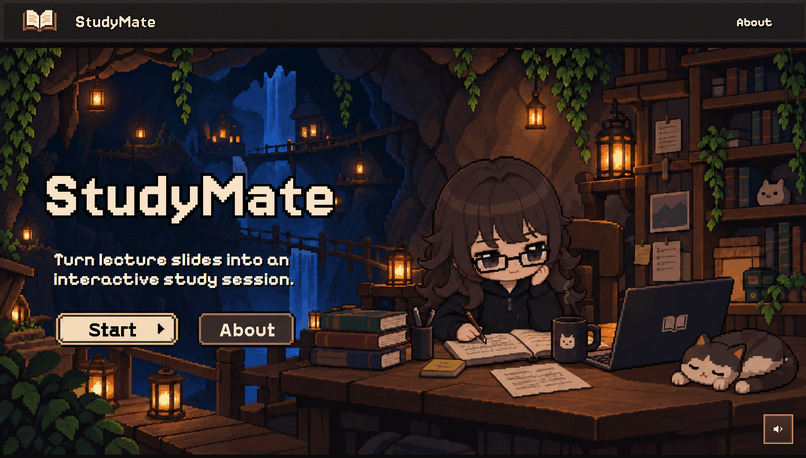
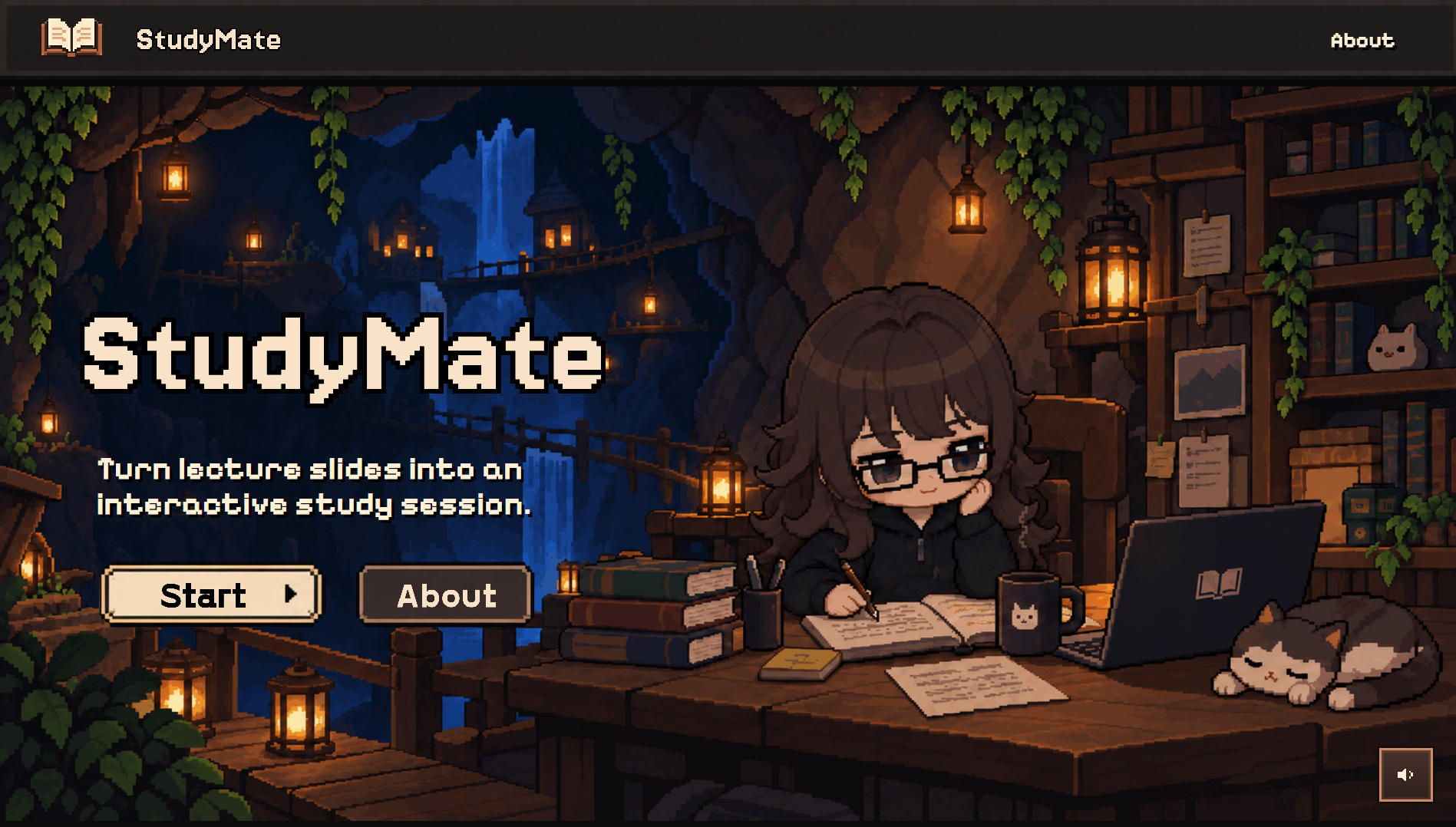
Home Page
-
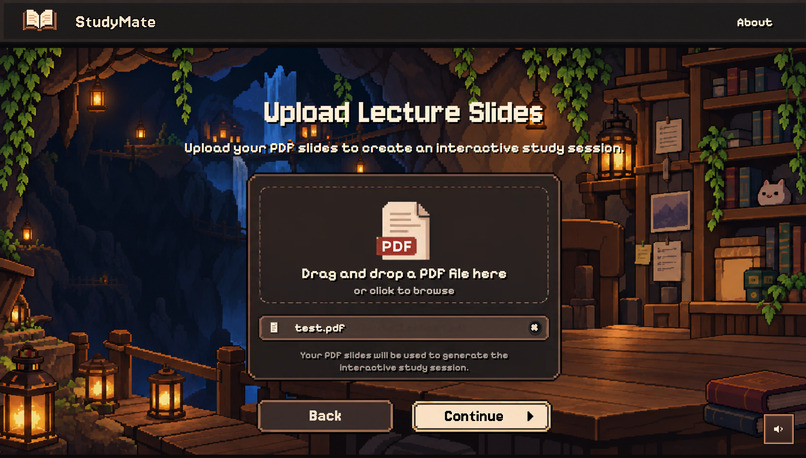
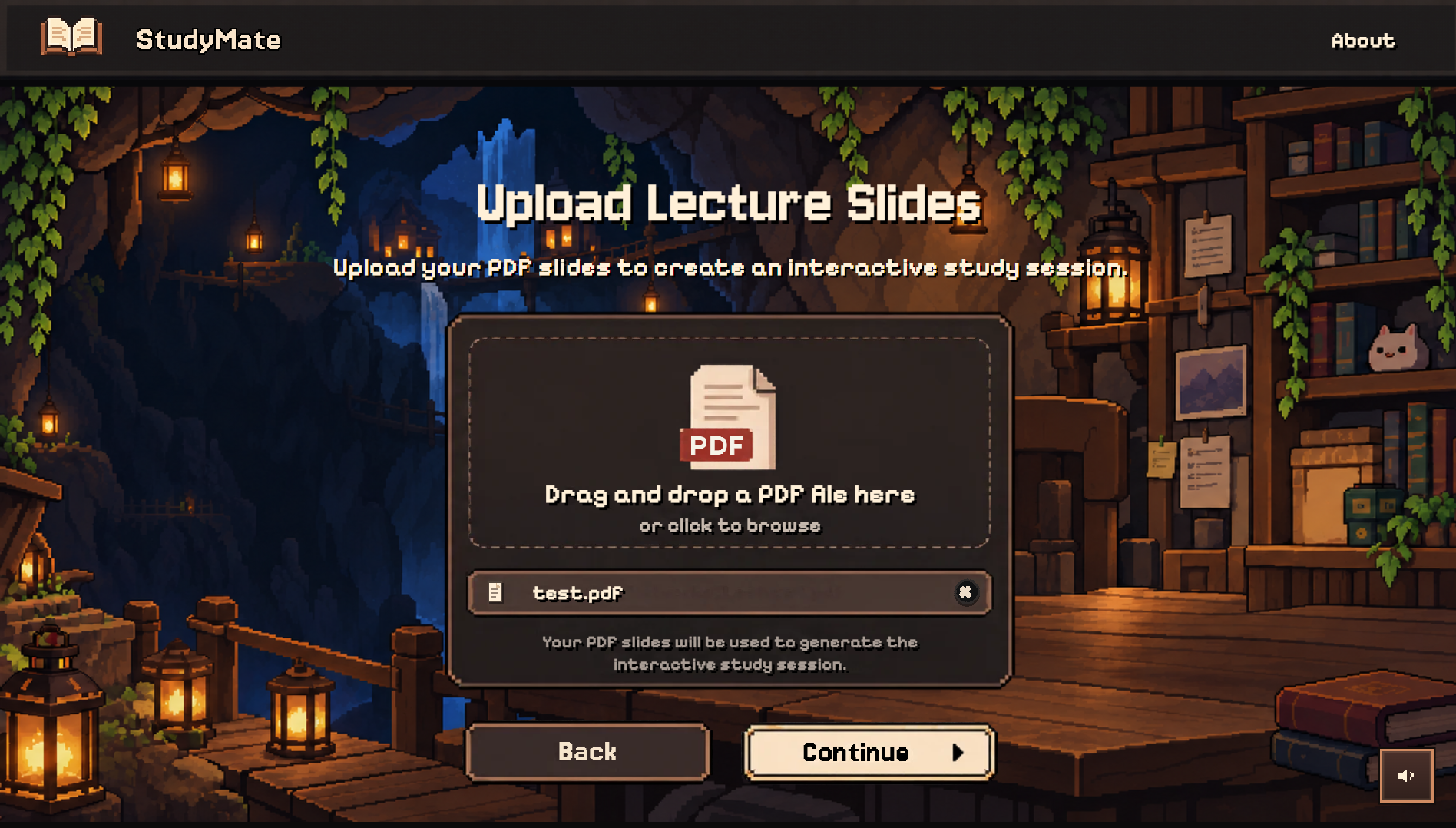
Upload Lecture Slides Page
-
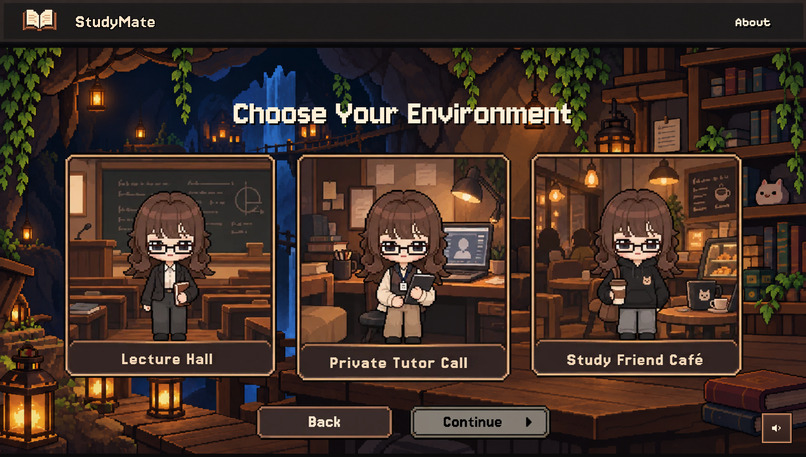
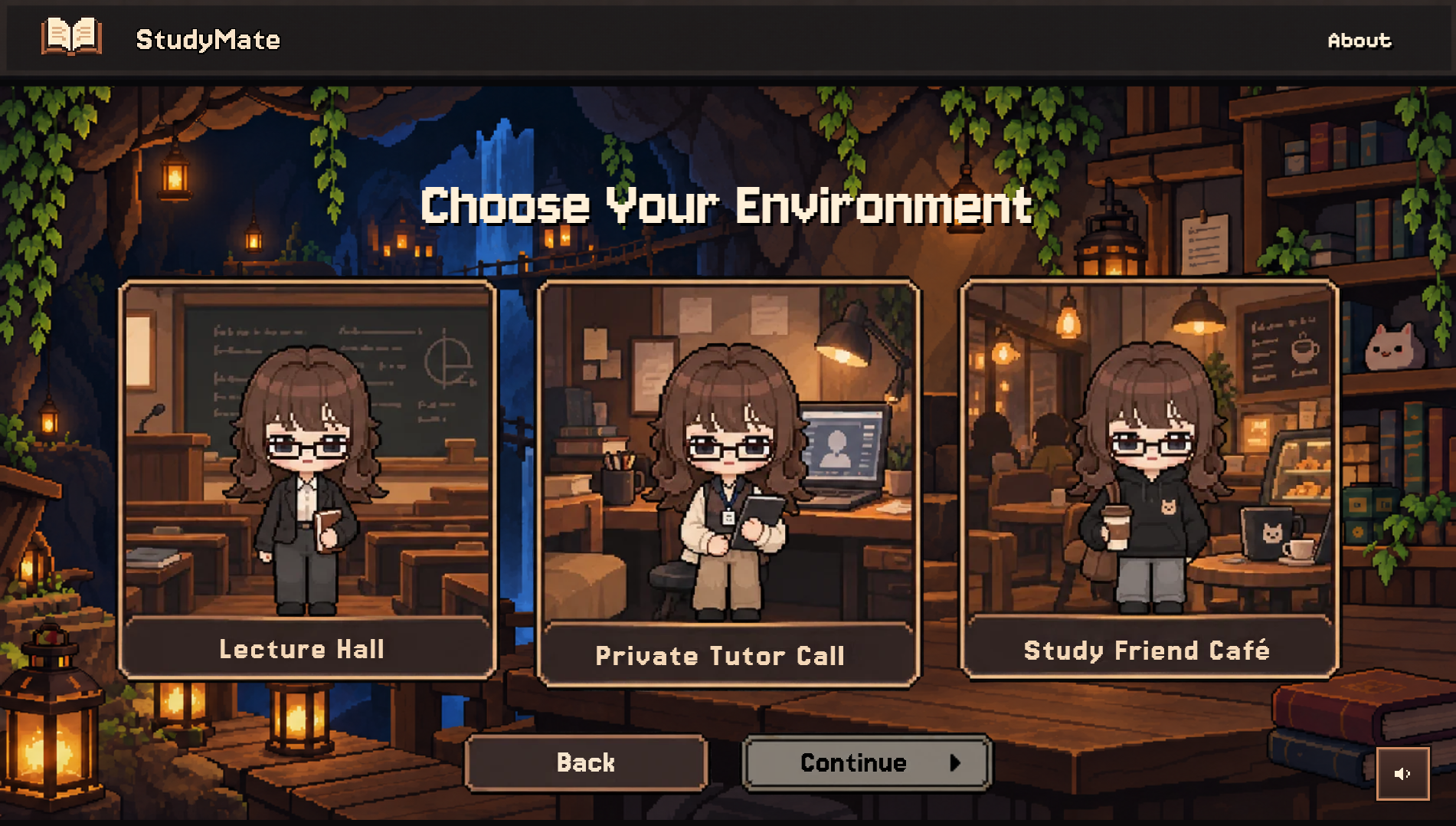
Choose Environment Page
-
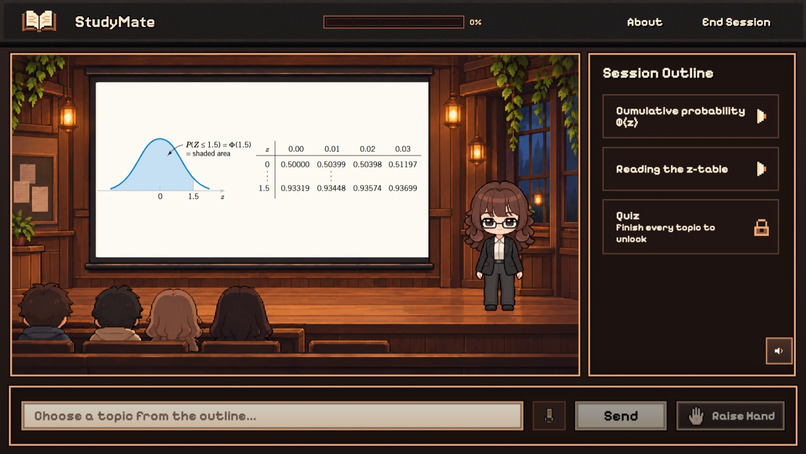
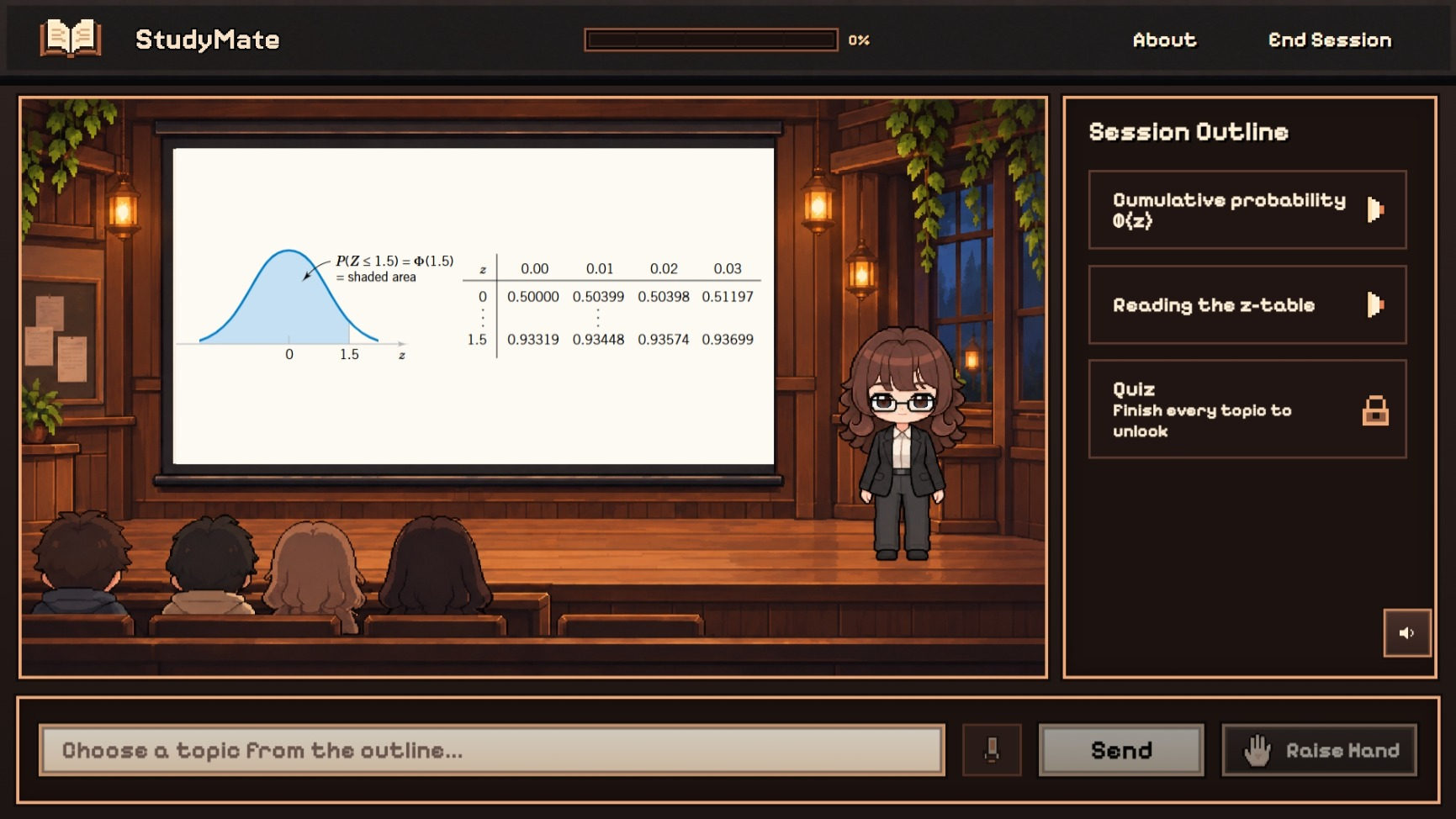
Lecture Hall Session Page
-
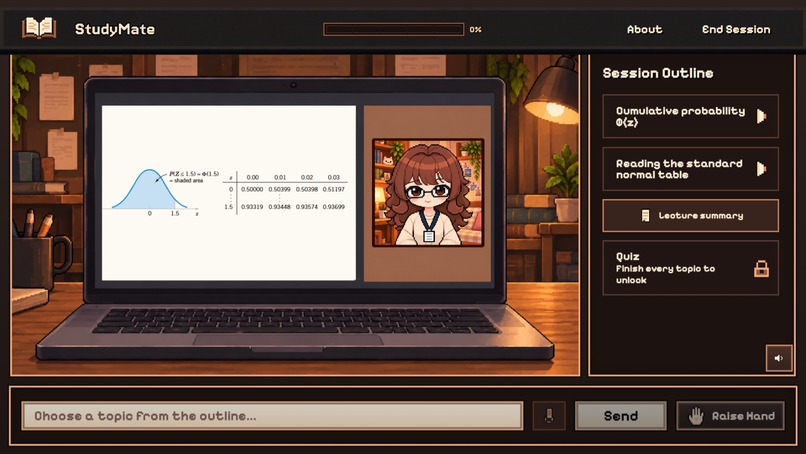
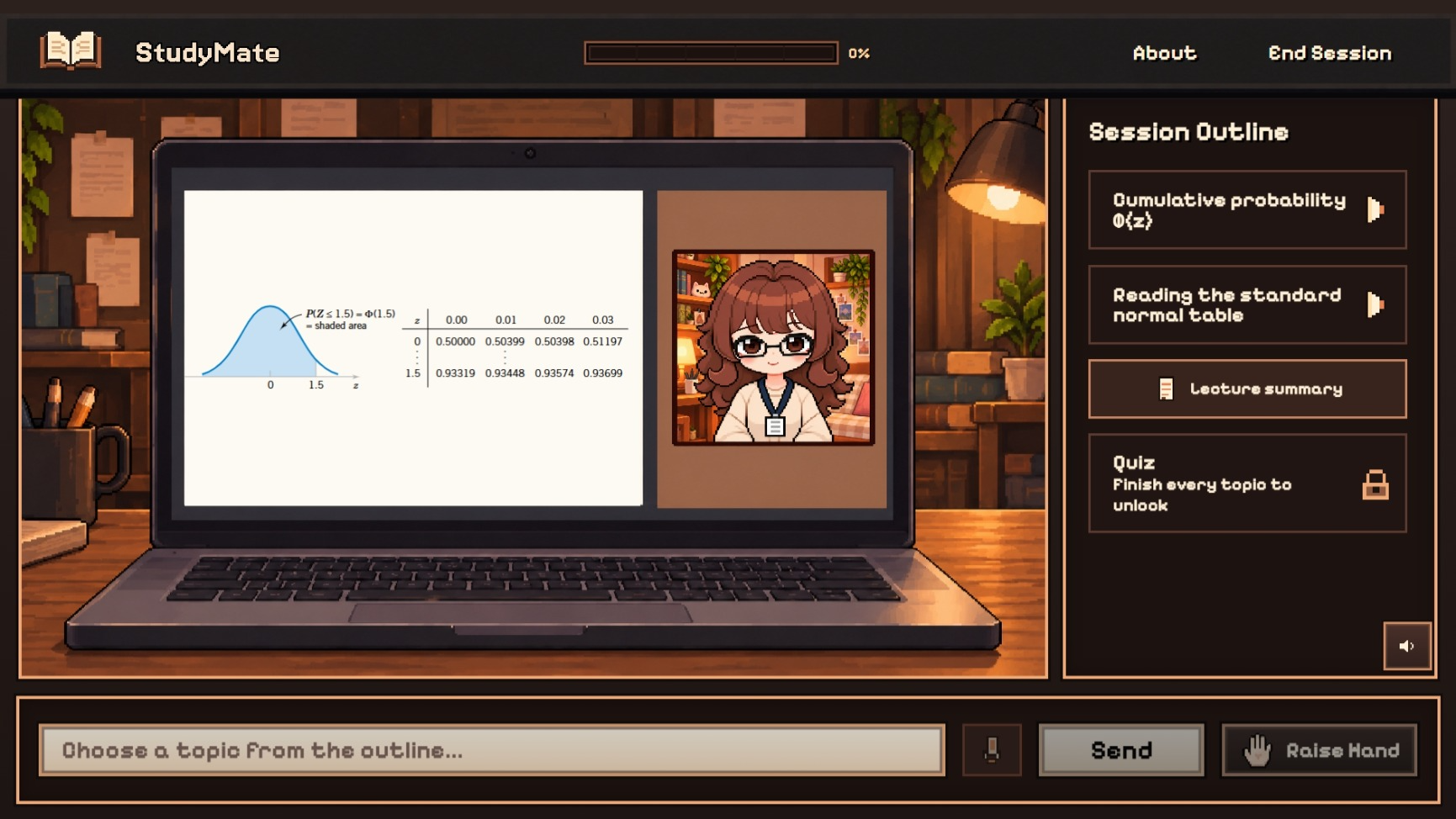
Private Tutor Session Page
-
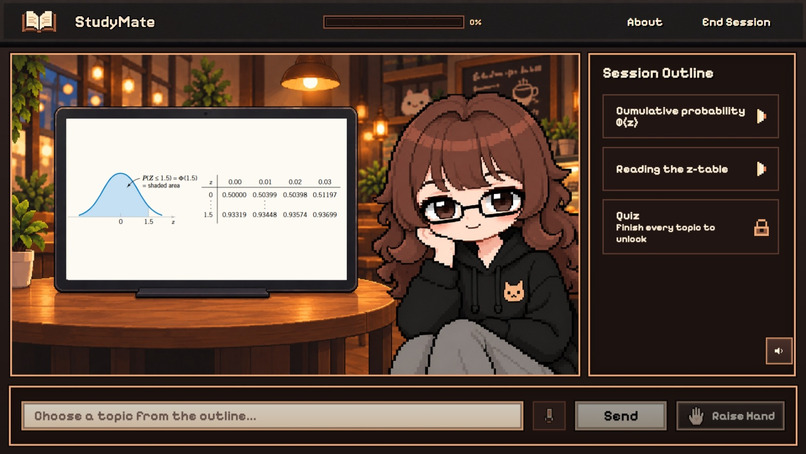
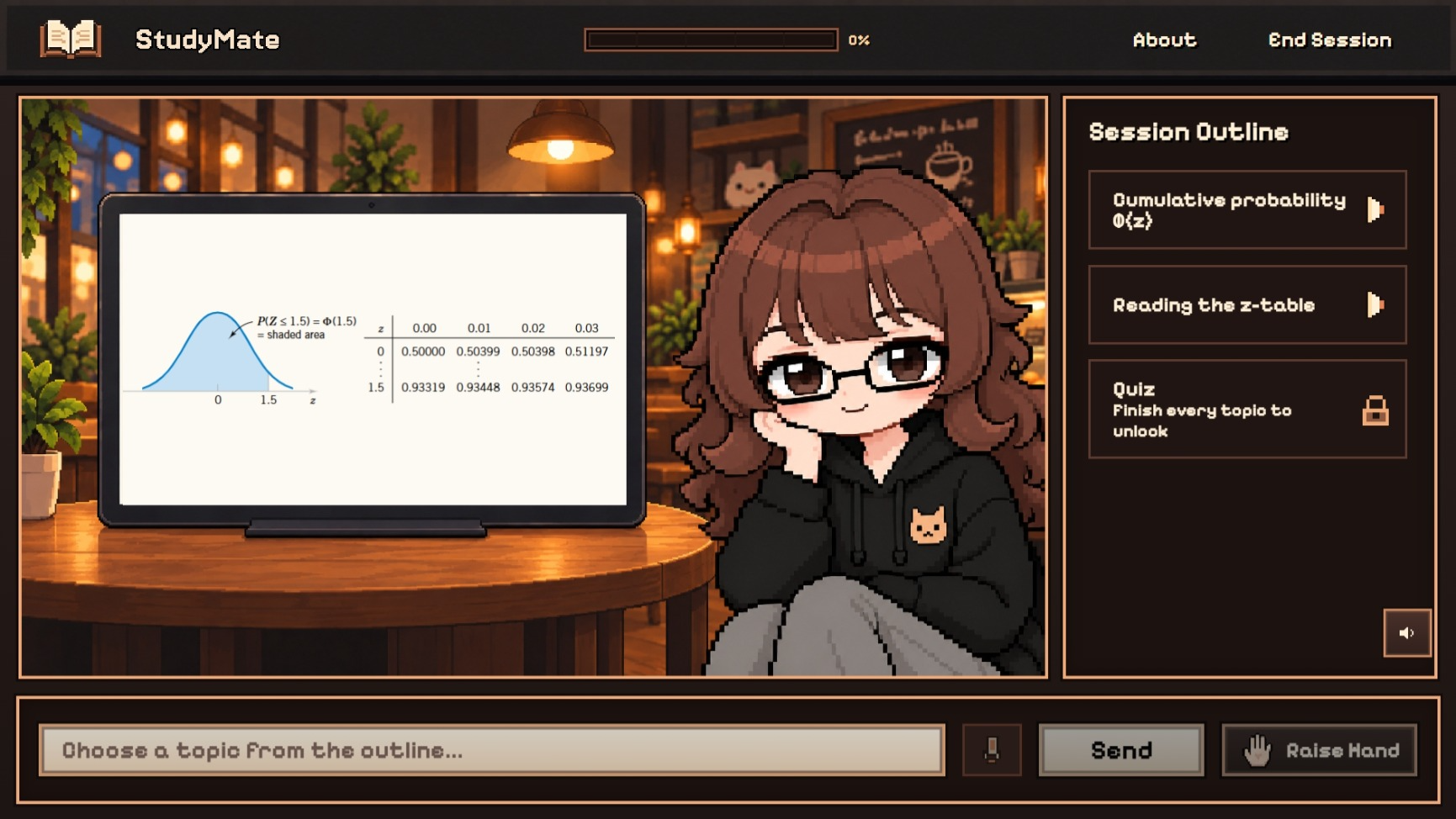
Study Friend Café Session Page
-
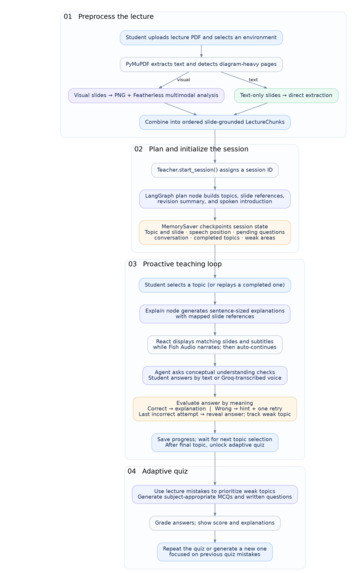
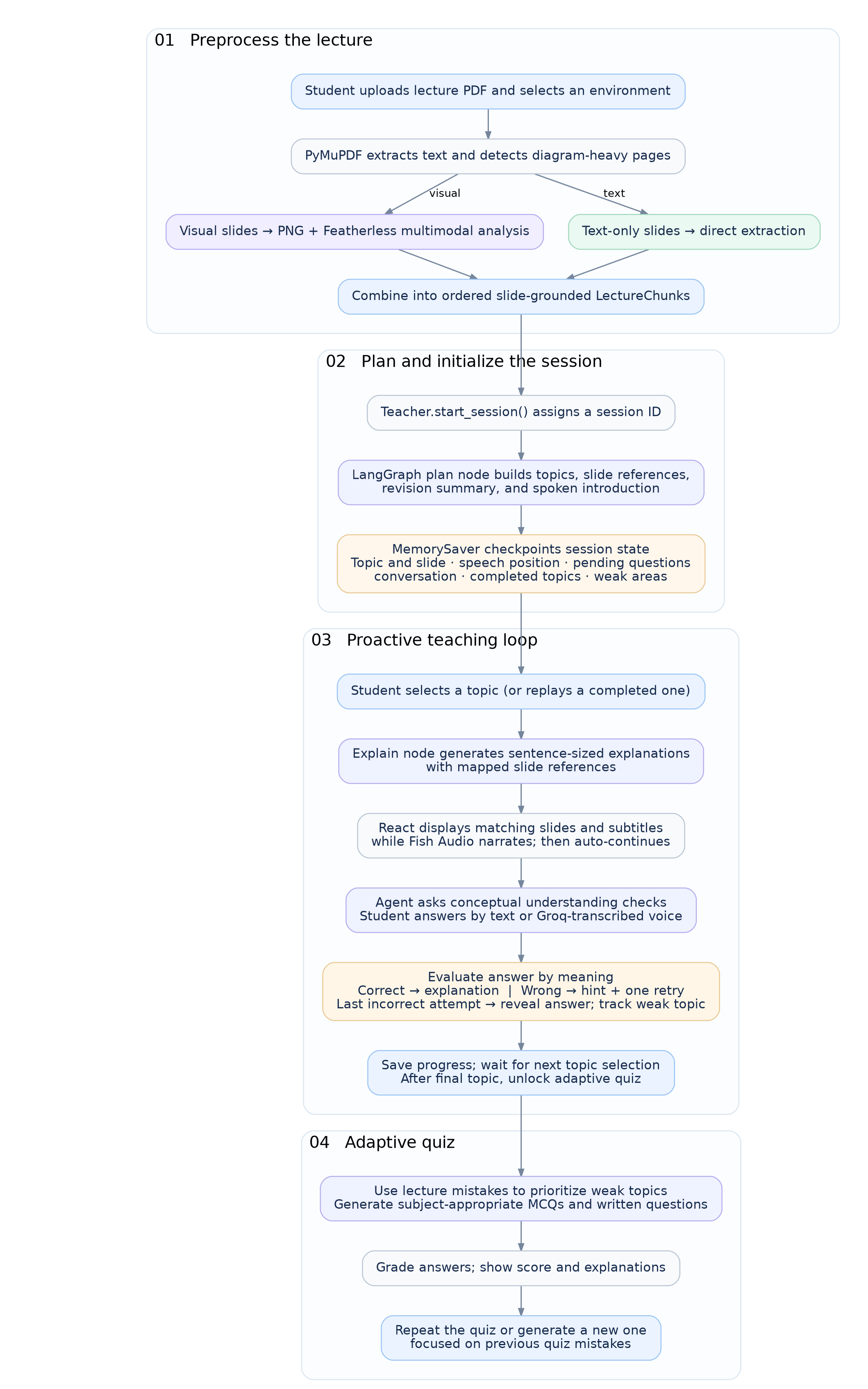
Agent's Workflow
Inspiration
What makes a lecture effective isn't just what the professor explains. It's how they teach.
A professor moves between slides, connects concepts, asks questions, revisits earlier material when students are confused, and somehow keeps the entire lecture moving.
But lecture slides alone can't recreate that experience.
As a student, I experienced the frustration of missing lectures or trying to study independently. YouTube videos rarely match your actual course material, while AI chatbots and chat-with-PDF platforms leave you responsible for directing the lesson: asking for explanations, requesting questions, reminding the AI where you stopped, and piecing everything together yourself.
I kept wondering: What if AI could recreate the structure, continuity, and interaction of a real lecture, not just explain its slides?
That's why we built StudyMate.
What it does
StudyMate transforms static lecture PDFs into stateful, interactive teaching experiences.
Rather than simply answering prompts, its AI agent actively leads the lesson—organizing concepts, explaining them aloud, and synchronizing the relevant PDF slides with speech, subtitles, and an expressive virtual teacher.
The agent follows a structured teach → question → evaluate → feedback workflow. Understanding checks aren't optional suggestions: students must engage with the questions, receiving hints and a limited number of attempts before the tutor reveals and explains the answer. Learning becomes active rather than passive.
Just like in a real classroom, students can raise their hand mid-explanation, ask about something they missed, even from an earlier slide, and receive a contextual answer before the lecture resumes where it stopped.
Behind the scenes, LangGraph maintains the lesson's state: the current topic, slide, speech position, conversation history, completed topics, and learning difficulties. Students can also replay topics with entirely new explanations.
After the lecture, an adaptive quiz prioritizes weaker concepts, selects suitable question formats, and supports new attempts focused on previous mistakes.
With three distinct learning environments, Lecture Hall, Private Tutor, and Study Café, StudyMate makes the experience feel less like using a chatbot and more like attending a lecture built around you.
The student doesn't have to guide the AI through the lecture. The AI guides the student toward understanding.
How we built it
PyMuPDF extracts slide content and detects pages that need visual interpretation; Featherless AI processes diagrams and visual concepts, then helps generate lesson plans, explanations, and understanding checks. Pydantic validates structured AI responses.
At the center is LangGraph: an interruptible, stateful teaching agent that coordinates planning, explaining, questioning, grading, feedback, topic navigation, and hand-raise interruptions while tracking what each student struggles with during the session.
FastAPI powers the backend, React + Vite + PDF.js provide the interactive classroom and synchronized slides, Fish Audio produces expressive speech, and Groq Whisper enables optional voice input.
Challenges we ran into
The real challenge wasn't making AI explain a slide it was making it behave like one continuous teacher. Questions, interruptions, slide changes, speech playback, and answer evaluation all needed to stay synchronized. We addressed that with explicit LangGraph states, checkpointed session context, segment-aware playback, and event-driven transitions. The quiz also required translating student mistakes into meaningful targeted practice rather than random revision questions.
Accomplishments that we're proud of
We built a complete teach → question → feedback → practice experience around students' actual course material. StudyMate goes beyond a PDF summarizer or chat interface: it turns static slides into an interactive lesson with three learning environments, natural interruptions, voice input, and adaptive assessment.
What we learned
A useful educational agent needs more than good answers. It needs pedagogical structure, continuity, and feedback, and an interface that makes students feel guided rather than responsible for prompting every next step.
What's Next
A great professor doesn't forget what happened in the previous lecture. Why should an AI tutor?
Our vision is to evolve StudyMate from an interactive lecture experience into a continuous, personalized learning companion that remembers a student's entire academic journey.
Students will be able to organize lecture PDFs into courses, allowing their AI tutor to connect new concepts to previous lectures, remember what they've already studied, and build on earlier knowledge instead of starting from scratch every session.
StudyMate will also track academic progress beyond lectures, including quiz grades, incorrect answers, and difficulties with practice assignments, to develop a deeper understanding of each student's strengths and weaknesses.
The agent will support different learning modes, from teaching lectures to guiding students through worksheets and practice problems, while maintaining shared learning context across them.
Combined with more customizable voices, characters, personalities, and environments, our goal is to create something closer to a real professor: one who knows your course, remembers your progress, understands where you struggle, and grows with you throughout your education.


Log in or sign up for Devpost to join the conversation.