-
-
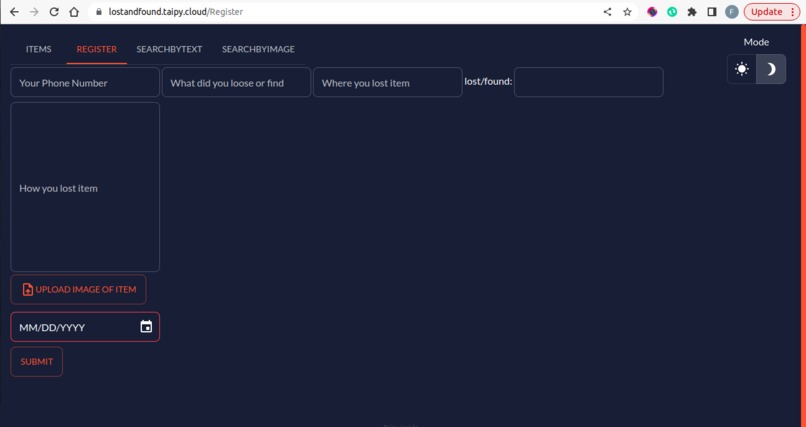
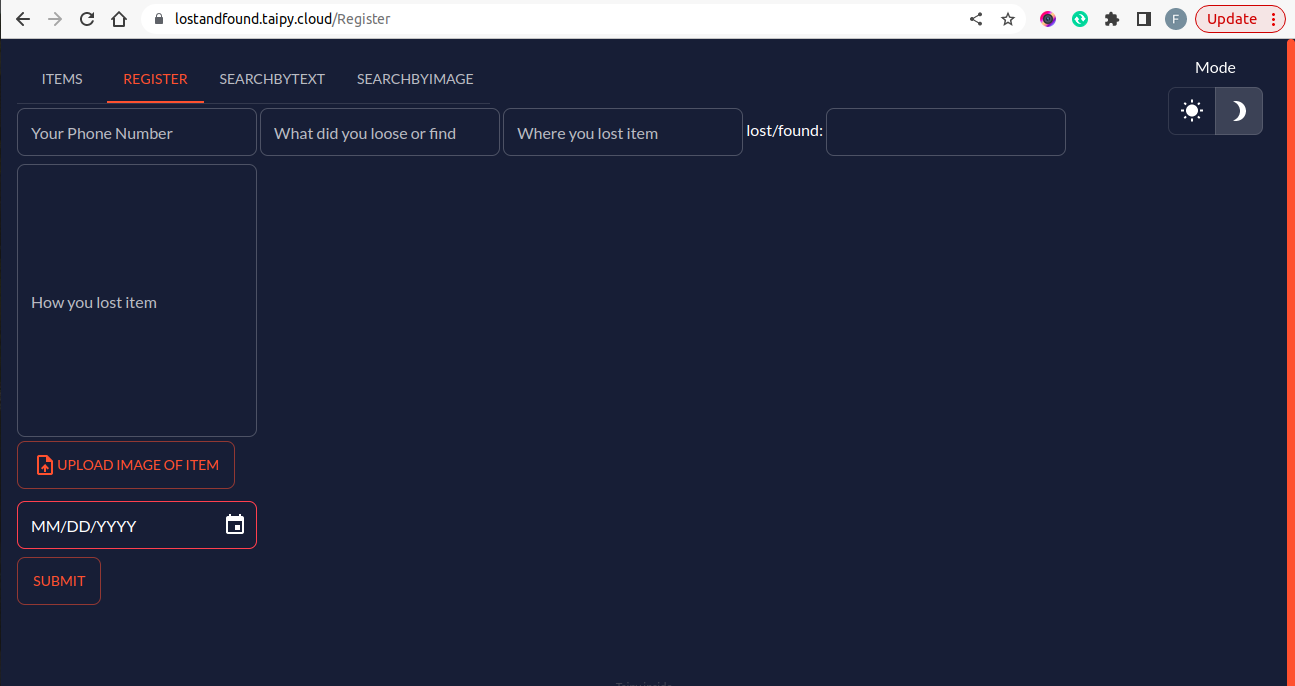
Register an item you found or lost
-
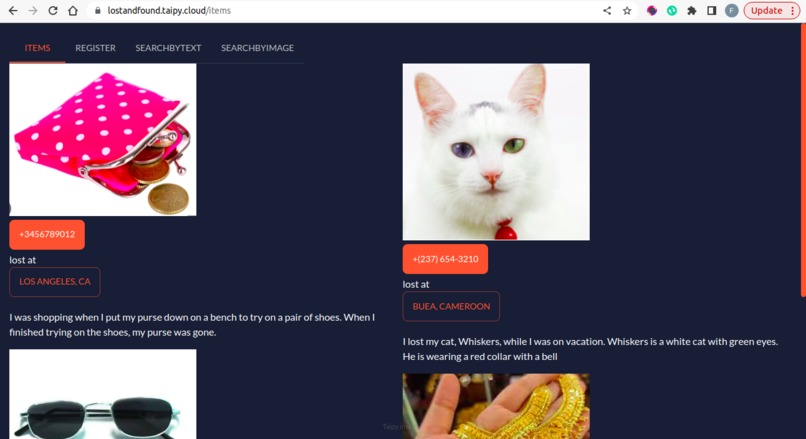
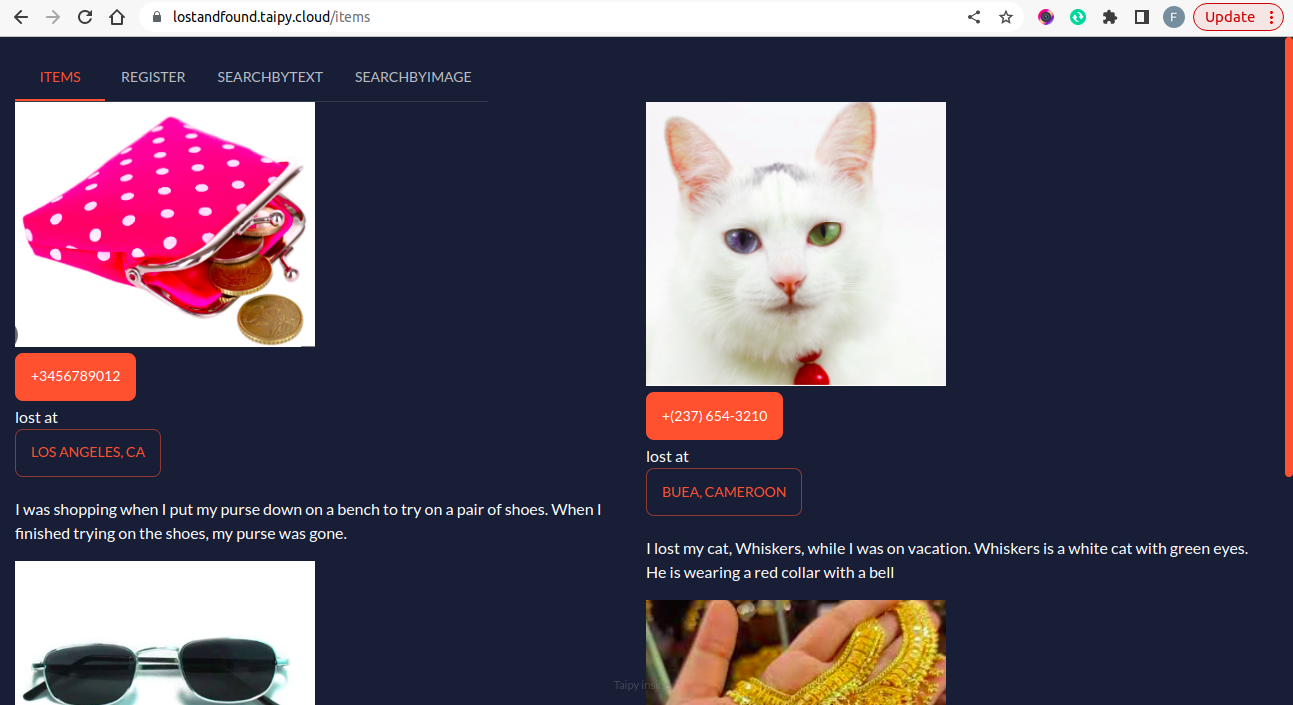
All lost and found items
-
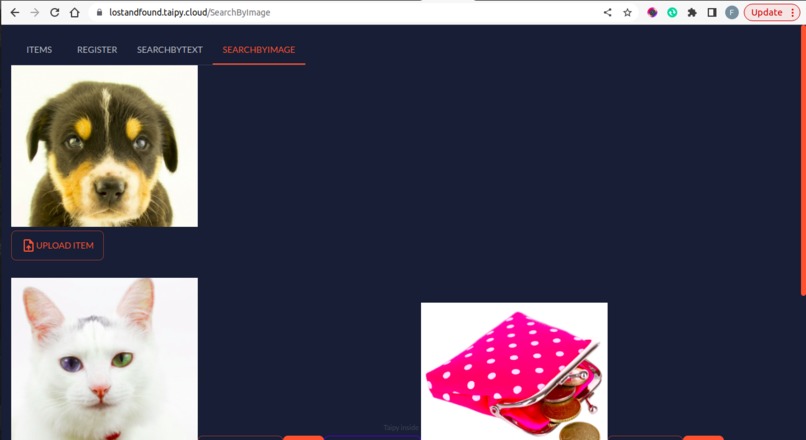
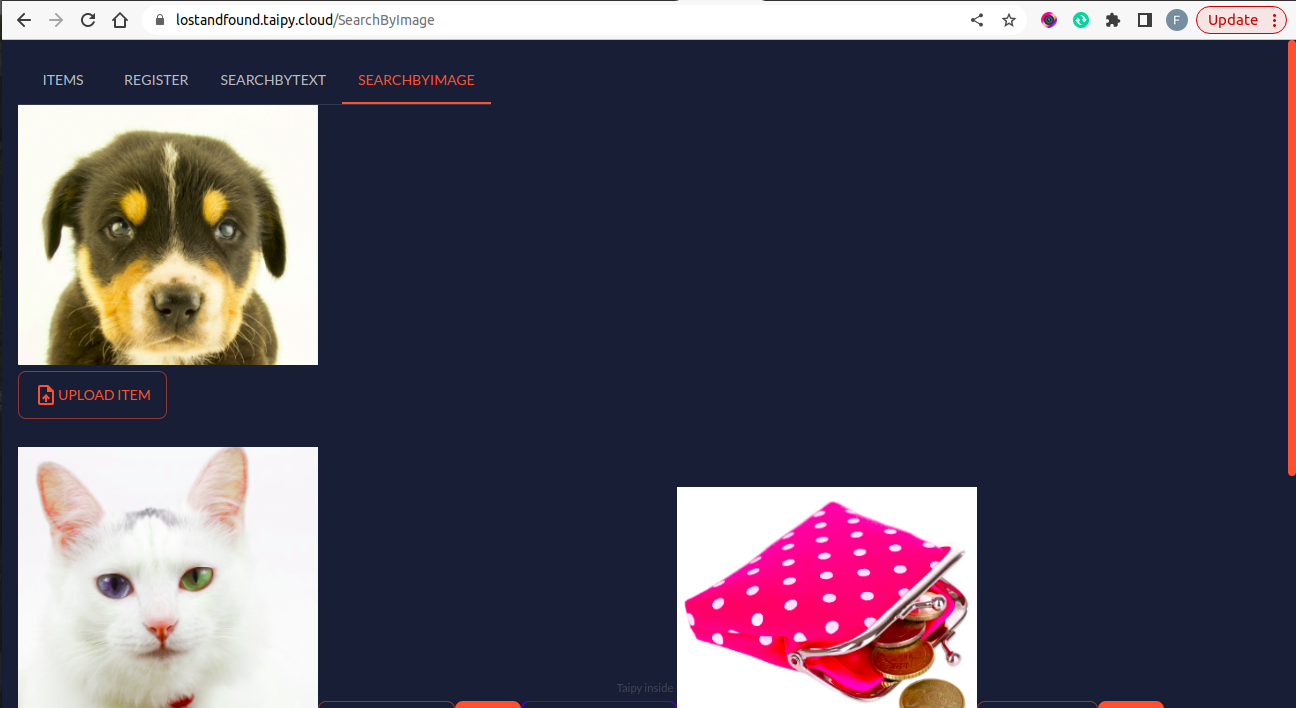
search for lost item by semantic similarities on uploaded image
-
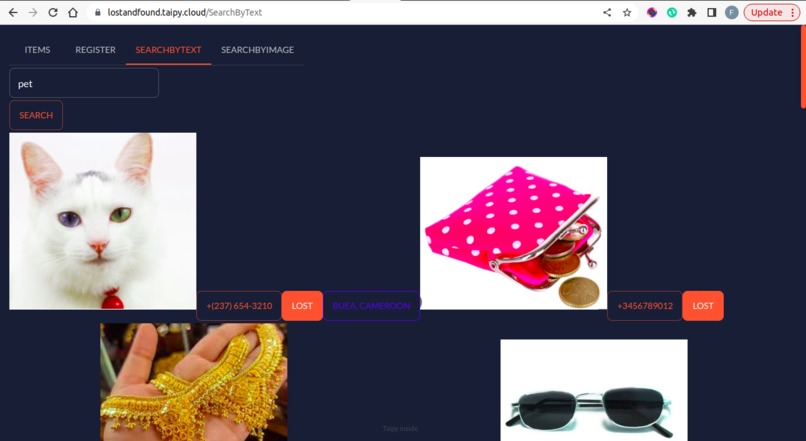
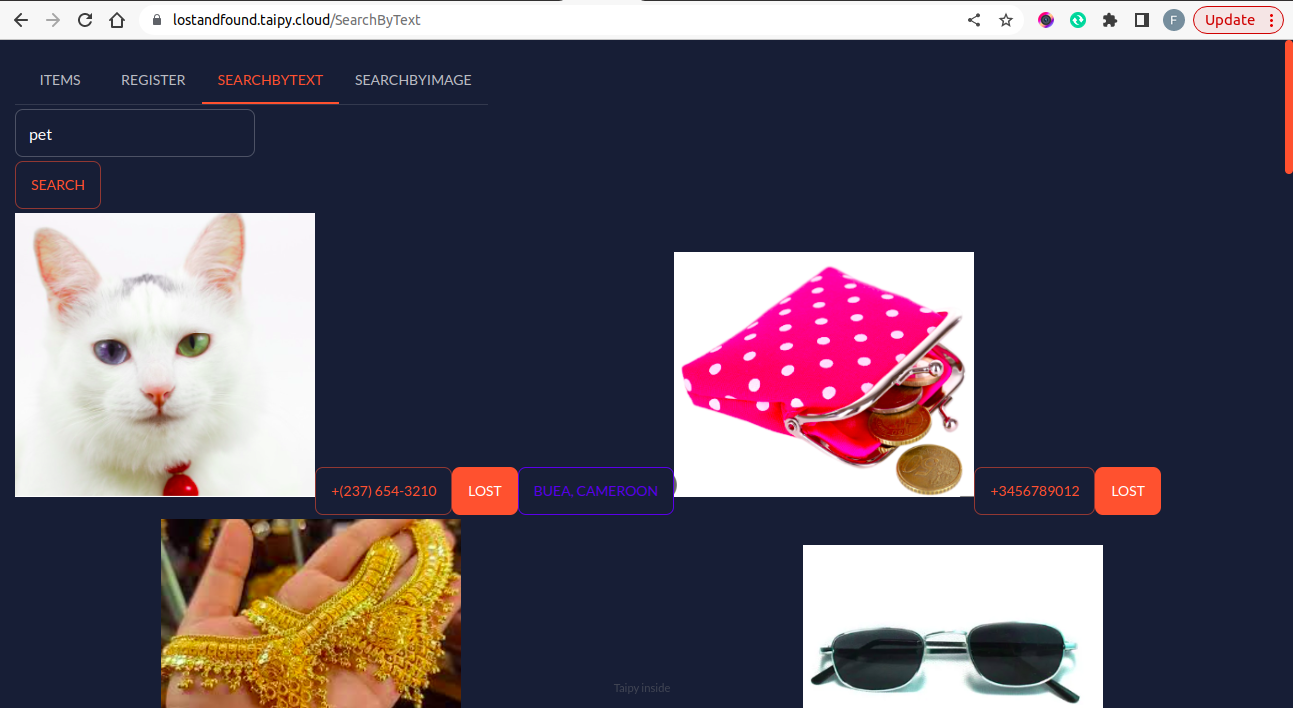
search for lost item by semantic similarities on dezcription (text)
Inspiration
I lost the original copy of my Birth certificate.
What it does:
- It uses image recognition to help people find thier lost items.
- Matches user stories to recommended lost items by using semantic search .
- People can easily turn in and claim lost items by contacting the phone numbers off the users who submitted an item reports.
How we built it
- It was built on Taipy, MongoDB atlas , Google Cloud Platform
Challenges we ran into
- Taipy did not provide line numbers to ease error debuging .
- Changes in the database reflect on the Taipy UI only after reseting the server.
- Not alot of information is avialable on MongoDB and Google Cloud vertex AI.
Accomplishments that we're proud of
- We proud of helping people reconnect with thier lost belongings.
- We are proud of fostering a sence of shared responsibility within every community.
What we learned
I learned to use Taipy to create a form for users to submit lost item reports, capture details like item description, location, date of loss, and finder's contact information, implement image upload functionality, and create a search interface for users to find lost items based on various criteria.
I learned to use MongoDB Atlas to implement Vector Search to enable semantic search capabilities for item descriptions and image recognition.
I also learned to use the Google Cloud pre-trained models to generate vector embeddings for lost item descriptions and images.
What's next for TMG Lostandfound
- Protect users from being spamed by introucing google recaptcha.
- Identify danger zones (areas with the most frequent missing item reports) and add to google maps.
- Use internationalization to support people who speak different languages
Built With
- google-cloud
- mongodb-atlas
- python
- taipy
- vertexai


Log in or sign up for Devpost to join the conversation.