-
-
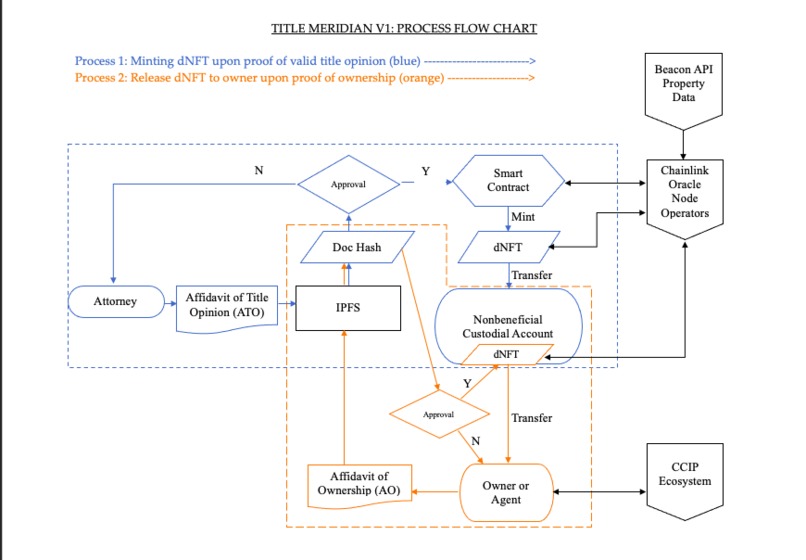
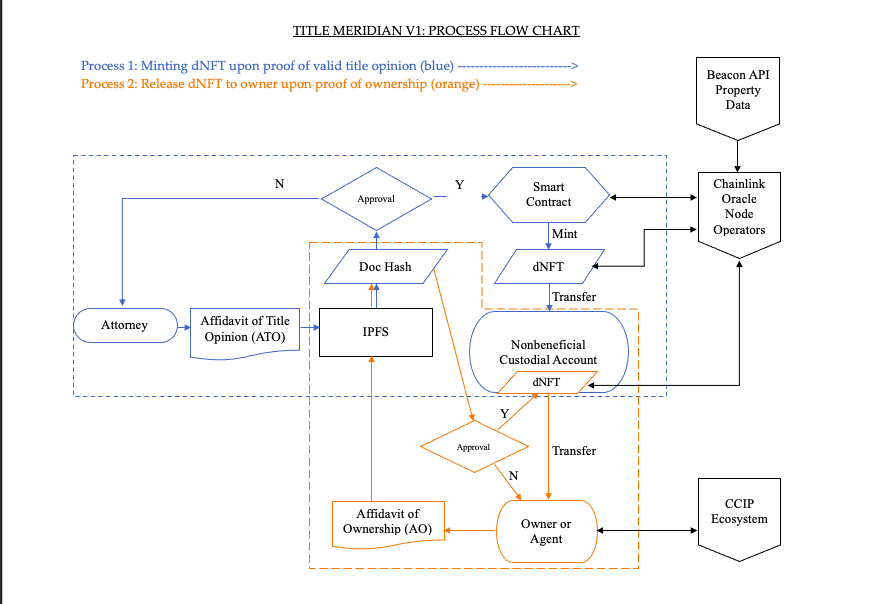
Title Meridian v1 Process Chart
-
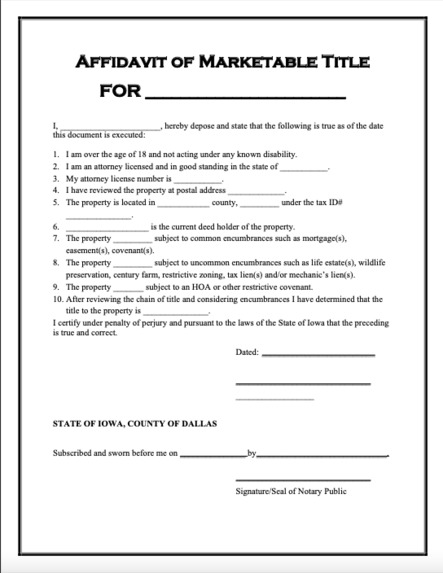
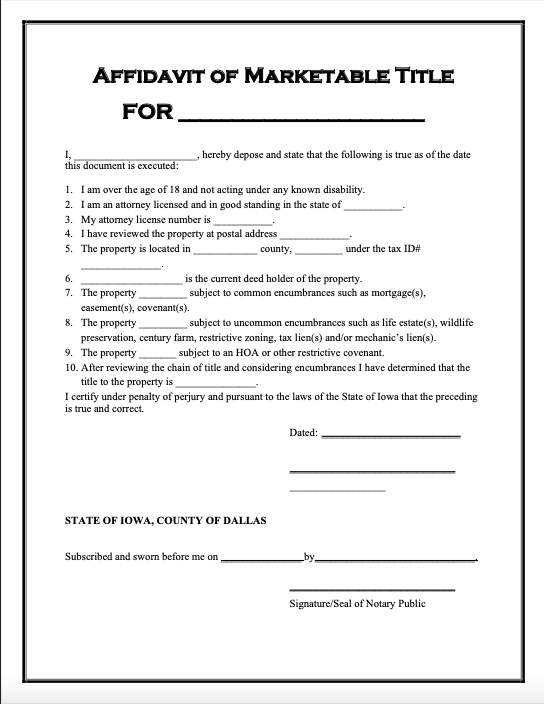
Affidavit of Marketable Title Form
-
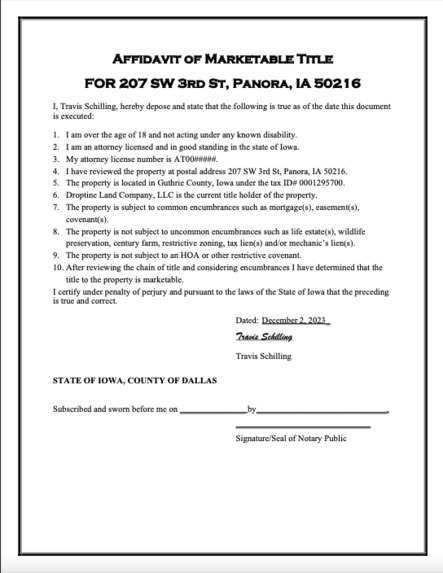
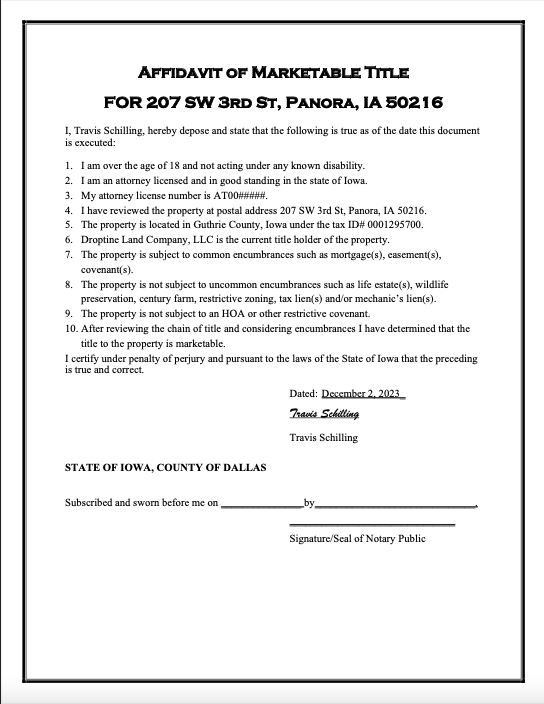
Affidavit of Marketable Title Example
-
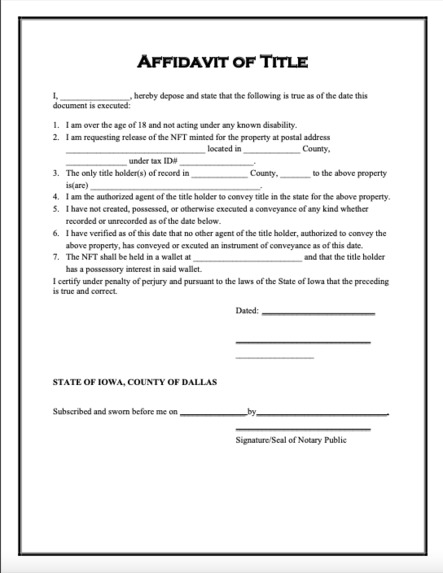
Affidavit of Title Ownership Form
-
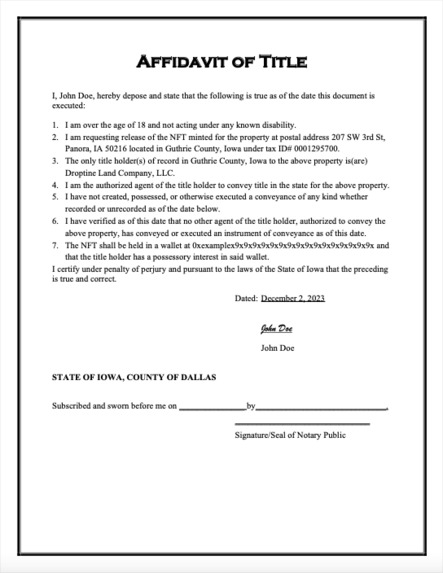
Affidavit of Title Ownership Example

The Problem
Land is the most fundamental resource in the global economy because it is universally necessary and finite. Land is used for every purpose from feeding people to housing data centers; how we use land defines its worth and facilitates our technological world, but before we can plan to use a particular plot of land we must know who owns it. It seems simple, but due to centuries of old-fashioned low-tech methods and regular human error the true owner, known as title holder, is often difficult to ascertain. In fact, it is so difficult that 49 of 50 states have completely given up on providing certainty to consumers and instead merely require that buyers are insured against loss in the event of title error.
Inspiration
Our project was inspired by the Title Opinion system that supports real estate transfers in the state of Iowa. Iowa is the last state in the Union that requires real estate transfers to be supported by an attorney-generated Title Opinion, which is a proactive document that helps all parties understand the marketability of title for property before it is sold (in contrast, all other states use title insurance, which is retroactive and not nearly as reliable). A lot of inefficiency in real estate transactions can be minimized through proactive action like a title opinion, and results in substantially decreased costs to the parties in a transaction. Furthermore, web3 is best served by ensuring that assets represented on-chain are as reliably certain as possible when they are first minted, which is best served by the title opinion method of verifying property ownership.
What our project does
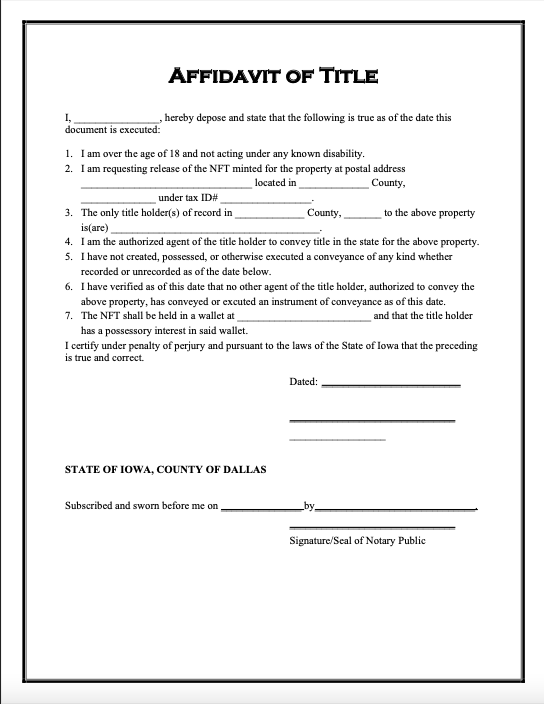
Although title opinions are generally attorney-client work product and subject to privacy protections, our project allows title opinions to be recognized on-chain by uploading an affidavit (a sworn and notarized statement by the opining attorney) to IPFS through our platform stating that a title opinion has been performed and identifies the legal owner of the property. Our platform retrieves the IPFS hash of this document, and after it is approved a dNFT representing the property is minted and deposited into a Nonbeneficial Custodial Account ("NCA"). The dNFT resides in the NCA until another sworn affidavit by the owner or its agent is uploaded to IPFS through our platform, which attests to the owner of the property and the address of a blockchain wallet that is controlled by them. Upon approval of this subsequent affidavit, the dNFT is released to the address named in the affidavit.
Once minted, these NFTs are dynamic because they utilize Chainlink node operators to pull data from a property data provider called Beacon and make it available on-chain. Once this data is made available, the metadata found in the dNFTs is automatically updated as-needed. Metadata intended for v1 includes:
- Parcel ID
- Property Address (Street Address)
- Deed Holder (or Title Holder)
- Class of Property (e.g. C - Commercial)
- Lot Area
- Net Assessed Value (last 3 years)
These legally-verified dNFTs are on-chain legal primitives representing the existence of property ownership, and allow for a variety of new types of products to be built on multiple blockchains as a result of being connected to CCIP through Interchain Connector. Web3 users can interact with these primitives in ways such as:
- Referencing property dNFTs in smart contracts or legal documents that are connected to smart contracts;
- Bundling dNFTs and their automatically updated metadata for on-chain real estate derivatives;
- Fractionalized interests in property such as shared rights to rental income, shared expenses, crop sharing, etc.;
- Assigning to the dNFT identifier memberships in things like utilities and HOAs in a way that is more transparent and accessible to the public.
How we built it
As a team of licensed attorneys with diverse experience, we leaned into our respective niches to develop a product that was not only viable as a web3 system, but also as one supported by nuanced legal principles.
- Scott Stevenson (Real Estate Attorney & Legal Engineer) - Scott's substantial software development experience and application of that experience to legal products helped us develop a robust framework (called Interchain Connector) upon which Title Meridian could be built.
- Mason Bump (Blockchain Attorney & Protocol Specialist) - Mason's experience with the real estate titles and knowledge of blockchain systems allowed him to develop the project's architecture in a way that would result in an outcome that is valuable in both the traditional world and in web3.
- Travis Schilling (Transactional Attorney & Systems Engineer) - Travis's background as a public sector engineer and as an experienced transactional attorney allowed the project to be refined and reflect practical realities required in the traditional world. As a practicing real estate attorney, a target user demographic for our platform, Travis has provided real-time feedback on Title Meridian’s real world utility.
Over the course of the hackathon, we developed our respective contributions so that they could integrate with each other effectively. Scott led the way by developing his own submission, Interchain Connector, which, with Scott’s blessing, we were able to incorporate into the architecture Mason and Travis developed for legally authenticating dNFTs that represent verified ownership of real estate on-chain.
Challenges we ran into
Time is one of the most pervasive problems in project development. We ran into issues with the timing of the hackathon itself, which took place during Thanksgiving and so close to the holiday season itself. Because the generation of the dNFT requires linking third-party data, this resulted in less effective time to contribute than we would have liked, but we still ended up with a result that we felt happy to submit.
Accomplishments we're proud of
We are proud to submit a project that so encapsulates the spirit of why Chainlink exists and opens the door to a new type of data that builds real utility on-chain. The backbone of our project, Interchain Connector, allows Title Meridian to port to multiple blockchains through CCIP, makes use of Chainlink node operators to power automated updates of property data found in our dNFTs, and IPFS allows attorneys to use a more traditional, paper-adjacent medium to interact with web3 in a meaningful way. In short, we are proud to have built an on-chain project with legal significance that has very broad applicability as enabled through Chainlink technology.
What we learned
We learned that there are so many different ways to tackle the problem of on-chain legal artifacts that we have to be intentional about what problems we want to solve given the time we have for the hackathon. In our situation, we wanted to show what we're capable of and that the potential of what we can build is worth the reward for Chainlink and for the web3 ecosystem at-large.
What's next for Title Meridian
This iteration of Title Meridian, known as v1, is proof that the concept of legally-verified on-chain property interests is viable. We hope to increase this viability in v2 by introducing the following features:
- Live Chainlink Property Data Feeds from Beacon API: We did not have the resources or the time to purchase a subscription to the API provided by Beacon, which would have allowed Chainlink node operators to query live property data and make it available on-chain. This data would allow for primitives like our Title Meridian dNFTs to exist on-chain and reflect actively updated and independently verified property data.
- Programmatically-Transferrable dNFTs: The security of the dNFTs generated during the Title Meridian process can be improved by making them conditionally-soulbound, which means that they can only be transferred to a new address upon approval of additional legal documentation submitted to IPFS that attests to new legal ownership of the asset on-chain. The hash of this approved documentation would be appended to the dNFT and enable a transfer to a new owner's address.
- Publicly Accessible UI/Frontend: Once we have the time to build it, we will build a frontend that allows users to submit affidavits, check property records and associated interests, verify on-chain ownership of property dNFTs, and eventually record property-adjacent interests like utilities and easements on-chain.
- On-Chain Title Guarantee: The system of title opinions which served as the inspiration for Title Meridian is supported by a local insurance fund known as Iowa Title Guarantee. Although the title opinion system results in substantially less risk than title insurance systems, no system is perfect, and in order to mitigate damage from issues with title discovered later it is important to have the ability to make people whole if they experience a problem. To do this, we would allocate a portion of fees received to an on-chain insurance fund that would serve this purpose.

Log in or sign up for Devpost to join the conversation.