-
Applyng ML methods to extract the principal points.
-
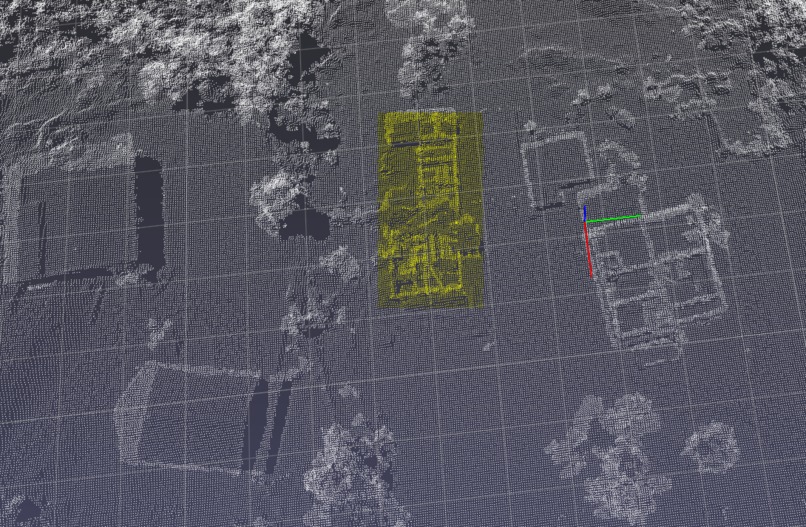
Selecting an area from a Point Cloud.
-
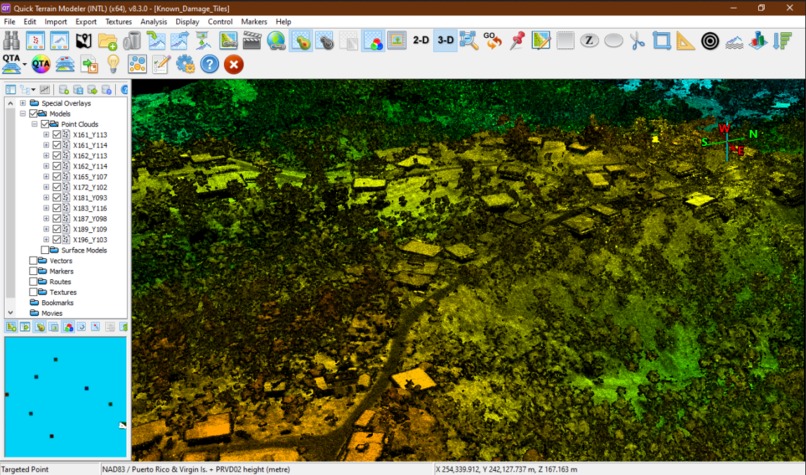
Visualizing data using the QTModeler


Inspiration
- Landslides often accompany earthquakes, floods, storm surges, hurricanes, wildfires, or volcanic activity. They are often more damaging and deadly than the triggering event. (Northern Maine Development Commission)
- “Hurricanes” are large, spiraling tropical storms that can pack wind speeds of over 160 miles an hour and unleash more than 2.4 trillion gallons of rain a day. Hurricanes can be coupled with storm surges and severe flooding. (National Geographic Education)
- Natural disasters affect 218 million people and claim 68,000 lives per year. (Center for Research on the Epidemiology of Disasters)
- Natural disaster losses totaled $74.4 billion in 2020. (Insurance Information Institute)
Thus, the main reason for inspiration came from the will to apply knowledge in the area of technology to benefit the population that is affected by natural disasters. In addition, there is also the will of the members to learn about a new and challenging topic.
Challenges we ran into
The main "problem" suffered by the members was the lack of knowledge in the area. Even though there was a great desire to learn, a lot of time was spent getting to know and exploring the theme and the area, leaving little time for development.
Main idea
As already said, the group did not have much time for development. It is also worth saying that this is the first Hackaton of all members and, to at least apply the studies developed, we decided to create a general approach for point cloud classification from airborne data from a LiDAR, creating the steps to be performed to, in the future, build a Deep Learning-based classifier that is able to identify all the points required in the challenge.
How we developed it
Initially, we researched the LiDAR system and how the point cloud data is generated. Thus, we analyzed each challenge of the competition, in an attempt to create an understanding of each one, as well as to prioritize the tasks that would be performed. Next, the main forms of point cloud segmentation and classification were researched, as well as the technologies that are used in these applications and that could be used in the development of the project.
What we learned
The team learned about various topics about LiDAR, as well as the application of this tool in the area of natural disasters. We were also able to work as a team to divide the task and generate the best possible result, even without experience.
What's next for PCD Classification Approach
The next steps for the project are to develop an application from the chosen approach. We believe we have gathered enough materials and knowledge to create an interesting and robust application.

