-
-
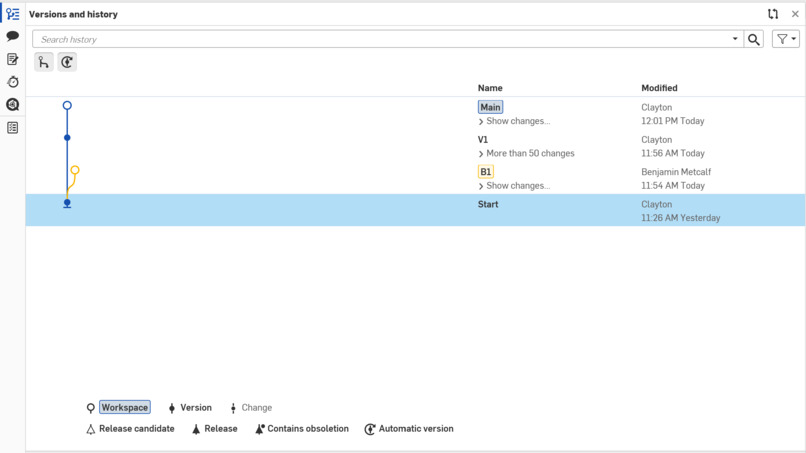
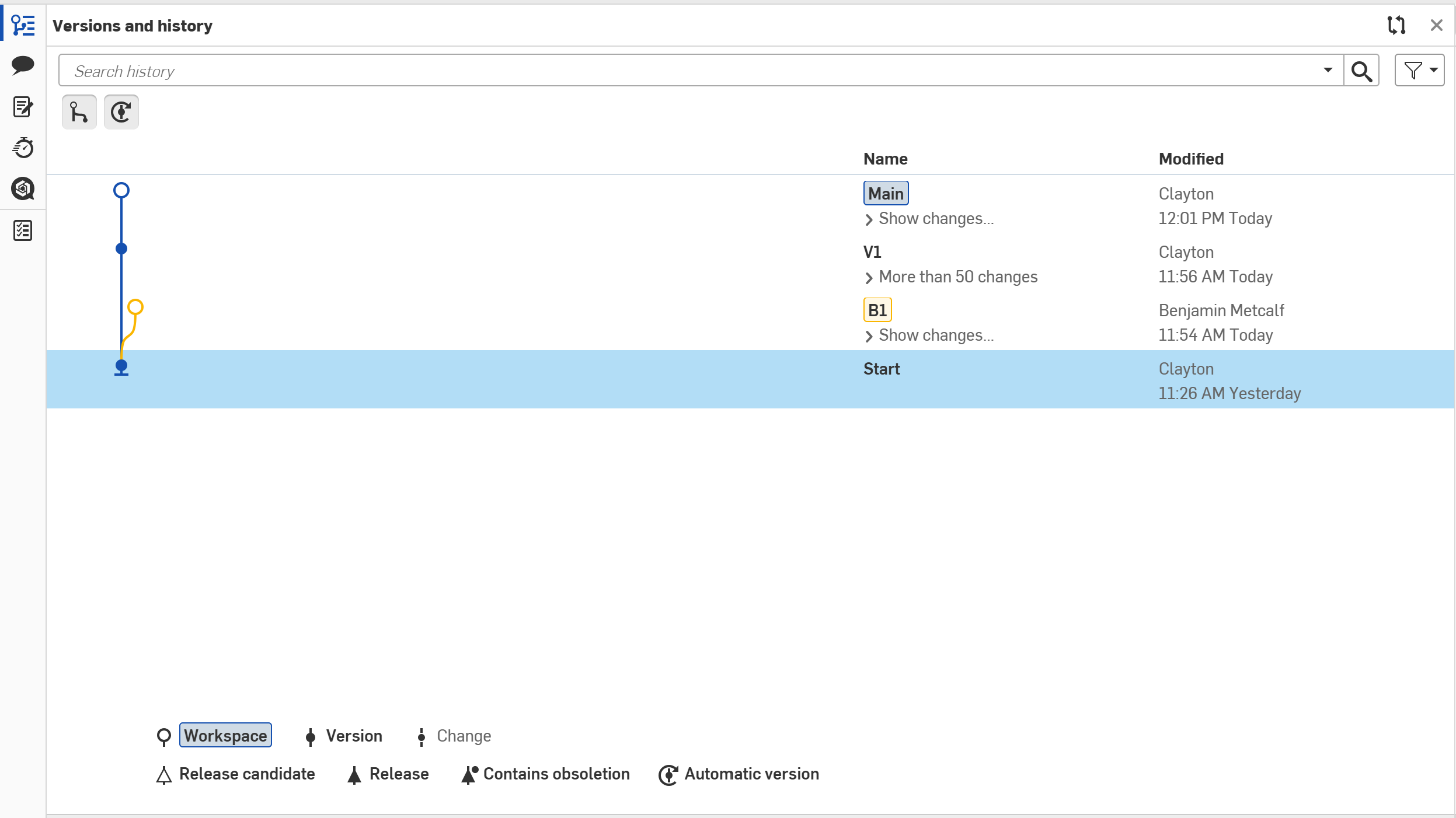
Here is the Assembly Version History, we had to copy our document onto a new one
-
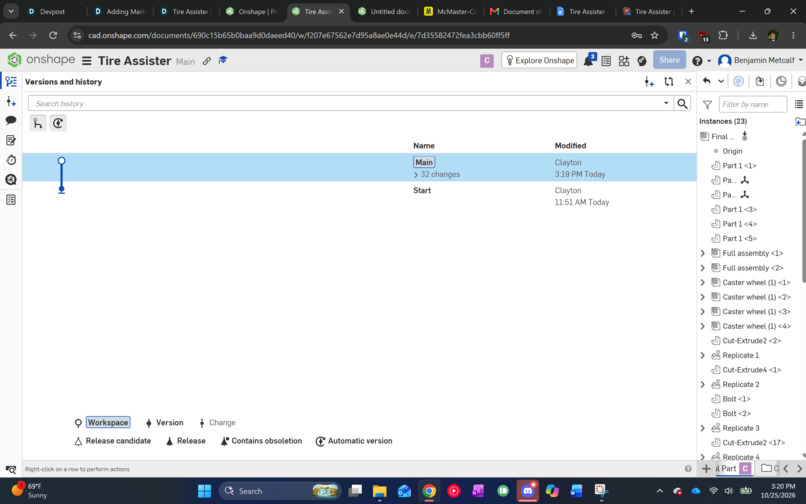
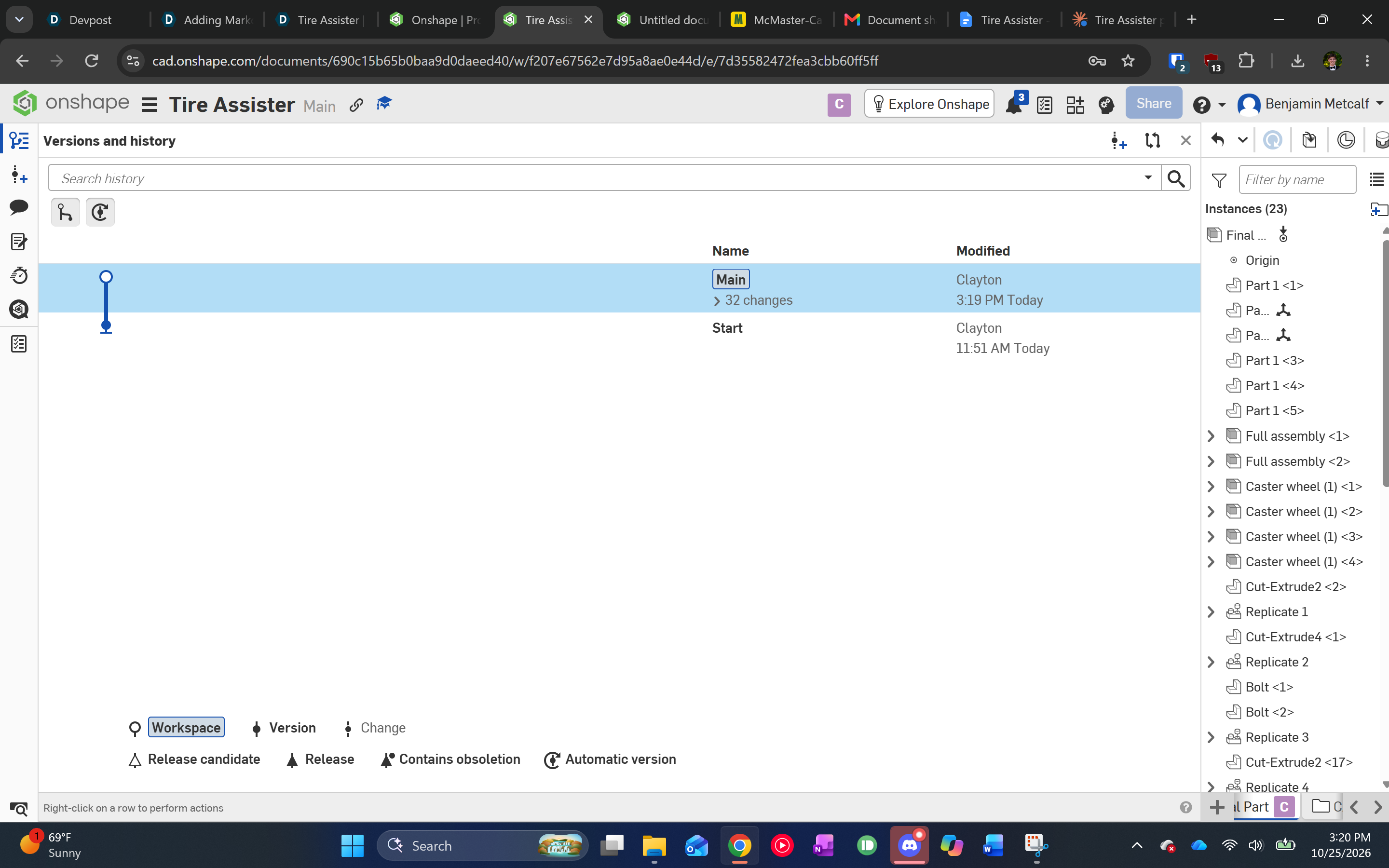
Here is the coppied version
Inspiration
A flat tire is a hassle for most drivers, but for someone who is elderly, disabled, or not strong enough to lift a wheel, it can mean being stranded. One of the hardest parts of changing a tire is lifting a heavy wheel and holding it steady at hub height while lining up the lug holes. We wanted to make a product that lets anyone change their own tire, even when they're alone in the car.
What it does
Tire Assister is a wheeled cart that takes the lifting out of mounting a tire. Here's how it works:
- Pull out the ramp.
- Roll the tire up the ramp into the loading zone. No lifting required.
- Adjust the movable piece to fit the tire's size.
- Line up the lug holes with the car's hub. The tire sits on ball bearings and rollers, so it can be turned and shifted with a light touch until the holes line up.
- Attach the tire and remove the cart. Once the tire is on the car, the Tire Assister pulls away easily.
The cart rolls on wheels, and its handle and bars make it easy to push, steer, and position next to the car.
How we built it
We modeled Tire Assister in Onshape, designing the frame, ramp, and movable piece ourselves. For standard components (wheels, bolts, and nuts), we imported models from McMaster-Carr and GrabCAD, so the design uses real, off-the-shelf hardware.
Our core design rule: the user should never have to lift the tire. The ramp turns a lift into a push. Rolling a wheel of weight \(W\) up a ramp at angle \(\theta\) takes a push of only about
$$ F \approx W \sin\theta $$
so a gentle ramp cuts the effort to a fraction of the wheel's weight.
Challenges we ran into
- Getting all of the constarints: Making sure the ramp would act like it would in the real world was a challenge,b ut with some changes to our design we were able to fix it.
Accomplishments that we're proud of
- A complete design covering every step (loading, positioning, aligning, and removal) with little lifting required.
- Designing around accessibility from the start, for drivers who can't change a tire on their own.
- Using real, off-the-shelf hardware, so the design is ready to move toward a physical prototype.
What we learned
- How to design for a specific user: every feature had to work for someone with limited strength or mobility.
- How simple mechanisms like ramps, rollers, and bearings can stand in for physical strength.
What's next for Tire Assister
- Build a physical prototype and test it with real tires and vehicles.
- Make it more compact so it's easy to keep in a trunk.
- Test with our target users (elderly and disabled drivers) and refine the design from their feedback.
- Support more tire sizes, including SUVs and trucks.
Built With
- grabcad
- mcmaster
- onshape

Log in or sign up for Devpost to join the conversation.