-
-
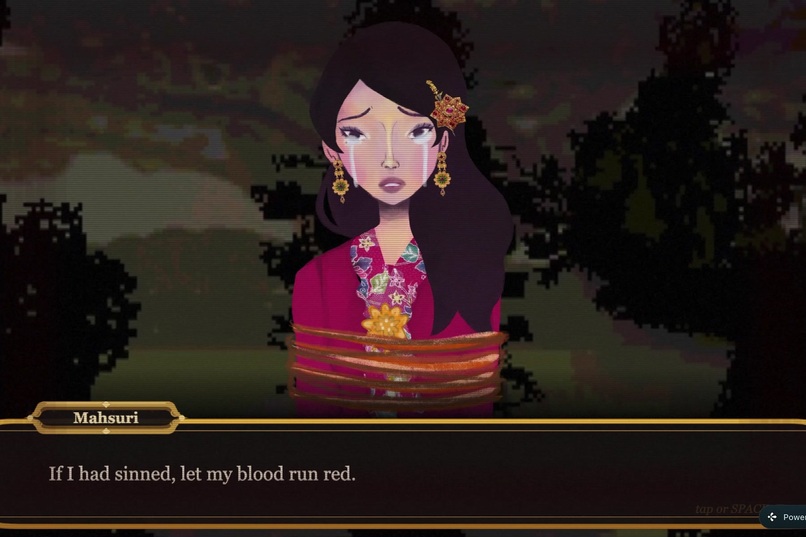
Mahsuri
-
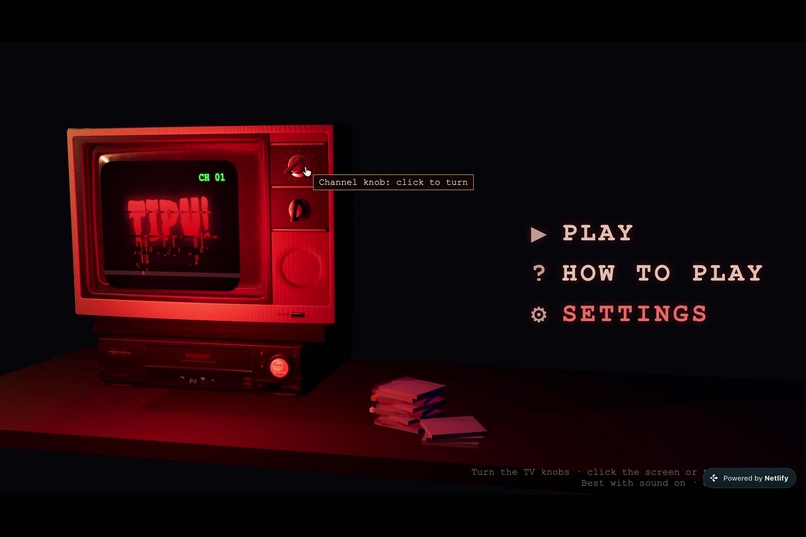
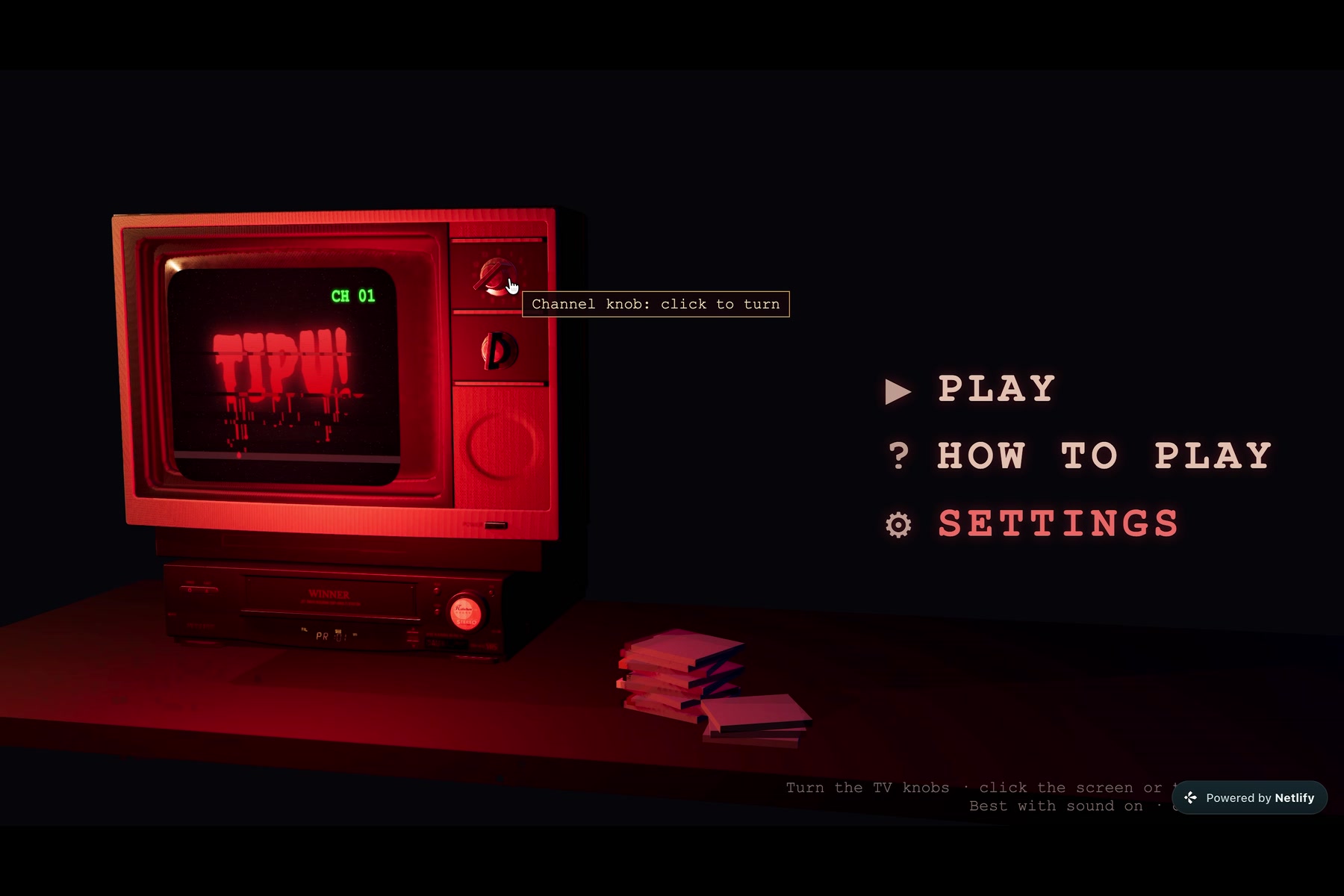
Title Screen
-
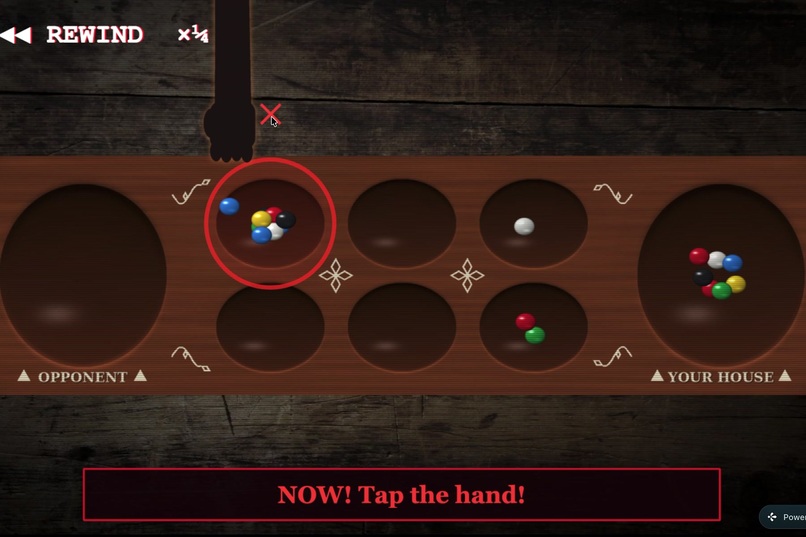
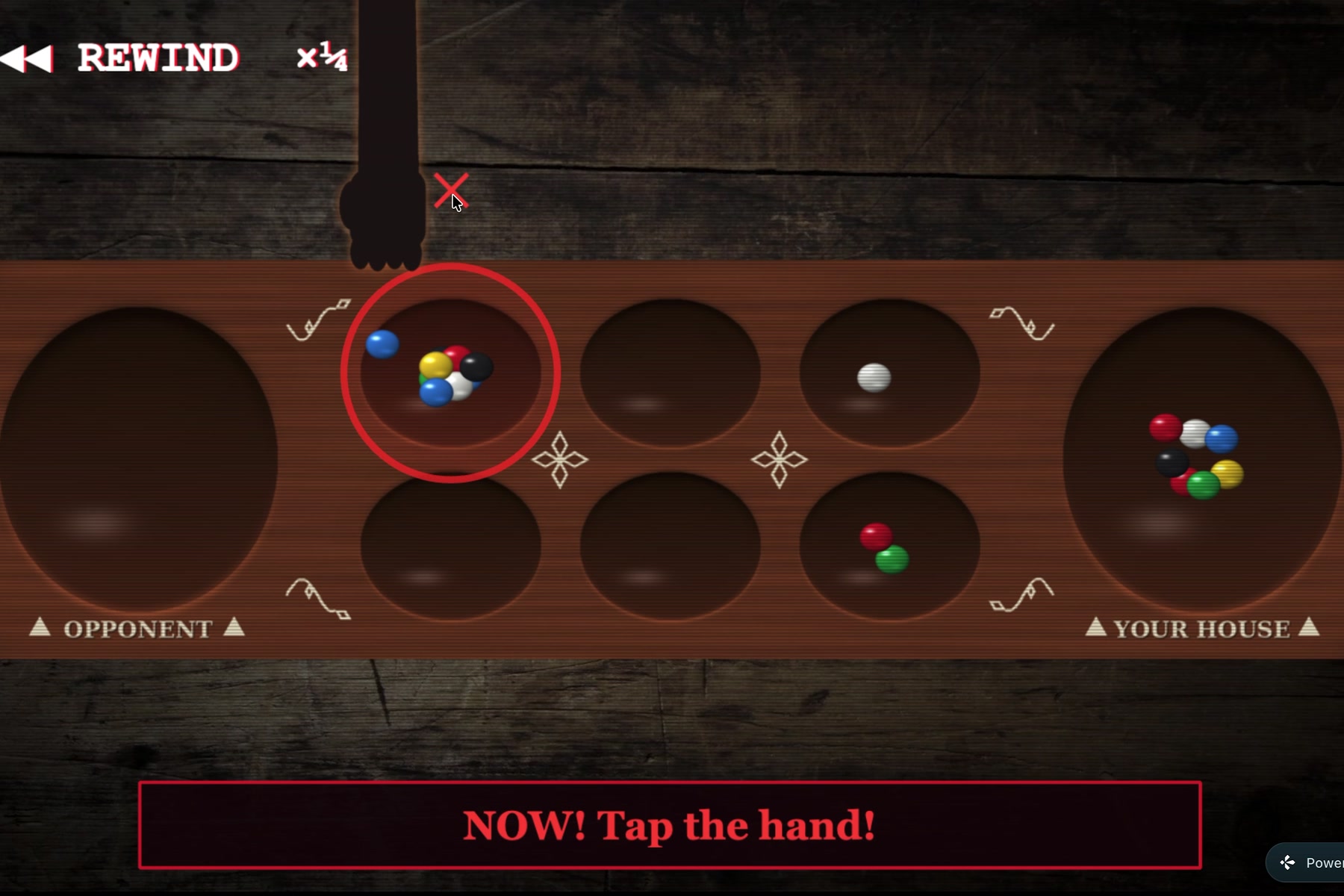
Rewind Catch Mechanism
-
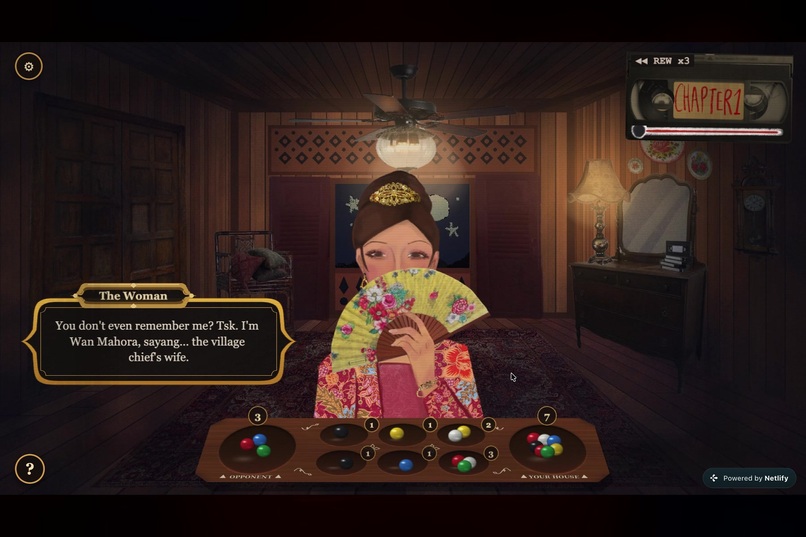
Congkak board
-
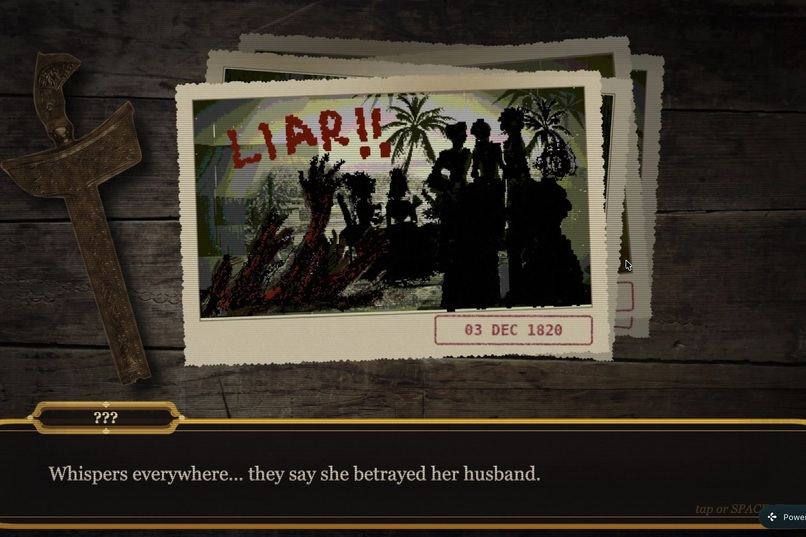
Story Flashback
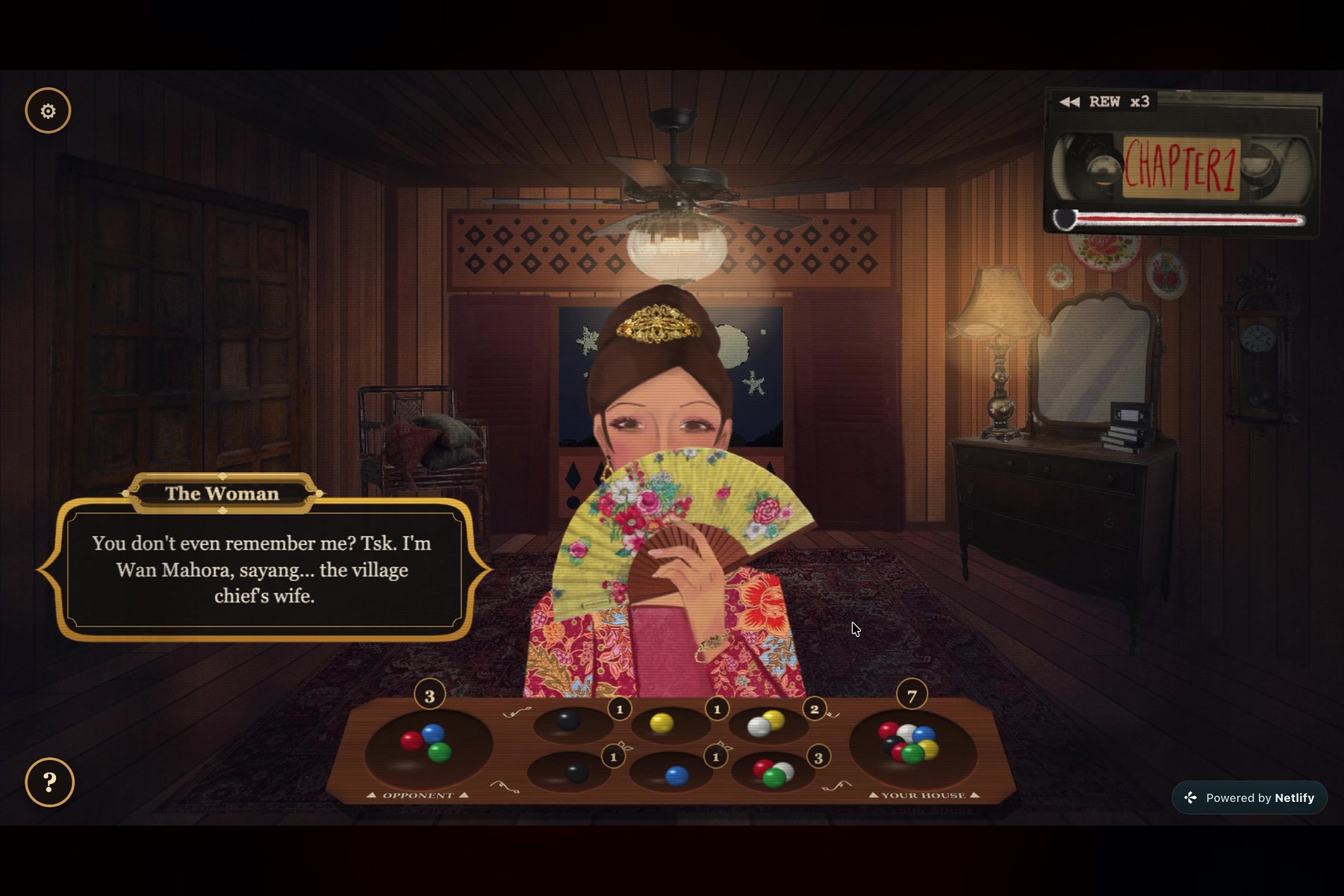
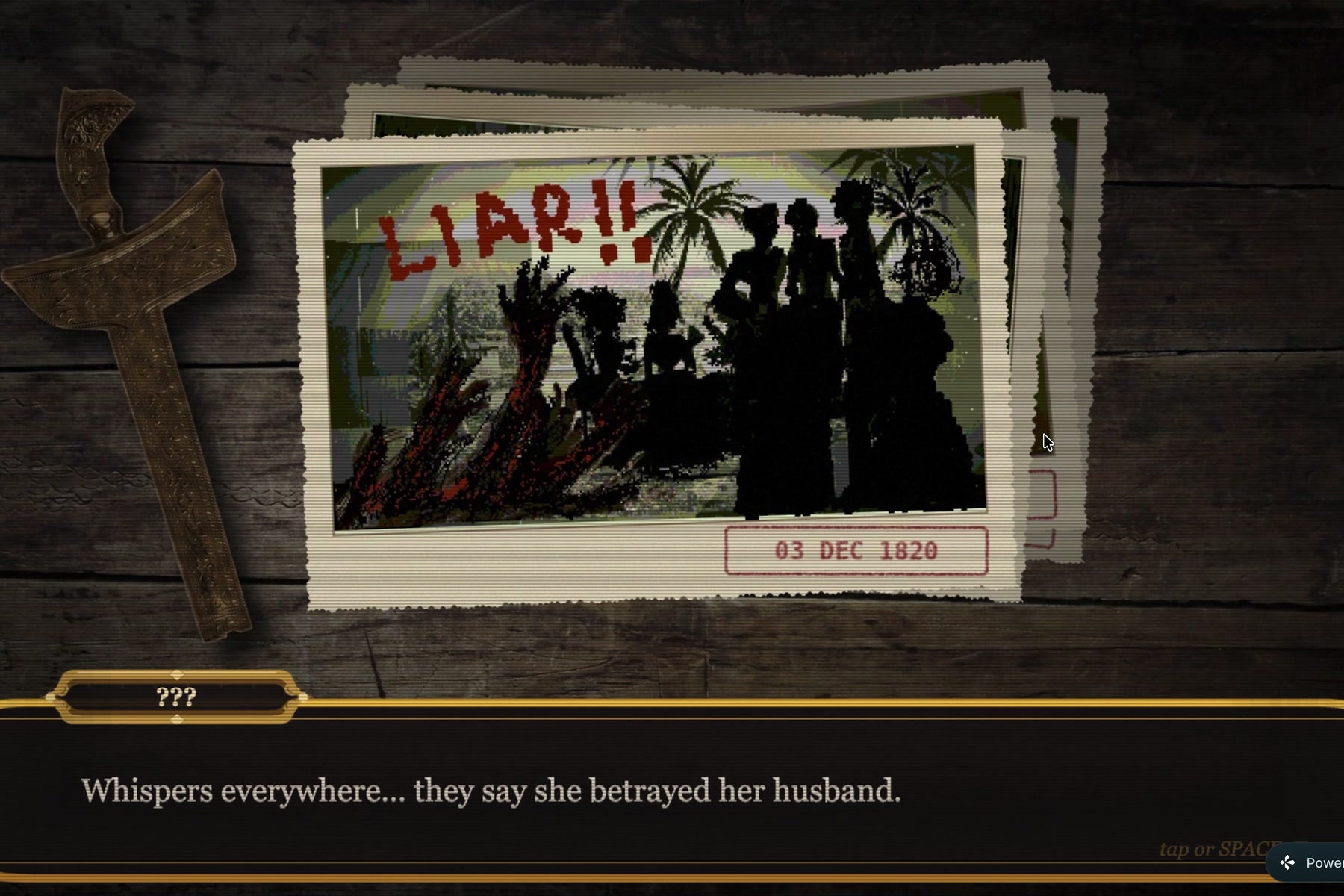
Inspiration
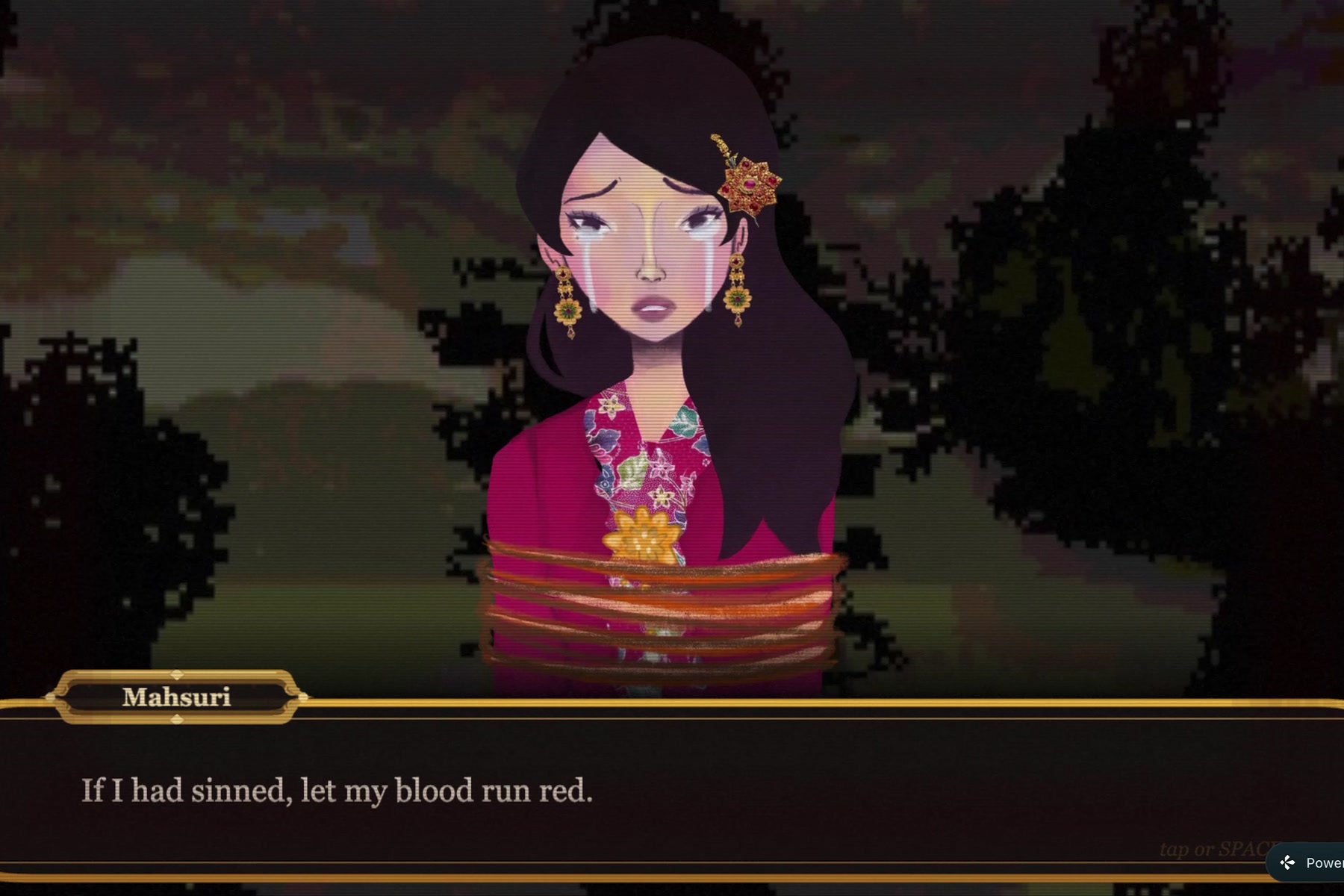
Every Malaysian kid knows the story of Mahsuri. In the early 1800s, a young woman in Langkawi was accused of adultery while her husband was away at war. The village chief refused to hear her side, and she was tied to a tree and executed. Legend says her blood ran white, proof that she was innocent, and with her last breath she cursed Langkawi to seven generations of misfortune. I grew up with the legend, but always from the outside: a tomb you visit, a story someone tells you. I wanted to make a game where you are her, before you know it. You wake with no memory in a dark house, and the only way to get your past back is to win a game of congkak.
The problem is, they cheat. That's where the VHS tape comes in. Old tapes let you rewind and watch something again, frame by frame. In this game, rewinding is how you catch a lie.
What it does
TIPU! ("cheat!" in Malay) is a short, 4-minute browser horror game.
- Play mini congkak. Each side has 3 pits and a house, and you always move first.
- Spot the cheat. Your opponents slip in extra seeds, skip your pits, steal from your house, or cut the lights. Hit ◀◀ REW to replay their move in slow motion, then tap the hand the moment it cheats.
- Mind the tape. Every rewind wears the tape down. Rewind too much and it snaps.
- Win back your memories. Each win unlocks old photographs of what happened, until you learn who you really are.
- Two opponents, two chapters: Wan Mahora, the village chief's sweet-talking wife, and the Village Chief himself, who speaks like a judge.
Why it fits Resurrection
VHS is dead technology. TIPU! brings back its most familiar feature, rewind, and makes it the core mechanic: the button that used to replay a film is now how you catch a liar. Alongside it, a traditional game (congkak) and a 200-year-old legend come back for a new generation who is likely to have played or them.
Who it's for, and why it matters
- Anyone curious about Malaysian culture. You learn congkak by playing it, and the Mahsuri legend through the story rather than a plaque.
- Easy to pick up. A How to Play screen, hints when you're stuck, an always-there ? button, and the whole game takes about 4 minutes.
- The hand-drawn characters are styled after traditional Kebaya attire, so the culture shows in the art as well as the story.
- Accessible. Free in any desktop browser, with no login or install. Every voiced line is also shown as text. Music, sound effects and voices have separate volume controls, and an auto-play mode advances the story for you.
How I built it
Stack: TypeScript (strict), Phaser 3, Three.js for the 3D title screen, Vite, Vitest + fast-check, deployed on Netlify. AI in the game:
- Opponent moves come from a rules-based game AI: it takes an extra turn if it can, otherwise a capture, otherwise a random legal move, and it secretly plans cheats for certain turns.
- Live taunts: when you catch a cheat, a Netlify Function asks Google Gemini for a new line in that character's voice, so it's different each playthrough.
- Voices: Wan Mahora, the Village Chief and Mahsuri are voiced with Gemini text-to-speech. The memory narrator is my own voice, with a light radio filter to match the VHS look. Art: every character is hand-drawn by me: Mahsuri, Wan Mahora and the Village Chief, along with their expressions and poses (Wan Mahora's fan goes down when she gets angry). I also made the animations myself, so each character reacts as the game plays out. The backgrounds and memory photos are my own artwork and collages too.
Built with Kiro
TIPU! was built spec-first in Kiro, and the .kiro folder in the repo is the source of truth for the whole game.
- 8 steering docs (
inclusion: always) set the rules of the world: the legend, the full script, each character's voice, the congkak rules, the VHS style, the tech stack and the folder structure. Kiro always knew Wan Mahora calls you sayang and the Chief talks like a judge, so I rarely had to repeat myself. - 7 specs, one per feature (congkak rules, board scene, opponent cheats, rewind, story flow, memories and reveal, VHS effects and sound). Each one went requirements → design → task list. 124 of 144 tasks are done.
- Property-based tests: the congkak-rules spec defined correctness properties, such as "sowing never drops a seed in the other player's house", "the total number of seeds never changes" and "a full game always ends". Kiro wrote fast-check tests for them, and all 7 passed. The full suite is 45 tests, all passing.
- 3 agent hooks check my work when I save: one runs the tests whenever game logic changes, one checks new dialogue fits the text box and stays in character, and one flags any new asset that isn't credited.
My free Kiro credits ran out partway through, so I finished the remaining tasks with another AI assistant, following the same Kiro specs and steering.
Challenges I ran into
- The game froze after you caught a cheat. Catching (or missing) a cheat in the rewind replay froze everything. From a screen recording of the bug, we traced it to timers from the replay that kept running after the replay screen had closed, then tried to update text that no longer existed, which crashed the scene. The fix was to track every replay timer and cancel them all when the replay ends.
- Gemini refusing to voice lines. Some voice lines came back blocked by Gemini's safety filter, with no audio at all. The cause was words in my style instructions, not the lines themselves: describing a "menacing" voice in a horror game about a young woman set it off. I had to learn which keywords triggered it, reword the style prompts, and add a safer fallback style so every line could still generate.
- Voices that sound Malaysian. Early takes were too whispery or too American. Switching some characters to a Malaysian-English language setting fixed the accent, and spelling the word as "chongkak" in the voice script finally got it pronounced right. On top of that, I kept hitting Gemini's per-minute and daily limits, so I regenerated lines in small batches.
- Recording my own narration. The narrator is my voice, recorded at home, so I cleaned up the room echo, evened out the volume against the AI voices, and added a light radio filter so it sounds like it's coming off an old tape.
- Getting congkak right. Sowing skips the opponent's house, captures only happen on your own side, and every game has to end. Property-based tests check these rules against hundreds of random boards, far more than I could cover by playing.
- Licensing every asset. The credits hook flagged every untraced image, and I replaced the ones I couldn't verify with properly licensed alternatives.
Accomplishments that I'm proud of
- Turning a legend I grew up with into something you play, not just read.
- Drawing and animating every character myself, so the game has its own look instead of stock art.
- A rewind mechanic that is both the VHS theme and the core gameplay.
- A rules engine with property-based tests behind it.
What I learned
Writing specs before code forced me to decide how congkak and the cheats work before anything was built, so the logic held up while the visuals kept changing. Steering docs worked like a shared memory for the whole project.
How Kiro helped, specifically:
- It built the rules engine from my spec. I wrote the congkak rules as precise WHEN… SHALL… requirements (for example, "WHEN seeds are sown by the player, THE CongkakLogic module SHALL skip index 7 (opponent's house)"). Kiro turned that into a design and a task list, then implemented the pure TypeScript rules engine and the first half of the board scene directly from it.
- It proved the rules work. The spec defined correctness properties, such as "sowing never drops a seed in the other player's house", "the total number of seeds never changes" and "a full game always ends". Kiro wrote fast-check property tests for them and tracked the results: all 7 passed, and the suite is now 45 tests, all passing.
- It kept every character in voice. Because the steering docs were always loaded, new dialogue came out right the first time. Wan Mahora calls you sayang and hides behind her fan, and the Chief talks like a judge, so I rarely had to repeat myself across dozens of scenes.
- Its hooks caught mistakes while they were small. Saving game logic re-ran the tests and named the broken rule if anything failed. Editing the script checked that every line fits the 140-character text box and that no opponent is named before they introduce themselves. And the credits hook left a TODO for every uncredited image, which is how I found and replaced the ones I couldn't trace before submitting.
- It made the spec the source of truth. When my free Kiro credits and the hackathon's bonus credits ran out, I finished the remaining tasks with another AI assistant, following the same Kiro specs and steering, so the game stayed consistent.
Two small fixes elsewhere:
What's next for TIPU!
- More expressive characters. More animated reactions and expressions, so each opponent visibly panics, sneers or breaks down as the game turns against them, like the dramatic character moments in story-driven horror games.
- More nostalgic mini-games. Congkak is just the start. I want to bring back more of the little games I grew up with, like the old plastic water games where you pump a button to float rings onto pegs, each with its own way for opponents to cheat.
- More chapters and legends. New stories from Malaysian folklore, each with a boss opponent who has their own health bar, cheats and personality.
- Mobile and a Bahasa Melayu option, so more people can play it in the language the legends come from.
Built With
- adobe
- claude
- css
- figma
- gemini
- html5
- javascript
- kiro
- netlify
- node.js
- phaser.js
- procreate
- three.js
- typescript
- vite
