-
-
TinyStudy AI Planner
Inspiration
As university students, we frequently suffer due to fatigue, stress, or exhaustion rather than a lack of desire to study. The majority of study planners make the assumption that students are highly motivated and disciplined, which can be disappointing on bad days. I wanted to create a tool that encourages kids to make gradual progress and says, "It's good to proceed slowly." TinyStudy AI, a comfortable AI-powered study planner that adjusts to the student's energy and mood, was born out of that concept.
What it does
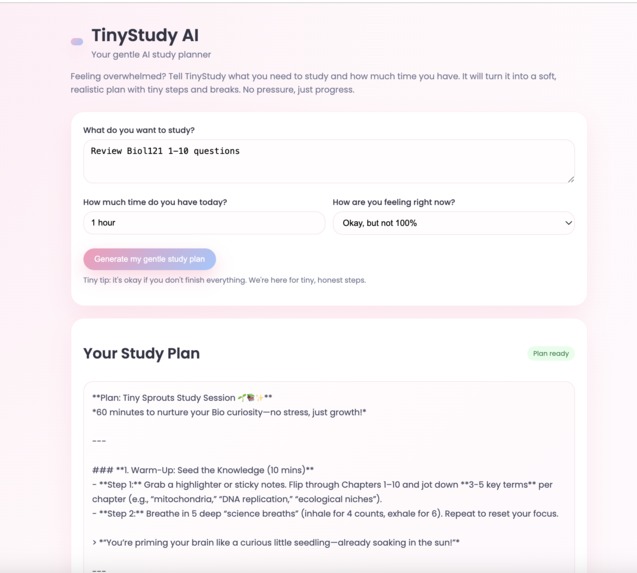
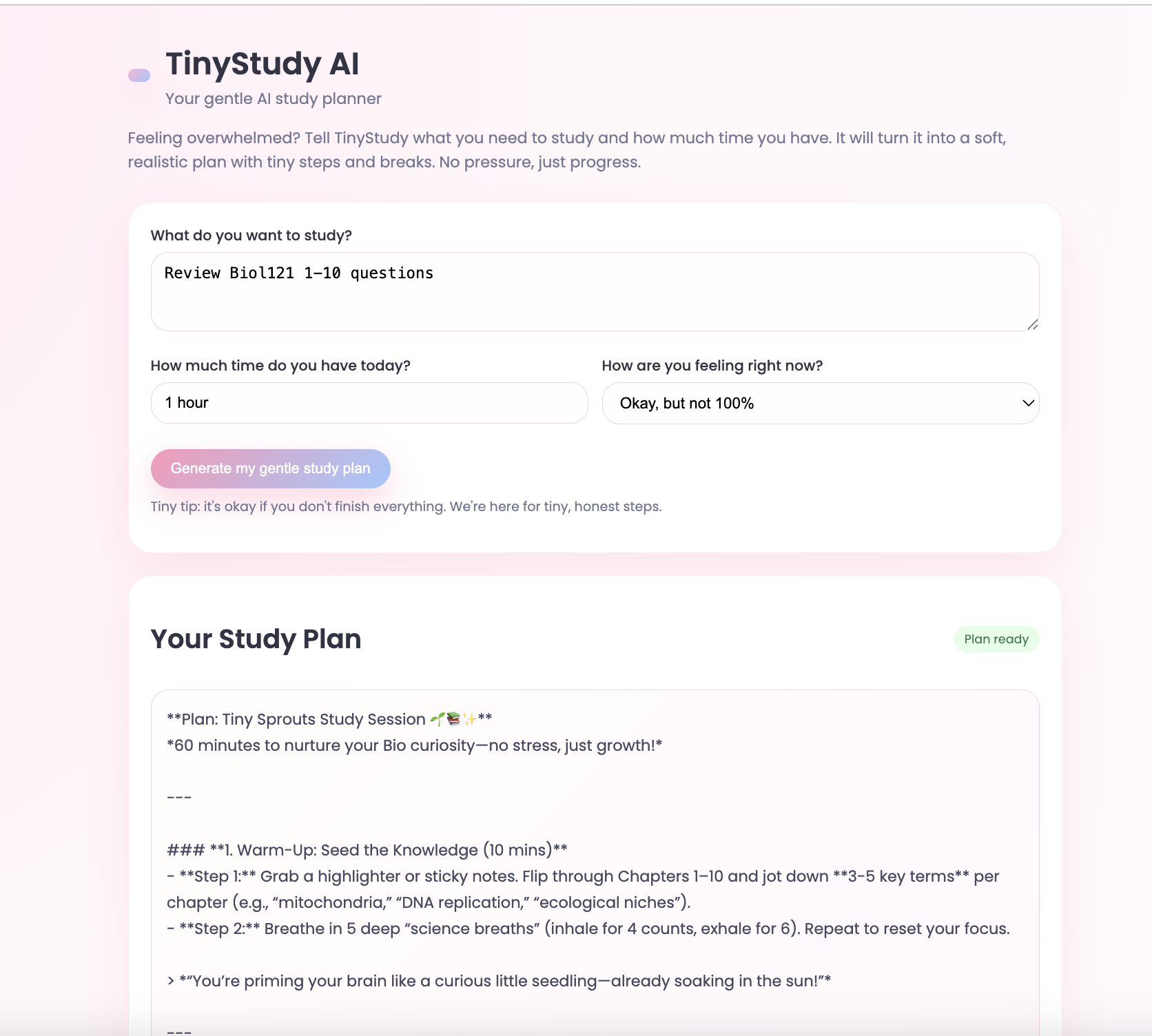
An AI-powered study planner called TinyStudy AI was created to help students both intellectually and emotionally. The application reacts to what the student wants to study, how much time they have, and how they are feeling at the moment, rather than forcing production through guilt or pressure. The AI creates a customized study schedule with small, manageable steps, realistic pacing, and gentle reinforcement based on these three inputs. The project aims to make learning feel more relaxed and doable, particularly on days when motivation is low.
How we built it
We created TinyStudy AI with HTML and CSS to have a soft, calming, and unthreatening user experience. All of the necessary logic and functions, including handling inputs, generating timely content, sending and receiving API requests, and dynamically updating the page with the outcomes, were carried out using JavaScript. We were able to integrate a large language model without the requirement for bought OpenAI credits, thanks to the OpenRouter API, which enables the language model response. To avoid CORS issues, development and testing were done locally using an HTTP server prior to uploading to GitHub.
Challenges we ran into
We encountered a number of significant obstacles throughout development. We spent a lot of time debugging 400- and 401-level problems, and CORS blocking, missing headers, and improper request formatting caused API requests to constantly fail. Additionally, we had to address unusual output formats, rate constraints, and model choices. In addition to the technical challenges, it was challenging to construct a welcoming and emotionally supportive user experience while working under hackathon time constraints. But during the contest, every challenge aided in our quick development.
Accomplishments that we're proud of
We are pleased that in just one weekend, we were able to create a completely functional AI study planner. It was incredibly satisfying to watch the AI produce soft, reassuring study plans after hours of debugging. We take particular pride in developing a project that could actually assist students who battle pressure and burnout, as well as in building a user experience that is emotionally comfortable rather than demanding. Most significantly, we learned new tools quickly and finished a purposeful, well-considered project.
What we learned
This hackathon taught us how to use OpenRouter to integrate large-language-model APIs quickly, how to use Developer Tools to troubleshoot complex API request failures, and how frontend development is impacted by HTTP headers and CORS regulations. Additionally, we learned how to create user interfaces that cater to emotional requirements as opposed to only utilitarian ones. In addition to teaching us technical skills, the project taught us the importance of progress over perfection in both hacking and studying.
What's next for TinyStudy AI
Further features like a mobile version, calendar integration, mood-based journaling, progress monitoring, reminders, and streaks that encourage incentive without guilt are all things we would love to add to TinyStudy AI in the future. In order to help more students feel encouraged and cared for during their academic path, we eventually intend to make TinyStudy AI a freely available web application.

Log in or sign up for Devpost to join the conversation.