🏰 Tiny Castle — Your chat. Your army.
The streamer keeps playing. Chat has a kingdom to defend.
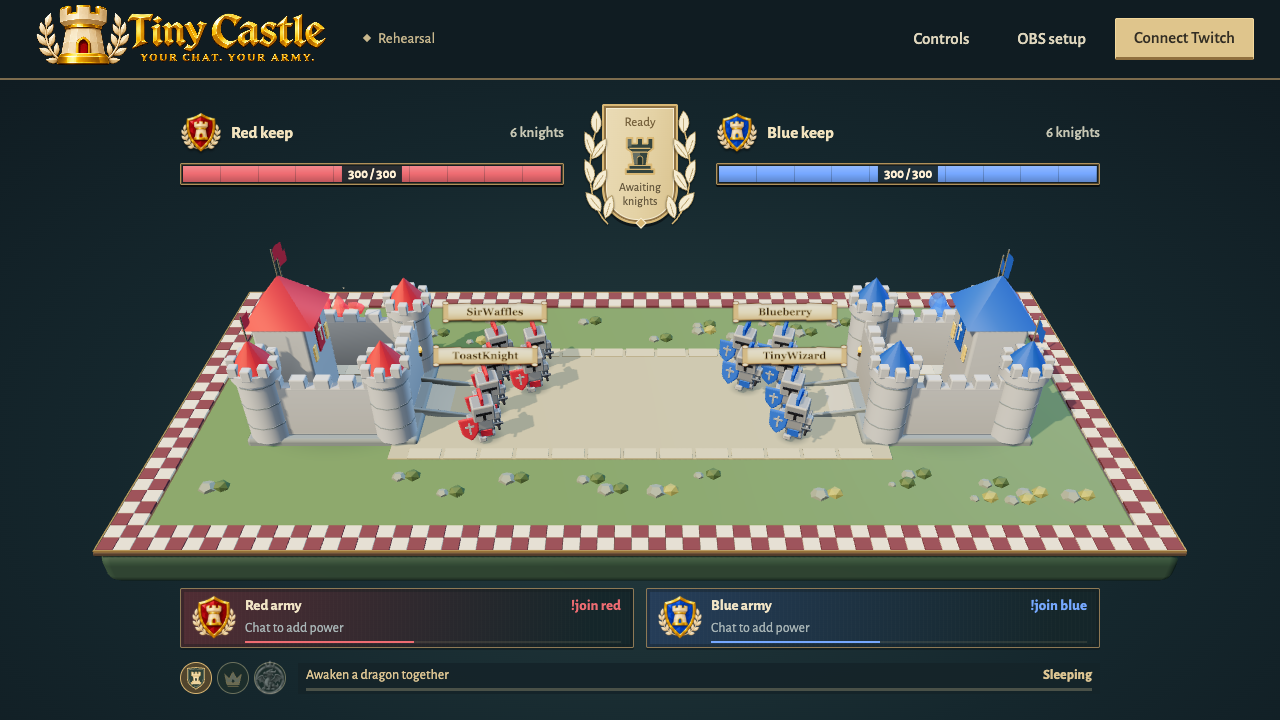
Tiny Castle turns Twitch chat into a miniature 3D battlefield beneath the streamer's webcam. Viewers join armies, influence battles and summon a dragon together.
▶ Watch the demo · ⚔️ Try the interactive rehearsal
📜 Inspiration
A Twitch message can disappear in seconds. I wanted a viewer's participation to leave something visible: a knight with their name, a castle worth defending and a shared moment they helped create.
Tiny Castle gives chat its own rivalries, rallies and victories alongside the streamer's usual content.
⚔️ What it does
Join → Rally → Battle → Celebrate.
- Join. Type
!join redor!join blue. A parchment welcomes you into the kingdom. - Rally. Eligible messages strengthen your army and build wooden defenses. Vote
!chargefor stronger attacks or!fortifyfor protection. - Battle. Drafted viewers appear as named knights that march, fight and break through defenses automatically.
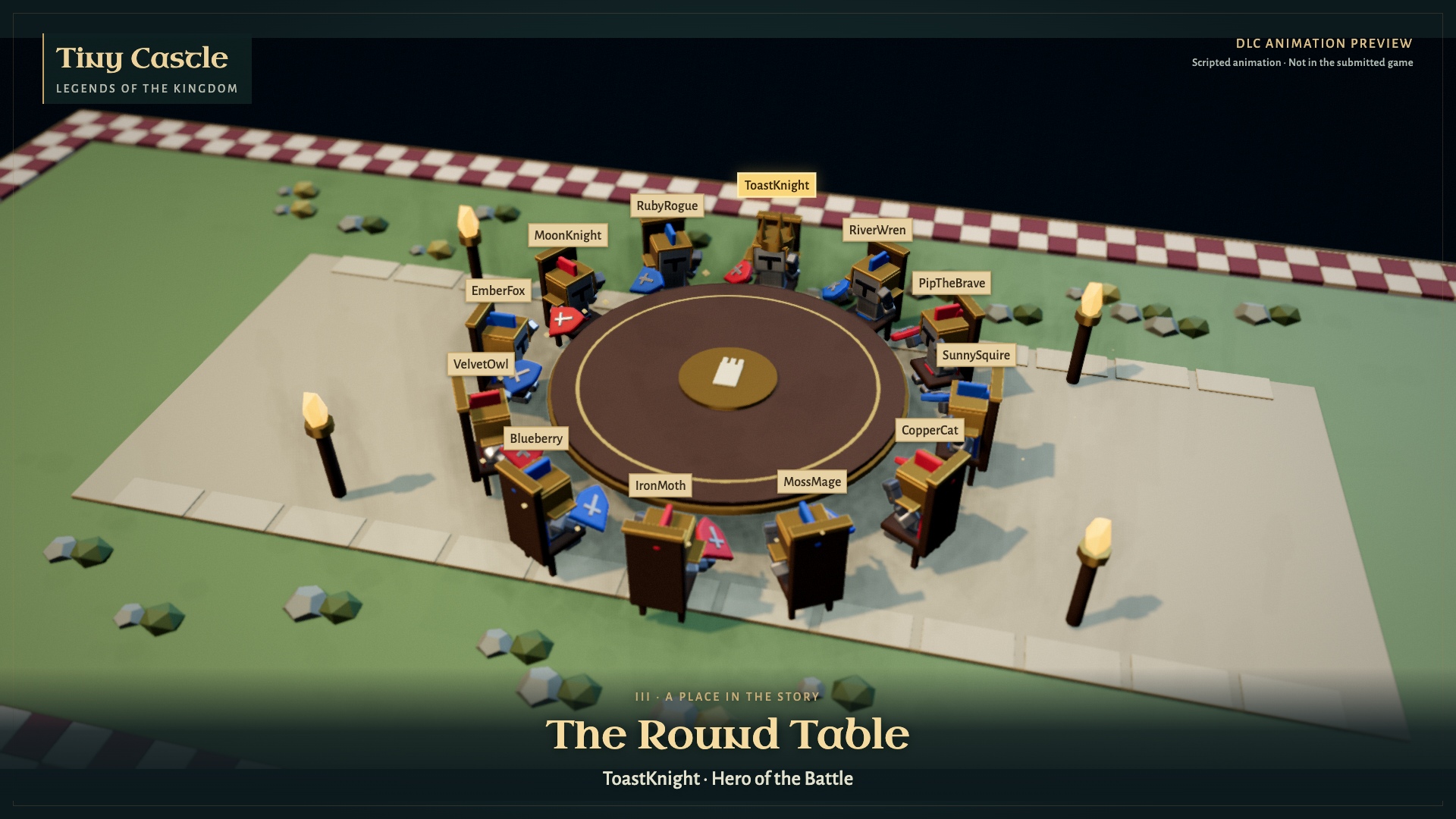
- Celebrate. Victory unfurls a parchment with herald trumpets. The winning army's top objective attacker becomes Hero of the Battle.
Castle Clash pits red against blue. Boss Raid unites chat in a gold army against the Iron Colossus, with telegraphed attacks and an enraged phase.
Streamers connect Twitch, add an OBS Browser Source and control matches from a compact panel. Viewers participate through chat with no download or payment.
🐉 A spectacle the community earns
The next shared reward stays visible, giving chat something to anticipate:
- Shield Rally: knights strike their shields and the castle's power effects surge.
- Royal Ascension: knights kneel as gold armor assembles and capes unfurl.
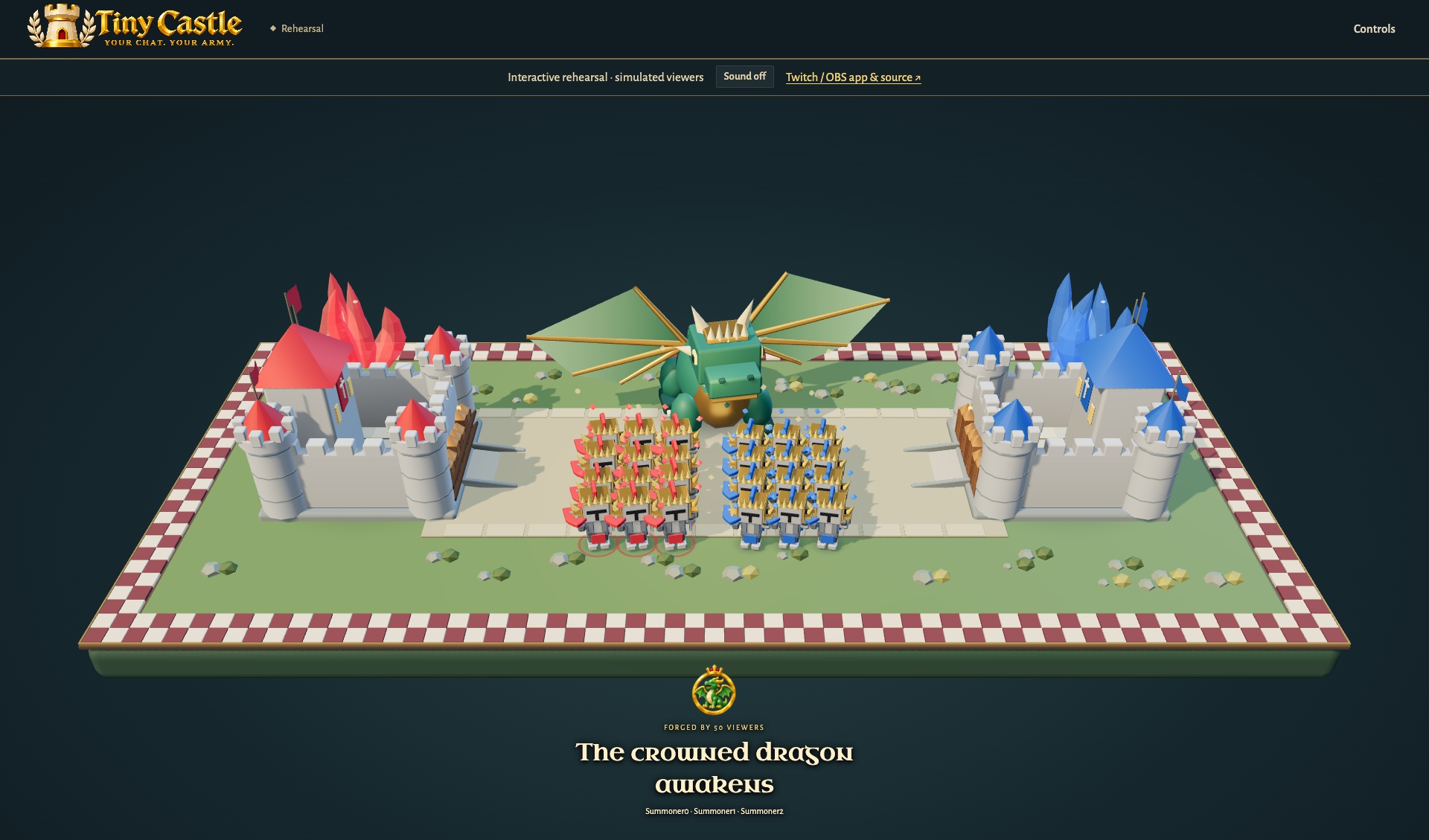
- Legendary Awakening: a dragon lands behind the castle, receives the army's salute and remains as its guardian. A parchment honors contributors.
Exceptional participation can earn a crowned guardian. A separate armor track adds increasingly ornate equipment.
Firestorm rewards sustained team engagement with one warned fireball barrage per army per match. It damages enemy knights and defenses; wooden walls and defensive votes soften the blow.
Goals scale to the starting community, then stay fixed. Cooldowns and distinct-contributor requirements shape progression. Armor and ceremonies are cosmetic; battle power comes from eligible chat, tactical choices and Firestorm.
⚒️ How I built it with Codex
I used OpenAI Codex to build and refine the game, Twitch integration, 3D models, animation, interface, sound and tests.
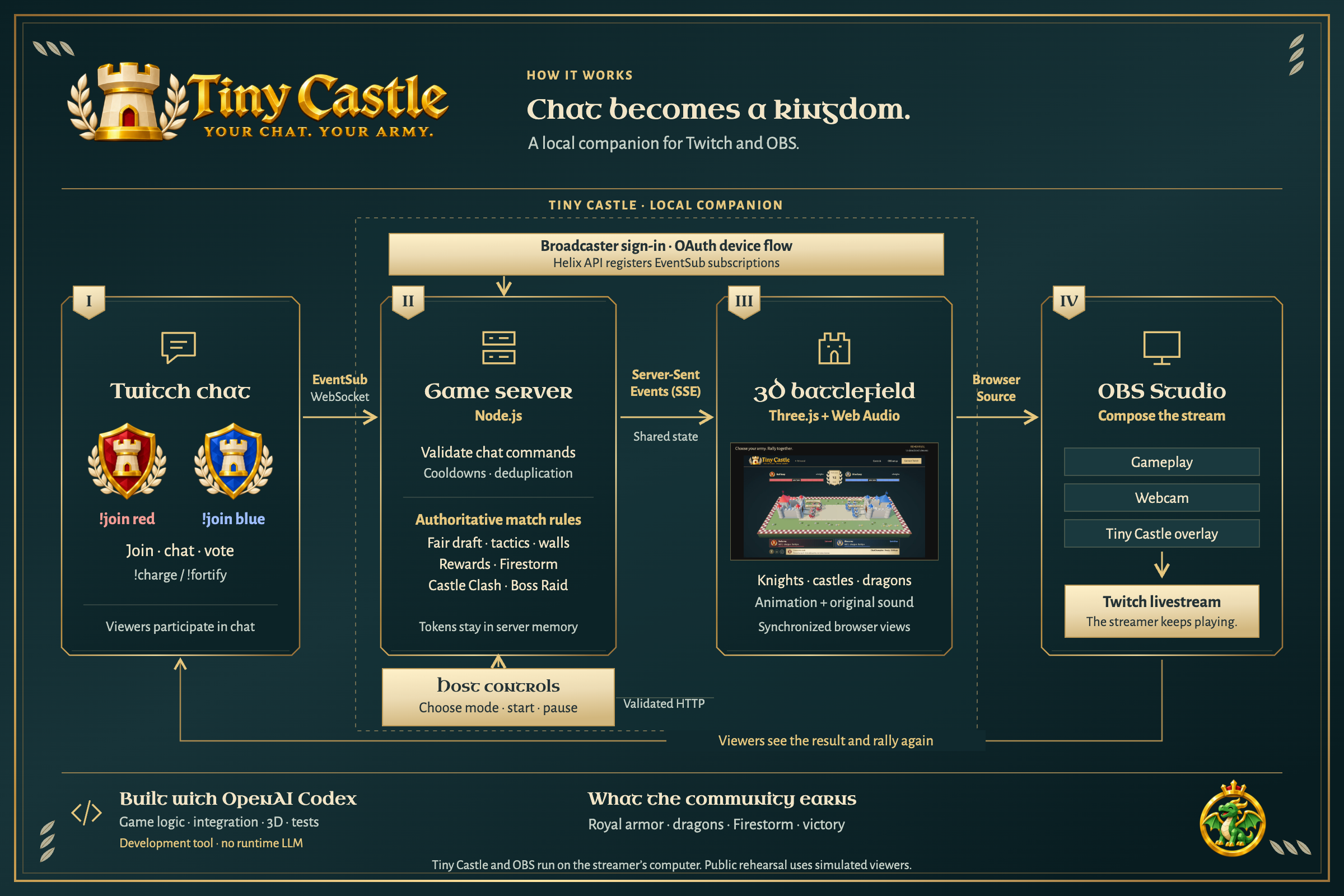
The live interaction follows a clear path:
Twitch chat → EventSub → Node.js battle rules → Three.js battlefield → OBS.
Twitch OAuth authorizes chat access; EventSub WebSockets deliver chat and moderation events. Node.js maintains shared game state, Three.js renders procedural models, and Web Audio supplies original sounds. Image generation helped develop the heraldic artwork.
A full-match test exposed a five-viewer battle ending before the dragon's original timer. Codex helped adjust the buildup and add a regression test verifying the earned dragon arrives before that match ends. The current suite has 94 passing automated tests.
The game runs without runtime LLM calls.
🛡️ Challenges and design decisions
- Recognition without crowding. Each wave drafts up to 12 visible knights per army, prioritizing fewer appearances and randomizing ties. Waiting viewers still contribute and vote; extra messages do not improve draft odds.
- Fair celebrations. Ceremonies briefly pause combat and its clock equally for both armies.
- A readable stream. Parchment names, framed health bars and compact OBS framing keep the scene legible. Space around the battlefield is transparent.
- Twitch reliability. Tests cover duplicate events, cooldowns and reconnects. Rehearsal inputs stay separate from live chat; authorization tokens remain in server memory.
👑 What I'm proud of
Tiny Castle connects personal recognition with a shared goal: viewers can see their names, influence their army and help earn a celebration everyone watches together.
The public browser rehearsal uses the same game rules with simulated viewers, letting judges try the complete loop immediately.
🕯️ What I learned
The buildup to a reward and recognition afterward matter as much as the animation itself.
I also learned to separate convincing rehearsal footage from verified Twitch behavior. That distinction shaped the tests and demo labels.
🗺️ What's next
** If I had one more day to build I would animate more power ups, engagement markers, battlefields, bosses, etc.
Next: playtest with 2–5 independent viewers, then refine joining instructions, small-community pacing and OBS setup from their feedback.
Current validation: the video includes actual Twitch/OBS interaction from one real account. Complete group battles and the crowned-dragon sequence use clearly labeled simulated participants. Independent multi-viewer live play and production-scale audience capacity remain unverified.
Built With
- css3
- html5
- imagegen
- javascript
- node.js
- oauth-2.0
- obs-studio
- openai-codex
- playwright
- server-sent-events
- three.js
- twitch
- twitch-eventsub
- web-audio-api
- webgl
- websockets

Log in or sign up for Devpost to join the conversation.