-
-
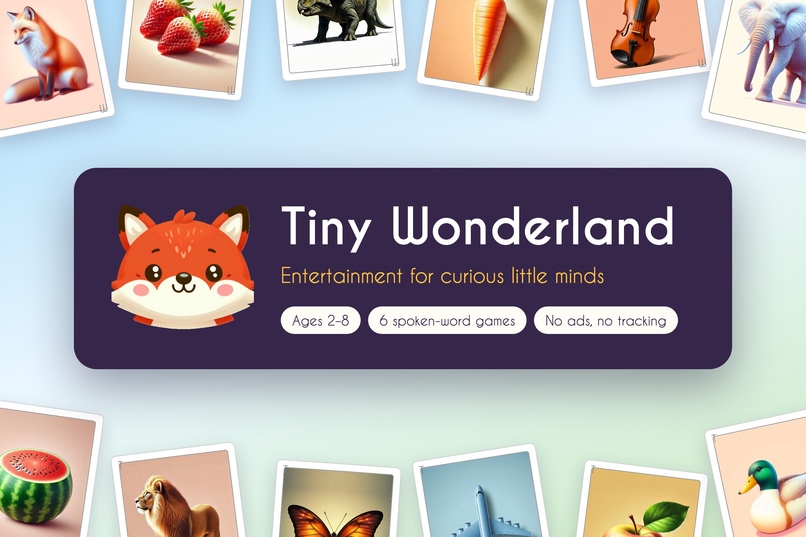
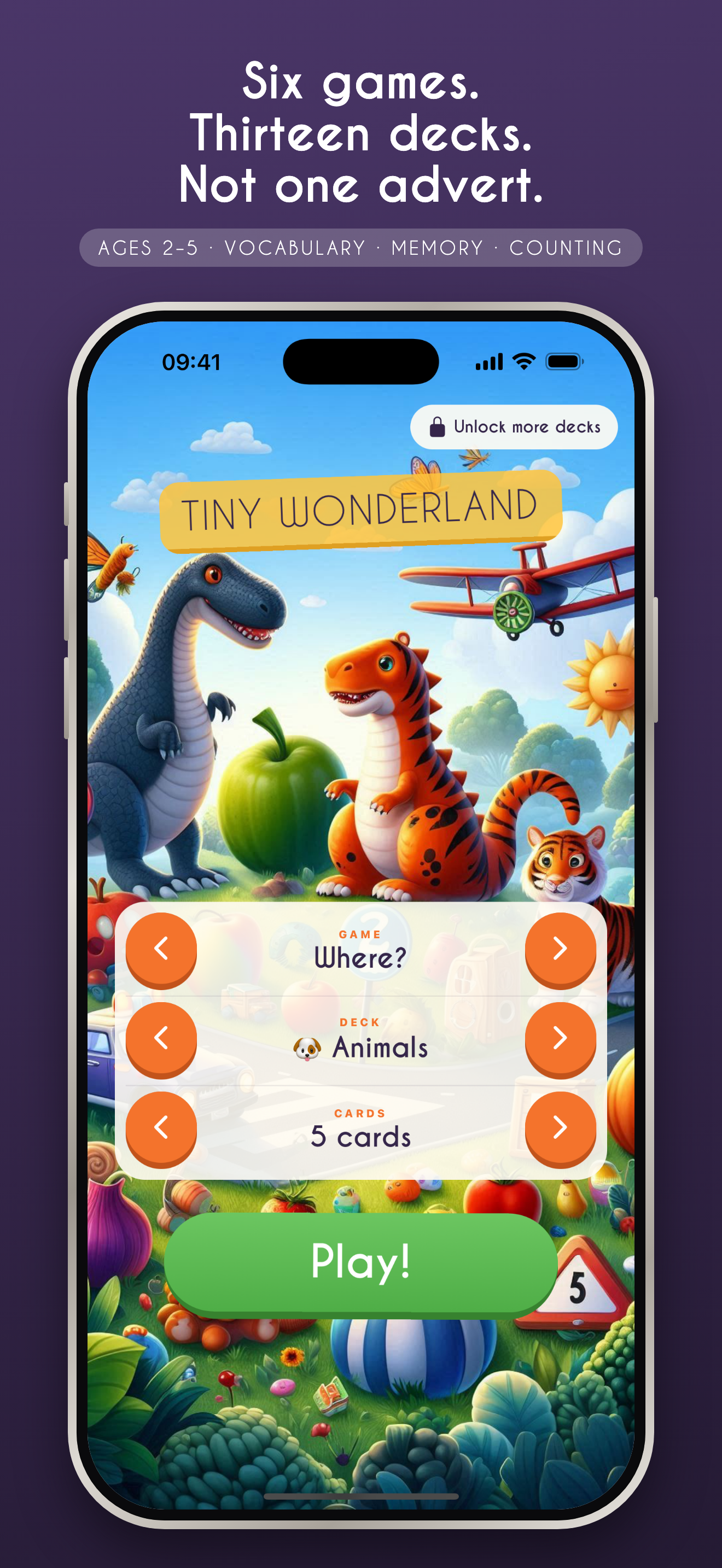
Tiny Wonderland: six spoken-word games for 2-8 year olds, built from one deck of picture cards. No ads, no tracking, fully offline.
-
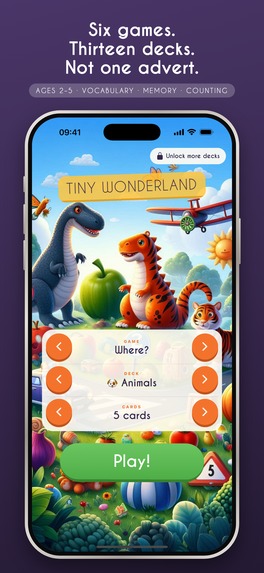
Six games, thirteen decks, 157 cards. Three decks are free forever, with every game unlocked.
-
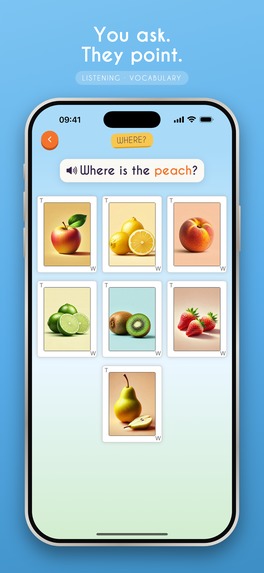
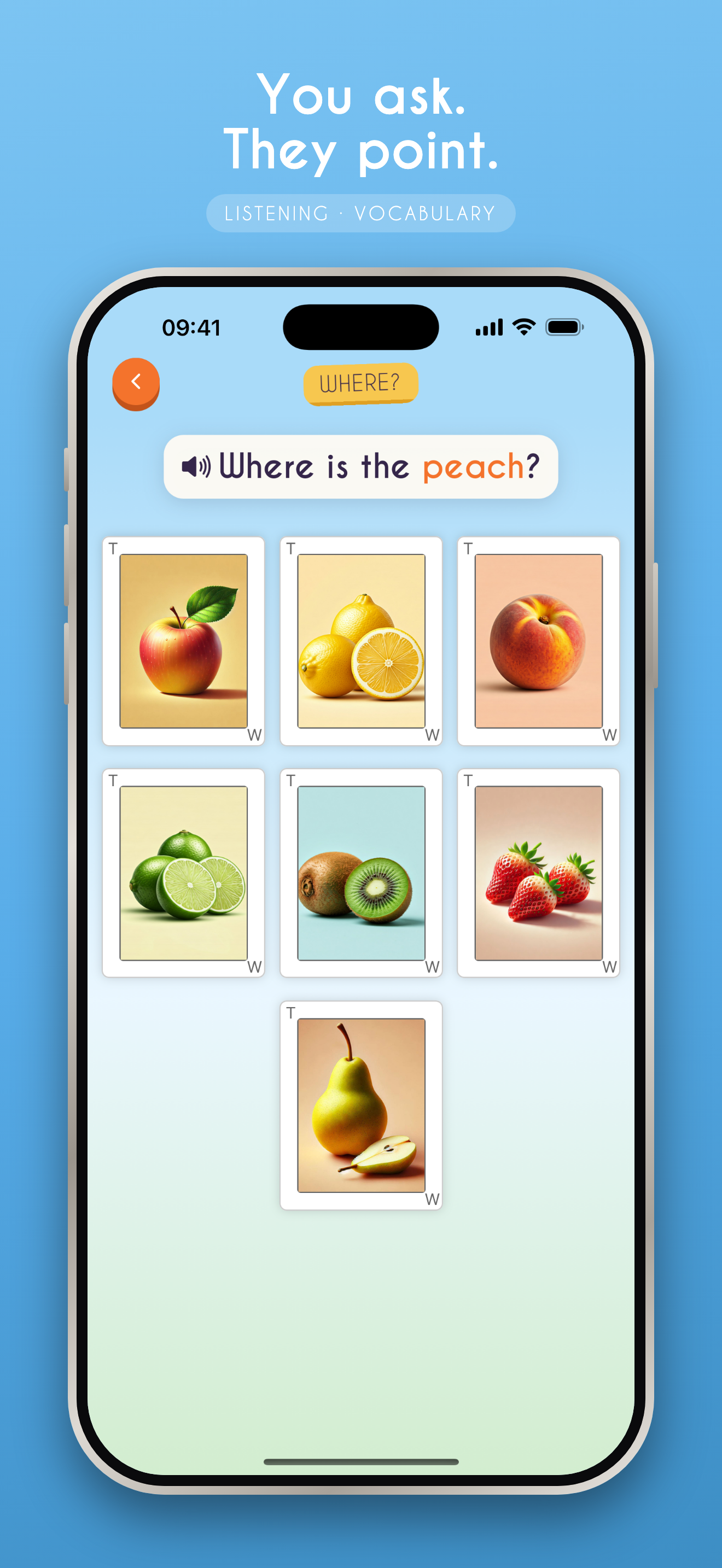
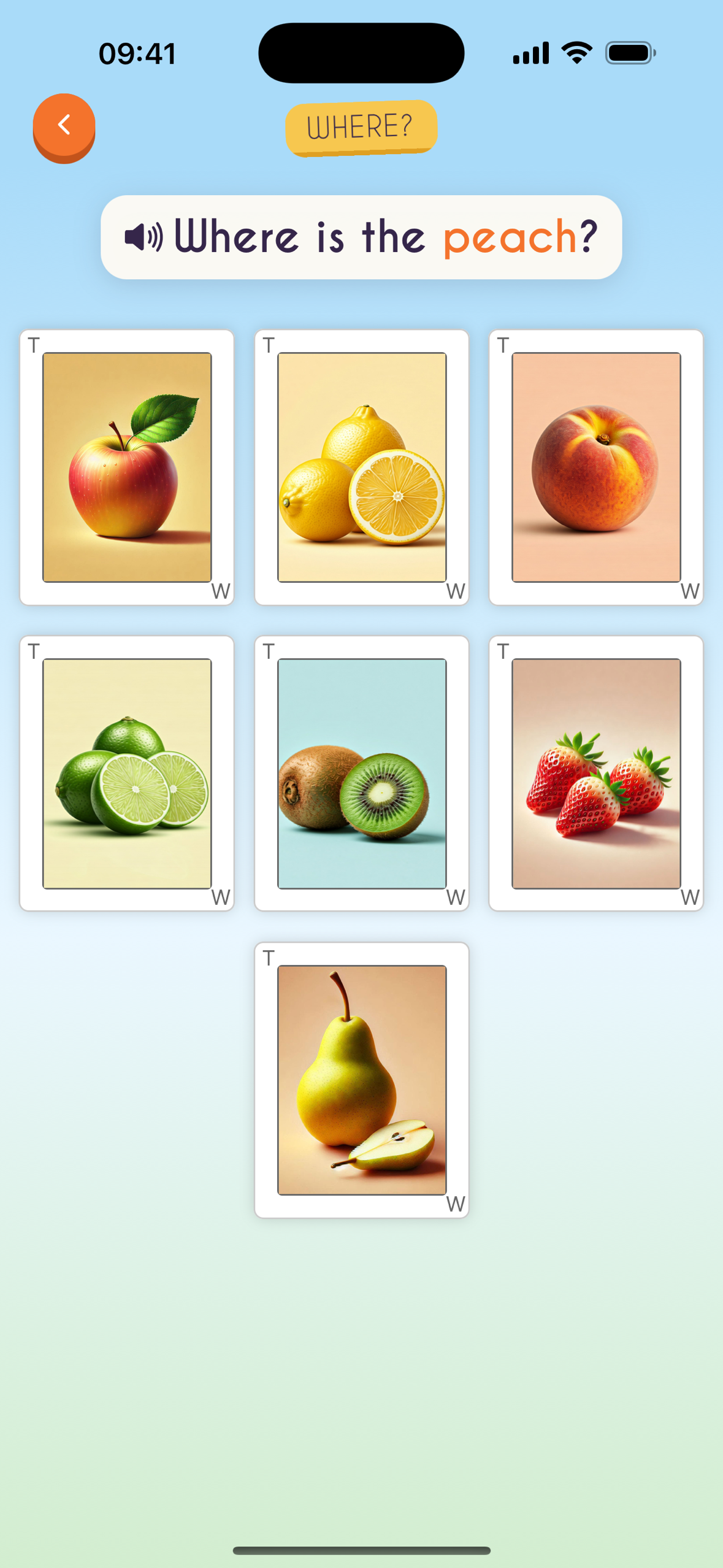
"Where?" is the original game: a warm voice asks "where is the dog?" and a small finger finds it. Listening and vocabulary.
-
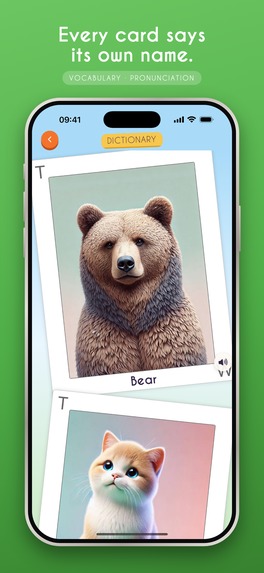
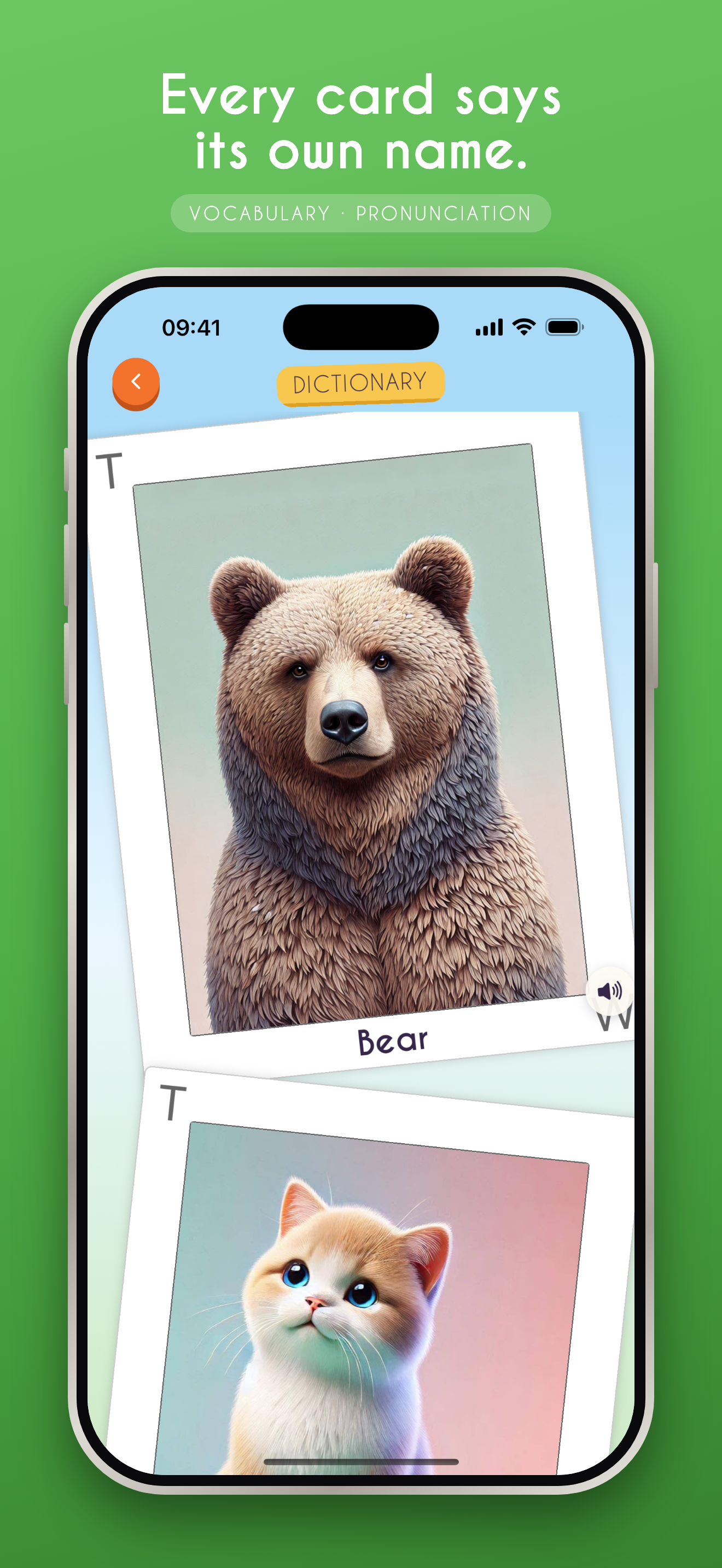
Every card says its own name aloud, so a child can explore new words alone when a parent isn't free to read along.
-
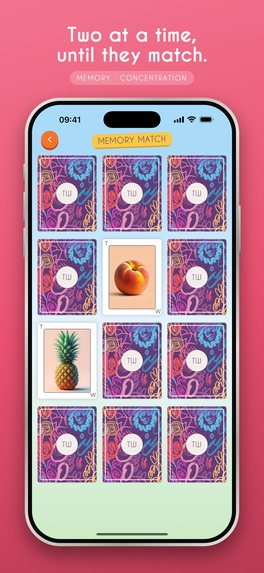
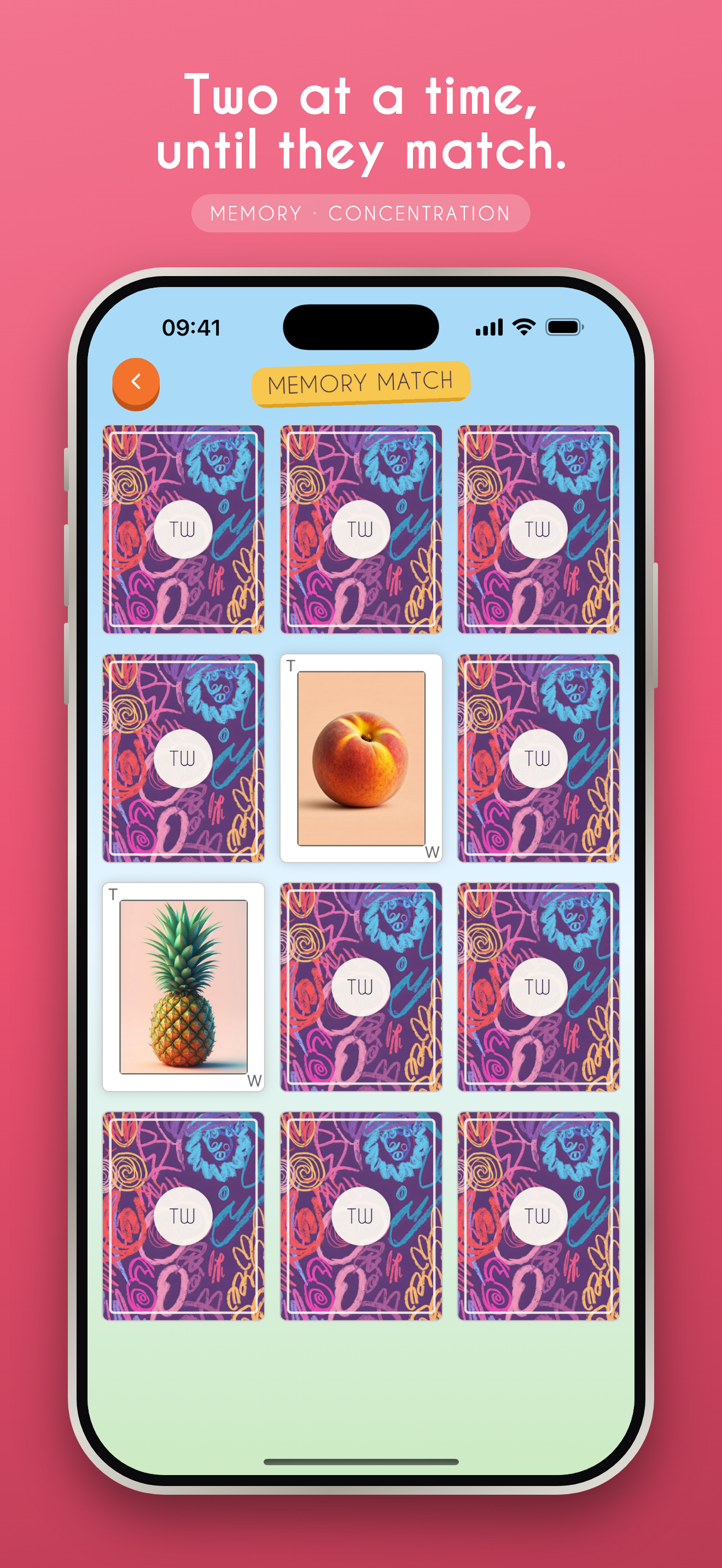
"Memory Match" A classic game where you flip two cards at a time and find the match. You choose how many pairs, so it grows with the child.
-
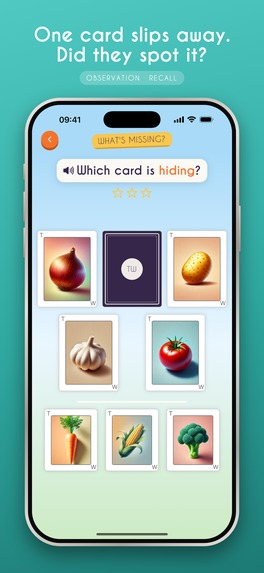
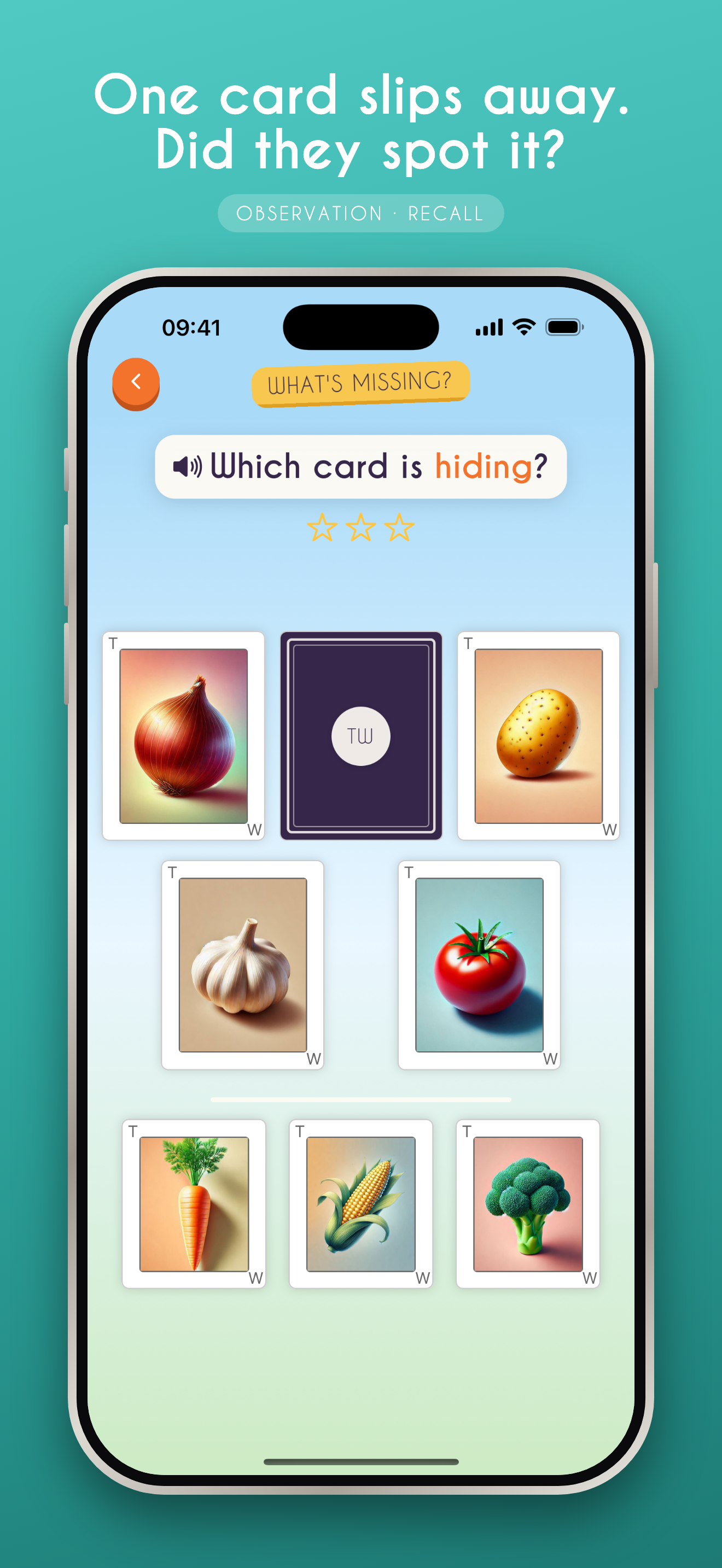
"What's Missing?" Study the cards, watch them flip, then spot the one that slipped away. Observation and recall.
-
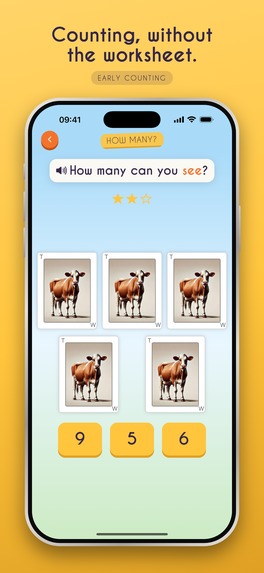
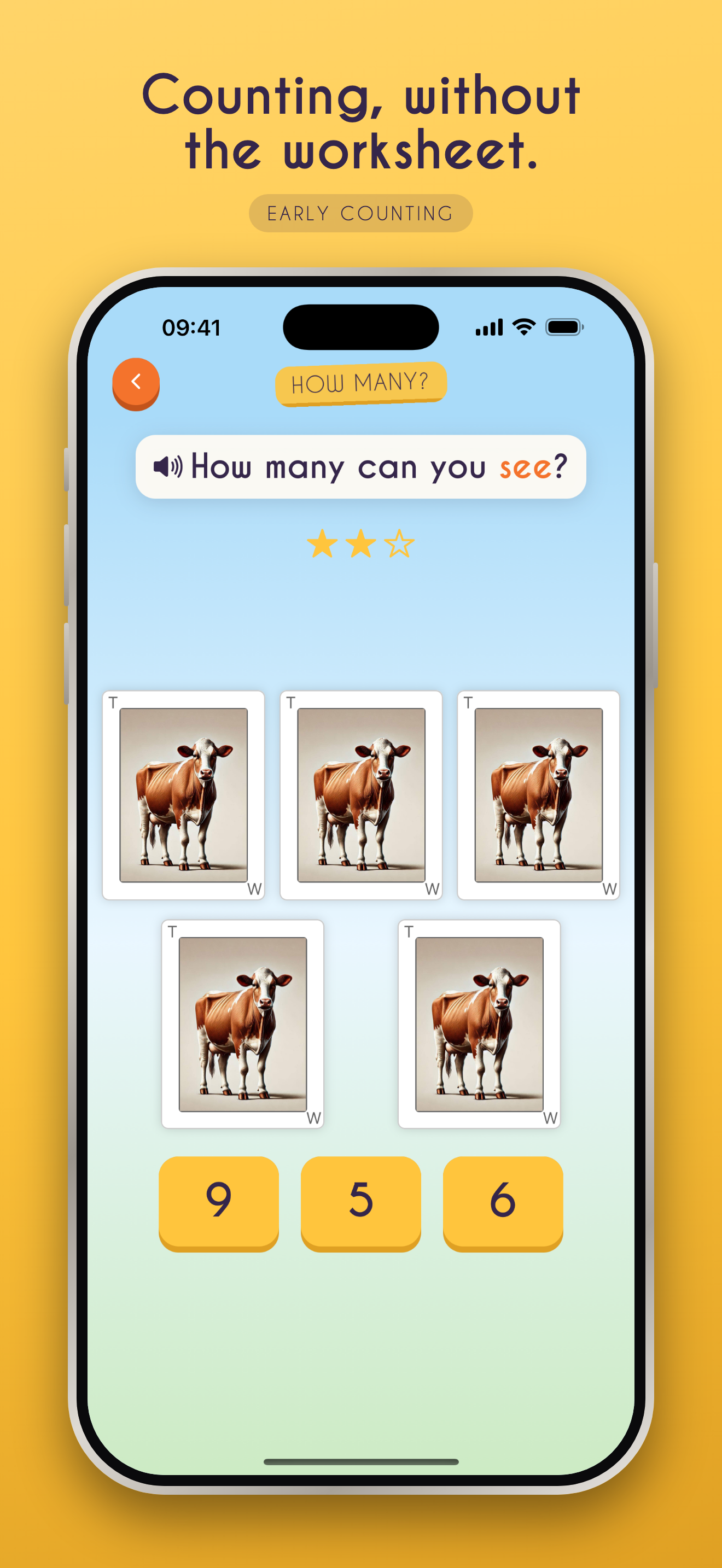
"How Many?" Count what's on screen and pick the number. Early counting and subitising, without a worksheet in sight.
-
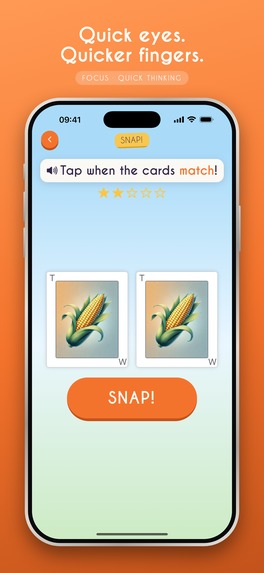
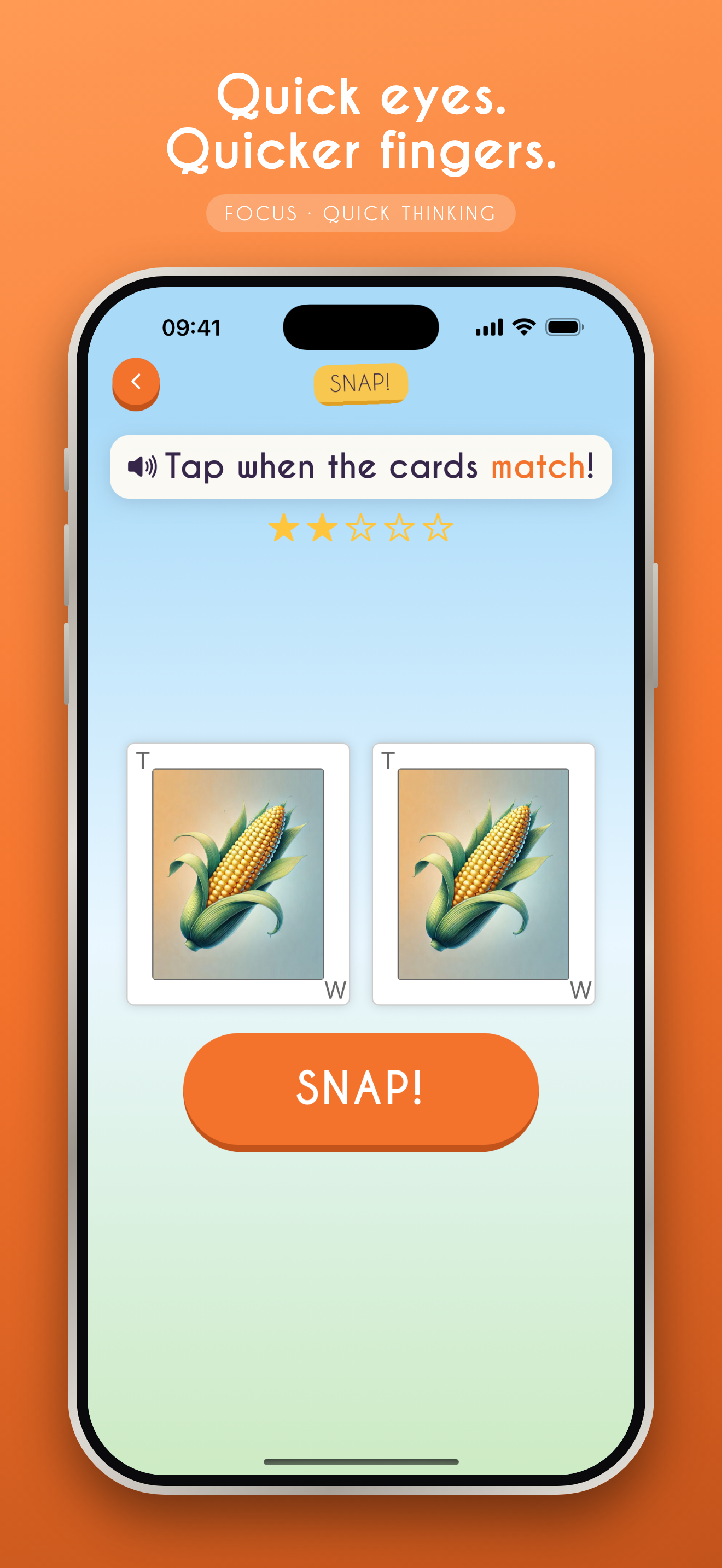
"Snap!" Tap as soon as two cards match. Adjustable speed, because a two-year-old and a six-year-old need different games.
-
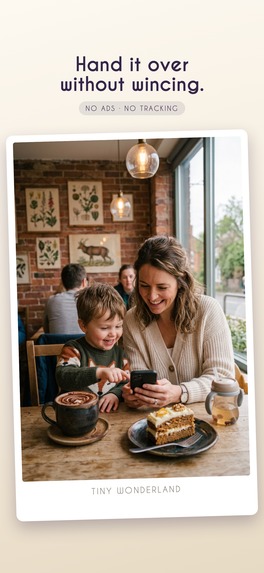
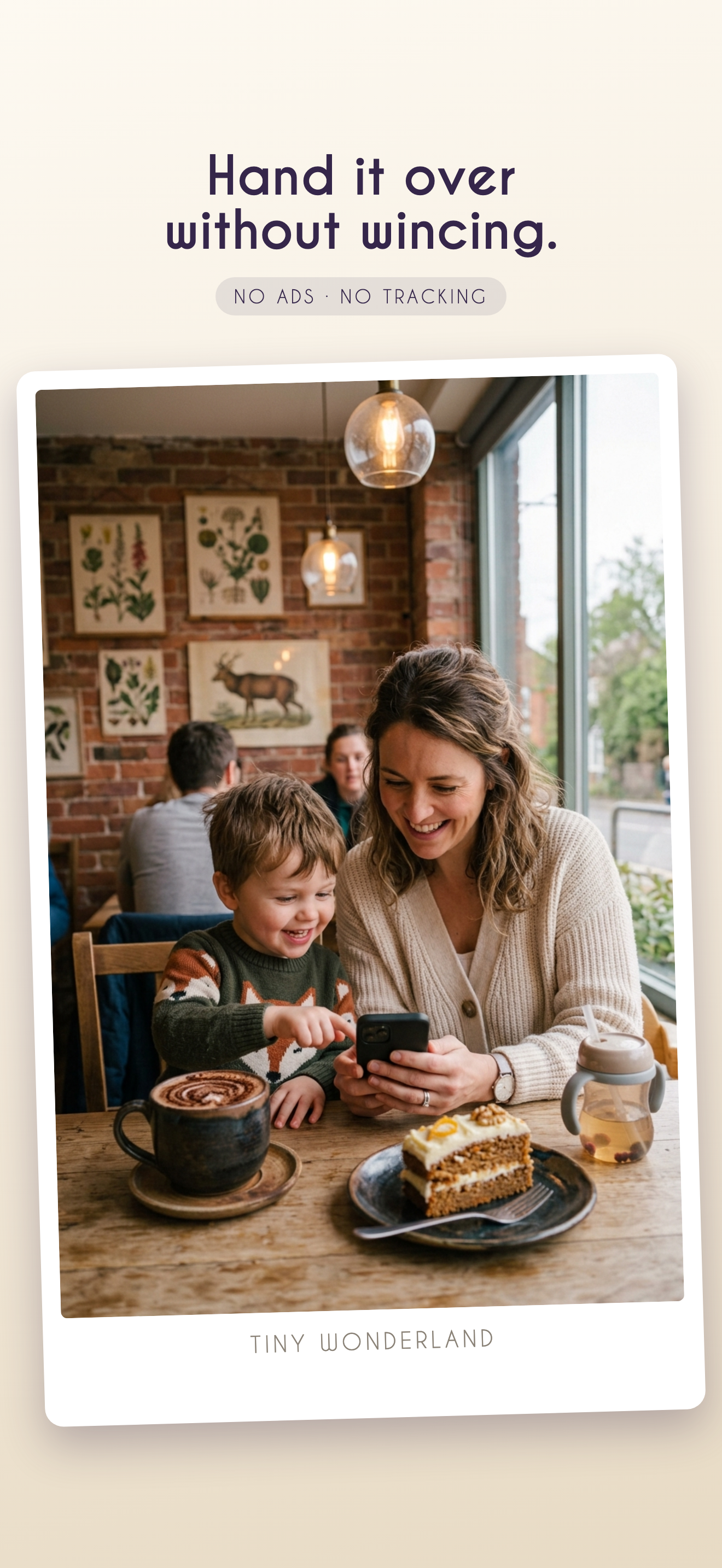
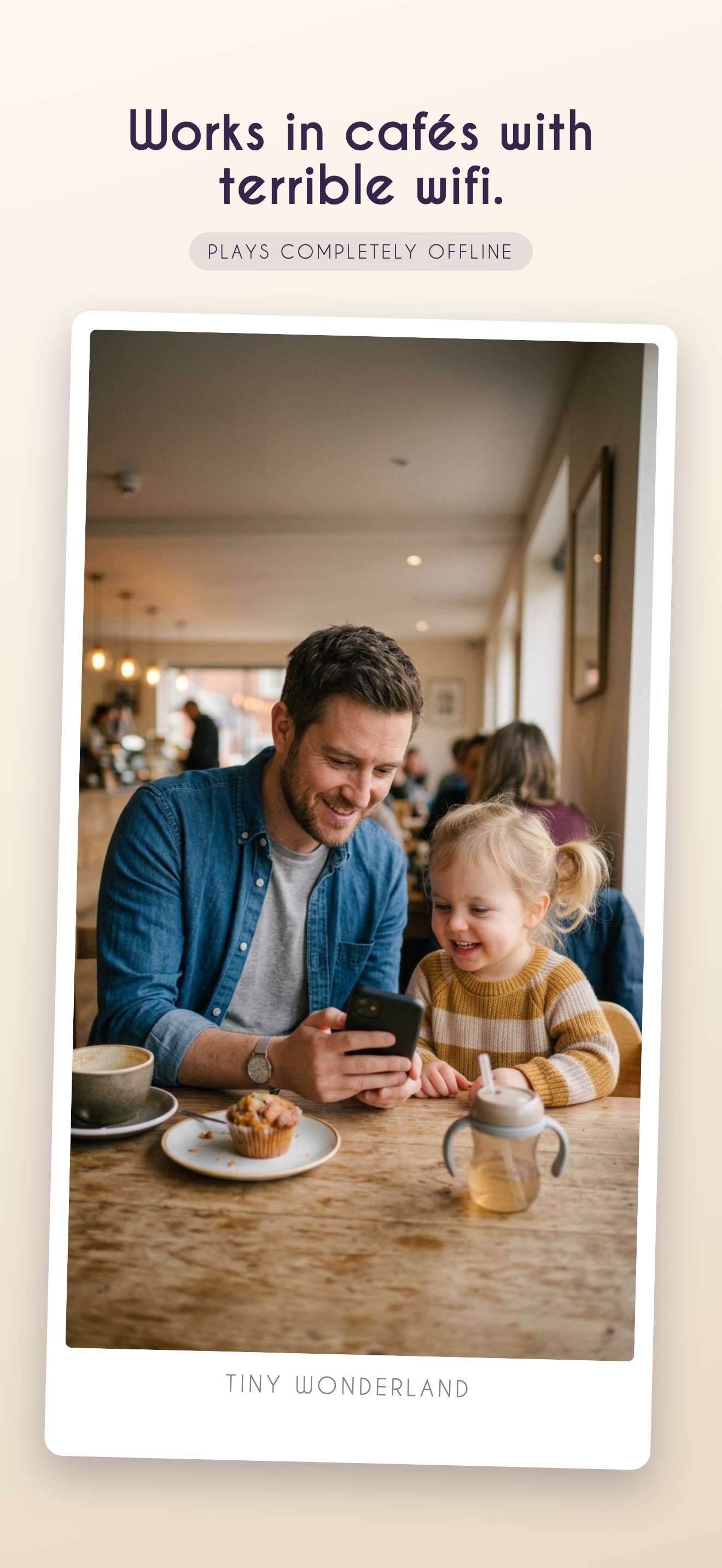
The app exists because we played this with real cards in coffee shops. Now the deck is never left at home.
-

All 641 voice clips are bundled in the binary, so it works in aeroplane mode - and in cafes with terrible wifi.
-
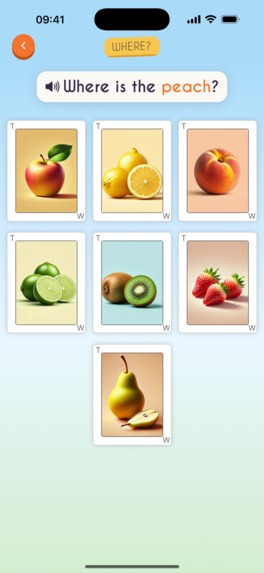
"Where?" running unframed on an iPhone 16 Pro - the screen exactly as a child sees it.
-
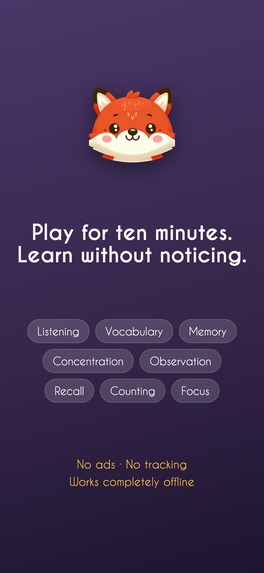
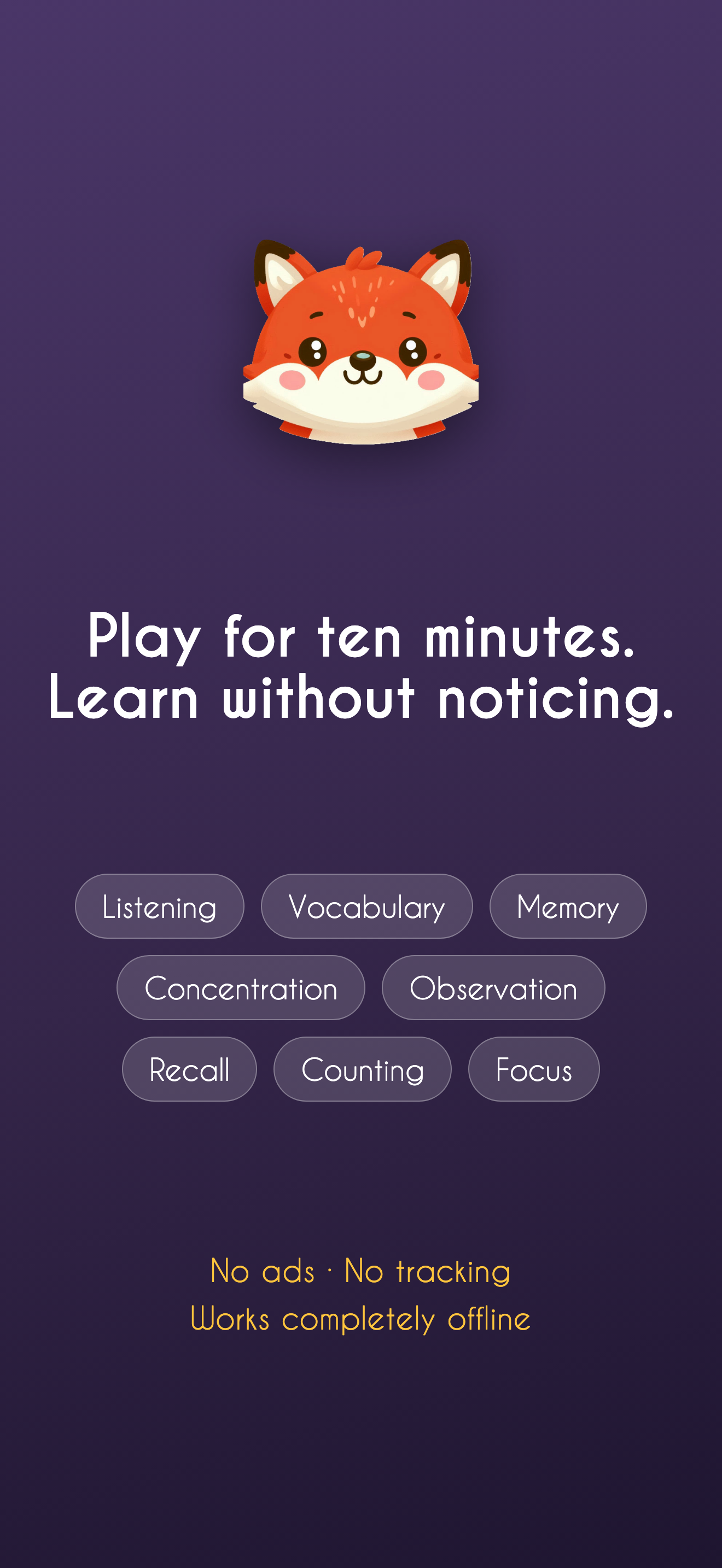
Ten quiet minutes, and they're learning. No ads, no tracking, no analytics SDK - the binary doesn't even link AdSupport.
-

Tiny Wonderland, by Freshly Baked Code. Built with React Native, Expo and RevenueCat.
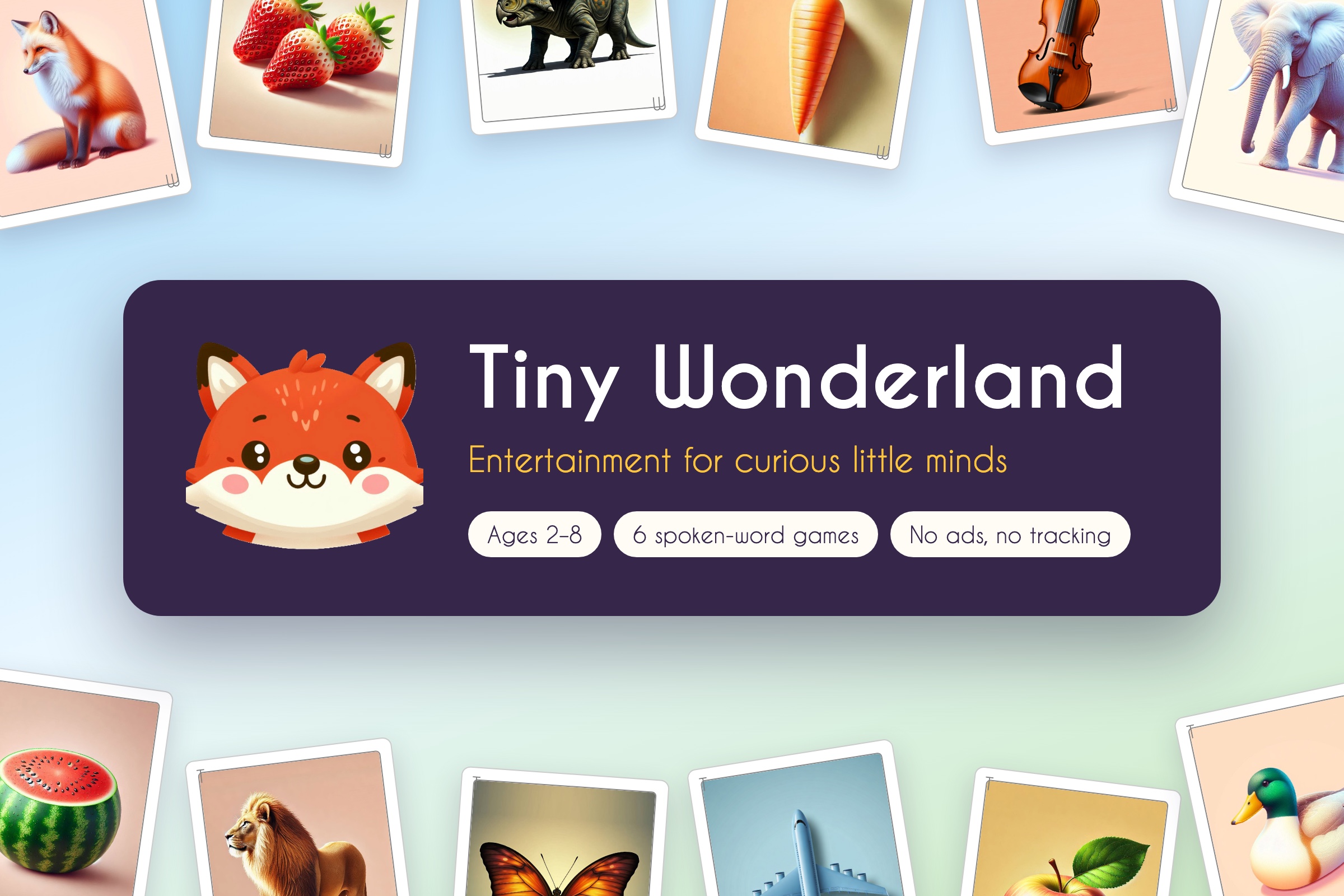

Tiny Wonderland started with a pack of animal picture cards and a toddler.
When our daughter was about 2 years old and we were trying to boost her vocabulary, we bought her a set of picture cards. Without really meaning to, we invented a game. We'd spread a few out on the table and one of us would ask "where's the dog?" - and she'd point. That was the whole game, and she loved it. We played it on the floor at home, and we started taking the cards with us to coffee shops to keep her entertained and quiet(ish!) while we were out in public.
So I started wondering whether that game could live on my phone. You'd never forget to pick up the pack of cards, and you'd always have it with you whether you were at home, or in the car, or out and about. And then I wondered if the game could ask "where's the dog?", and do it in a warm voice, wait patiently for a small finger to land, and be happily finished after a few minutes.
That's the app. The first game I built is called Where?, and it is exactly the game we played on that table. Everything else grew out of it:
- Every card says its own name aloud, in case the parent's not available to do it for them.
- No ads and no tracking, because I am SO sick of children's games trying to push upgrades or purchases at children who don't understand what the ramifications are: the only place you can buy anything in Tiny Wonderland is behind a parental gate.
- It all works offline, because coffee shop wifi is terrible and everyone gets frustrated when a promised game doesn't work.
Once I had Where? working, I realised I could expand on the games available, reusing the cards and the functions for speaking and create more games with an educational purpose. I tried them out on my daughter and she loved them. She play-tested the games for me and I discovered that she would actively try to break them by trying things like touching cards multiple times to see what would happen. I found several bugs from watching her do this! It also showed up timing issues with the speech and animation and I had to figure out how to keep the pacing quick enough to maintain interest without losing out on conveying information.
With a mechanism for the decks in place, I could also expand on the cards available to make the games even more varied. At this stage we've got the following:
- Where?: which was the first game and teaches listening and vocabulary skills
- Memory match: one of my favourites, rewarding concentration and memory ability
- What's missing?: a game where a card is removed and the player has to use observation and recall skills to work out which one has vanished
- How many?: an early counting game to encourage subitising and using numbers
- Snap: a classic card game, requiring focus and quick thinking
- Dictionary: which functions like a first-word encyclopedia and cements vocabulary
Other games for this age group exist, but we loved playing this one and I've shared it with some of my daughter's friends who have enjoyed it too. I've never tried to replace focussed parenting with a screen, but a free 10-15 minutes of calm while I know my daughter is actually doing something to support her learning is almost priceless.
Built With
- expo-audio
- expo.io
- kokoro-tts
- react-native
- react-navigation
- tailwind
- typescript

Log in or sign up for Devpost to join the conversation.