-
-

-
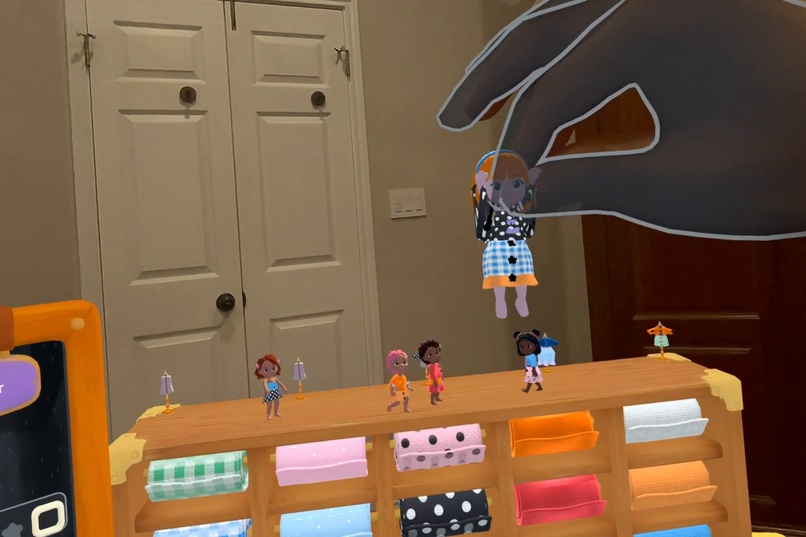
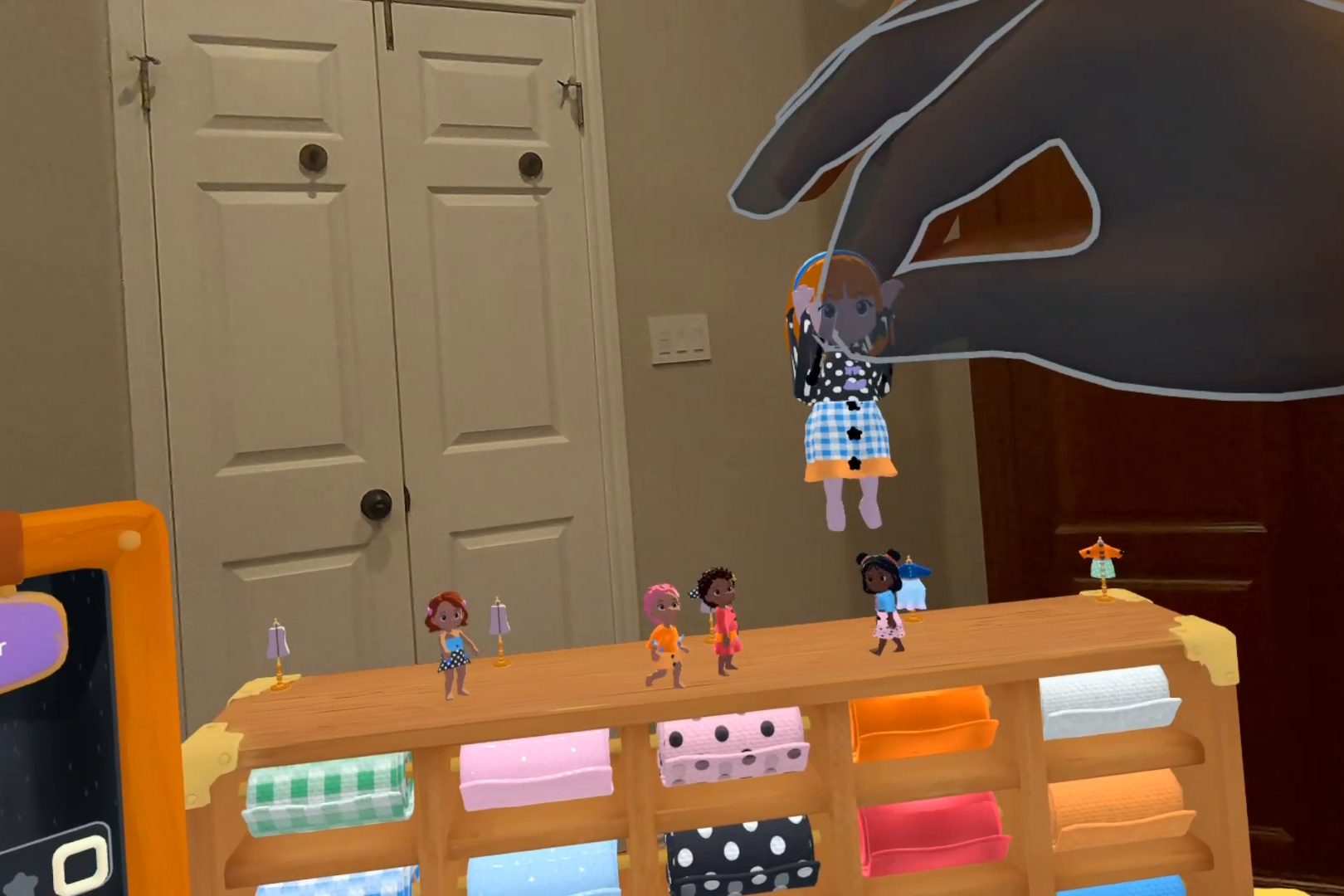
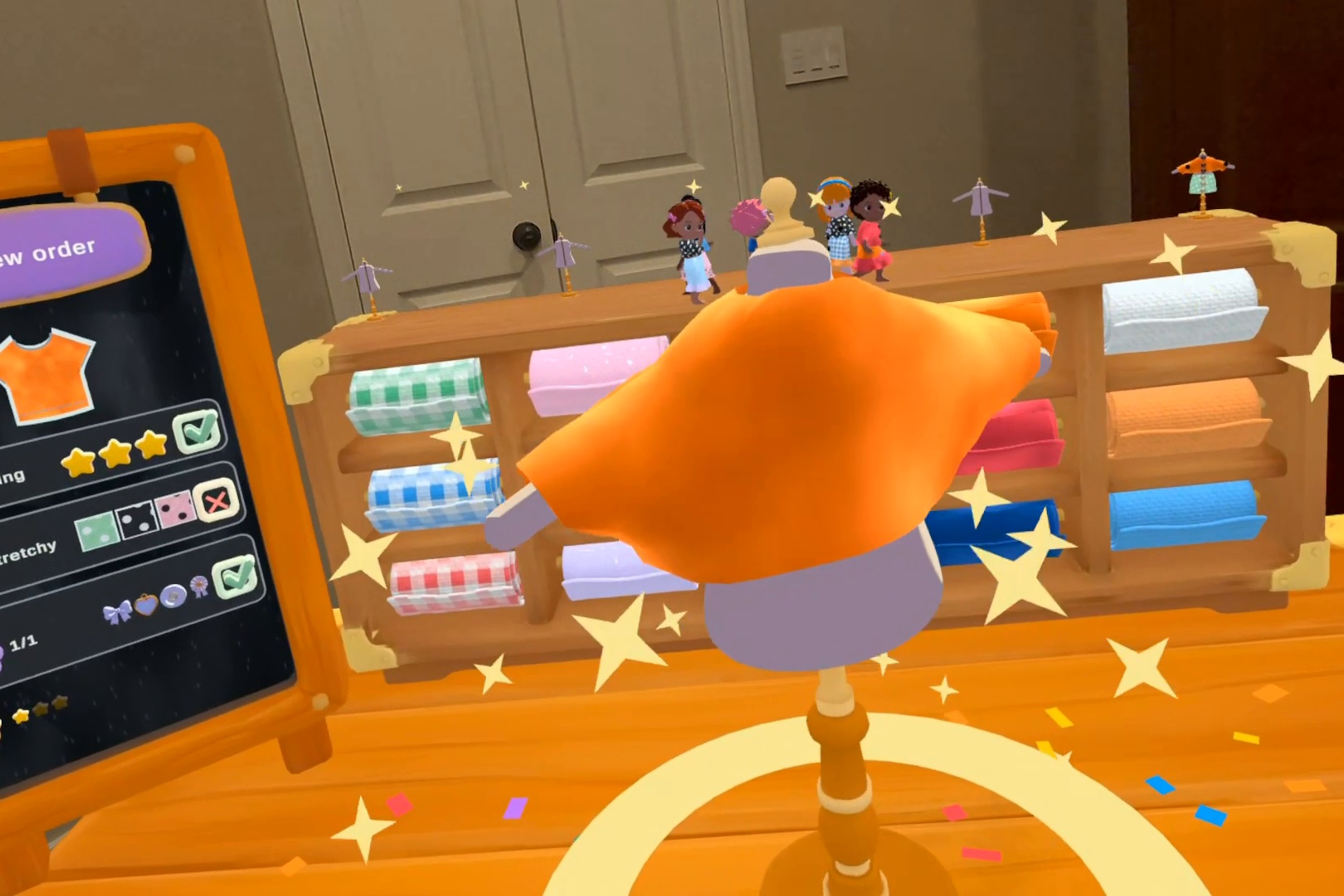
A doll held up in her new outfit, the others on the shelf below
-
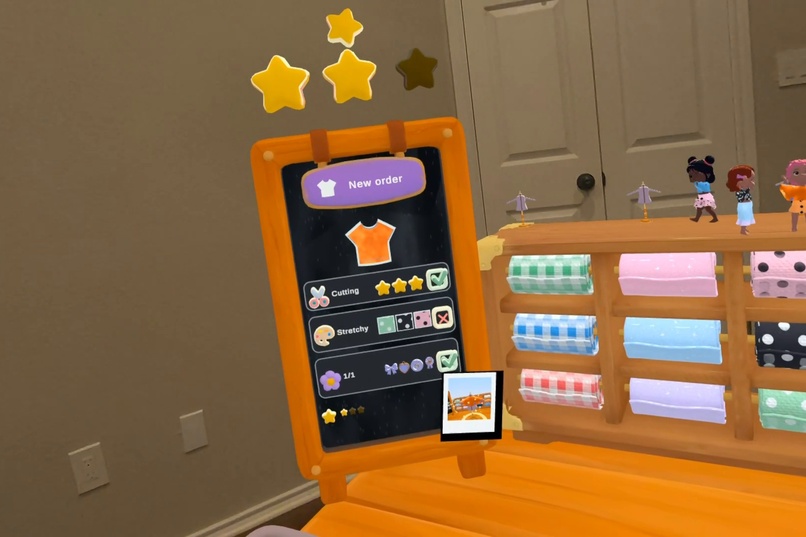
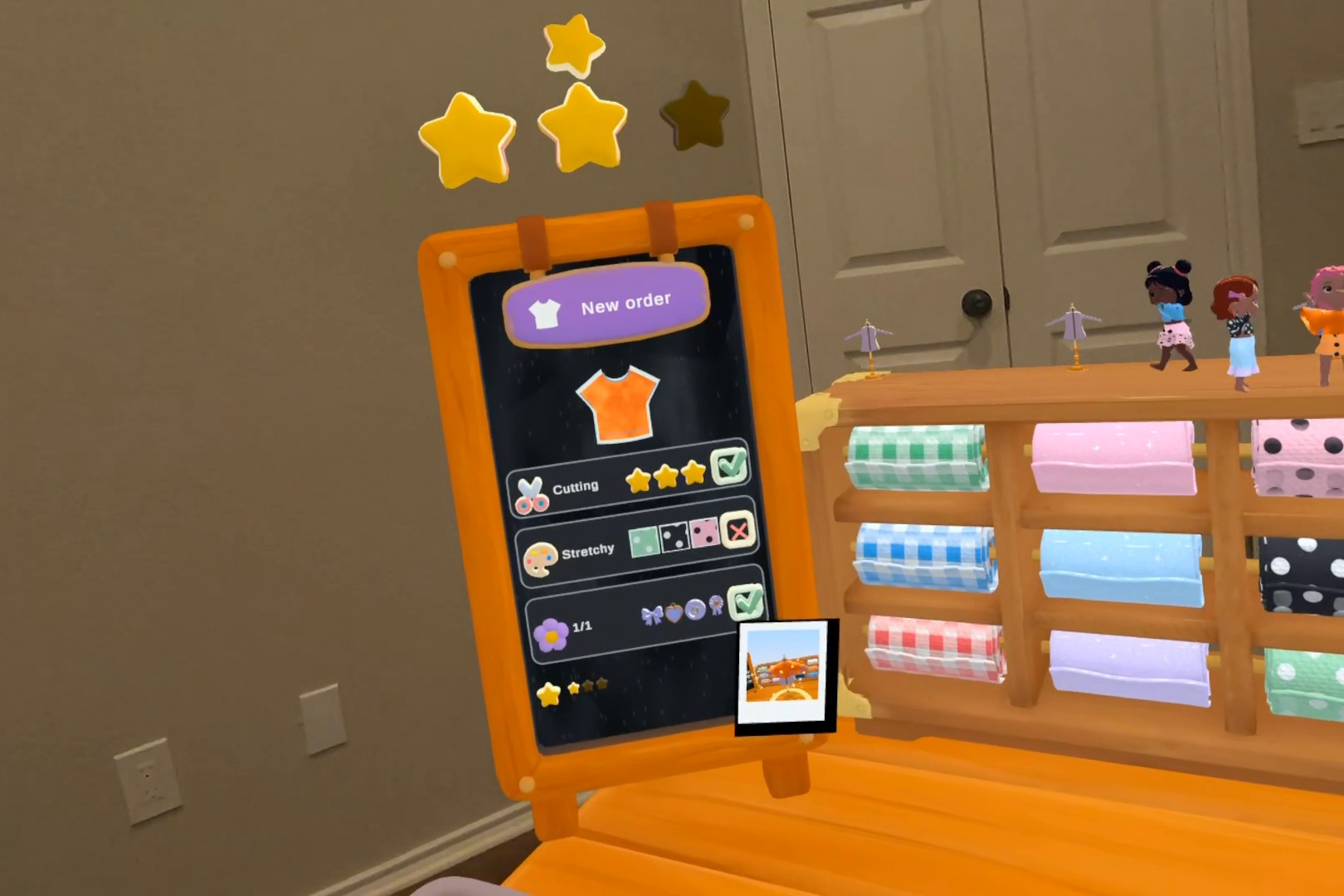
Order board with three stars and the photo print
-
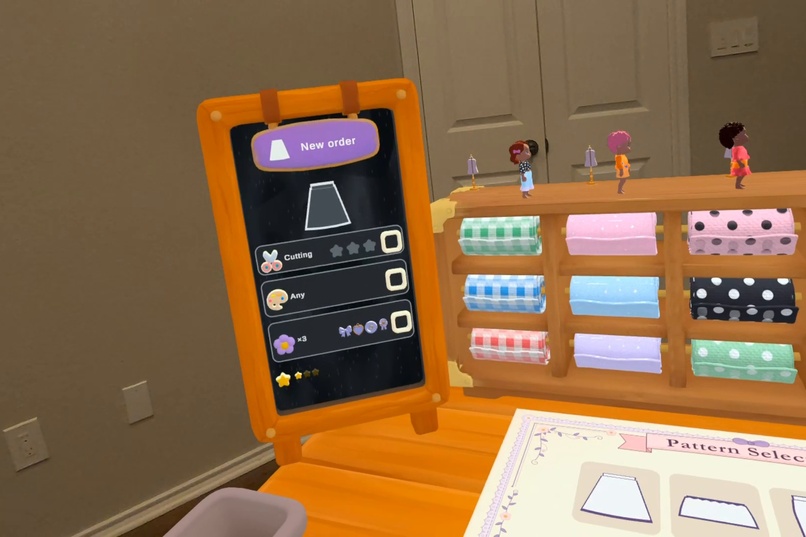
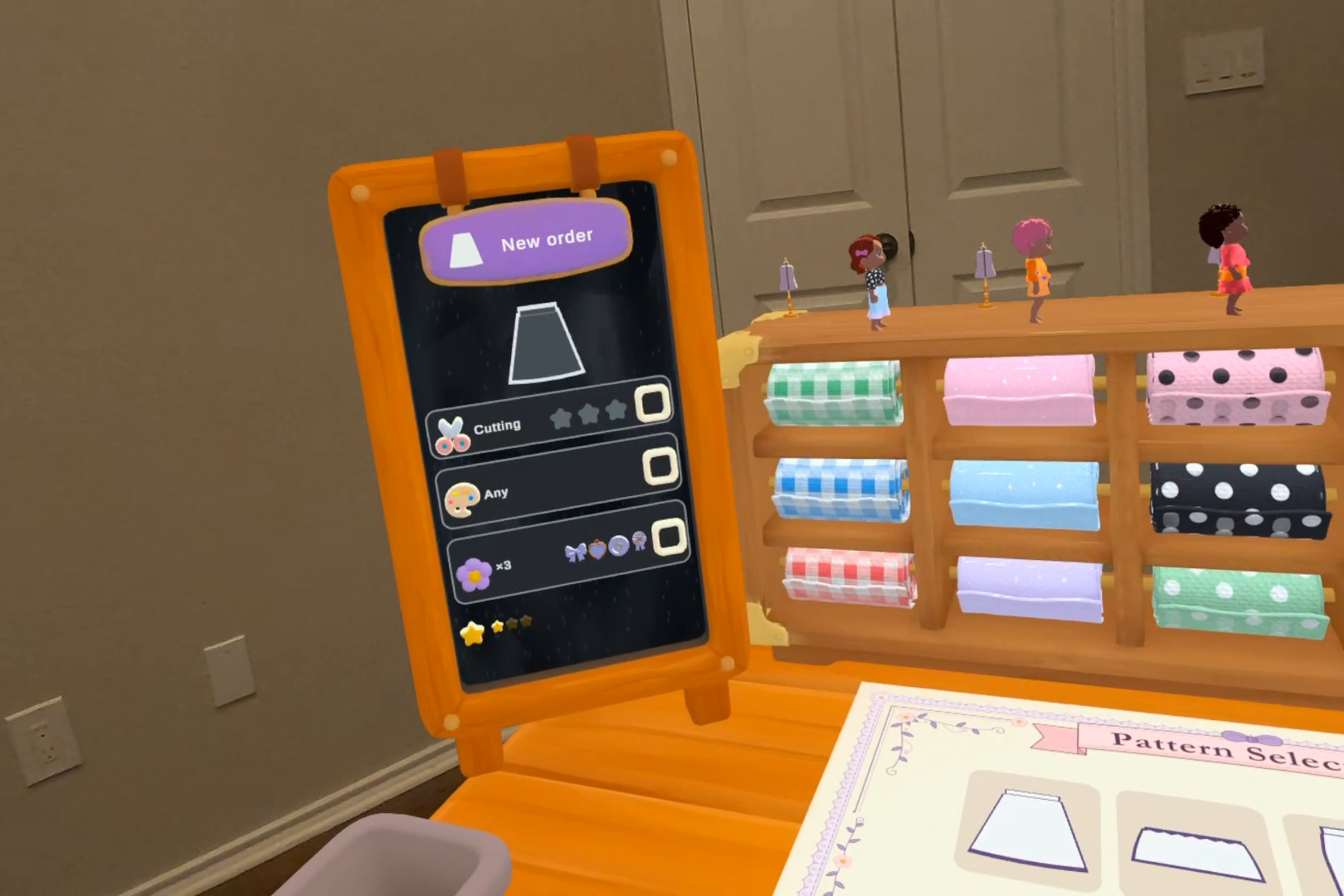
A new order on the board, the pattern paper beside it
-
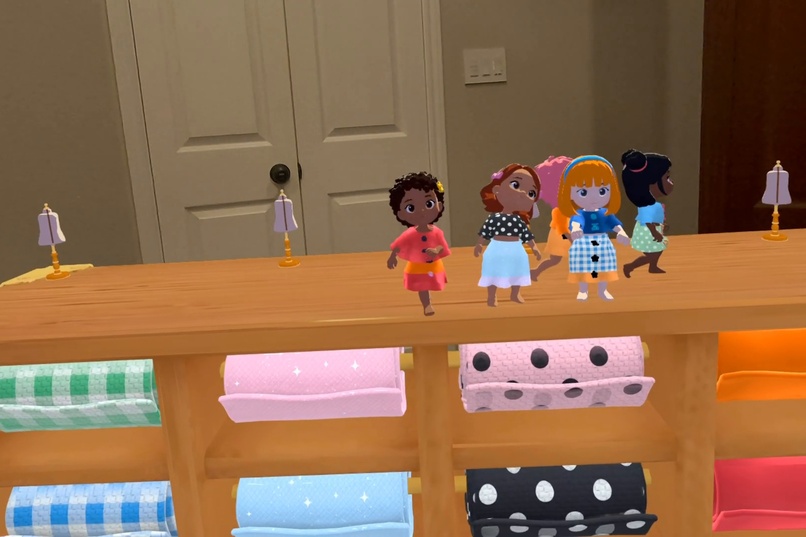
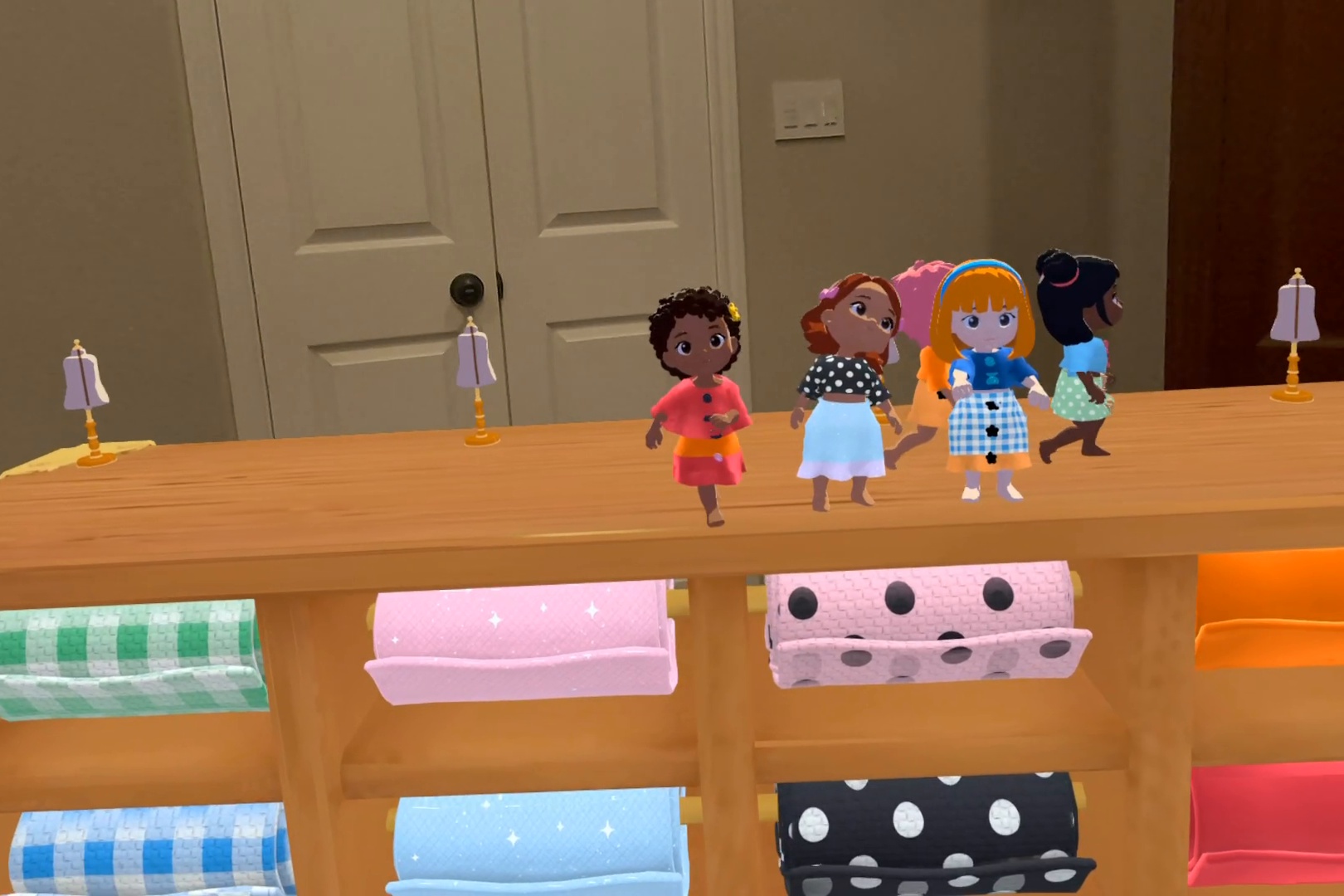
Dolls in their outfits on the cabinet
-
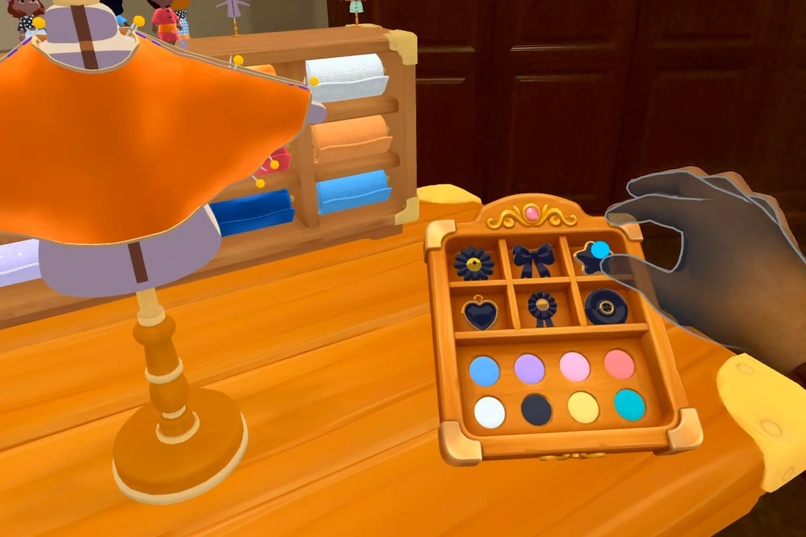
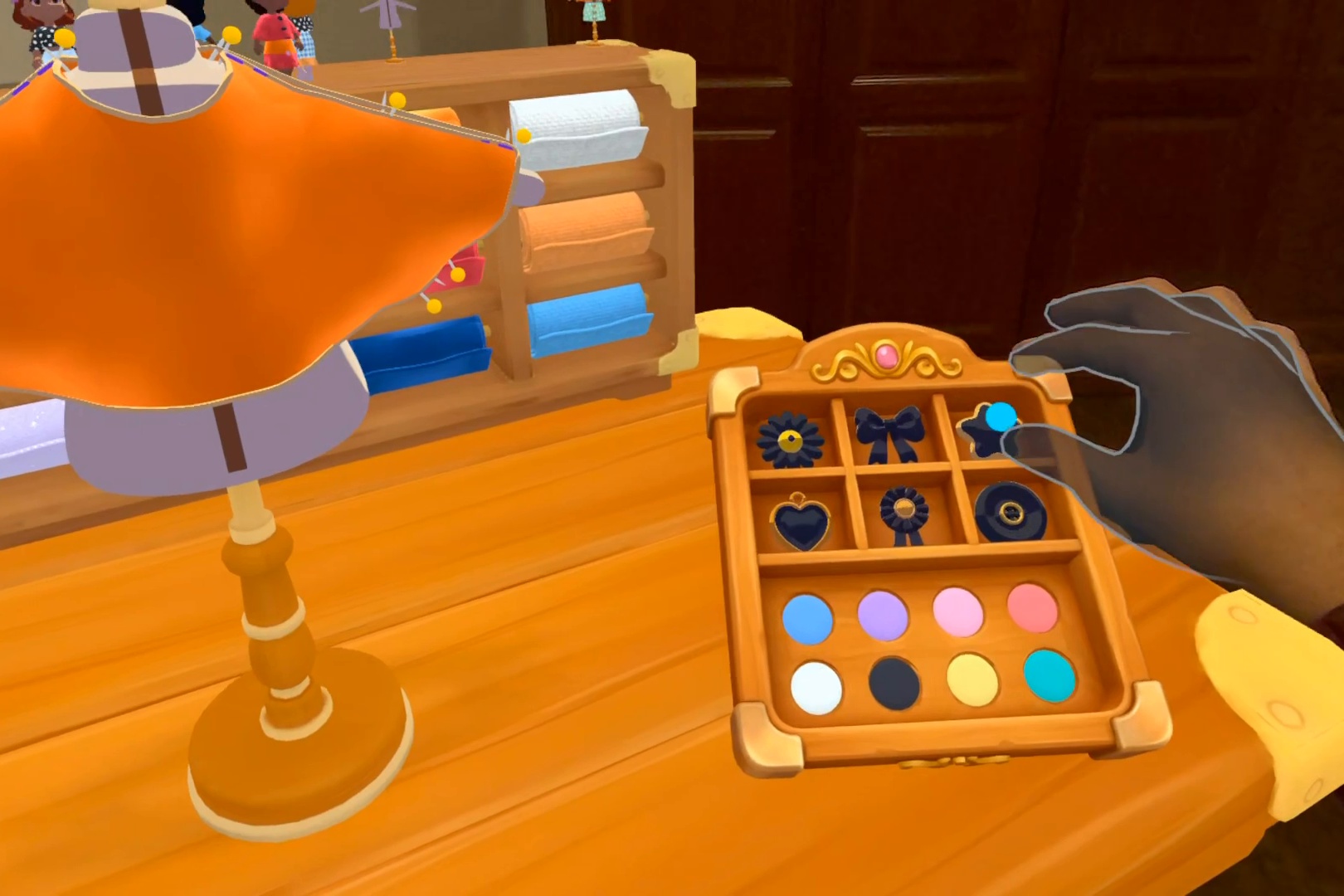
Decoration tray and paint pots
-
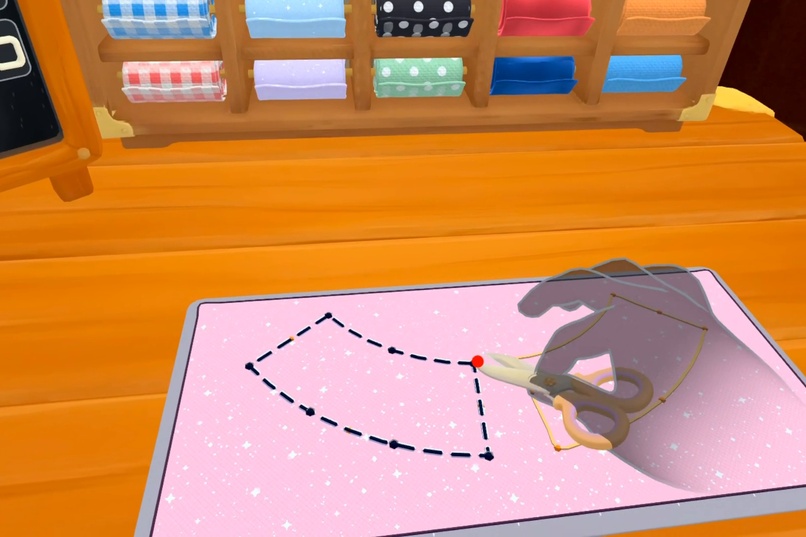
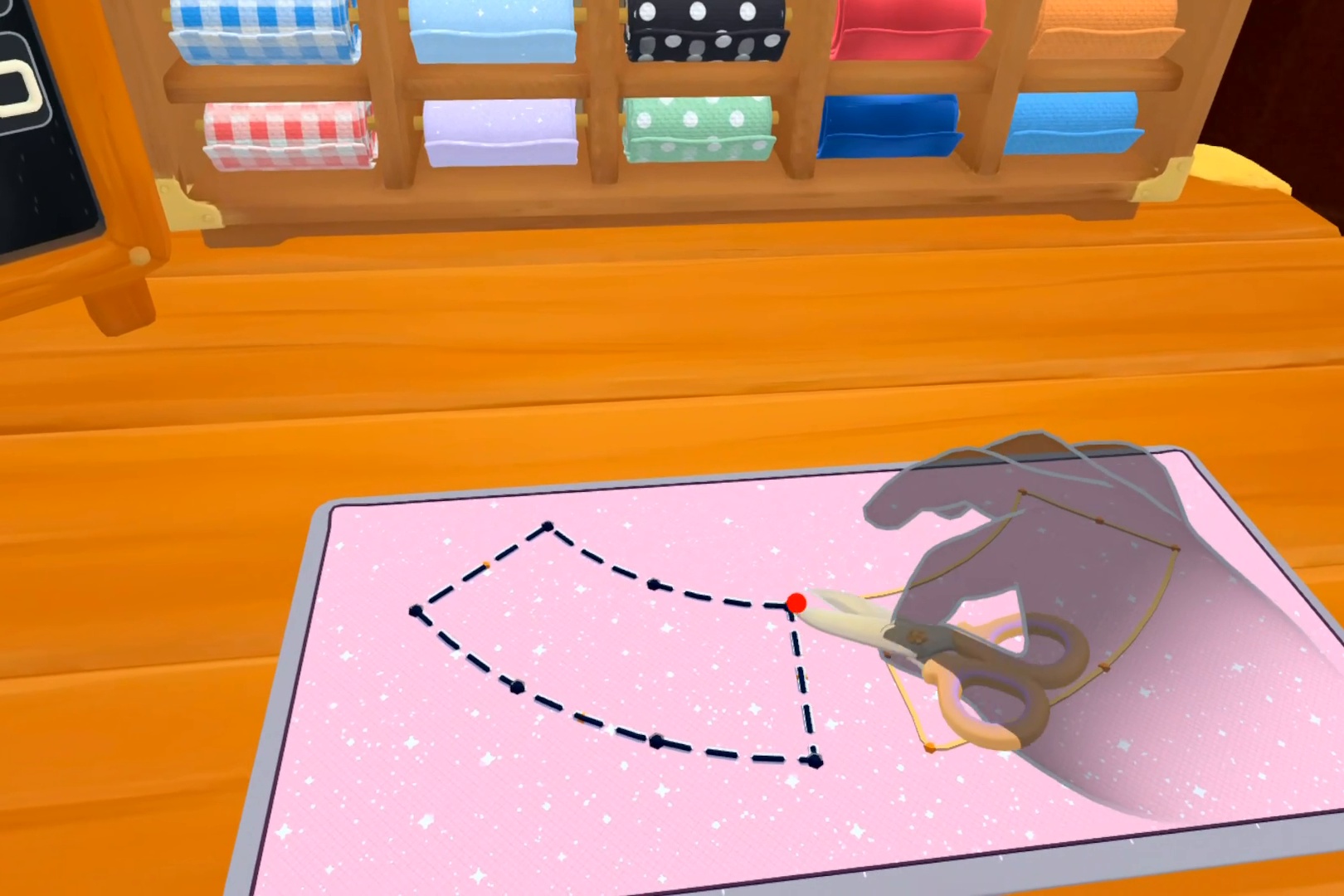
Hand scissors cutting the pink star tulle along the chalk
-
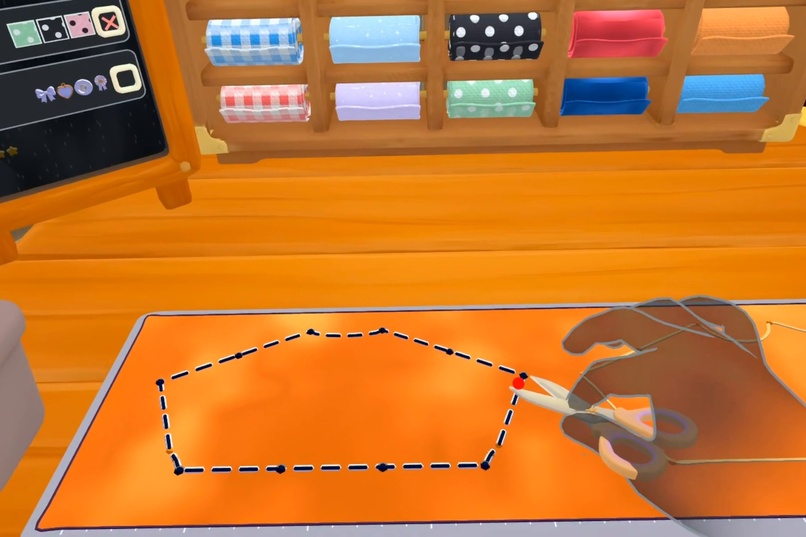
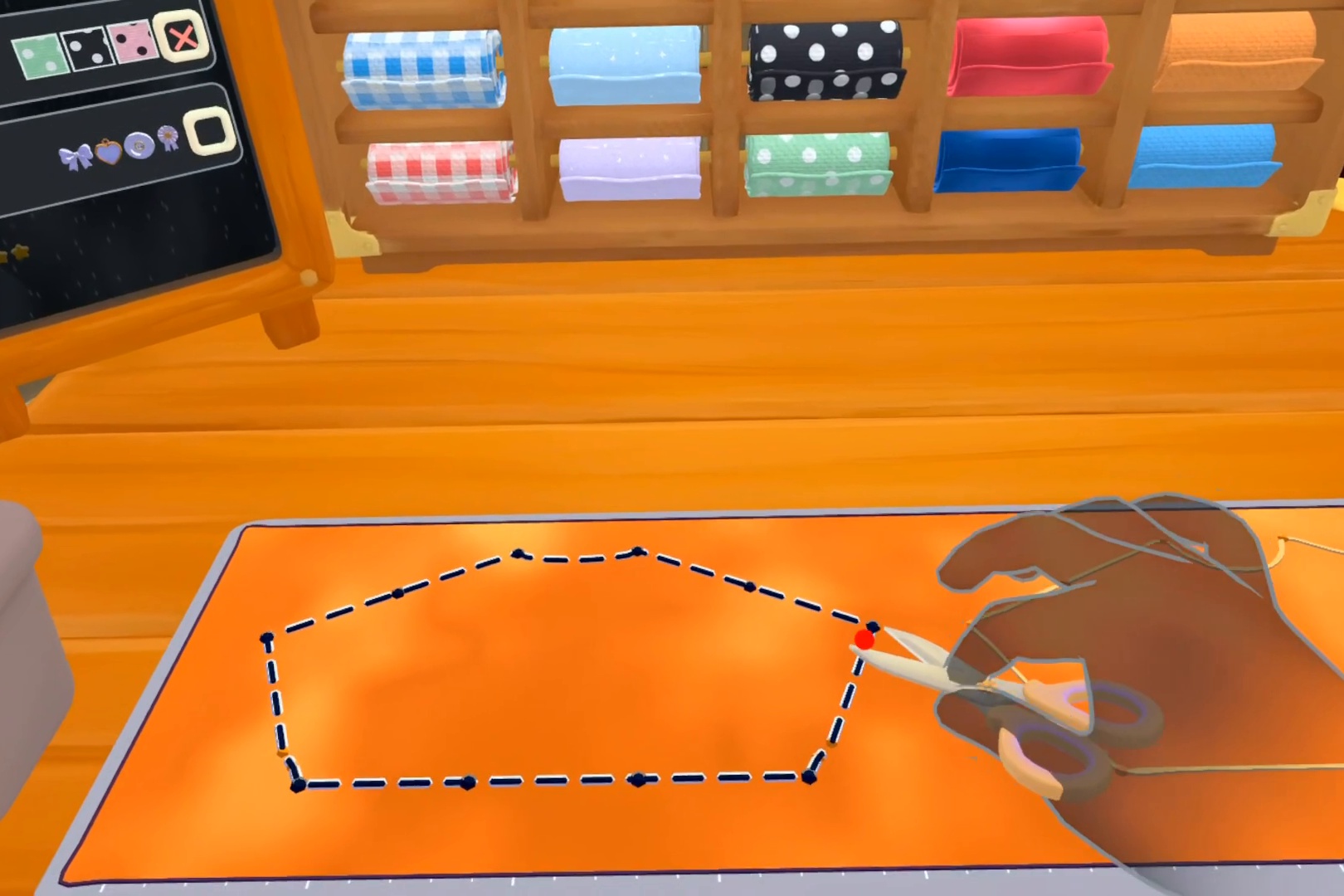
Cutting the orange velvet
-
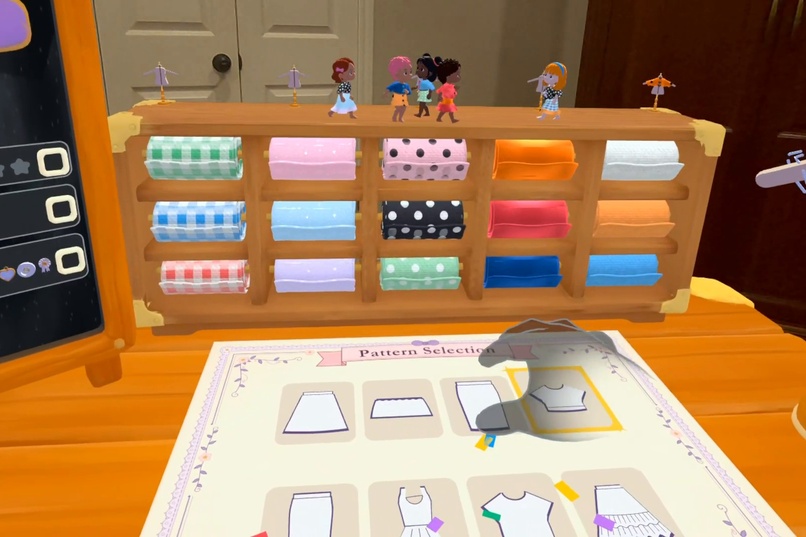
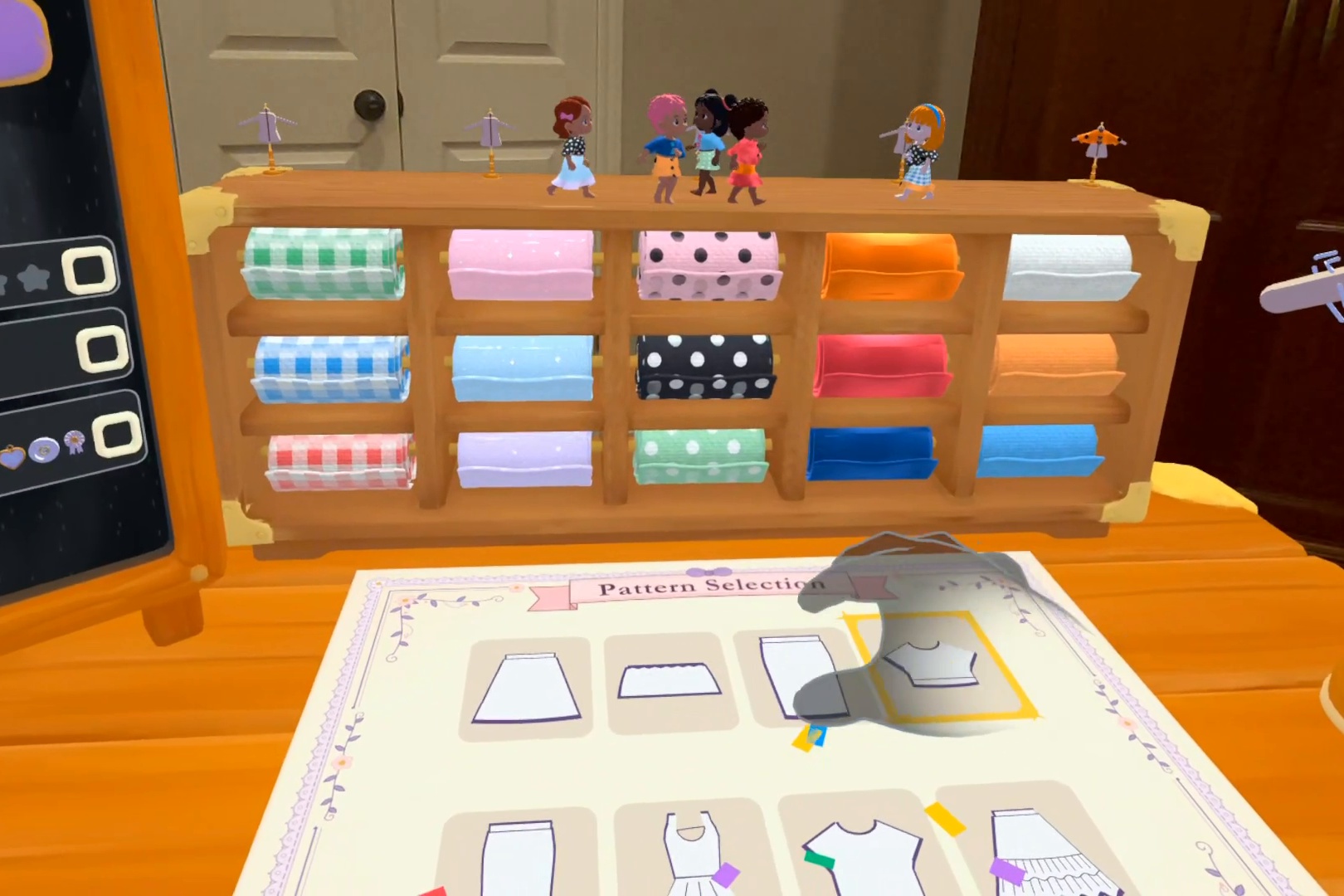
Picking a garment on the Pattern Selection paper
-
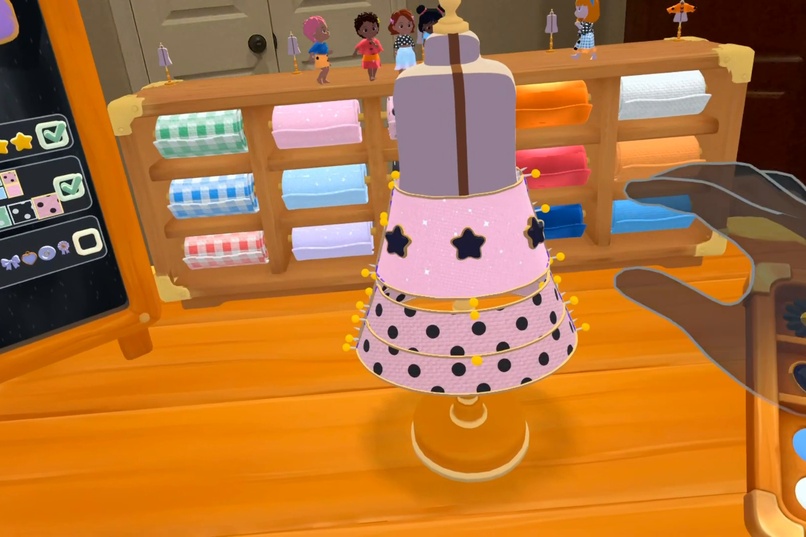
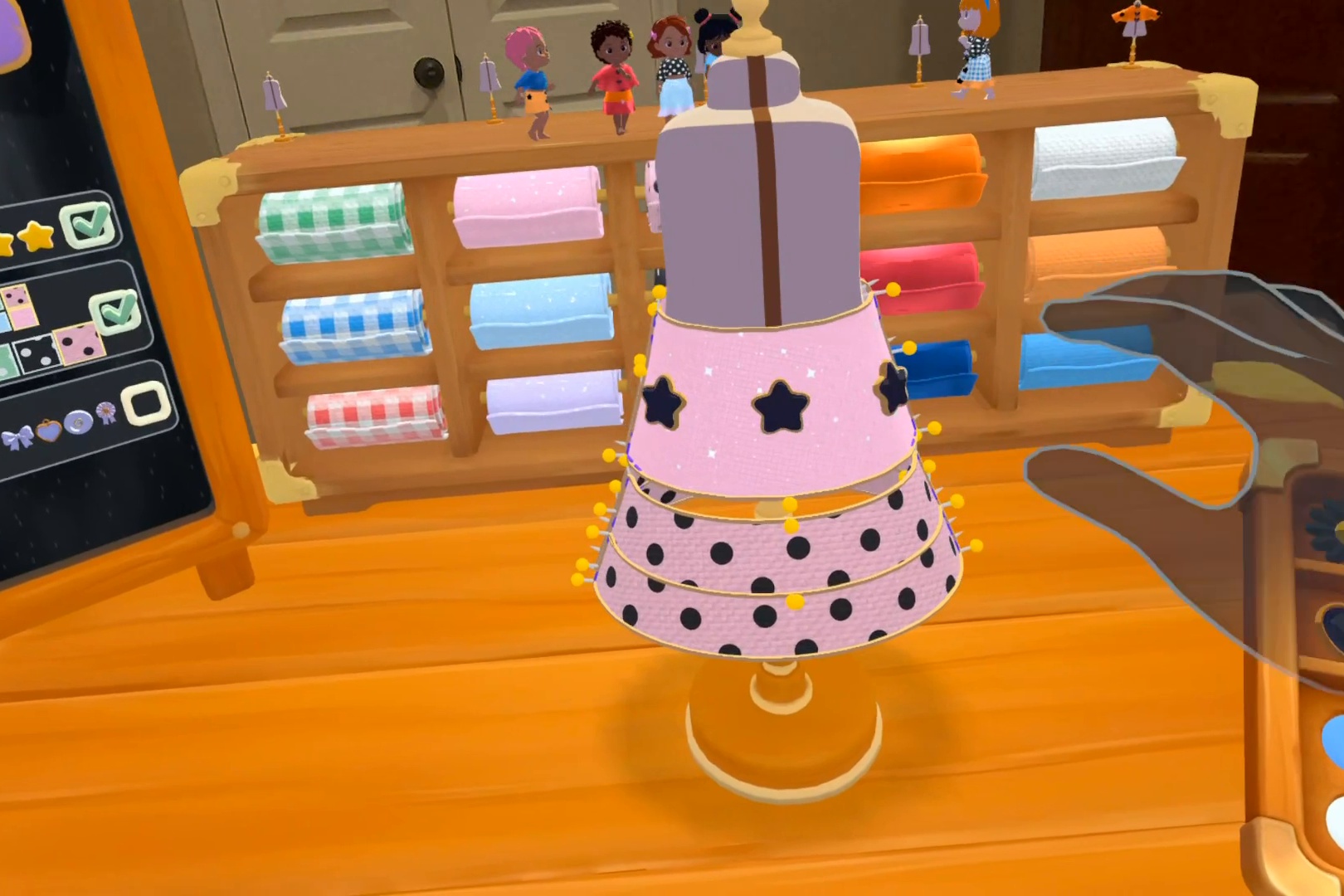
Tiered dress with star decorations
-
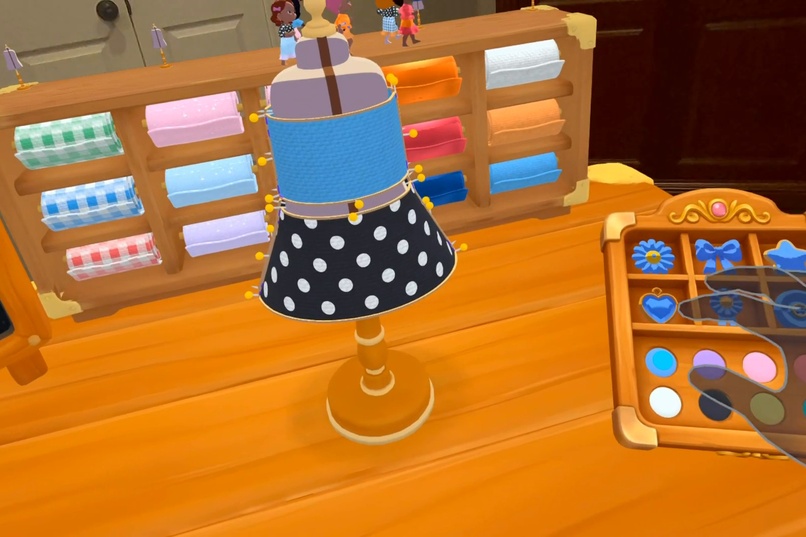
Blue and polka-dot dress being decorated
-
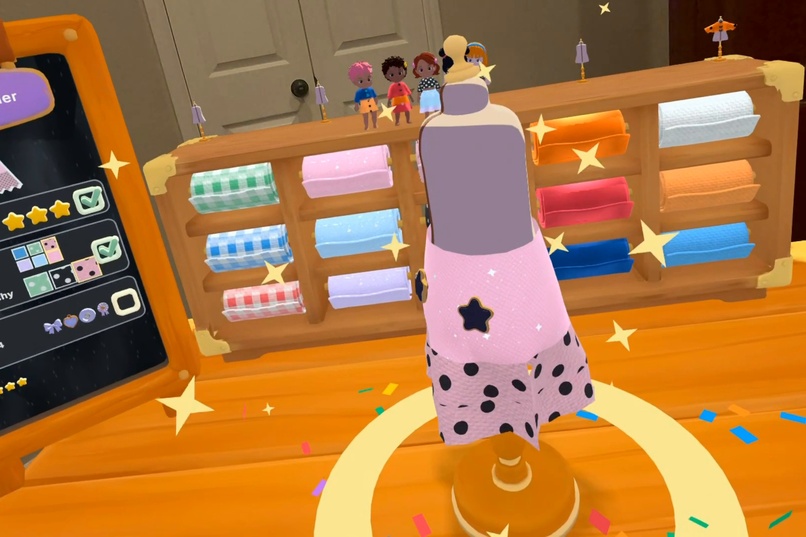
Dress's reveal
-
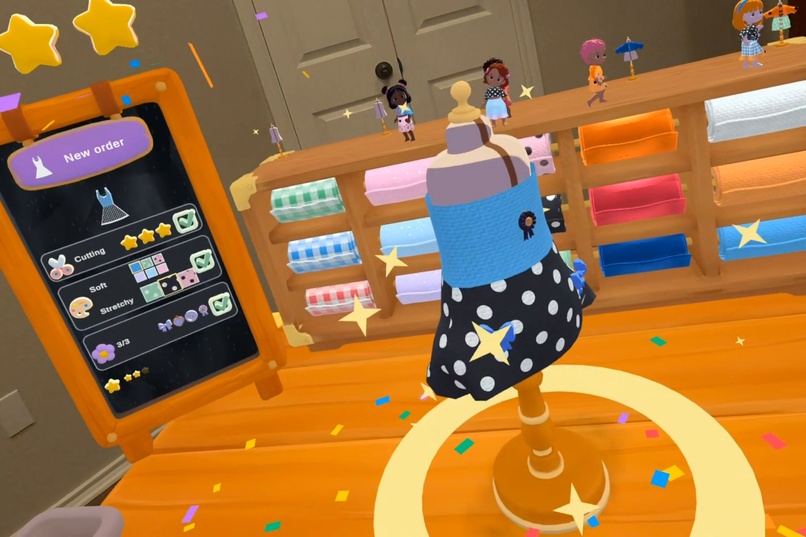
Final reveal with three stars
-
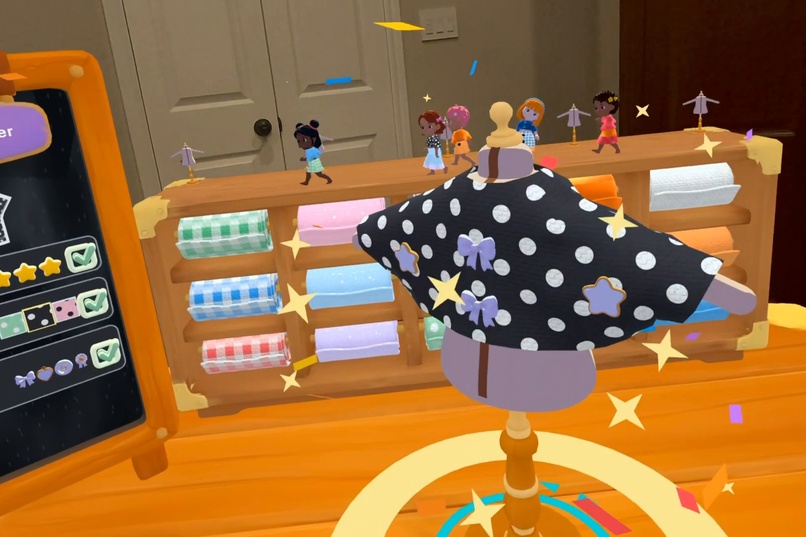
Polka-dot tee's reveal, with sparkles
-
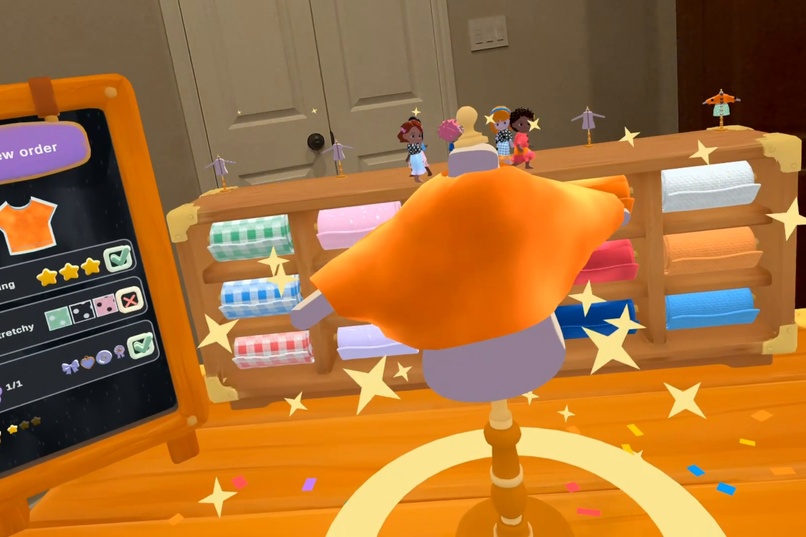
Velvet tee's reveal
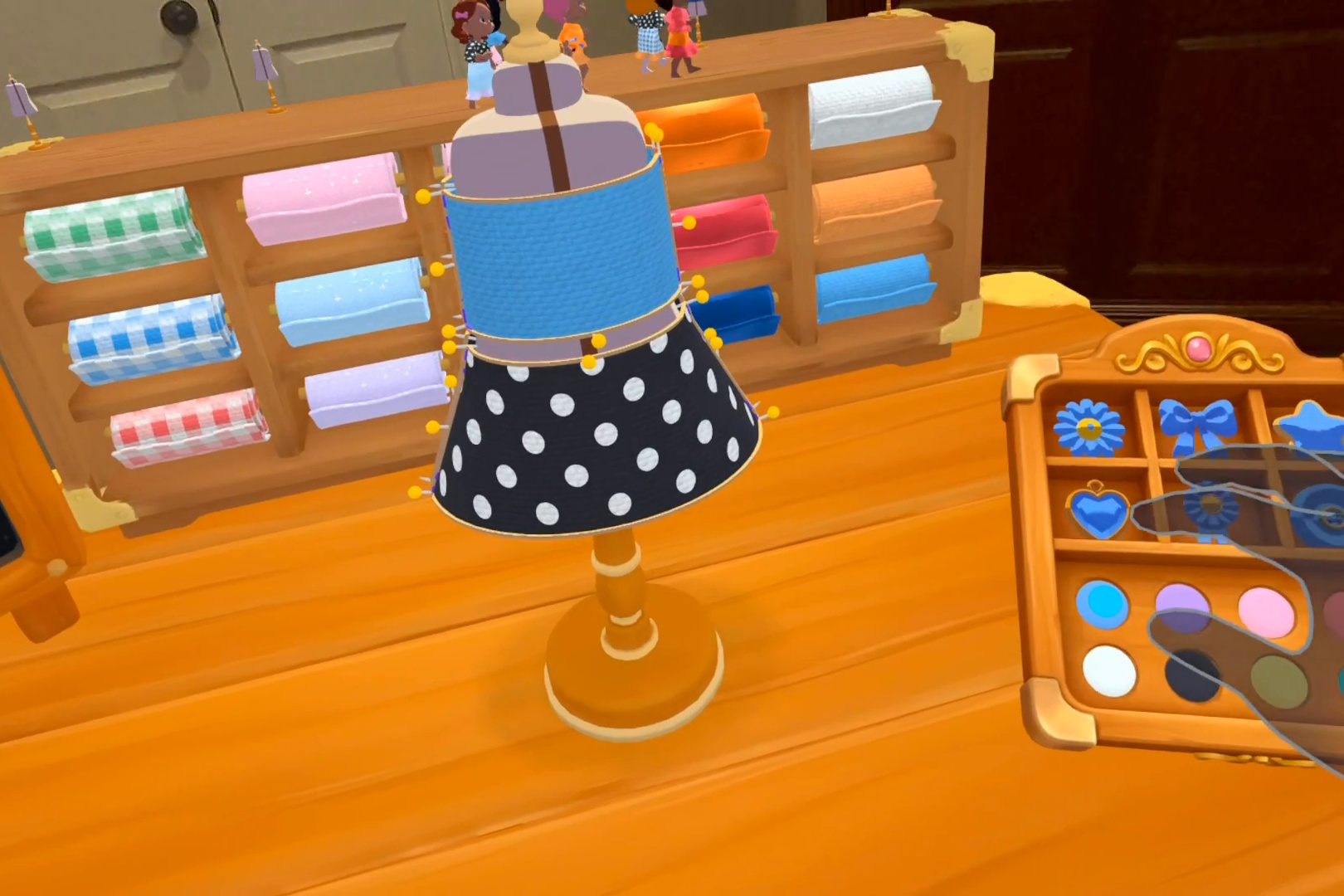
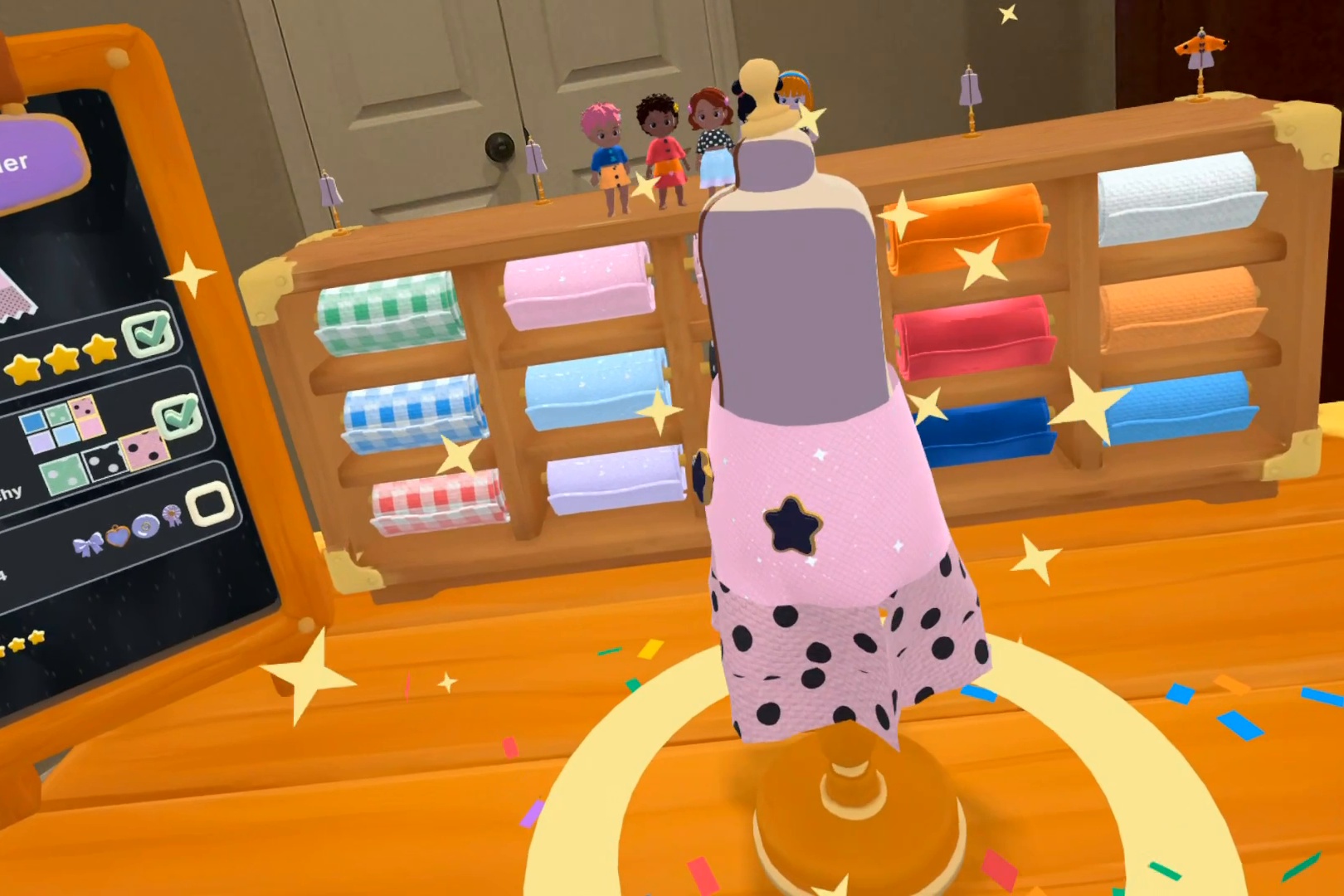
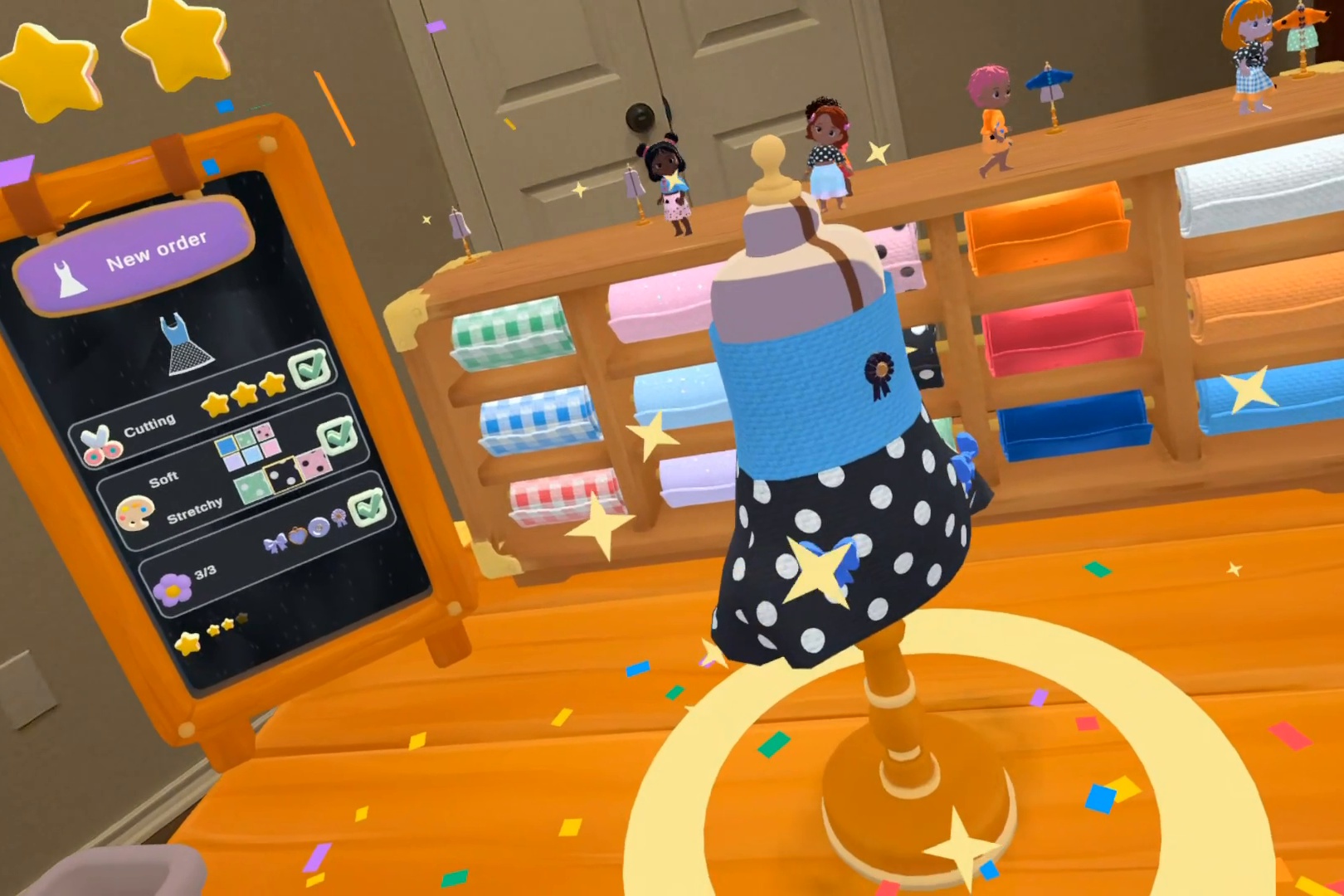
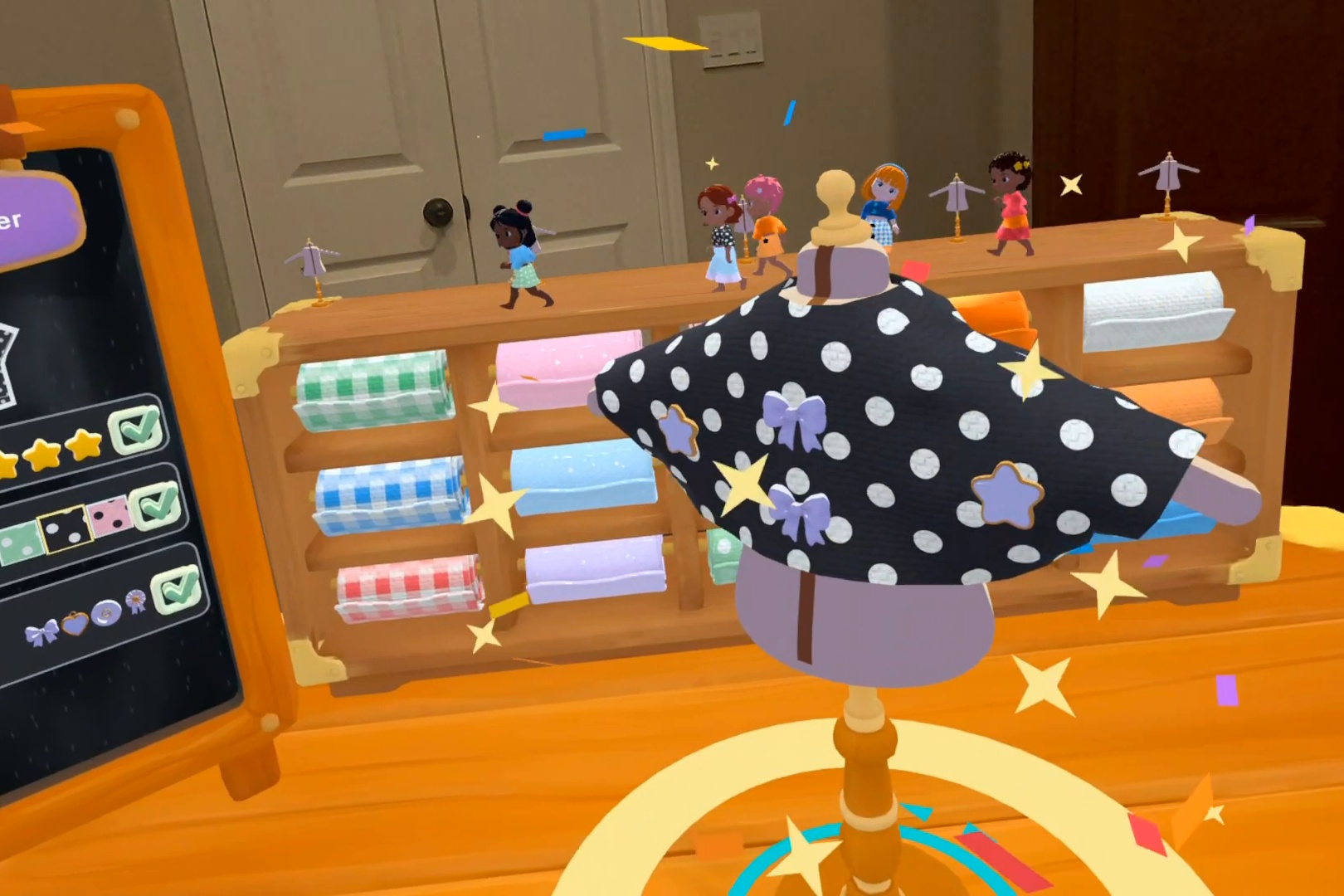
Inspiration
Sewing is hand work: cutting along a line, pinning two edges, running a needle down a seam. Hand tracking reads those gestures well. We wanted a cosy game where your hands are the tools and your own room is the workshop.
What it does
A tailor's workshop table appears in your room, all within reach while seated. Little dolls live on the fabric cabinet; they wander and react to you, and every order arrives on a chalkboard of pictures, not text.
- Choose a design: pick a garment card on the Pattern Selection sheet and press Start.
- Pick a fabric: pinch a bolt (cotton, shimmer velvet, polka dots, sparkle star tulle or gingham) and its sheet unrolls with the pattern chalked on it.
- Cut: take the scissors and cut along the chalk. The cloth is really cut, not swapped for a texture.
- Place: let a piece go near the dress form and it settles into place; the seams pin themselves.
- Sew: point your index finger and it becomes a threaded needle. Run it along a seam and the gap stitches shut.
- Decorate: stars, bows, daisies, buttons, rosettes and hearts, dyed any colour from the paint pots.
- Hand in: earn up to three stars, and your little customers wear what you made. Take an outfit off one doll and dress another in it.
Orders never end: skirts, tube tops, T-shirts and dresses. Everything works with bare hands; controllers are optional
How we built it
The cloth is our own position-based (XPBD) simulation in engine-free C#, so the same code runs in .NET tests and in Unity. On Quest 3 a Burst-compiled kernel steps it on its own thread. Cutting splits the mesh itself, sewing pulls edges shut with stitches, and pieces collide with the dress form's exact shape. Unity 6 and Meta's XR SDK provide passthrough, hand tracking and the Interaction SDK. Sounds and music are synthesised in code.
Challenges we ran into
- Noisy hands. A two-finger scissors gesture was misread constantly. A simple pinch that follows your fingers works.
- Cutting live cloth without breaking the simulation, even when a cut doubles back or stops at a corner.
- Clothes on tiny moving dolls. Legs and shoulders poked through the outfits as the dolls walked. We tied the cloth to each doll's skeleton and measured it in the headset until nothing came through.
- Fabric over passthrough. There's no real light to match, and fine fabric detail is smaller than a headset pixel, so every fabric looked the same. We lit the cloth from the player's head and compared each fabric against the designer's swatches until they matched.
- Hands-only controls. A resting hand would grab things by accident. Every control now needs a deliberate pinch.
Accomplishments that we're proud of
- A full loop (cut, place, sew, decorate, hand in) with bare hands and no text: orders, cues and scores are all pictures.
- Real cutting and sewing: the garment is the cloth you cut.
- Dolls that wear what you made.
What we learned
- Design gestures around what the tracker reads best (a pinch), not what looks natural.
- Forgiving tools beat precise ones: cuts that follow the chalk make hand-tracked cutting feel good.
- Log everything: a headset event log found bugs no playtest described.
What's next for Tiny Tailor: Mixed-Reality Doll Dressmaker
More garments (shorts and trousers), more detail art, more complex garments for users to create, and a release on the Meta Horizon Store.

