-
-
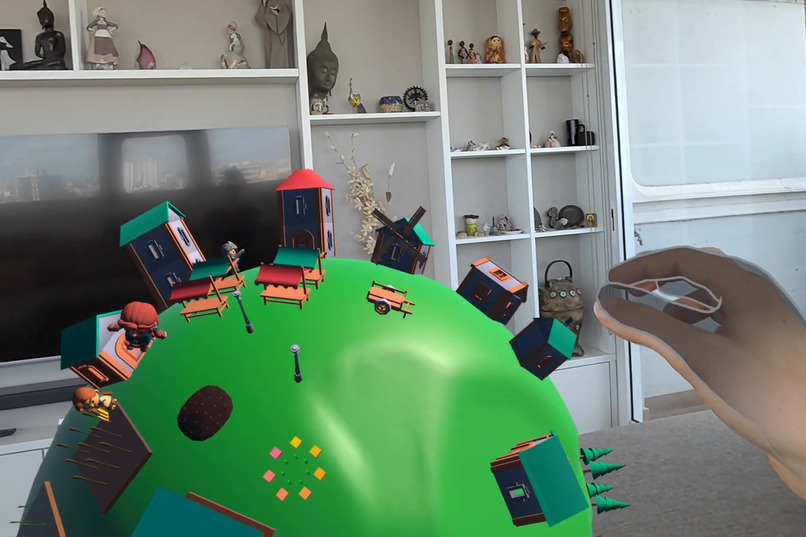
Build and grow your own little civilization.
-
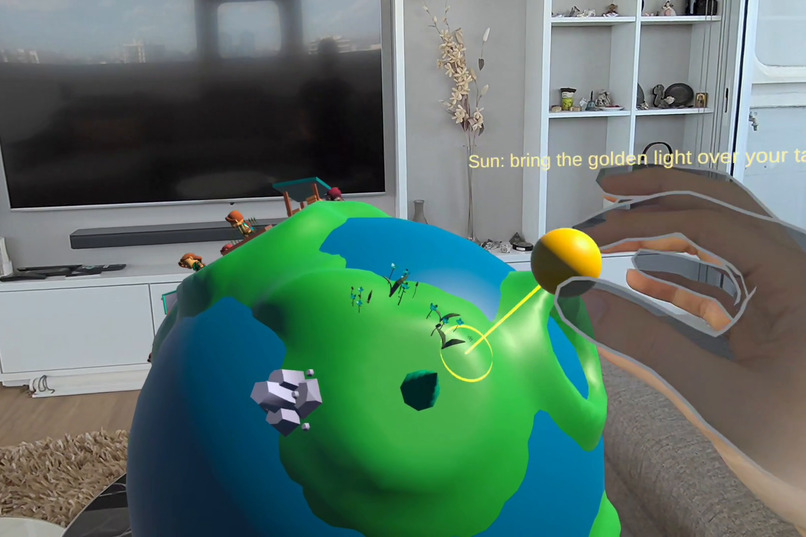
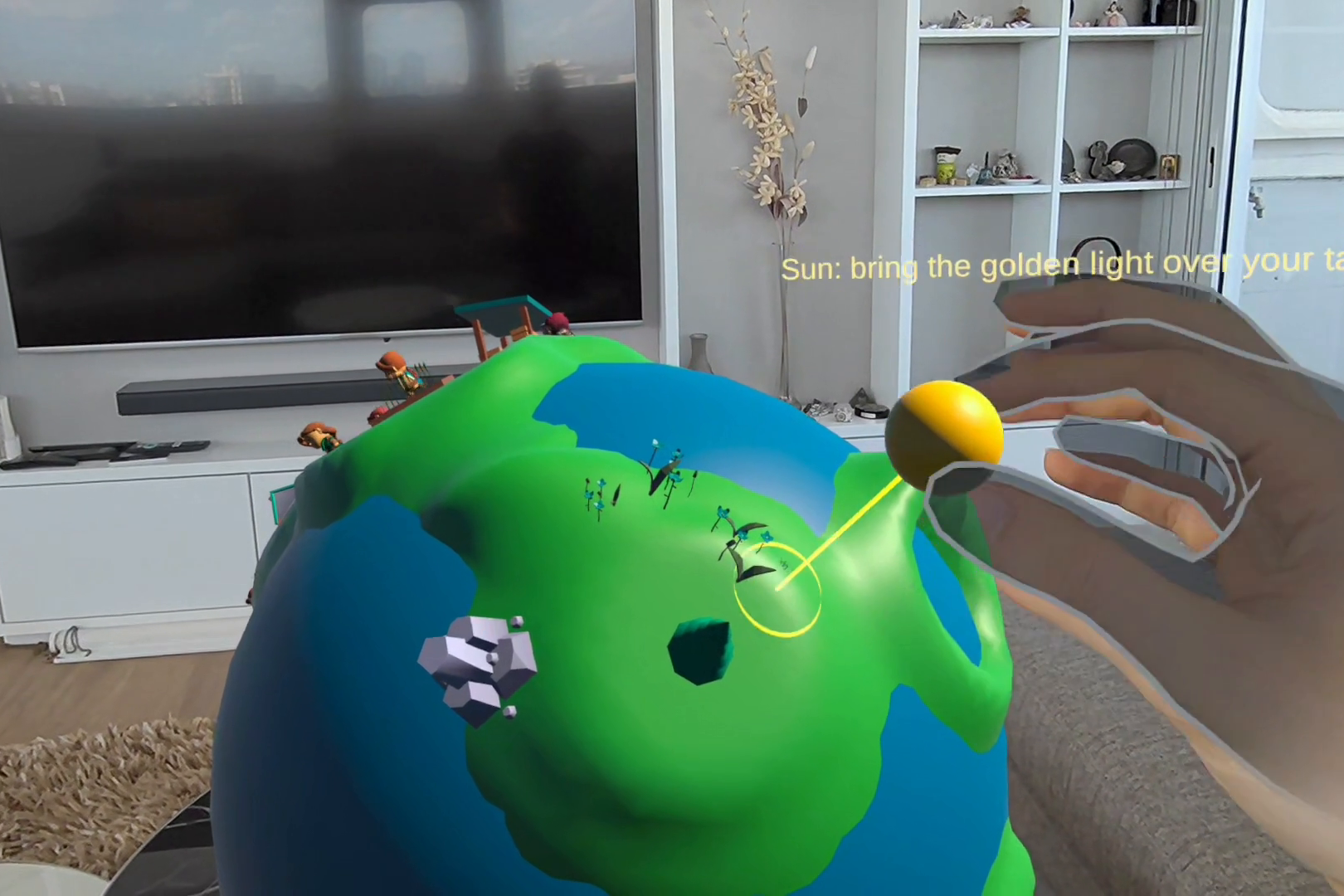
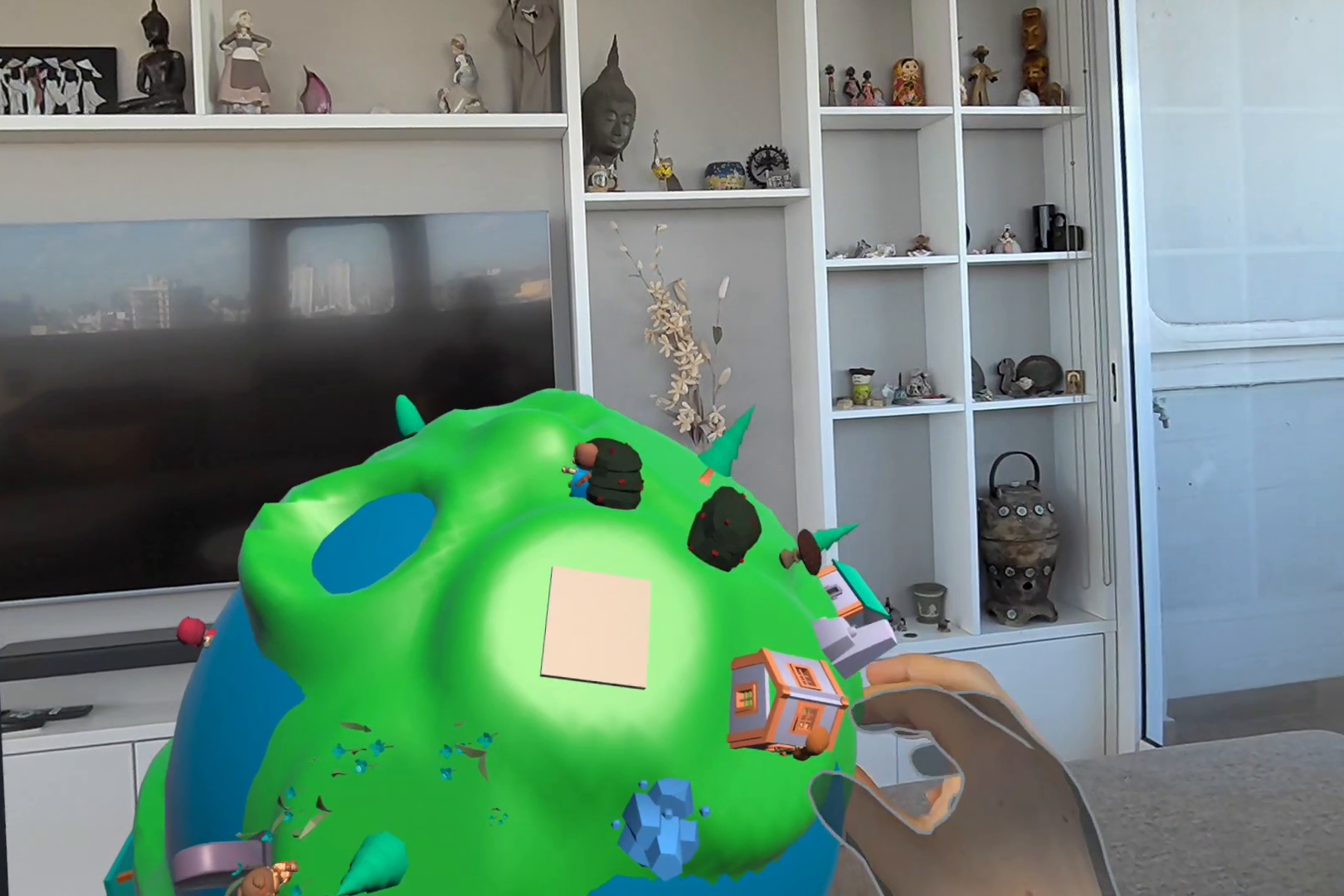
Harness the power of the sun to shape your world.
-
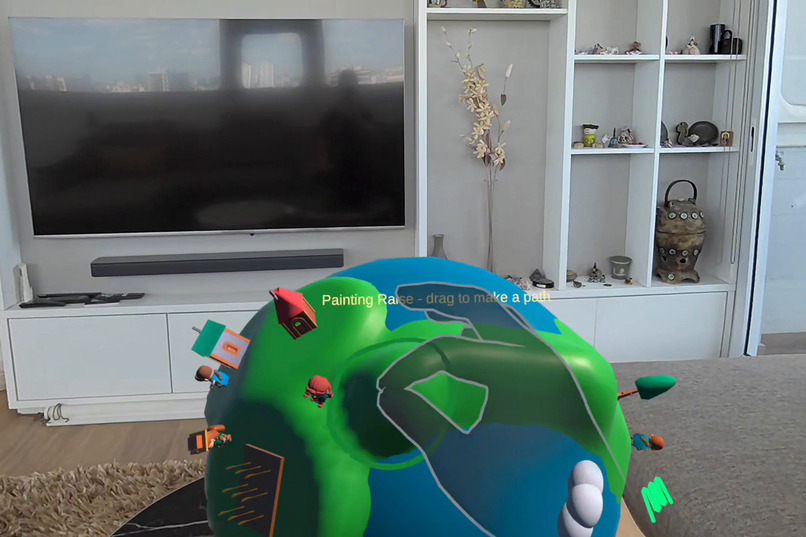
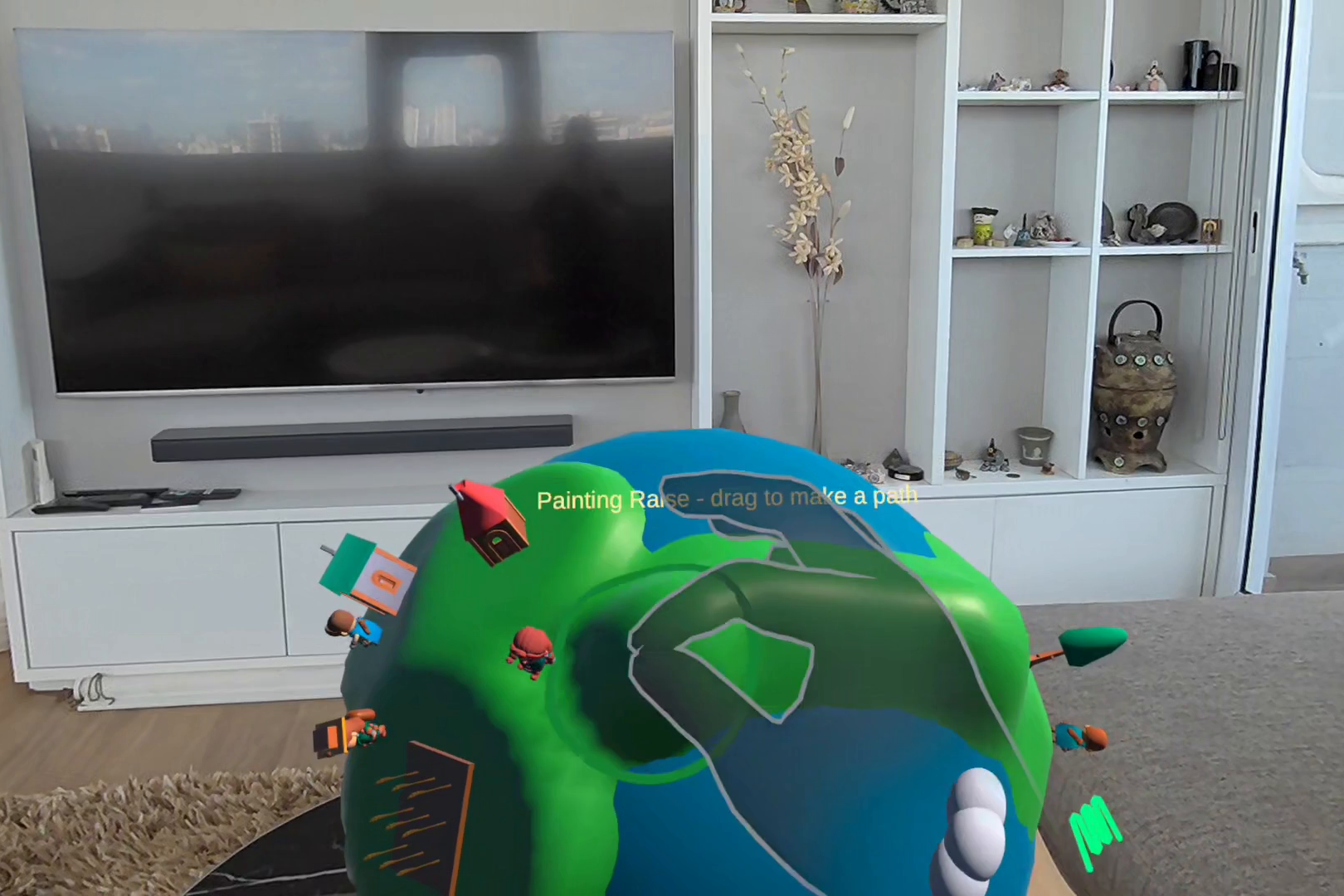
Sculpt the land and reshape your island.
-
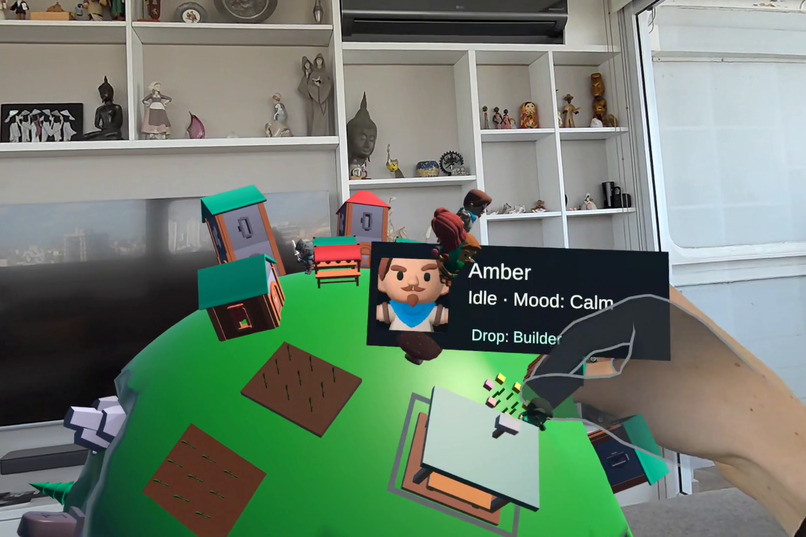
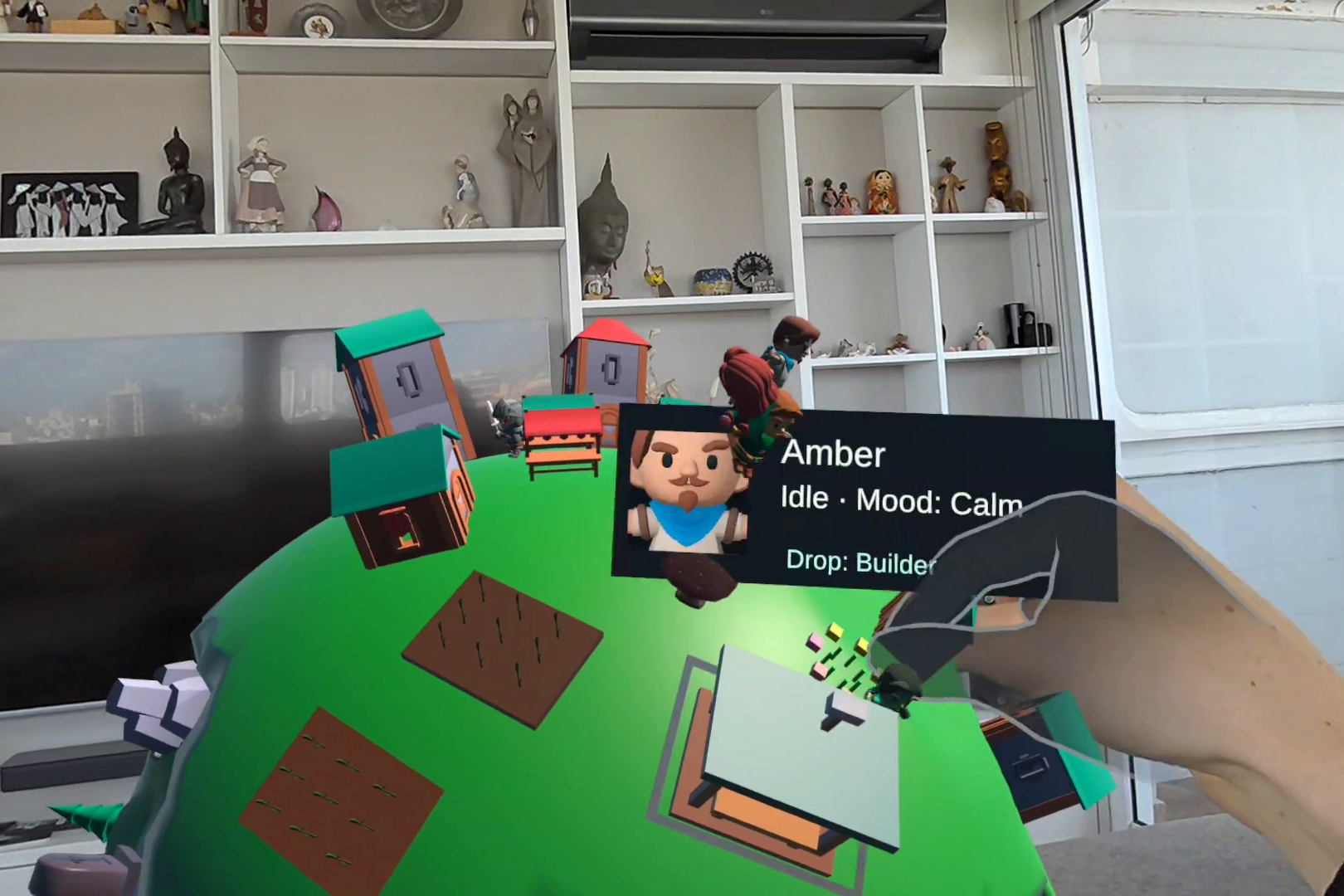
Meet your villagers and interact with them directly.
-
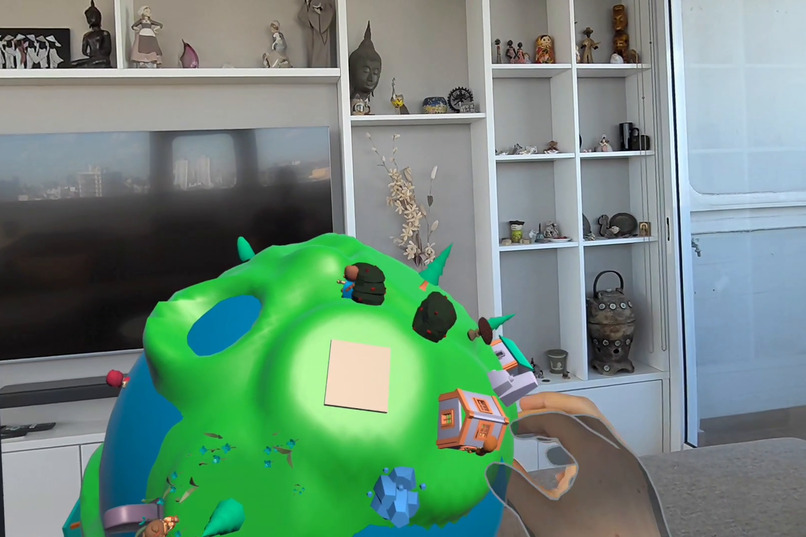
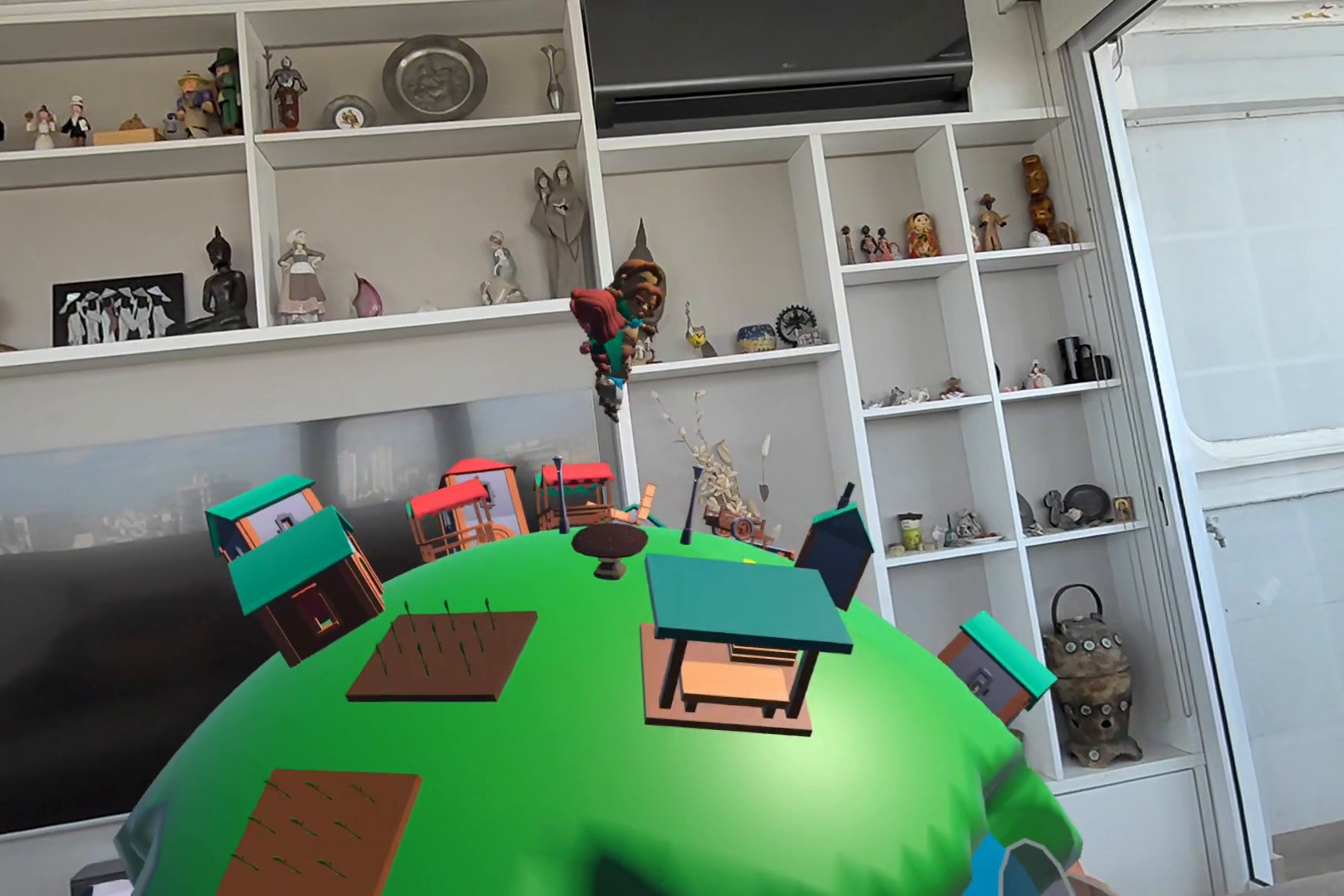
Place buildings and watch your villagers bring them to life.
-
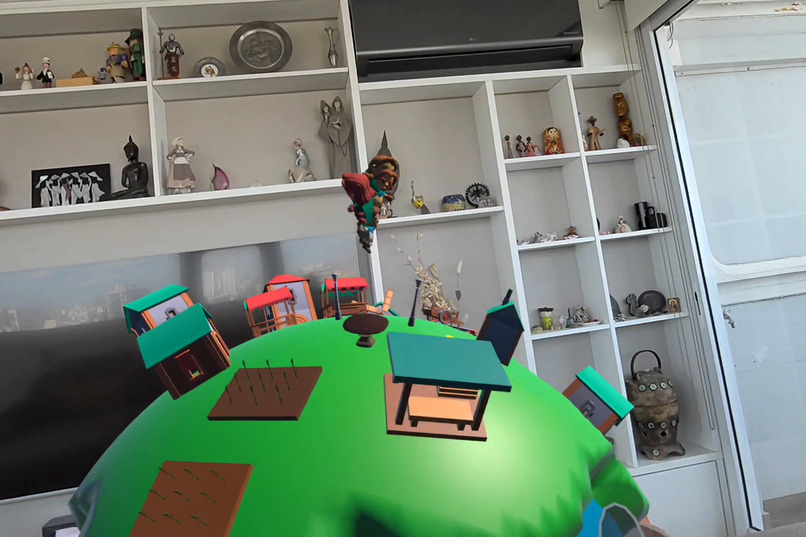
A tiny living world, right in your room.
Inspiration
I've always liked the idea of god games, where you can watch a little civilization grow while influencing the world around it. With mixed reality and hand tracking, I wanted to explore what that experience could look like if the world was actually sitting right in front of you.
The idea behind Tiny Deity was simple: what if you could become a god of a miniature world, using your own hands to shape the land, control nature, and interact with its inhabitants?
Rather than creating a traditional strategy game with complex menus and controls, I wanted something more playful and relaxing, where experimenting with your powers is part of the fun.
What it does
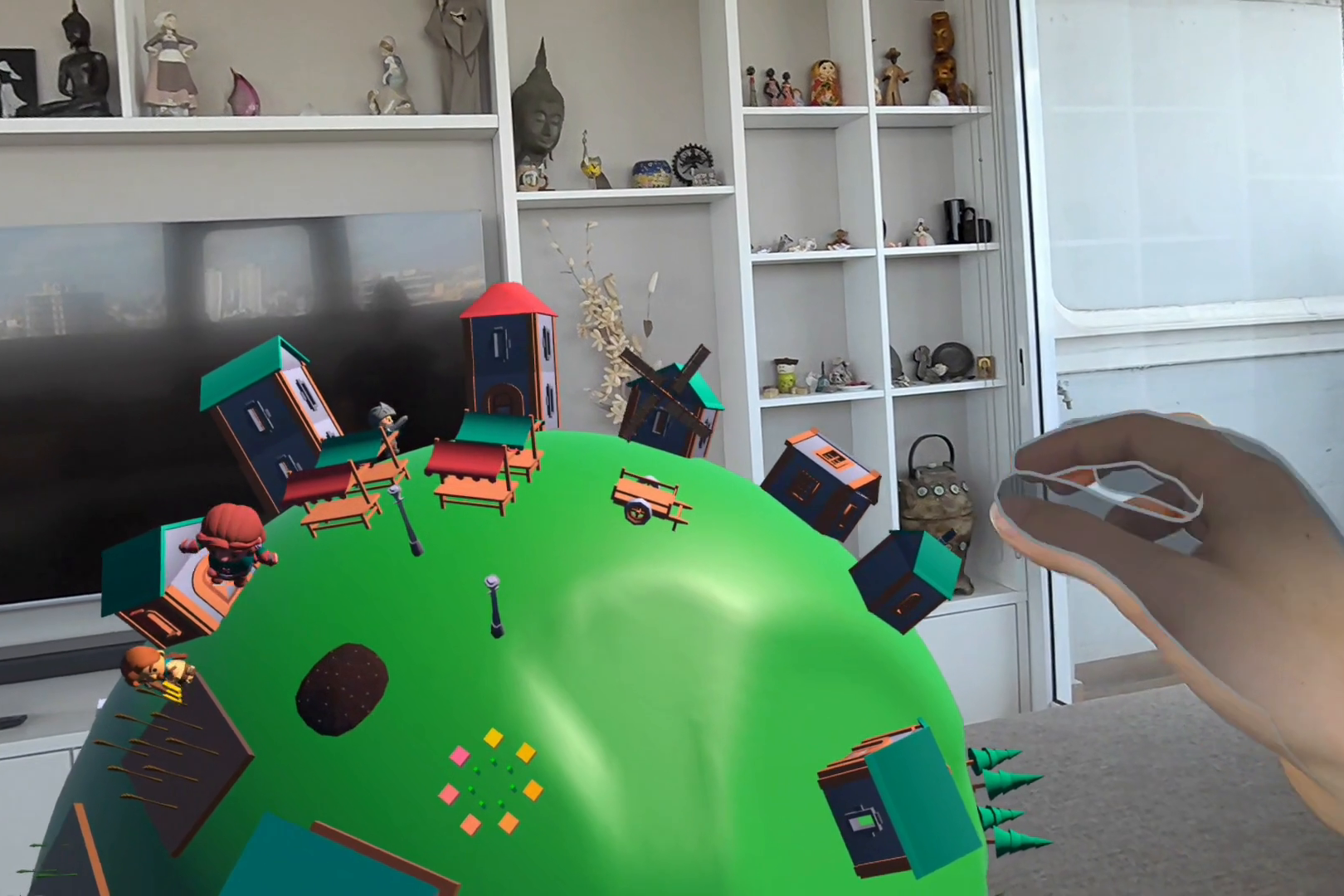
Tiny Deity is a mixed-reality god simulator that brings a miniature civilization into your physical environment.
Players can interact directly with the world using their hands, shaping its development and experimenting with different divine powers.
Some of the main gameplay mechanics include:
- Divine powers: Control sunlight, summon rain clouds, and unleash lightning to influence the world.
- Terraforming: Shape and modify the landscape to change your environment.
- Village building: Help your villagers construct buildings and develop their settlement.
- Living inhabitants: Interact with tiny NPCs that react to your actions and the world around them.
- Quests and objectives: Complete challenges and discover different ways to use your abilities.
- Exploration and experimentation: Discover hidden interactions and find creative ways to influence your civilization.
The goal is to make the world feel like a little living playground, where players are encouraged to experiment rather than follow a single predefined path.
How I built it
Tiny Deity was developed in Unity 6, targeting Meta Quest with mixed-reality passthrough and hand tracking.
I started by building a small interactive world and experimenting with how players could naturally interact with it. From there, I gradually added terrain manipulation, divine powers, NPC behaviors, building mechanics, and objectives.
A major part of the development process involved iterating on interactions directly in VR. Mechanics that seemed intuitive on a regular screen often felt completely different when experienced through hand tracking.
I also focused on giving the world enough life and personality that interacting with it would feel rewarding even outside the main objectives.
Challenges we ran into
One of the biggest challenges was making hand interactions feel natural and reliable. When players can manipulate terrain, interact with villagers, and activate different powers, it's important that the game understands what they're trying to do.
Terraforming was particularly challenging because it needs to feel precise without requiring complicated controls.
Another challenge was finding the right balance between a sandbox and a structured game. I wanted players to have freedom to experiment, but also meaningful objectives and a sense of progression.
Designing the interface for mixed reality presented its own challenges. Traditional menus can feel intrusive when the main attraction is a miniature world sitting directly in front of you.
Accomplishments that we're proud of
One of the most rewarding parts of building Tiny Deity has been seeing the different gameplay systems come together into a world that feels interactive and alive.
I'm particularly proud of:
- Creating a miniature world in mixed reality that players can explore and interact with directly in their own physical space.
- Implementing multiple divine powers that affect the environment and its inhabitants in different ways.
- Bringing the civilization to life through NPC behaviors, construction, and interactions with the player.
- Combining sandbox gameplay with objectives, giving players both the freedom to experiment and goals to work toward.
Seeing players interact with the world through natural hand movements, rather than traditional controllers, has been especially rewarding.
What we learned
Developing Tiny Deity reinforced how important it is to design around the strengths of mixed reality rather than simply adapting traditional game mechanics.
Hand tracking creates opportunities for interactions that feel much more physical and playful, but also requires careful consideration of precision, feedback, and discoverability.
I also learned that small details, like the way an NPC reacts to lightning or how the environment responds to sunlight, can make a big difference in making a miniature world feel alive.
What's next for Tiny Deity
I want to keep expanding Tiny Deity into a richer god simulator, with more things to discover and reasons to return to your little world.
Some planned improvements include:
- More unlockable buildings, characters, and divine powers.
- Additional quests, achievements, and progression systems.
- More NPC behaviors, reactions, and personalities.
- Random events and visitors that make each session feel different.
- Additional decorations and environmental interactions.
- Continued improvements to hand interactions, terraforming, and overall usability.
Ultimately, I want Tiny Deity to become a relaxing little world that players enjoy returning to, whether they're completing objectives, building their civilization, or simply experimenting with being a god.

