-
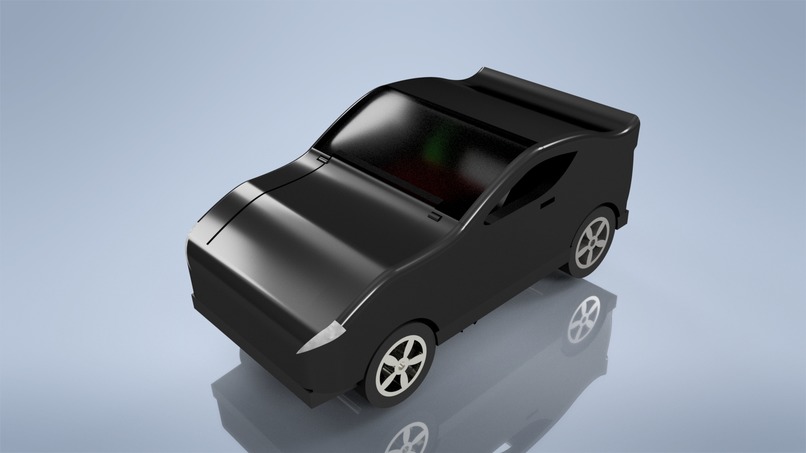
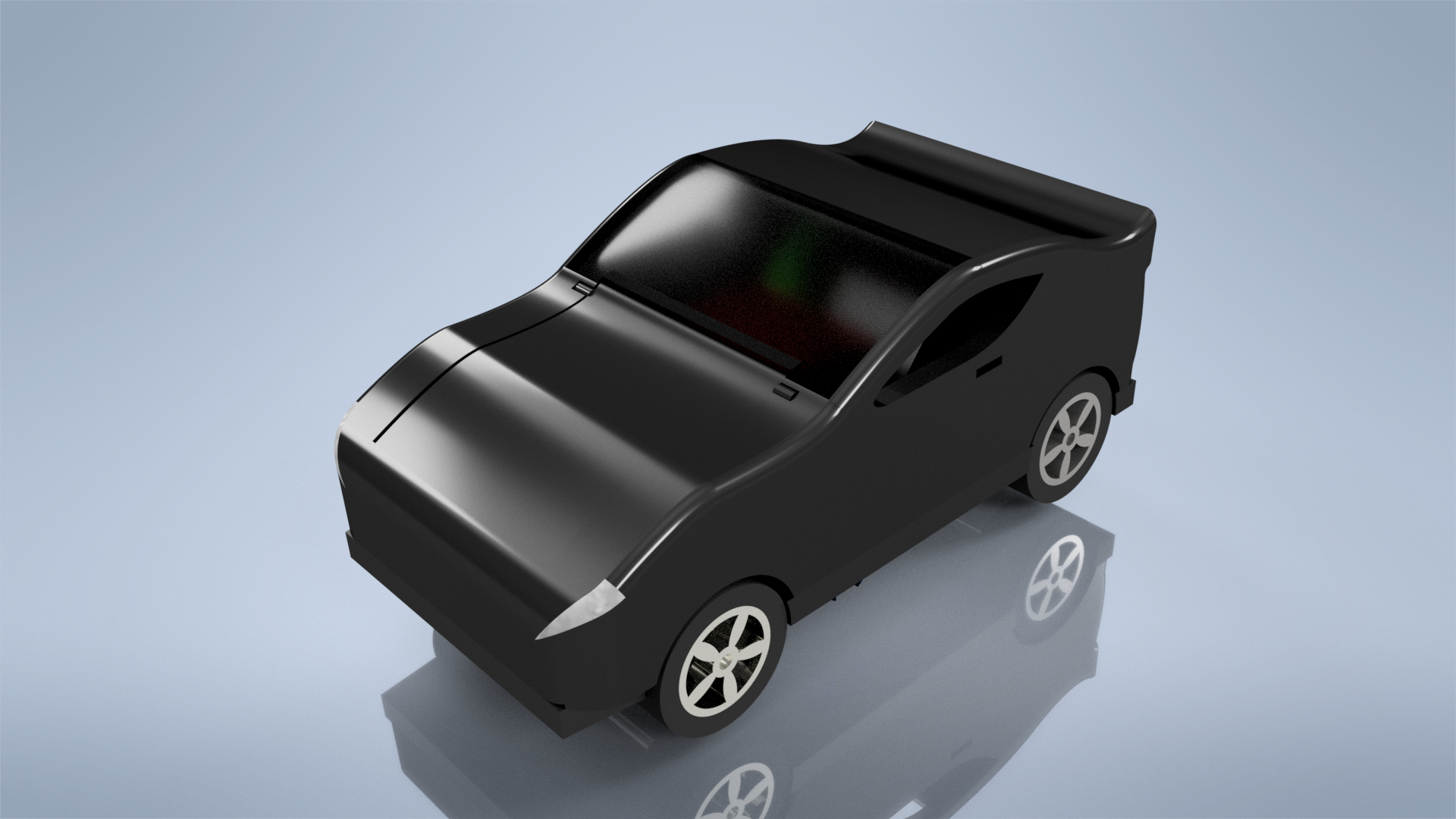
Rendered image of the final car
-
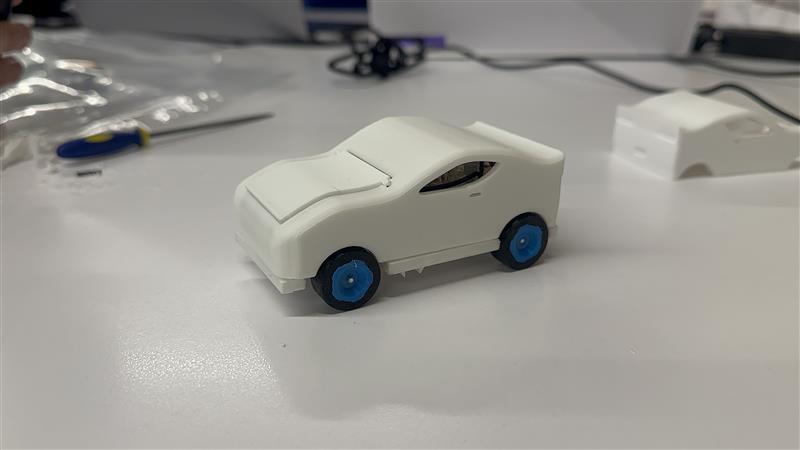
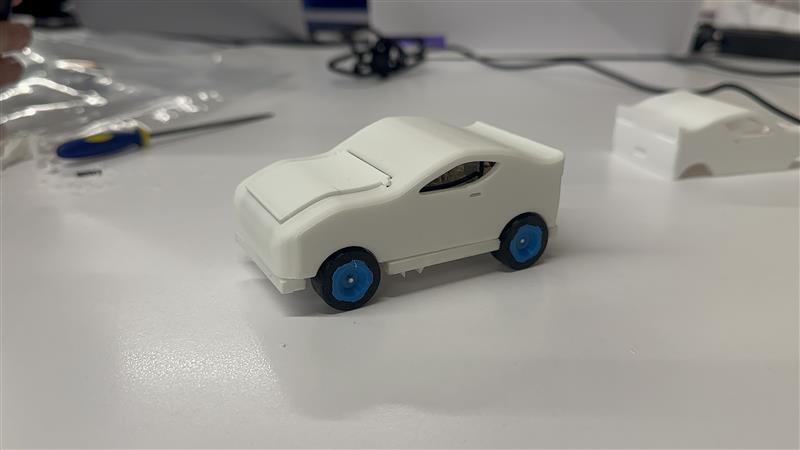
Car model
-
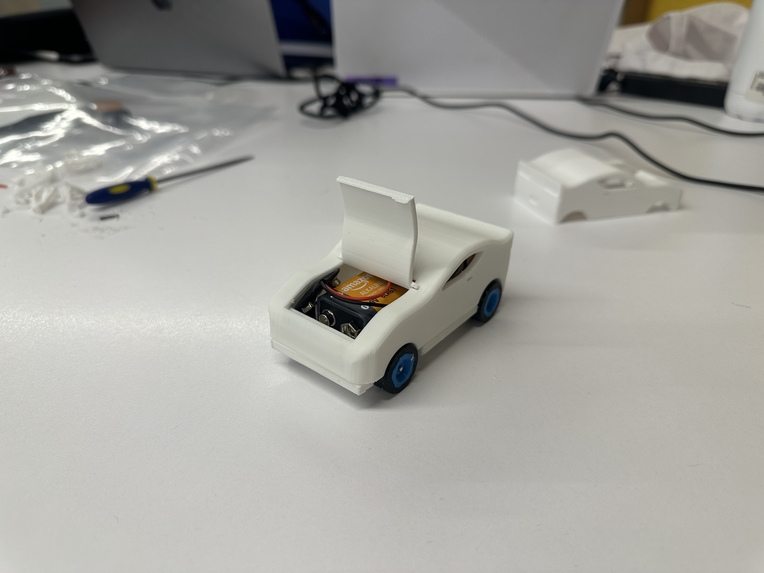
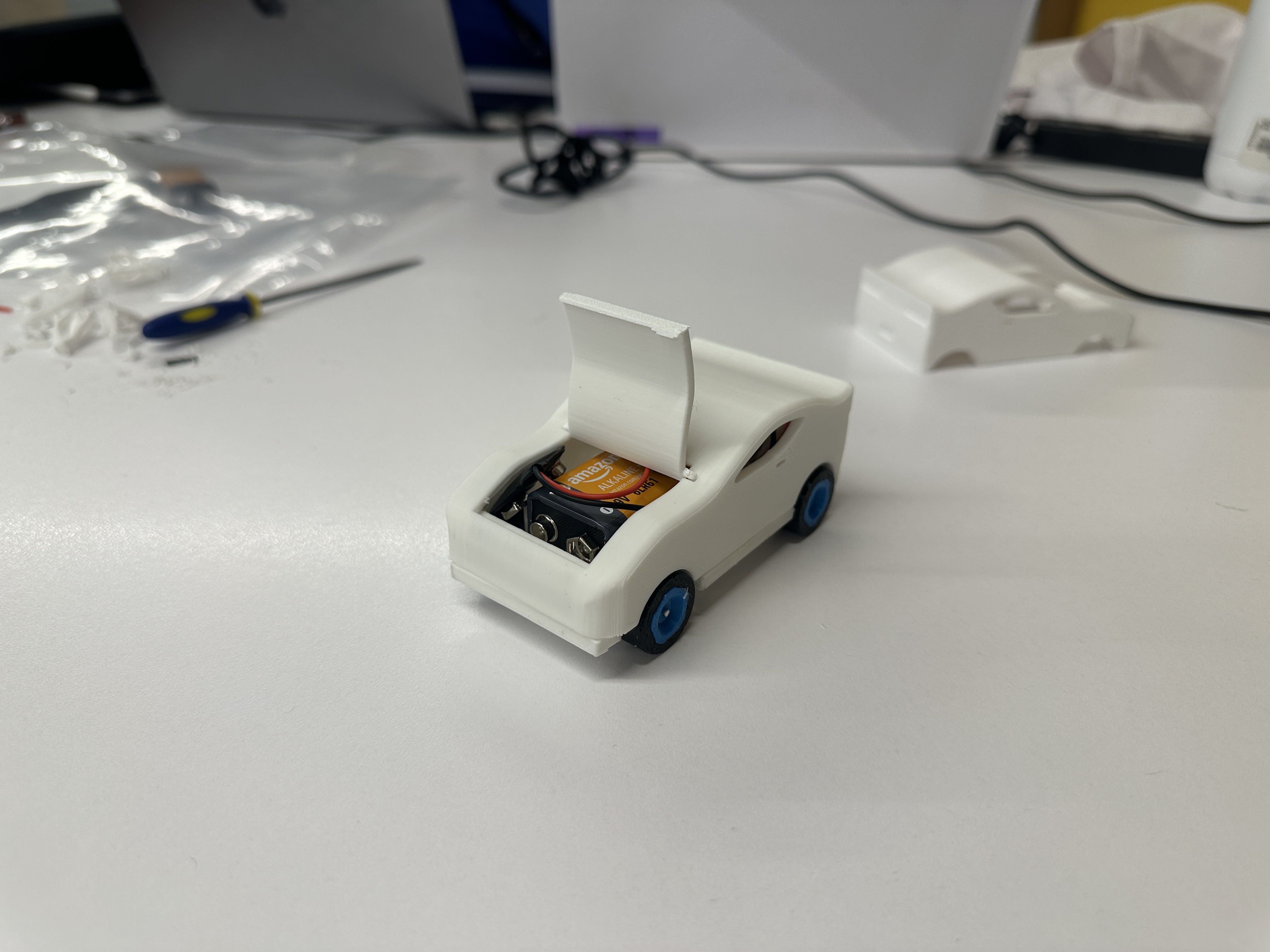
car with the hood open
-
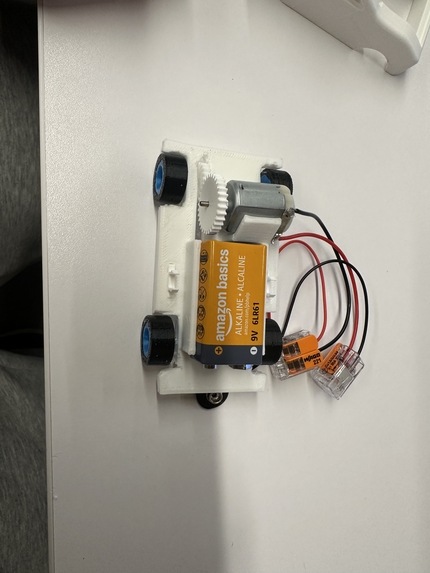
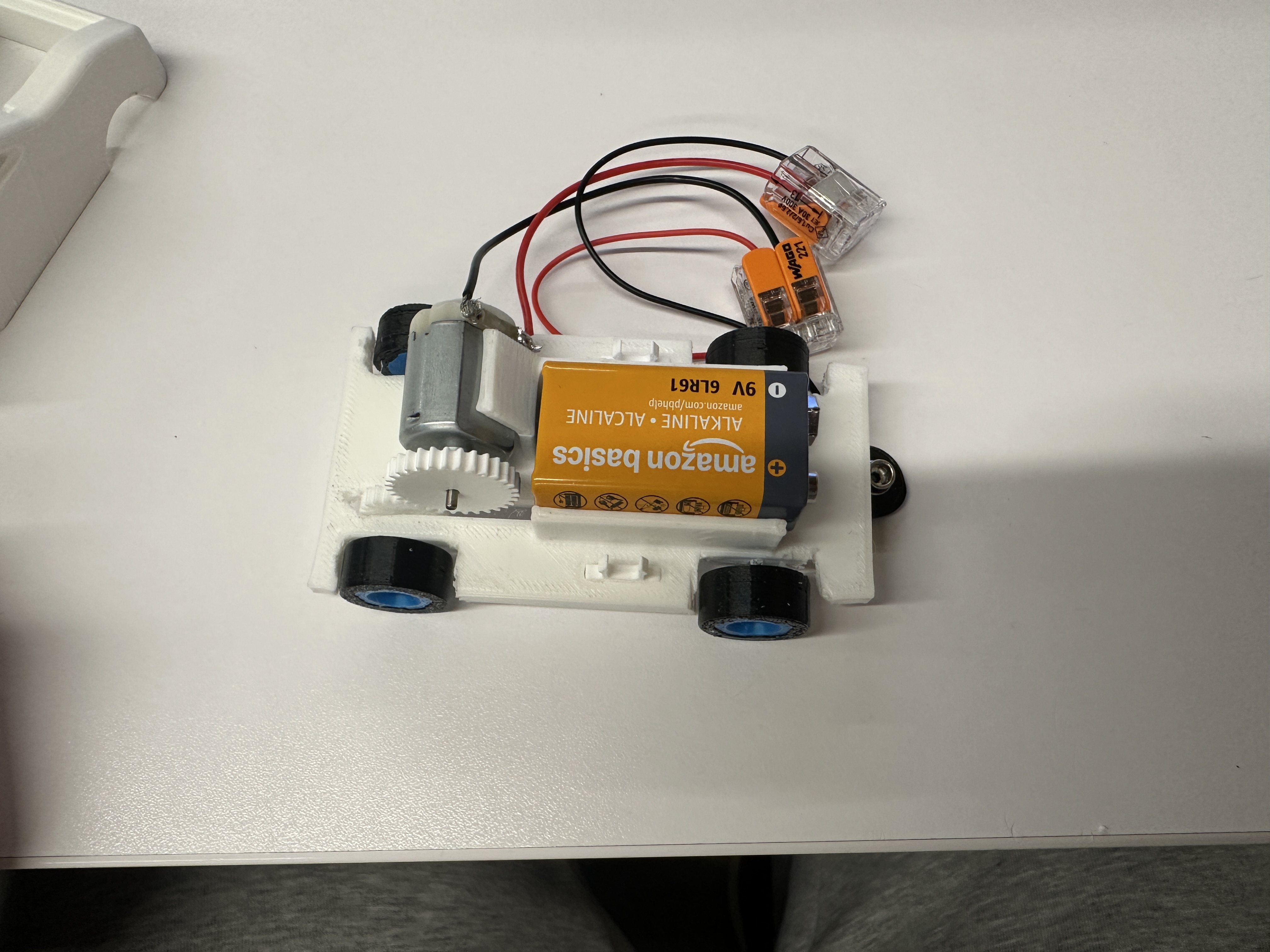
car insides
Inspiration
TinkerCar was inspired by the idea that most toy cars are finished products rather than creative tools. While traditional toy cars are fun to race, they rarely encourage tinkering, learning, or personalization. We wanted to design a toy that turns play into a hands-on design experience — one where building, modifying, and understanding the car is just as important as racing it.
What it does
TinkerCar is a modular, 3D-printable racing car platform designed for creativity and performance. It uses a standardized chassis for consistent racing while allowing users to design, print, and swap their own custom shells. The car is rear-wheel drive, optimized for speed on an oval track, and includes interactive features like an opening hood that powers the car on.
How we built it
We designed TinkerCar entirely with 3D printing in mind, prioritizing printability, durability, and ease of assembly. The chassis was optimized to print without supports, and all parts snap or clip together without fasteners or external materials. The drivetrain uses a single DC motor with a spur gear ratio to improve speed, and the shell attachment system allows for quick customization without affecting performance.
Challenges we ran into
One of the main challenges was balancing modularity with performance. Making the shell removable while keeping the car stable and fast required multiple design iterations. We also had to carefully design the chassis to be support-free while still strong enough for repeated racing. Ensuring reliable wall-guided motion on the oval track was another key challenge that required testing and refinement.
Accomplishments that we’re proud of
We’re proud of creating a fully 3D-printable car that requires no fasteners, no tools, and no external materials while still delivering strong performance. The clip-on shell system successfully allows for creativity without compromising fairness or reliability. Most importantly, we created a design that is simple, repeatable, and engaging for users of all experience levels.
What we learned
Through this project, we learned how to design within real-world constraints such as manufacturability, assembly, and repeatability. We gained experience optimizing designs for 3D printing, creating snap-fit mechanisms, and balancing mechanical performance with user interaction. We also learned the importance of iteration and testing when designing for both usability and reliability.
What’s next for TinkerCar
Next, we see TinkerCar evolving into a full creative platform. Future improvements could include additional standardized attachments, alternative drivetrain options, and expanded shell design challenges. We also see potential for TinkerCar to be used in workshops, classrooms, and racing leagues as a tool to introduce engineering, design thinking, and creativity through play.
Built With
- inventor

Log in or sign up for Devpost to join the conversation.