-
-
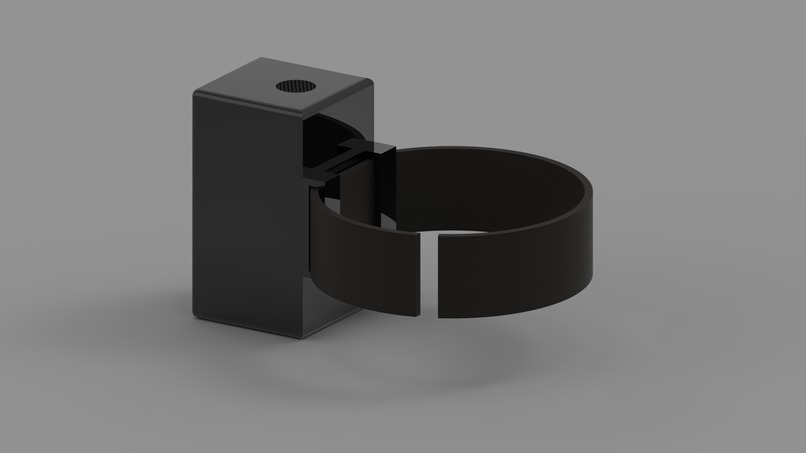
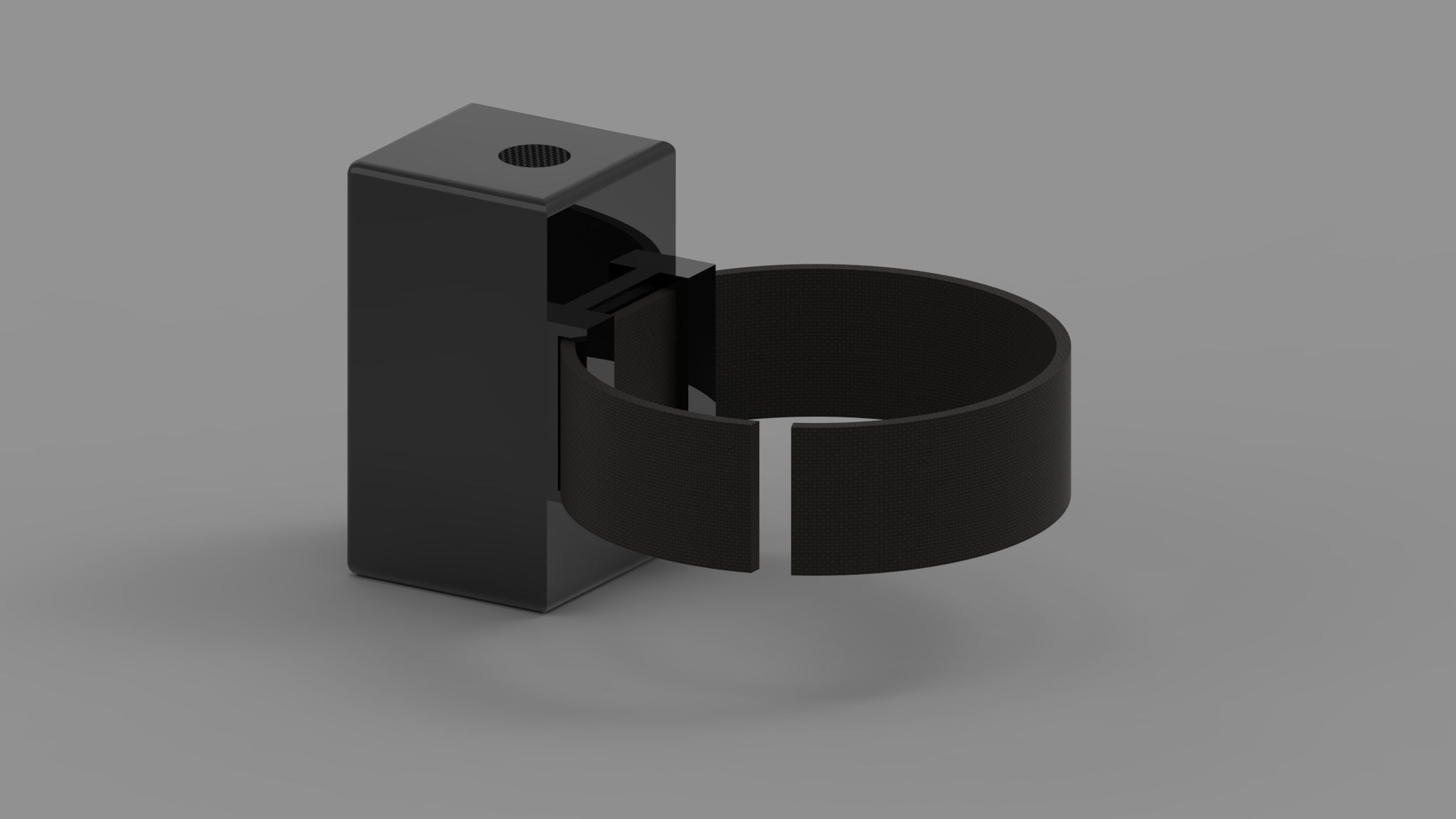
Close up render
-
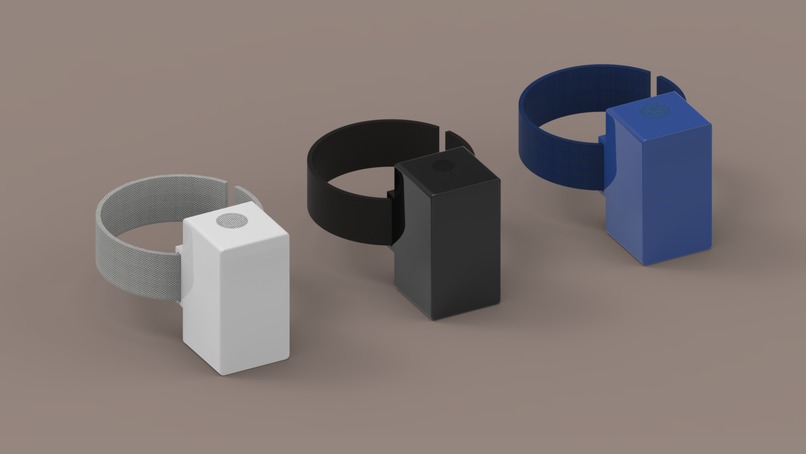
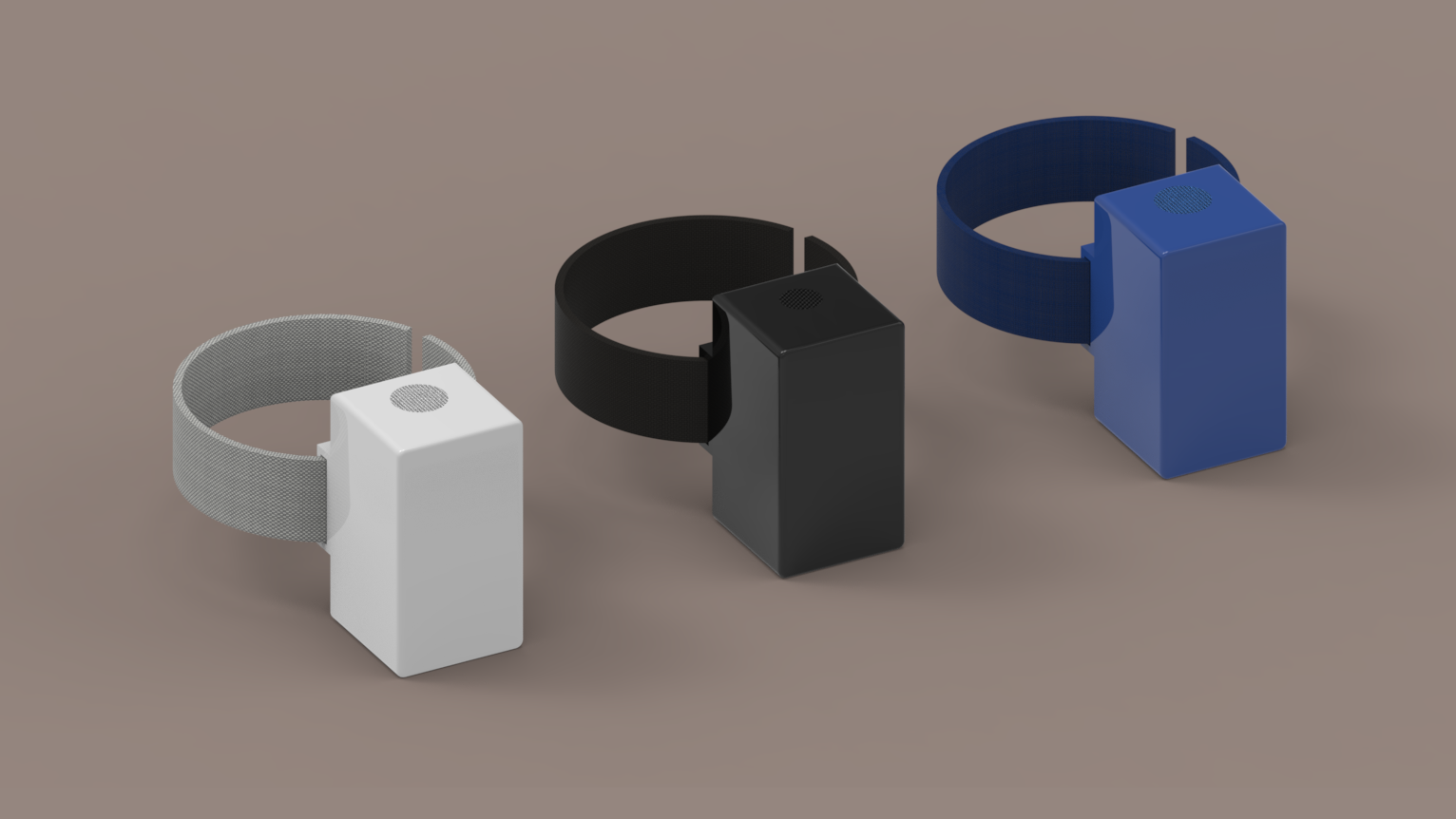
Hero shots and product variation
-
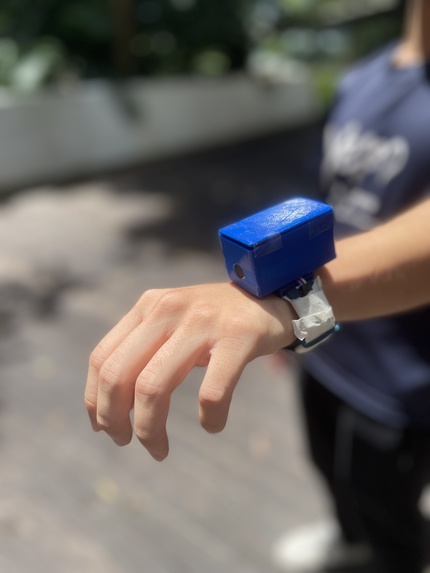
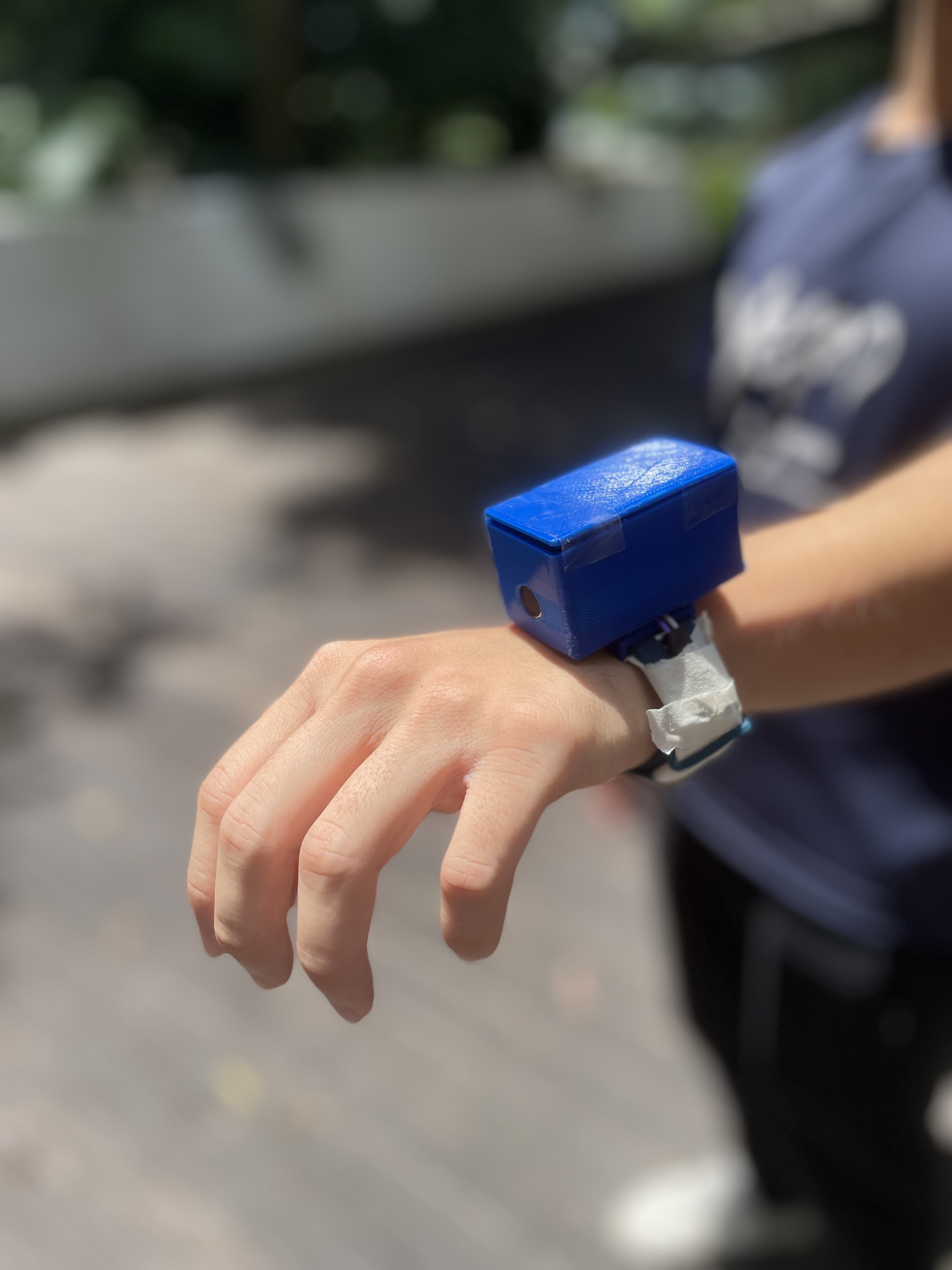
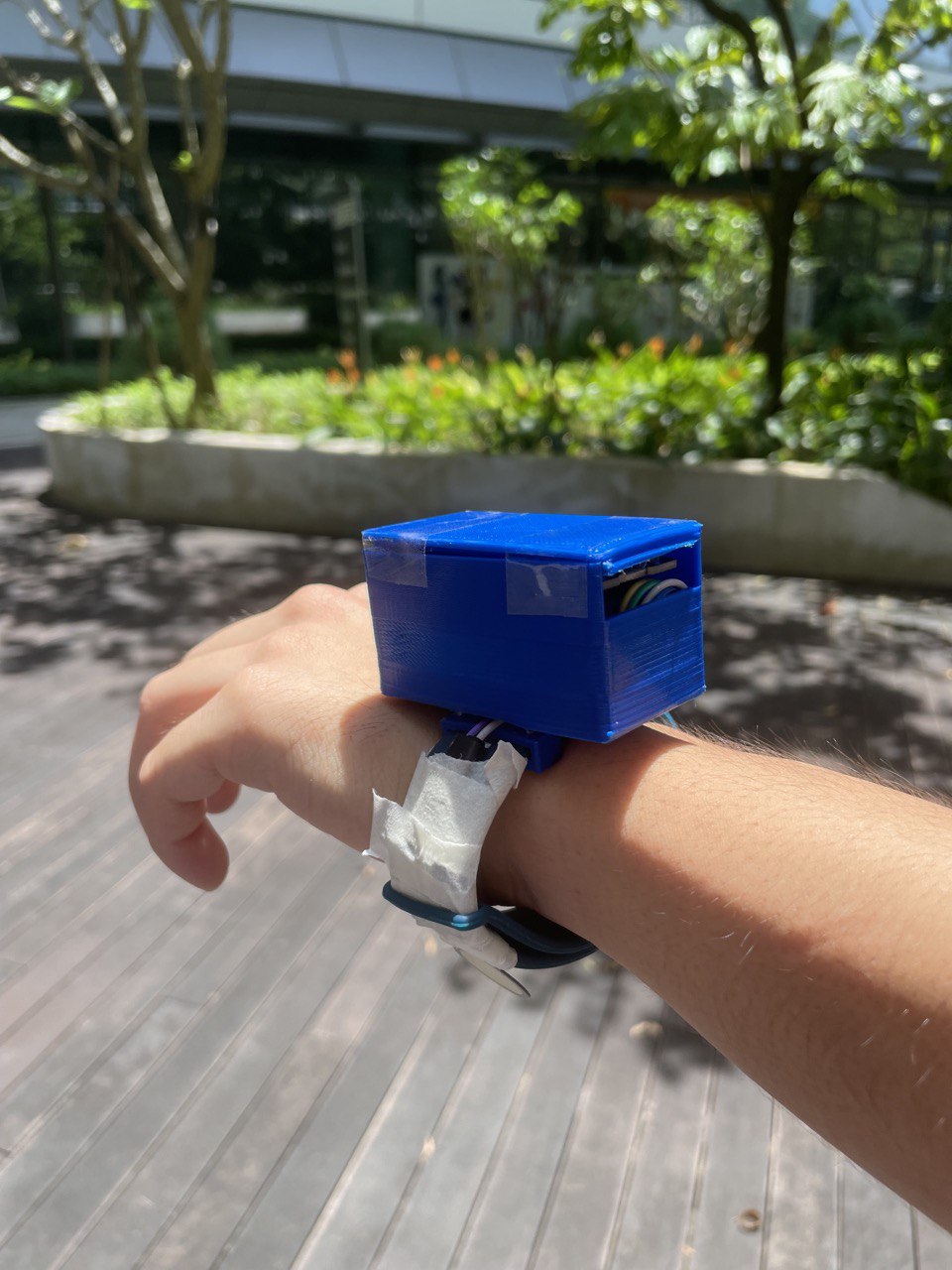
Wearable prototype
-
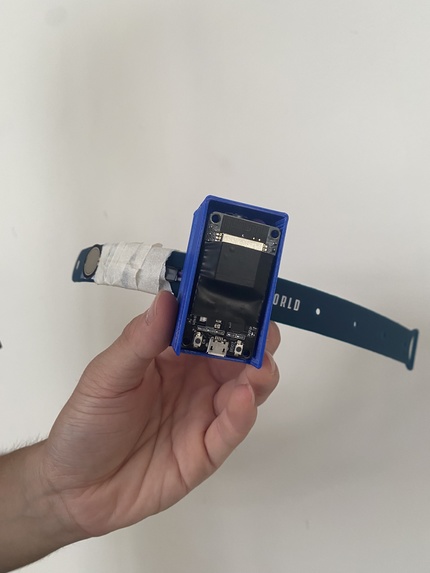
Internal components
-
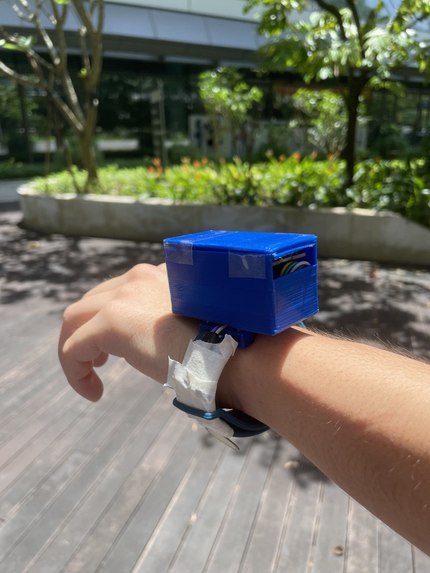
Wearable tech

Inspiration
Having hit a roadblock amidst our brainstorming session, we were exasperated. Time was our enemy. Time, and noise. The ThinkTank was like a pressurized chamber, with all this energy trapped inside, and nowhere to go. How could we possibly think, when the voices outside are overpowering the voices from within? Wait a minute. How indeed? If this was enough to agitate us, how much more overwhelming would it be for others with sensory sensitivity? People with ASD experience difficulty with sensory processing, so it would make it that much harder for them to cope with these environmental triggers and focus on their task. Further research exposed gaps in current solutions within the market, such as sensory assistive technology that are too focused on one aspect e.g. noise-cancelling headphones, leaving users susceptible to other sensory triggers. ASD-centric applications are also designed to assist in challenges people with ASD face, which may not necessarily help users integrate into and feel included in society. Therefore, we decided to create not only an integrated experience which will tackle sensory overload as a whole, but also one that can help make everyday technologies that we use more inclusive and accessible to people with ASD.
What it does
Detects signs of anxiety caused by sensory overload and provides an integrated experience to help users overcome it.
How we built it
Hardware
- Building up knowledge on hardware and electronics needed
- Setting up the code for electronics separately before integrating them into one .ide file
- FSR402 Force Sensor (Strain Gauge Mechanism) used to measure heart rate. An elevated heart rate could suggest that the user is experiencing sensory overload. In the event of an elevated heart rate, the wearable will be alerted and initiate an intervention sequence.The FSR402 can also be replaced with any other component that can measure heart rate, such as Plethysmography (PPG) and Electrocardiogram (ECG) modules.
- KY-038 Sound Sensor used to measure ambient sound in the environment which could be a factor causing sensory overload. Any loud values that sustain for an extended period of time will alert the wearable to initiate the intervention sequence. The KY-038 can also be integrated in tandem with other sensors for ambient environment, such as light intensity and temperature, to provide more possible scenarios of stimuli that can cause sensory overload.
ESP32 integration
- One ESP32 (I) included in the wearable, processes heart rate data and sound sensor data recorded by the sensors, and decides whether to initiate the intervention sequence via a boolean value. This boolean value is communicated to a separate ESP32 (II) which is linked to the computer. The ESP32 (II) then initiates
- The ESP32 (II) then initiates an intervention response that lowers down screen brightness and volume requires the user to breathe and calm their heart rate before proceeding.
Interface
- Creating breathing circle animation using p5.js library
- UI considerations for potentially hypersensitive users
- Slow, gradual and calming animations
- Use of dull and mild colour palette as opposed to bright colours which may be triggering Simple and minimal use of words
Challenges we ran into
One challenge that we faced is our limited expertise in front-end development, which we managed to overcome with creative open-source platforms like p5.js, which offer a user-friendly approach to interface creation. The unavailability of an ECG heart module was also a major frustration, which led us to explore alternatives, such as force-sensitive resistors. Furthermore, our unfamiliarity with the ESP32 microcontroller led to extensive troubleshooting and problem solving, which was time consuming, given the time constraints we were given to work within.
Accomplishments that we're proud of
We take pride in our noteworthy achievements that have marked our journey as a team. For the majority of our members, this hackathon served as their inaugural experience, igniting a passion for innovative problem-solving and collaborative work. Our ability to conceive a novel and innovative idea showcases our creative thinking and vision. Crafting a functional prototype within the constrained timeframe of just 24 hours underscores our dedication, efficiency, and technical prowess. Furthermore, our accomplishment is not only in our solution but also in our synergy, as we harmoniously combined diverse skill sets and backgrounds, exemplifying our successful interdisciplinary collaboration.
What we learned
We learnt how to work with the various skillsets that each interdisciplinary background brought, how to manage our time efficiently in a strict time constraint, and how to bounce back from failures in each step of the way.
What's next for timeout
- Leverage on government funding for assistive technology to create a more inclusive and accessible society (SG Budget 2023: more support for people with special needs, Enabling Masterplan 2030)
- Mass-produce products to take advantage of bulk purchases
- Partner with Autism Resource Centre Singapore (ARCS) to roll out the initiative
Built With
- arduinoide
- autodesk-fusion-360
- javascript
- keyshot
- python
- rhino3d

Log in or sign up for Devpost to join the conversation.