-
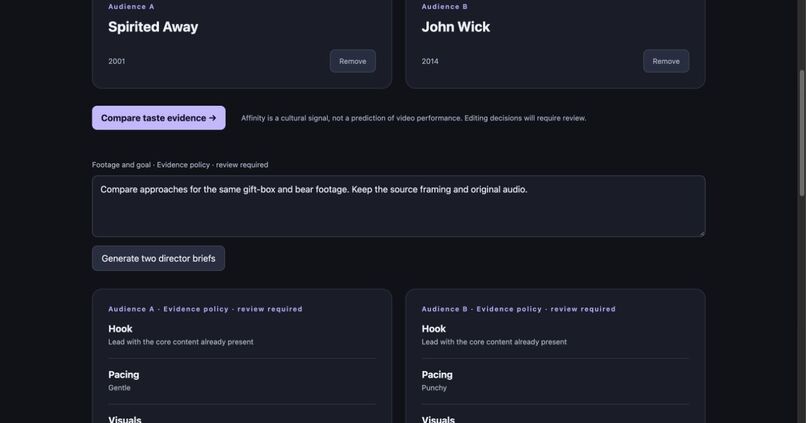
Live Qloo evidence produces distinct, explicitly labeled pacing candidates for two cultural references.
-
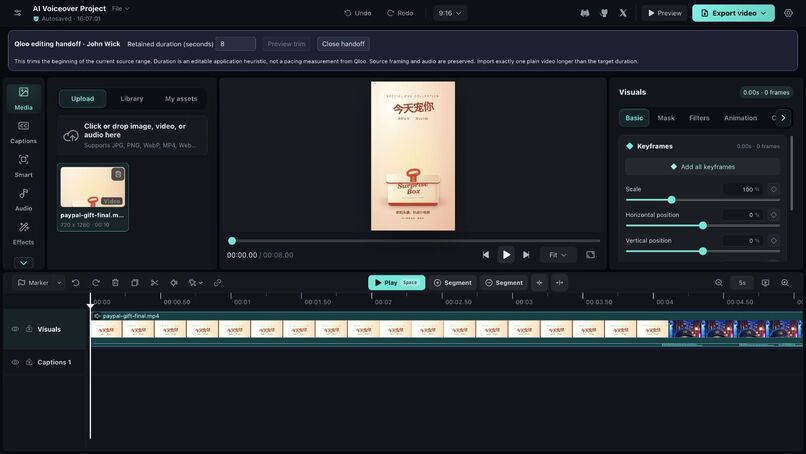
Reviewed source trim applied in Timeline Studio: eight-second portrait video, with original audio and reversible edits.
INSPIRATION
A creator can describe a target audience with a favorite film more easily than with editing jargon. We wanted to connect those references to a practical editing workflow while letting the creator inspect the evidence and stay in control.
WHAT IT DOES
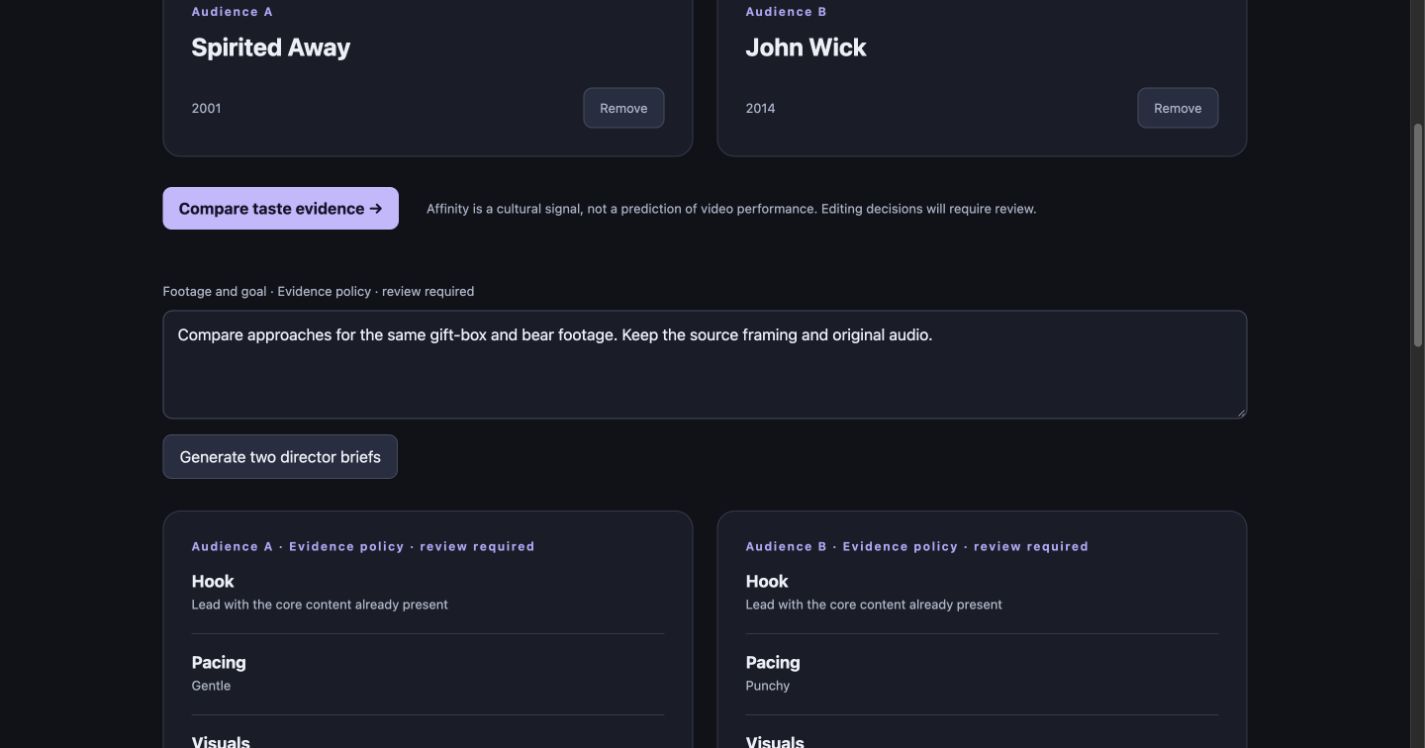
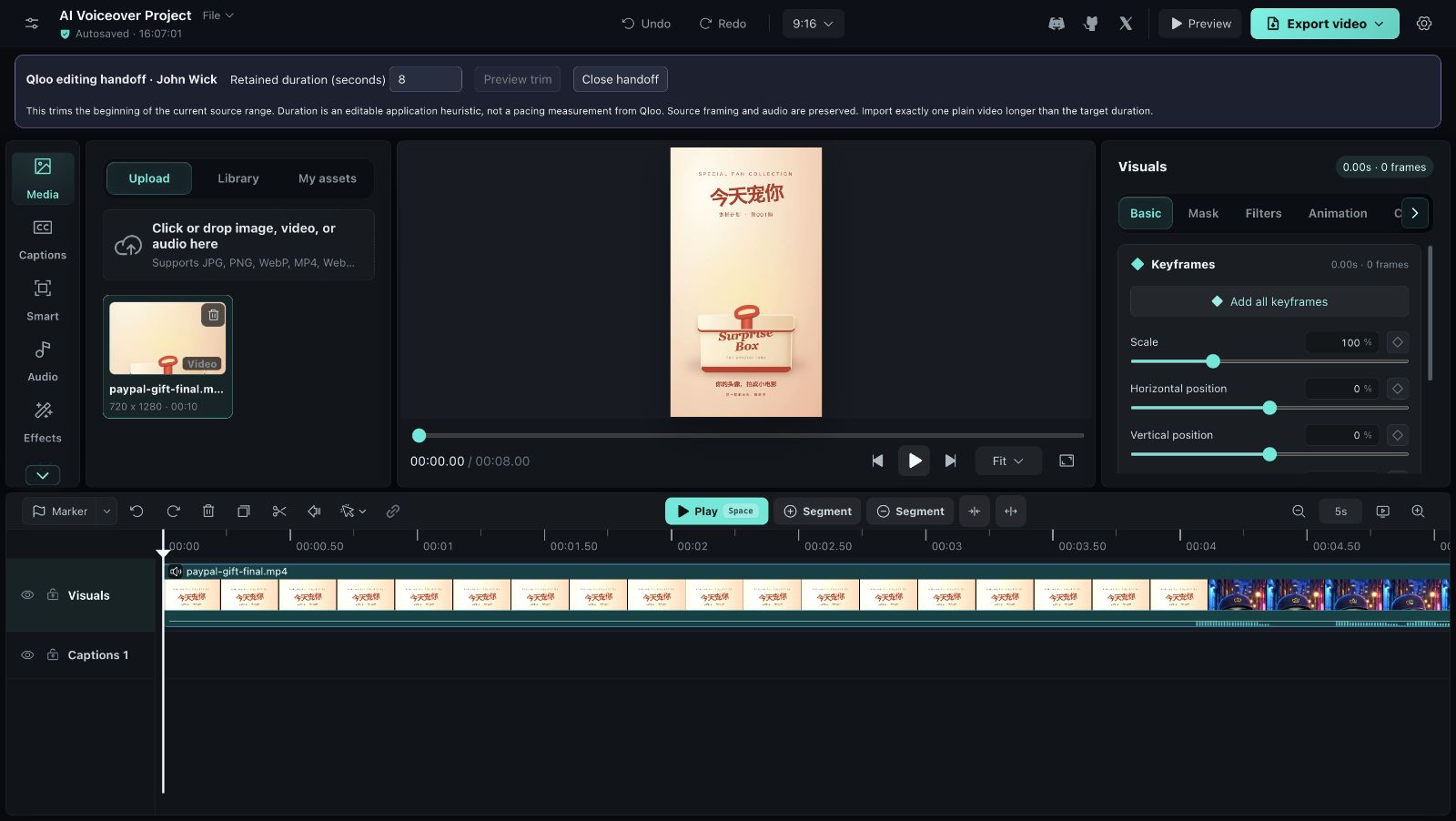
Taste Director compares two audience references using live Qloo Search and Insights. The creator confirms the intended entities, inspects cultural recommendations and provenance, and reviews separate editorial candidates. A selected candidate opens Timeline Studio with an editable retained-duration suggestion. Import one plain video, preview the exact source-trim change, apply it, undo it if needed, and export an MP4 locally in the browser.
HOW WE BUILT IT
React and Vite provide the interface; Vercel hosts the public app and Node API functions. Qloo credentials remain server-side. Search resolves ambiguous references; Insights supplies the cultural evidence. A transparent rank-weighted genre policy maps that evidence to gentle, balanced, or punchy candidates. The public deployment uses this policy, not an online language model. Optional local Ollama mode is documented separately.
The editor handoff reuses Timeline Studio's existing inspect/preview/apply transaction system with freshness checks and undo. Progressive WebMCP tools are registered only when supported by the browser. External browser-agent invocation has not been verified in our current Chrome setup; the public GUI workflow works independently.
WHAT QLOO CONTRIBUTES
The policy evaluates live recommendations associated with each confirmed reference instead of relying only on generic model knowledge. The interface exposes the Qloo evidence separately from our editorial interpretation. Qloo does not prescribe trim lengths: 12, 10, and 8 seconds are editable application defaults. We do not claim these settings improve audience performance or that the planner understands source footage.
CHALLENGES
We separated cultural evidence from speculative creative advice, constrained what can reach the timeline, and retained explicit human review. A small local model sometimes returned similar creative choices or inconsistent language, so the hosted prototype uses a reproducible policy with clearly stated limitations.
ACCOMPLISHMENTS
Live Qloo entity search and audience comparison, 13 interface languages, server-only credentials, a public deployment, and an actual review/apply/undo/export workflow. Local Chrome verification trimmed a 10.03-second portrait video to 8 seconds, restored it with undo, and exported an H.264/AAC MP4.
WHAT WE LEARNED
Cultural grounding and editorial quality are separate problems. Showing evidence, making interpretation explicit, and keeping edits reversible helps a creator evaluate recommendations without mistaking affinity for a guaranteed outcome.
WHAT'S NEXT
Improve the artistic usefulness of audience-specific choices, support more complex reviewed edit plans, evaluate against a generic baseline with creators, and verify external agent invocation on a compatible browser.
EXISTING PROJECT DISCLOSURE
Timeline Studio's browser editor predates this entry. This competition branch adds Qloo's server adapter, entity confirmation, audience comparison, evidence-policy director, optional local-model director, progressive Qloo tools, reviewed editor handoff, and public deployment configuration.
JUDGE WALKTHROUGH
- Open the public /qloo/ URL and select English.
- Search audience A: Spirited Away; confirm the intended movie.
- Search audience B: John Wick; confirm the intended movie.
- Enter a short source-footage brief and generate candidates.
- Inspect the evidence and choose Review in editor for a candidate.
- Import your own plain video longer than the retained duration, or change the duration to a shorter value.
- Preview trim; inspect before/after timing; apply changes.
- Undo the edit, or export it as MP4.
Built With
- qloo
- react
- vercel

Log in or sign up for Devpost to join the conversation.