-
-
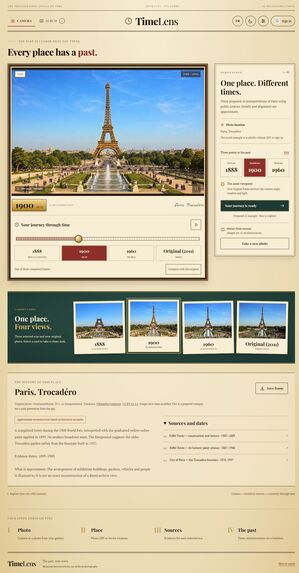
Paris example: timeline and sources. Photo: NonOmnisMoriar, CC BY-SA 3.0. Prepared AI views: TimeLens, same licence.
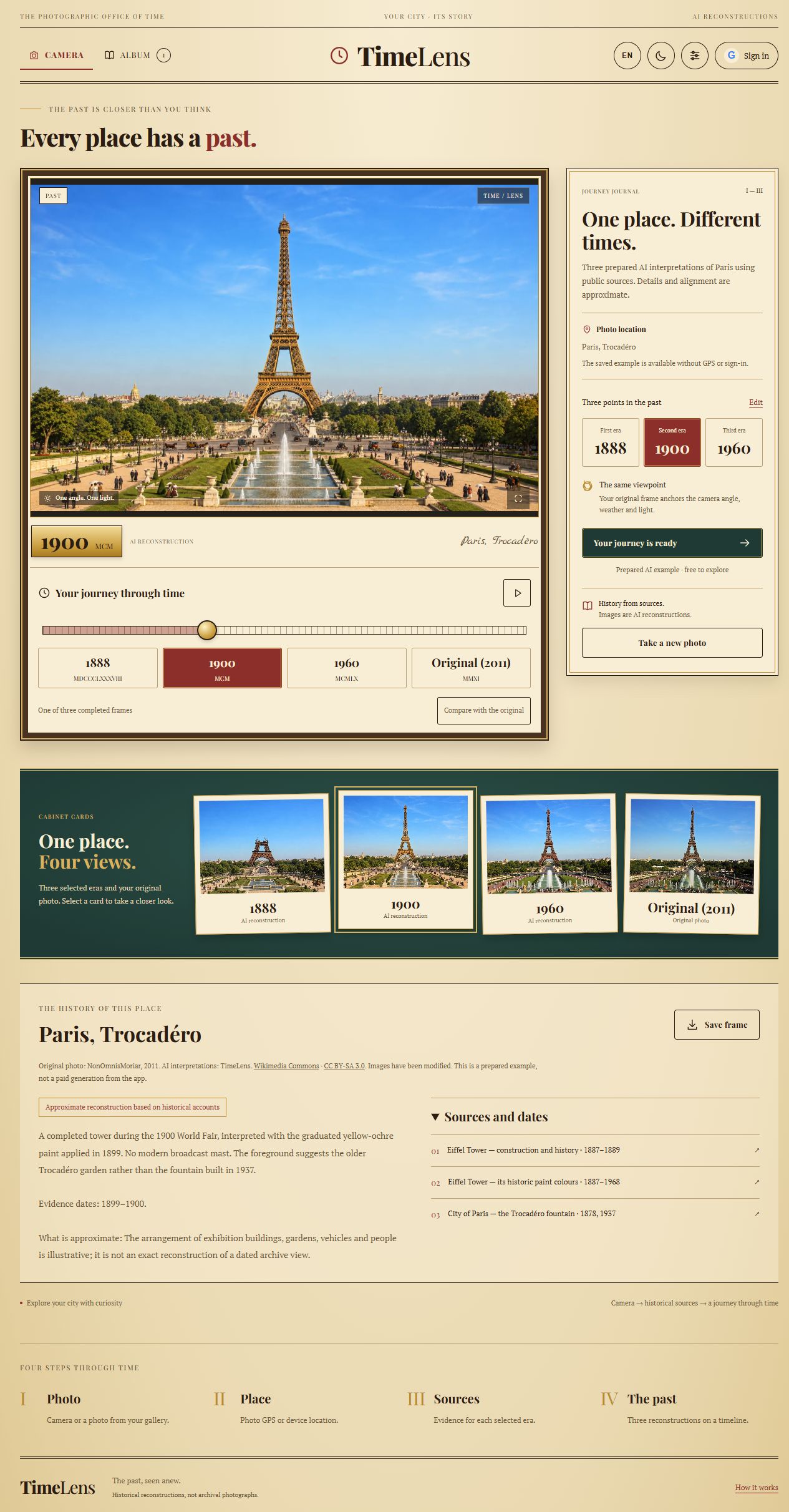
TimeLens lets people explore the history of a place through a photograph. Capture or upload a building or street, use photo GPS metadata or device location, choose three years, and move a timeline to compare researched AI reconstructions with the original. The pipeline identifies the place, searches the web, validates retrieved source links, and records evidence and uncertainty for each era. Drawings, written history and archaeology can support periods before photography. Three image edits run in parallel, with sources and finished frames appearing progressively. The original photo guides viewpoint, weather and lighting; historical detail and alignment remain approximate, and generated images are clearly labelled as reconstructions. Firebase Hosting, Cloud Functions, Cloud Tasks, Firestore and private Storage support queued processing and a private album. The OpenAI key stays in Secret Manager. Judges can explore a prepared, sourced Paris example without signing in; guest generation is also available with a limited allowance. English/Russian, light/dark themes and remembered preferences make TimeLens useful for curious walkers, travellers and students. The idea grew from a simple question: what did an everyday place look like before us? The main engineering challenges were connecting each era to retrieved evidence, handling periods before photography, preserving the uploaded viewpoint, and keeping a slow image-generation workflow usable. Evidence labels, progressive results and the original-photo comparison make those limitations visible. AI tools used include OpenAI web research and image editing, built-in ImageGen for the prepared example, and Codex for development assistance. Third-party photo, font and library credits are included in the repository. The prepared Paris example demonstrates the viewer; it is not a measured production-accuracy benchmark.

Log in or sign up for Devpost to join the conversation.