-
-
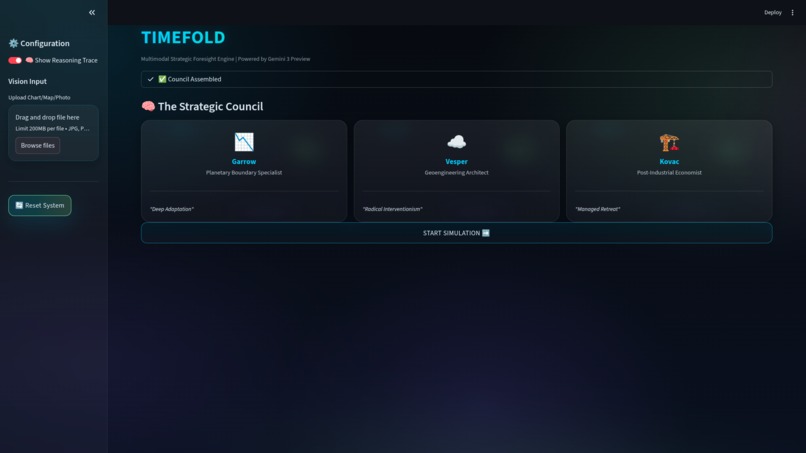
To Stabilize the Model Thinking Structure, Expert Roles Should Be Assigned
-
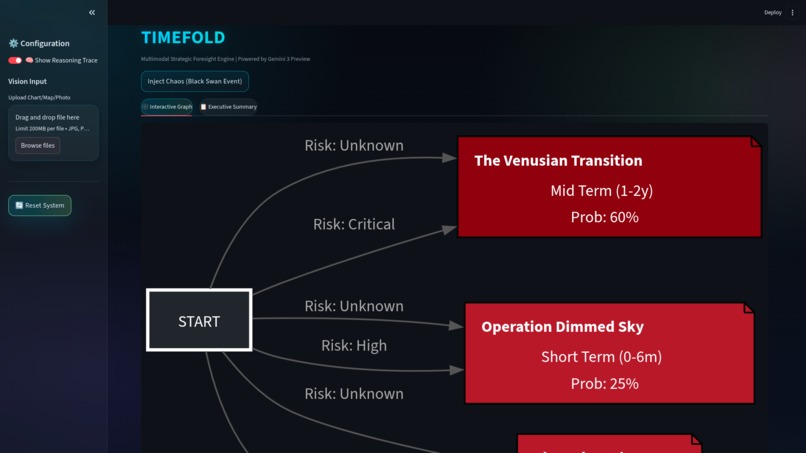
Generating output based on subject matter
-
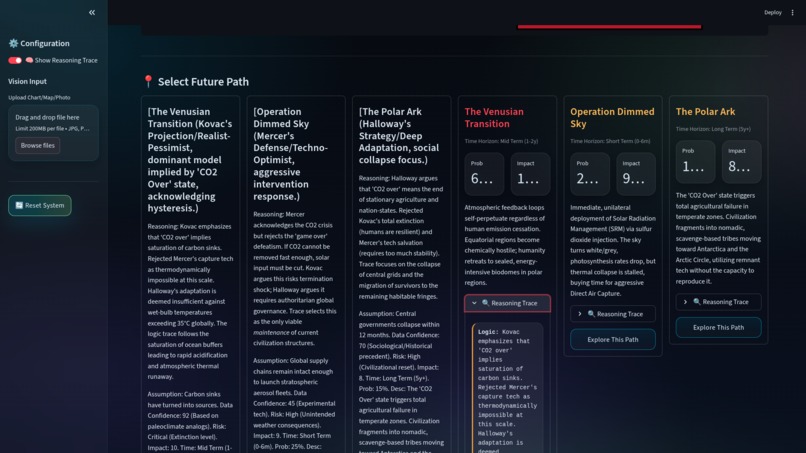
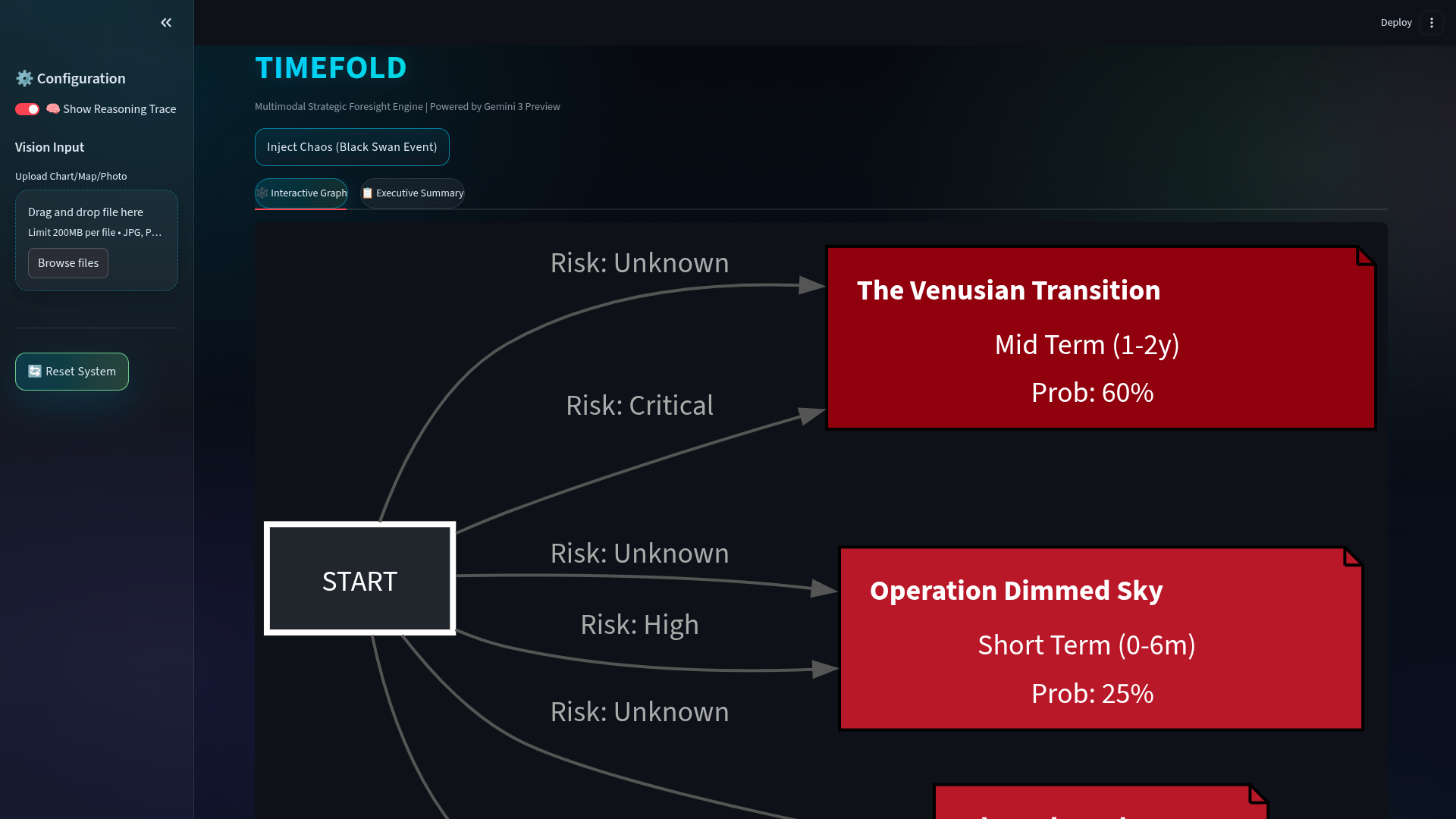
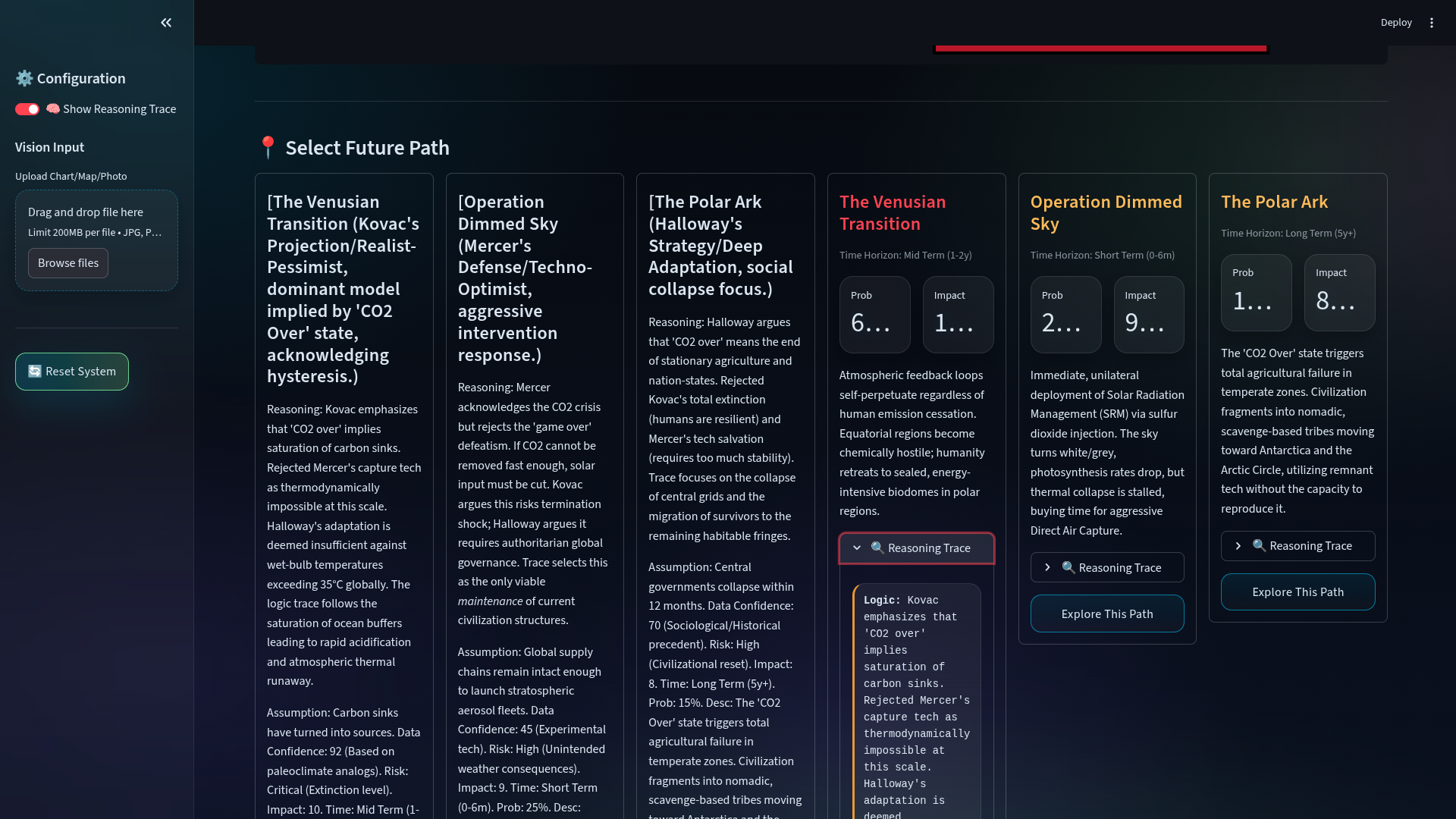
Detailed probability trees and visualizations of the subject output
Inspiration
- Classical planning systems are fast but static they optimize once and recompute blindly when constraints change. With Gemini 3’s reasoning and long-context capabilities, we were inspired to explore whether planning systems could reason about strategy, not just compute solutions.
What it does
- Time-Fold is an adaptive planning engine that combines deterministic planning with Gemini 3–powered strategic reasoning. Instead of static optimization, it evaluates constraints, trade-offs, and long-horizon outcomes to adapt decisions in real time.
How we built it
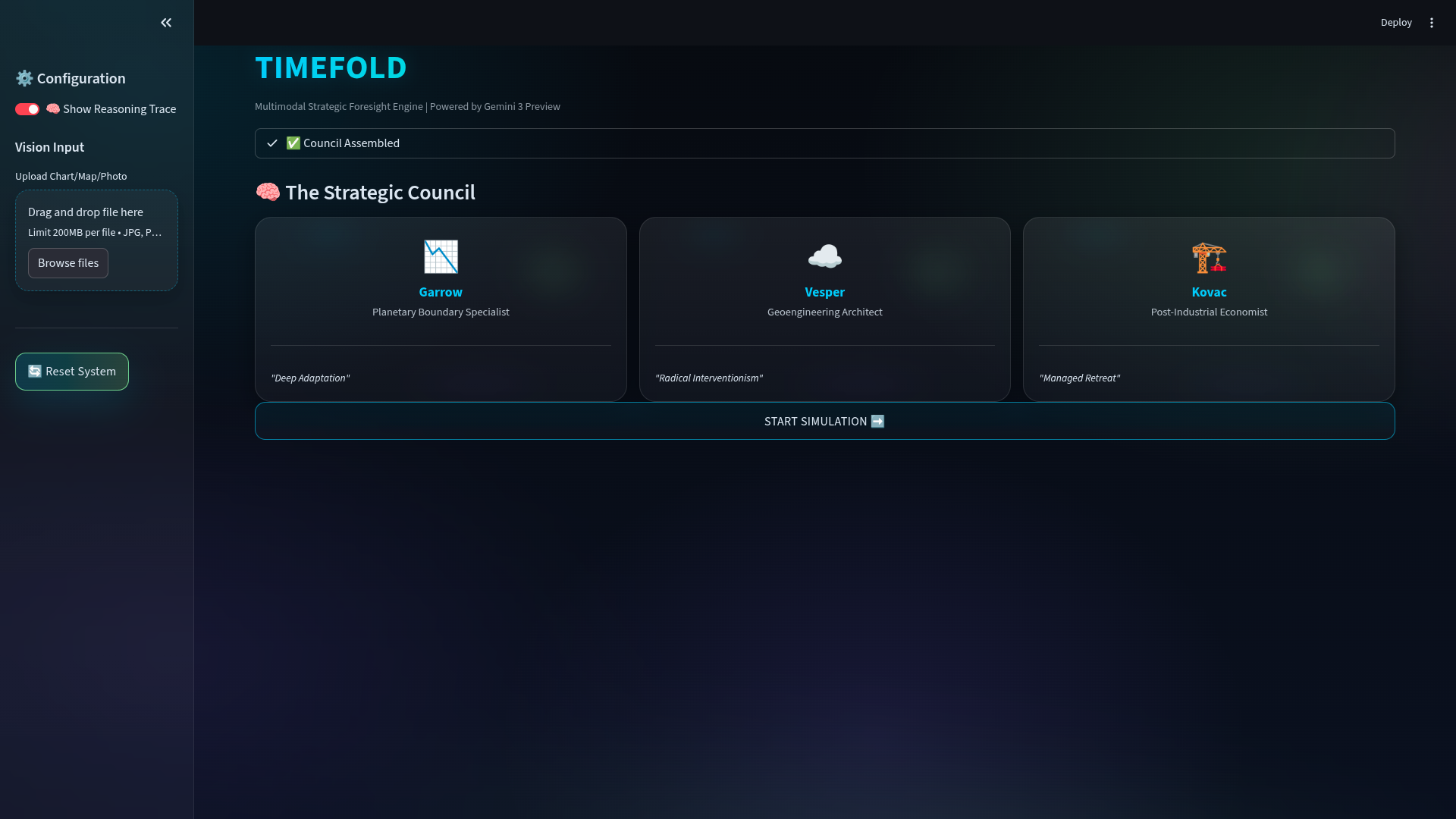
- How we built it The system uses a layered architecture: Deterministic planning core for constraints and state generation, Gemini 3 reasoning layer for strategy evaluation, Streamlit interface for real-time interaction, Gemini 3 is used for reasoning, long-context analysis, tool-based structured inputs, and low-latency inference.
Challenges we ran into
- The main challenge was using Gemini 3 as a reasoning engine, not a chatbot. We also balanced deterministic guarantees with probabilistic reasoning while keeping latency low.
Accomplishments that we're proud of
- Built a fully working adaptive planning prototype
- Integrated Gemini 3 as a core reasoning layer
- Enabled dynamic strategy adaptation instead of recomputation
What we learned
- We learned that combining classical solvers with AI reasoning creates more adaptive and robust decision systems. Prompt structure and context design proved critical for effective reasoning.
What's next for Time-Fold
- Next, we plan to add multi-scenario reasoning, deeper real-world integrations, and formal evaluation against classical planners.

Log in or sign up for Devpost to join the conversation.