Inspiration
Many times when traveling, especially in large groups, planning out what to do can become way more stressful than expected. We noticed this not just from our own personal experiences, but also from talking to others, that a lot of time during trips is actually spent figuring out what to do next rather than enjoying the moment. This is usually just because there are too many options, and it becomes overwhelming to decide what is actually worth the limited time we have.
On top of that, when traveling with others (i.e. friends, family), it can be difficult to balance different preferences. Some people want to explore early in the morning, while others maybe just want to sleep in and prefer to take things slower, which can lead to conflicts or wasted time trying to compromise. We also found that most people rely on multiple apps at once, such as notes apps, maps, social media, and spreadsheets, which makes the process even more confusing and fragmented as most existing traveling apps require third party uploads and a lot of back-and-forth between platforms.
As a result, we were inspired to create an application that could simplify this process by helping users prioritize what to do, as well as plan and maximize their time on vacation more effectively, and make decisions faster as a group.
This led to the creation of TimeFlies!
What it does
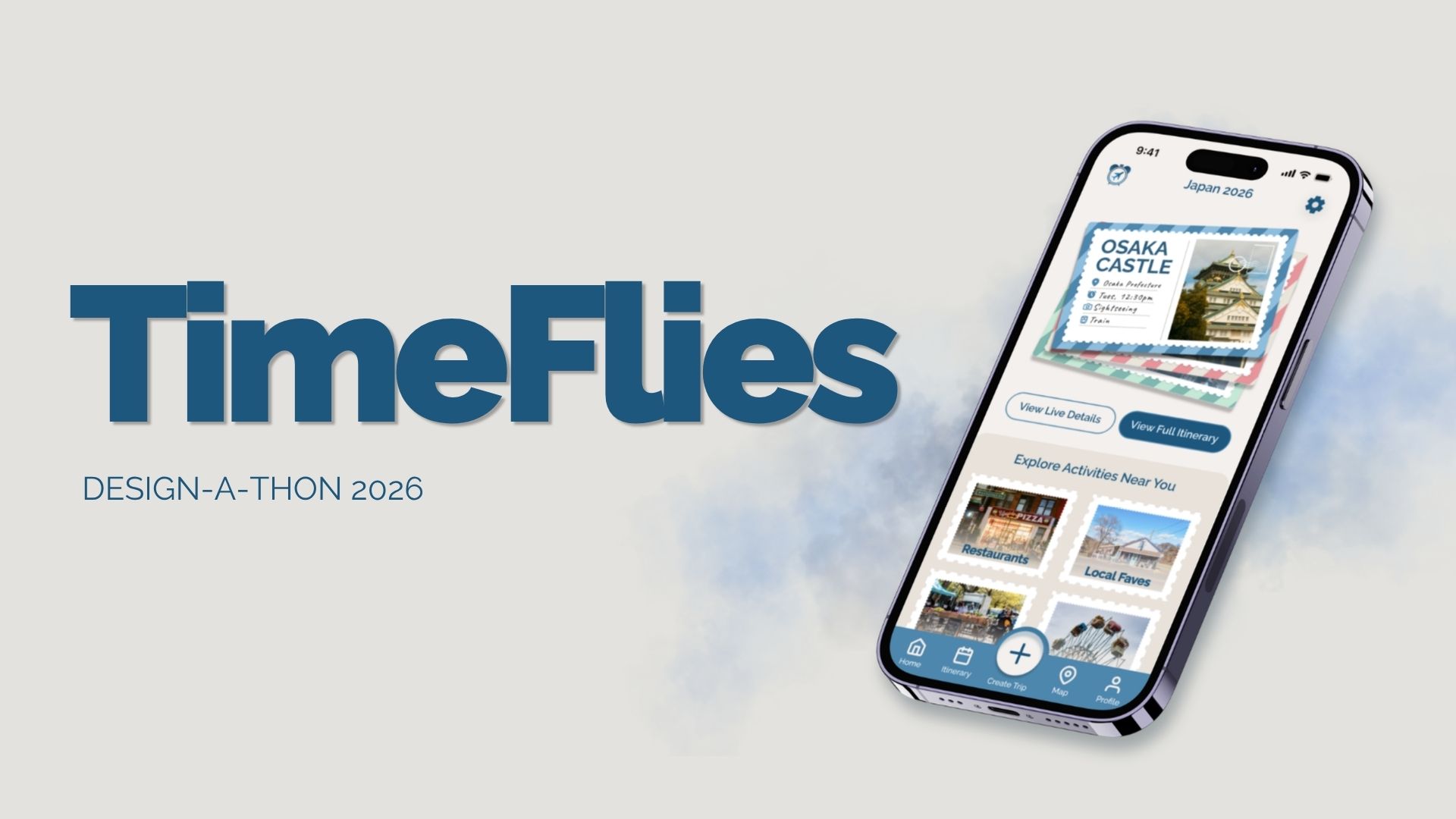
TimeFlies is a mobile application that helps users plan out their trips by turning their limited time into a clear and structured itinerary. Users can input trip details including destination, time frame, budget, interests, and how far they are willing to travel, and the app will generate a personalized, hour-by-hour schedule.
Instead of overwhelming users with long lists of recommendations, TimeFlies focuses on deciding what is actually worth doing based on the user’s own preferences and time constraints. Users also have the option to include specific “must-visit” places, thus still prioritizing user freedom and preference. For group travel, TimeFlies allows users to invite others and compare preferences. The app highlights where plans overlap and where they conflict, helping groups quickly come to a decision without spending too much time debating. Overall, the main goal of TimeFlies is to reduce decision fatigue and help users spend less time planning and more time actually enjoying their trip.
How we built it
We began by conducting user research interviews and comparatively analyzing existing travel planning apps to better understand common pain points. From there, we focused on designing a system that prioritizes time efficiency and decision-making rather than just organizing information or throwing a bunch of recommendations at the user expecting them to do all the planning themselves.
We used Google Gemini extensively in our brainstorming process to help us refine our ideas for key features we could include. Additionally, we used Notability in order to take structured notes throughout the design process, as well as to create low-fi wireframes that would guide our final designs.
Finally, we used Figma to design the user interface and map out the full user flow, including onboarding, itinerary generation, and group planning features. Our main focus was creating a clean and intuitive experience that makes planning feel simple instead of overwhelming.
Challenges we ran into
One challenge we encountered was narrowing down our core features. There were many ideas we wanted to include, but we realized that trying to do everything at once made the app feel unfocused. As a result, we had to step back and prioritize what actually mattered most, which was helping users make decisions and optimize their time.
Another challenge we faced was designing specifically for group travel, since people often have different preferences and schedules. Finding a way to visualize overlaps and conflicts in a simple and intuitive way required a lot of iteration, especially for groups with larger numbers of people.
What we learned
From this experience, we learned the importance of narrowing down ideas and homing in on a specific problem rather than trying to include too many features that addressed a lot of different issues all at once. While it could be tempting to add everything we thought was useful, we realized that good design in practice means prioritizing simplicity and clarity for users. As such, we also learned how important user research is in developing a product. The insights we gathered from interviews played a big role in guiding our UI/UX design decisions and helped us focus on real pain points like decision fatigue and time management within traveling groups.
Most importantly, we learned a lot about how to navigate and work through ambiguity and uncertainty as a team. As our idea evolved throughout the process, we had to constantly communicate, provide real-time feedback to one another, adjust our direction, and adapt based on what made the most sense.
What's next for TimeFlies
Moving forward for TimeFlies, we can see ourselves potentially expanding on many of the app's current features, while also implementing new features entirely.


Log in or sign up for Devpost to join the conversation.