-
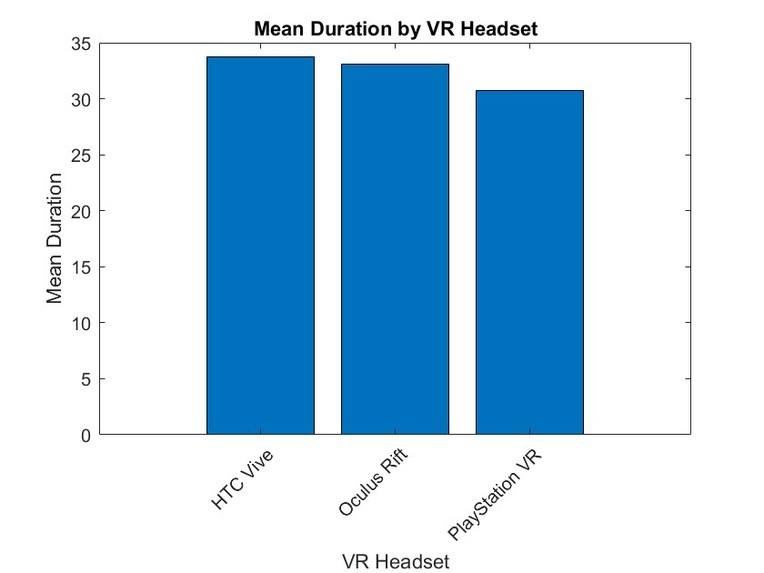
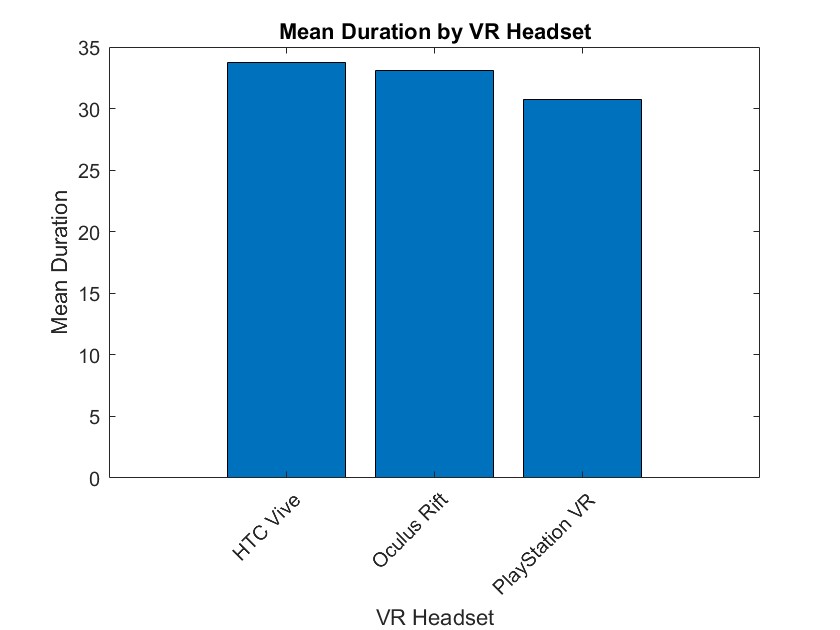
Timed ChallengeVR_Team Bros_Mean Duration by VR Headset
-
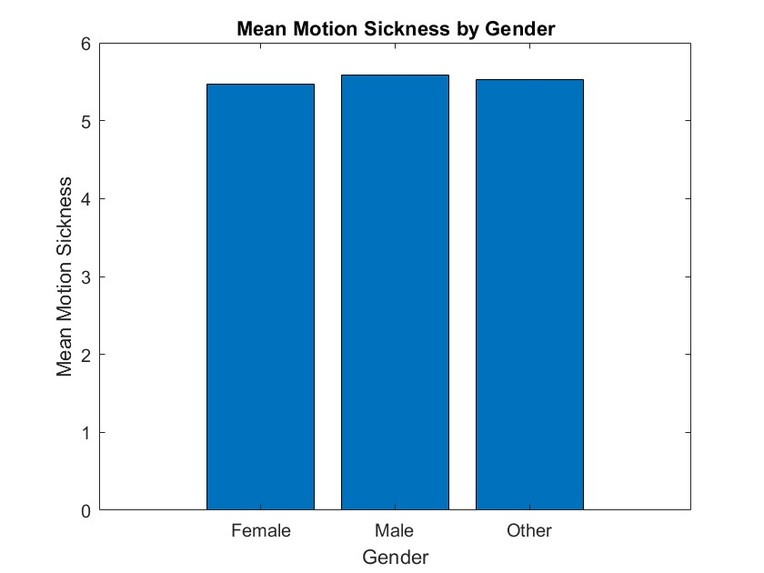
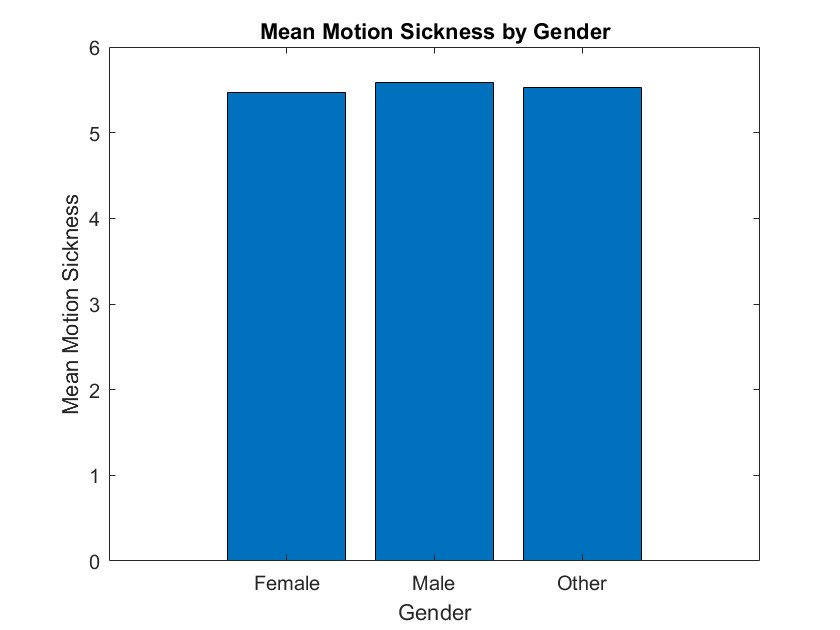
Timed ChallengeVR_Team Bros_Mean Motion Sickness by Gender
-
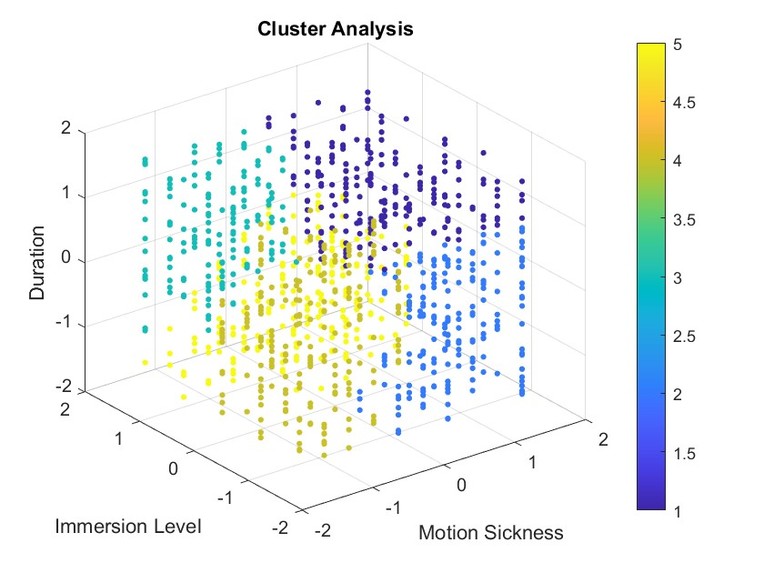
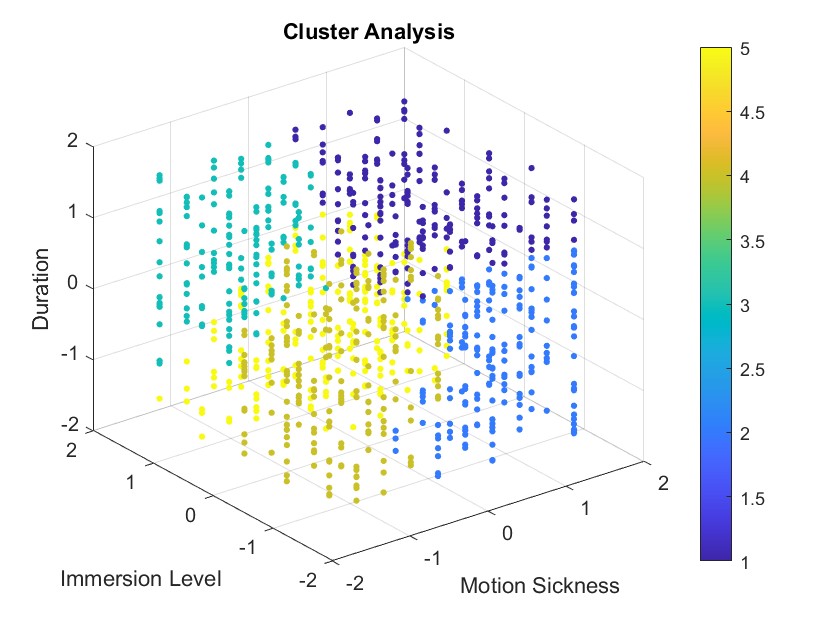
Timed ChallengeVR_Team Bros_Cluster Analysis
-
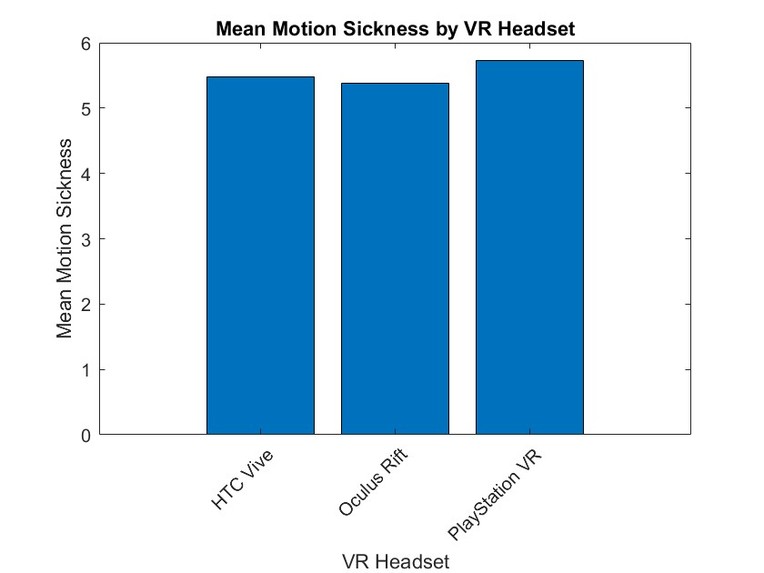
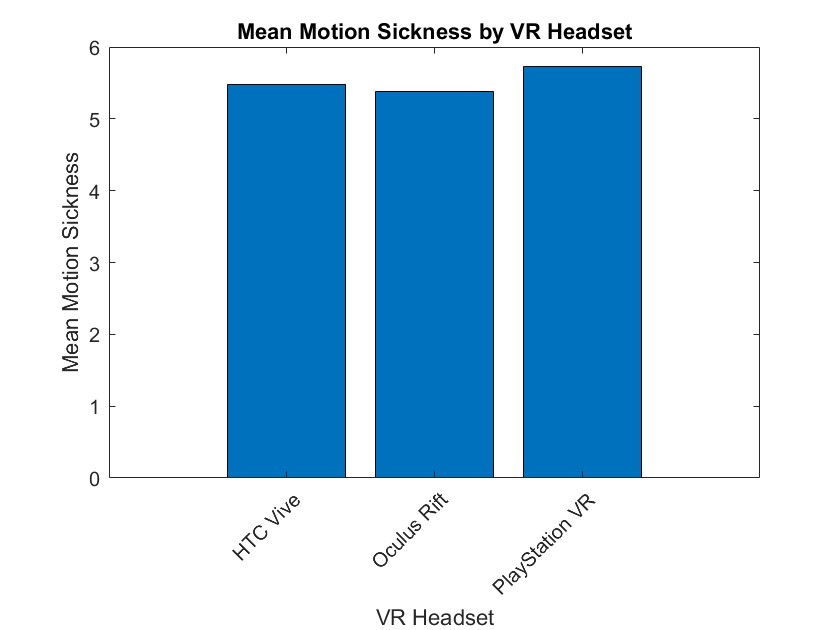
Timed ChallengeVR_Team Bros_Mean Motion Sickness by VR Headset
This code performs various analyses on a dataset related to VR headset usage, motion sickness, immersion levels, and session duration. Let's break down each section:
Inspiration: The inspiration behind this code could be to understand how different factors such as VR headset choice, gender, and session duration relate to motion sickness and immersion levels in VR experiences. It aims to uncover insights that can inform design decisions for VR systems and experiences.
What it does: Demographic Analysis: It analyzes which demographic (gender) is more likely to experience motion sickness. VR Headset Performance: It investigates which VR headsets are associated with higher levels of motion sickness and whether certain headsets are better suited for longer sessions. Cluster Analysis: It performs cluster analysis to identify distinct groups of users based on their reactions (motion sickness, immersion levels) and usage patterns (duration, choice of VR headset). Association Rule Mining: It uses association rule mining to discover interesting relationships between different variables in the dataset, such as VR headset choice, motion sickness levels, and immersion levels. How we built it: The code is implemented in MATLAB. It uses various functions and techniques provided by MATLAB, such as data manipulation, statistical analysis, clustering algorithms, and association rule mining.
Challenges we ran into: The challenges section could discuss any difficulties encountered during the development process, such as data preprocessing issues, algorithm selection, or interpretation of results.
Accomplishments that we're proud of: This section could highlight any significant findings or insights obtained from the analyses, as well as successful implementation of complex data analysis techniques.
What we learned: Here, the authors could reflect on the lessons learned during the project, including technical skills, insights into VR user behavior, or best practices in data analysis.
What's next for Timed Challenge 4 VR Headset Submission: This section could outline future steps or improvements, such as refining analysis techniques, collecting additional data, or applying findings to improve VR experiences.
Overall, the code aims to provide actionable insights into VR headset usage patterns and user experiences through data analysis techniques.

Log in or sign up for Devpost to join the conversation.