-
-

The TiMed designed logo
-
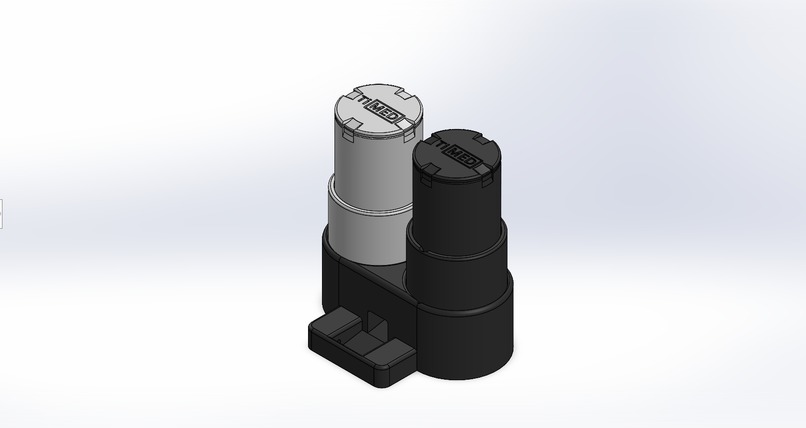
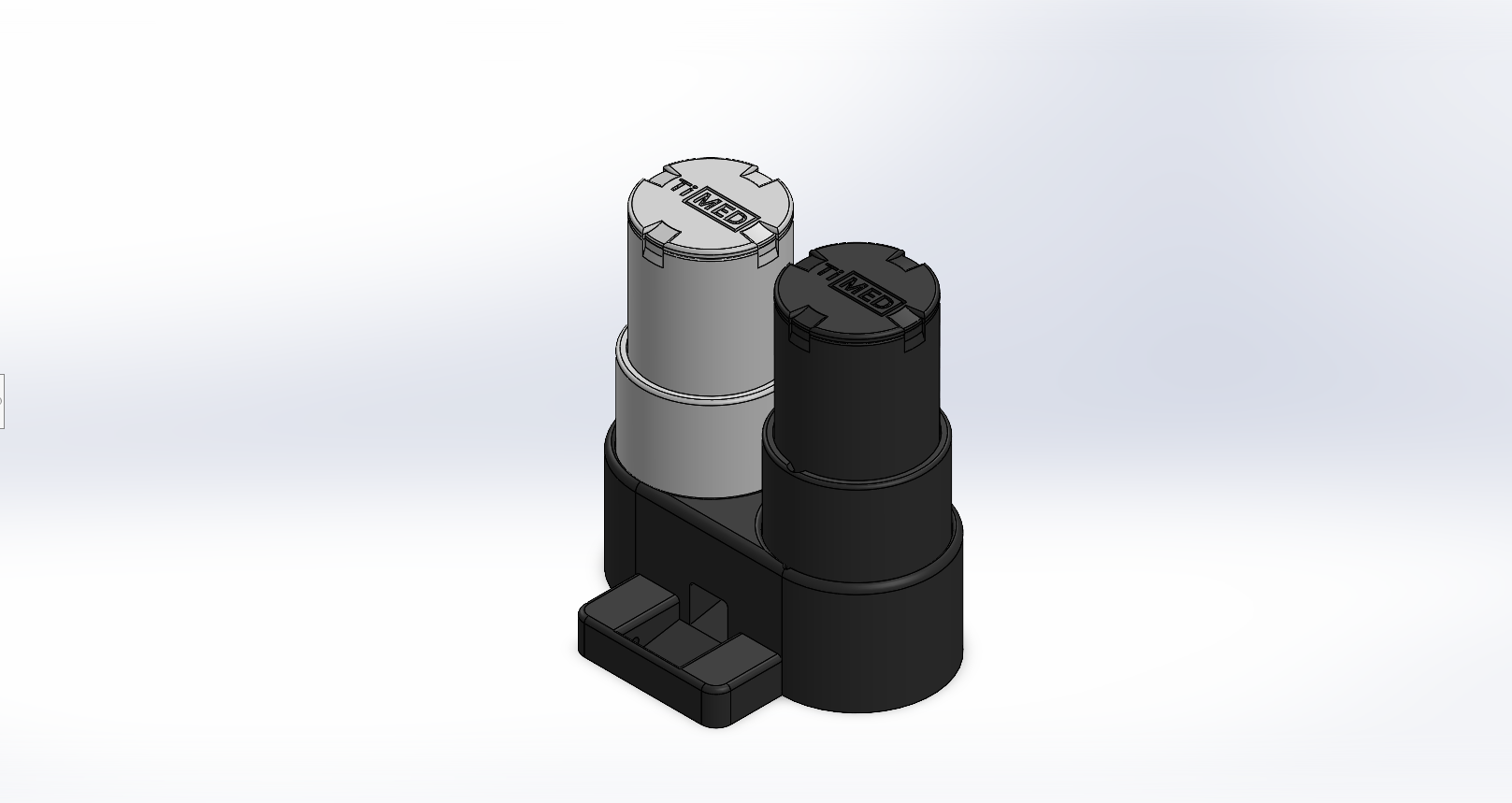
CAD - Build Full view
-
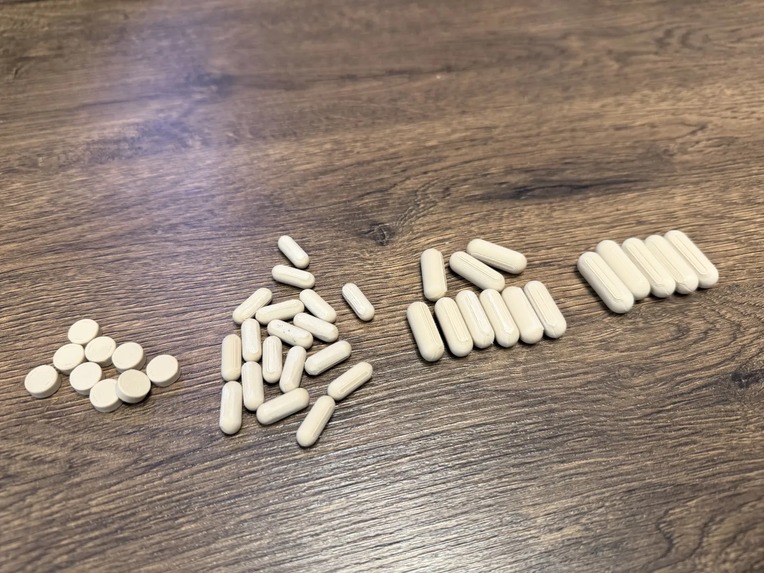
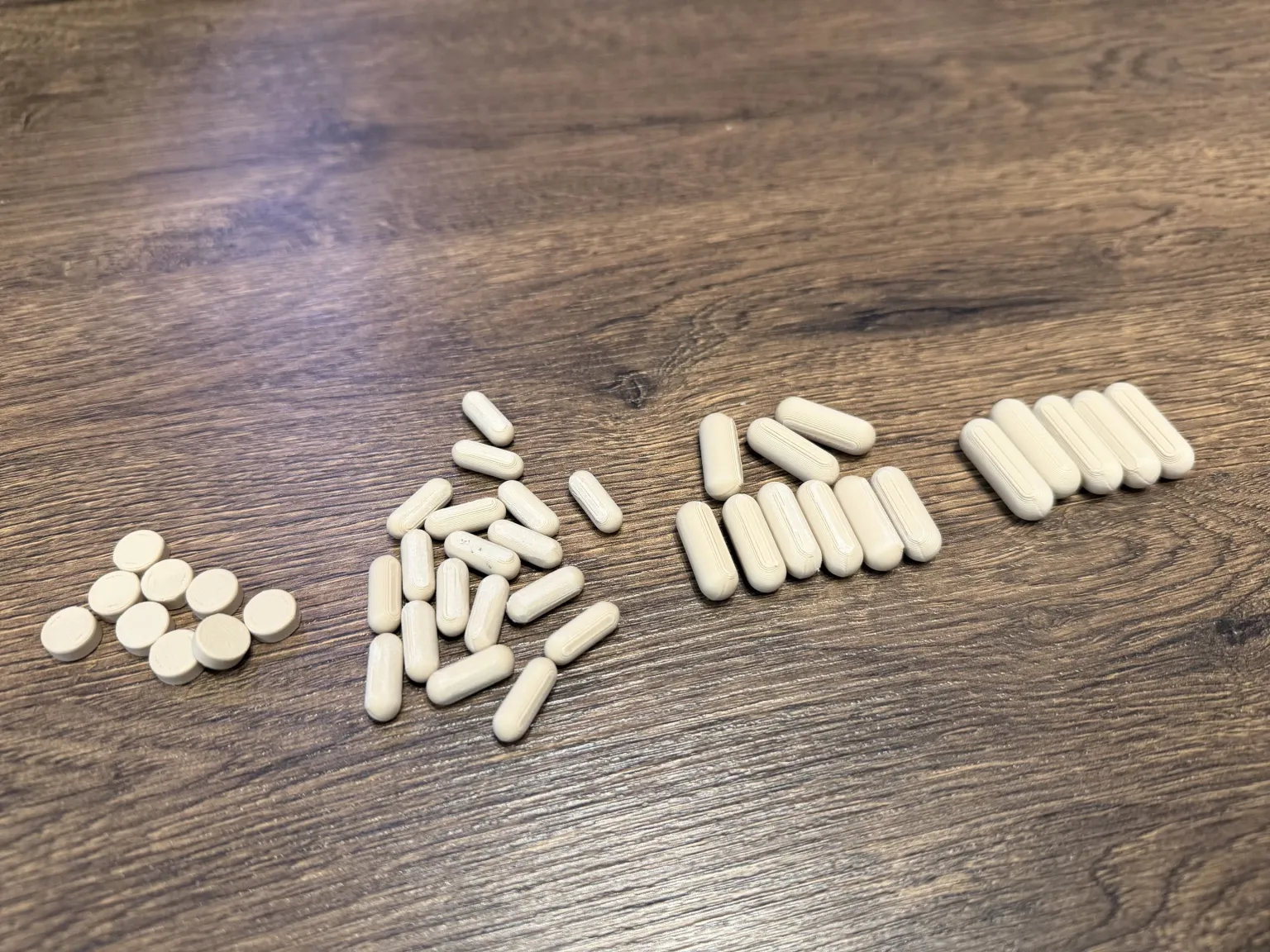
3D printed pills
-
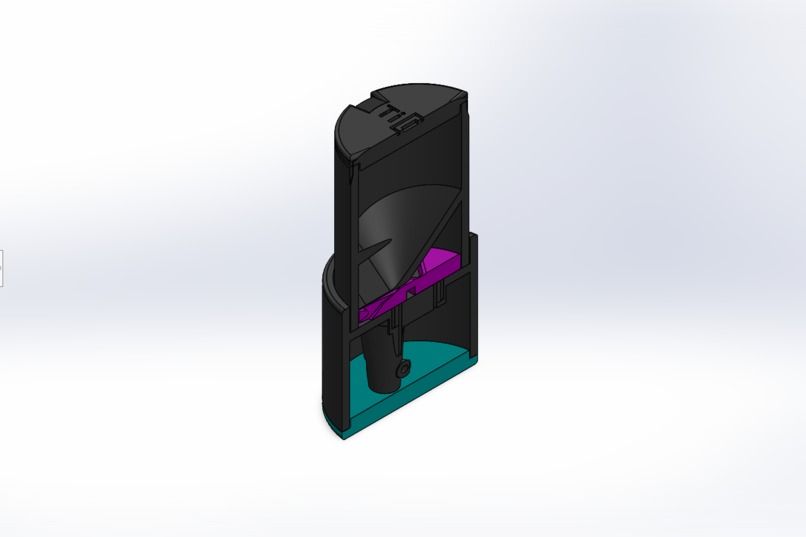
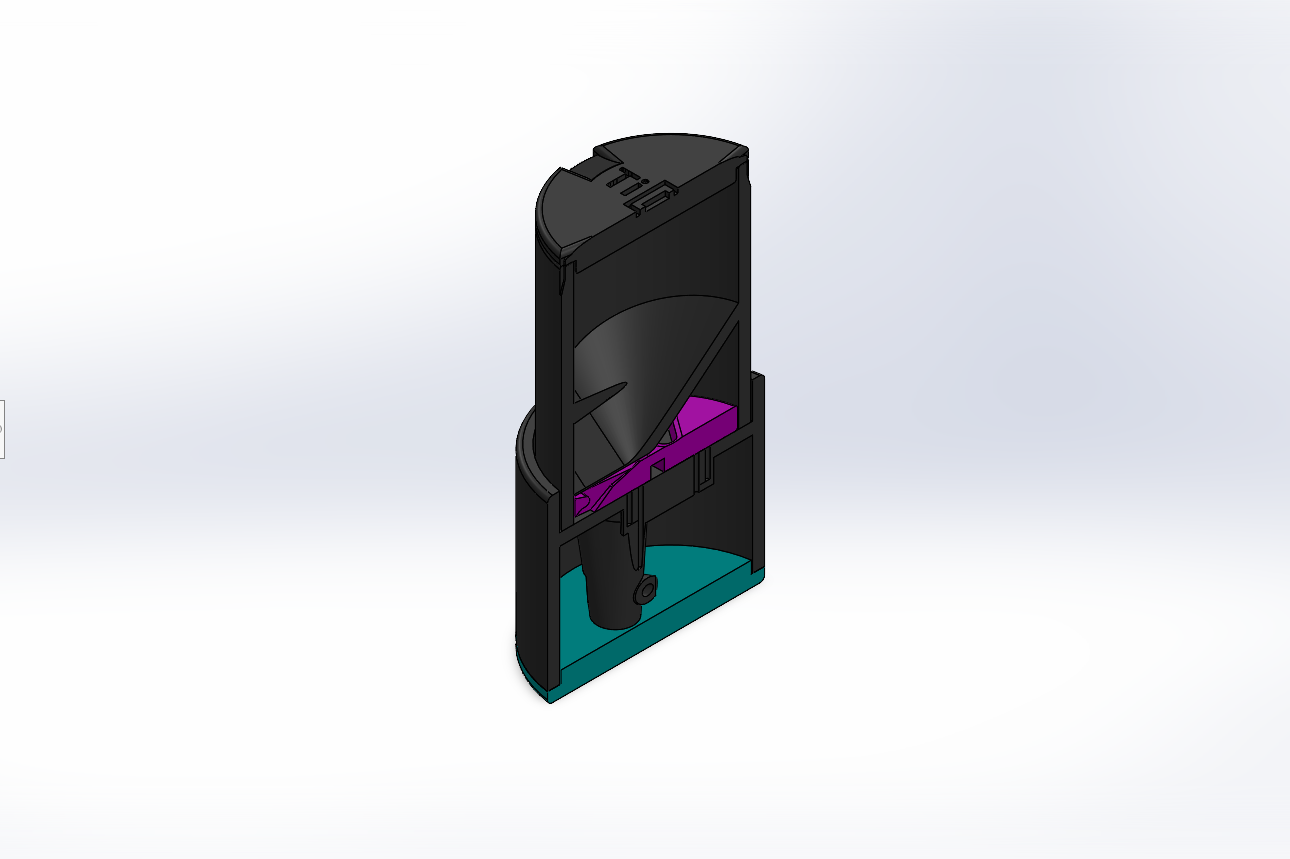
CAD - Compartment Section view
-
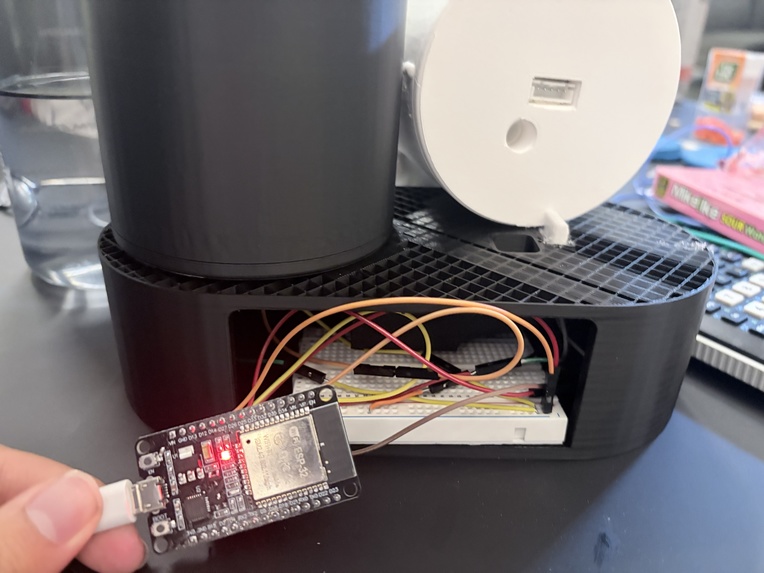
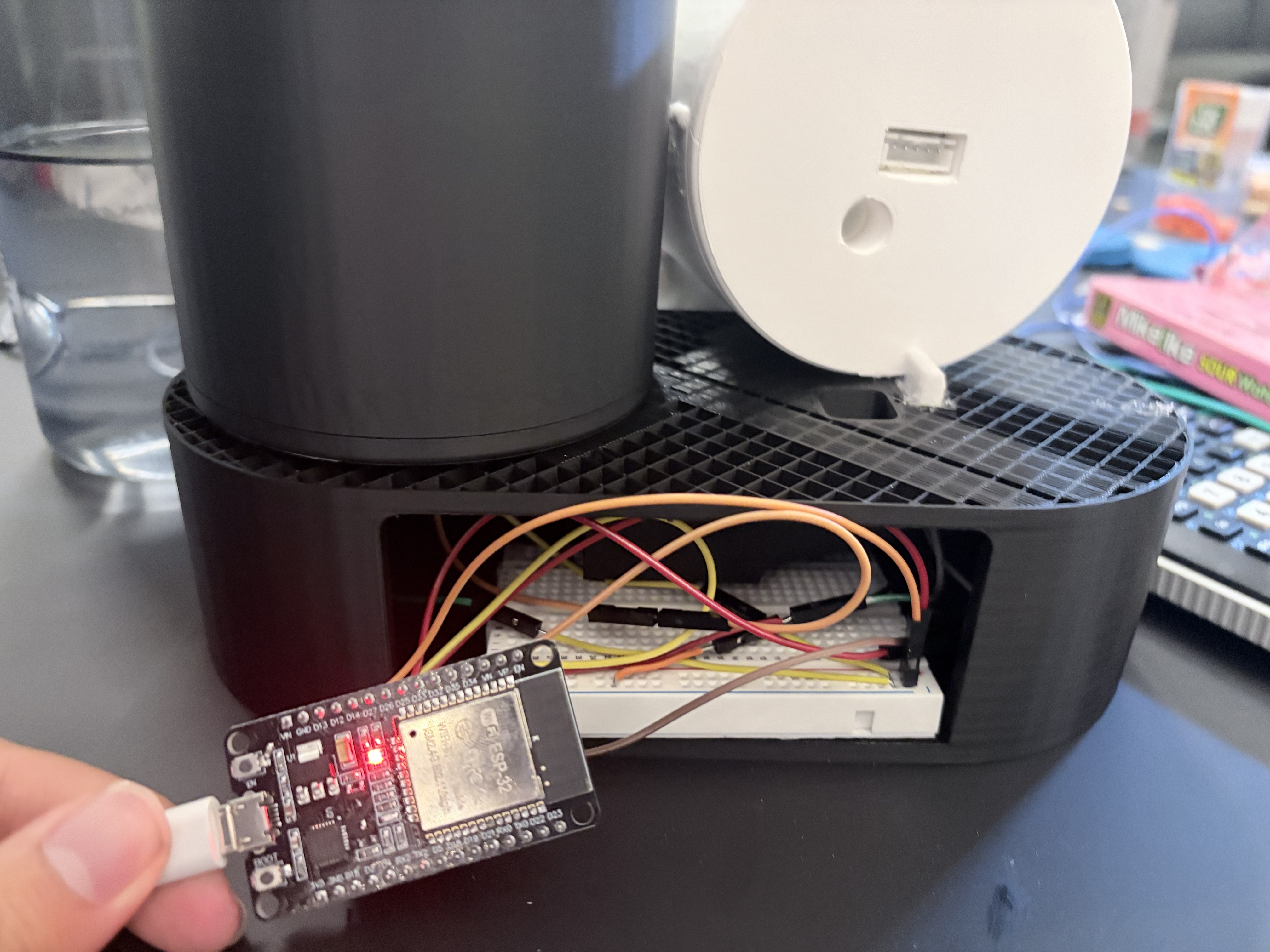
ESP32 Wiring

Inspiration
Many of our teammates have seen grandparents struggle to remember whether they've taken their pills and to differentiate between the plethora of different medications. These challenges become even greater for people who are visually impaired, who may be unable to read small prescription labels, distinguish between similar buttles, or visually confirm which medication and dosage they are taking.
For someone managing several prescriptions, a simple mistake can mean missing a necessary dose, taking the wrong medication, or accidentally taking a medication twice. Older adults are especially vulnerable to medication-related harm. Americans 65 and older visit emergency departments more than 600,000 times each year due to these events.
TiMed will make medication management less dependent on eyesight and memory, instead making the right pill appear at the right time, in exactly the right amount. This is simple and accessible while allowing patients greater independence and giving their families peace of mind.
What it does
TiMed primarily functions to dispense pills, remind users, and notify the user of their pill schedule. The corresponding app is built to be usable entirely through audio, to aid visually impaired and other disadvantaged users. The pill dispenser was designed to dispense pills of all sizes, and handle pills completely autonomously.
How we built it
- ESP32 for controlling the electronics
- Servos for actuating the dispensing disk to release pills
- Beam break sensor for pill detection and detecting user taking pill
- PLA 3D Printed housing and modules
- ElevenLabs API for app voice and audio
Challenges we ran into
During this journey there were a lot of challenges.
- Jamming: One of our primary mechanical challenges was designing the dispensing mechanism to minimize the risk of pills becoming stuck. We tested various incline angles and determined that a 40° slope provided the best balance for maximizing pill rolling and minimizing jams. We also implemented a software-controlled “jiggle” motion in the dispensing mechanism to help dislodge pills.
- Designing for various pill sizes: Because pills vary significantly in size and shape, we designed a dispensing plate with multiple openings of different sizes. This allows the system to accommodate a wider range of pill dimensions while maintaining reliable dispensing.
- Limited Availability of Electrical Components: We initially planned to use force sensors to detect when a user removed a pill from the dispensing area. However, due to the limited availability of suitable force sensors, we adapted our design and replaced them with a beam-break sensor.
- Location-aware dispensing: We initially conceptualized it using GPS and/or internet, but it was most practical in the end to use Bluetooth connectivity
- A series of disruptive chance challenges:
- The 3D printers were extremely limited, and the rushed prints had very bad tolerances
- A second print failed on the last few lines of the print
- One of our servos broke and we could not get a new one from the hardware desk since it was too late.
Accomplishments that we're proud of
We're especially proud of having succeeded against adversity and many unlucky situations arising throughout the duration of our project. As we watched our plan get derailed again and again, we kept pushing back again and again, and eventually finished with a version of our project we were proud of, since it accomplished all of the core objectives. We believe it can help others the way we intended, and to us this is an accomplishment.
What we learned
- Physical systems fail differently from software: A breadboard can have wiring errors while code can have build errors
- Designing for accessibililty: Instead of adding voice as an extra feature, it was one of the components of the core medication workflow since it needed to match the intended audience of the hardware.
- Using deterministic AI: By combining the flexibility of AI with the low deterministic setting option from ElevenLabs, we created an AI which would reliably funnel users to the correct resource
What's next for TiMed
- Improved sensing - By using pressure sensors, we can not only detect the moment pills are dispensed and removed, but also the quantity to double check the correctness of the mechanics.
- Opt-in family connectivity: Once the app joins the app store, we can allow users to voluntarily share adherence information with trusted family and maybe friends.
- Hardware improvement - Not only will we tweak the slope angles, the plate spin, and component sizes to maximize performance, we will have the resources to add more modules to organize more types of pills into one device.
Built With
- c++
- elevenlabs
- expo.io
- fastapi
- platformio
- react-native
- sql
- typescript


Log in or sign up for Devpost to join the conversation.