-
-
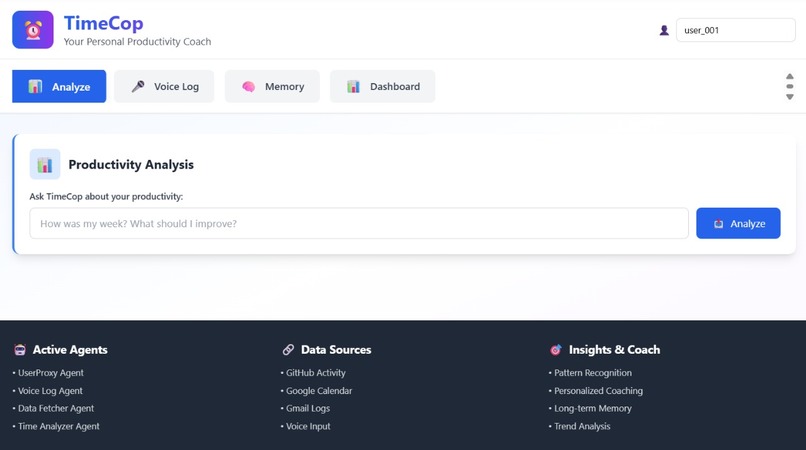
Landing Page
-
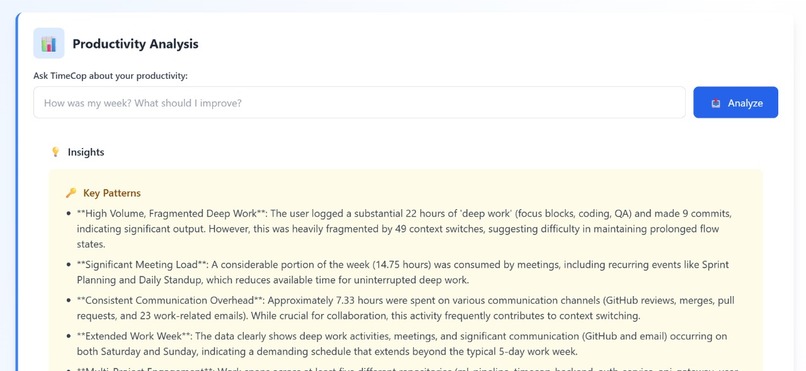
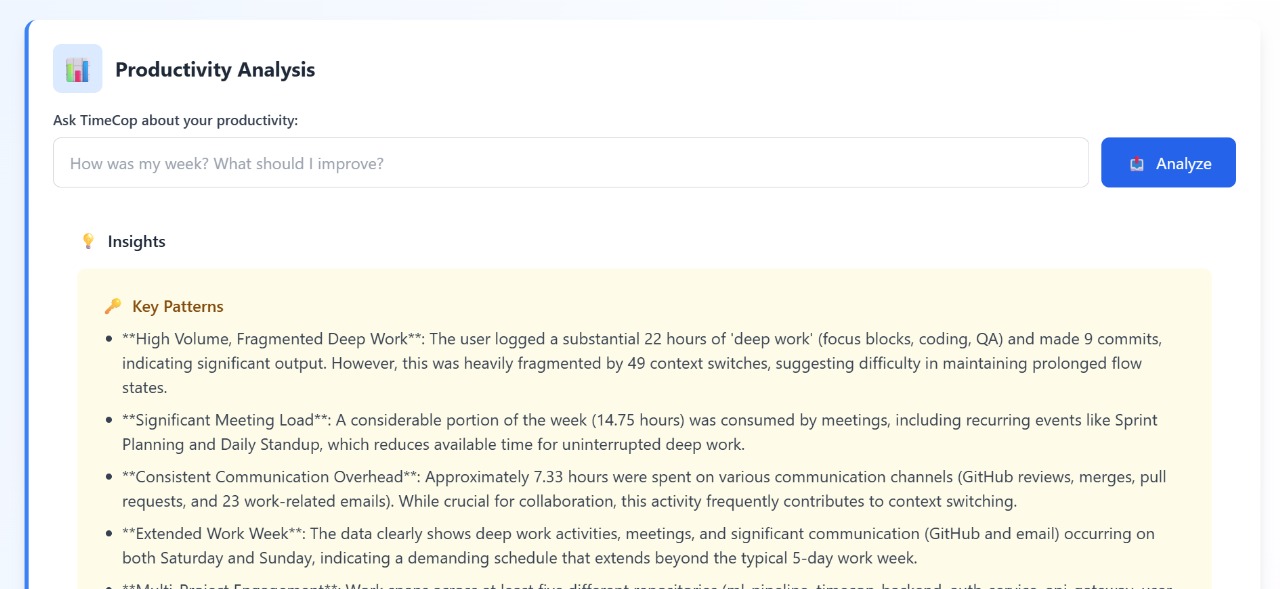
Insights
-
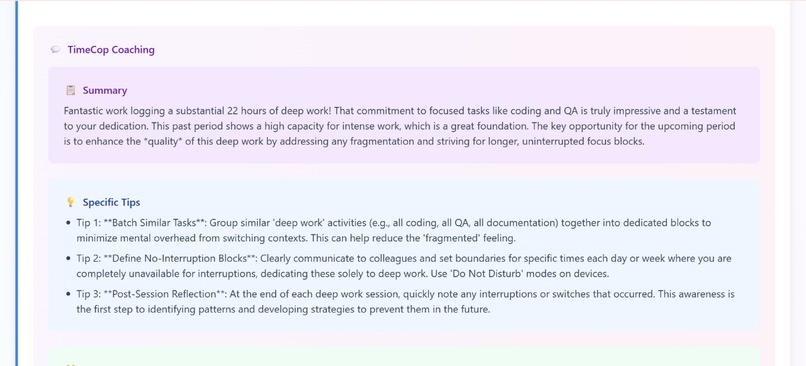
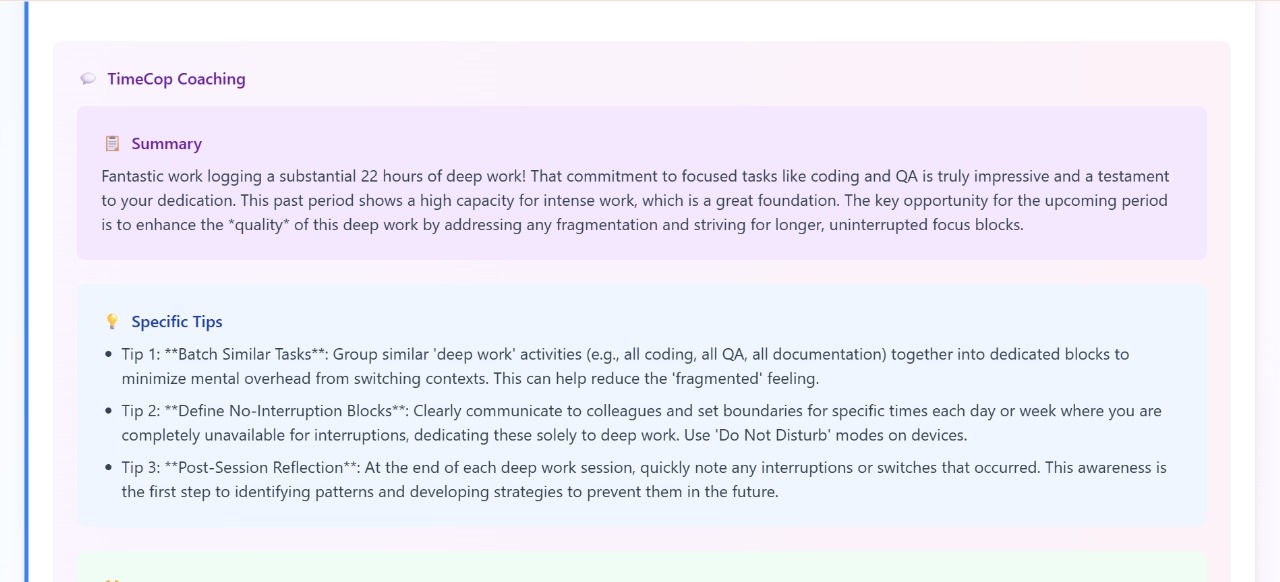
Coaching
-
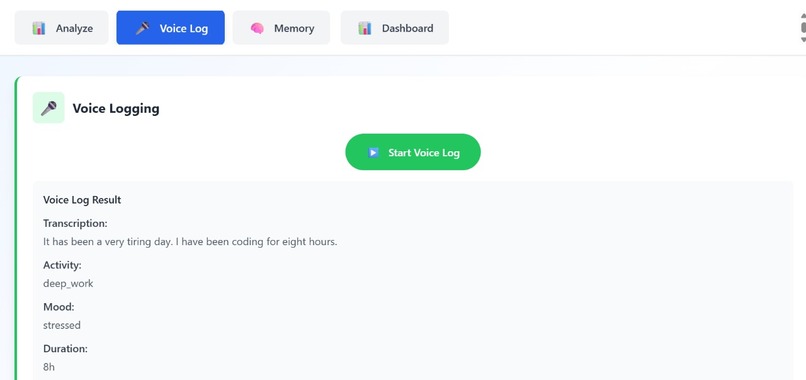
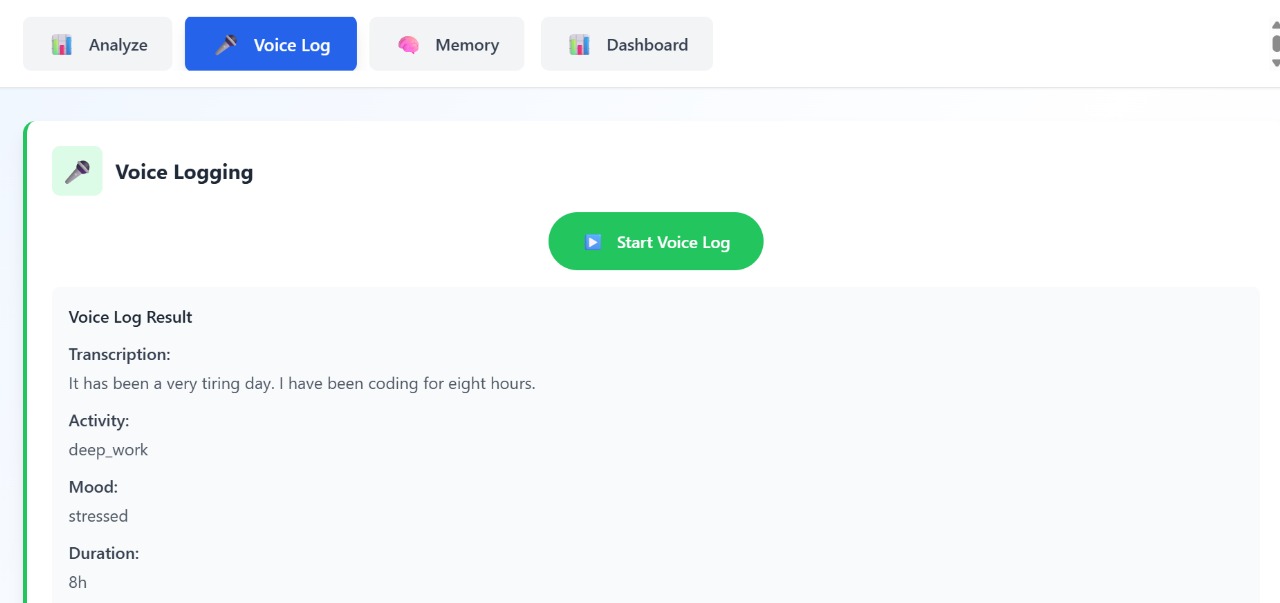
Voice Logger
-
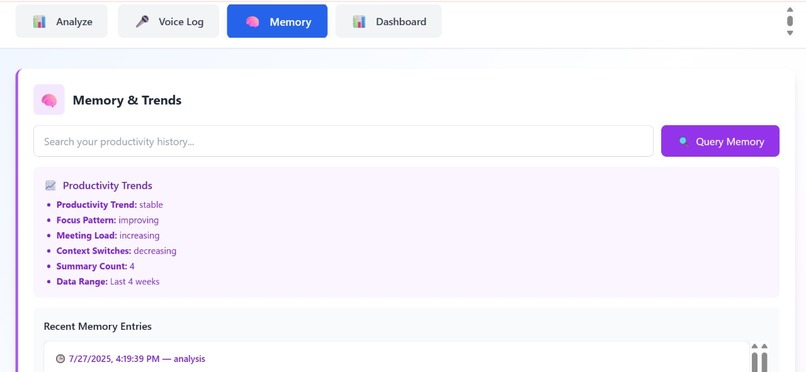
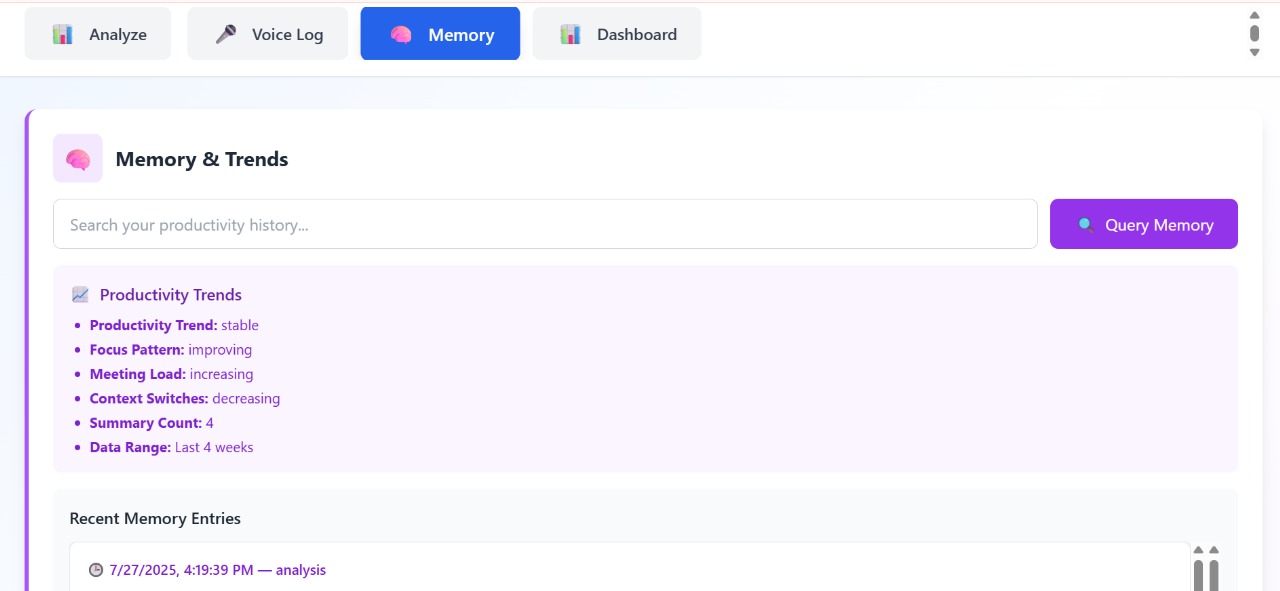
Memory Query
-
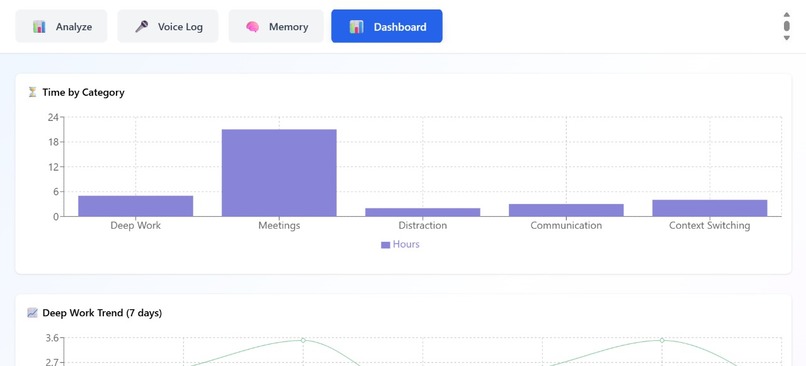
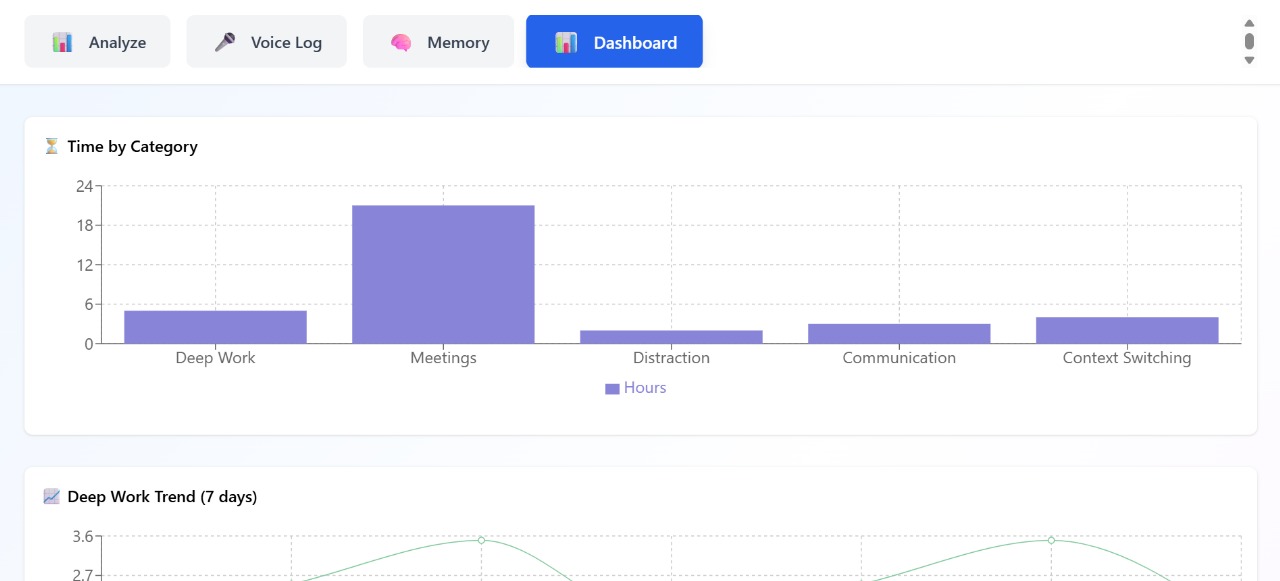
Dashboard
Inspiration
As a college student, I struggle with multiple roles. From being a coder, leading my tech club at college to academics, personal hobbies. I often found myself overwhelmed, yet unsure of why. Most productivity tools I used just tracked time or threw generic reminders like “Take a break” after 60 minutes. But real-life work isn’t that simple. Sometimes you're in flow at the 60th minute, sometimes you're drained after 20. This idea for TimeCop came from that frustration. I wanted something smarter- a system that understands why I slow down, when I’m at my best, and how to guide me back when I drift. Something that respects human complexity, not just clocks.
What it does
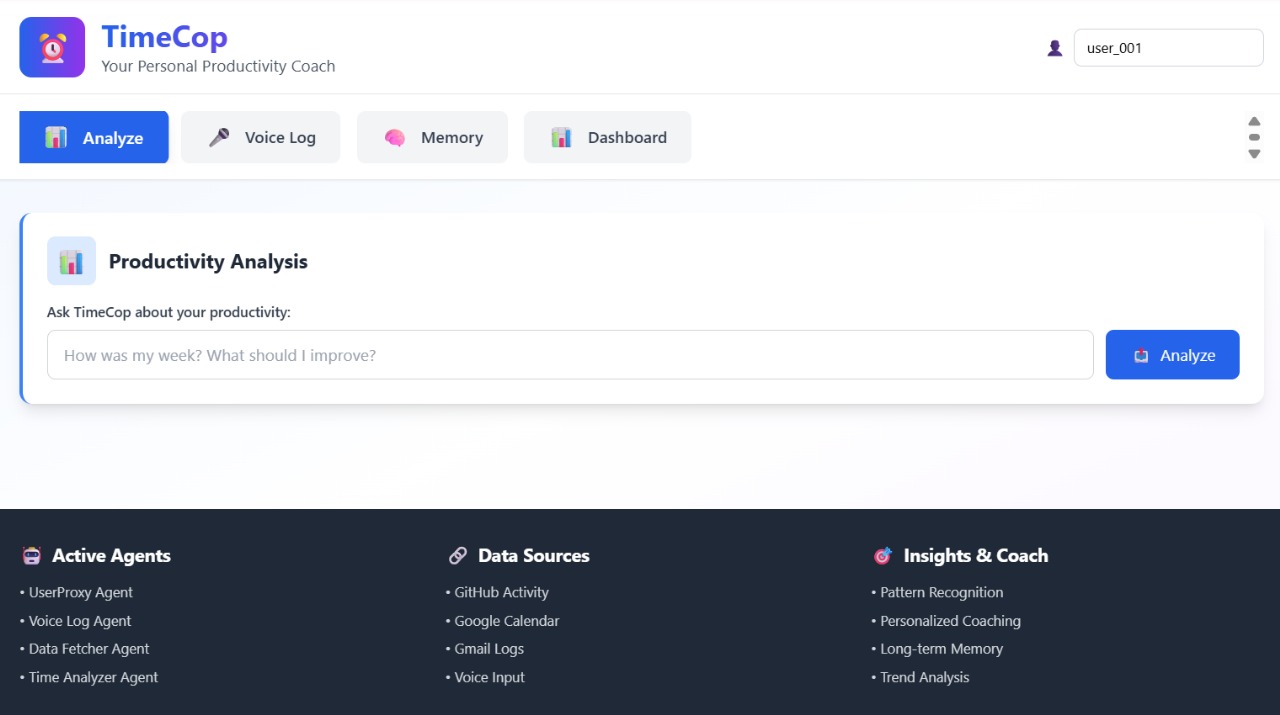
Time Cop is your personalized productivity coach. It is comprised of 7 agents- UserProxy Agent, DataFetcher Agent, Analyzer Agent, Insights Agent, Coach Agent, Voice Agent, Memory Agent which collaborate to categorize your activities, detect productivity indicators, and generate meaningful insights.
- A Voice Agent for natural, conversational check-ins and updates
- A Coach Agent that identifies patterns, burnout risk, and focus trends
- A Memory Agent using RAG (Retrieval-Augmented Generation) to keep track of your past context, reflections, and ongoing tasks
- A Data Fetcher Agent that integrates with your productivity ecosystem (GitHub, Email, Calendar etc.)
- A Dashboard for analytics that highlights actionable insights instead of just raw data
How we built it
TimeCop was built using:
- Set up the FastAPI backend with CORS middleware to allow communication from the React frontend.
- Built the React frontend to allow voice input, fetch summaries from the backend, and show analysis/coaching sections.
- Integrated Faster-Whisper for voice transcription. VoiceLog agent to capture, tag, and preprocess transcriptions.
- Designed a vector memory layer using inMemory storage and fast similarity search.
- Built the MemoryAgent to manage RAG workflows, vectorize and store logs, and retrieve relevant past records.
- Orchestrated all agents using AutoGen to enable message passing, memory storage, insight generation, and LLM-based coaching. All agents are powered by Gemini LLM model "gemini-2.5-flash".
- Debugged and fine-tuned CORS issues, Whisper model caching, and memory-agent outputs for stable performance across all modules.
Challenges we ran into
- Getting agents to make sense of different data sources (like GitHub commits vs. Calendar events) and respond meaningfully was hard.
- Initially, our AI agents gave vague or repetitive advice. Tuning prompts and adding memory with RAG helped personalize their responses.
- Whisper model permissions: Faced WinError 1314 on model cache writes; solved by deleting corrupt cache snapshots and adjusting directory permissions.
Accomplishments that we're proud of
Building TimeCop has been rewarding for me in terms of learning new technologies, but even more so in understanding how AI can truly assist humans, not just automate tasks. I’m proud of how each agent works in sync especially the Coach Agent, which now gives context-aware feedback rather than generic tips.
- Developing a memory system that reflects back insights from previous sessions making TimeCop feel like it remembers you.
- Creating a voice interface that’s not just a gimmick, but genuinely useful for micro-reflections and commands.
- Watching the Coach Agent actually catch moments of focus loss and suggest reflective actions.
What we learned
This project taught me that building truly helpful AI isn’t just about models and prompts- it’s about empathy, timing, and understanding the nuances of human behavior.
- RAG systems can drastically improve personalization if combined with well-structured memory inputs.
- Voice interfaces add a surprising human touch, especially when they’re subtle and context-aware.
- I have learned how to work with Autogen and build autonomous agents.
- Productivity is more emotional and psychological than we usually treat it in tech. Understanding that made this project more human.
What's next for TimeCop - Your Productivity Coach
This is just the beginning for TimeCop. This project shows the potential of building a system like this. Below are the pointers on how I plan to make the application better:
- Deeper integrations with Slack, Notion, Jira, and more tools where people actually work.
- Mobile assistant version: A lightweight TimeCop companion to track reflection and nudges on the go.
- Integrate Chroma DB for persistent storage.
- Scale and deploy the application for audience to try.
Built With
- autogen
- chromadb
- fastapi
- faster-whisper
- gemini
- git
- github
- html
- javascript
- postman
- python
- react
- scikit-learn
- tailwind
- vscode

Log in or sign up for Devpost to join the conversation.