-

Key Art
-
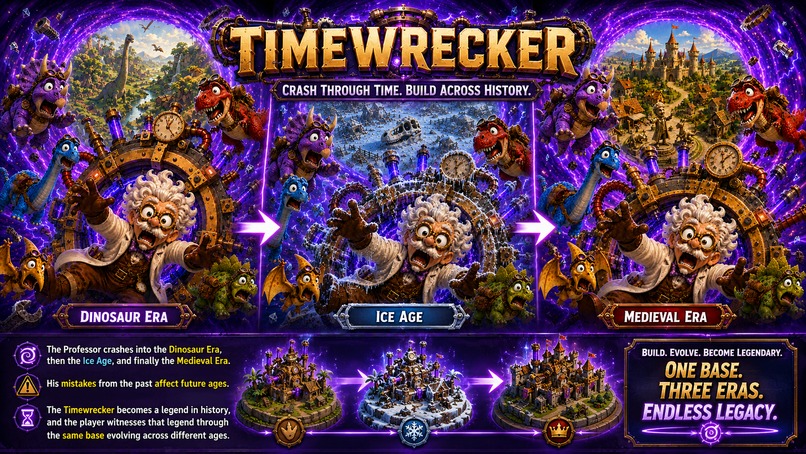
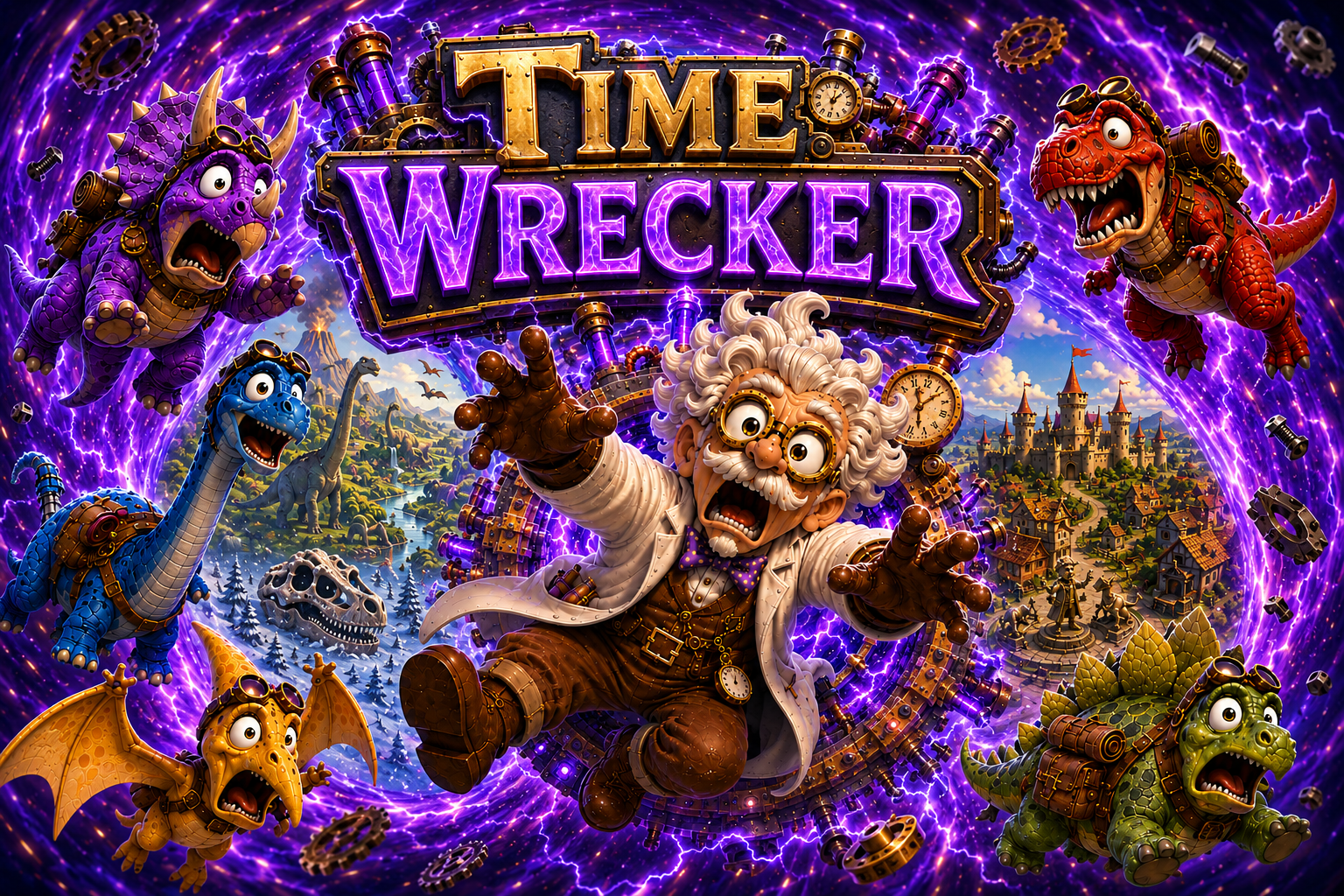
Survive across different ages. See you actions from the past become history!
-
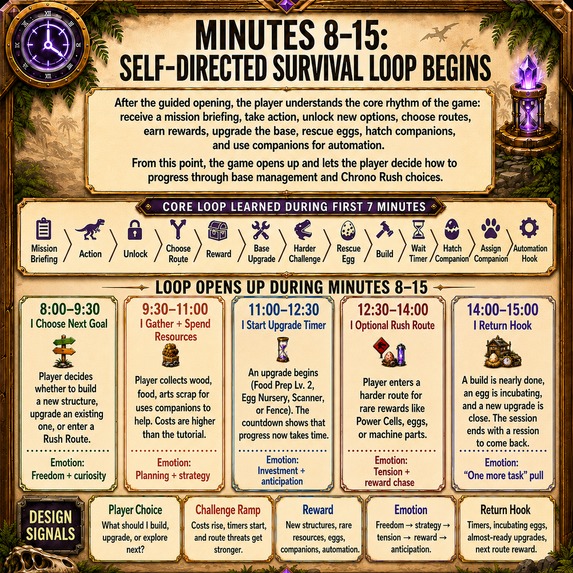
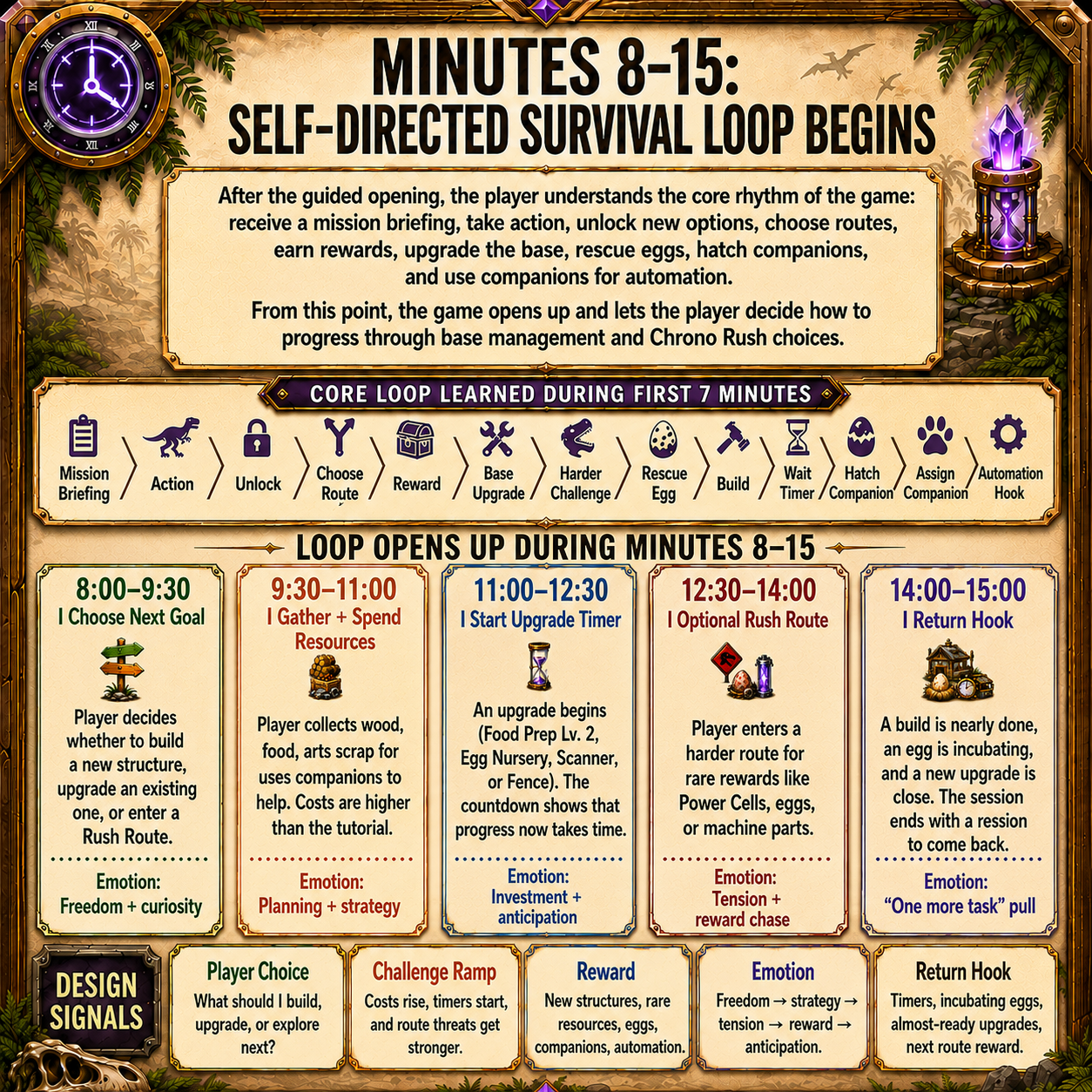
Core loop
-
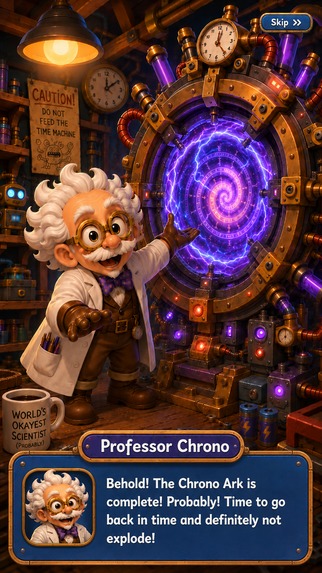
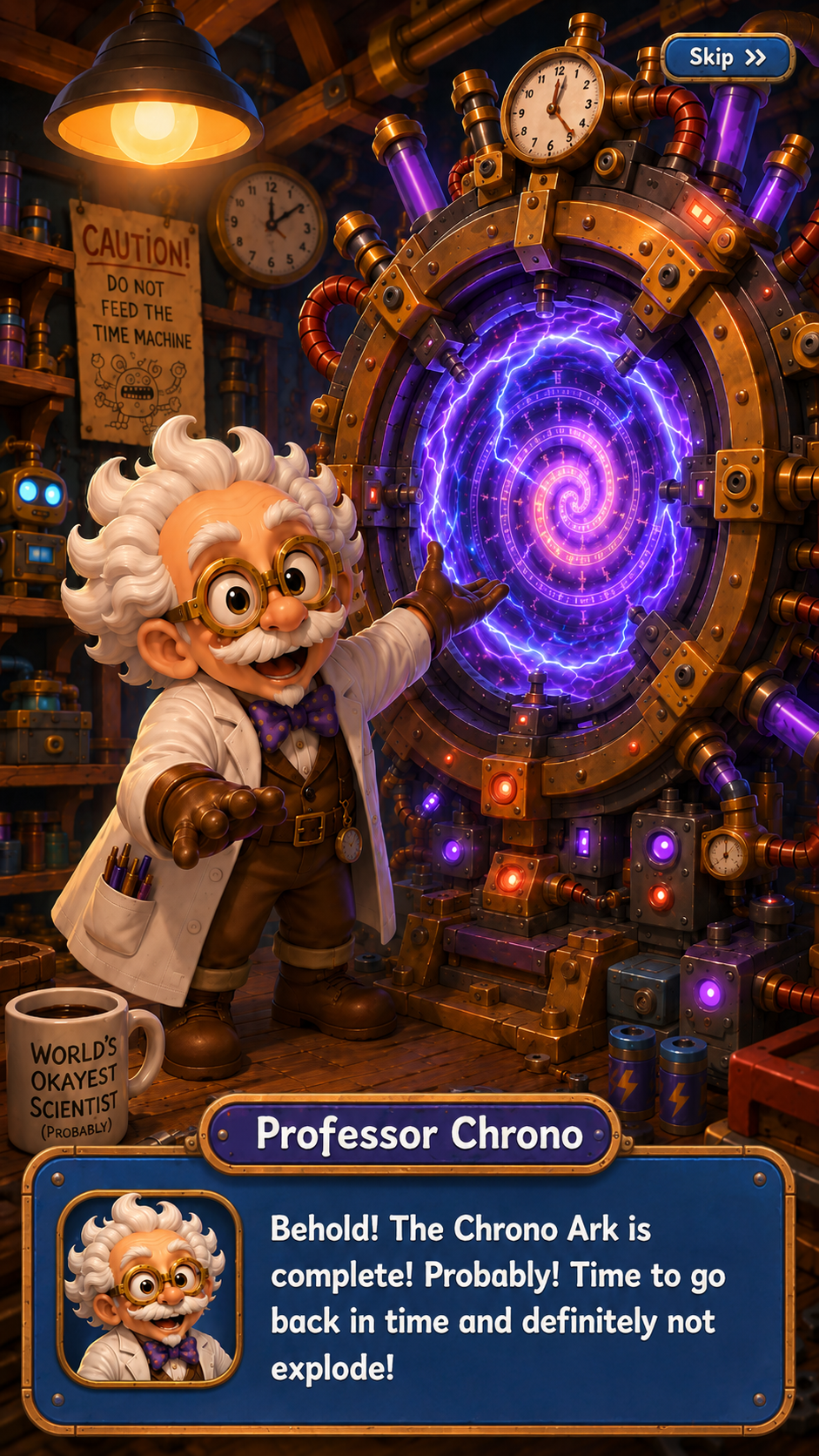
Starting Scene
-
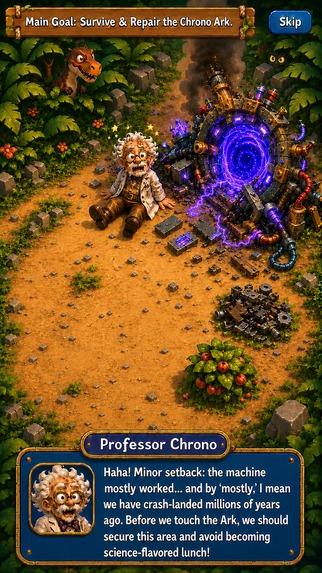
Tutorial Scene
-
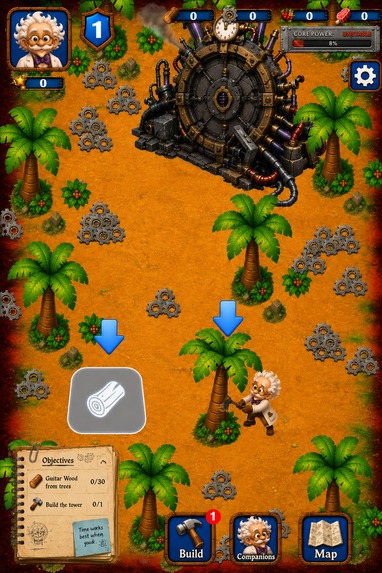
Base scene 1
-
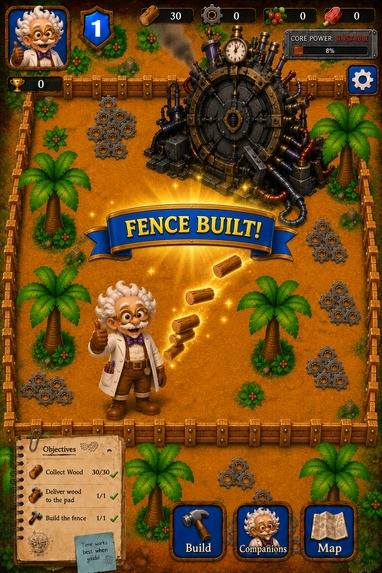
base scene 2
-
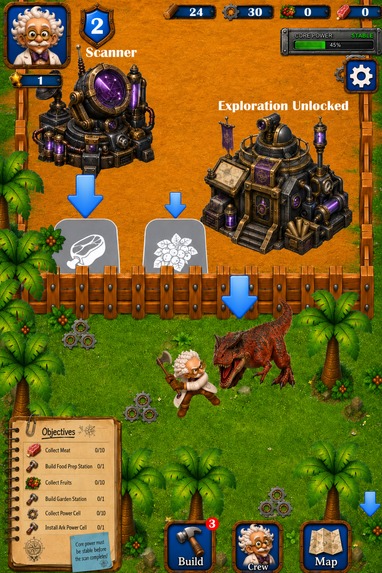
base scene 3
-

base scene 4
-
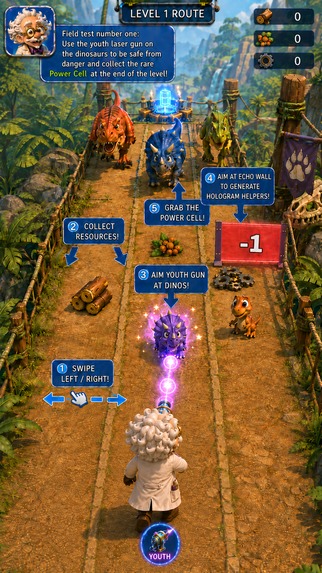
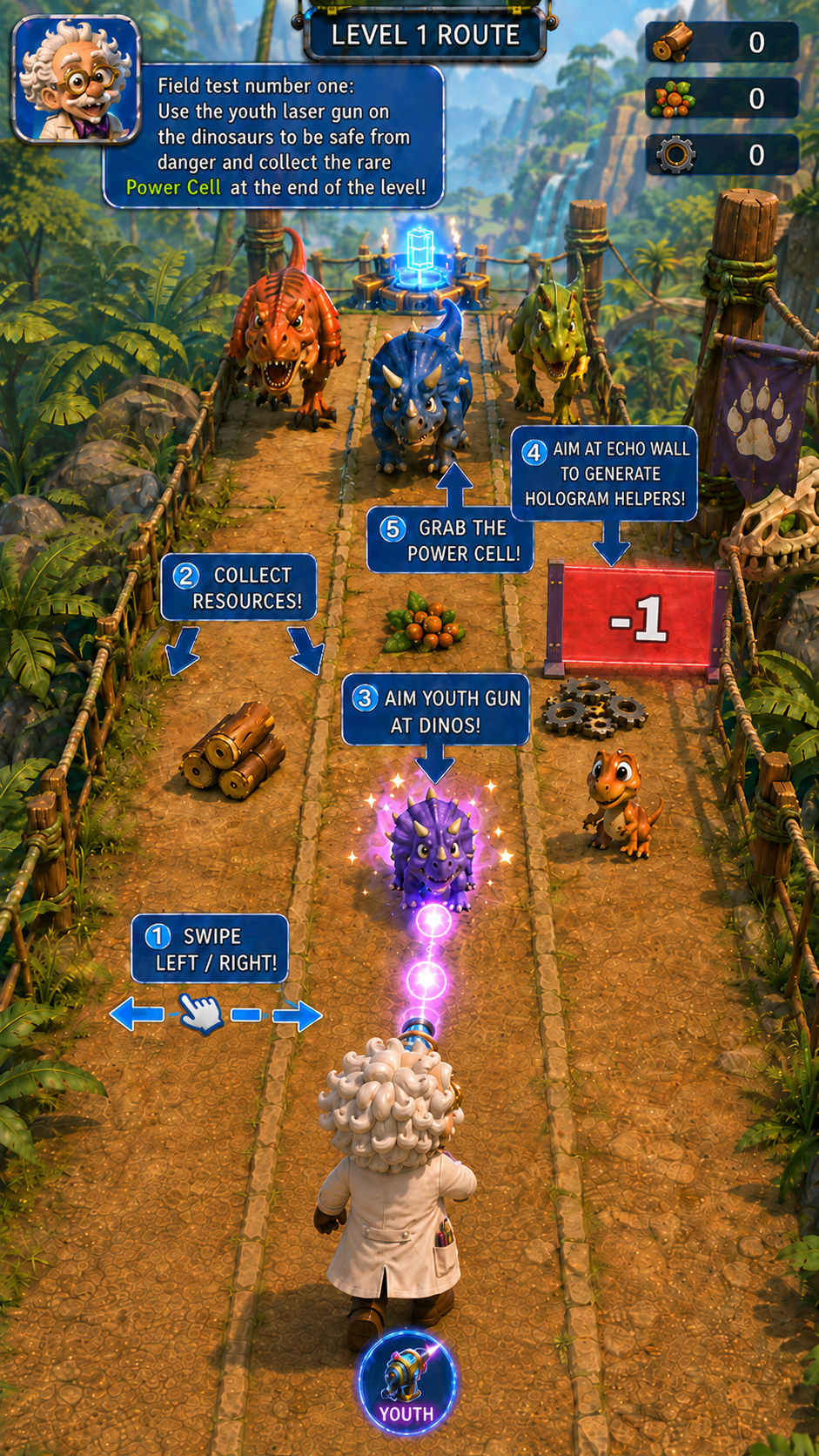
Route1 Scene
-
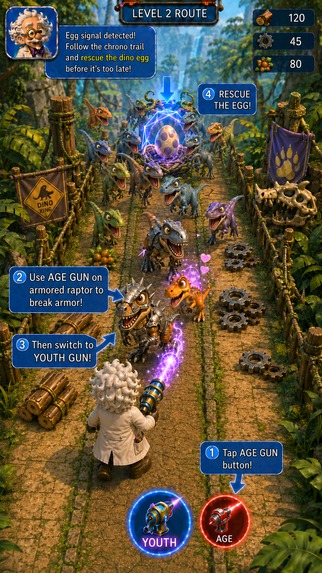
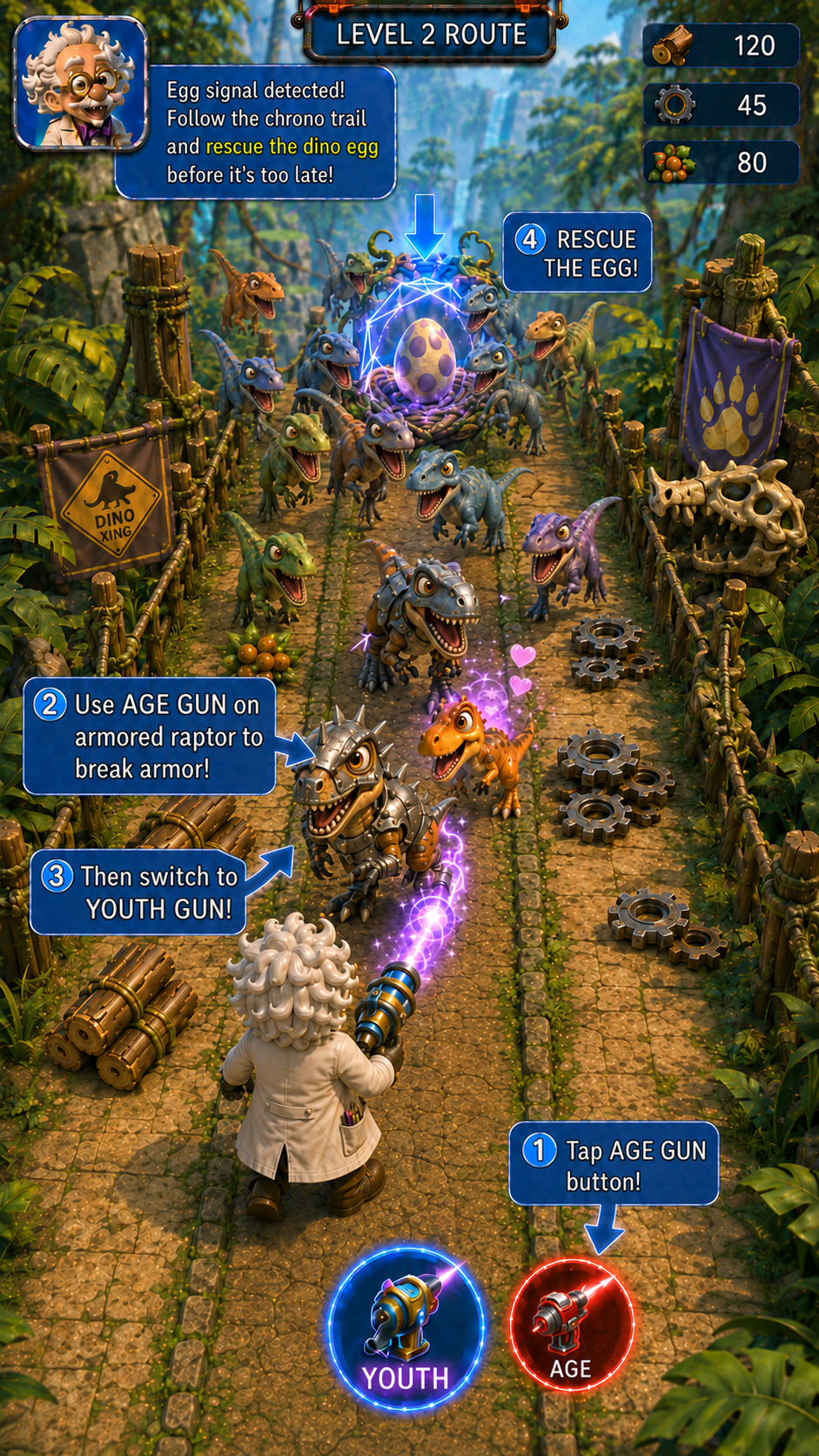
Route 2 Scene
-
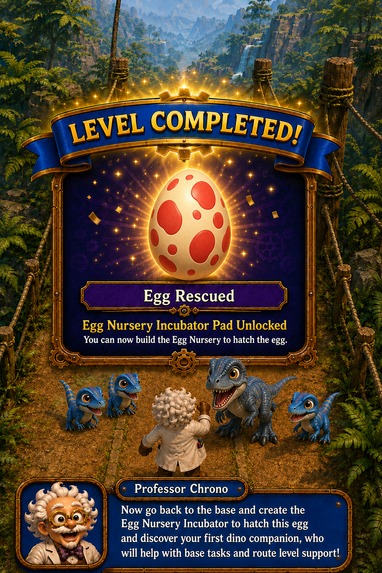
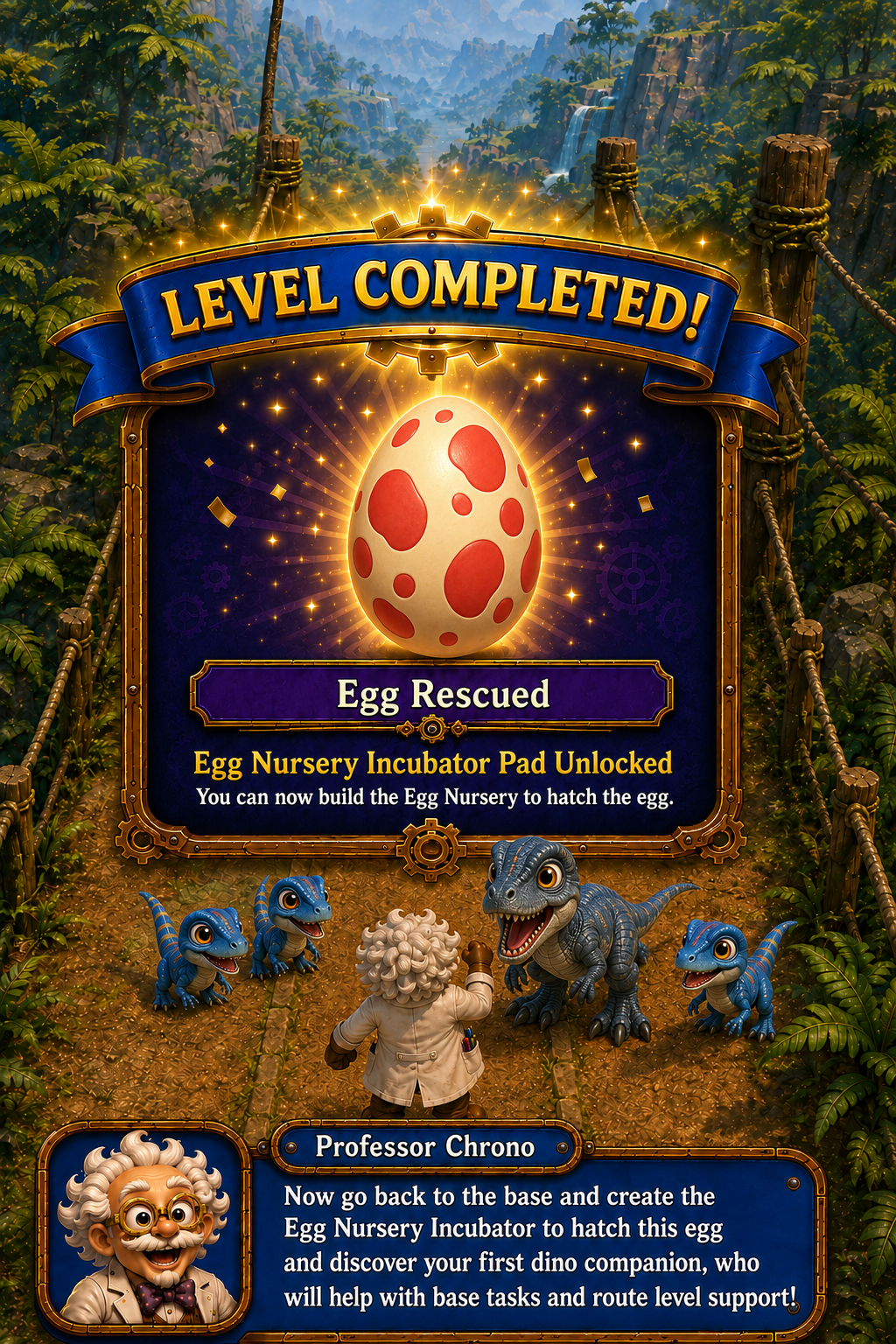
Route level reward
-
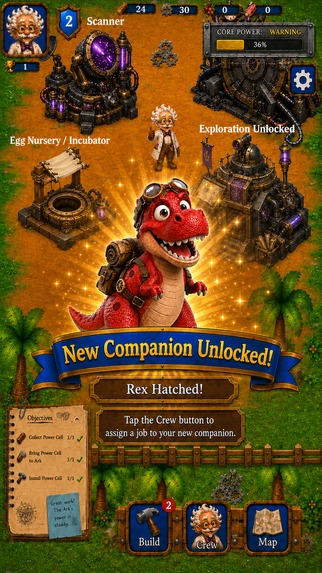
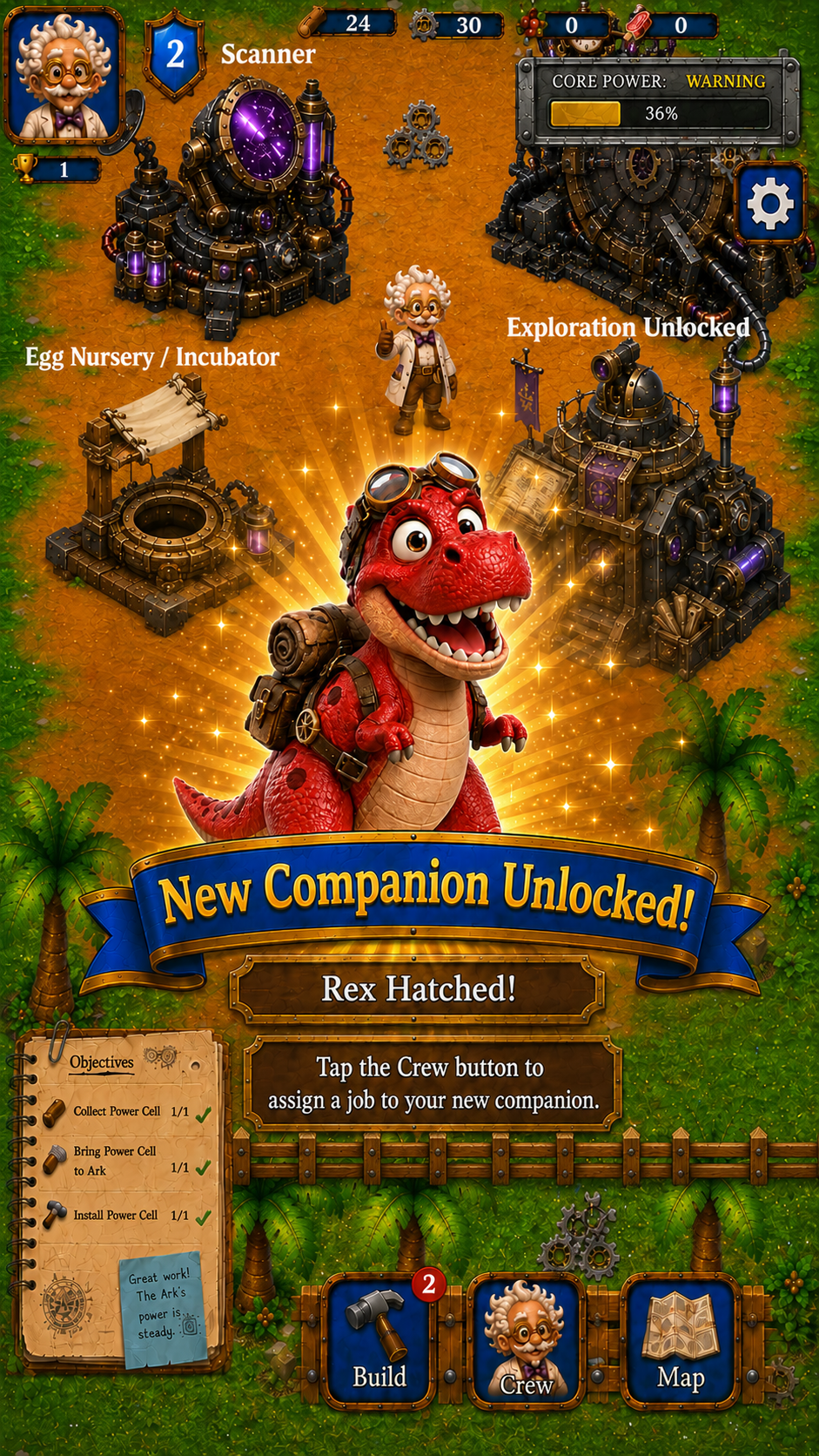
New companion
-
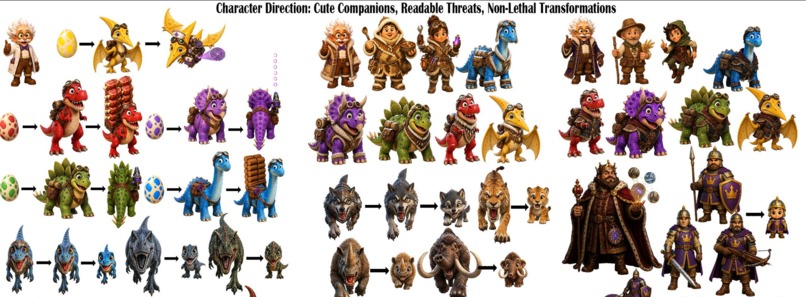
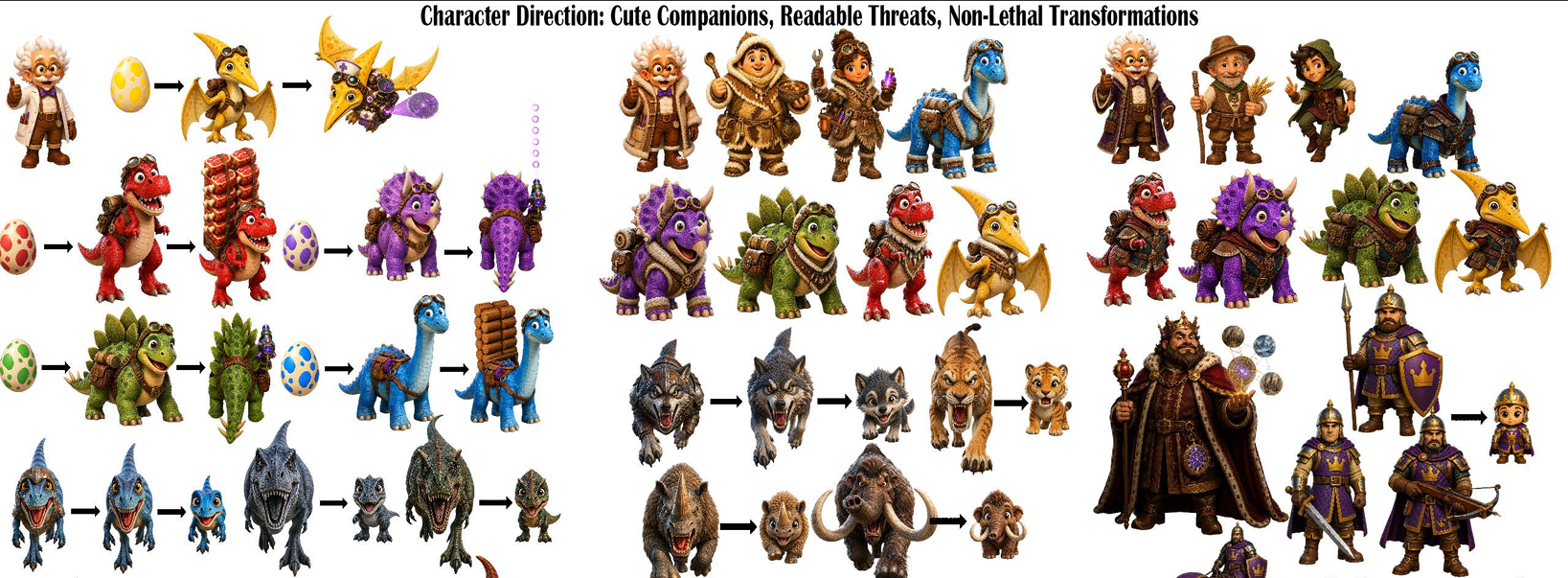
Charcathers and Villains per each Time Age

TIMEWRECKER: Time Travelling Survival
Inspiration
The inspiration for TIMEWRECKER: Time Travelling Survival came from one of the most exciting feelings in games: turning a disaster into a home, then discovering that your choices have changed history.
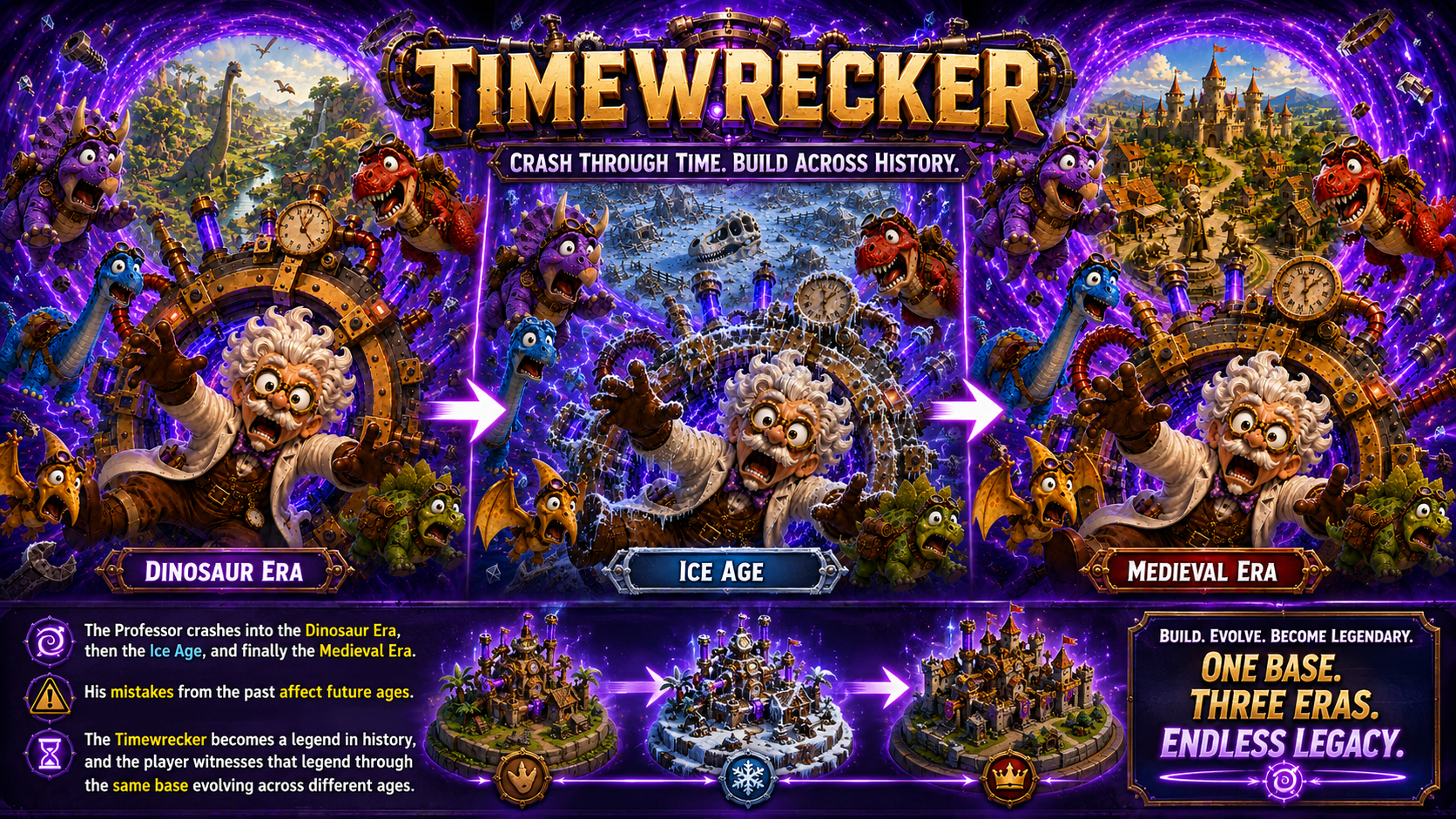
Many survival games are powerful because they make players prepare for what comes next. In TIMEWRECKER, that idea goes even further. The player is not only preparing for the next upgrade, the next expedition, or the next threat. They are preparing for the future itself. The same base that starts as a broken crash site in the Dinosaur Era later becomes frozen ruins in the Ice Age and eventually turns into legend in the Medieval Era.
I wanted to create a survival game where progress feels visible and emotional. Every repaired fence, rescued egg, upgraded station, and stabilized machine should feel like it matters. The player is not just collecting resources for numbers on a screen. They are rebuilding the Chrono Ark, protecting companions, and shaping what the world becomes after time changes it.
Another major inspiration was the idea of combining cozy base-building with fast action. The base gives the player ownership, planning, and long-term goals, while the Chrono Rush expeditions give the game danger, mastery, and quick replayable challenges. The result is a mobile-first survival experience built around the feeling of:
One more expedition. One more upgrade. One more discovery.
The visual inspiration also came from the contrast between playful adventure and chaotic time travel. The professor is expressive, funny, and slightly panicked, while the world around him is dangerous, colorful, and full of purple Chrono energy. The game is not meant to feel dark or hopeless. It is a chaotic survival adventure where mistakes from the past become the legends of the future.
What it does
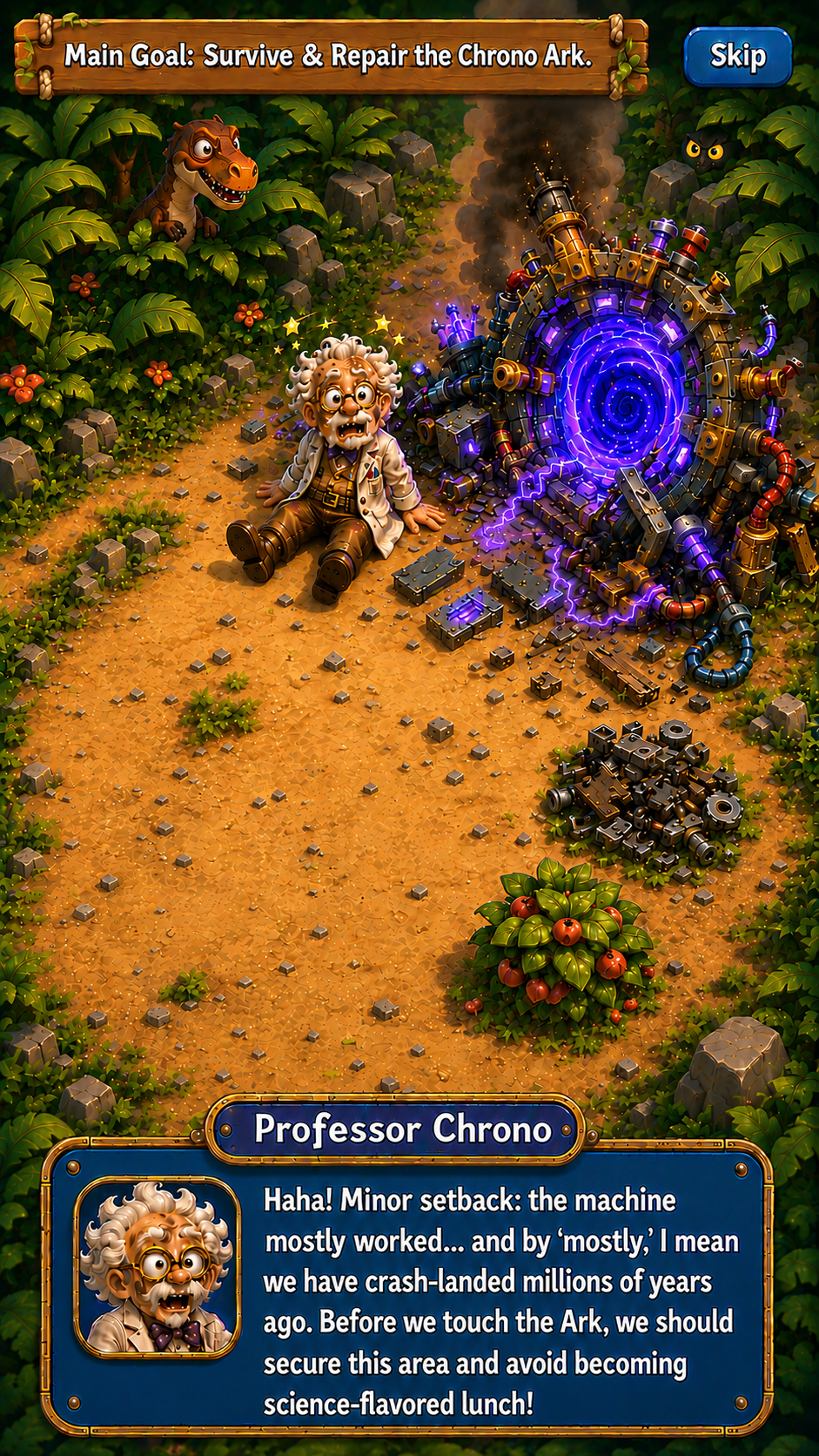
TIMEWRECKER: Time Travelling Survival is a mobile-first survival and resource management game about a reckless scientist whose homemade time machine explodes and strands him in the Dinosaur Era.
The player begins beside the smoking wreck of the Chrono Ark, surrounded by jungle, scattered machine parts, broken fences, hungry dinosaurs, and only a small safe camp. From there, the game alternates between two connected play spaces:
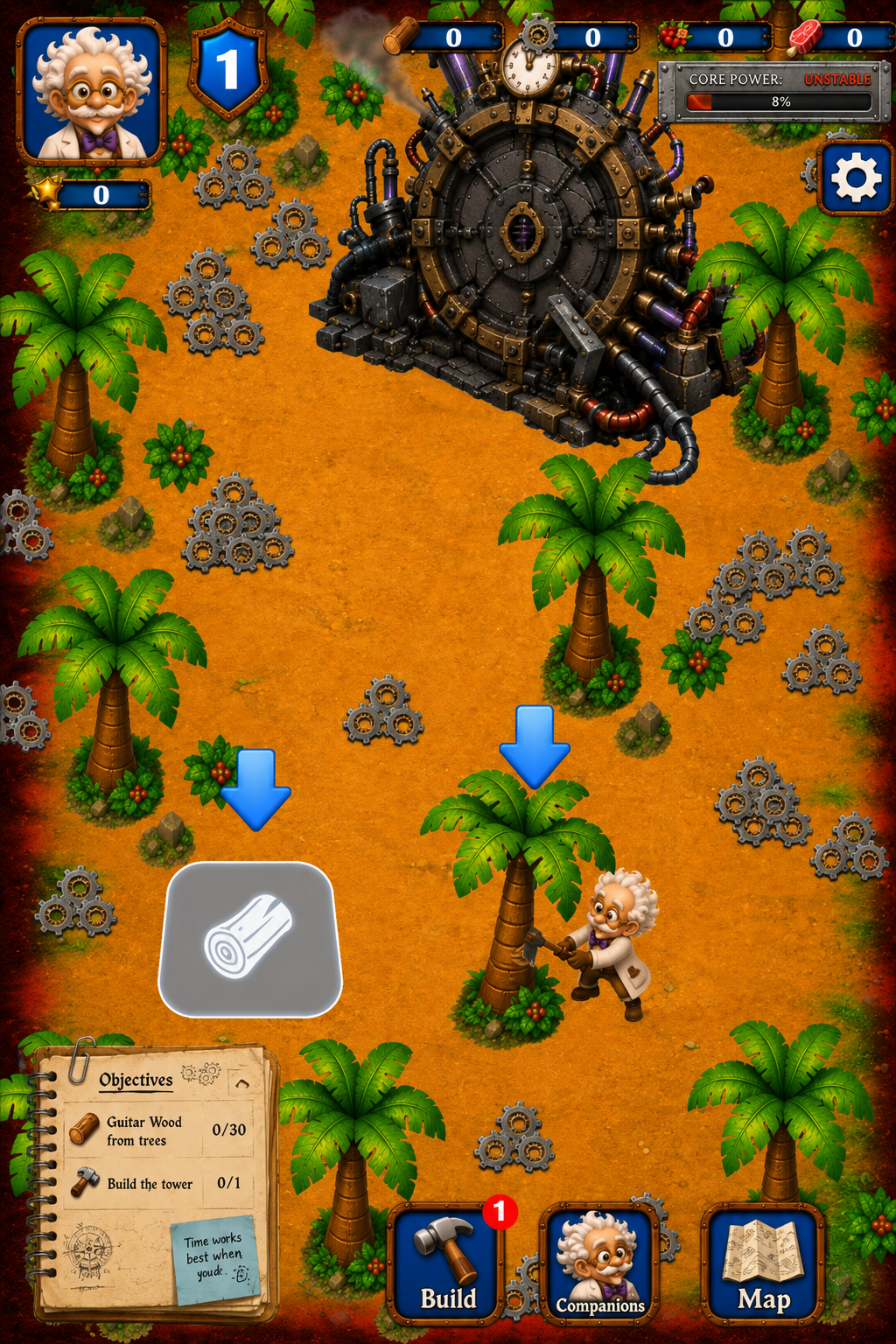
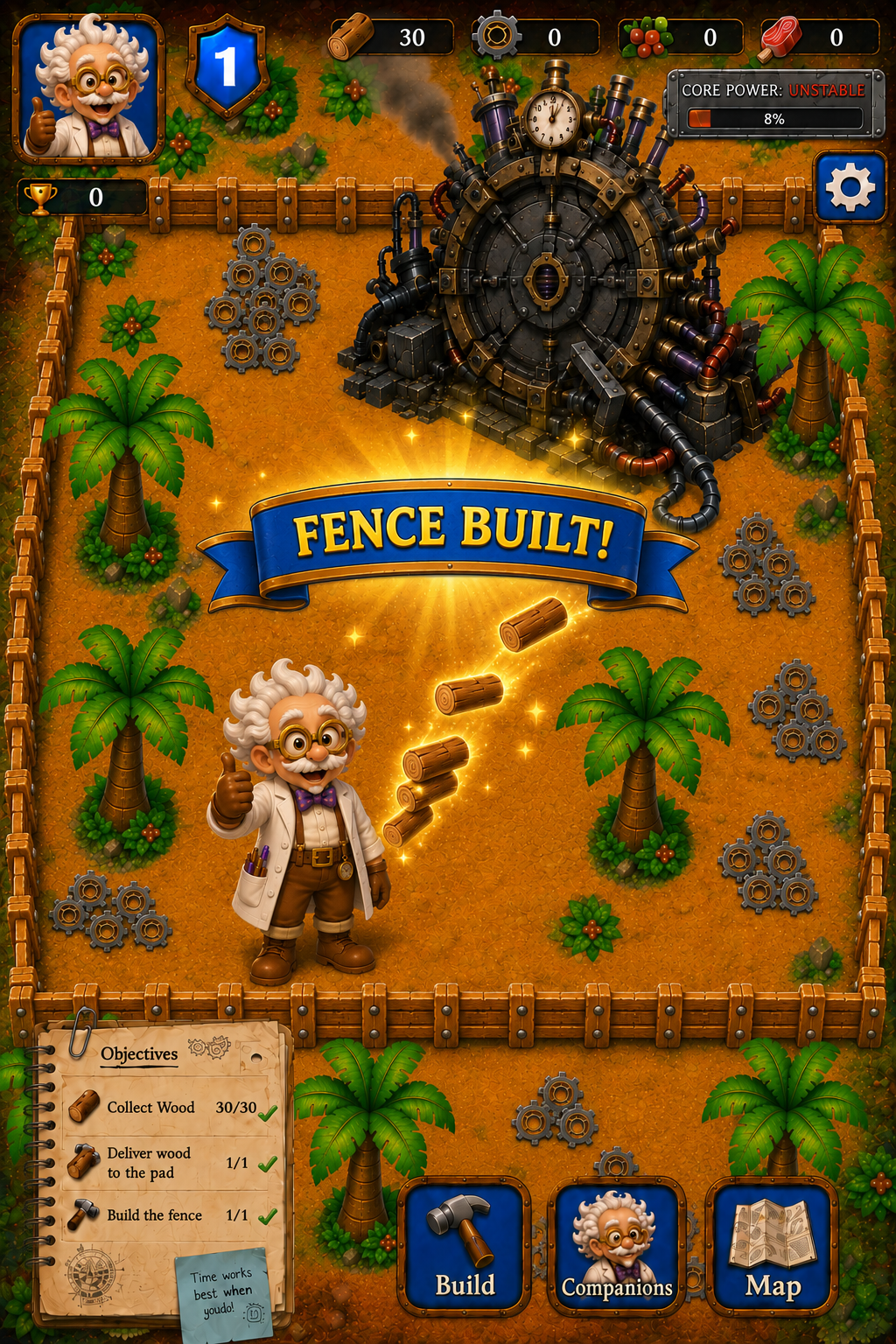
Base Survival Gameplay Players walk around a growing survival base, gather resources, deposit materials, build on visible upgrade pads, expand fences, rescue eggs, hatch companions, assign helpers, and repair the Chrono Ark.
Chrono Rush Expeditions Players enter short three-lane action routes where they swipe between lanes, collect rare rewards, avoid danger, and use time-based weapons to survive. The AGE Gun breaks armor, rocks, and obstacles, while the YOUTH Gun transforms living threats into harmless baby versions instead of killing them.
The core gameplay loop is:
Need → Gather → Build → Expedition → Upgrade → Survive → Discover
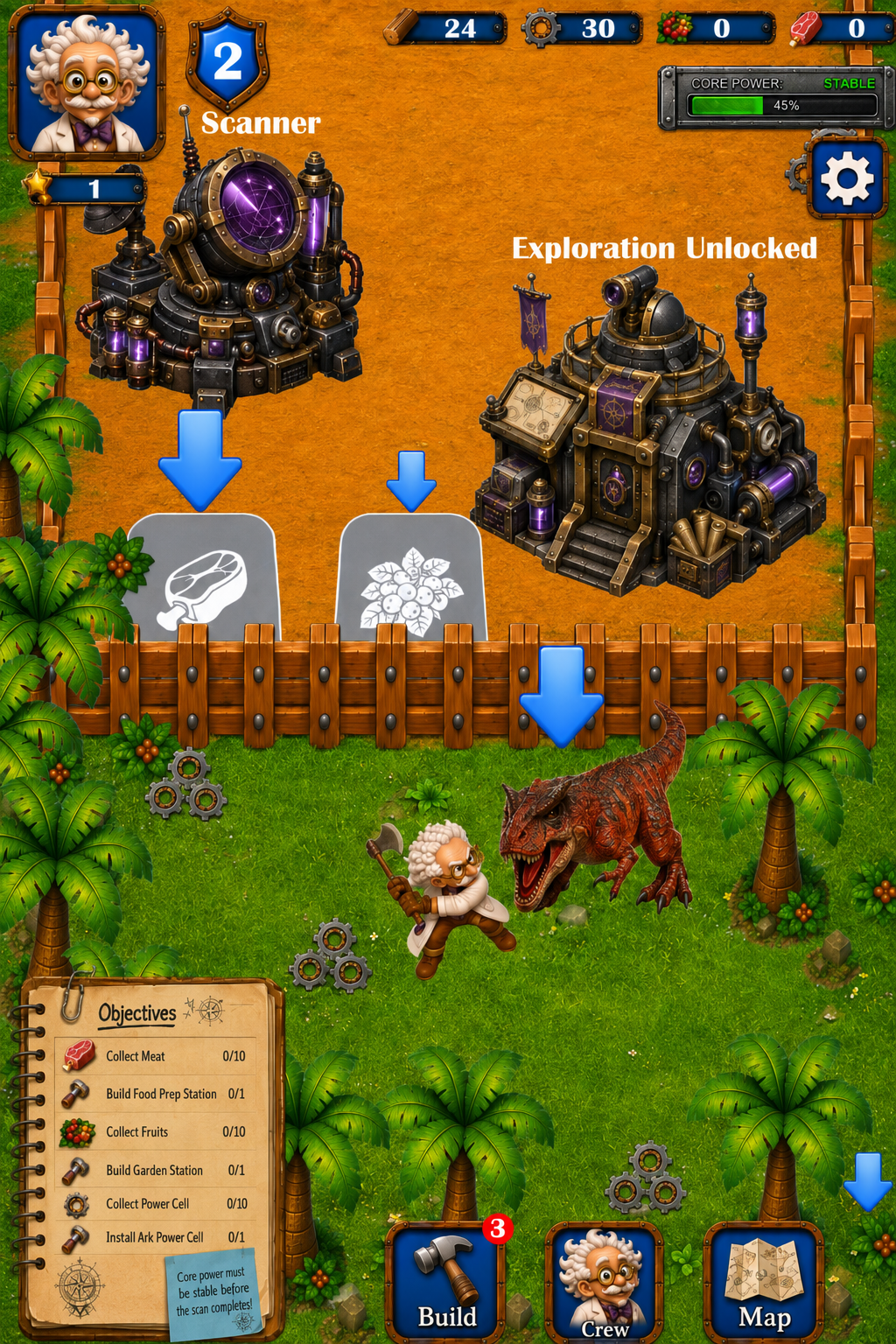
The base creates urgent survival needs, and the expeditions provide rare solutions. A player might need a Power Cell to stabilize the Chrono Core, so they gather resources at base, repair the Scanner, enter a dangerous route, use AGE to break armor, switch to YOUTH to neutralize a dinosaur, collect the Power Cell, and return to install it. The reward is not just a score screen. The reward becomes something visible in the base.
Across the full game, the player travels through three connected eras:
Dinosaur Era The player turns a dangerous crash site into a working dinosaur sanctuary while managing Chrono Core Power, rescuing companions, and repairing the Ark.
Ice Age The same sanctuary returns as frozen ruins. The player must rebuild it into a Great Hearth village, protect companions from the cold, earn survivor trust, and keep the Heat meter stable.
Medieval Era The same location becomes a hidden workshop settlement near a kingdom. The professor has become a legend, and a king now controls Chronos, a future-glimpsing artifact created by the professor’s mistakes. The player must avoid royal discovery, build allies, infiltrate the castle, and repair the timeline.
The main promise of the game is:
Survive the current era, protect the companions and allies gained there, repair the time machine, and discover what the same place becomes after time changes it.
How we built it
The design process began with one question:
How can a survival game feel deep and meaningful while still working in short mobile sessions?
Instead of building a large open-world survival game with complex menus, TIMEWRECKER was designed around readable systems, quick decisions, visible progress, and short action missions that always connect back to the base.
The game was built around two systems that depend on each other:
The base gives expeditions a reason to matter. Players need rare parts, Power Cells, eggs, diamonds, and machine components to expand the camp and repair the Ark.
The expeditions give the base rewards it cannot safely produce. Players run Chrono Rush routes to earn rare progression materials, then return to base and turn those rewards into visible upgrades.
The first 15 minutes were designed to teach the loop step by step. The player sees the Chrono Ark fail, crashes into the Dinosaur Era, gathers wood, builds the first fence, unlocks the Scanner, opens the Chrono Map, completes the first route, installs a Power Cell, rescues an egg, unlocks the Incubator, hatches a companion, and begins choosing their own next goals.
The visual direction was also designed to support gameplay clarity. The Dinosaur Era uses warm dirt paths, deep blue UI panels, wooden borders, brass details, and purple Chrono energy. The Ice Age keeps the same layout but adds icy blue panels, frost textures, snow, and cold lighting. The Medieval Era shifts to deep purple and gold to match the royal conflict while keeping the same interaction language.
Key design principles included:
- Mobile-first controls and readable UI
- Short sessions with meaningful progress
- Visible base growth instead of abstract upgrades
- One main survival pressure per era
- Time-manipulation mechanics instead of traditional combat
- Companions that affect both emotion and gameplay
- A consistent base-and-expedition loop across all eras
- Strong visual identity through purple Chrono energy, steampunk machinery, and era-specific environments
The MVP is scoped as a Dinosaur Era vertical slice. It focuses on proving the complete core loop first: walk the crash-site base, gather and deposit resources, build stations, launch Chrono Rush expeditions, install rare rewards, hatch helpers, and repair the Ark.
Challenges we ran into
One of the biggest challenges was combining two different gameplay styles without making either one feel disconnected.
The base gameplay is slower, strategic, and focused on planning. The Chrono Rush routes are faster, skill-based, and focused on reaction. To solve this, every expedition reward was designed to feed back into the base. Rare resources are not random prizes; they unlock stations, stabilize survival meters, hatch companions, and repair the Chrono Ark.
Another challenge was making survival feel urgent without becoming punishing. Many survival games can feel stressful if players lose too much progress. In TIMEWRECKER, survival meters create pressure during active play, but the player’s base is not destroyed while they are away. This keeps the game accessible for mobile players while still giving them important decisions during each session.
A third challenge was teaching the time mechanics clearly. The game includes the AGE Gun, YOUTH Gun, Echo Walls, and Rewind, but introducing all of them at once would overwhelm players. The solution was to teach mechanics in layers: first movement and gathering, then building, then YOUTH transformation, then AGE armor-breaking, then Echo and Rewind mastery routes.
Scope was another major challenge. The full vision includes the Dinosaur Era, Ice Age, and Medieval Era, but building all three at full depth immediately would be risky. The production plan solves this by focusing the MVP on the Dinosaur Era first, while designing the later eras so they can plug into the same proven systems later.
The final challenge was visual coherence. The game uses many eras, creatures, structures, UI screens, and gameplay states, so the art direction needed one strong identity to hold everything together. Purple Chrono energy, steampunk machinery, expressive characters, readable UI, and repeating base landmarks help make the game feel like one connected world instead of separate random themes.
Accomplishments that we're proud of
We are especially proud of creating a survival concept where the player survives across time, not just across space.
Some of the accomplishments we are most excited about include:
- Designing a clear mobile-first survival loop that connects base-building with short action expeditions.
- Creating a unique time-manipulation combat system where AGE breaks armor and YOUTH neutralizes threats non-lethally.
- Turning enemy transformation into part of the game’s identity by making threats become harmless baby versions instead of being killed.
- Designing the same base to evolve across three eras: Dinosaur sanctuary, Ice Age ruins, and Medieval legend.
- Creating companions that are not only collectibles, but also automation helpers, expedition supporters, and emotional attachments.
- Building a first 15-minute player journey that teaches gathering, building, route selection, rare rewards, egg rescue, and automation without overwhelming the player.
- Developing a coherent visual identity with purple Chrono energy, wood-and-brass UI, steampunk machinery, expressive characters, and era-specific color palettes.
- Creating a scoped production plan that proves the Dinosaur Era MVP first before expanding into the Ice Age and Medieval Era.
Most importantly, we are proud that every major system supports the same fantasy:
The player’s base survives through time, and their mistakes become history.
What we learned
The biggest lesson we learned is that survival games are strongest when progress creates anticipation.
Players are not only motivated by what they have already built. They are motivated by what they are close to building next. A nearly affordable station, a companion about to hatch, a Power Cell route, a dangerous reward lane, or an unstable survival meter can all create the feeling of “I just need one more run.”
We also learned that UI is not separate from game design. In TIMEWRECKER, the player needs to understand resources, build pads, Core Power, route rewards, companion jobs, armor bars, health bars, and gun states quickly. Clear UI makes the game feel playable before the player even understands every system.
Another lesson was that visual progression is extremely important. When a player repairs the Ark, upgrades a station, expands a fence, or unlocks a companion, the world should visibly change. This makes progress feel real and helps the player feel ownership over the base.
We also learned that scope control makes a larger vision stronger. Instead of trying to build all three eras at once, the MVP focuses on proving the Dinosaur Era loop first. Once that loop works, the Ice Age and Medieval Era can build on the same foundation with new survival pressures, enemies, resources, and story consequences.
Finally, we learned that the most memorable part of TIMEWRECKER is not only the time machine. It is the emotional connection between the player and the place they build. The base becomes a home, then a ruin, then a legend. That transformation is what makes the game feel original.
What's next for TIMEWRECKER: Time Travelling Survival
This project represents the foundation of a larger time-travel survival campaign.
The next step is to build and test the Dinosaur Era MVP. This version will focus on one complete vertical slice: a walkable crash-site base, visible build pads, Chrono Core Power, resource gathering, station upgrades, companion helpers, egg rescue, AGE/YOUTH mechanics, Echo, Rewind, and 20–30 short Chrono Rush levels.
After the Dinosaur Era loop is validated, the game can expand in layers:
- More Dinosaur Era routes, enemies, companions, and Ark repair milestones
- Expanded base upgrades and stronger production systems
- Additional companion roles and automation jobs
- More advanced Chrono Rush routes using Echo and Rewind mastery
- The Ice Age chapter with Heat, frozen ruins, survivors, Heat Cores, cold hazards, and the Great Hearth
- The Medieval Era chapter with Secrecy, royal suspicion, hidden workshops, influence, Chronos clues, soldiers, patrols, and castle infiltration
- Post-game Chrono Portal revisits where players return to earlier eras and repair timeline problems
- Timeline crisis missions where past choices create future challenges
- Expanded social and companion systems that let players compare bases, routes, companions, and legacy outcomes
The long-term vision is to create a survival game where progress does not disappear when the player leaves an era. It becomes history.
Crash through time. Build across history. Survive the future.
Built With
- chatgpt
- claude
- ice
- photoshop


Log in or sign up for Devpost to join the conversation.