-
-
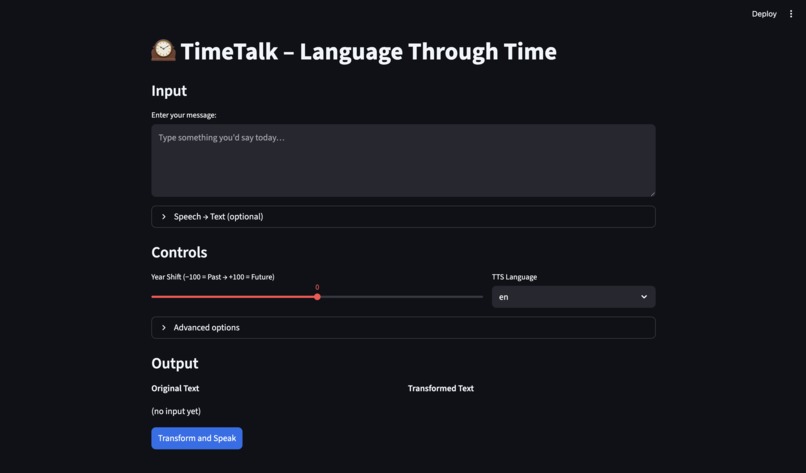
Time Talk App
-
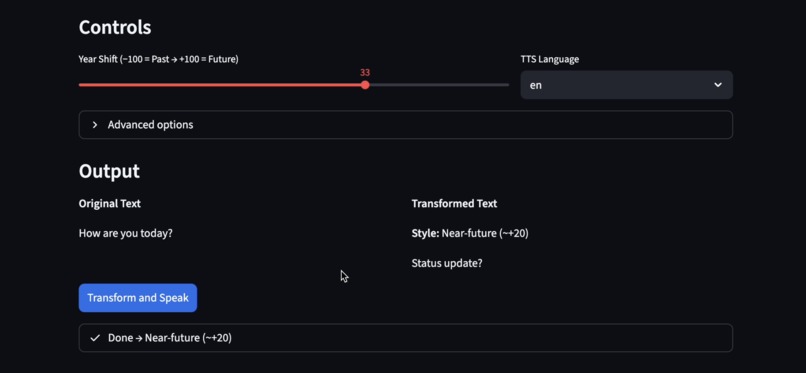
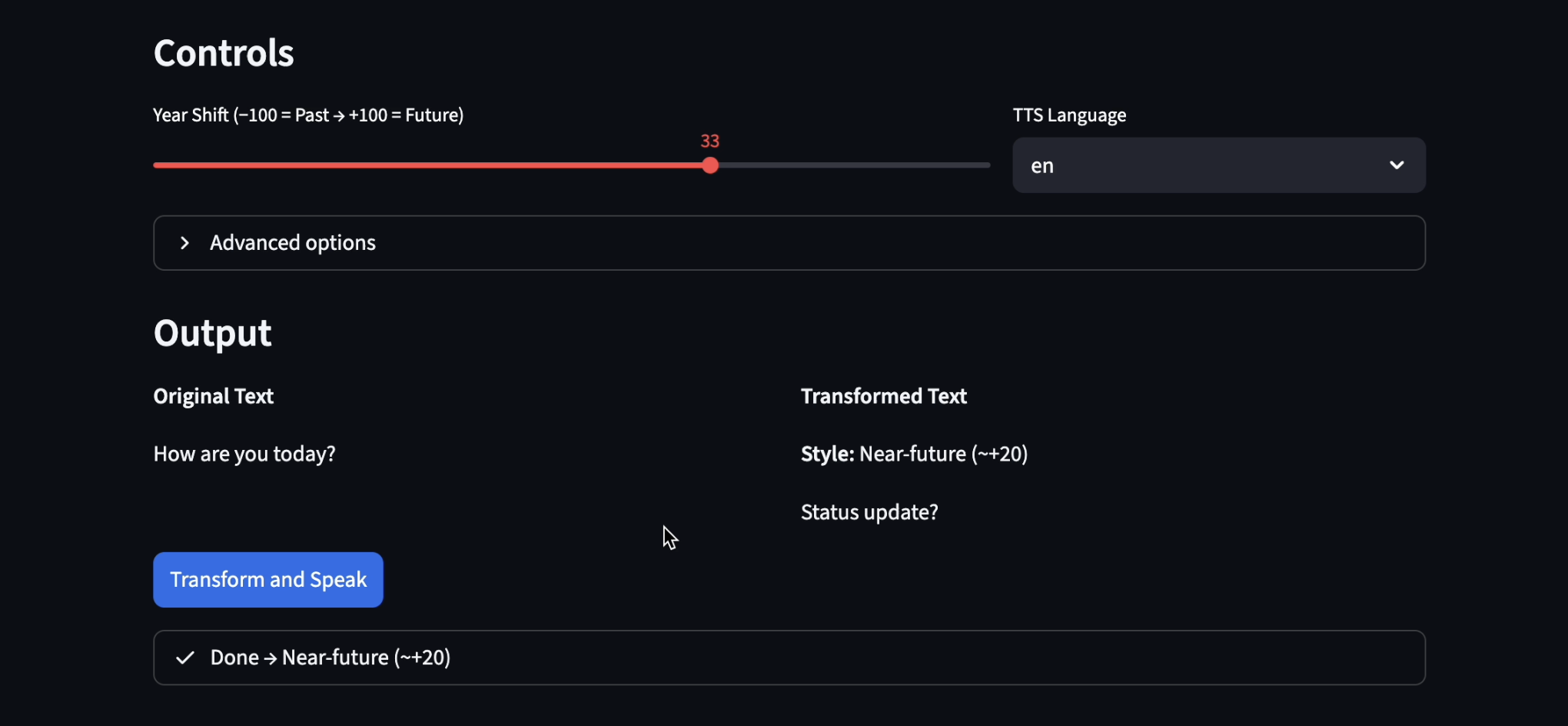
Future Tone
-
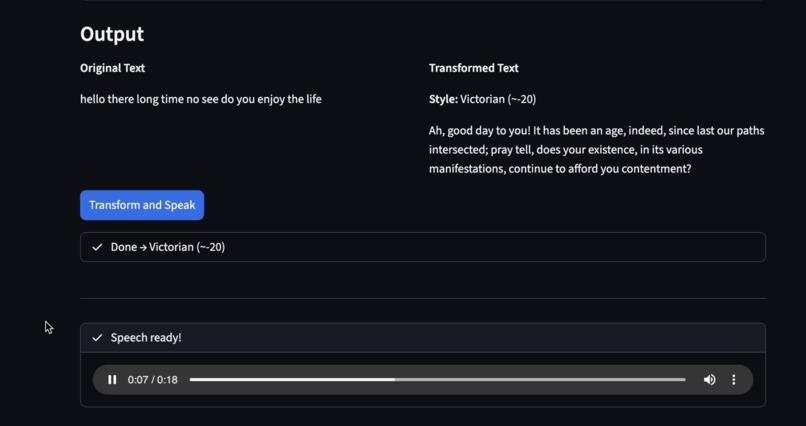
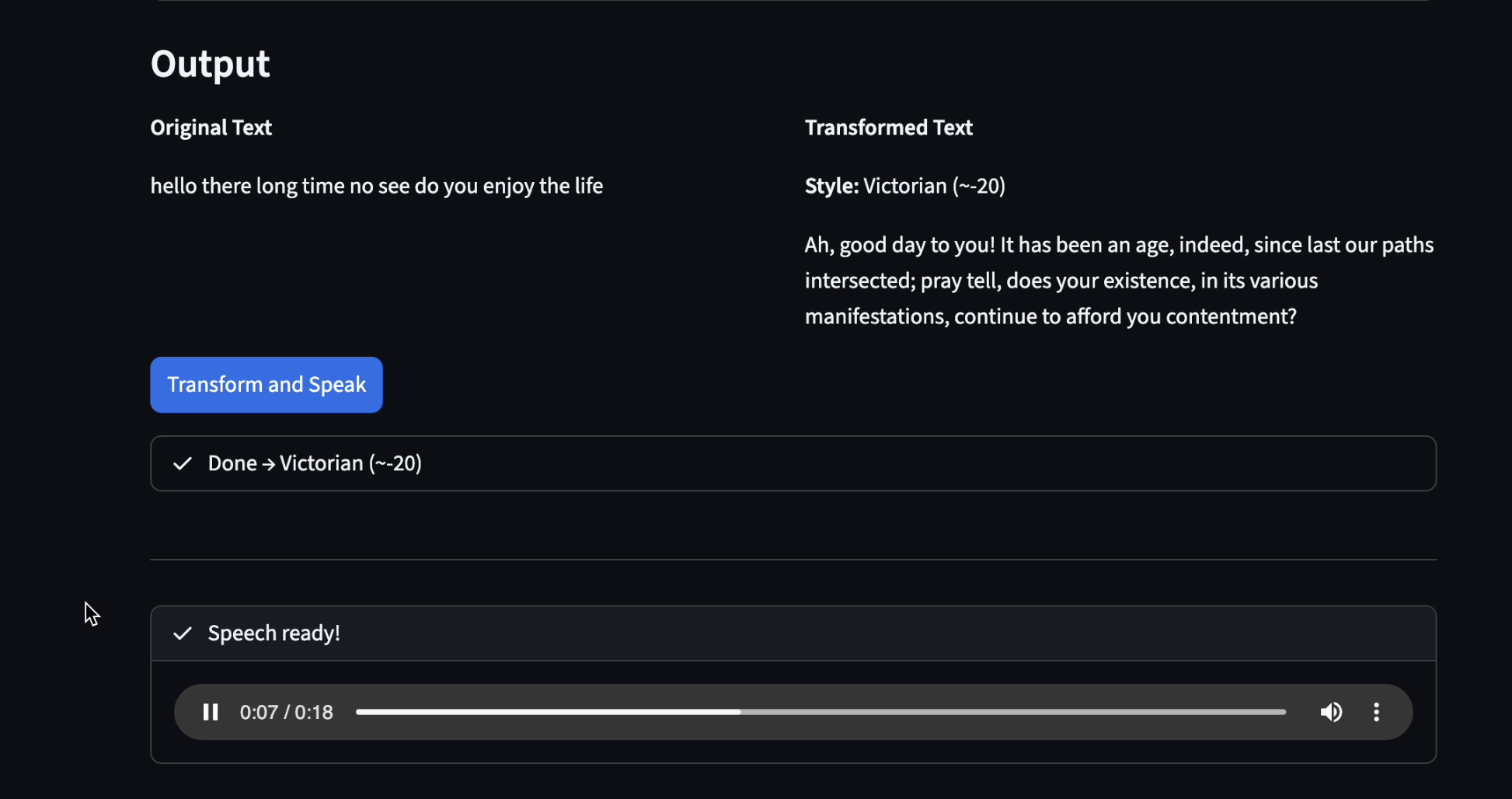
Past Tone
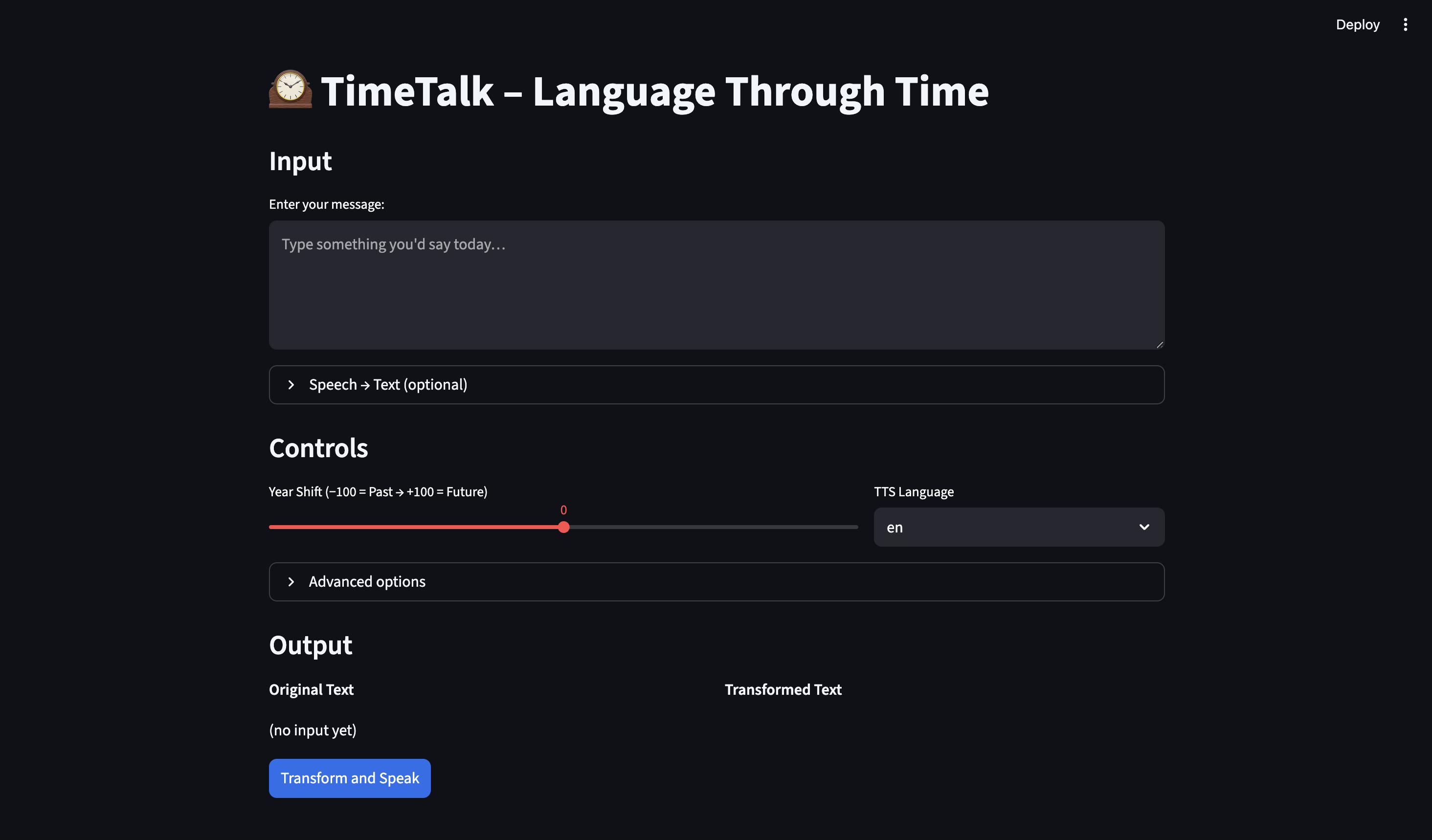
Inspiration
Language has always evolved — from Old English to modern slang — but today, even people a decade apart struggle to understand each other. We wanted to bridge that gap. With TimeTalk, we imagined what it would be like if people from any era — Shakespeare’s time, the Victorian age, or the cyberpunk future — could communicate seamlessly.
What it does
TimeTalk lets users “time-travel” through English. You can speak or type, and the app instantly transforms your words into the style of different time periods — from Old English to futuristic slang — and even speaks them aloud using AI-generated voices.
How I built it
I built a Streamlit frontend connected to a Python backend. The backend integrates three AI components:
- LLM (Language Model): Rewrites text based on historical or futuristic linguistic patterns.
- STT (Speech-to-Text): Converts live speech into text for processing.
- TTS (Text-to-Speech): Synthesizes the transformed text into an expressive voice. Each era’s tone is defined by a style-mapping function that adjusts grammar, diction, and tone based on a “time slider.” ## Challenges I ran into Model alignment: Balancing historical accuracy with readability. Audio latency: Ensuring real-time conversion between STT and TTS. UI responsiveness: Managing Streamlit session states and multiple environments (UI vs. TTS backend). ## Accomplishments that I'm proud of I completed the project all by myself Built a fully functional prototype that transforms both text and voice across time periods. Designed a dynamic era slider with live feedback. ## What I learned I learned how to orchestrate multiple AI services — STT, LLM, and TTS — into one seamless pipeline. We also deepened our understanding of linguistic evolution, system integration, and user experience design under real-time constraints. ## What's next for Time Talk I hope to expand TimeTalk into a cross-platform app that supports more languages and historical voices, allowing users worldwide — and across generations — to communicate, learn, and connect through time. I also want to let TimeTalk produces digital people talking based on output voice and user's figure.


Log in or sign up for Devpost to join the conversation.