-
-

Logo
-
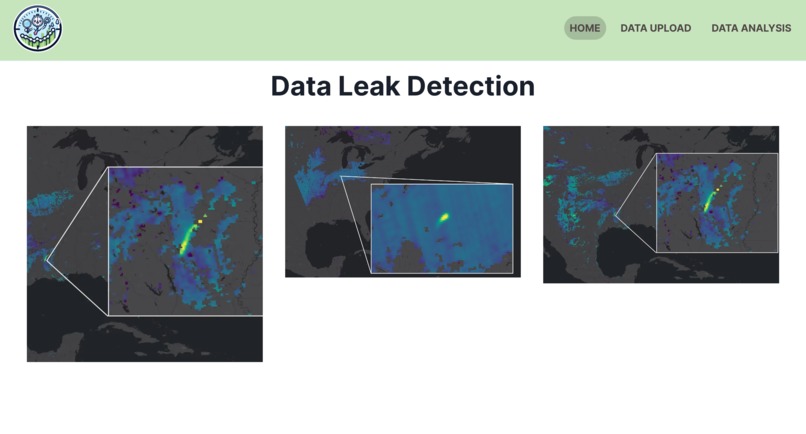
Data Home - Leak Detections
-
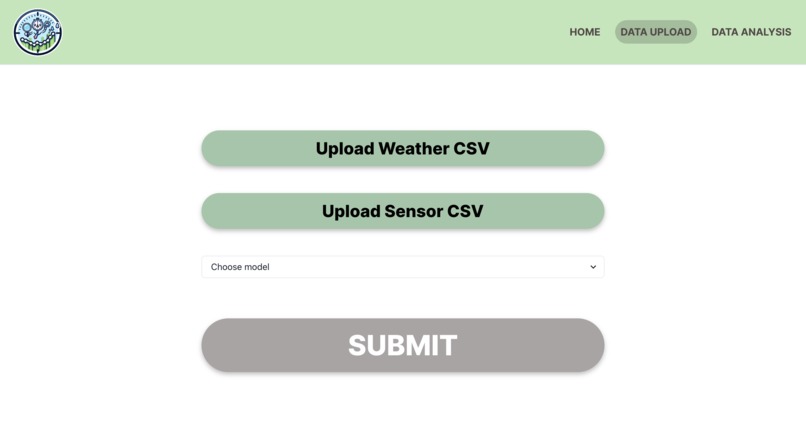
Data Upload

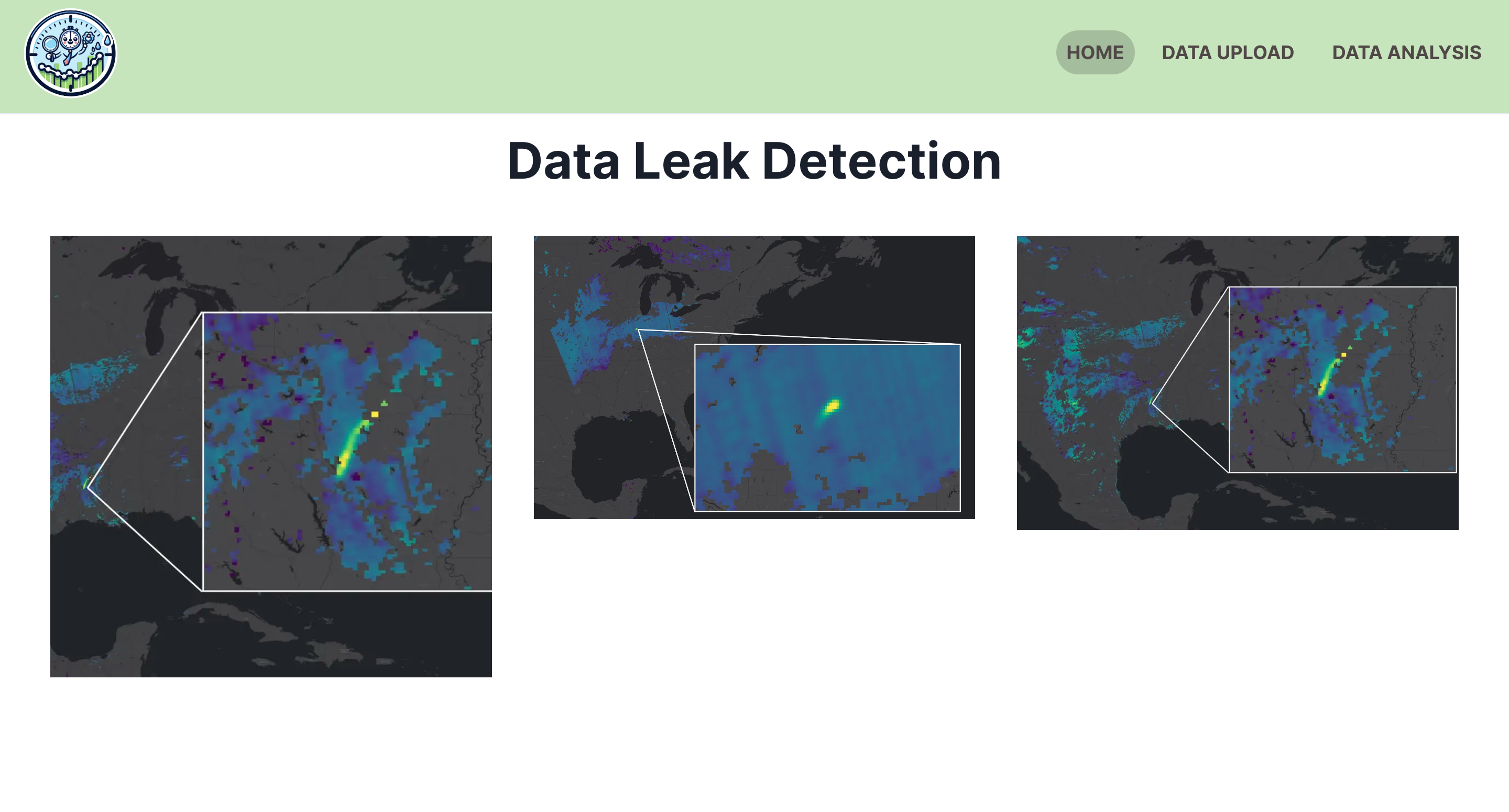
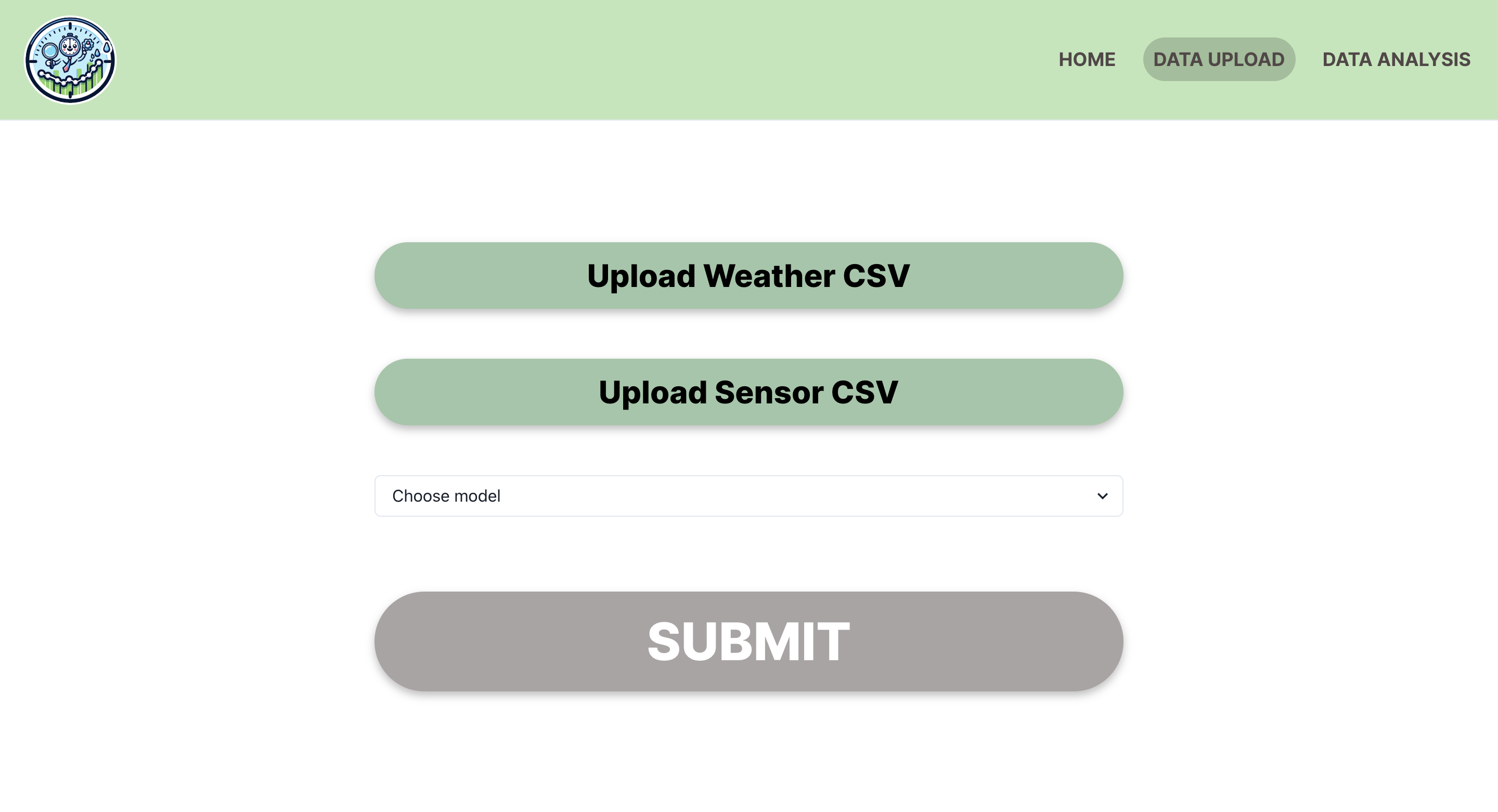
EOG Methane Detection
What it does
We have developed an advanced web page tailored for identifying methane leaks within a 2-hour timeframe at your facility. Leveraging sensor data, wind direction, and speed, the system analyzes trends to pinpoint potential leak locations. The application provides a user-friendly interface with interactive visualizations, offering a comprehensive view of the data analysis process.
How we built it
To build our leak detection system, we employed a robust combination of programming tools and technologies. Python was the backbone of our front end, providing the necessary algorithms and logic for processing the data and detecting leaks. We utilized diverse datasets containing relevant information to train and validate our AI model, enabling it to recognize patterns and identify potential leaks effectively. In addition, we leveraged React, a popular JavaScript library, to create a user-friendly and responsive interface for our program. This technology stack allowed us to seamlessly integrate the backend functionalities powered by Python with an intuitive frontend interface, ensuring a seamless user experience while harnessing the power of AI to address leak detection challenges efficiently.
Challenges we ran into
Transitioning our AI focus from identifying no leaks to specifically detecting leaks presented significant challenges. One of the primary issues we encountered was the prevalence of false negatives, where the AI failed to detect leaks, leading to potential risks and operational issues. To minimize these false negatives, we adjusted the model, inadvertently increasing false positives instead. This trade-off between false negatives and false positives became a recurrent obstacle, requiring constant fine-tuning and iterative improvements to strike the right balance. Navigating this delicate equilibrium was essential to ensure the accuracy and reliability of our AI in accurately pinpointing leaks, a task vital for the safety and efficiency of various industries and applications.
Research
Following our project analysis, we realized that the flow of pollutants in the form of vapor or smoke released into the air. These are of considerable importance in the atmospheric dispersion modeling of air pollution. These are mainly classified into 3 types:
- Buoyant Plumes: Plumes that are lighter than air because they are at a higher temperature and lower density than the ambient air that surrounds them or because they are at about the same temperature as the ambient air but have a lower molecular weight and hence lower density than the ambient air. e.g., Methane (CH4) is buoyant because it has a lower molecular weight than air.
- Dense Gas Plumes: A plume may have a higher density than air because it has a higher molecular weight than air (for example, a plume of carbon dioxide). A plume may also have a higher density than air if the plume is at a much lower temperature than the air; such plumes are called dense gas plumes.
- Passive Flumes: Plumes which are neither lighter or heavier than air.
The Gaussian-plume formula is derived assuming ‘steady-state’ conditions. That is, the Gaussian-plume dispersion formulae do not depend on time, although they do represent an ensemble time average. The meteorological conditions are assumed to remain constant during the dispersion from source to receptor, which is effectively instantaneous. Emissions and meteorological conditions can vary from hour to hour, but the model calculations in each hour are independent of those in other hours. Due to this mathematical derivation, it is expected to refer to Gaussian-plume models as steady-state dispersion models. In practice, however, the plume characteristics change over time because they depend on changing emissions and meteorological conditions. One consequence of the plume formulation is that each hour the plume extends instantaneously out to infinity. Concentrations may then be found at points too distant for emitted pollutants to have reached them in an hour.


Log in or sign up for Devpost to join the conversation.