-
-
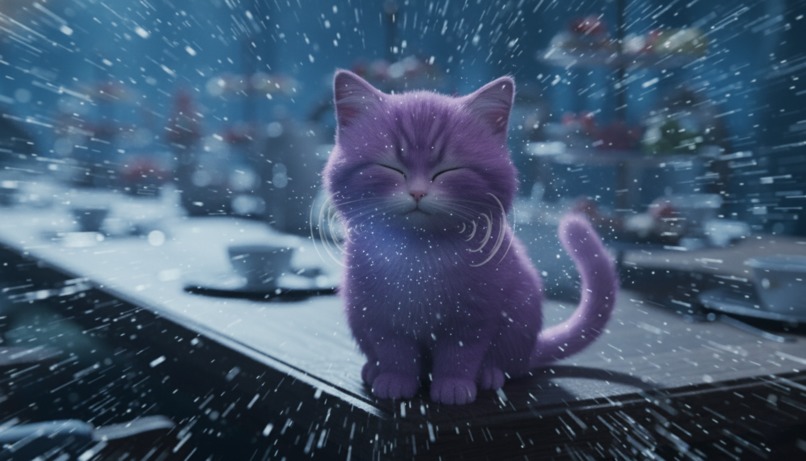
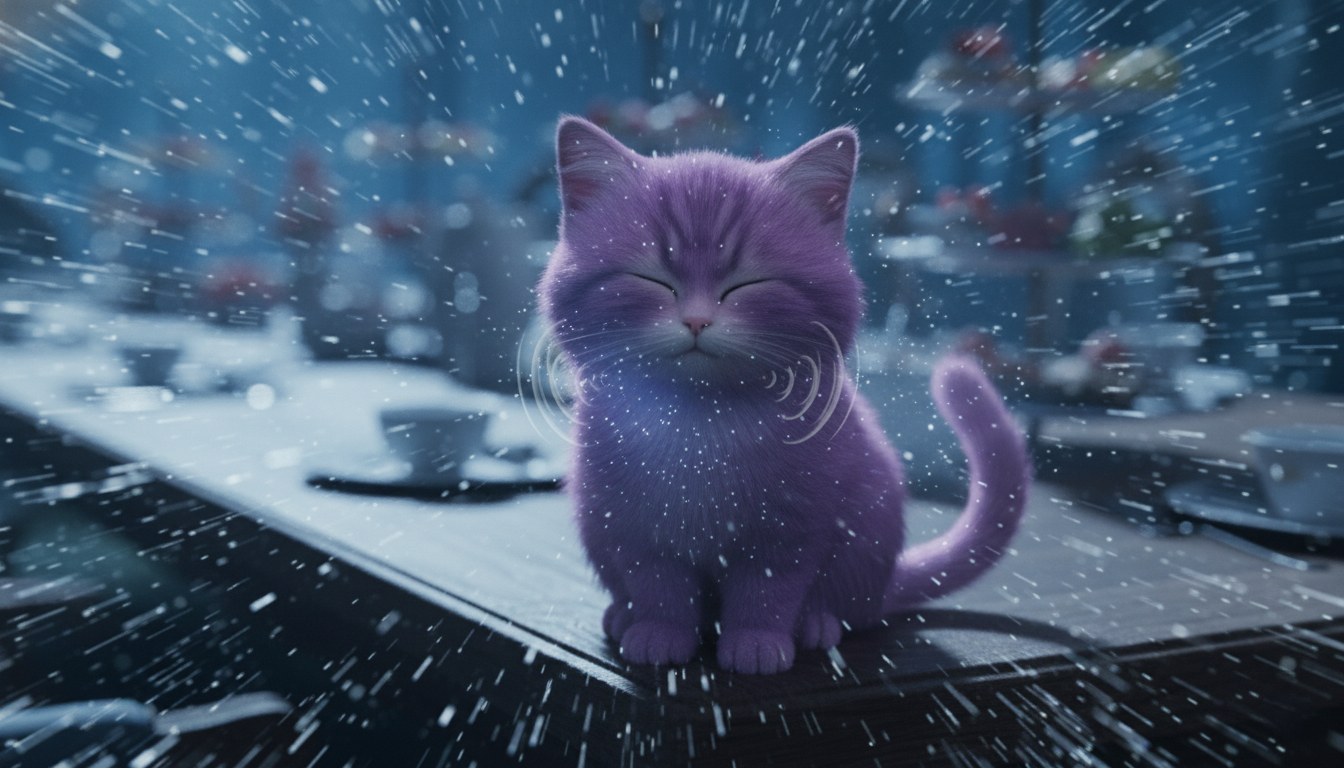
A curious character in a different world
-
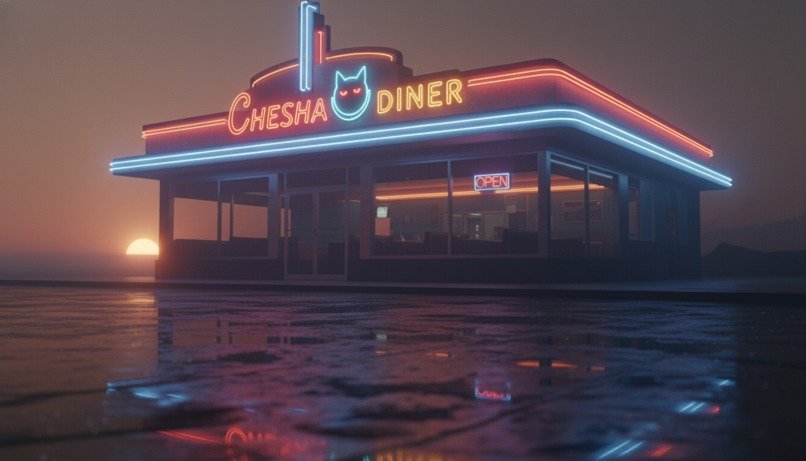
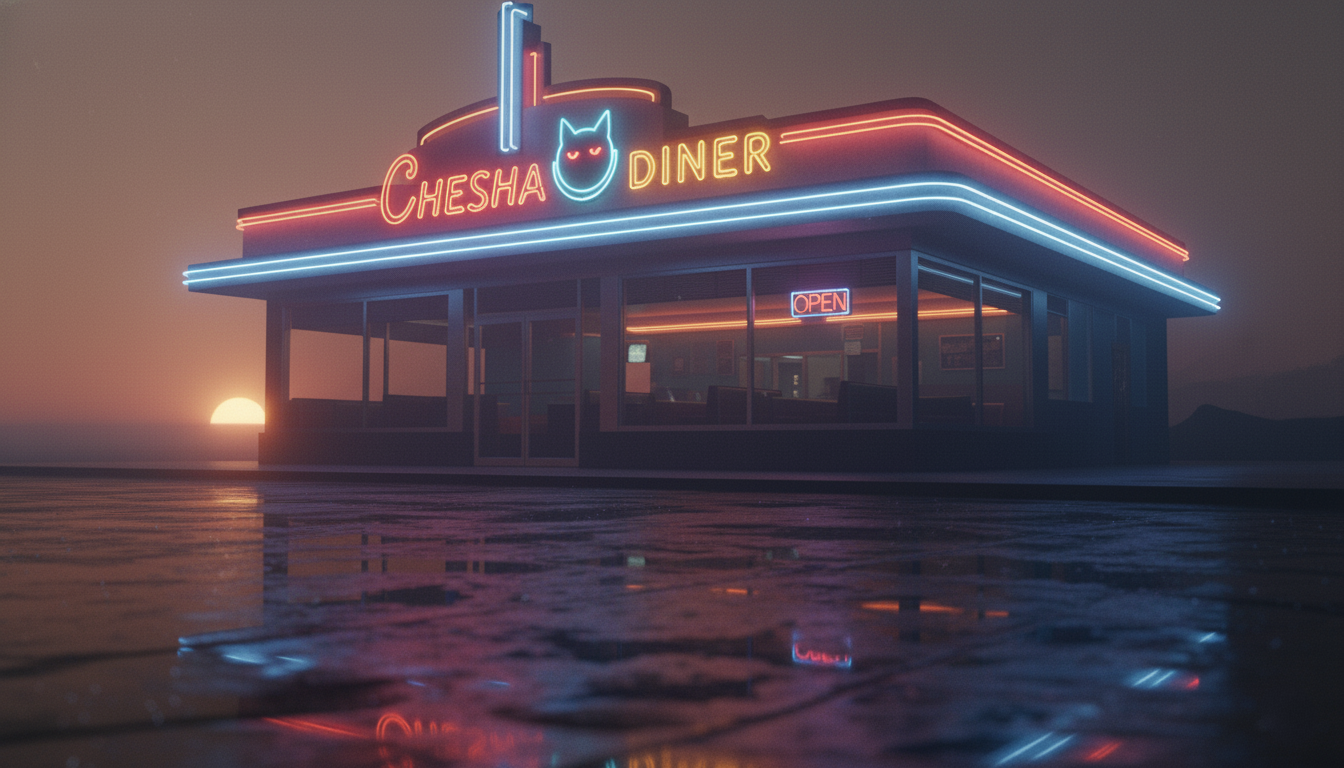
Chesha Diner, where the story resides
-
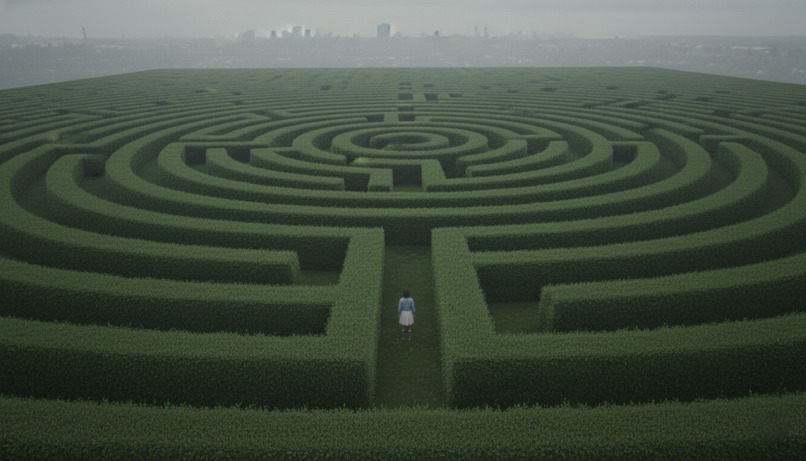
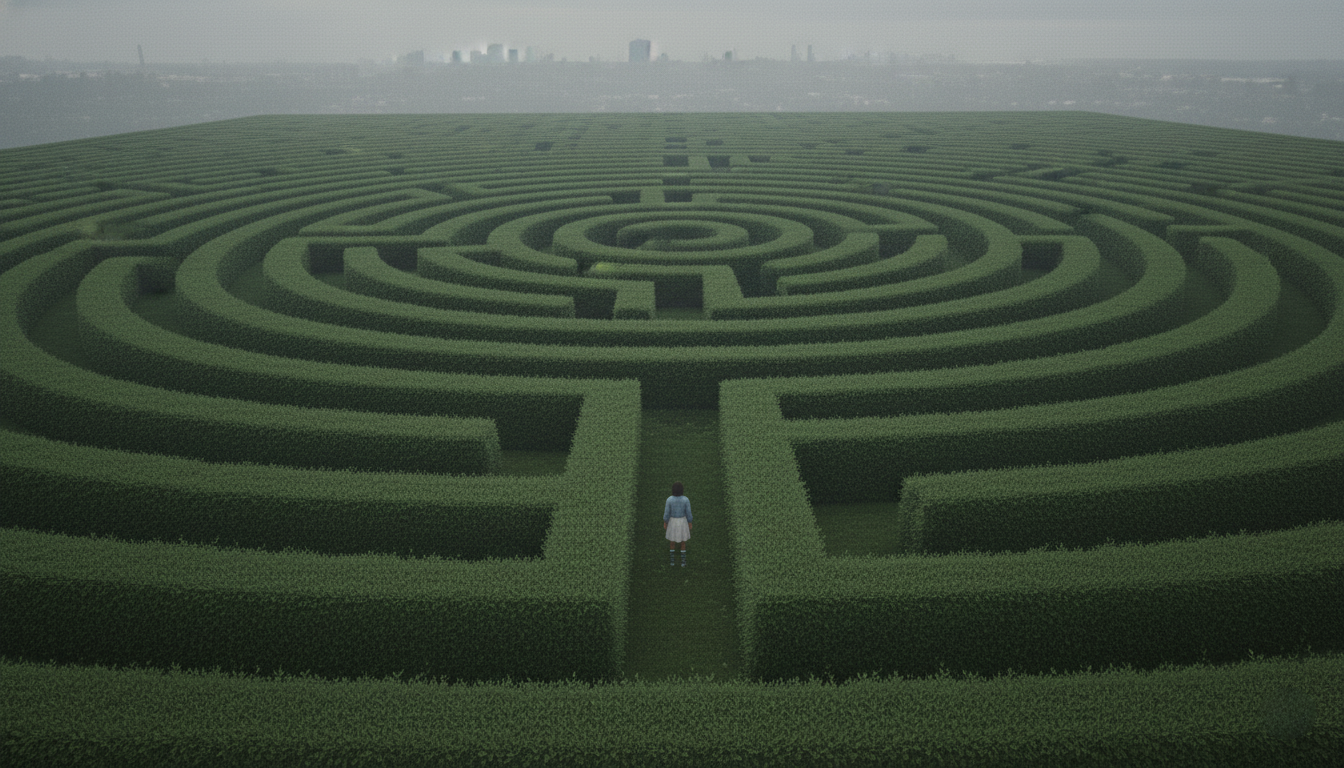
Protagonist being lost (in a maze)
-
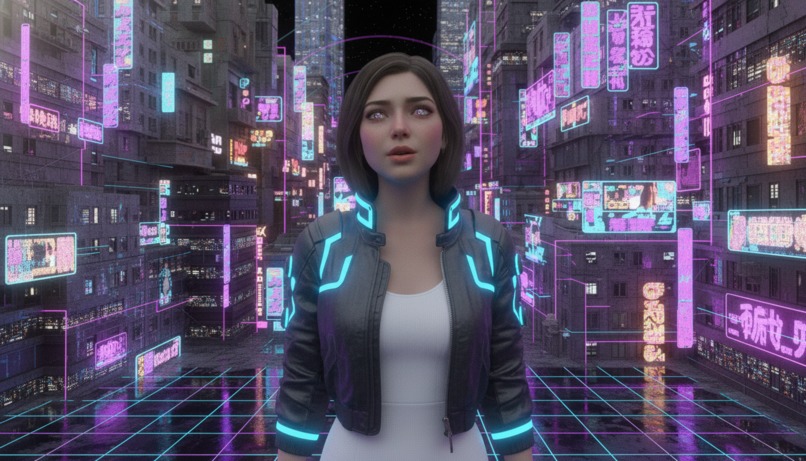
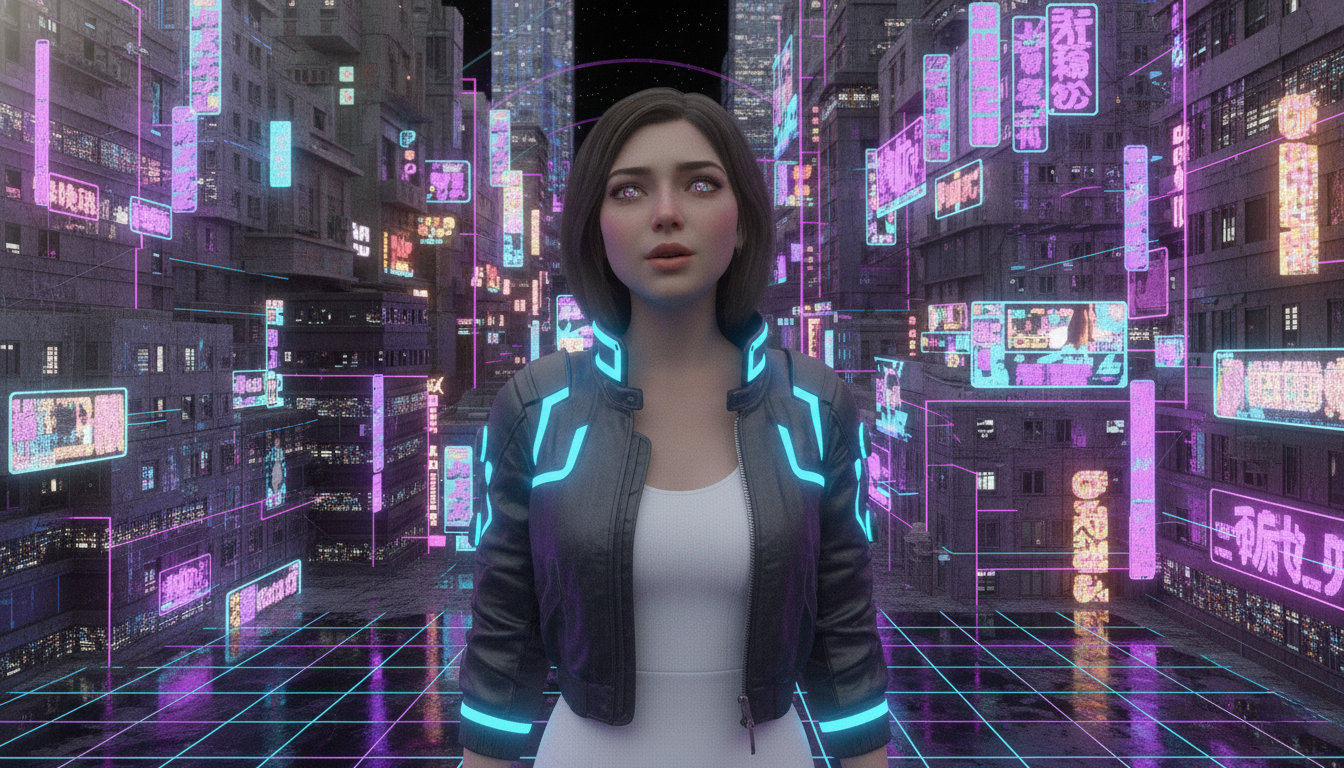
Protagonist transformation in a cyberpunk world
Inspiration
Time Labyrinth began as part of Melodies of Transience, an album exploring the liminal spaces we inhabit e.g. between careers, relationships, life stages, and seasons. We're constantly caught between moments, neither fully here nor there.
The specific inspiration came from a personal reflection of being lost, which feels terrifying at first, and then wondering what if it's actually something to savor? What if getting lost is not a detour but the journey itself?
I wanted to create a piece that reassures listeners: It's okay to not know where you're going. Sometimes the most profound moments happen when we stop trying to find our way back and simply exist in the present.
What I Learned
This is not my first AI-generated music video. The first one was created more than a year before, before there was Nanobanana, and because it featured an actual real-life product, a lot of editing effort was needed to put the actual product into the scenes.
In comparison, image and video generation has grown so much in the past year, that one can even skip a large part of the editing, as long as he provides a solid character or style reference. Therein lies the main goal of this challenge: To update myself with a new workflow in MV creation.
Musical Discovery
Blending bossa nova rhythms with lofi textures, this song needed to feel both melancholic and hopeful—a paradox that required careful balance between jazz-influenced instrumental warmth and electronic ambient space. The use of bilingual lyrics (Japanese and English) pushed me to think about emotional resonance beyond literal translation. Each language carries different textures: Japanese for introspection, English for universal connection.
Visual Storytelling
The MV starts in a relatable midnight diner, which grounds viewers before transporting them through surreal worlds. The progression—urban diner → grass maze → cosmic wormhole → moonlit tea party → cyberpunk maze → return—mirrors the emotional arc of disorientation, exploration, acceptance, and integration. Subtle Alice in Wonderland references (like the "Chesha Diner" name, tea party imagery, and Cheshire cat) add whimsy without literalness, letting viewers discover layers on repeat watches.
How I Built It
Music Production (Perplexity and Suno AI)
- The lyrics were composed using Claude Sonnet 4.5 on Perplexity in a multi-step workflow, which includes composing, iterating, and having a bilingual lyricist proofread and improve the lyrics to account for nuances of both languages
- I also used Perplexity's Research function to identify commonalities between song styles of Bossa Nova and Lofi songs, giving me key elements like instruments, BPM, textures to input into the Suno prompt
- Generated 20+ variations, from which the best creation was curated to reflect the mood that balances melancholy and hope
Visual Storyboard
- The concept of "labyrinth" aptly landed itself into the whimsical world of Wonderland and the journey through different worlds, which leads us to the next part
- Breaking the 3:27 song into 9 narrative sections to match the musical transitions, through which it included action and interaction with each world, as well as the transition onto the next world
- Elements like the pocket watch, teacup, protagonist's outfit travel across worlds as visual threads, while elements like the "Chesha Diner" and early rabbit motifs hinted at where the story goes
- The final chapter of having tea in a gazebo echoes the scene from Alice in Wonderland albeit set in a cyberpunk world, which also gives it room to transport the protagonist back to the present
Image Generation (Nanobanana on Google AI Studio)
- I mainly generated in the realism style, which Nanobanana can do really well, so I didn't need to use any other image generation tools
- It was iterative prompting of scenes and camera angles, using the branching function whenever I need to go into a new scene/style
Animation (Seedance on Wavespeed AI)
- I started generating on Wan, but found that while the animation were smooth, it did not have as much movement as I'd like, which led me to Seedance
- Most scenes were generated using Start Frame only, or Start-and-End frame for more creative control, which was especially needed for transiting across worlds
- While Wan2.5 allows for lip-sync, it also modified the video output, which deviated from the transitions I wanted so the sync of the lyrics was editted manually through timing of the clip
Post-Production
- The music and video clips were put together using CapCut
Challenges Faced
Challenge 1: Music Video Pacing in a 3:27 clip
The relative short timing of the audio track meant that I cannot make the protagonist travel across too many different worlds. Each one has to be meaningful and purposeful. When tasked to choose between the type of world, I wanted to ensure that the scenes could communicate first being lost, then the curious and mysterious feeling, and then finding oneself in an unfamiliar environment.
In hindsight, the scene in the cyberpunk world could have been developed further eg interaction with new characters as opposed to just wandering and landing in a gazebo.
Challenge 2: Lipsyncing Challenges
As mention above, lip syncing remains a difficulty. The character can actually lip sync well but if I were to include character movement and background scene changes while the lip sync happens, the video does not come out as expected. This has proven to be a challenge for music videos that requires the character to be moving while singing.
In hindsight, I'll have better chosen the lip-sync scenes to be more static, so as to match what is available in current AI video generation capability.
Challenge 3: Conveying The Message "It's Okay to Be Lost" Without Preaching
Underlying the whole song, which was composed in E minor, so as to reflect a mellow mood, there was a challenge in coming up with a video style to match the message. Should I have it in 3D character, or anime style? I landed on the realism style as it felt most relatable and it allowed me to bring the character into different worlds, while having a single protagonist lead the audience through the story.
Also, the protagonist never "finds her way out" in the end. She simply returns, suggesting the journey was the point. The final scene mirrors the opening, but the scene changes from midnight to sunrise to highlight the concept of a new dawn, with an optimistic outlook that matches the tone and lyrics of the song.
Final Reflection and What's Next
Making this project reminded me of its own message: creation is getting lost in the process. I didn't have everything figured out at the start. I wandered through iterations, changed directions, discovered new ideas mid-journey. And that meandering path made the final piece richer.
I hope this video resonates with even one person who's feeling directionless right now and is a silent acknowledgement that their "lostness" is also valid, and is even a beautiful state of being.
The album Melodies of Transience has nine other songs that communicate the feeling of being in different transitory stages. I hope to create even more masterful music videos to match the other songs.
Built With
- capcut
- nanobanana
- seedream
- suno
- wavespeed

Log in or sign up for Devpost to join the conversation.