Inspiration
Modern day social media has increasingly shifted towards instant gratification with features like immediate sharing, real-time feedback, and the constant pursuit of likes and comments. While this has created a highly engaging and fast-paced environment, it often leads to shallow interactions and a loss of meaningful connection. The pressure to share for validation ruins authentic experiences and reduces the value of creating memories. In a world where content is consumed and forgotten quickly, it’s easy to lose sight of the deeper meaning behind the moments we capture.
FreezeFrame reimagines how we share and experience our memories. It’s about focusing on quality over quantity and allowing reflection to play a significant role in how we experience and share our lives.
What it does
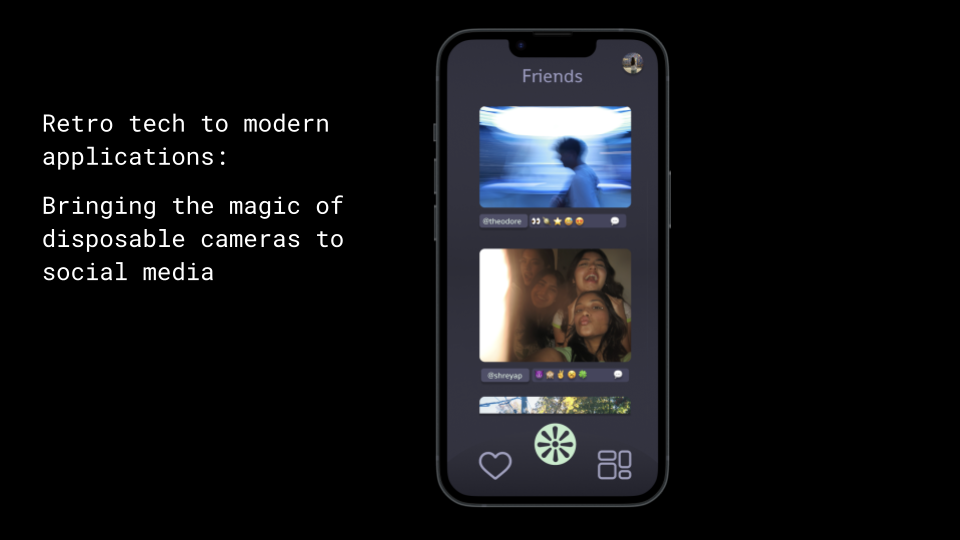
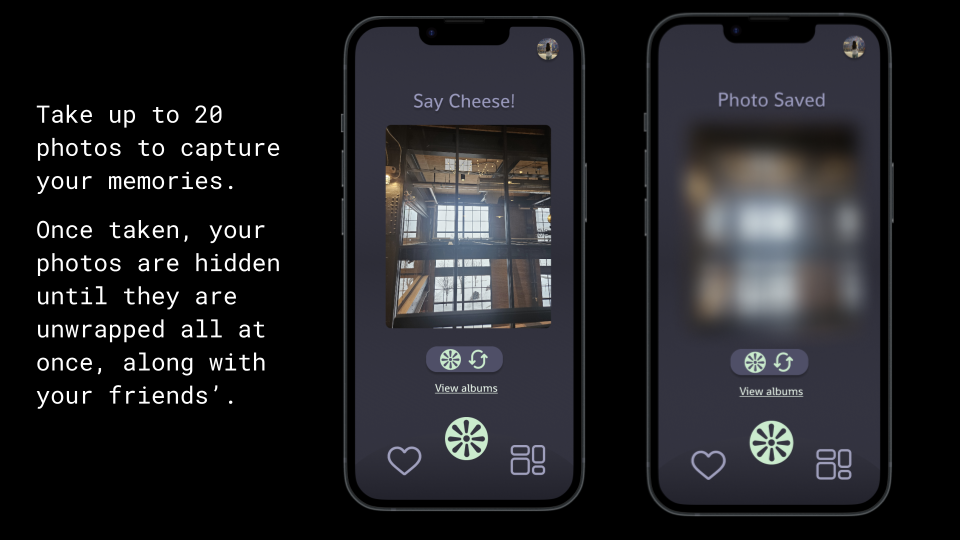
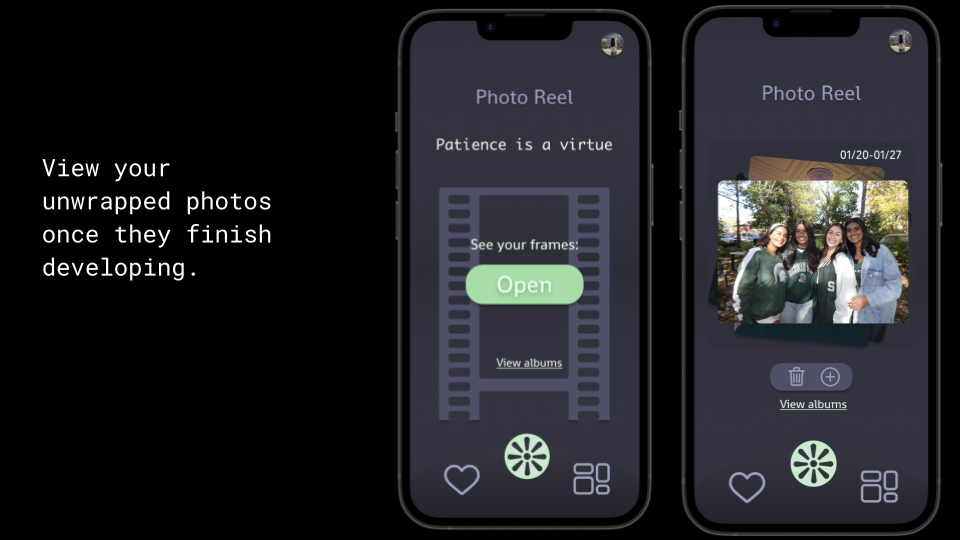
FreezeFrame takes a different approach to social media by encouraging users to slow down and make their moments more meaningful. The core of the app is a camera, where users can take up to 20 photos per week—but here's the twist: you can't see any of your photos until the end of the week. The photos are hidden until the week ends, and at then everybody's photos are all dropped at once on a feed for you and your friends to view and react to.
The goal of this app is to create a sense of anticipation and encourage people to reflect on their memories. Instead of falling into the dopamine-driven cycle of likes and comments, this app gives users the space to revisit their week. Every moment should count: Snap. Freeze. Relive.
How we built it
Throughout the development of this project, we gained significant experience working with VSCode, React, ExpoGo, and Figma. We expanded our knowledge of React Native by leveraging its cross-platform capabilities to build a mobile app. Our team integrated our phones camera function within ExpoGo, managing permissions and ensuring seamless photo capture functionality across devices. Additionally, we focused on UI/UX design, using Figma to create frames and prototypes for a responsive, user-friendly interface that aligns with the unique delayed photo viewing feature.
Challenges we ran into
We faced several challenges throughout the development process. Aligning our app’s design with the Figma mockups required numerous iterations to get the paddings, margins, and overall responsiveness right across devices. Backend integration proved challenging, especially when coordinating the API for photo uploads and fetching data for the weekly feed. Working as a team in regards to coordinating the frontend and backend development posed challenges, particularly in maintaining smooth communication and avoiding merge conflicts.
Accomplishments that we're proud of
One of the features we’re most proud of is the camera functionality, which allows users to easily flip between front and back cameras, enhancing the usability and experience. We're also very proud of the multiple tabs we implemented within the app, allowing users to seamlessly navigate between features like the weekly feed, highlights, and camera page. Beyond the technical achievements, we're incredibly proud of our idea itself. As a team, we genuinely believe in the product, and each of us would use it with our friends. The excitement we shared for the concept helped drive us through the late hours, and we maintained strong communication and momentum throughout the entire process. This project not only challenged us technically but brought us together as a team, and we’re proud of the collaboration that went into making it a reality.
What we learned
This project taught the importance of maintaining UI/UX consistency across different screens and devices to provide a smooth user experience. Additionally we learned to manage data effectively which was difficult but a key lesson, particularly in handling loading states and error responses. From a backend perspective, we gained valuable insights into securely and efficiently scaling data handling services, aligning frontend requests with backend responses. Finally, working in a team environment, we honed our skills in version control and team collaboration, realizing the importance of clear communication and workflow when multiple developers are contributing to different parts of the codebase.
What's next for FreezeFrame
As we continue to enhance FreezeFrame, we’re excited about several new features and improvements. We plan to introduce shared albums, allowing users to collaborate and share memories with friends. Additionally we would like to implement facial recognition technology to enable automatic friend tagging, making it easier to identify and share photos with specific people. Users will also have the ability to customize their photo feeds, adding personality to their profiles. To encourage reflection, we’re working on monthly recaps and a yearly wrap-up, where users can revisit their most memorable moments. Additionally, we’re planning to implement a feature where users can unlock customizable stickers by sharing the app with a friend, allowing them to decorate their photos with images from their camera roll, creating more personalized and creative memories. These updates will further enrich the user experience, making it more interactive and personalized for everyone.
Built With
- expogo
- figma
- flask
- gemini
- git
- github
- mongodb
- python
- react
- react-native
- typescript
- vscode


Log in or sign up for Devpost to join the conversation.