Inspiration
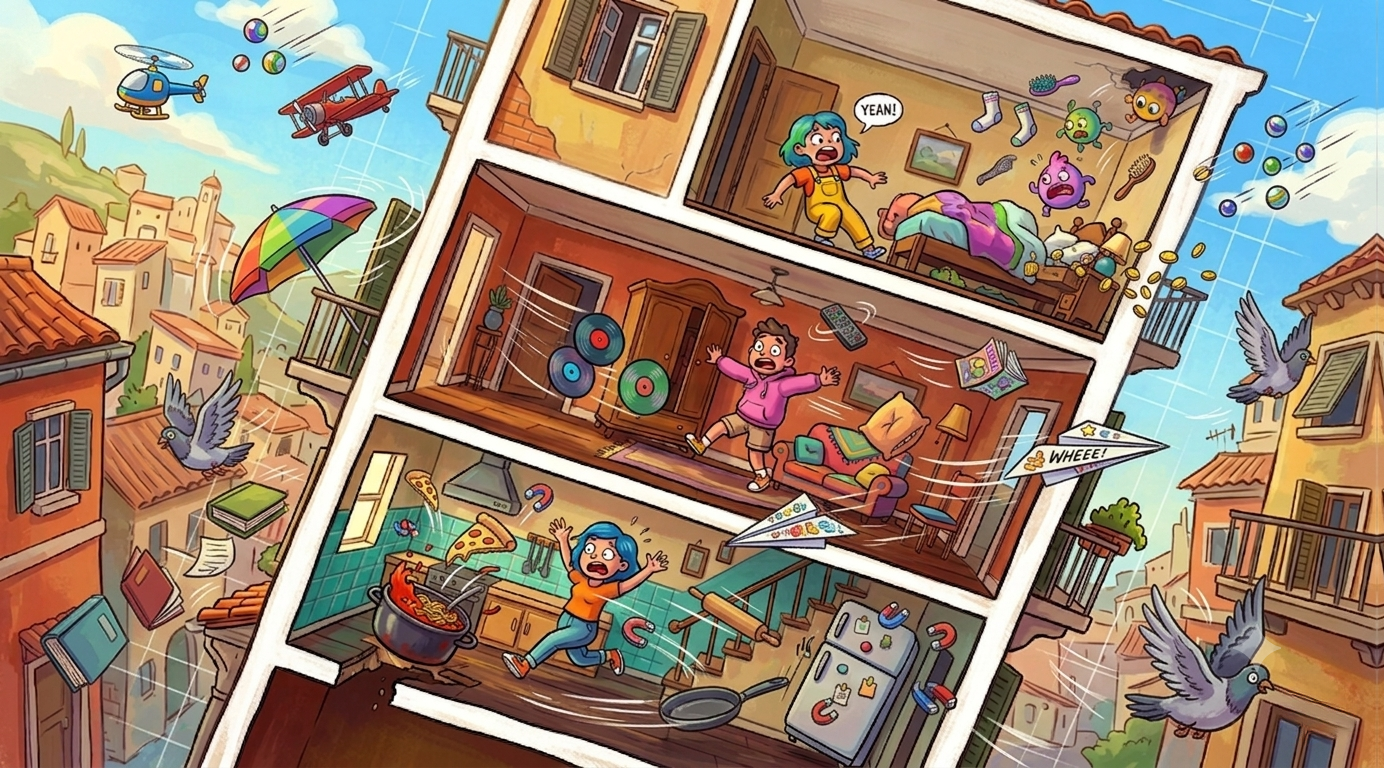
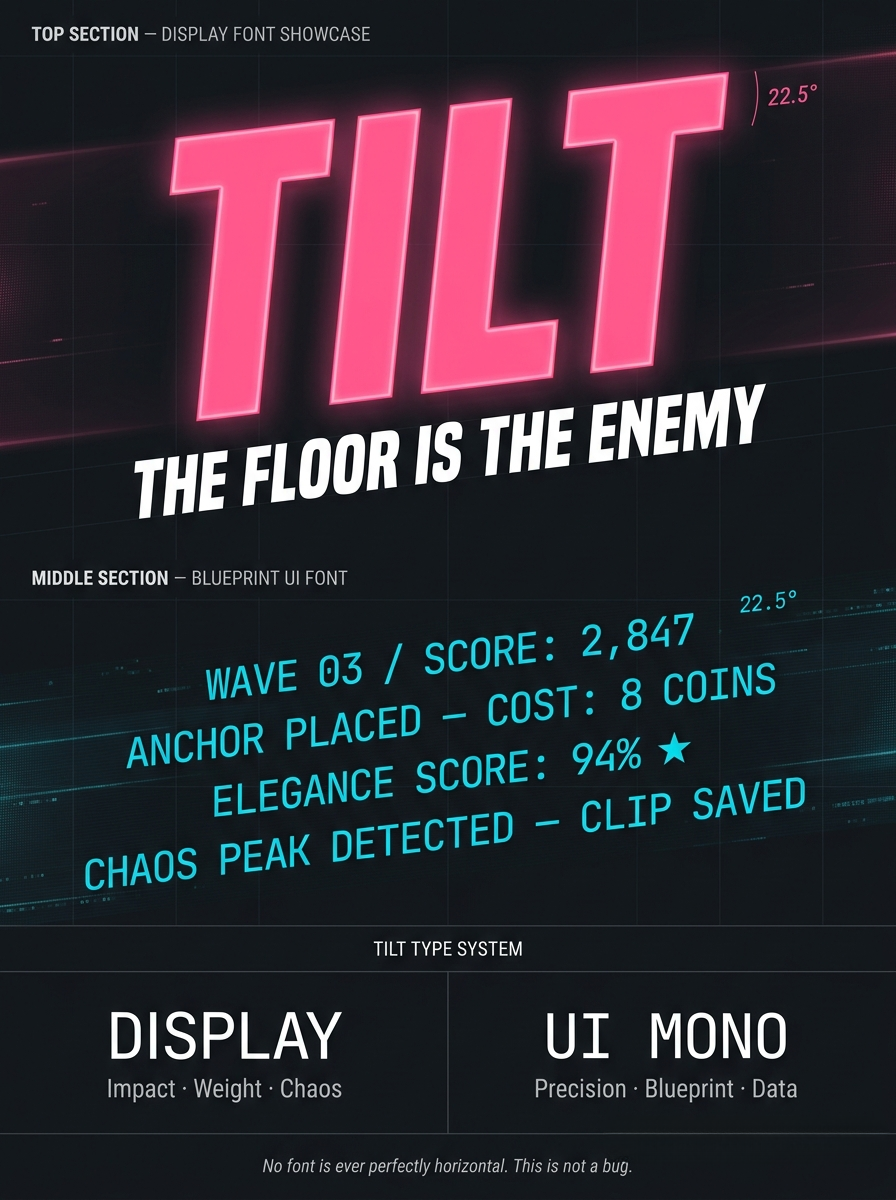
The 22.5° angle is not arbitrary. It comes from the Italian TV show "Stasera tutto è possibile," where contestants navigate a room tilted at that exact slope — and repeatedly, hilariously lose the ability to do anything with dignity. Watching that show, one question kept surfacing: every Tower Defense game gives you a flat, stable surface to build on. What if that surface betrayed you?
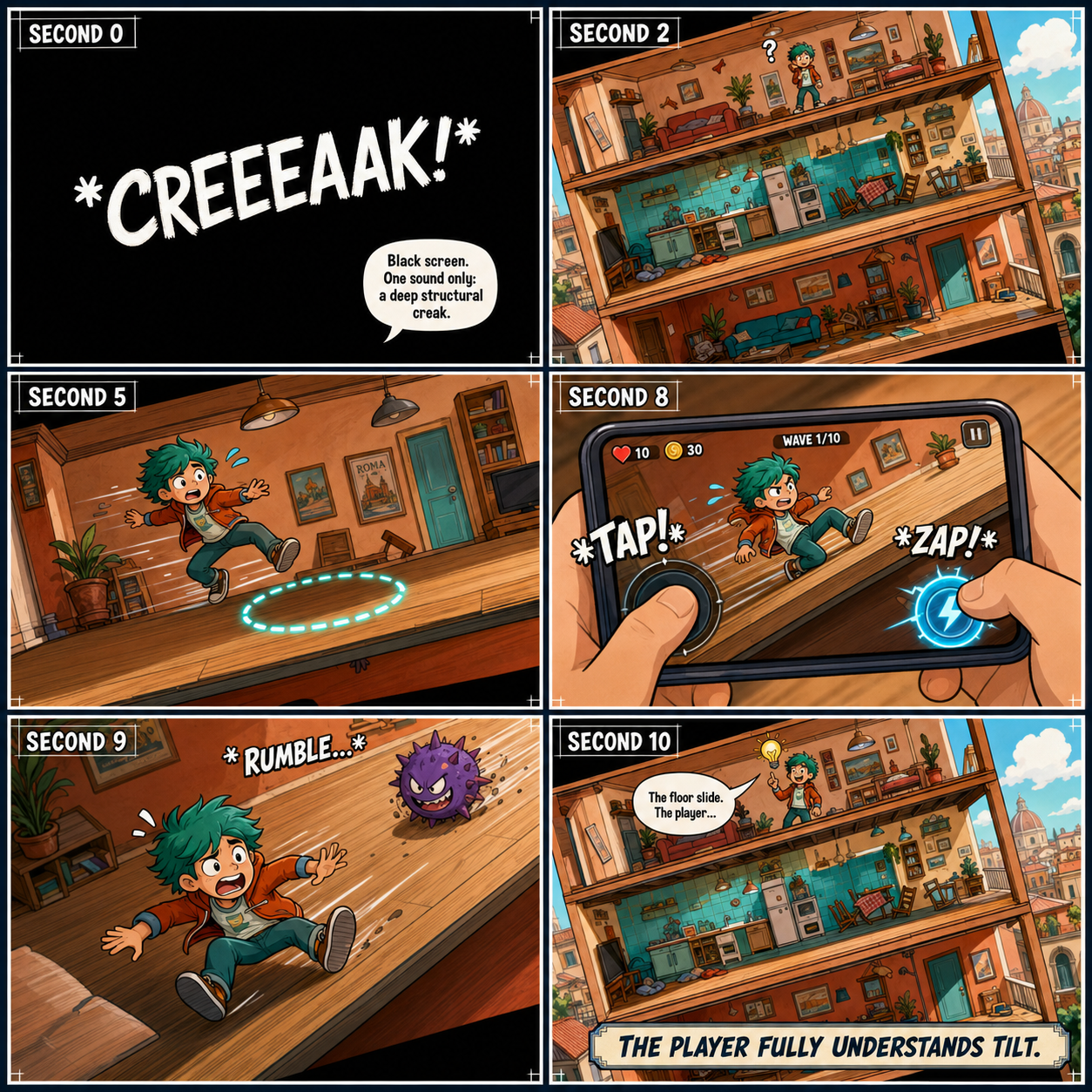
TILT applies that question to the genre. The building is not a backdrop — it is the level design. Towers slide. Enemies follow gravity instead of fixed paths. And the player's own avatar is not exempt: you move against the slope with the same physics as every object in the room, which means your strategy is never purely tactical. It's always also a physics problem.
A second inspiration came from 1980s physical maze toys — the kind where you tilt the entire box to guide a ball through a labyrinth. TILT inverts that toy: instead of tilting the world to move one ball, the world is already tilted, and you are the ball, the wall, and the player, all at once.
What it does
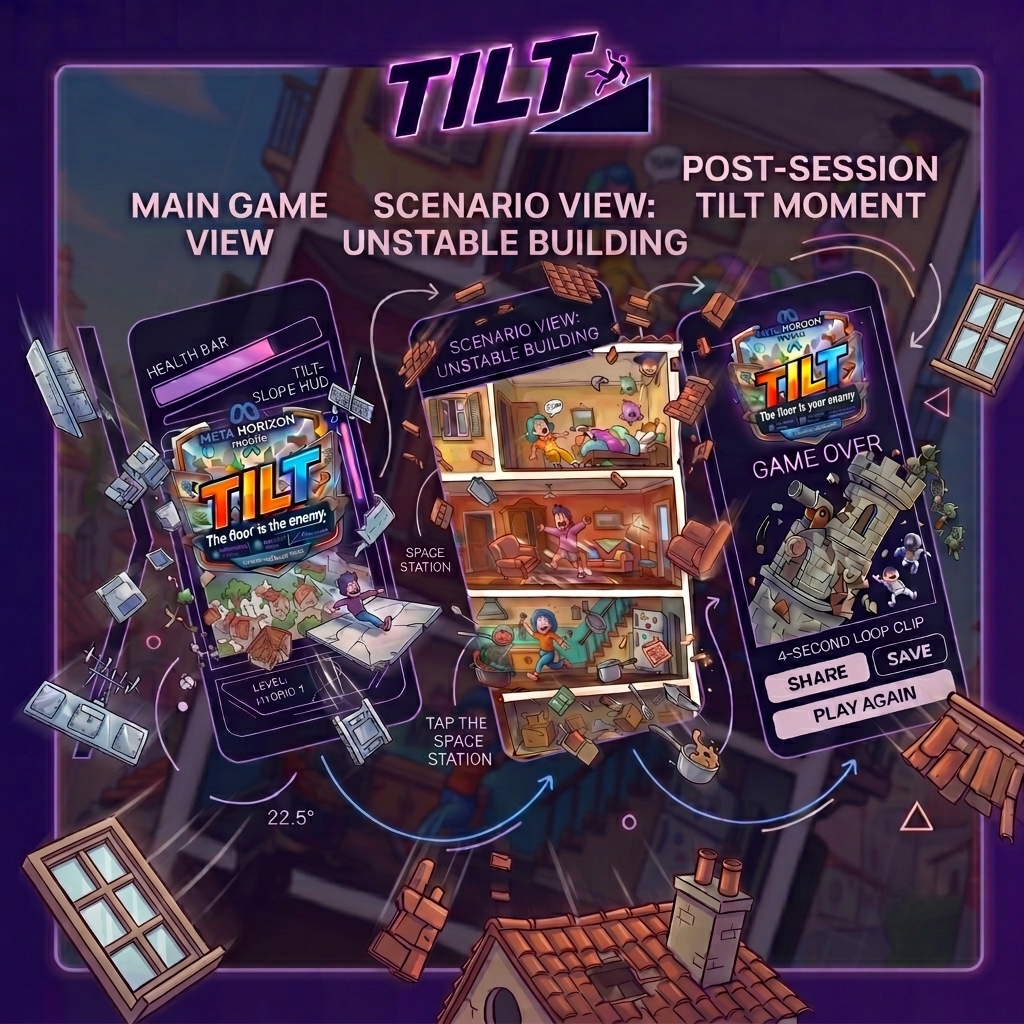
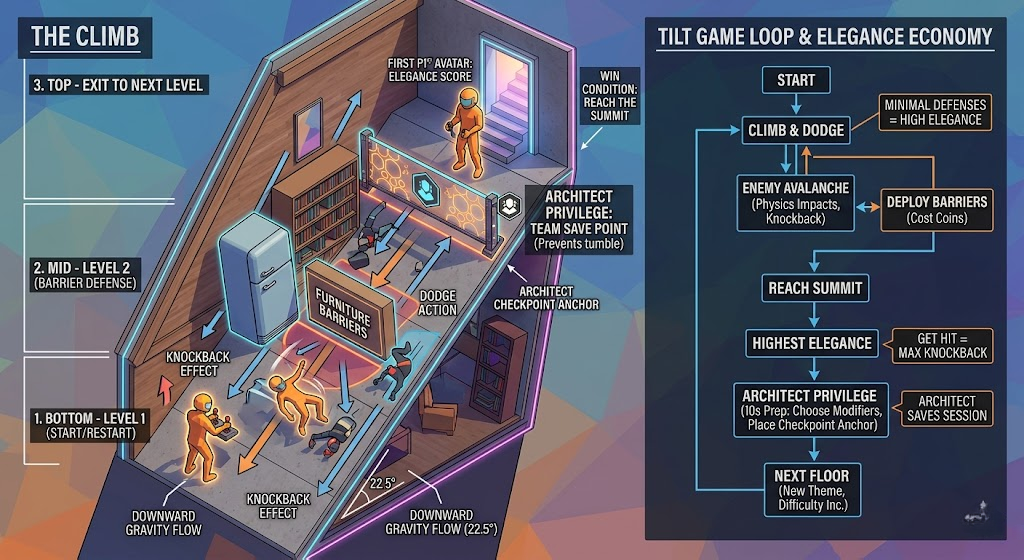
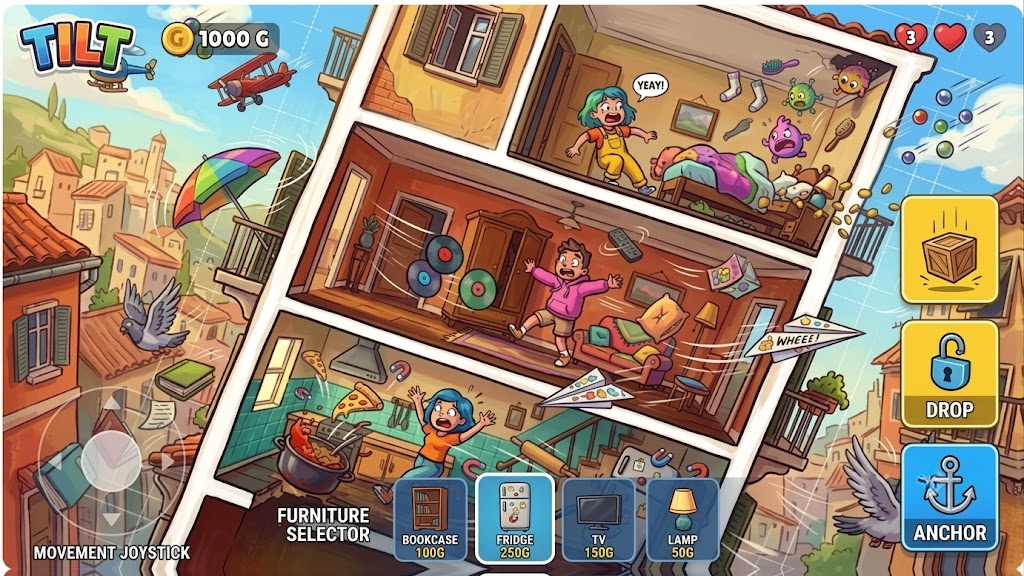
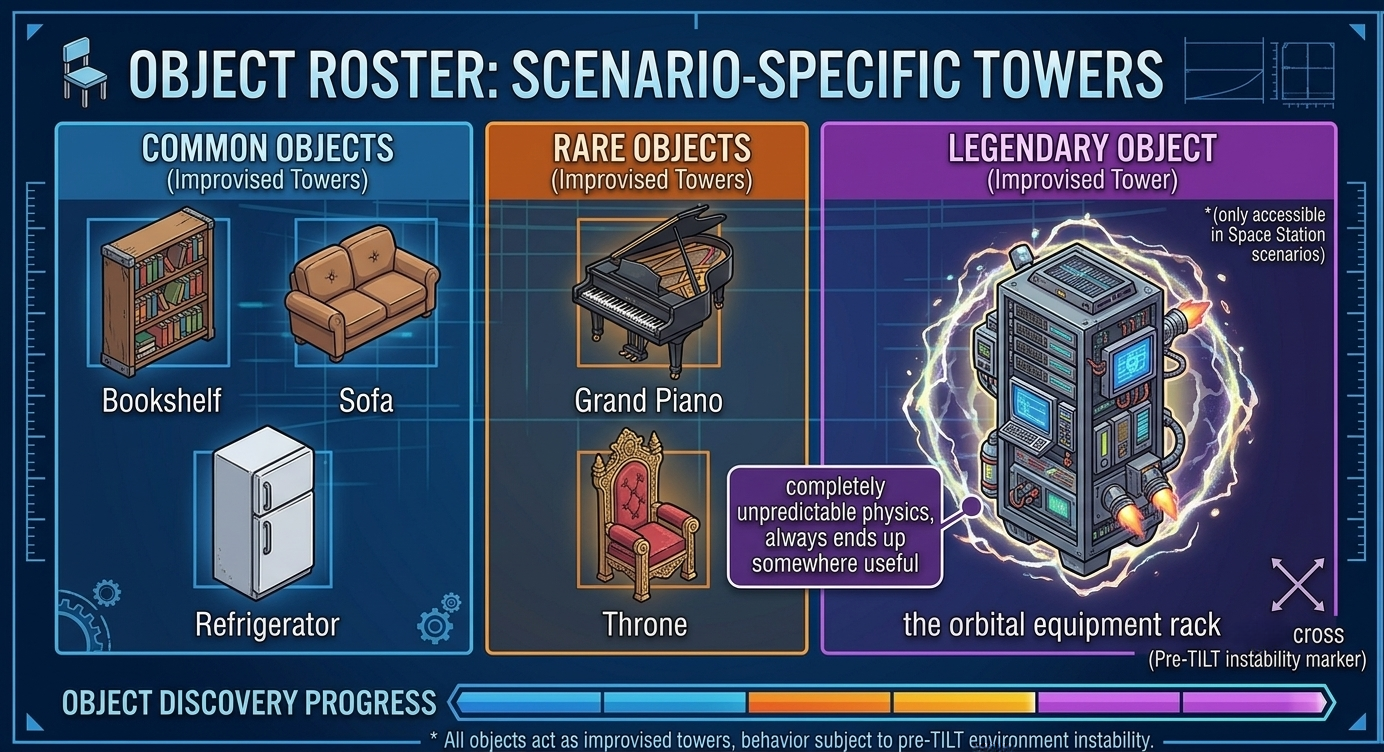
TILT is a multiplayer Tower Defense & Strategy game built for Meta Horizon Mobile. Players enter architectural cross-sections tilted at exactly 22.5° and must survive enemy waves using four tower types — Library, Refrigerator, Television, Lamp — each with a distinct tactical role, all of which slide unless anchored. The player's own avatar is also subject to the tilt: movement means fighting gravity with an on-screen joystick, not walking on stable ground.
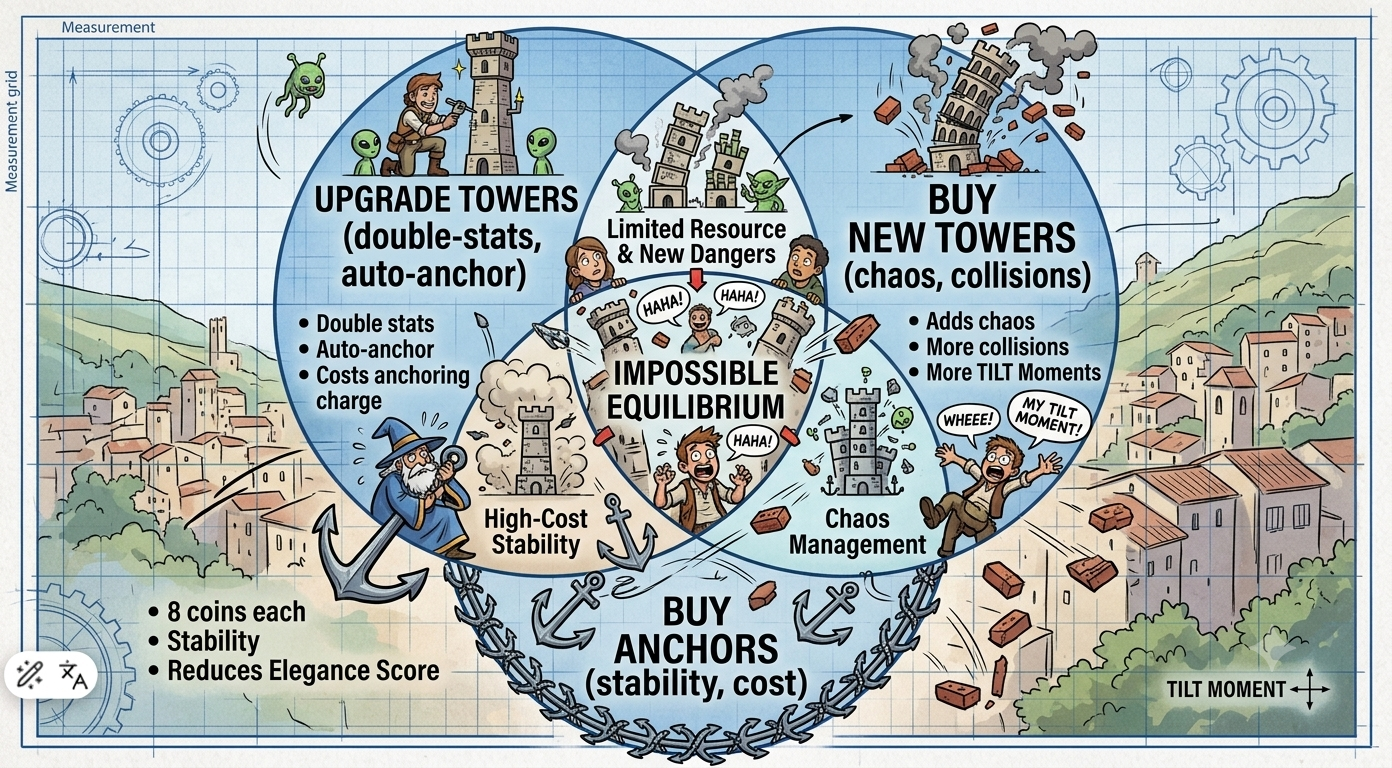
Three enemy types (The Slider, The Climber, The Bouncer) each interact differently with the tilt physics, forcing players to counter with specific tower choices rather than brute force. A parallel scoring system, the Elegance Score, rewards the opposite of the obvious strategy: surviving with zero anchors placed earns the maximum score, creating a tension between winning efficiently and winning elegantly.
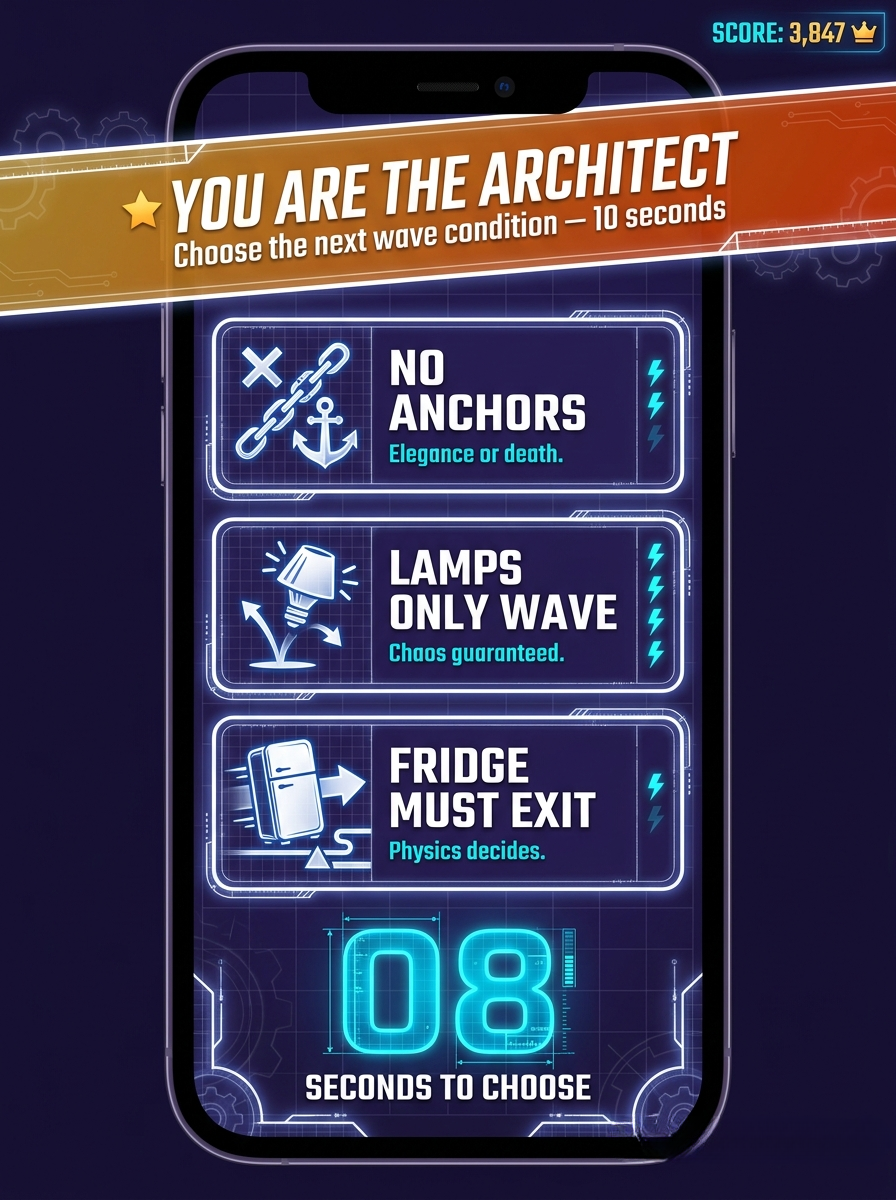
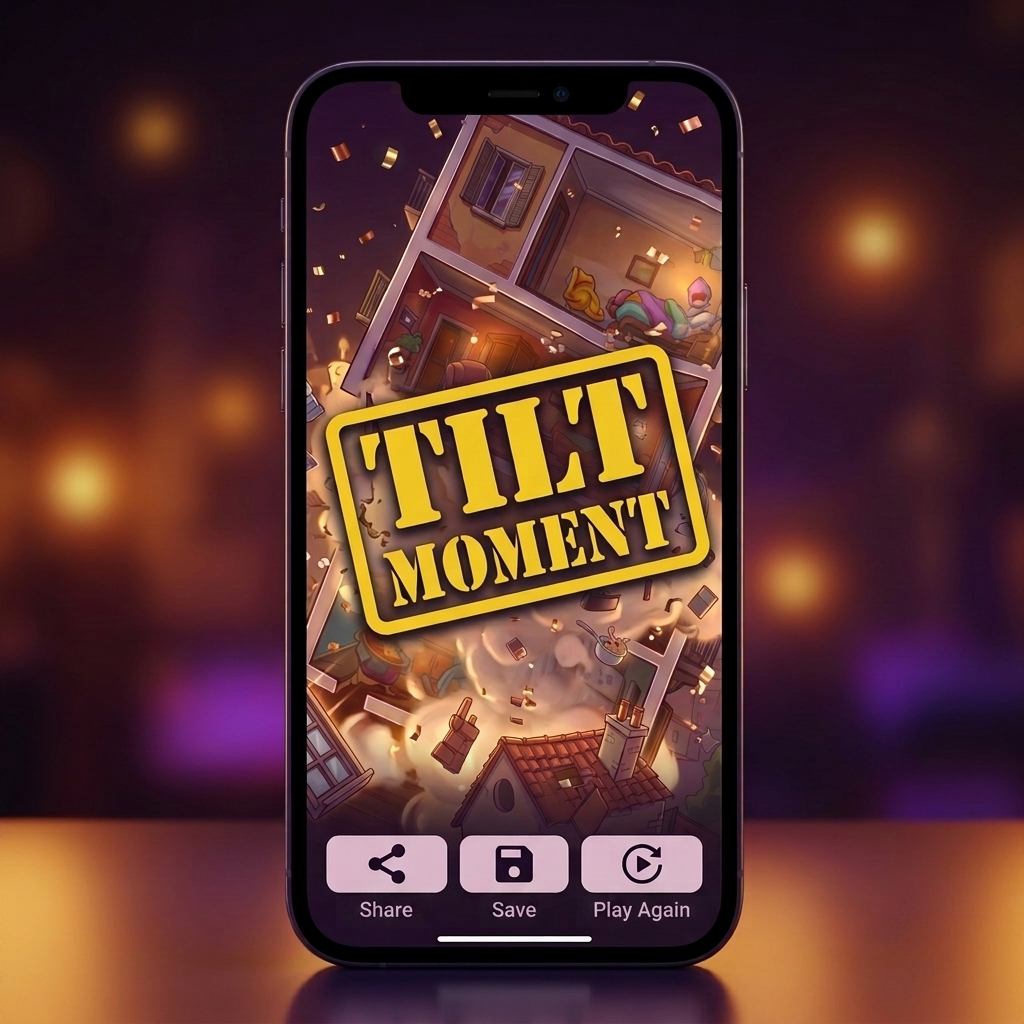
In multiplayer, the Architect Privilege system hands real power to whoever performs best each wave: the top scorer becomes the Architect and chooses the next wave's mission condition — "no anchors allowed," "lamps only," "fridge must reach the exit" — forcing every other player to adapt in real time. The game also auto-detects each session's peak chaos moment and saves a shareable 5-second clip, turning every match into content without requiring the player to do anything except play.
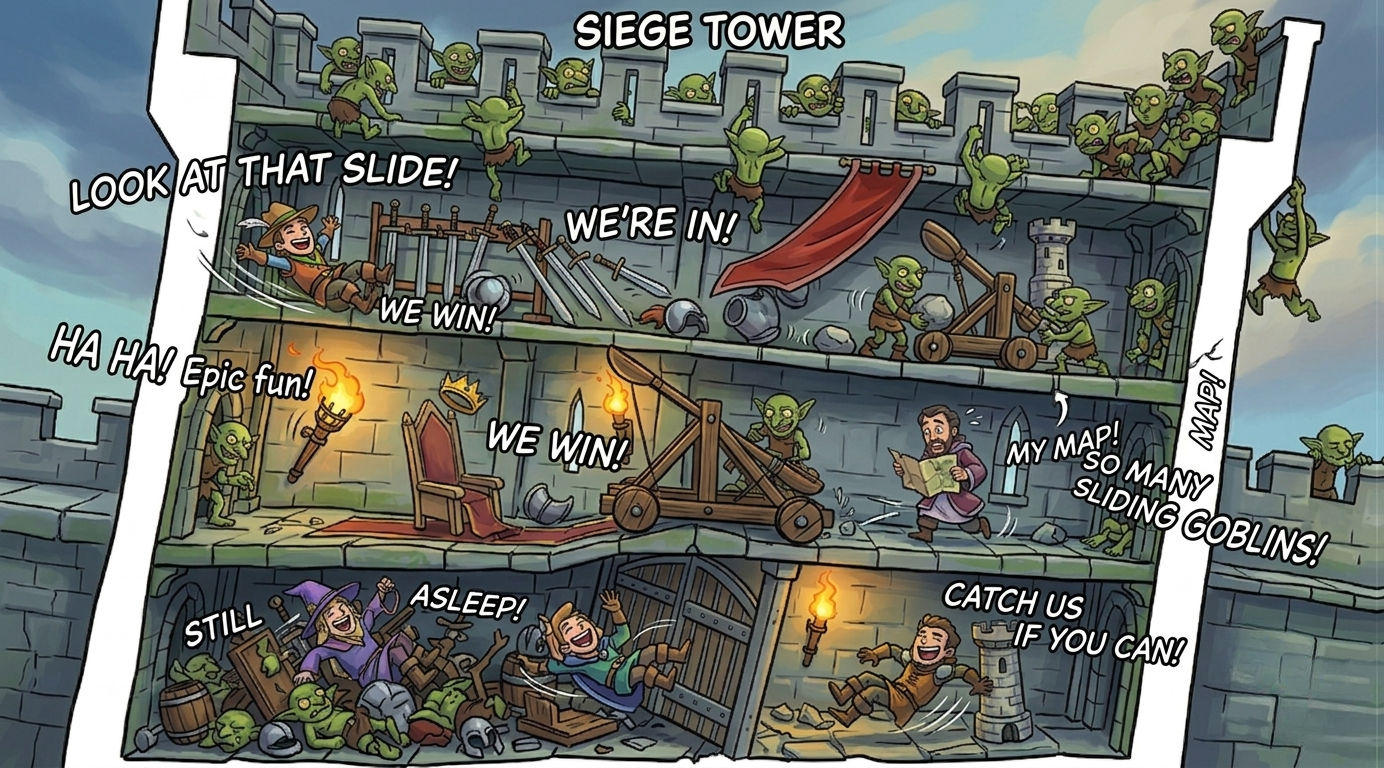
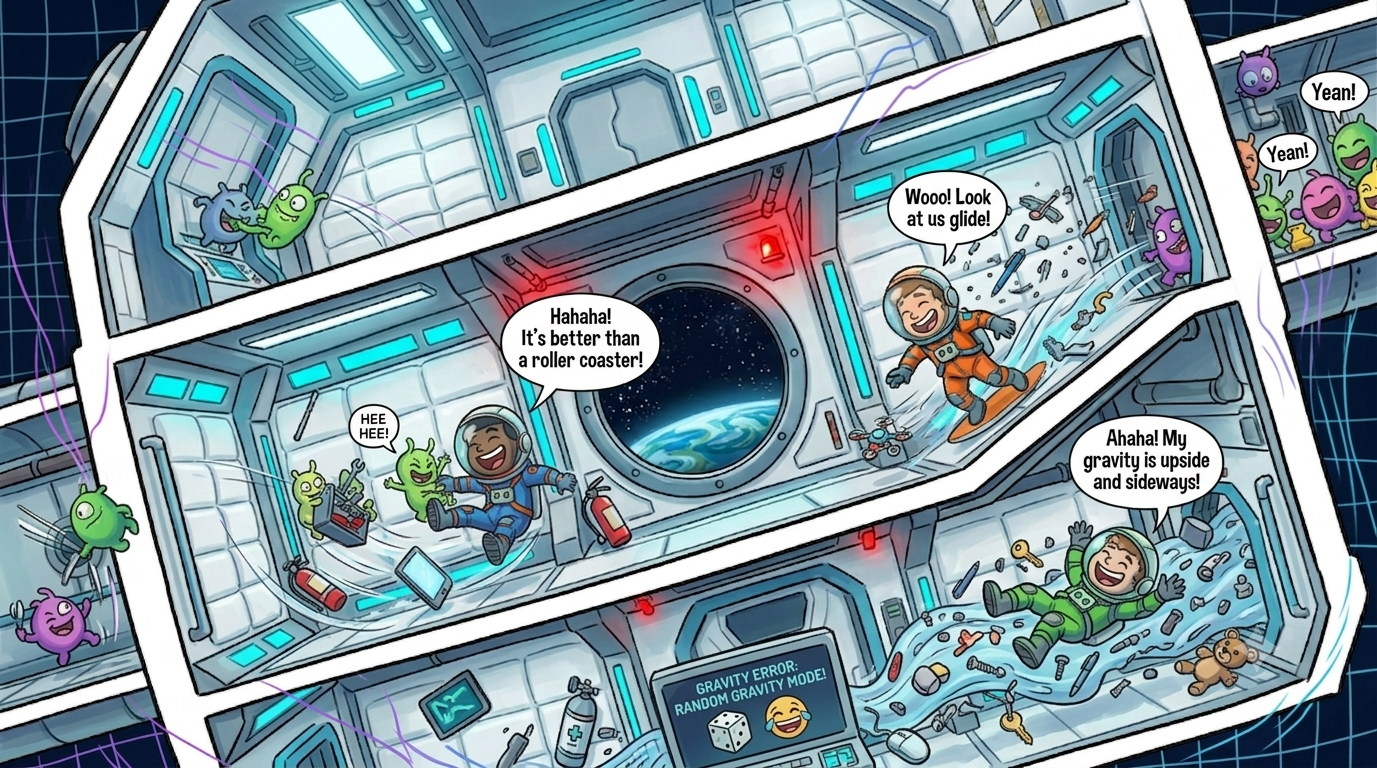
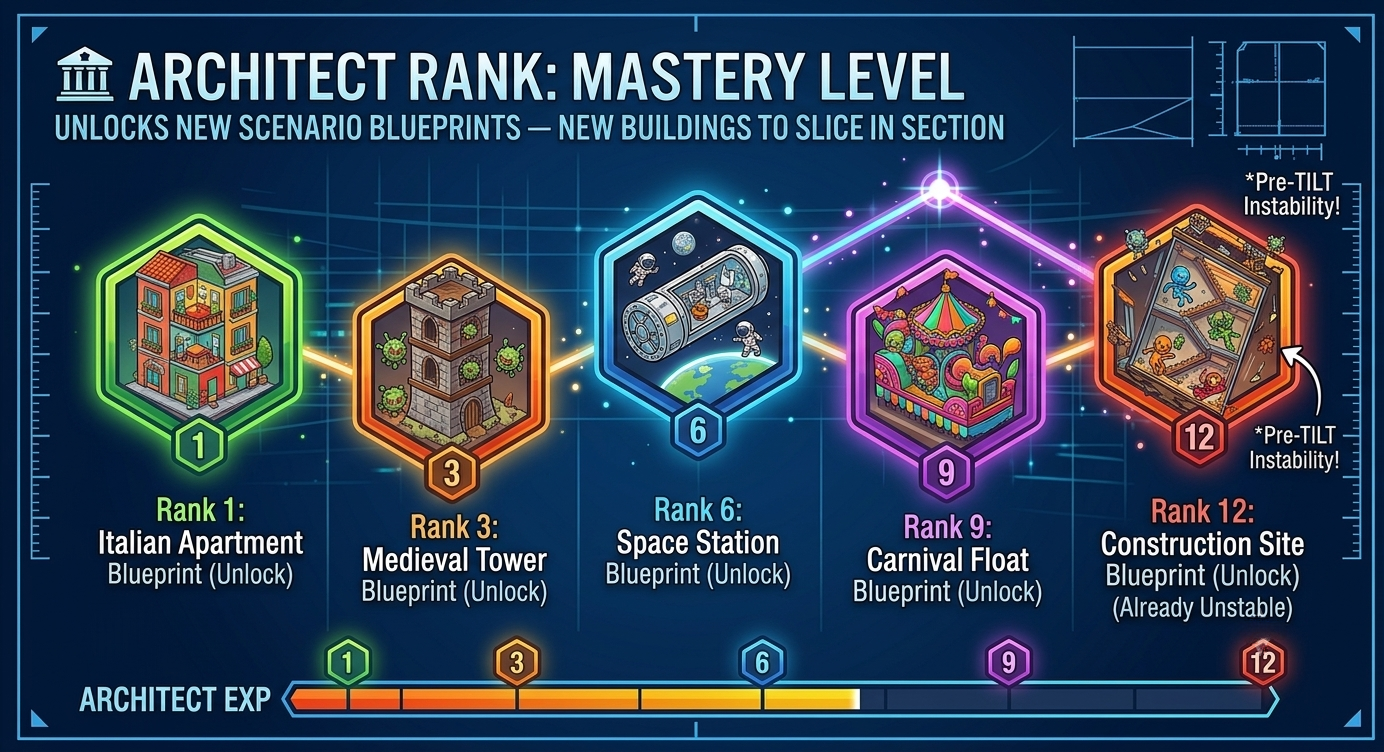
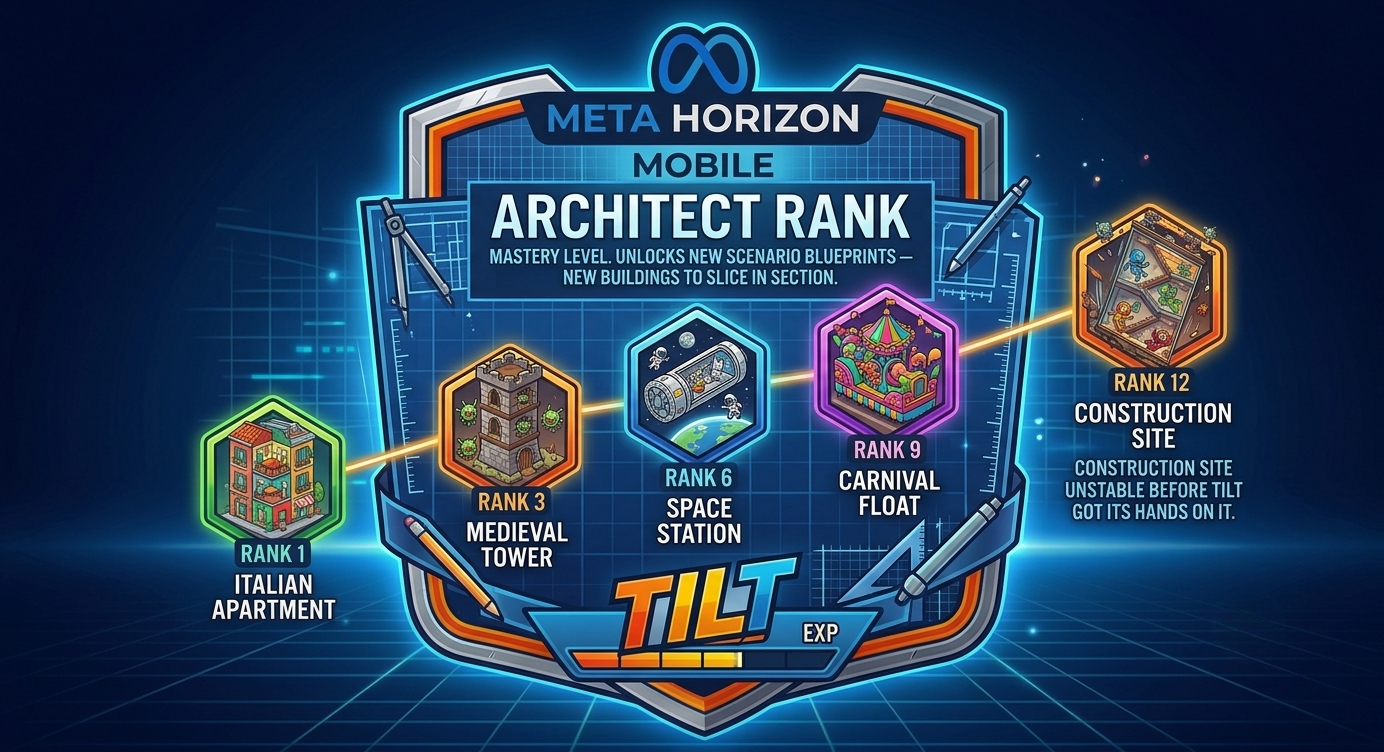
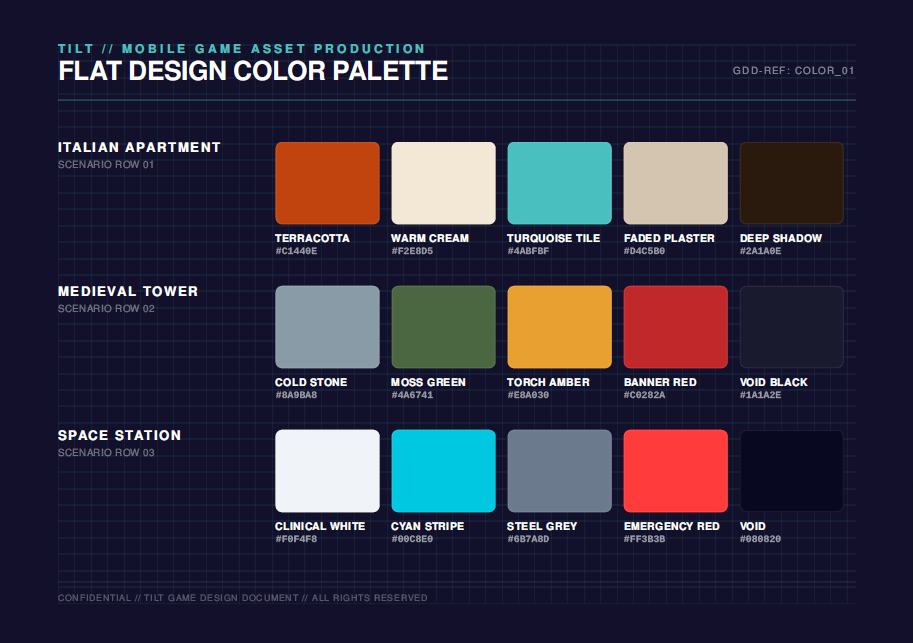
Three scenarios are planned: Italian Apartment Block (MVP, launch), Medieval Tower (post-launch priority 1), and Alpha Space Station (post-launch priority 2) — each with its own enemy skin, object roster, and color palette.
How we built it
Development started from a single physical insight — sliding objects on a slope — and worked outward into four interlocking systems: the tilt physics layer, the tower/enemy matchup table, the Elegance Score economy, and the Architect Privilege multiplayer layer added in a later design pass once the core loop was validated on paper.
The project targets Meta Horizon's TypeScript scripting layer. Input is handled through PlayerControls.connectLocalInput for the joystick axes and ScreenButtonManager.connectMobileInput() for on-screen mobile controls. Haptic feedback is mapped to five distinct gameplay events (anchor placement, object collision, wave start, wave end, TILT Moment) using different durations and intensities to make the slope physically legible without relying on visual cues alone. The Architect Privilege system is designed around a server-authoritative score snapshot at the end of each wave, a local mission-picker UI, and a NetworkEvent broadcast to synchronize the chosen mission condition across all clients — without requiring any backend beyond what Meta Horizon already provides.
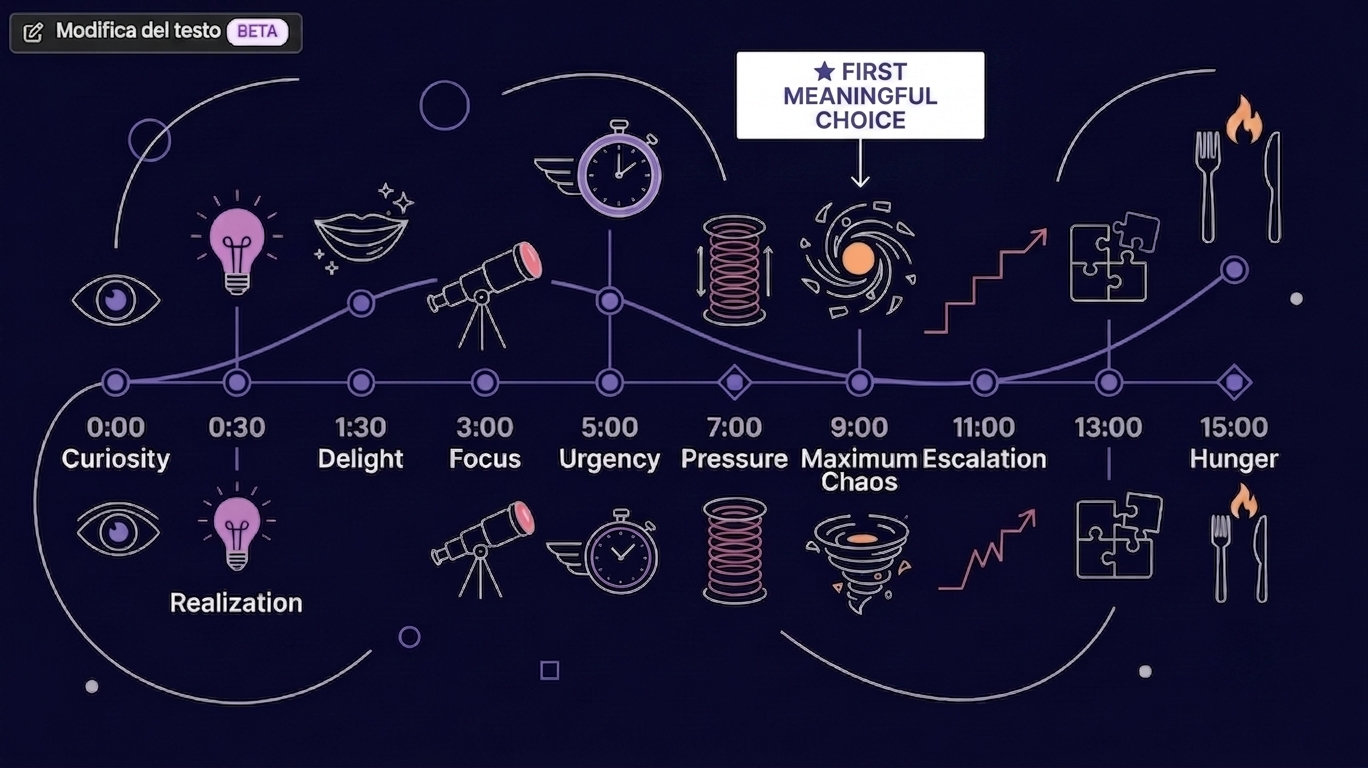
All four required artifacts (Game Design Document, Player Journey Map, Visual Concept Package, Production Plan) were developed iteratively, audited multiple times against the official contest brief to check coherence across documents, terminology consistency, and feasibility of every stated technical dependency.
Challenges we ran into
The biggest design challenge was making the tilt feel like the mechanic rather than a cosmetic skin on a standard Tower Defense formula. Early drafts treated gravity as flavor; the breakthrough was making the player's own avatar subject to the same sliding physics as every placed tower — turning movement itself into a constant tactical decision.
On the technical side, an early design assumption involved using device gyroscope input to let players physically tilt their phone to influence the slope. After investigation, this was confirmed unavailable on the Meta Horizon platform and was fully removed from every document — replaced with the on-screen joystick approach, which also better serves accessibility and consistency across device types. A known joystick-axis bug on mobile was identified and documented as a risk with a mitigation plan rather than ignored.
Balancing the Elegance Score against the main coin economy required care: if zero-anchor play were strictly optimal, no one would build towers at all. The current design treats it as a parallel, optional economy — a leaderboard for restraint that coexists with, rather than replaces, the core survive-the-wave loop.
Multiplayer synchronization for the Architect Privilege system also required deliberate scoping: rather than building a custom backend, the design relies entirely on Meta Horizon's existing NetworkEvent broadcast system, keeping the feature technically feasible within the contest's production timeline.
Scope discipline was its own challenge. A map editor, clan systems, and cash leaderboards were all considered and deliberately cut — not because they were bad ideas, but because every one of them required persistent backend infrastructure beyond basic session data. Every feature cut was a decision to ship the core tilt mechanic first.
Accomplishments that we're proud of
Keeping four separate documents — Game Design Document, Player Journey Map, Visual Concept Package, Production Plan — fully consistent with each other through multiple rounds of revision. Every number, every mechanic, every piece of terminology matches across all four artifacts, including the late addition of the Architect Privilege system, which touches all four documents without contradicting anything already written.
We're also proud of catching our own mistake before anyone else had to. The original design assumed gyroscope input would let players physically tilt their phone. Once we confirmed that wasn't available on Meta Horizon, we didn't patch around it — we removed it cleanly from every document and replaced it with a joystick-based control scheme that's more accessible and more consistent across devices. Documenting that decision instead of hiding it felt like the right call.
Designing the Elegance Score to genuinely reward the opposite of the obvious strategy — and having it hold up under scrutiny — is the single mechanic we're happiest with. It's a small system, but it changes how every other system in the game gets played.
What we learned
The strongest design hook in TILT wasn't the tilt angle itself — it was the decision to make the Elegance Score reward the opposite of the obvious play pattern. Designing two competing definitions of "winning" inside the same session turned out to be more compelling than any single difficulty curve could have been.
We also learned the value of removing things. The gyroscope idea felt exciting early on, but cutting it once it proved infeasible — rather than working around it — produced a cleaner, more accessible control scheme. Documenting that decision explicitly across all four artifacts, including in the "If I Had More Time" section, made the design story more credible, not less.
What's next for TILT
The floor is the enemy — and you are the tower.
Post-launch priority 1 is the Medieval Tower scenario, paired with an anchor upgrade system and the Elegance Score weekly leaderboard. Priority 2 introduces Alpha Space Station alongside seasonal live events — an Italian Carnival float tilted mid-parade, a Ferragosto beach scenario, and a Christmas living room where the tree falls every three minutes by design.


Log in or sign up for Devpost to join the conversation.