Inspiration
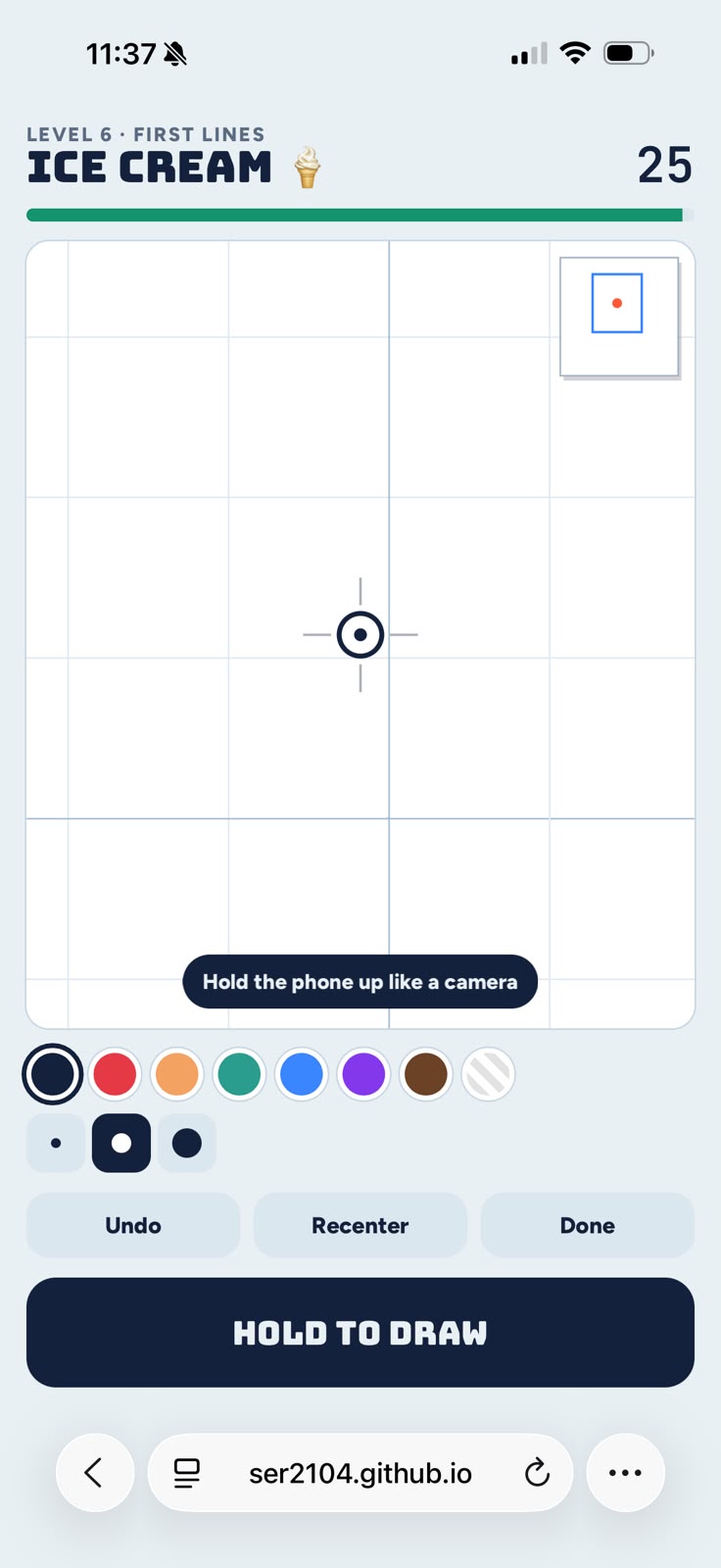
Hand and wrist rehab exercises are repetitive, and people stop doing them at home. We asked: what if the exercise were a game? In Tilt Sketch you draw by moving your phone, so every drawing is wrist and forearm movement, and an AI makes it fun by guessing what you drew.
What it does
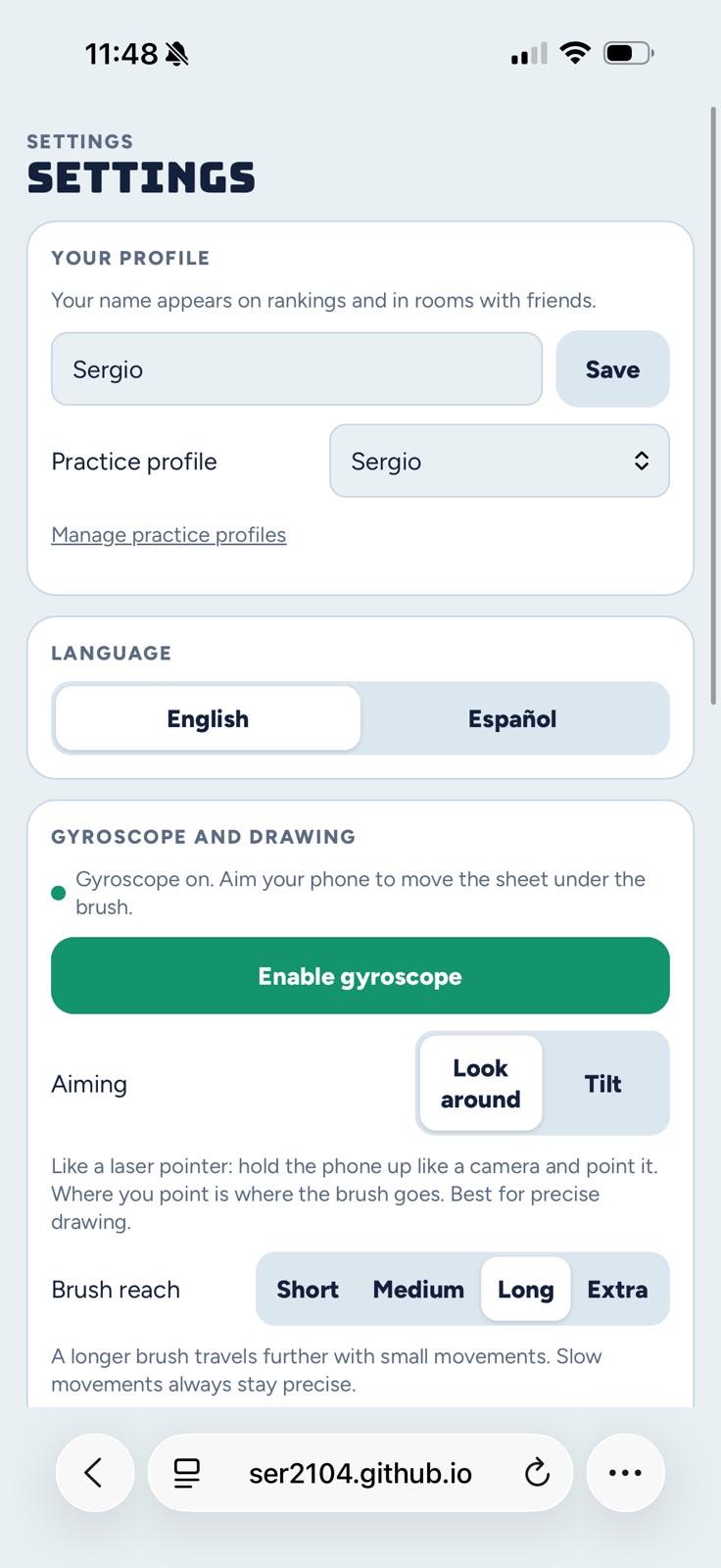
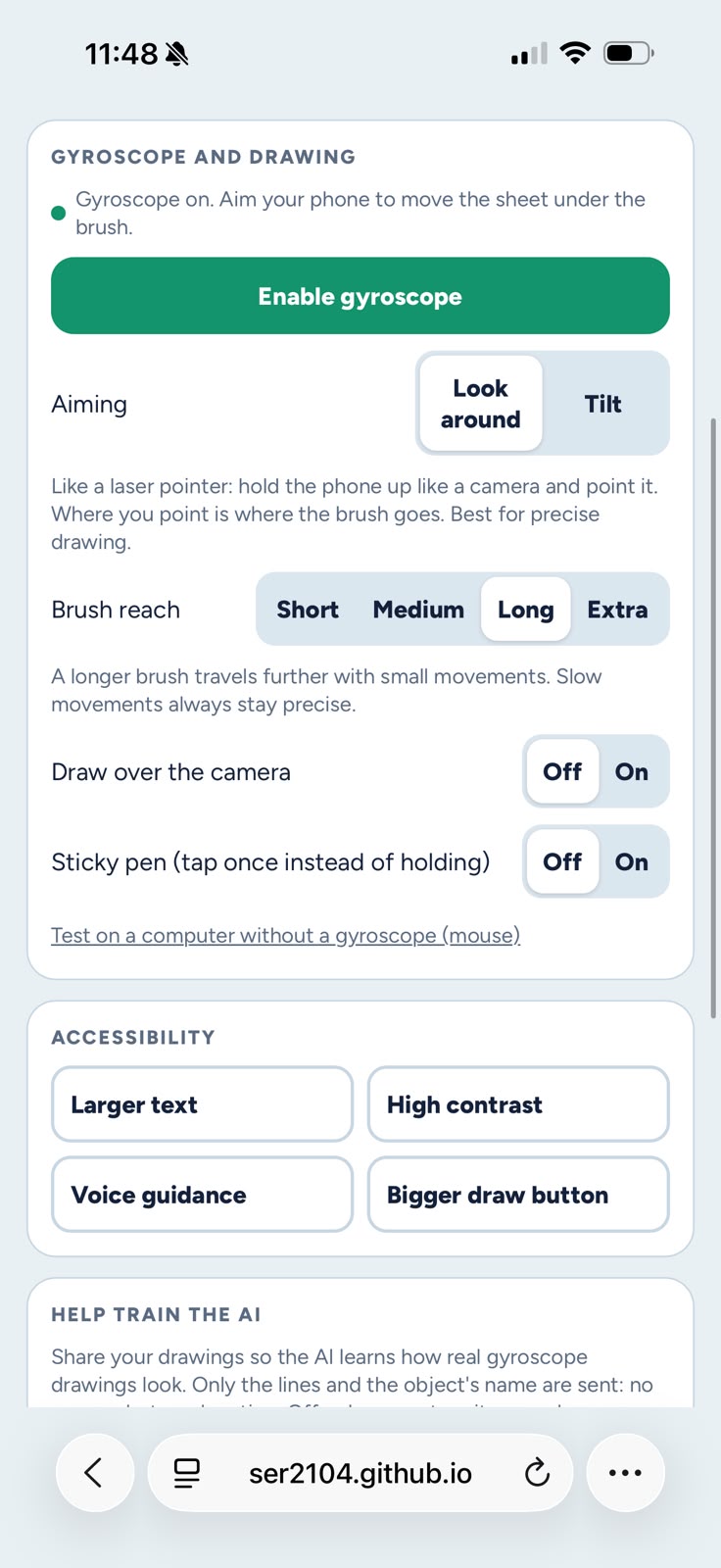
- Draw with the gyroscope: aim the phone and the sheet moves under a fixed brush.
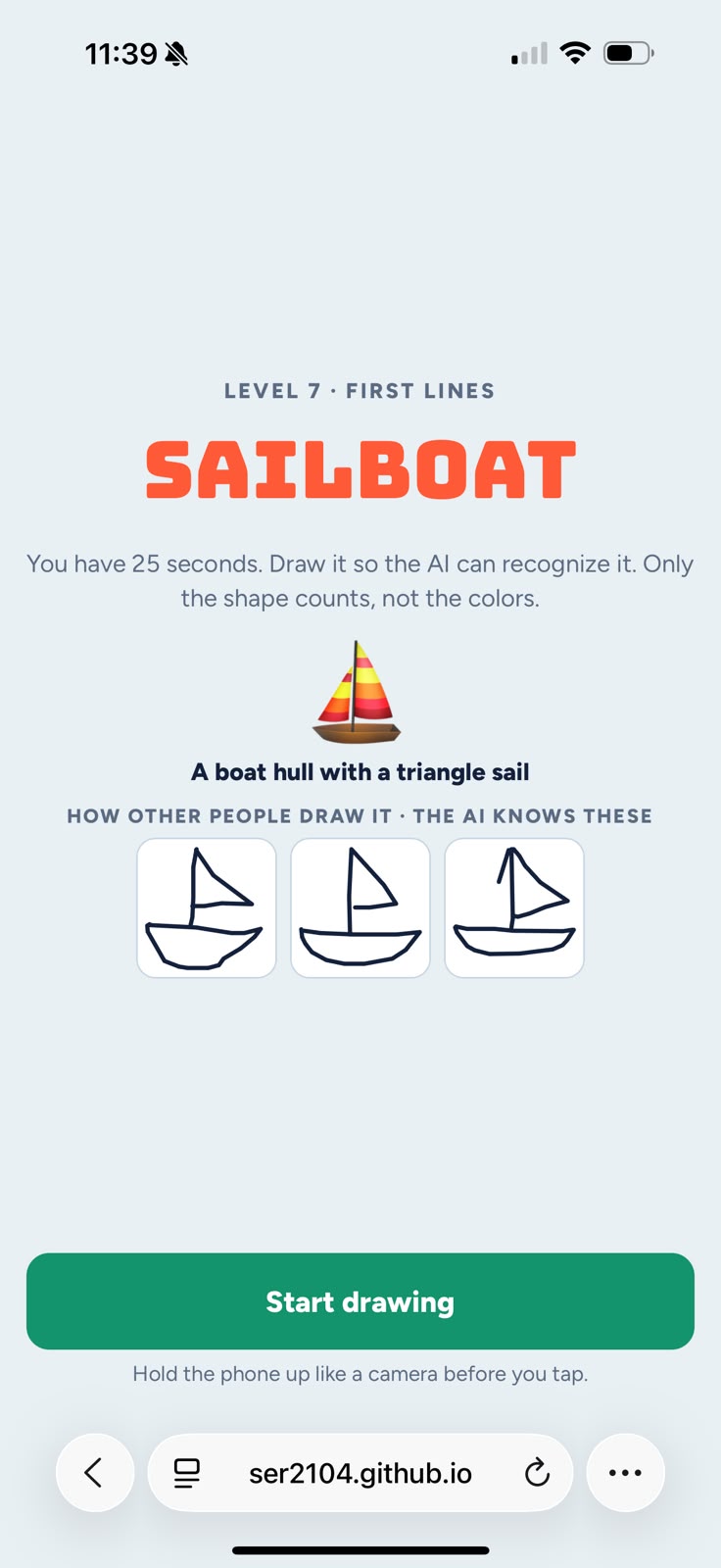
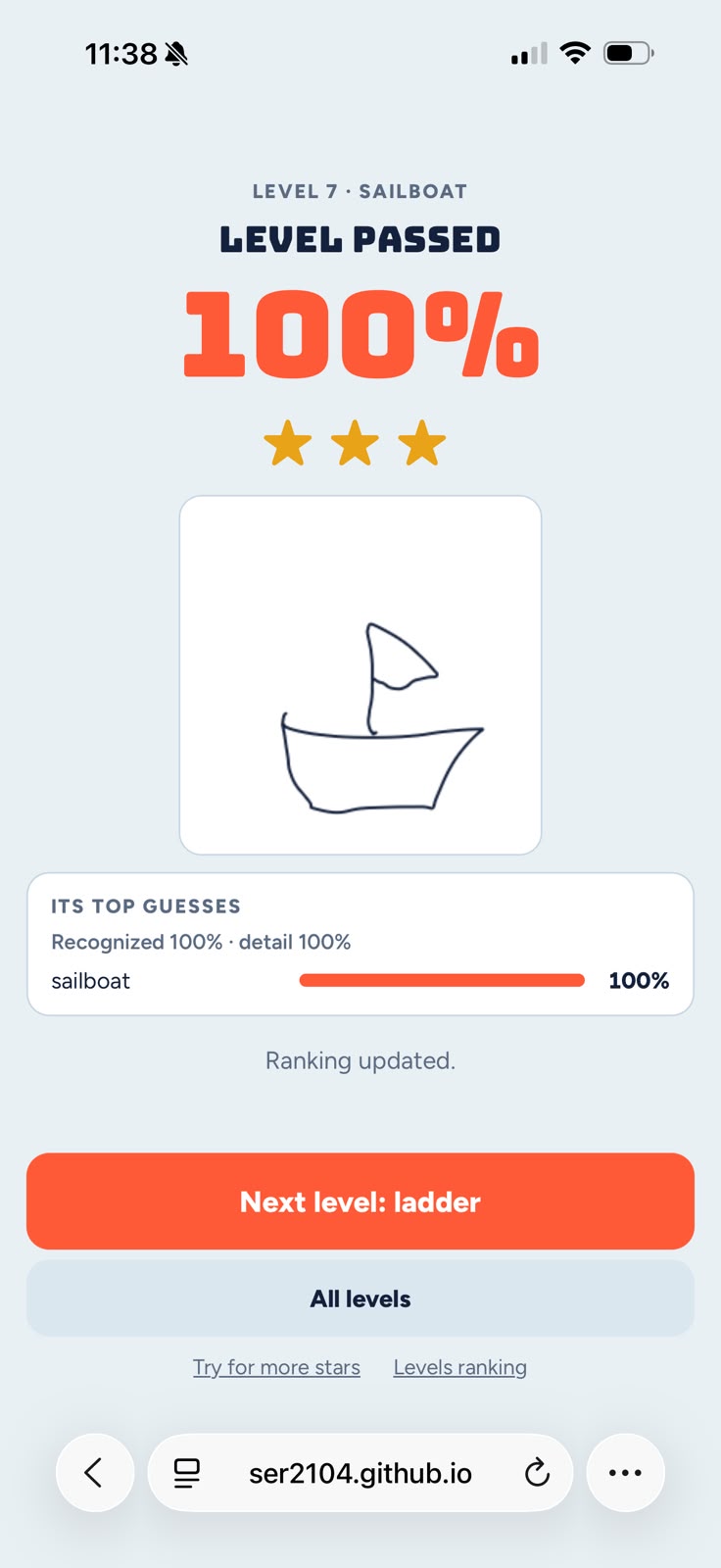
- On-device AI judge: it shows its live guess while you draw and explains its top 3 guesses with confidence. The score combines how well the AI recognizes the drawing with how much detail you drew compared with real drawings of that object.
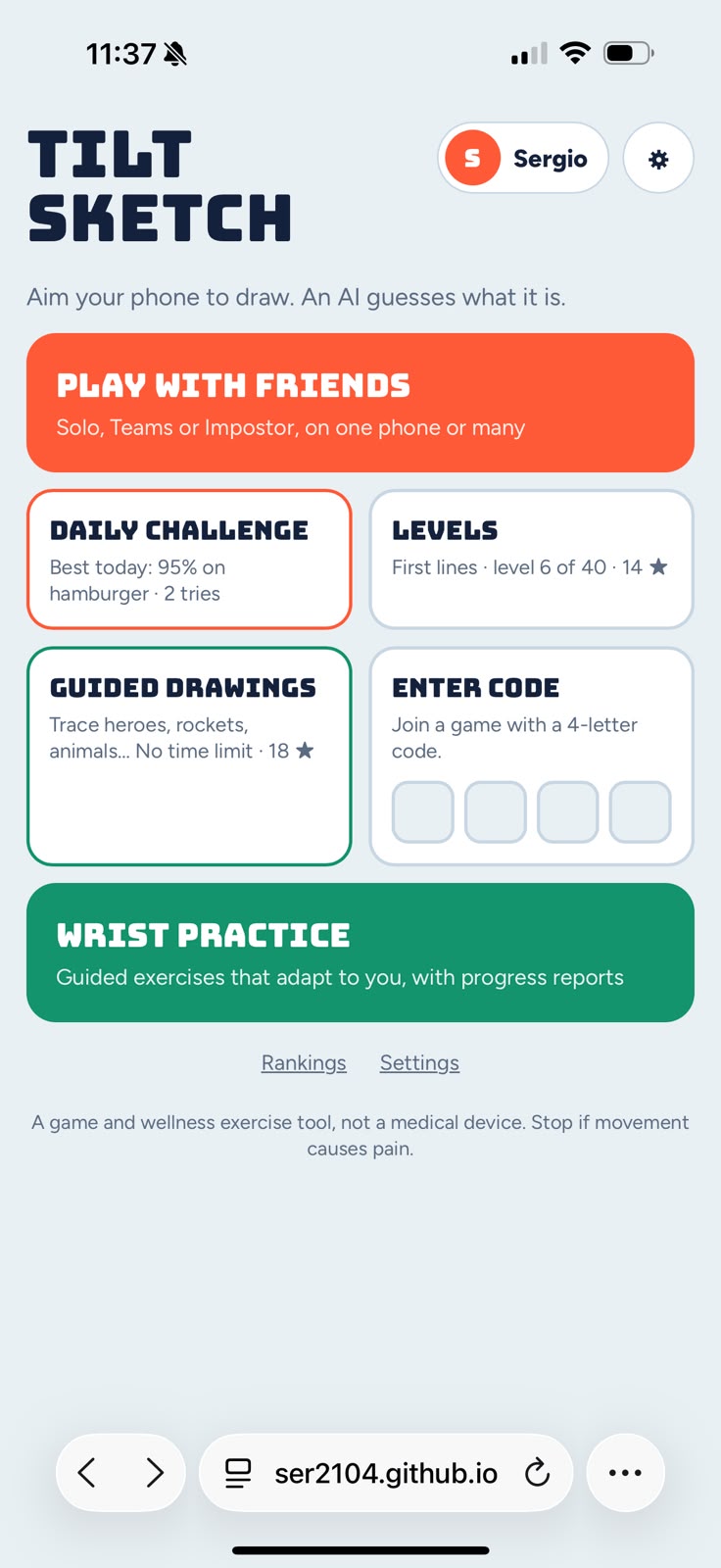
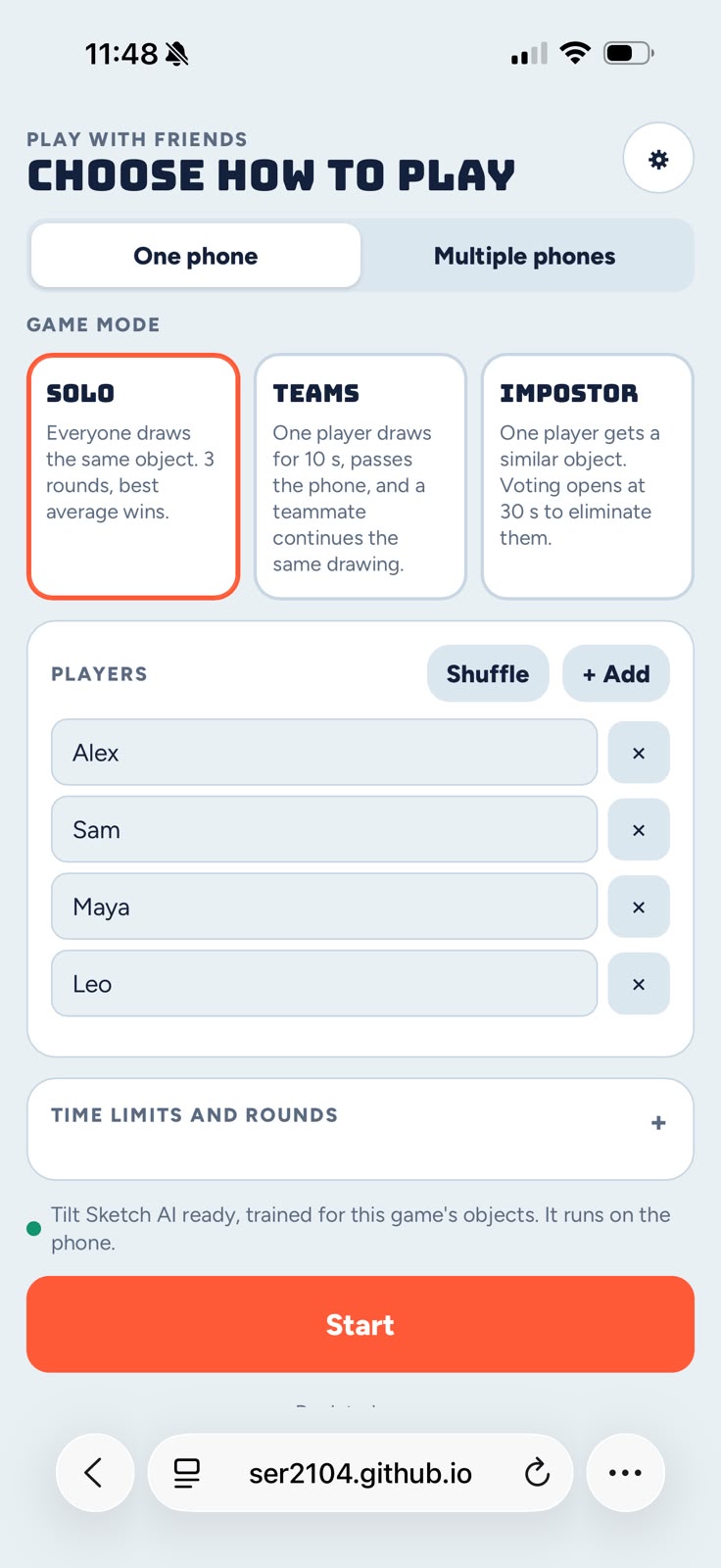
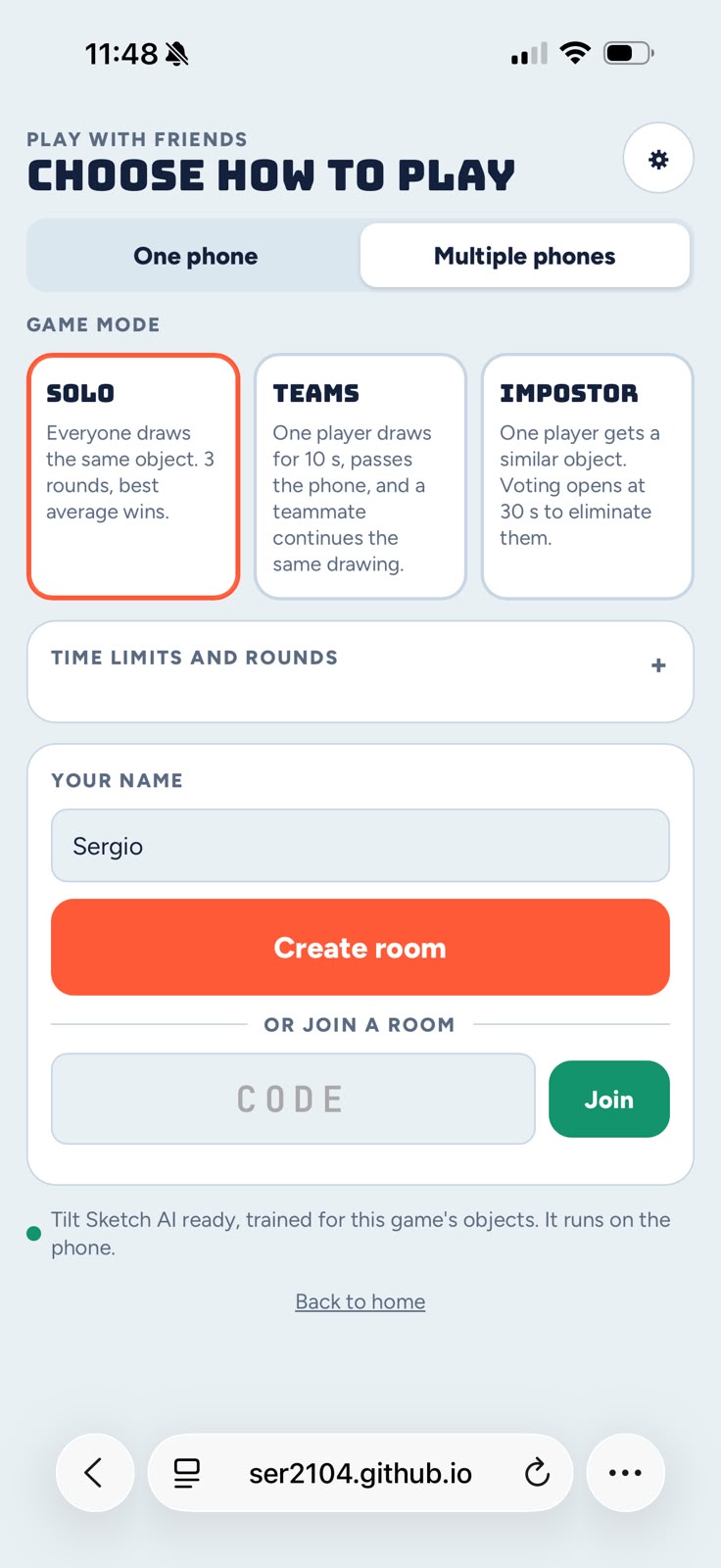
- Play with friends: Solo, Teams (relay drawing) or Impostor (one player gets a similar object, then everyone votes). It works on one phone or many; join with a QR code or a 4-letter code.
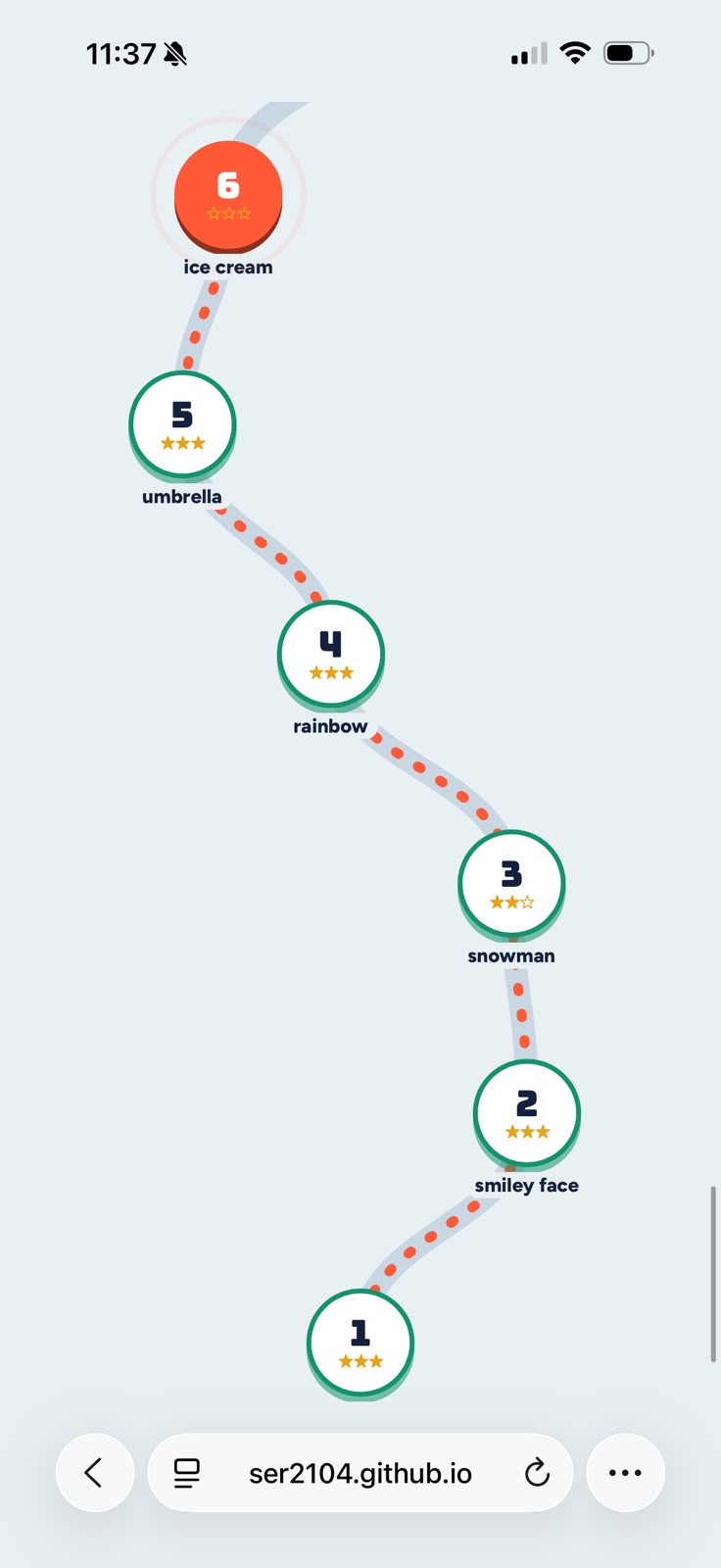
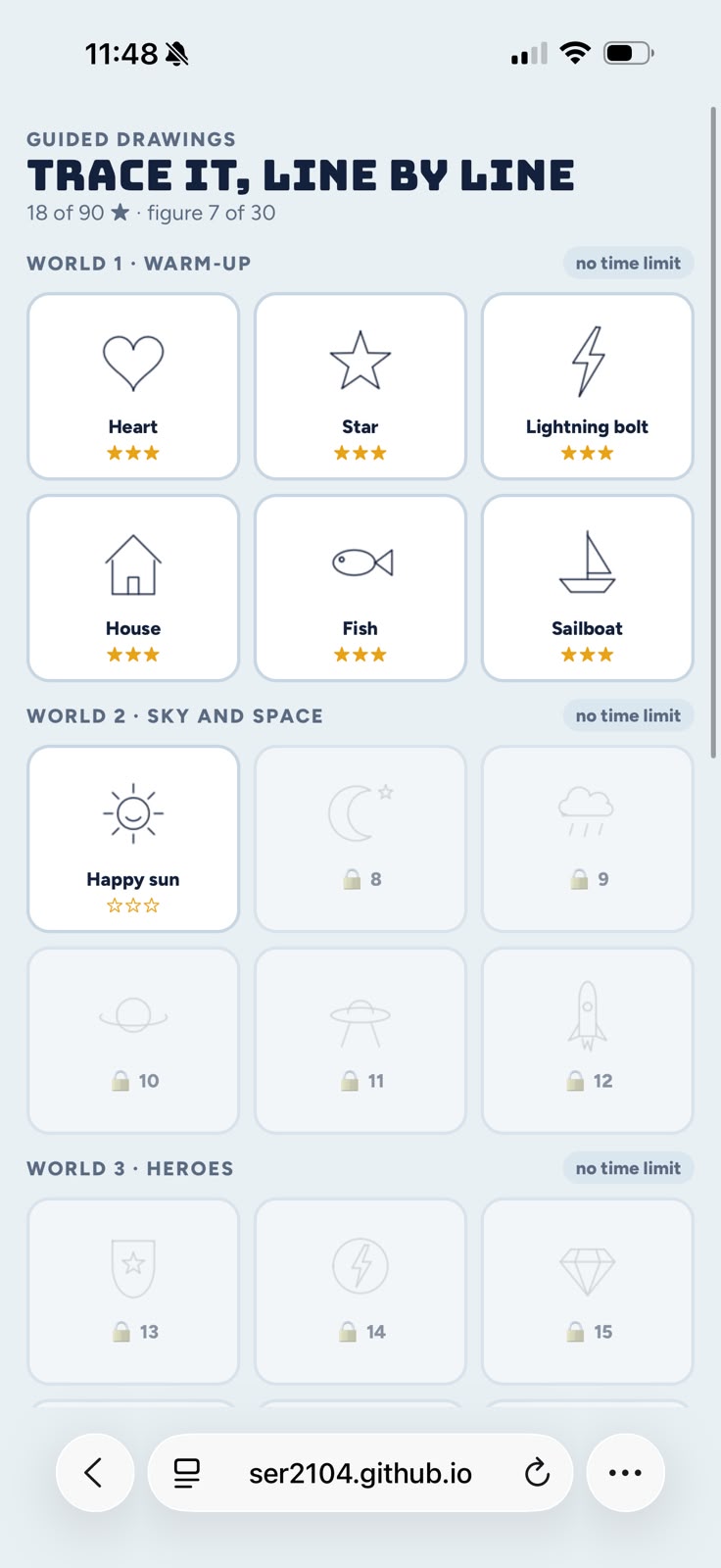
- Challenges: a daily challenge with a shared leaderboard, 40 levels on a path map, and 30 guided line-art drawings with no time limit.
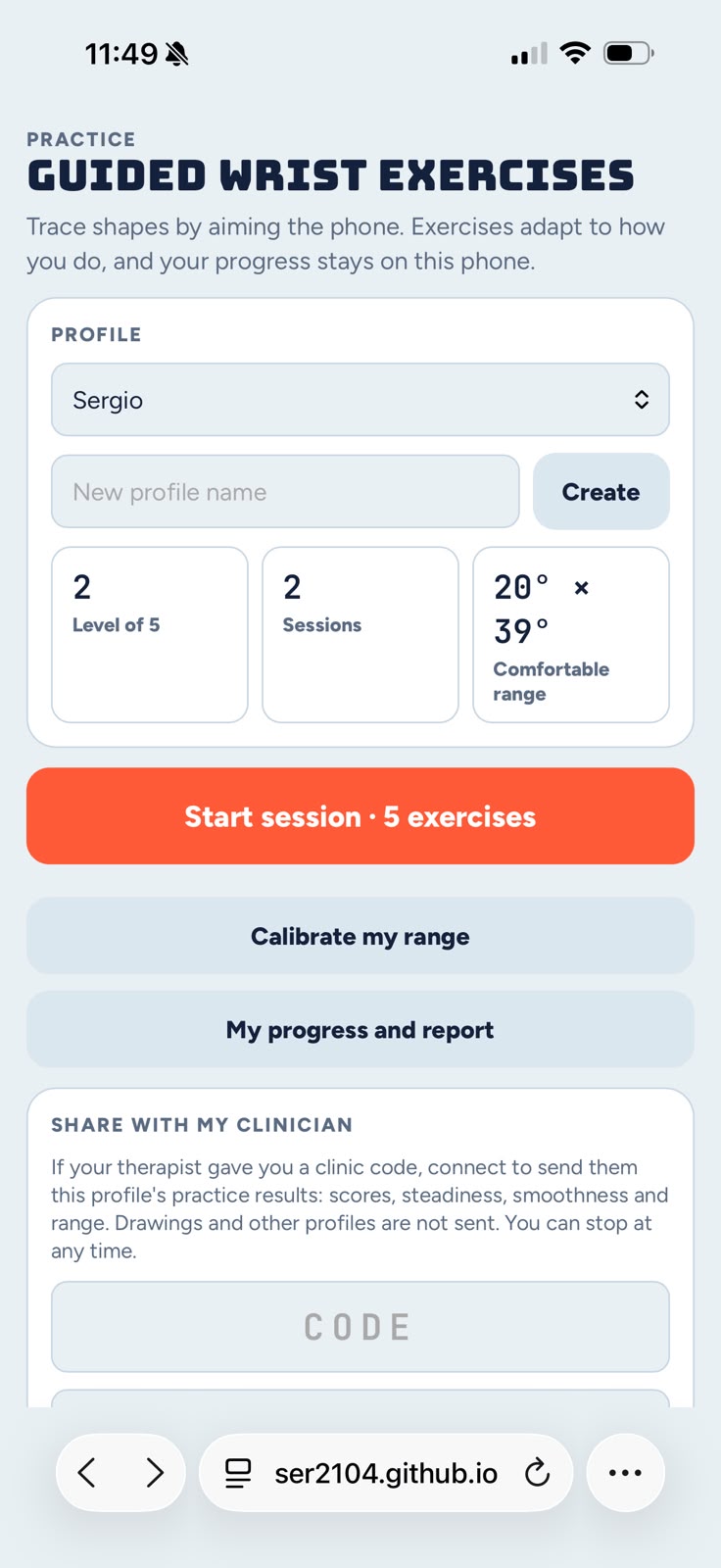
- Wrist practice: adaptive tracing exercises that measure tremor, smoothness, range of motion and accuracy, with progress charts and a printable report. Patients can share their results with a therapist through a clinician dashboard.
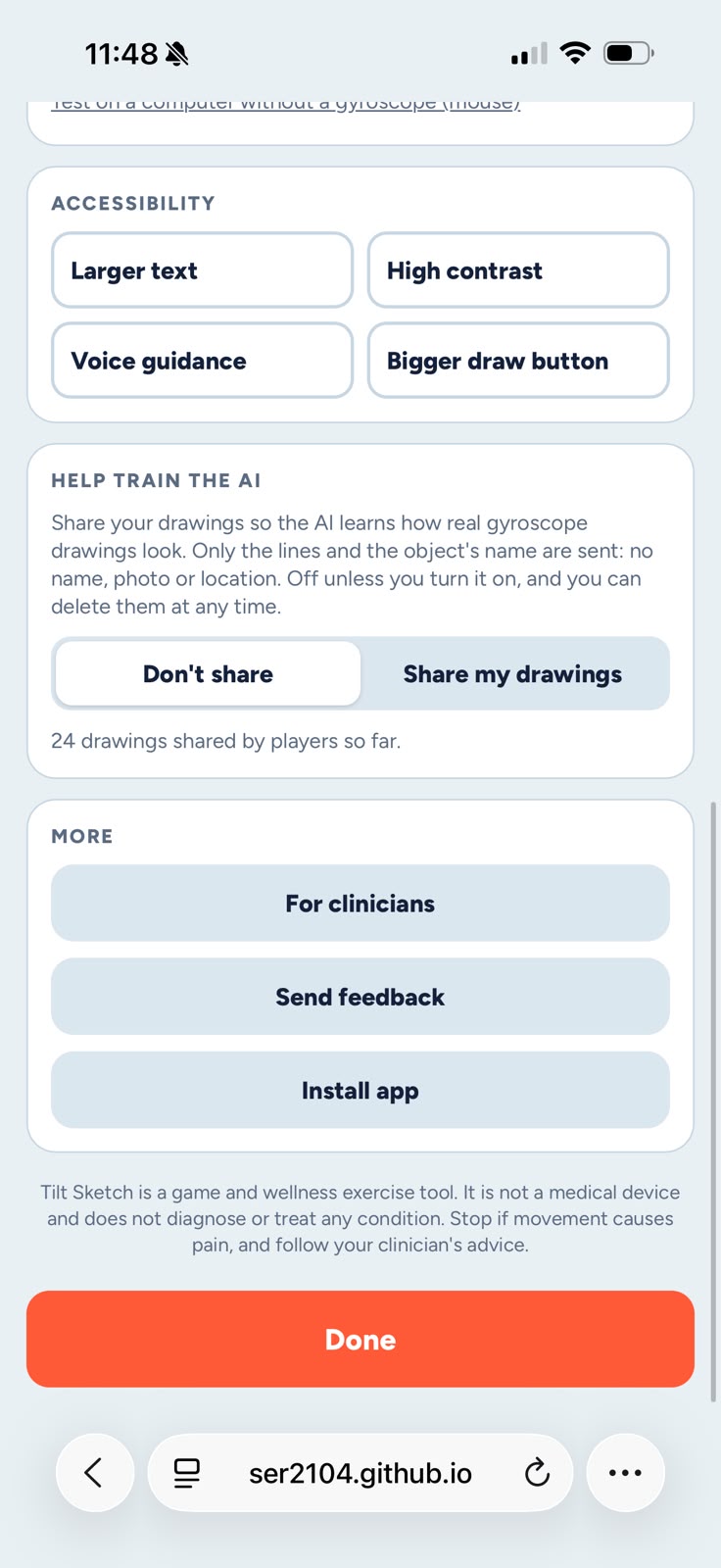
- English and Spanish, accessibility options, and an installable app that works offline.
How we built it
- Custom AI model: a CNN with 1.1M parameters trained on 395k Quick, Draw! drawings across 78 objects plus an "other" class. We augmented the drawings to look like gyroscope input (tremor, rotation, cut-off strokes) and calibrated the model with temperature scaling. It runs in the browser with TensorFlow.js.
- Wobble cleaning: every stroke is resampled, smoothed and simplified before judging. The exact same step runs in training and in the browser.
- Results on held-out gyroscope-style drawings: 82.3% top-1, compared with 38.7% for DoodleNet, plus 91.9% top-3 and a calibration error of 0.004.
- Real examples: before each drawing, the game shows 3 real drawings the model recognizes best, so players know the shape the AI expects.
- Motion analysis: a 4–12 Hz tremor band, jerk-based smoothness and range of motion, computed from the orientation stream.
- Multiplayer: rooms run through Supabase Realtime, so up to 12 phones can join on campus Wi-Fi or mobile data.
- Backend: Supabase with row-level security for leaderboards, opt-in drawing donations, anonymous feedback and clinician sharing.
- Quality: 16 Playwright end-to-end tests in CI with simulated gyroscopes, including 8 phones joining a live room.
Challenges we ran into
The off-the-shelf model collapsed on real phone drawings: a wobbly house dropped from 75% to 9%. Fixing that took gyro-style training data plus stroke cleaning. Training had to fit a hackathon, so we sped up rendering about 10x with OpenCV and used mixed precision on a free Colab T4. Direct phone-to-phone connections failed on campus Wi-Fi, so we moved rooms to a realtime relay. Players also showed us that "the AI recognized it" isn't the same as "it's a good drawing", which is why the score now includes detail.
Accomplishments that we're proud of
Our own model more than doubles DoodleNet's accuracy on gyroscope drawings. The game gives real-time AI feedback, and the full rehab mode with clinician sharing was built in a weekend.
What we learned
Real input is noisy. The best AI fix was matching our data and preprocessing to how people actually draw with a phone, and testing with real players early.
What's next
Retraining on the drawings players donate, a pilot with physical and occupational therapists, and therapist-assigned exercise plans.
Built With
- css3
- github
- github-actions
- google-colab
- html5
- javascript
- keras
- numpy
- opencv
- peerjs
- playwright
- postgresql
- pwa
- python
- supabase
- tensorflow
- tensorflow.js
- webrtc

Log in or sign up for Devpost to join the conversation.