What does it do?
Till turns a one-register night close into a constrained Strands workflow for small-shop owners.
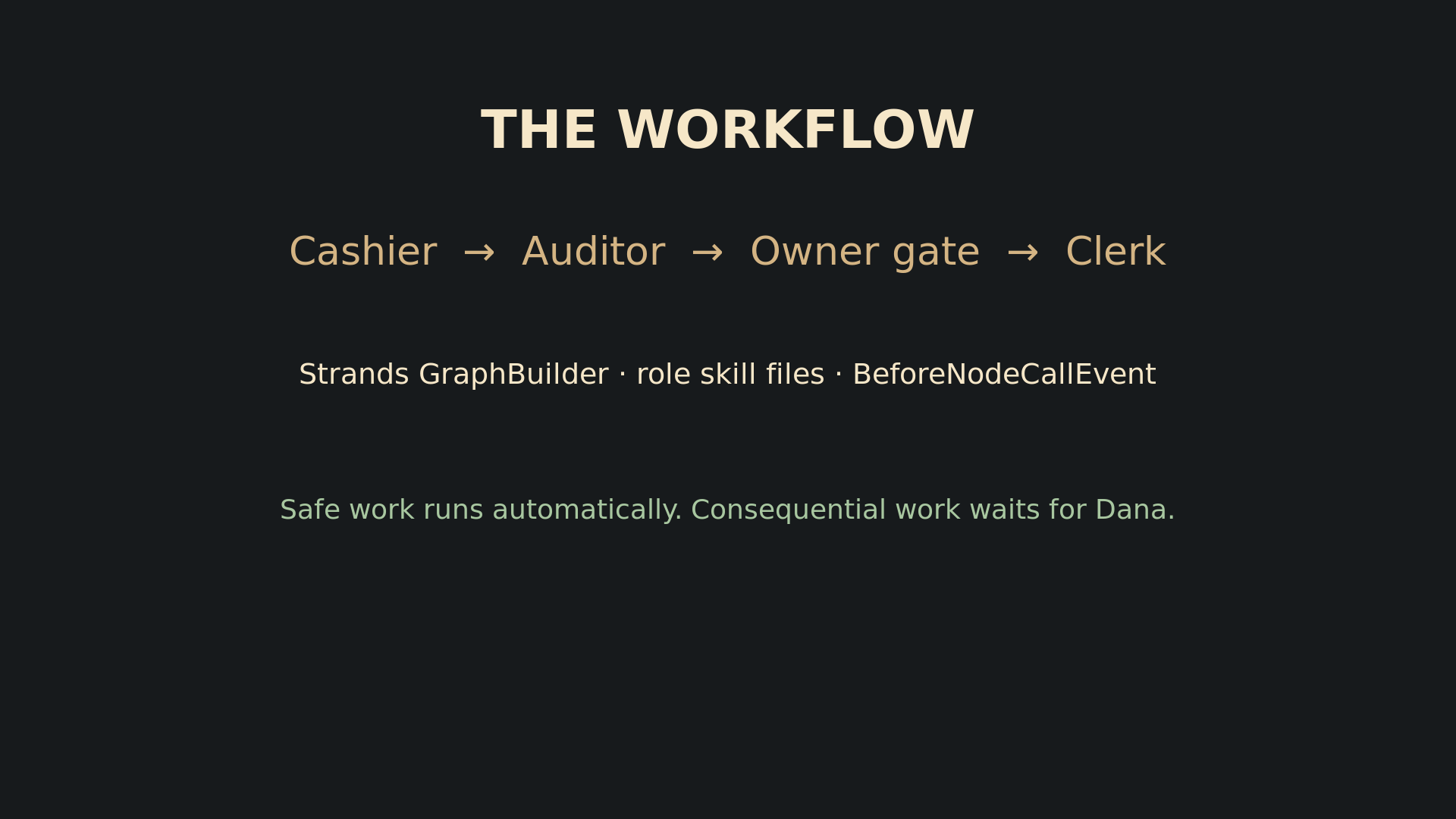
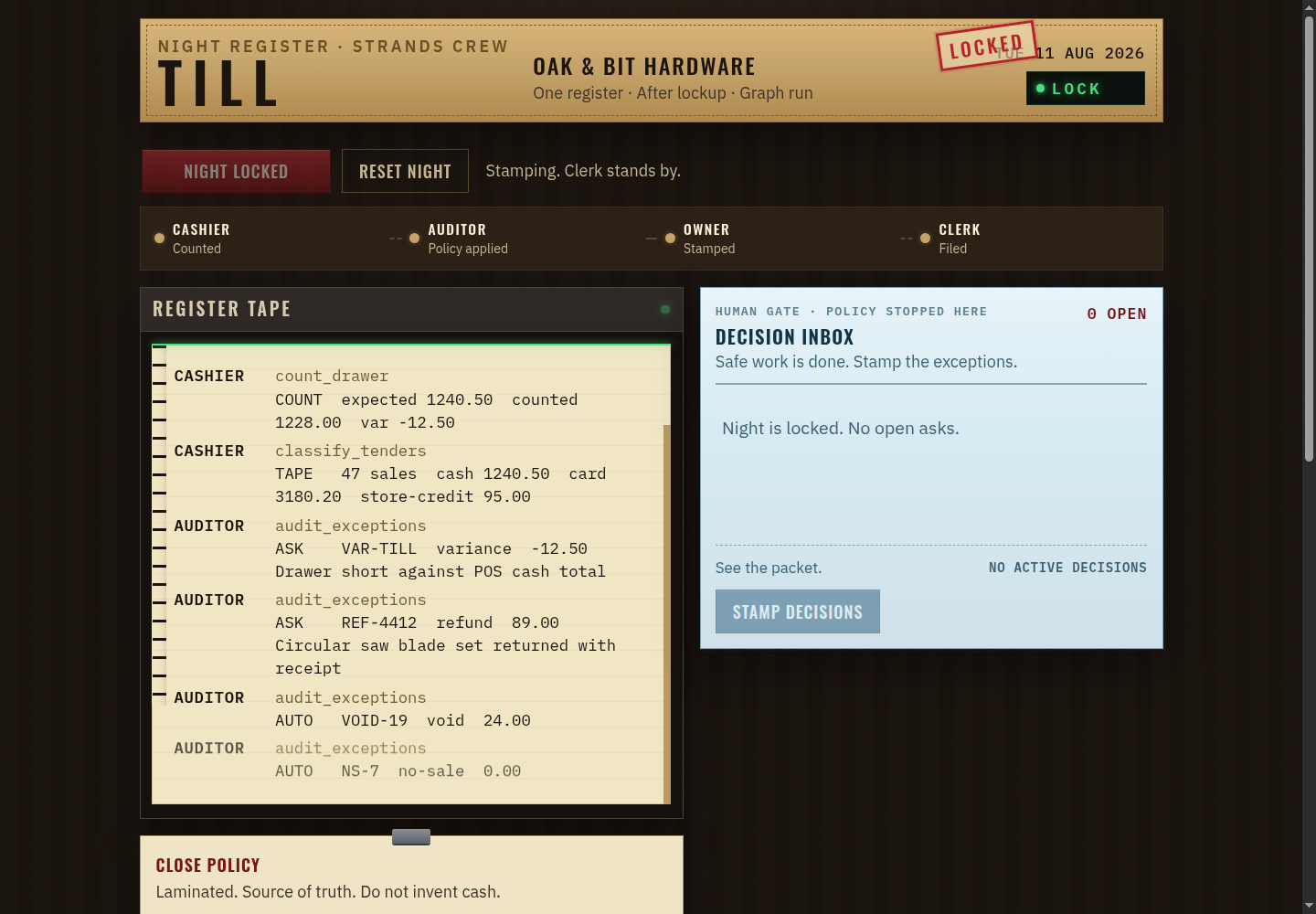
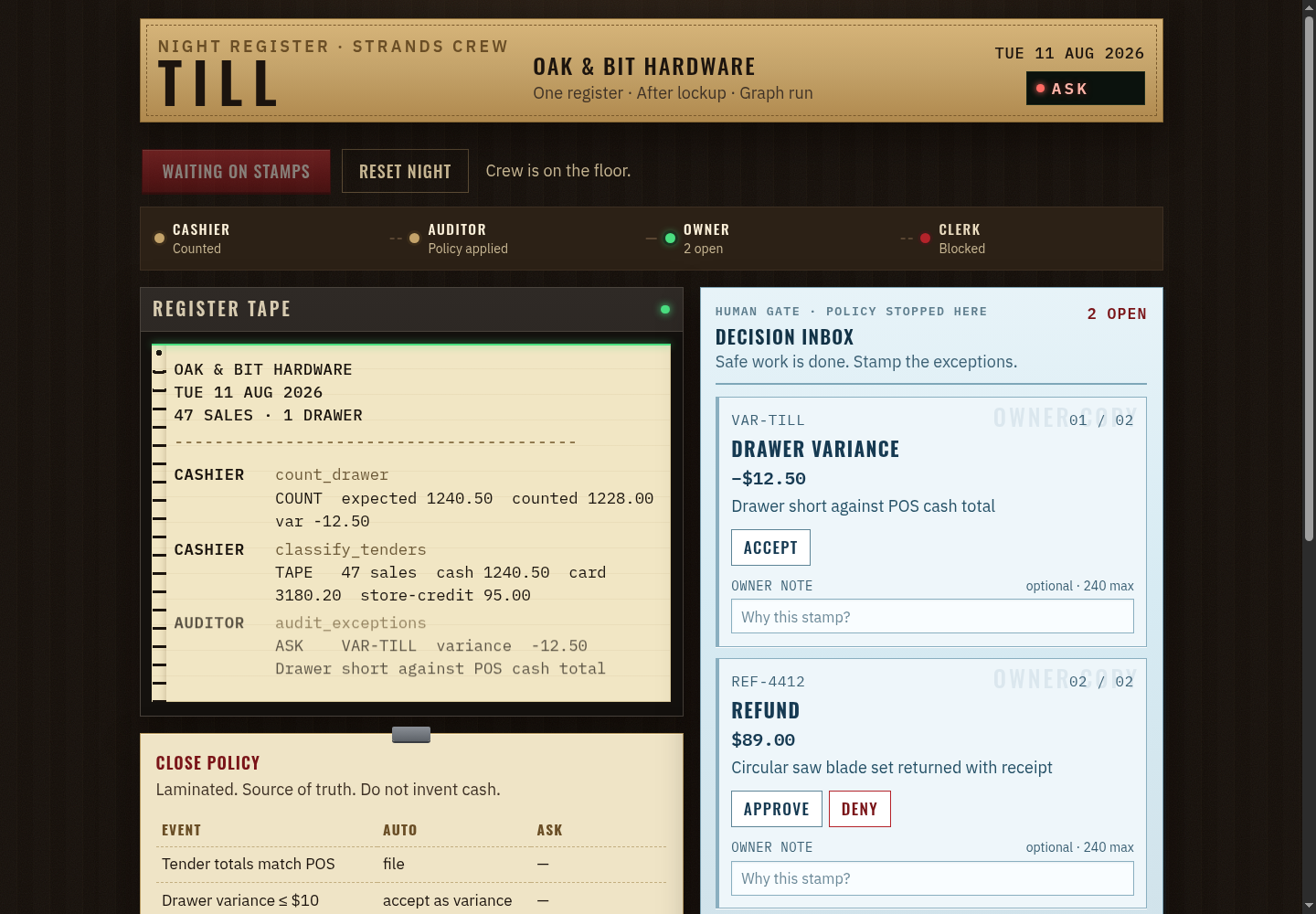
The cashier counts the drawer and classifies tenders. The auditor applies one visible policy table to variance, refunds, voids, and no-sales. Safe items continue automatically; only exceptions that policy cannot safely close reach the owner's Decision Inbox. A real Strands BeforeNodeCallEvent interrupts the graph before the clerk. After the owner stamps every open decision, the same graph resumes and files a locked deposit packet.
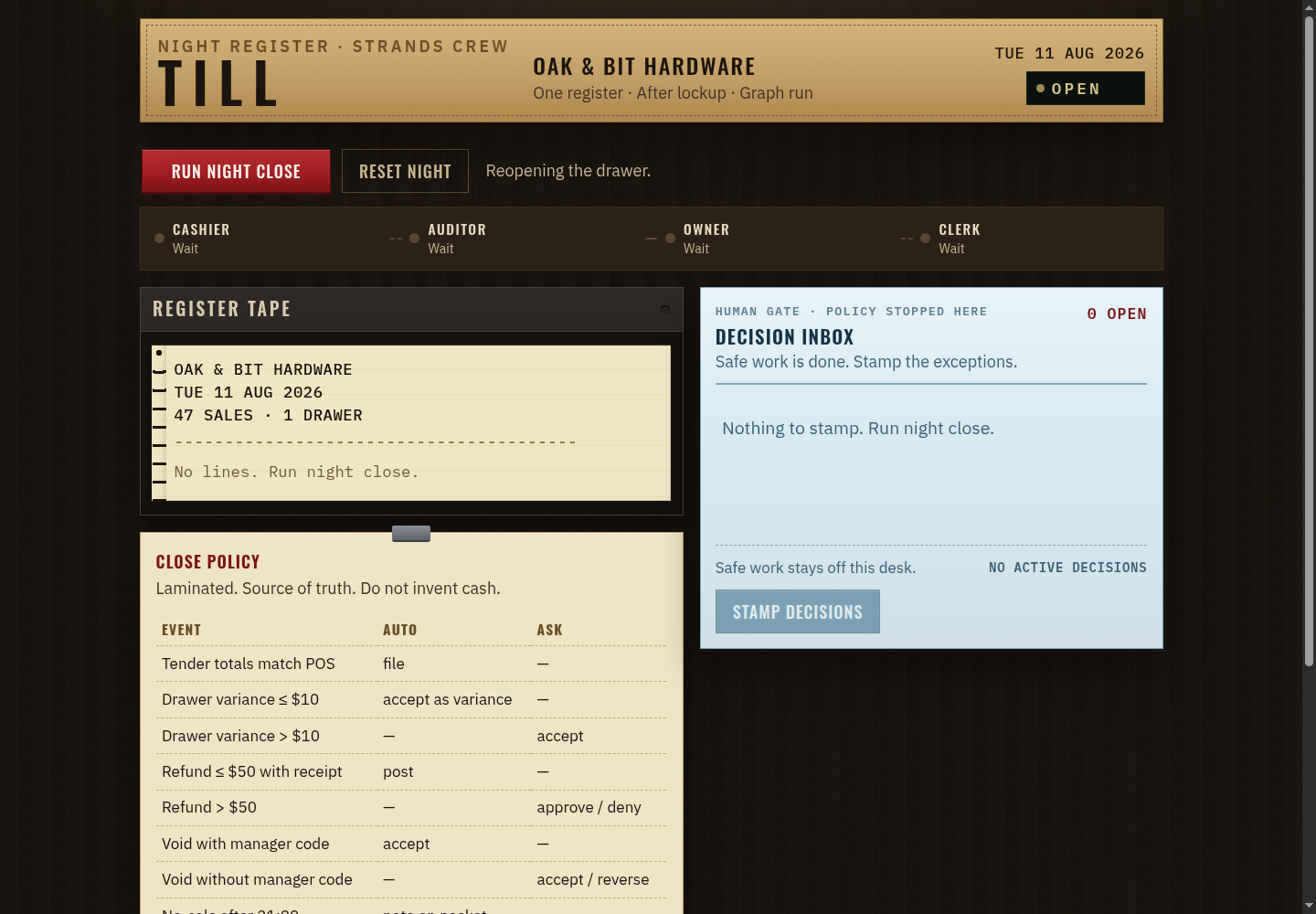
The board is deliberately transparent: role contracts live in skills/role/SKILL.md, policy is centralized in till/policy.py, the register tape exposes the tool calls, and the final packet can be exported as local JSON after the night is locked.
Why does it matter?
Small-shop owners repeatedly close the same register while making judgment-heavy decisions about shortages, refunds, and voids. Till keeps repetitive work in the background and surfaces only the decisions that require human judgment. It prevents a deposit from being filed while an exception is unresolved.
What is demonstrated?
- A seeded register starts with no open asks.
- Run night close executes the Strands graph.
- The owner sees a drawer variance and refund exception while the clerk is blocked.
- The owner accepts or approves each open decision.
- The same graph resumes and files a locked deposit packet.
- The board shows the role/tool tape, empty inbox, locked packet, and local JSON audit export.
The board also accepts a different POS-neutral close packet with shop metadata, expected/count cash, tenders, and refund/void/no-sale exceptions. The same graph and policy table process it, while malformed packets are rejected before the graph starts.
How is Strands used?
- GraphBuilder connects cashier → auditor → clerk.
- Each role is a MultiAgentBase graph node and loads a role contract from skills/role/SKILL.md.
- BeforeNodeCallEvent provides the owner-gate interrupt before the clerk.
- interruptResponse resumes the same graph after the complete decision set is validated.
- The deterministic local executor is deliberate: no model is allowed to invent or decide cash policy. Optional model review is bounded to owner-facing explanation.
Boundary
The current build uses a synthetic, process-local register. It does not claim a real POS connection, real-money movement, multi-user persistence, hosted deployment, measured customer savings, or AWS AgentCore deployment. The local audit export is a JSON download and is not uploaded or persisted by Till.
See the public README for setup instructions, architecture, tests, and limitations.
Built With
- css
- fastapi
- html
- javascript
- pydantic
- pytest
- python
- strands-agents-sdk

Log in or sign up for Devpost to join the conversation.