-
-
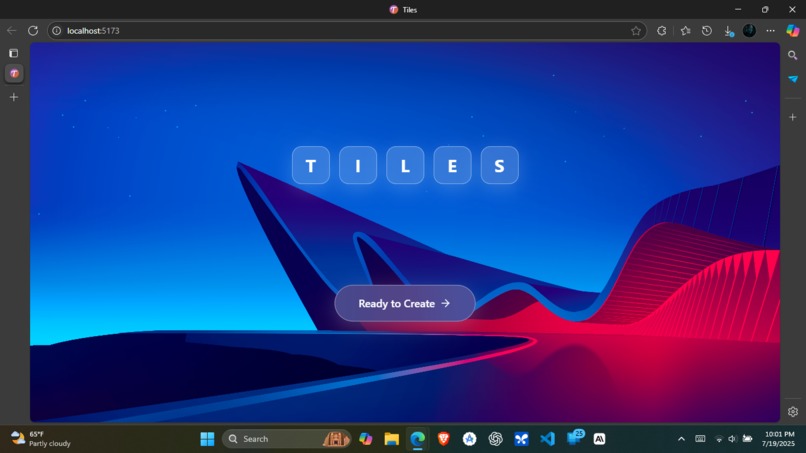
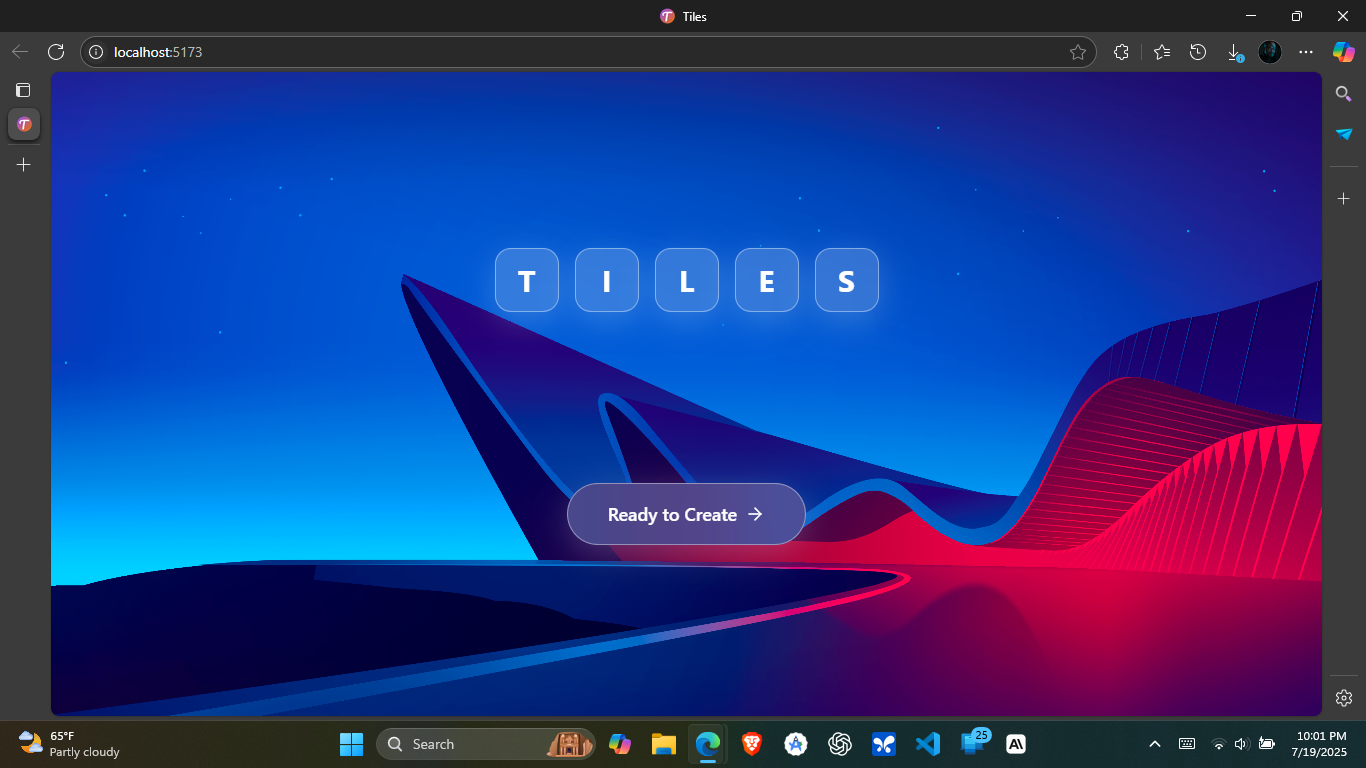
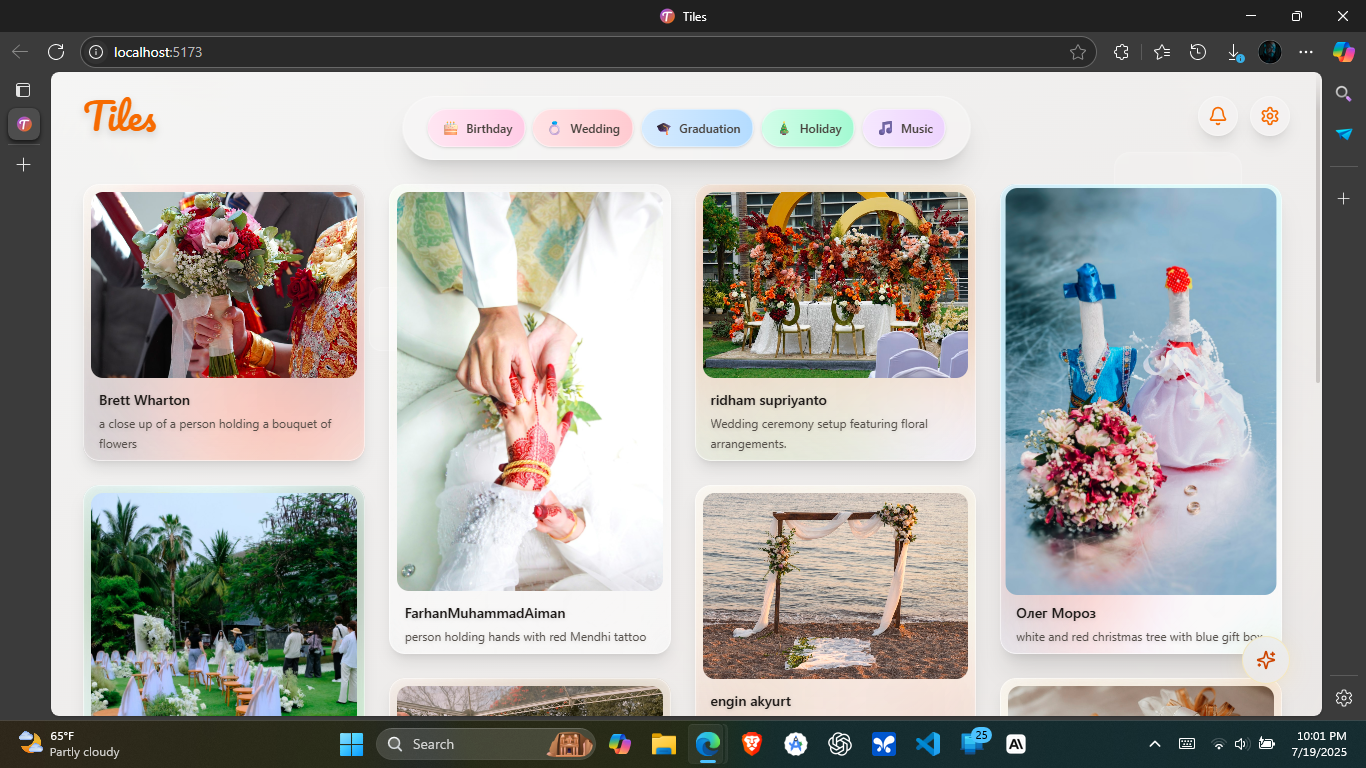
tiles welcome page
-
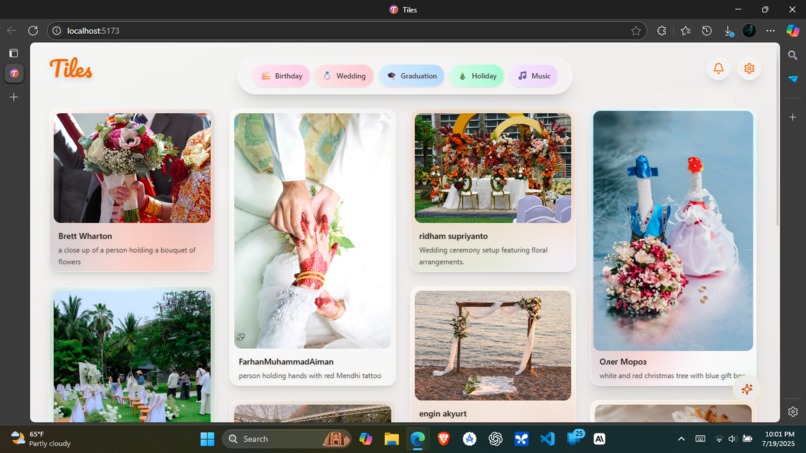
ui showing templates
-
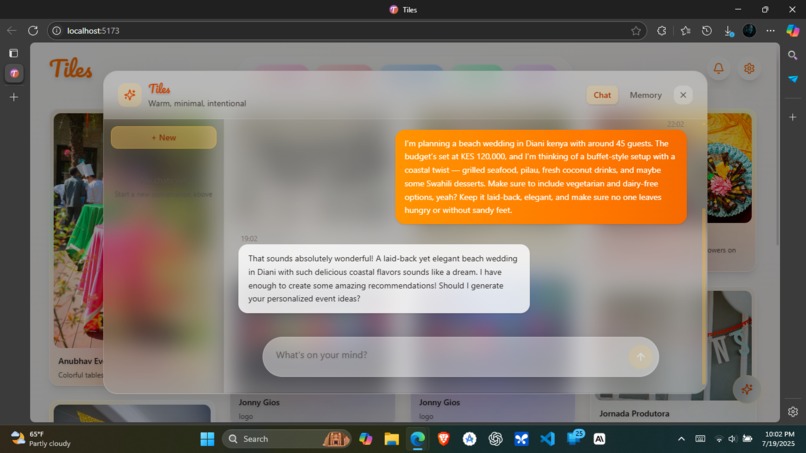
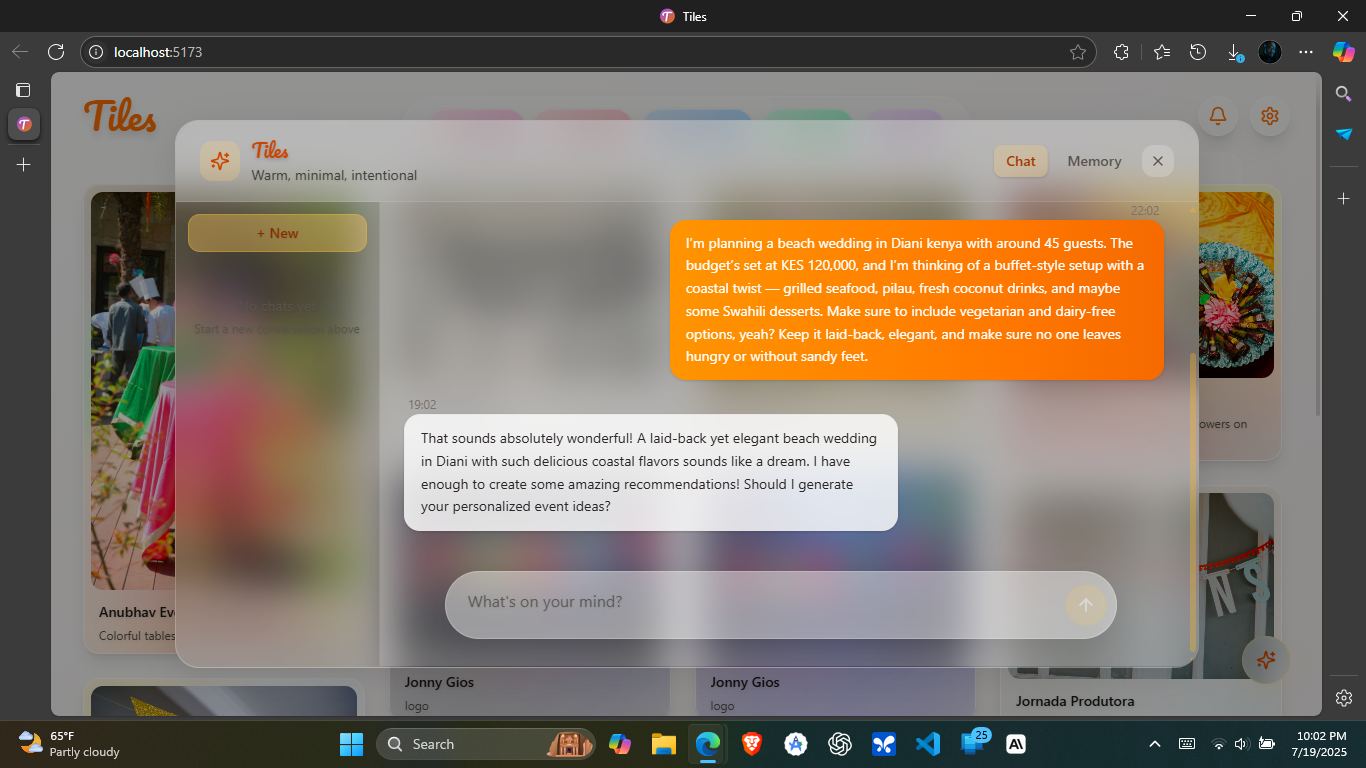
chat session
-
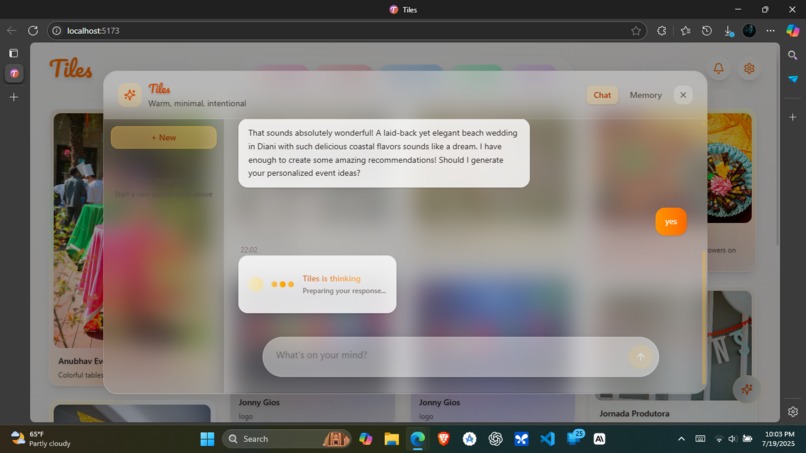
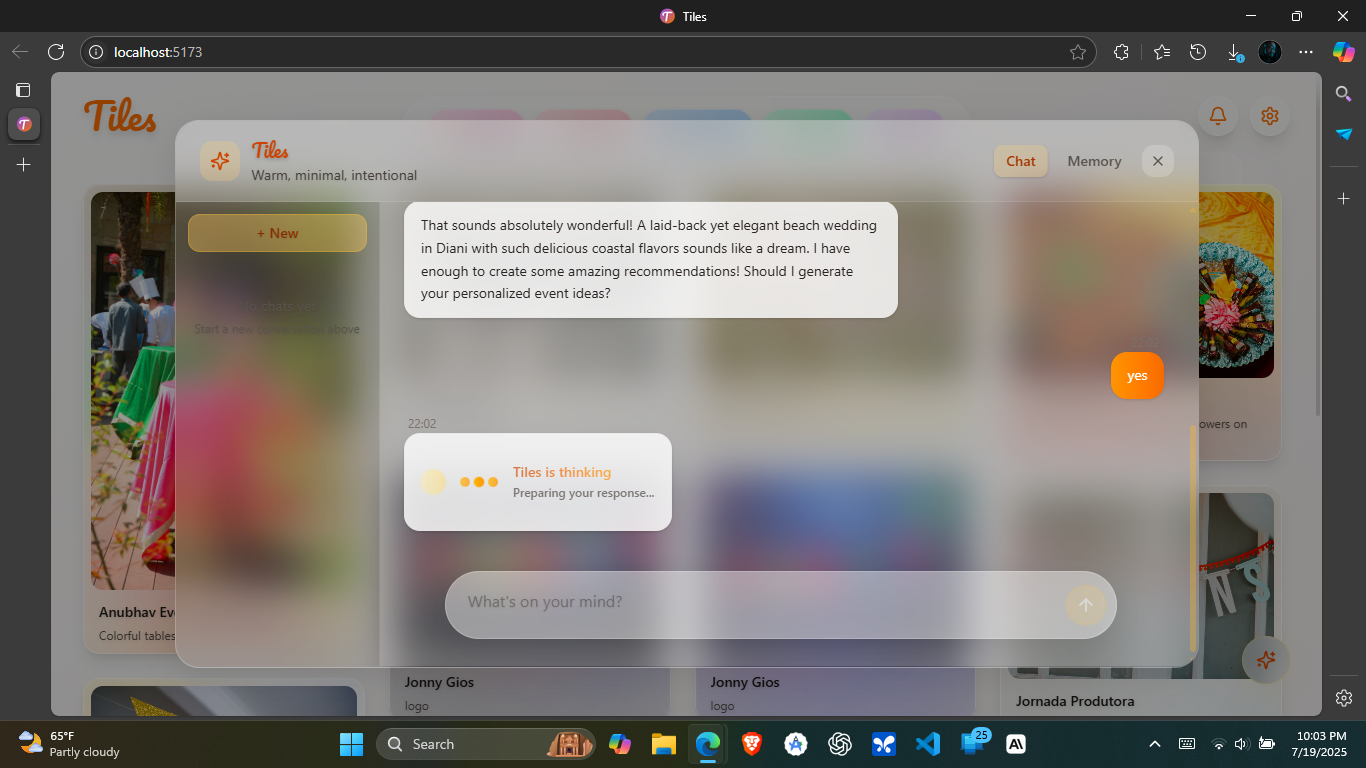
tiles generating in action
-
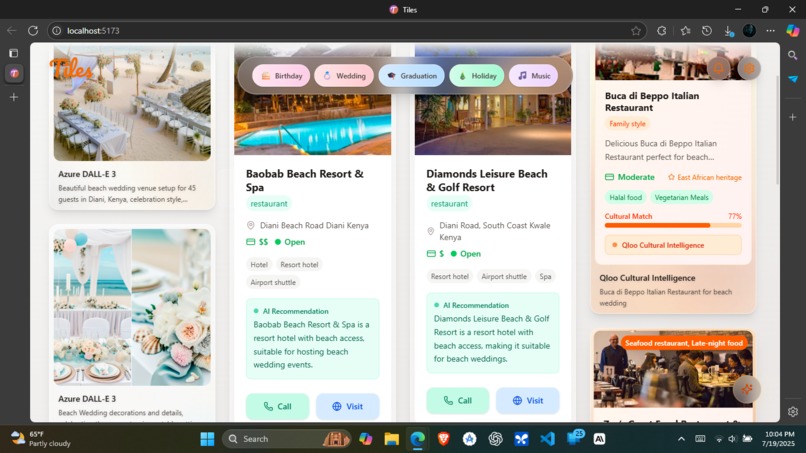
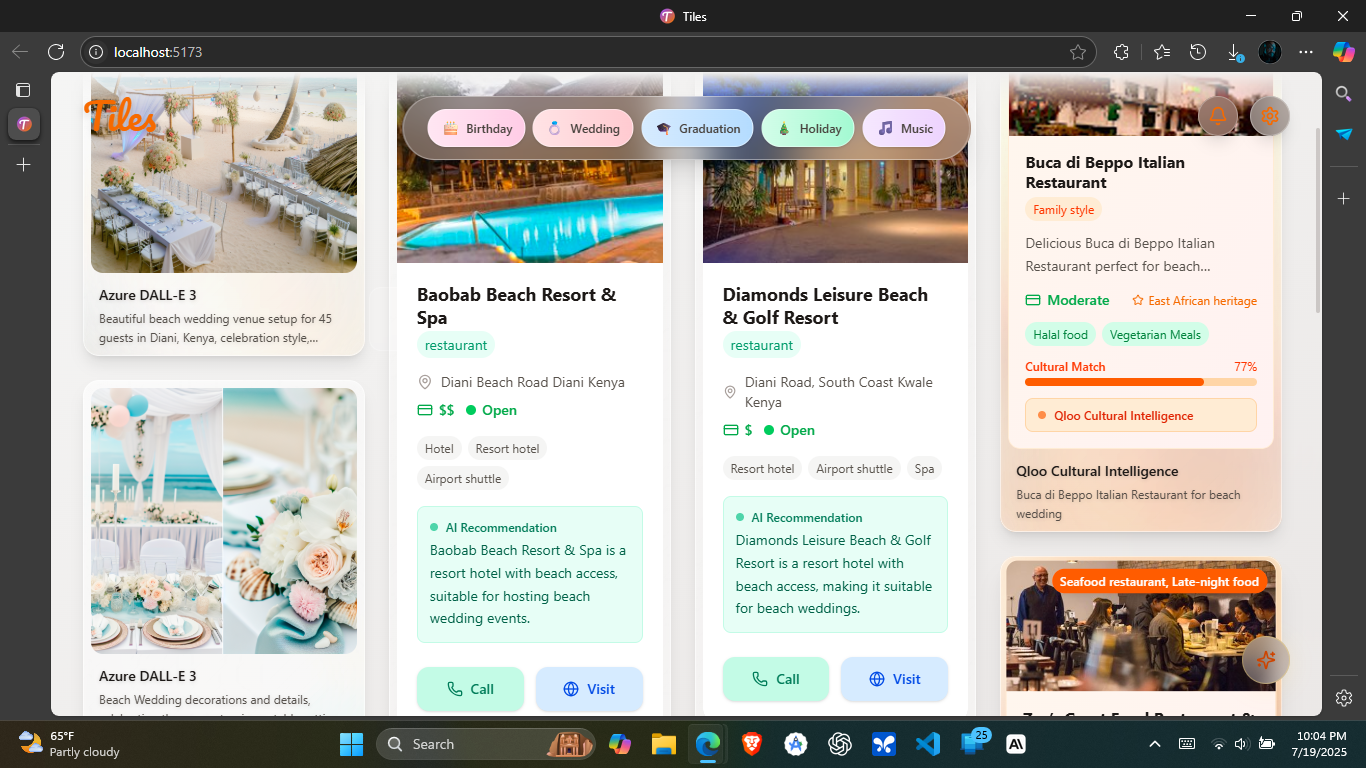
results for a query for a beach wedding setup in diani kenya
-
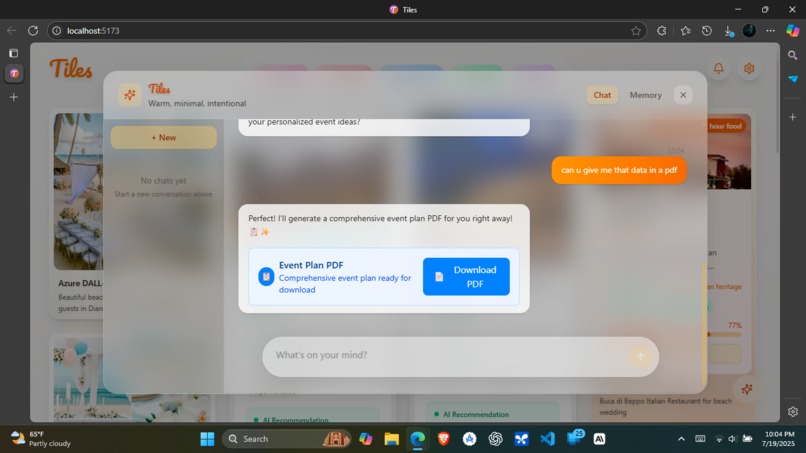
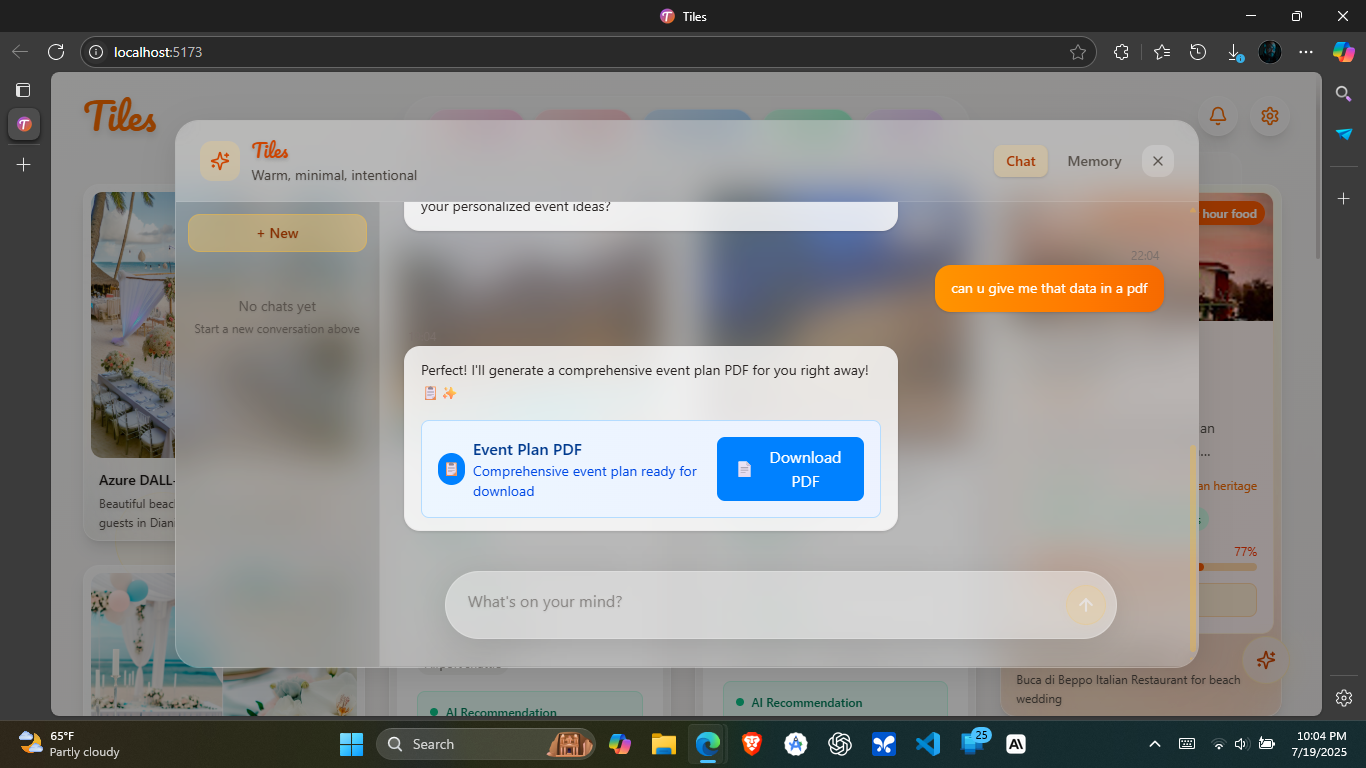
tiles can generate pdfs as part of event plan
-
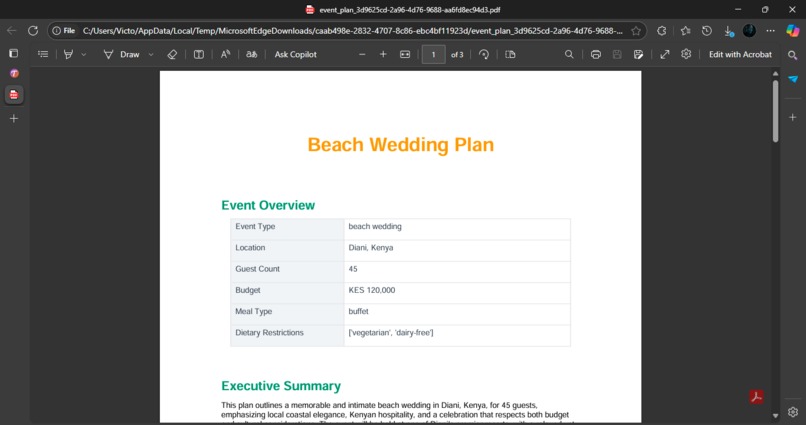
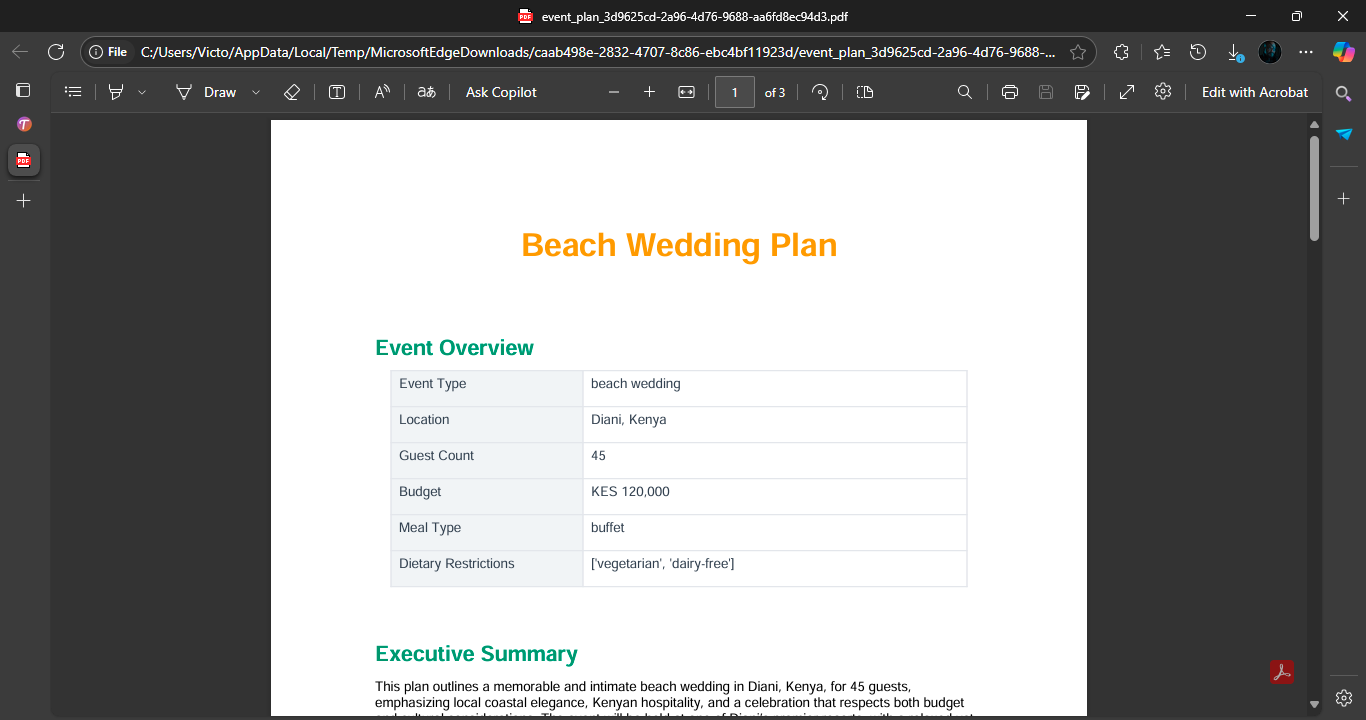
sample pdf
🎯 Tiles - AI-Powered Event Planning Platform
Transforming event planning through conversational intelligence and cultural understanding ✨
🌟 Inspiration
Traditional event planning presents significant friction through disconnected tools, generic recommendations, and complex workflows that fail to capture personal style and cultural nuance. We envisioned a platform that combines Pinterest's visual discovery paradigm with conversational AI, enhanced by Qloo's cultural intelligence to create a truly personalized planning experience.
🧡 Tiles emerged from the insight that event planning should feel like collaborating with an intuitive creative partner who understands both your aesthetic preferences and cultural context.
🎨 Platform Overview
Tiles is a dynamic, Pinterest-inspired platform that revolutionizes event planning through intelligent conversation and cultural awareness. Users interact naturally with the system to create comprehensive event plans.
Core Capabilities
💬 Conversational Planning Interface
- Natural language processing for event specification
- Progressive data collection through contextual dialogue
- Persistent memory across planning sessions
- Intelligent follow-up questioning based on user input
🎨 Intelligent Content Generation
 Custom imagery creation via Azure DALL·E 3
 Culturally-informed music recommendations through Qloo AI
 Location-aware venue suggestions with rating integration
 Comprehensive planning documentation in PDF format
🌍 Cultural Intelligence Integration
- Regional preference understanding and adaptation
- Genre and mood-based music curation
- Venue filtering with cultural context consideration
- Event styling aligned with local tastes and trends
🟧 The platform generates a dynamic visual gallery that evolves as planning progresses, providing immediate visual feedback on conceptual decisions.
🛠️ Technical Architecture
🎨 Frontend Implementation
- React 19 with modern performance optimizations
- TailwindCSS for consistent design system implementation
- Framer Motion for smooth animation and transitions
- Modular component architecture supporting chat, gallery, and planning workflows
🤖 Backend Infrastructure
- FastAPI providing high-performance asynchronous Python API
- OpenAI GPT-4.1 for natural conversation processing and data extraction
- Azure DALL·E 3 for context-aware image generation
- Qloo AI integration for cultural intelligence and recommendation systems
- YouTube API for music playlist curation
🧠 Data Management
- In-memory context storage for real-time performance
- DynamoDB for persistent cross-session data management
- Progressive user profiling with intelligent data validation
- Context-aware state management across multiple AI services
☁️ Deployment Strategy
- AWS Lambda serverless architecture for automatic scaling
- CloudFormation infrastructure as code implementation
- API Gateway for request routing and management
- Multi-environment deployment pipeline supporting development through production
🚧 Development Challenges
🔄 State Management Complexity
Maintaining conversational context across multiple AI services while preserving user session state required implementing a sophisticated in-memory coordination system that synchronizes data flow between services.
🎨 Multi-Modal Content Integration
Creating cohesive user experiences that seamlessly blend AI-generated imagery, music recommendations, and venue data necessitated careful API orchestration and robust fallback mechanisms.
⚡ Performance Optimization
Balancing real-time AI response requirements with smooth user interface interactions required optimization of API call patterns, intelligent caching strategies, and progressive content loading.
🌐 Cross-Platform Deployment
Ensuring consistent functionality across local development and AWS Lambda environments required careful environment abstraction and dependency management strategies.
🎵 Cultural Intelligence Implementation
Integrating Qloo AI's recommendation capabilities while maintaining natural conversation flow required iterative refinement of context passing and response integration.
🏆 Key Achievements
✨ Conversational Intelligence
Developed an AI interaction system that feels natural and contextually aware, understanding event planning nuances and generating relevant follow-up questions.
🎨 Dynamic Visual Generation
Implemented DALL·E 3 integration that produces imagery closely aligned with user vision and event specifications.
🎵 Cultural Music Intelligence
Successfully leveraged Qloo AI to provide music recommendations that consider both event type and cultural context.
📱 Production-ready Infrastructure
Built a serverless system capable of handling real user loads with graceful scaling and robust error handling.
🎯 User Experience Design
Created an intuitive interface that users describe as feeling "natural" - achieving seamless integration between conversational input and visual output.
📋 Comprehensive Planning Output
Delivered end-to-end functionality from initial conversation through final planning documentation including venues, playlists, and visual assets.
🧠 Technical Insights
🤖 AI Service Orchestration
Successfully integrating multiple AI services requires careful attention to context management, error handling, and response coordination. The key lies in treating AI services as collaborative rather than sequential components.
💬 Conversational Design Patterns
Effective AI conversation design balances technical capability with user psychology. Every prompt structure, response timing, and follow-up question significantly impacts user experience.
🌍 Cultural Context Integration
Same event specifications produce meaningfully different results when cultural context is properly integrated. Qloo AI's cultural intelligence proved essential for relevant recommendations.
🧠 Memory Architecture Design
Effective conversational AI requires sophisticated memory systems. Our context management approach became fundamental to creating intelligent, personalized interactions.
⚡ Serverless Architecture Benefits
AWS Lambda enabled rapid deployment and automatic scaling, though it requires careful consideration of cold start optimization and state management.
🎯 User-Centered Development
Direct user feedback provided insights that specification documents could not capture, emphasizing the importance of iterative design based on real usage patterns.
🚀 Future Development Roadmap
🎯 Near-Term Enhancements
- Voice interface integration for hands-free planning interaction
- Progressive Web App implementation for mobile-optimized experiences
- Advanced Qloo AI integration with trend forecasting capabilities
- Real-time collaborative planning features
🌍 Expanded Intelligence Capabilities
- Multi-language support with cultural adaptation
- Seasonal and calendar-aware recommendation intelligence
- AI-powered budget optimization and cost management
- Direct vendor integration for streamlined booking workflows
🔮 Long-Term Vision
- Augmented reality event previews within actual spaces
- Social sharing capabilities for AI-curated event galleries
- Analytics dashboard for planning trend insights
- Enterprise-grade tools for professional event planners
🎨 Experience Evolution
- Mood-adaptive content generation based on user sentiment
- Cross-event style learning and preference refinement
- Deep integration with calendar systems, social platforms, and booking services
Tiles represents the foundation of a new approach to event planning where AI serves as a creative collaborator that understands culture, context, and human connection. 🤝
✨ Developed for the Qloo AI Hackathon 2025✨

Demonstrating the intersection of artificial intelligence,
cultural understanding, and creative collaboration

🧡 🟠 🟡

Log in or sign up for Devpost to join the conversation.