-
-
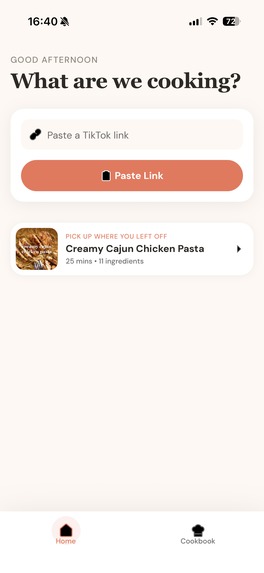
Home
-
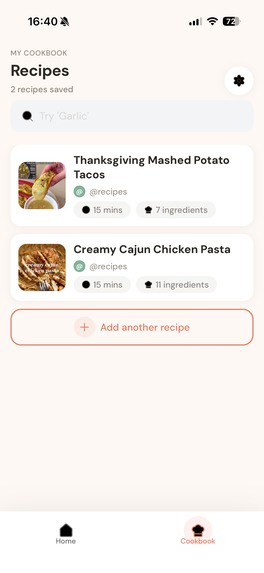
Cookbook
-
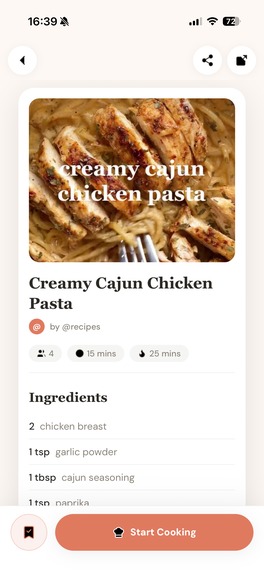
Recipe
-
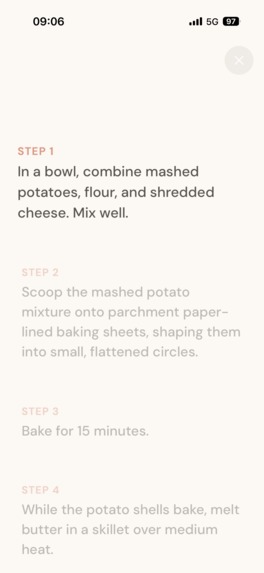
Cooking Mode
Project Background
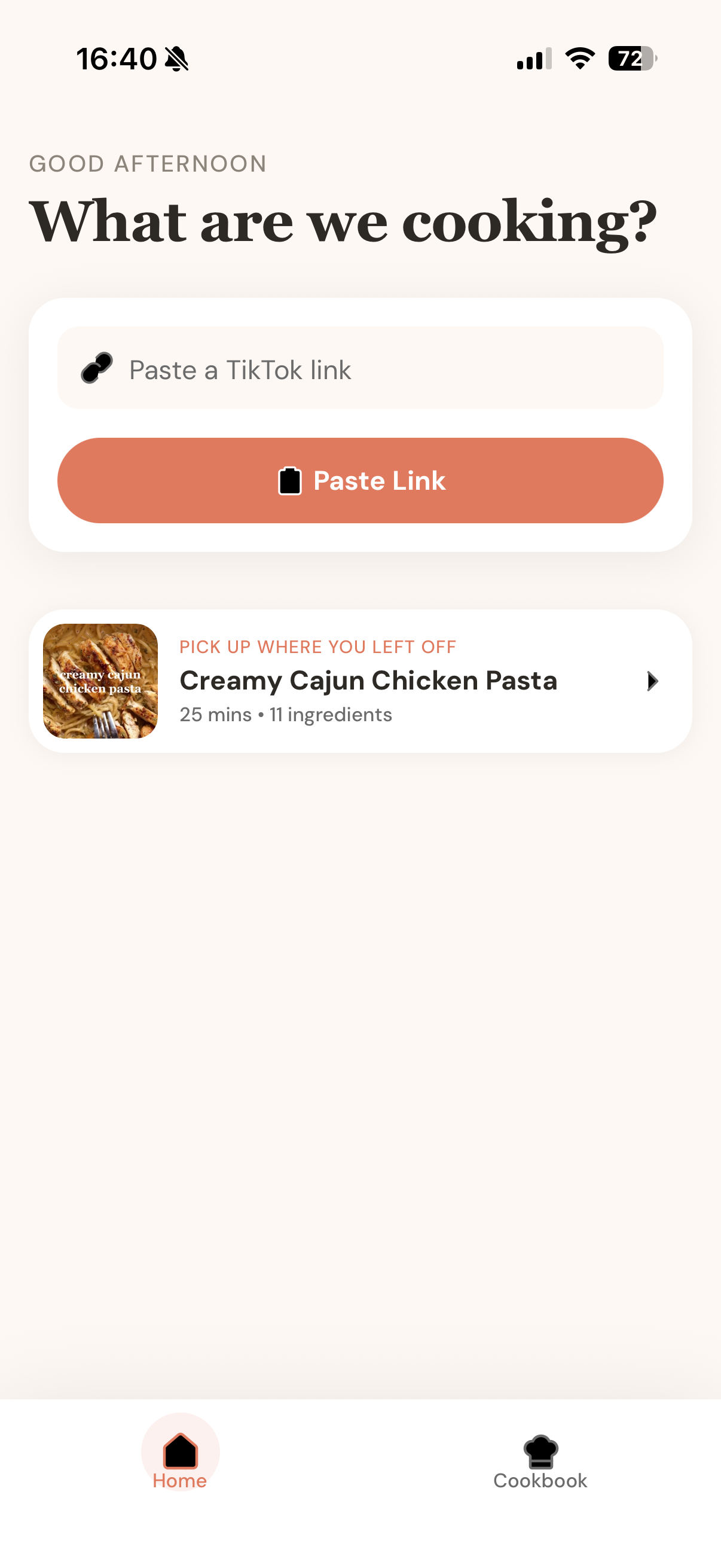
I used to work as a chef, so I’m the default cook at home. My partner sends me at least two TikTok recipes every day saying, 'We should eat this,' but those links always disappear into the void.
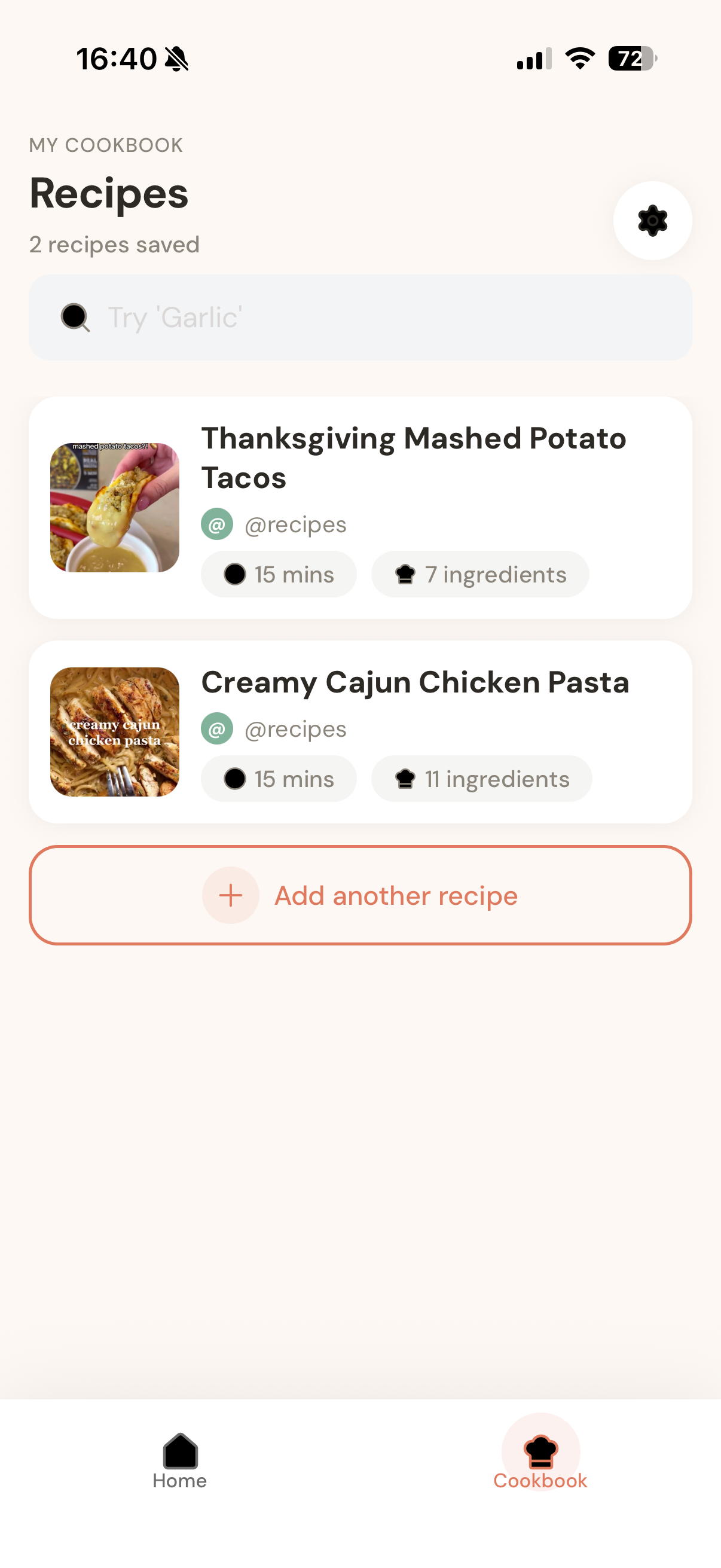
I realized there was a massive disconnect between Discovery (scrolling social media) and Execution (actually cooking dinner). I wanted to build a tool that didn't just save the link, but respected the chef’s workflow—organizing the chaos so I never lose track of a good meal again.
Some non technical learning
I’m a Product Manager by trade, not a developer, so this project forced me to step out of the 'ticket-writing' seat and into the builder’s seat.
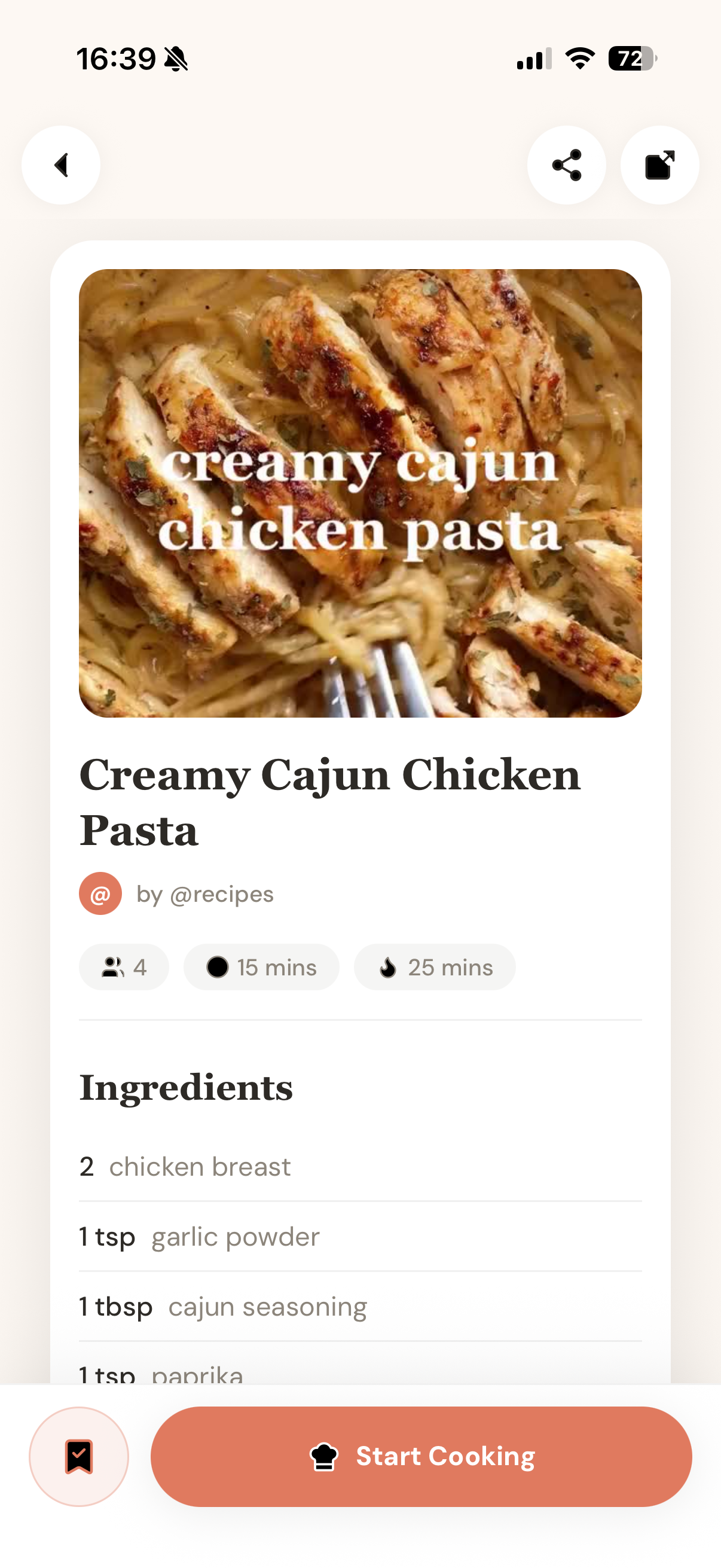
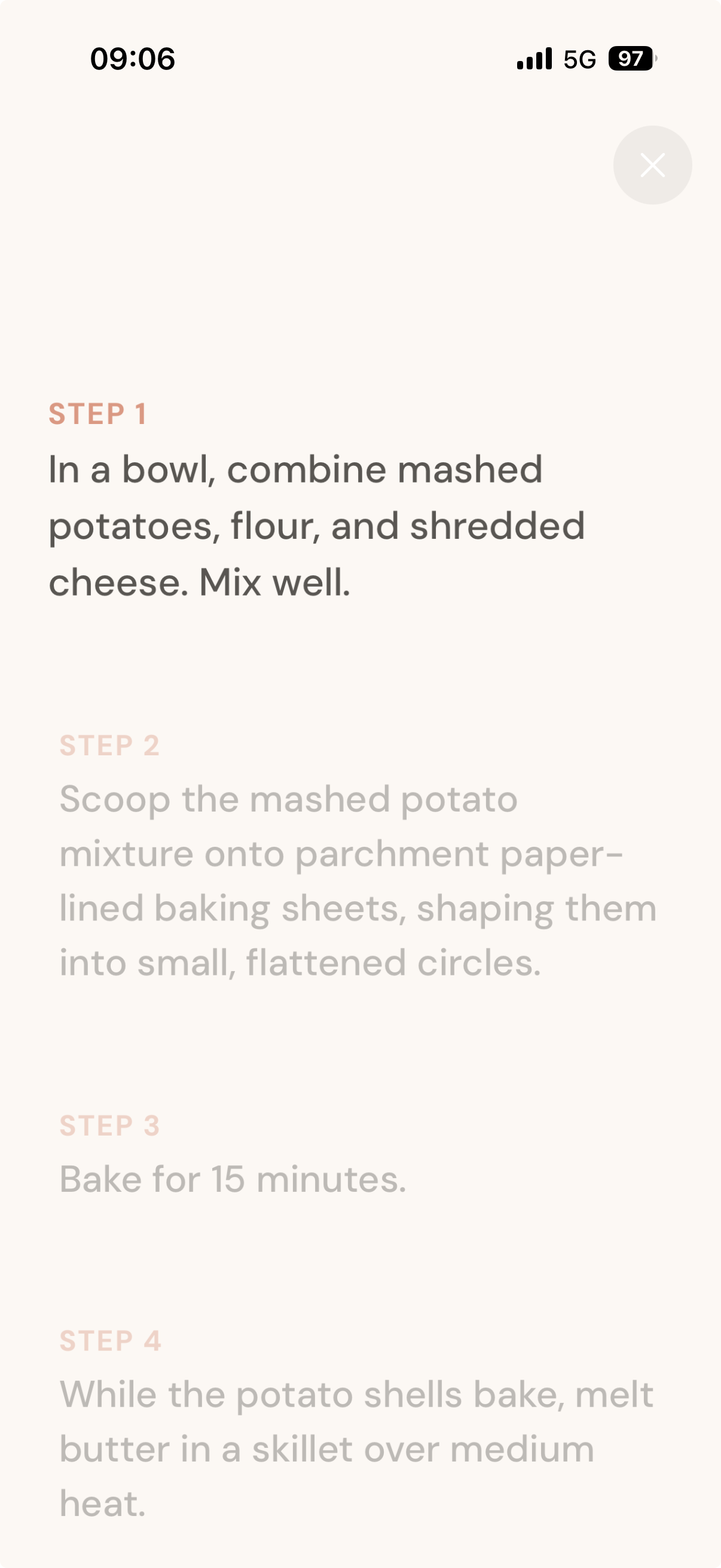
I learned that Utility is in the details. Designing for a user with dirty hands requires a different psychology than designing a standard app. I had to learn how to present complex information—like ingredients and timelines in a way that is legible at a glance from across the kitchen counter, stripping away anything that adds friction to the cooking process
The Build
I treated this as a test case for the future of software development: The PM as the Architect and AI as the Engineer.
I utilized the following stack:
- Frontend: React Native (Expo)
- Backend: Supabase
- Deployment: Railway
- Monetization: RevenueCat
My workflow was strictly process-driven:
Planning: I wrote detailed requirement specs (PRDs).
Execution: I used Claude Code (Planning Mode) to architect the solution and generate the core logic.
Verification: I used Codex to test, review, and verify the code written by Claude.
This allowed me to ship a complex, full-stack application by leveraging my product skills to direct the AI agents effectively.
Challenges
The biggest hurdle was bridging the gap between 'Development' and 'Engineering.'
As a non-dev, getting code to run on my machine was one thing, but getting it packaged, signed, and deployed to a real device that I could share with others was a completely different beast. I had to learn the hard skills of environment configuration, build pipelines, and production-grade stability—turning a collection of scripts into a legitimate, shippable product.
Built With
- expo.io
- node.js
- railway
- react-native
- supabase
- typescript

Log in or sign up for Devpost to join the conversation.