-
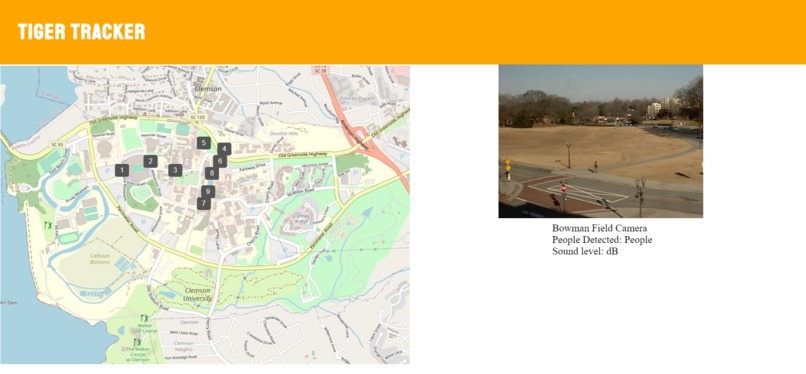
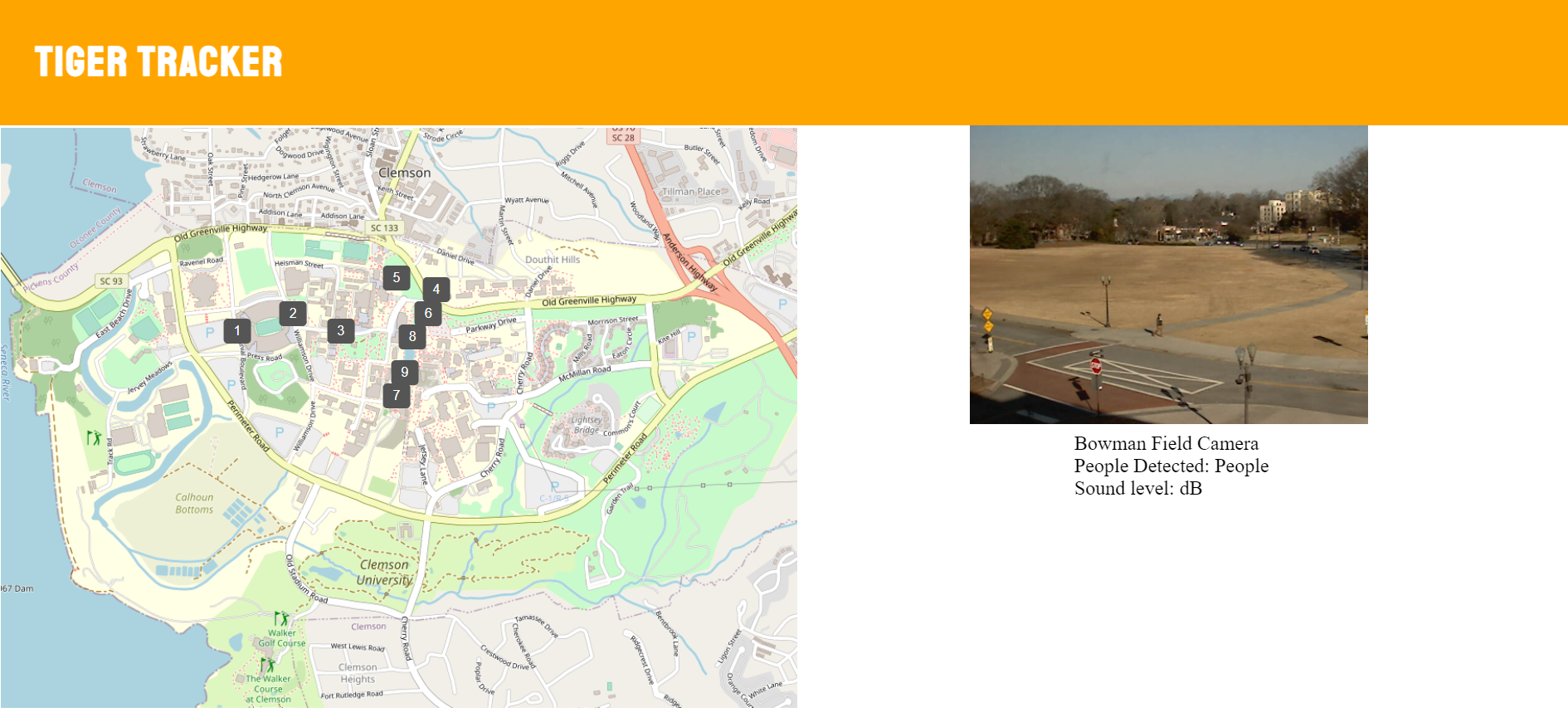
Website
-
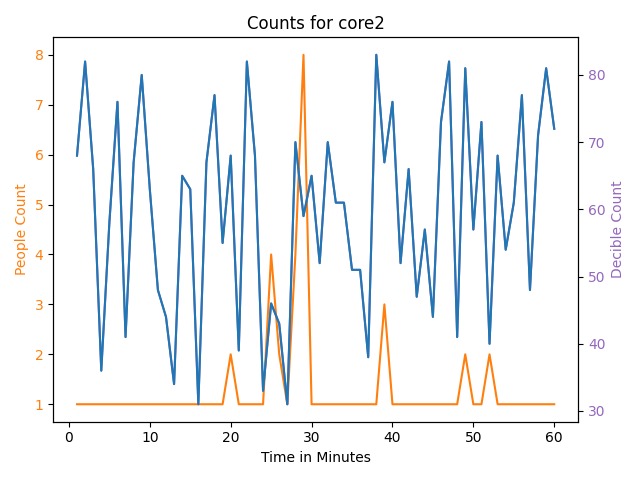
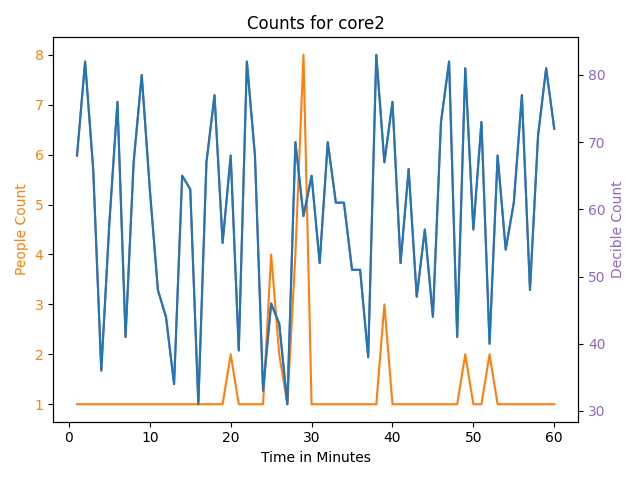
Graph of Decibels and People
Inspiration
With Covid variants unknown and busy walkways about, we wanted a way to know how many people were where. This way people can know what parts of campus are most busy to help in planning their route to remain the safest.
What it does
We used the open access webcams provided by Clemson which we feed into a Lambda function. This function uses the Rekognition service of AWS to detect the number of people in the image. This is then recorded into a S3 storage to be displayed by a website. Alongside this, another function is generating graphs based on the data to be displayed on the website.
How we built it
We took advantage of the many AWS services provided, such as Lambda, API Gateway, Rekognition, Amplify, and S3 for processing, interfacing with the function, analyzing the images, displaying the webpage, and storing the data.
Challenges we ran into
Initially, we tried to use a Flask python API instead of using Amplify. This ended up being a huge challenge. Between python package issues to zip permissions, we were unable to get this solution to work, so we ended up on Amplify.
Accomplishments that we're proud of
We are proud of learning how to integrate all of these AWS services to create a useful application within 24 hours. We were also proud of how we were able to distribute work so we could all work together without feeling left out.
What we learned
Most of the AWS services were new to us, so we all learned how to use their interfaces and APIs to integrate our project together. In addition to this, we learned a lot more about python, HTML5, CSS and JavaScript in the creation of the functions and in the website.
What's next for Tiger Tracker
As Tiger Tracker continues on, it will collect more and more data. This data can be useful to the university for construction planning, event placement, and security location. With this, the university and students can look at the density data to help in day to day or long term decisions.


Log in or sign up for Devpost to join the conversation.