-
-
Platform
-
Tech Stack
Inspiration
We’re building Tides to solve a problem: Non-technical business owners often struggle to improve their digital platforms for users. When they notice metrics declining, it’s difficult to experiment and test what will actually fix the issue.
We spoke with the owner of a small online clothing brand who noticed high traffic but relatively low purchase completions after hiring a local influencer to promote the brand. She felt her website wasn’t modern enough, and was forced to hire an external development team to rebuild an entirely new site, since making small, uncertain changes wasn’t cost-effective.
In reality, issues like these are often driven by small, fixable moments. Micro UX changes can have impact far beyond their size, but they're difficult to spot and test. Our goal is to help non-technical people build self-improving digital products as if their users are beside them, clearly guiding what to change.
What it does
What becomes possible for users or teams because you combined behavioral analytics + AI, rather than using either alone?
Behavioral analytics show what your users are doing. AI can generate ideas, but without grounding, these ideas are merely speculative. By combining behavioral analytics + context-supercharged AI, we make the product design / ideation process feel as if your users are beside you, telling you what to do.
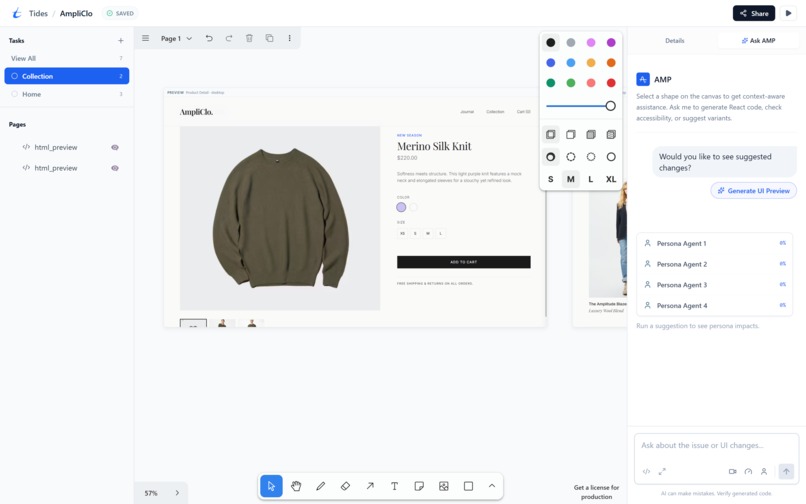
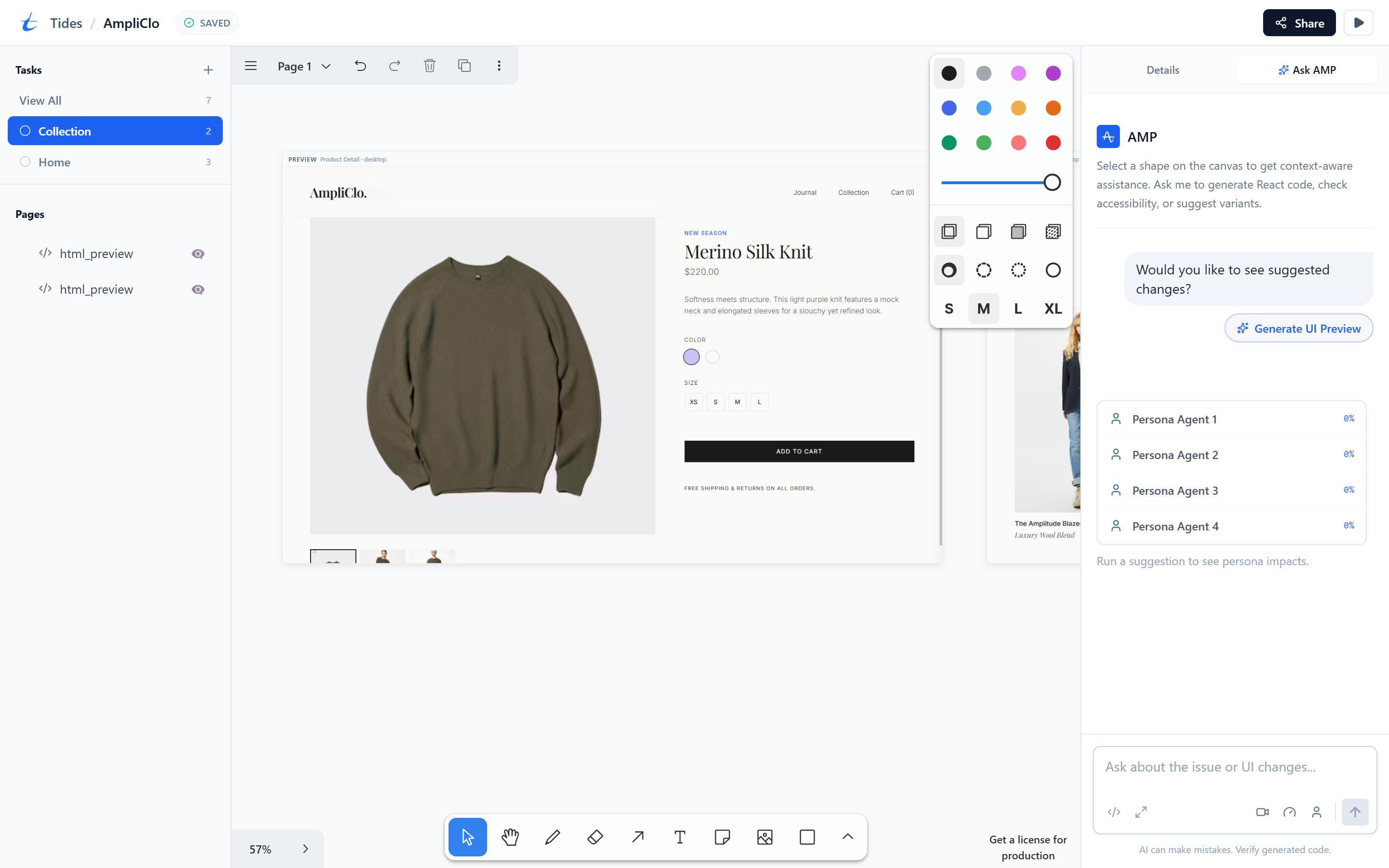
Tides is an Amplitude-native design platform, powered by agents that orchestrate an end-to-end product design workflow, from issue and opportunity identification to design execution.
Upload your website and plug Tides into an existing Amplitude project to begin uncovering evidence-backed product insights about how users respond to your website. Event data is sent to Tides' processing pipeline, a multi-step chain, that uses both AI agents and deterministic statistics to transform unstructured data into issues and opportunities that basic rules engines cannot capture.
Tides' users can easily visualize and build solutions based on these findings through a familiar design platform without losing analytics context while switching through dashboards. This design platform is built around solving 'issues.' When you navigate to an issue on Tides, we automatically pull up the relevant pages and funnels as well as provide a copilot to iteratively generate targeted UI microchanges.
Experiment with UI changes validated against your user data to simply and iteratively build a digital platform that improves itself.
Our demo features a simple e-commerce store, AmpliClo, with the following event schema:
Add to Cart, Brand Film Played, Cart Viewed, Checkout Abandoned, Checkout Started, Collection Viewed, Color Selected, Editorial Scroll Depth, Homepage Viewed, Lookbook Viewed, Payment Info Entered, Product Imaged Zoomed, Product List Viewed, Purchase Completed, Search Performed, Session Started, Shipping Info Entered, Size Selected, add_to_cart, begin_checkout, checkout_completed, checkout_step_viewed, filter_applied, nav_click,, page view, product_clicked, product_impression, size selected, multiple_photos_viewed
We separate navigation, intent, and commitment actions. By thinking in events rather than page views, we are able to model user intent over time and answer the question “where did the user go and why?” Like mature analytics teams, we track exposure, not just clicks. Furthermore, we measure micro-interactions such as color selected and size selected to determine micro UI changes that correlate with purchase behavior so we can iteratively create small experiments with outsized impact. Our schema represents a conversational funnel, not just events. (Ex. Discovery – Homepage Viewed, Collection Viewed, Lookbook Viewed), allowing us to make use of Amplitude’s pathways.
How we built it
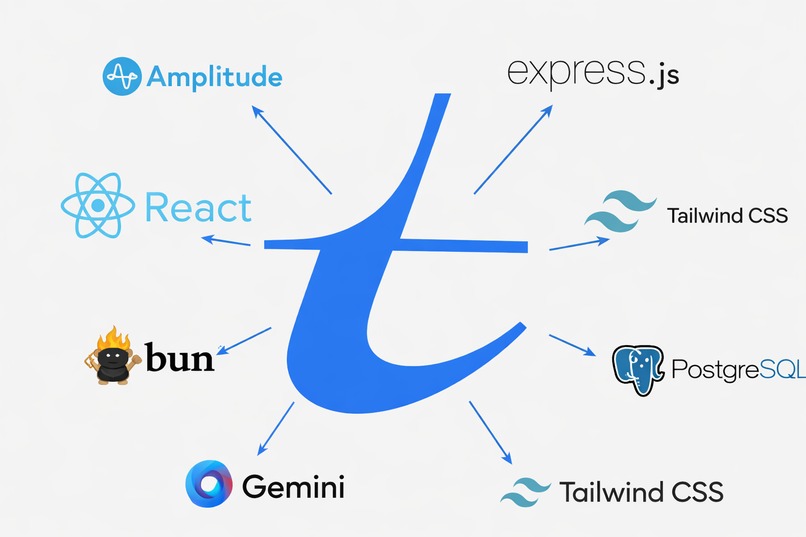
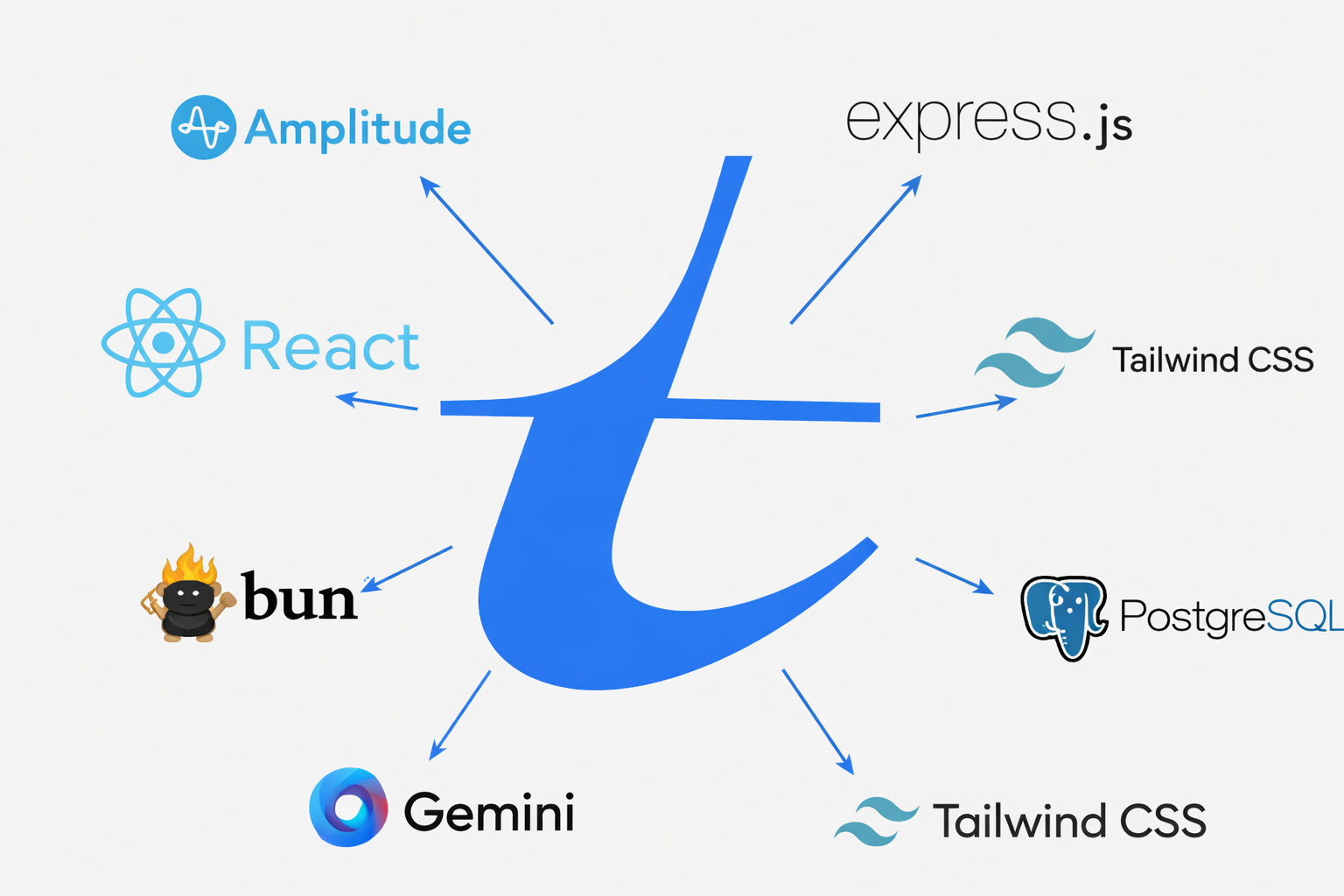
Frontend: React, TailwindCSS Backend: Amplitude API, ExpressJS, Bun, Gemini, PostgreSQL
What exactly is the AI doing with the data
It starts with Amplitude’s Export API, where we ingest every raw event, property, and user path.
But before our AI can 'think,' our engine must 'detect.' And we found the best results by modelling the data as Sequential Behavioral. For example, to analyze time series, we use rolling time windows to monitor event rates across segments. While a basic rules engine waits for a 20% drop to send an alert, we don't just see new users are leaving more; we see that their behavior is mathematically diverging from the global 'Happy Path', a sequence of x events immediately preceding a 'Success' event.
By assigning weights to these sequences, we provide the AI with deterministic evidence of an issue.
Now, we trigger our Design Agent. We base it off of Gemini 3.0 Flash to analyze the issue, code, and relevant screenshots to execute a non-aggressive change that a small business could actually implement. We can ask about its decision making process or for changes, and our copilot answers everything backed with Amplitude-provided evidence.
Now, here is the final piece of the self-improving loop: Synthetic Persona Simulation. Before we push this change to a single real user, we audition it in a sandbox. At the same time issues are generated with the processing pipeline, synthetic personas like "Explorers” or “Low Activity Engagers” are generated grounded in Amplitude’s behavioral data. Our AI can then simulate their reactions to the new UI, flagging if the change is too aggressive or if it successfully meets the different segments' needs.
Built With
- amplitude
- bun
- express.js
- gemini
- postgresql
- react
- tailwindcss


Log in or sign up for Devpost to join the conversation.