-
-
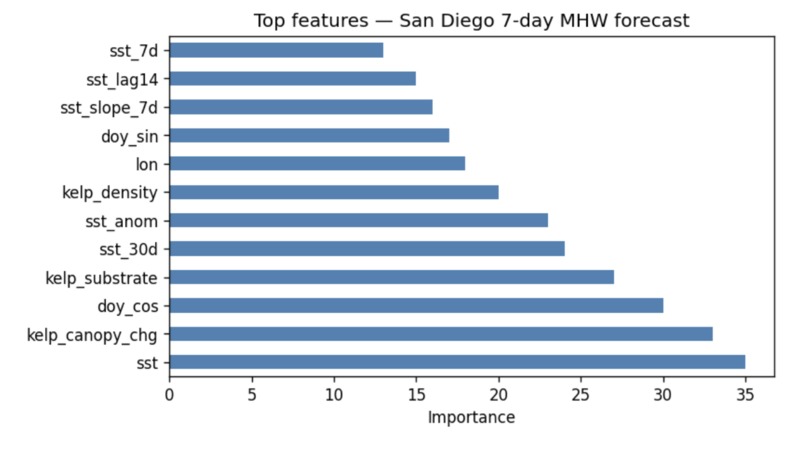
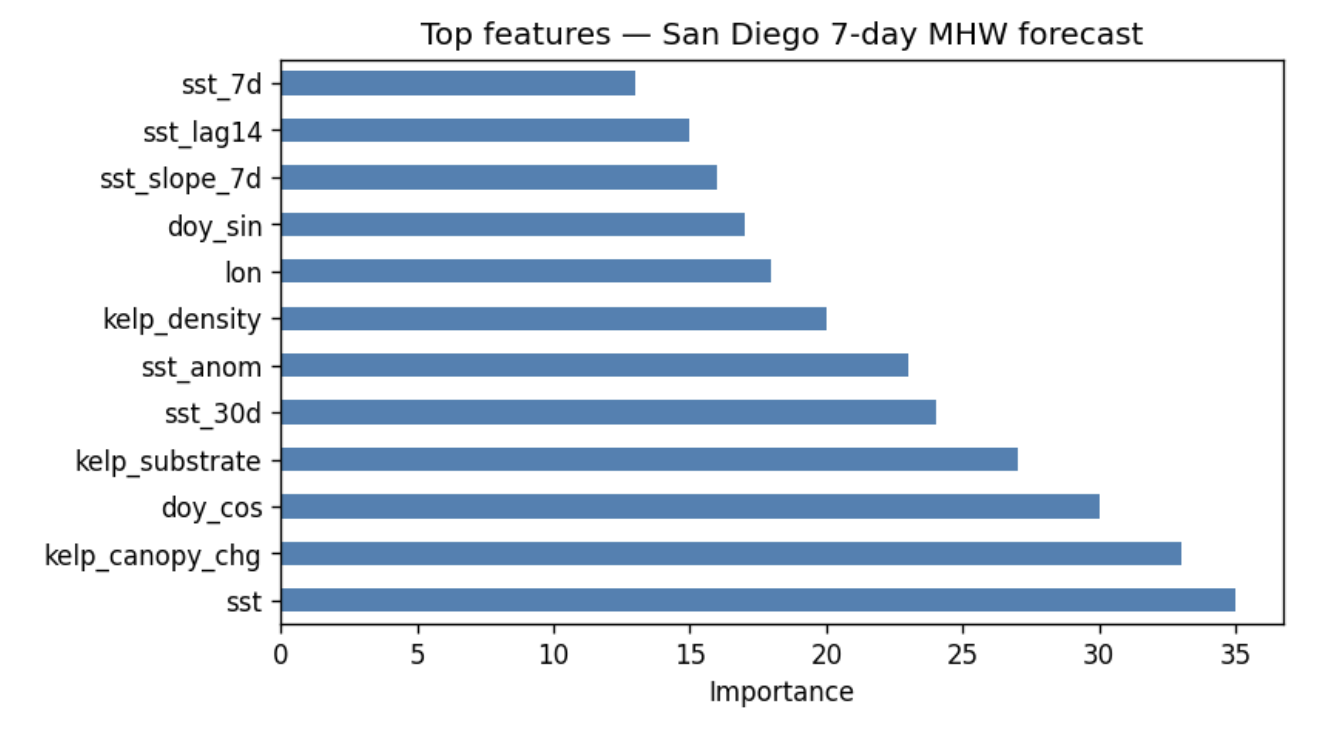
Top Features | 7-day MHW Forecast
-
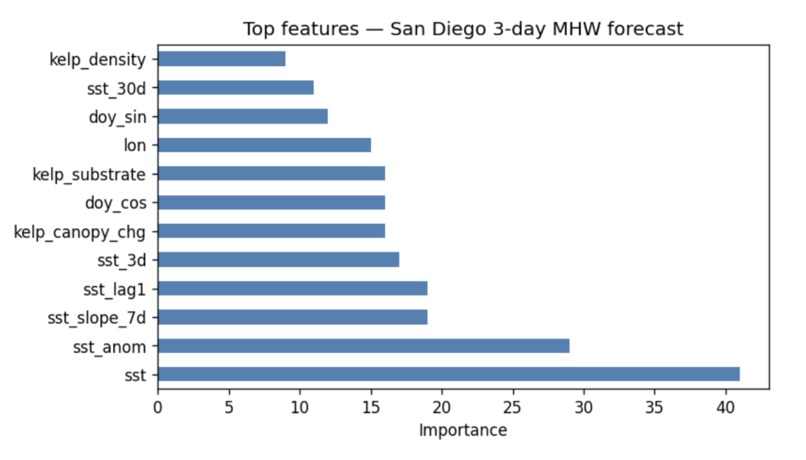
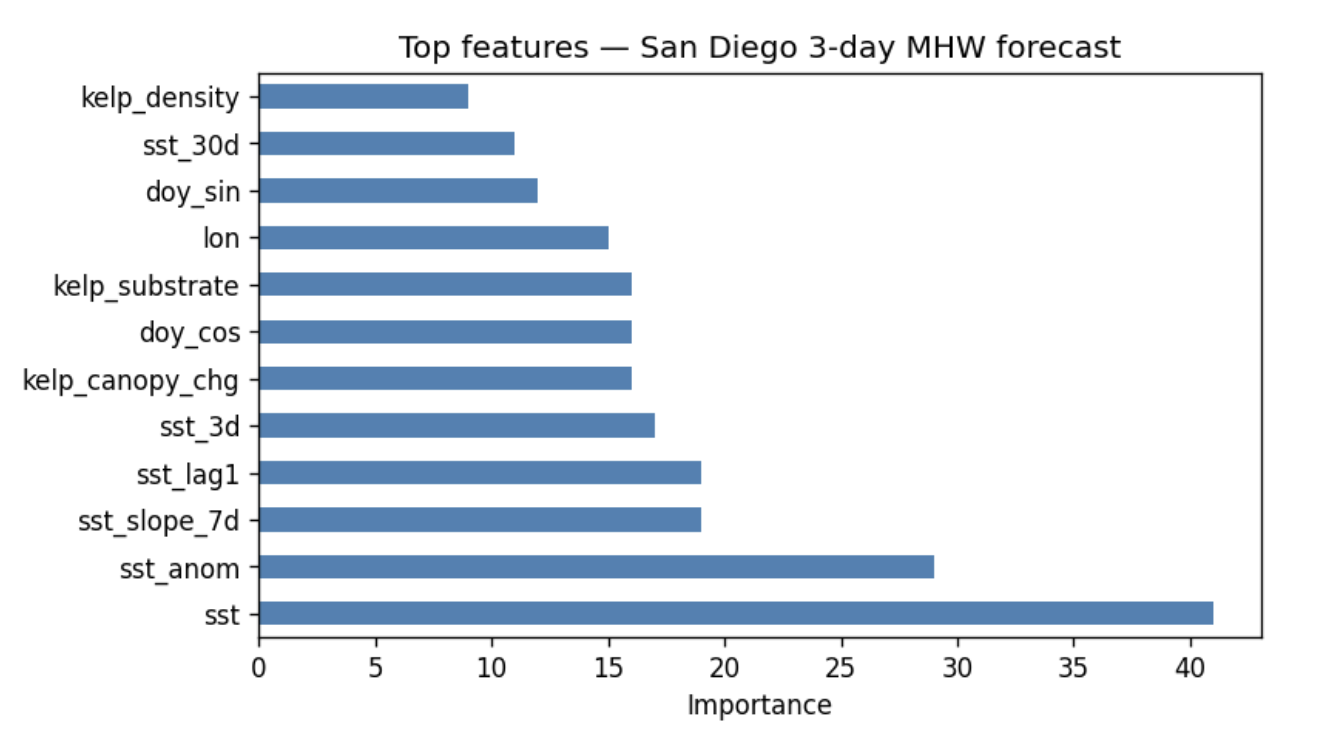
Top Features | 3-day MHW Forecast
-
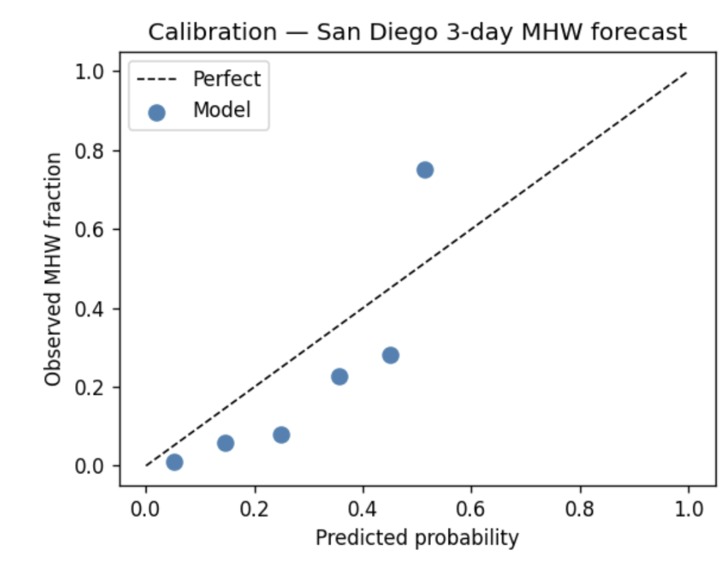
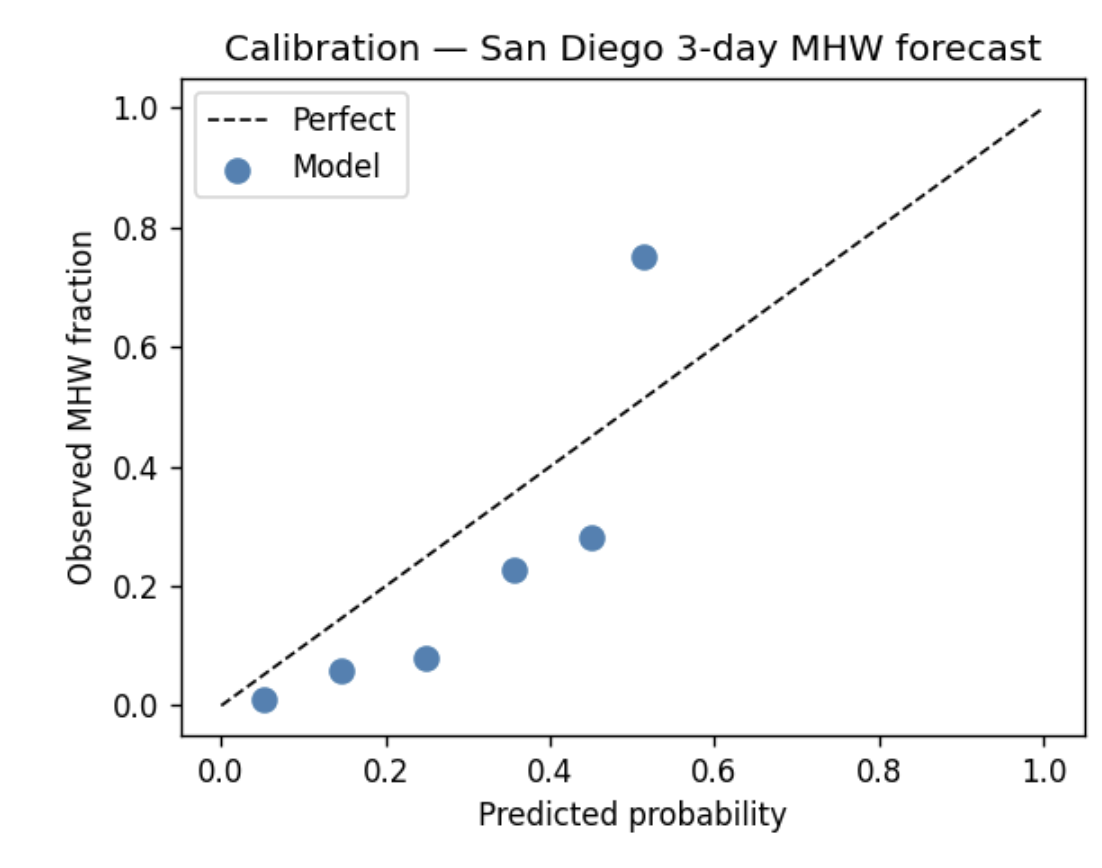
Calibration | 3-day MHW Forecast
-
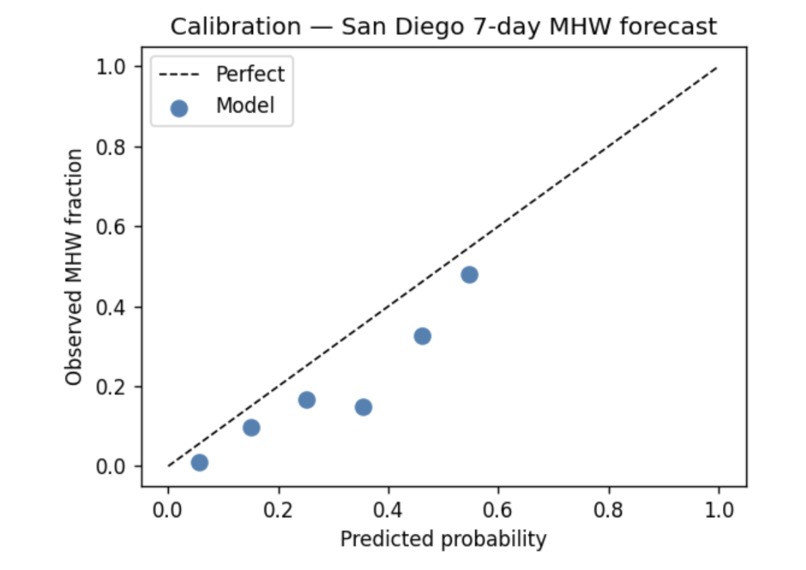
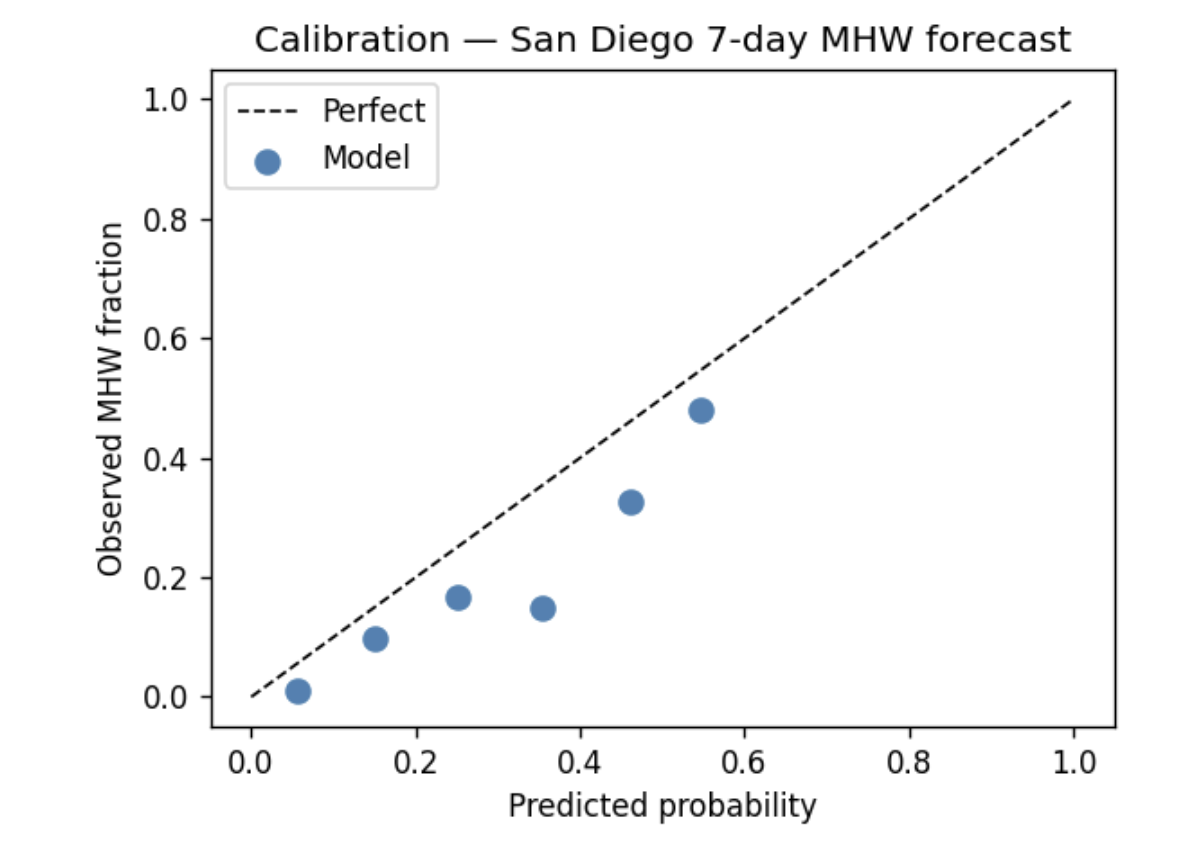
Calibration | 7-day MHW Forecast
-
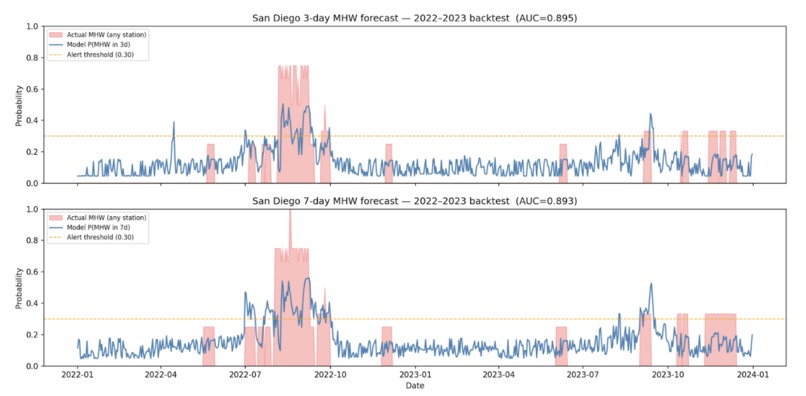
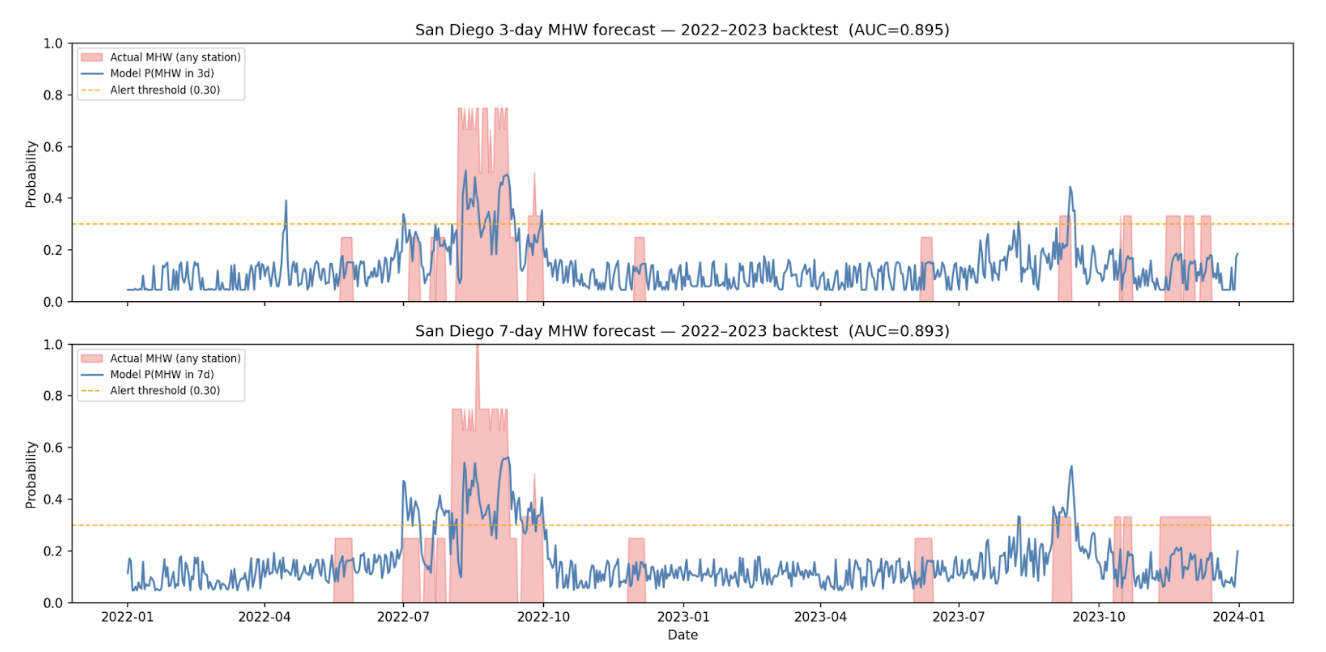
2022-2023 Backtests
Inspiration
At Team HydroRF, we recently accomplished a ranking of #1 USA & Top-5 Global for The EY AI & Data Challenge, where we built a machine learning model to predict water quality in South Africa!
We are passionate when it comes to converting data to real, deployable solutions, and we wanted to address a statewide problem here at home.
We built Tideline because marine heatwaves are becoming a recurring operating risk for California’s coast, especially for kelp growers and nearby ocean businesses that need time to respond. We wanted to turn ocean data into something practical: earlier warnings that help people protect revenue, ecosystems, and jobs.
What it does
Tideline predicts marine heatwave risk for the San Diego coastline at 3-day and 7-day horizons. It turns NOAA, NDBC buoys, CalCOFI, and kelp-monitoring data into a forecast that can support operational decisions like harvesting, monitoring, or protecting canopy.
How we built it
We narrowed the project to the San Diego coast and fused multiple datasets into a single forecasting pipeline. We engineered lagged temperature, anomaly, and kelp-health features, trained a lightweight model, and validated it through backtesting on historical heatwave periods.
Challenges we ran into
Our data came from different sources, formats, and cadences- buoys were hourly point measurements, satellites were daily rasters, and Scripps/CalCOFI data were lower-frequency profiles. Therefore, we built a unified coastal feature table using interpolation, nearest-neighbor mapping, and time alignment so all sources could be modeled together. Another challenge was turning a climate science problem into a product that feels specific, credible, and useful to a real user rather than just academically interesting, but thanks to a great mentor (shoutout Rina!) we learned to narrow the product to a specific beachhead market- San Diego kelp operators- so that the model answers a real decision: when to protect or harvest.
Accomplishments that we're proud of
We achieved strong predictive performance on both horizons, with 0.8946 AUC at 3 days and 0.8928 AUC at 7 days. We also built a system that is narrow enough to be deployable but broad enough to show real climate and business value. The people are left with a choice, not an outcome.
What we learned
We learned that climate tools become much more compelling when they are tied to a narrow user, a specific decision, and a short time horizon. It is easier to work up from a niche to a generalization. We also learned that data fusion is the real technical value here, because the hard part is not collecting data but making it meaningful together.
What's next for Tideline
Next, we want to add more kelp-specific and Scripps-derived features, test the model on more historical marine heatwave events, and pilot the product with a real San Diego kelp operator. After that, we’d expand into alerting, confidence calibration, and nearby ocean sectors like oysters and fisheries!


Log in or sign up for Devpost to join the conversation.