-
-
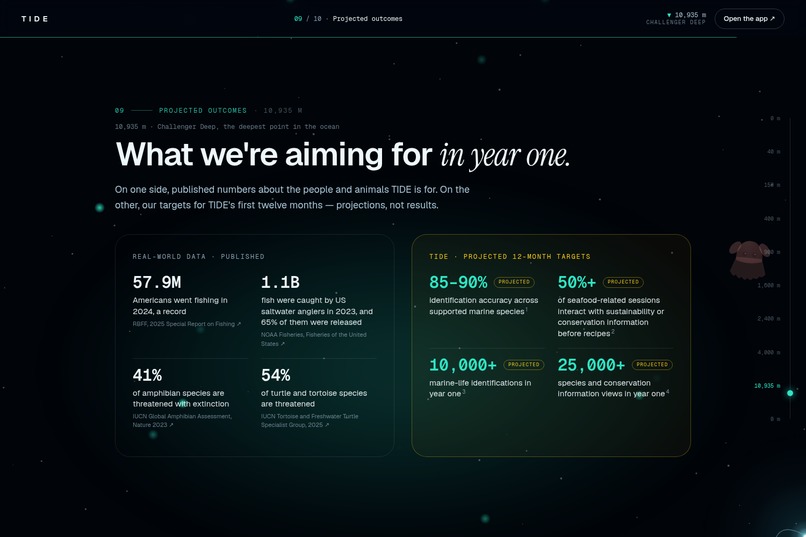
year Slide
-
-
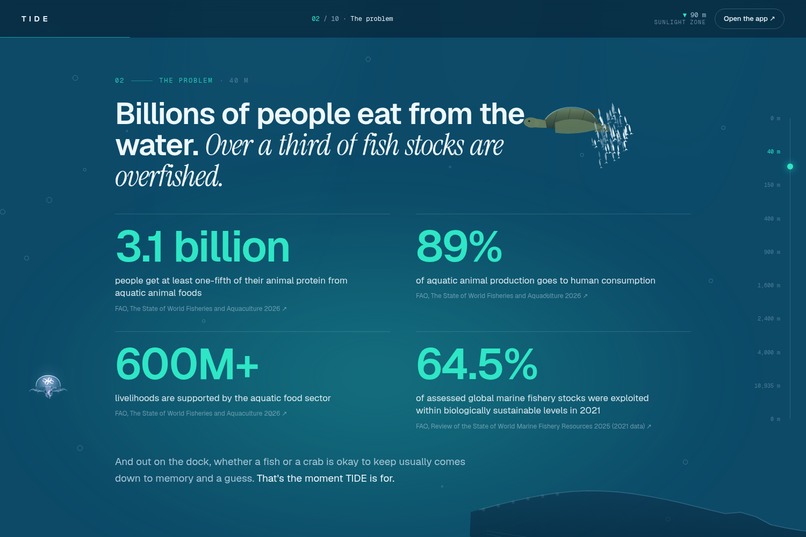
stats
-
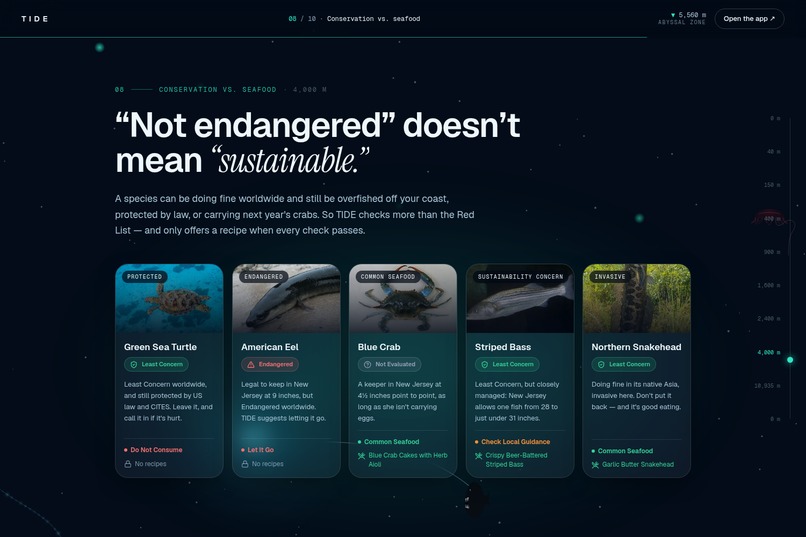
50 species
-
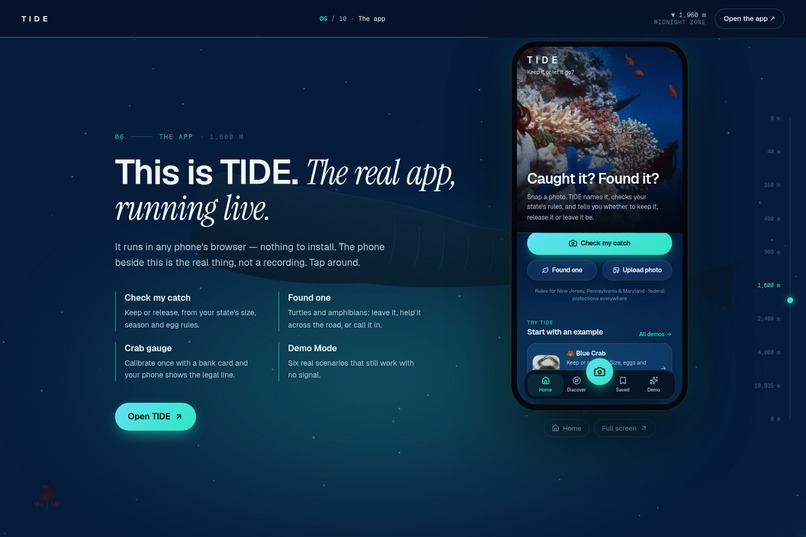
Onboard3
-
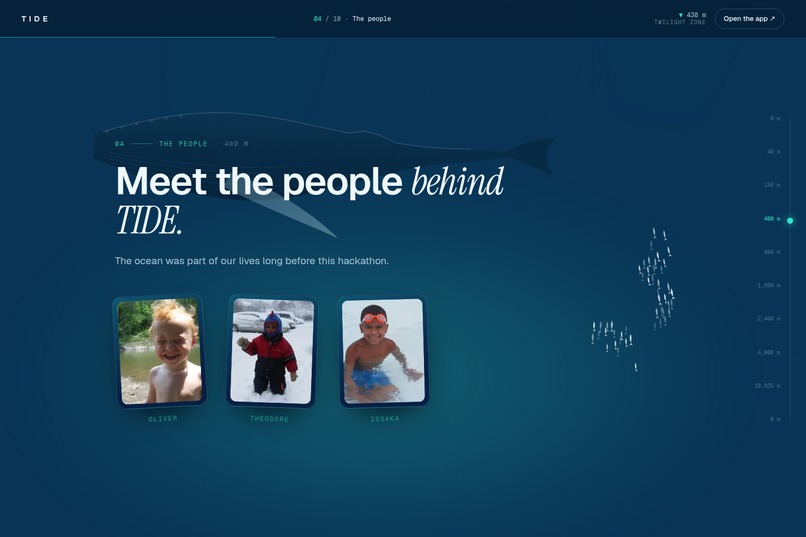
Meet the team
-
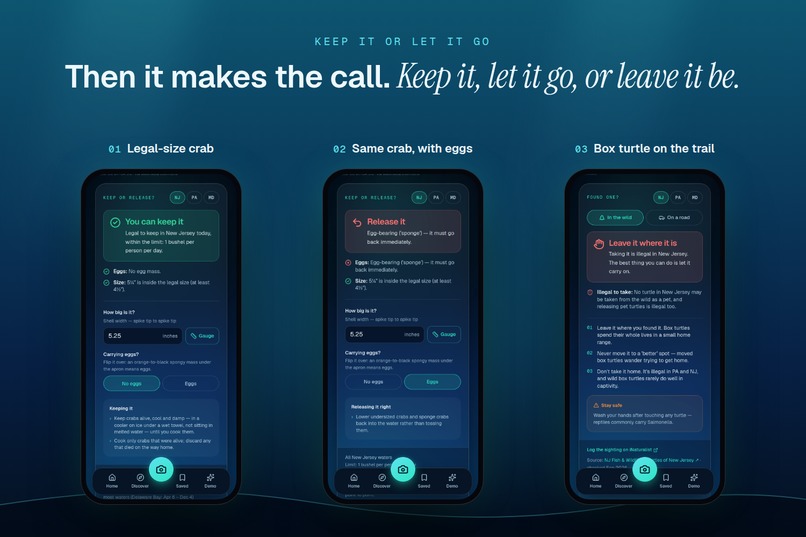
onboard2
-
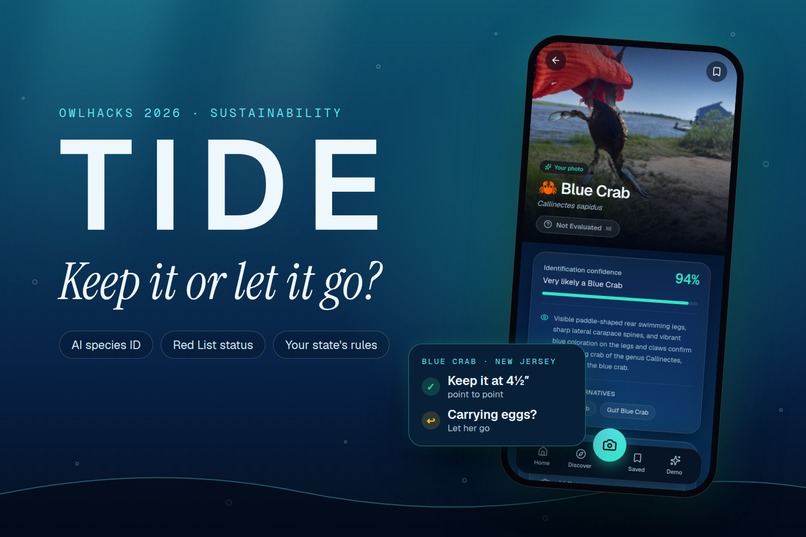
Thumbmail
-
Onboard1
-
End Screen
-
Title
Inspiration
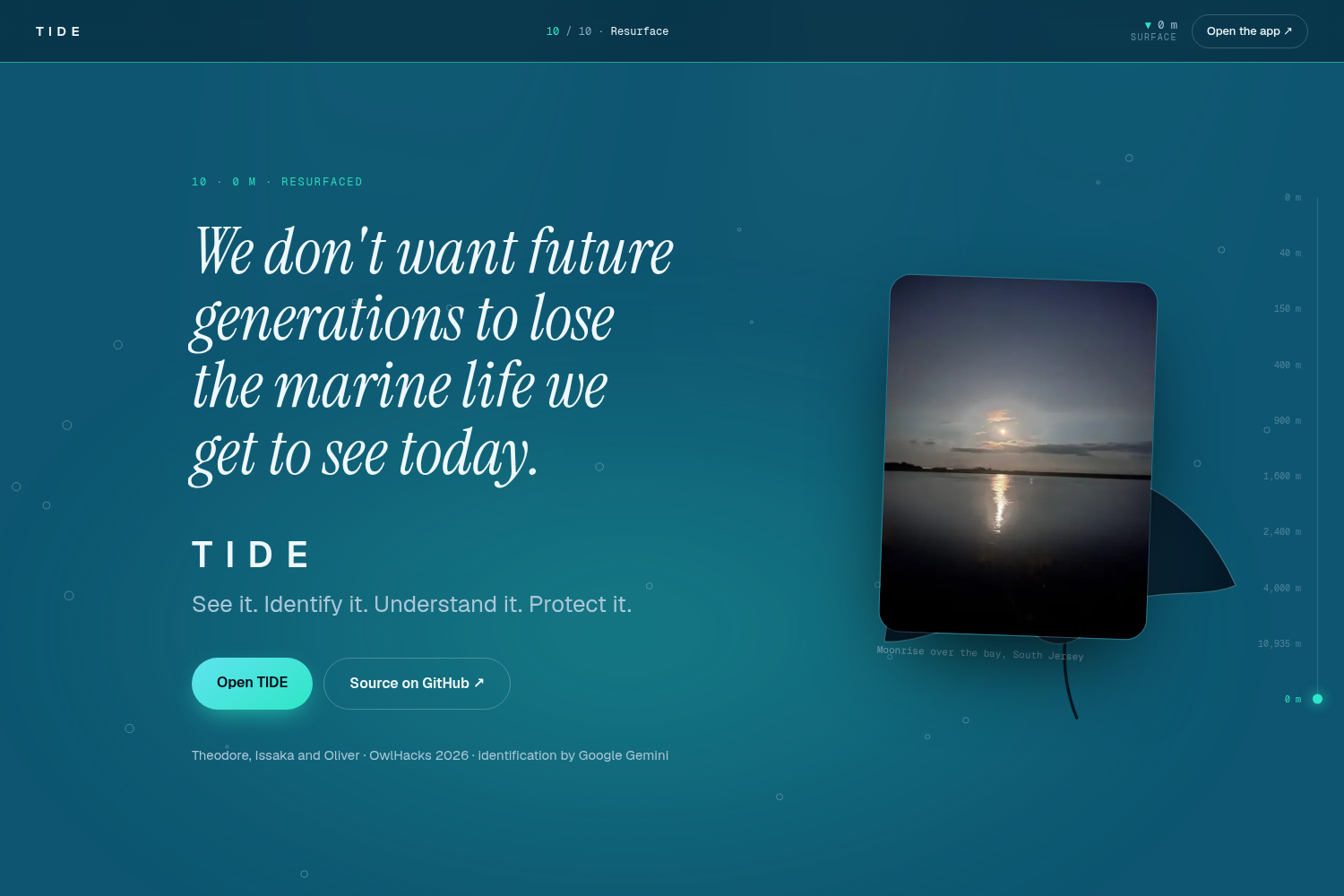
Theodore grew up crabbing in South Jersey. Every crabber knows the moment: you pull one up and hold it to the gauge. Is it four and a half inches? Is that a sponge under her? Is it even legal here? Guess wrong and you either break the law, or keep a crab that should have gone back to make more crabs.
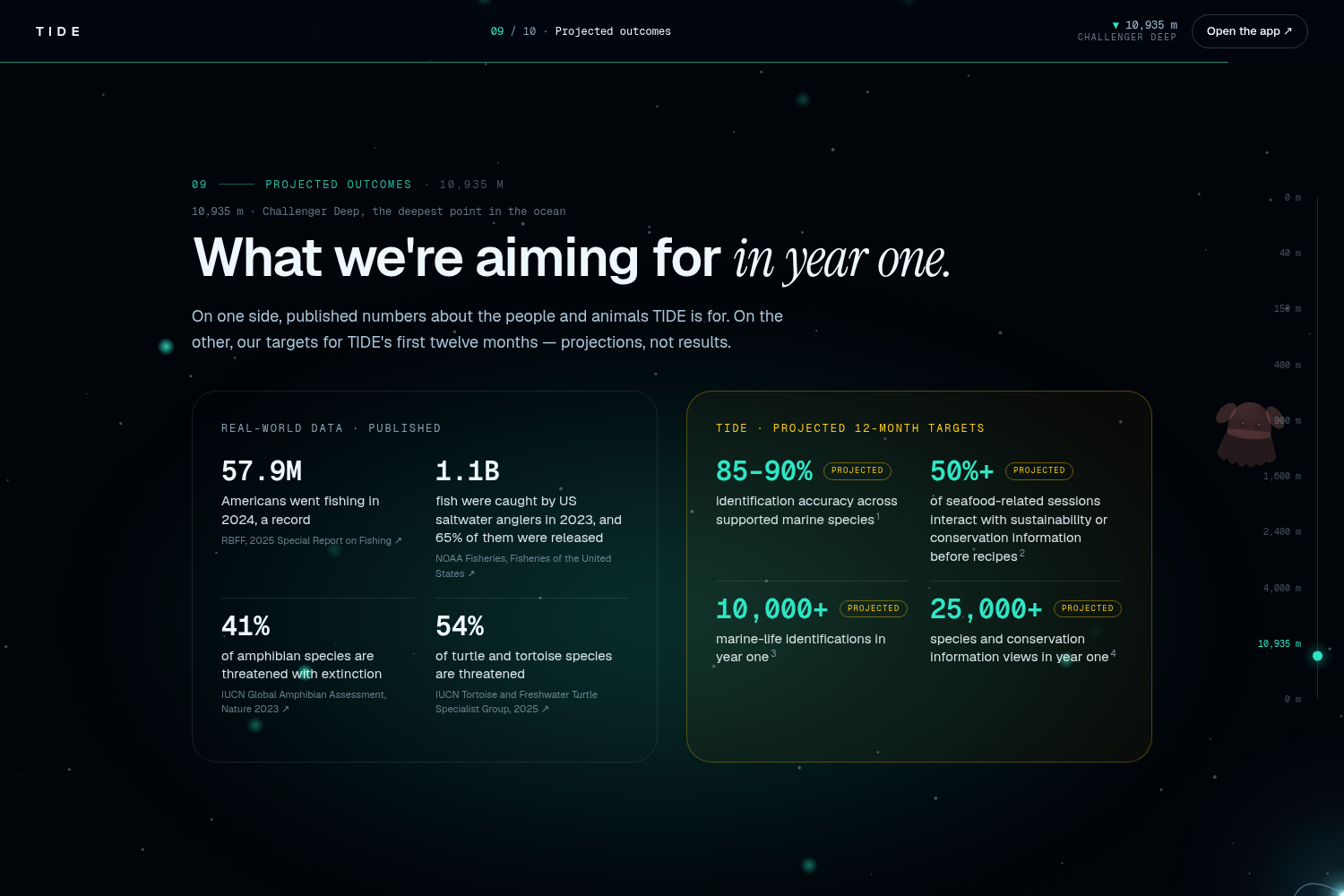
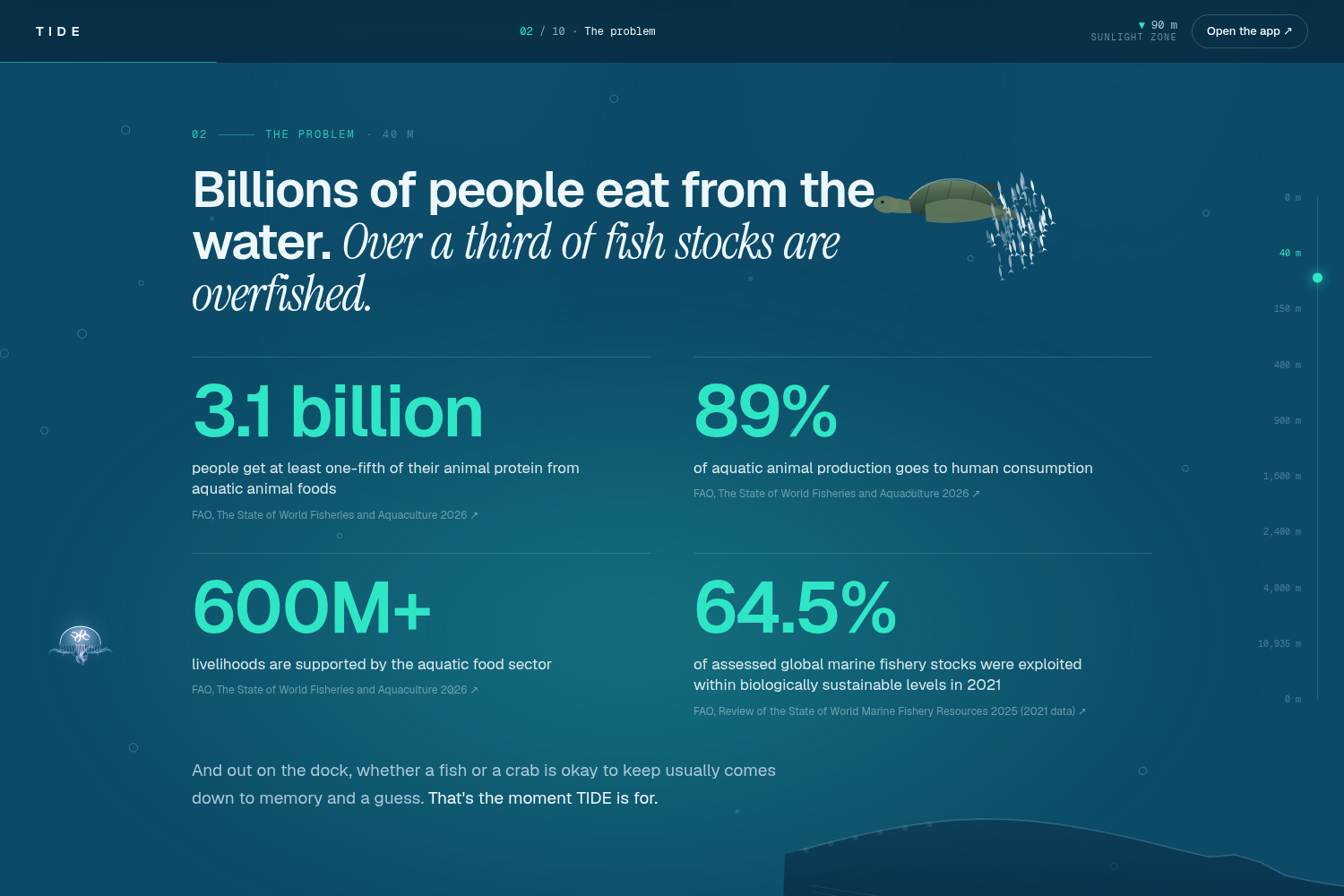
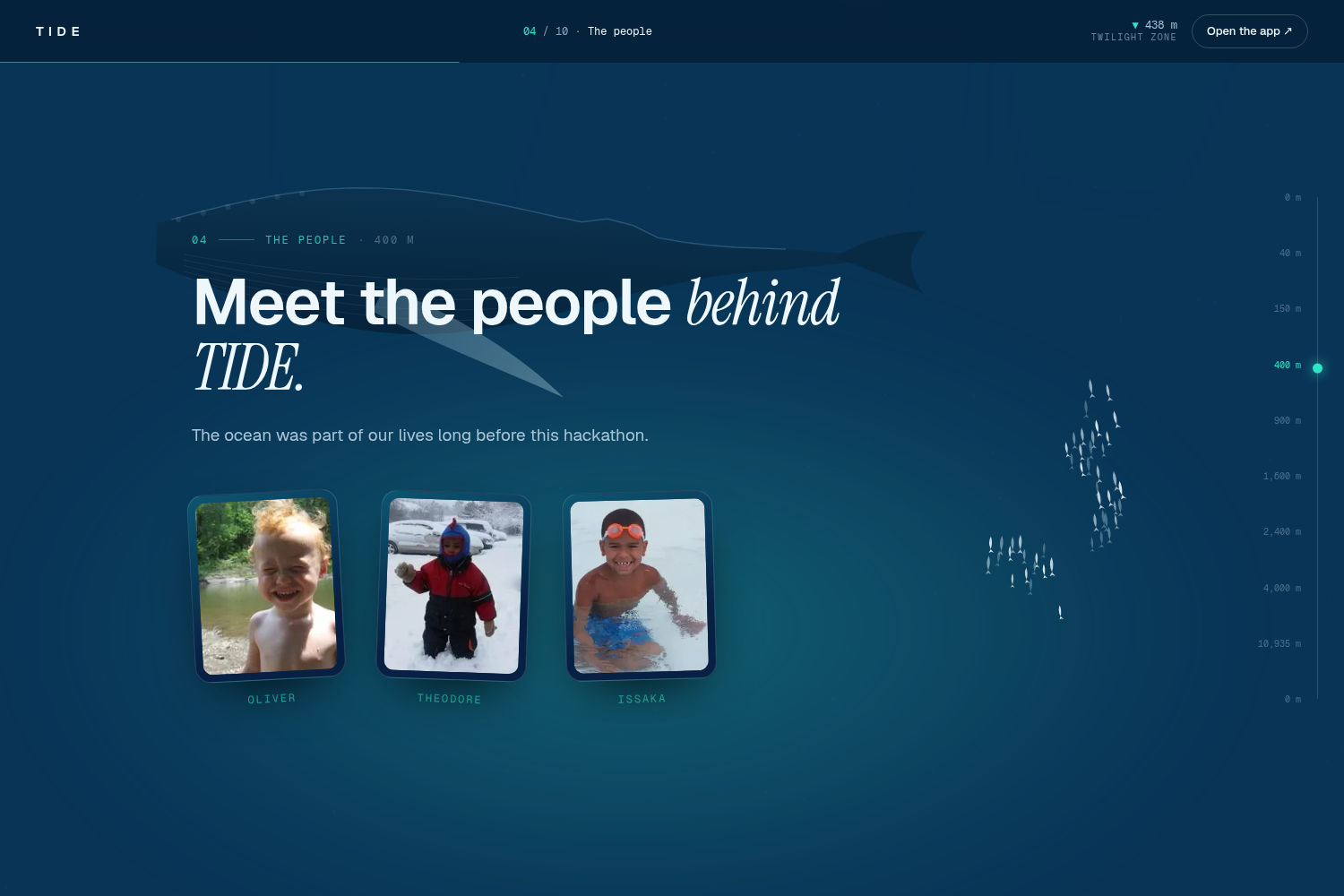
All three of us grew up on the water — fishing with family, crabbing off the marsh, chasing dolphins at the beach while the lifeguards blew the whistle. When OwlHacks said every tide tells a story about the health of our planet, we realized a lot of that story gets written on a dock, one catch at a time. Over a third of the world's fish stocks are overfished, and the call to keep or release usually comes down to memory and a guess.
Inspiration
We all grew up on the water. Theodore crabbed in South Jersey, Oliver went fishing with his family, and Issaka used to swim out toward dolphins at the beach.
Every time you catch something, you have to decide: can I keep this, or does it go back? Most people just guess. Guess wrong and you might break the law, or take a crab carrying eggs that should have gone back. Over a third of the world's fish are already overfished, so those guesses add up.
What it does
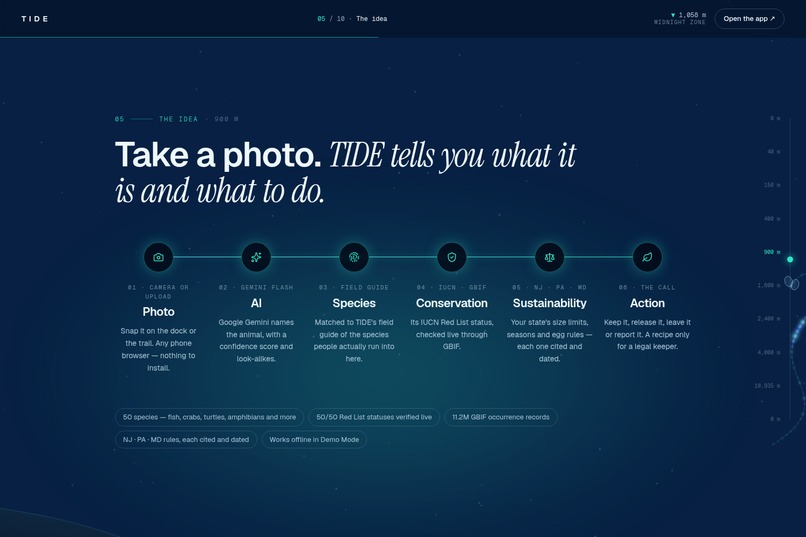
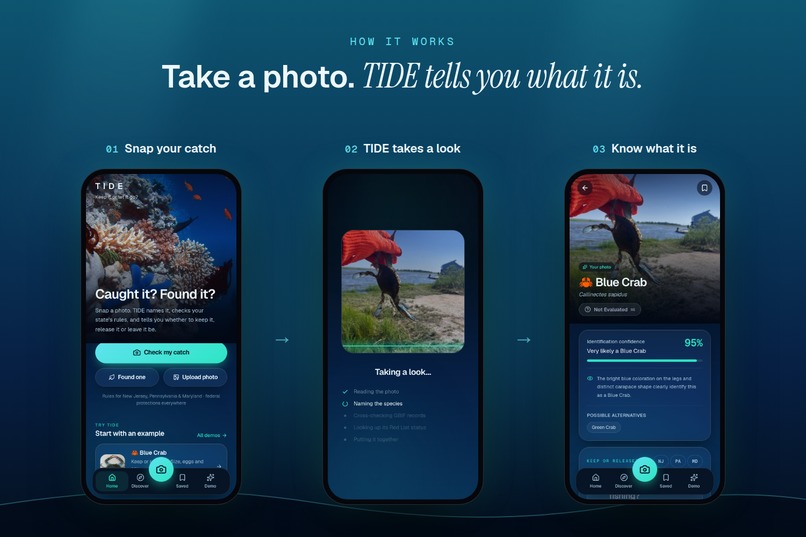
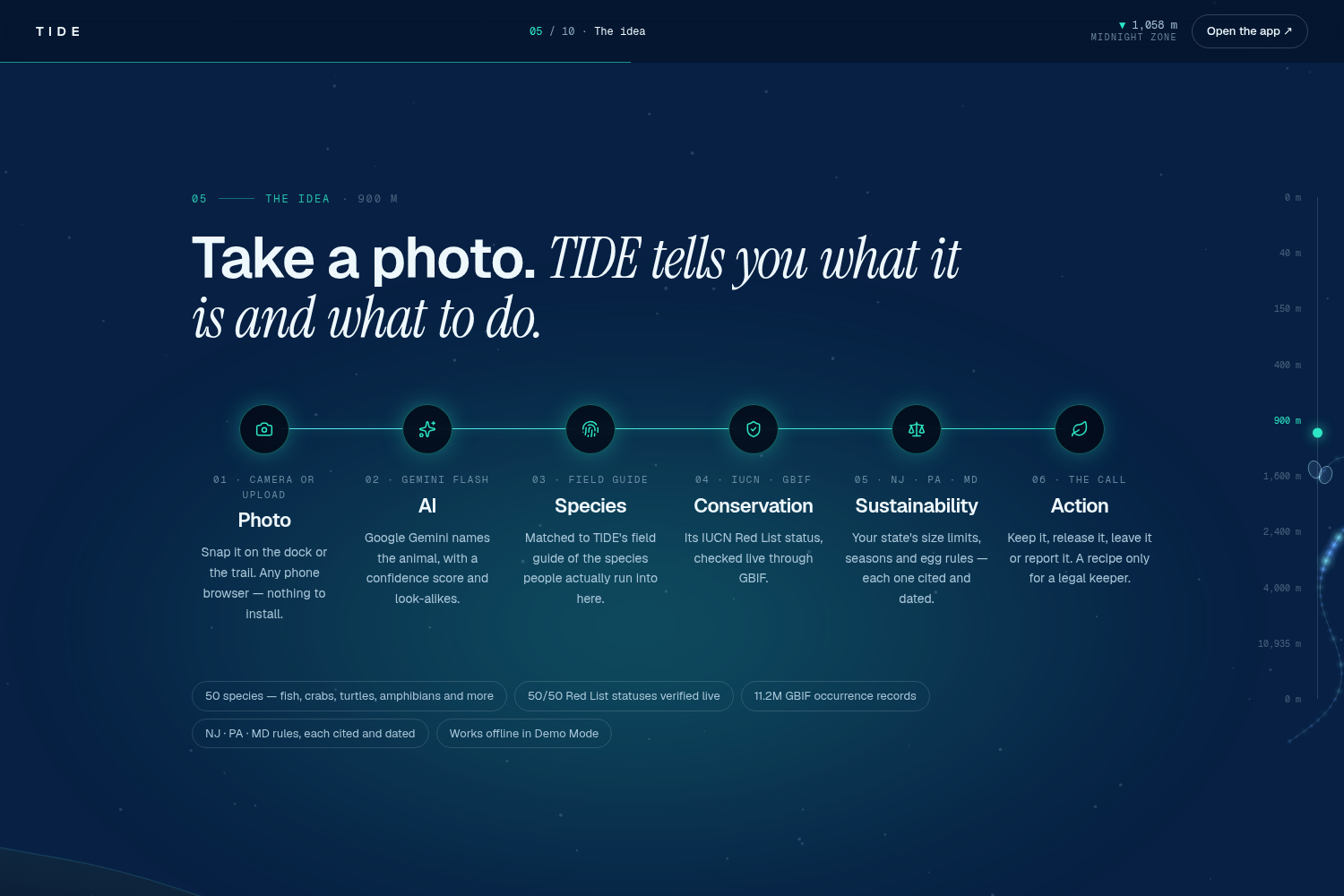
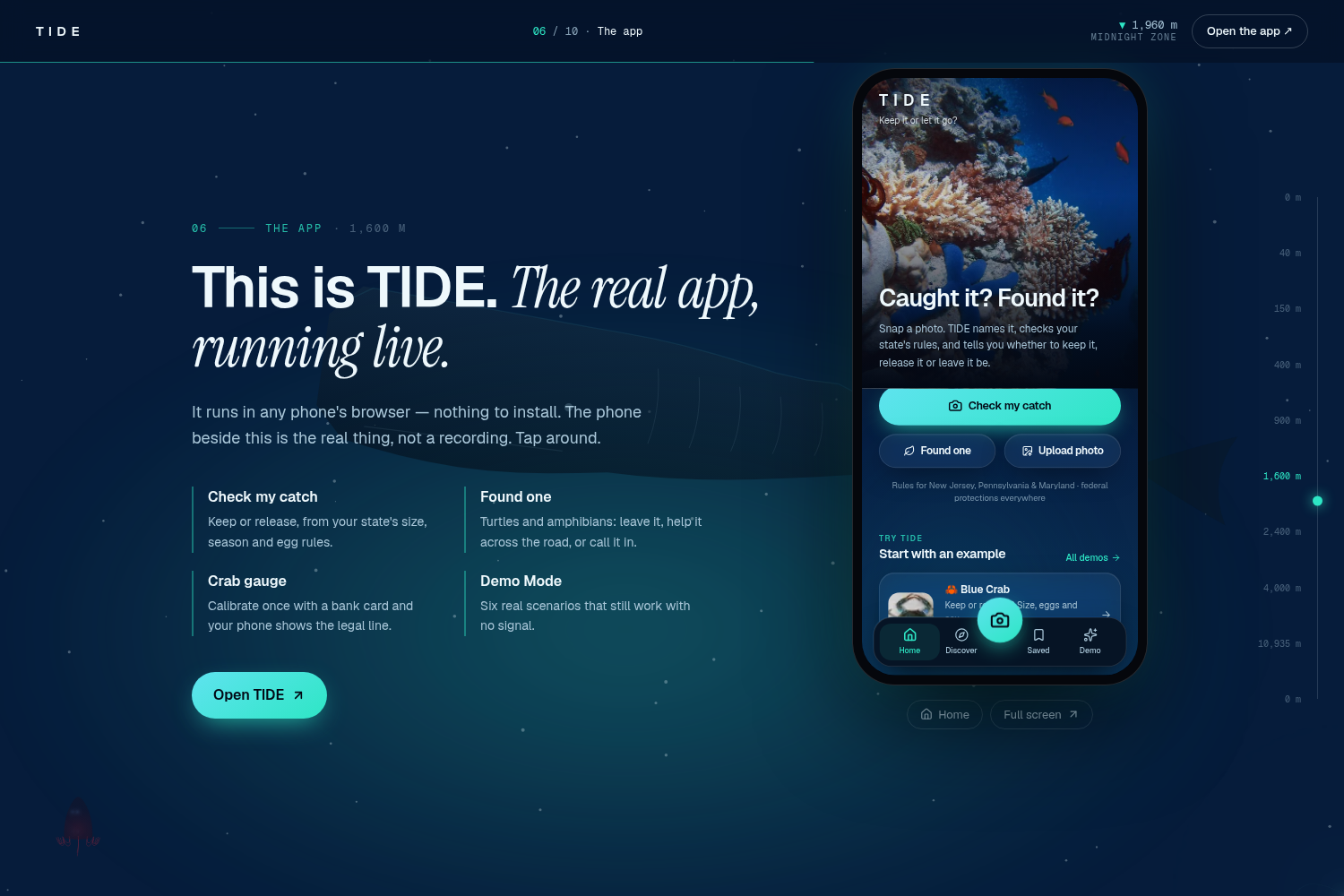
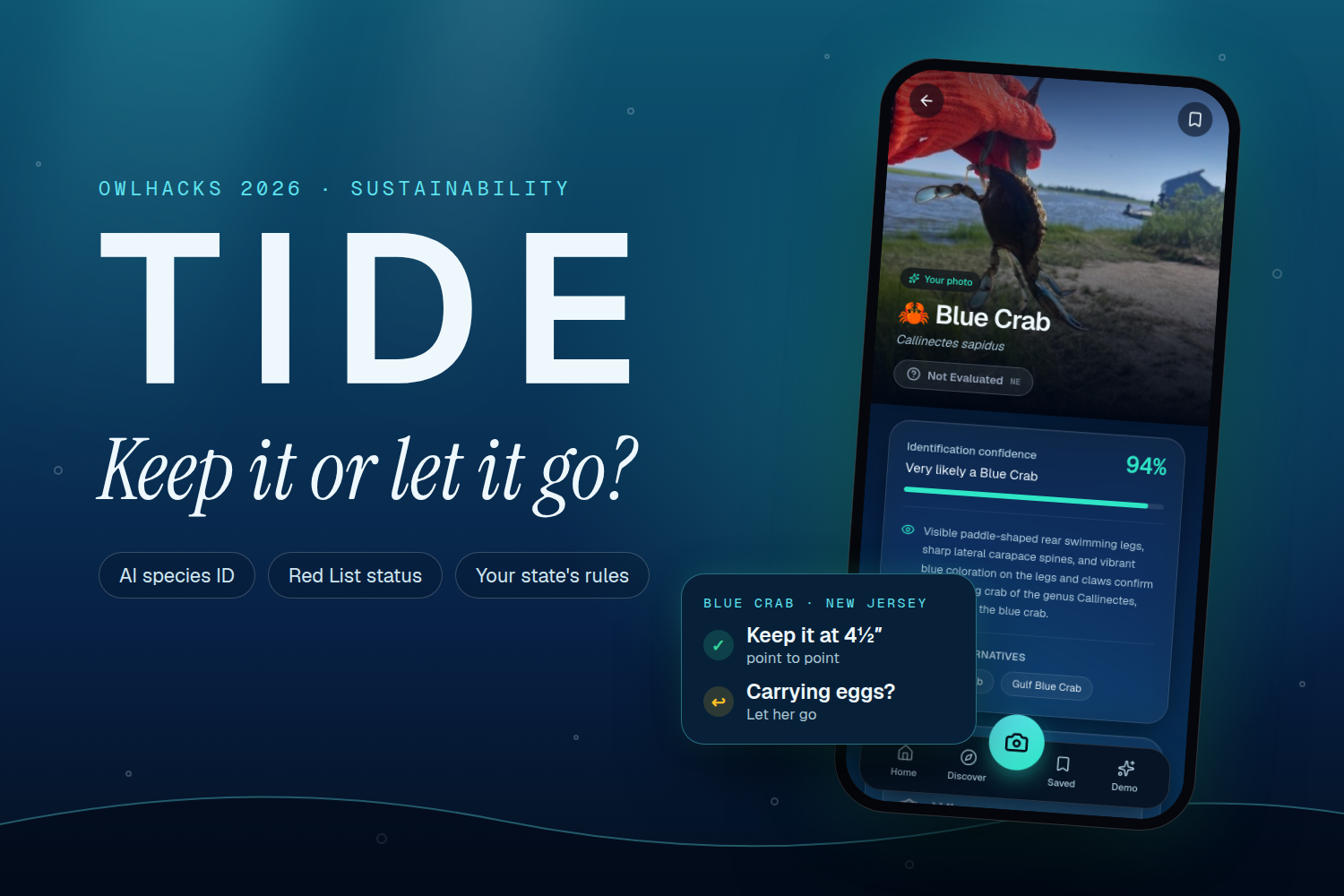
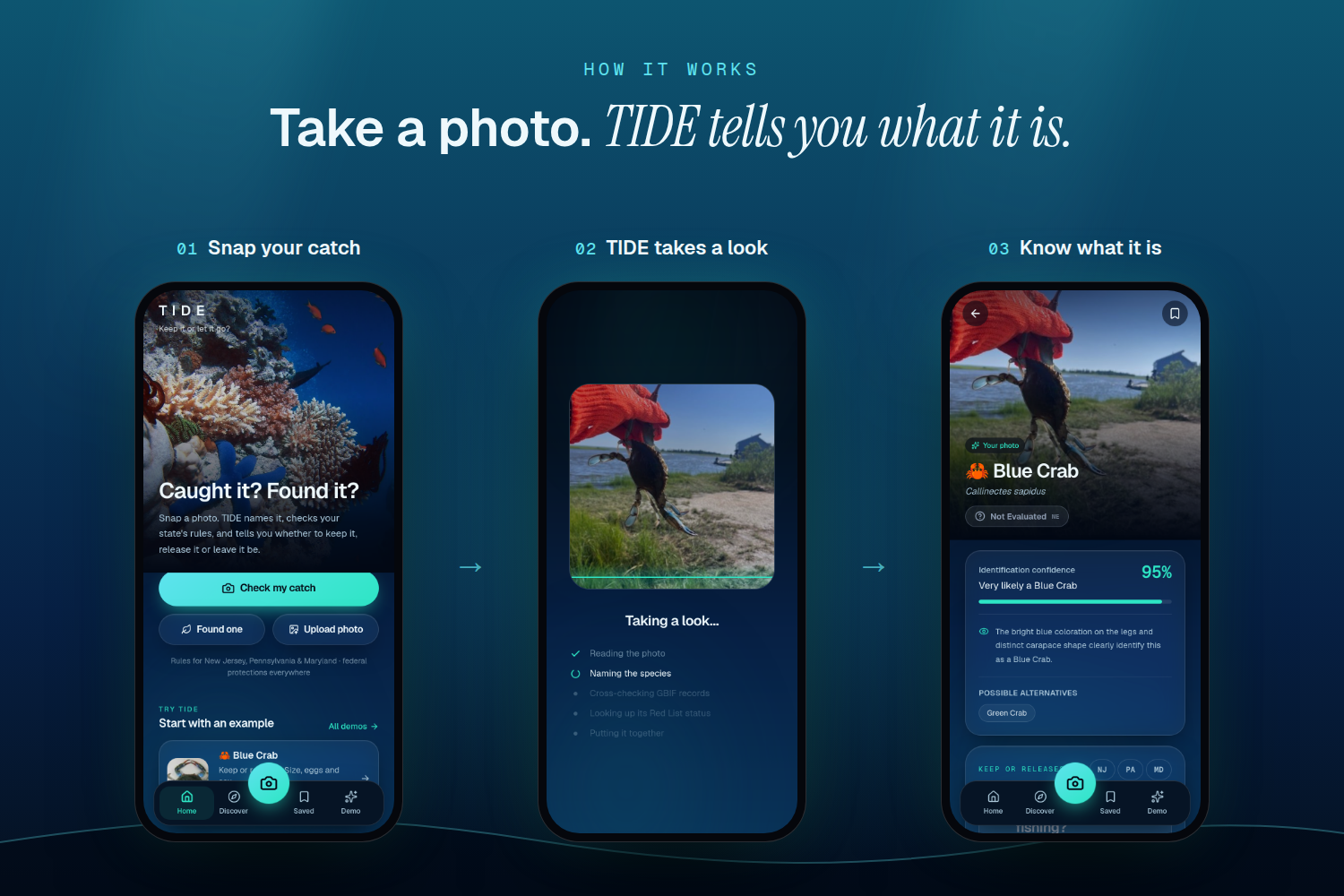
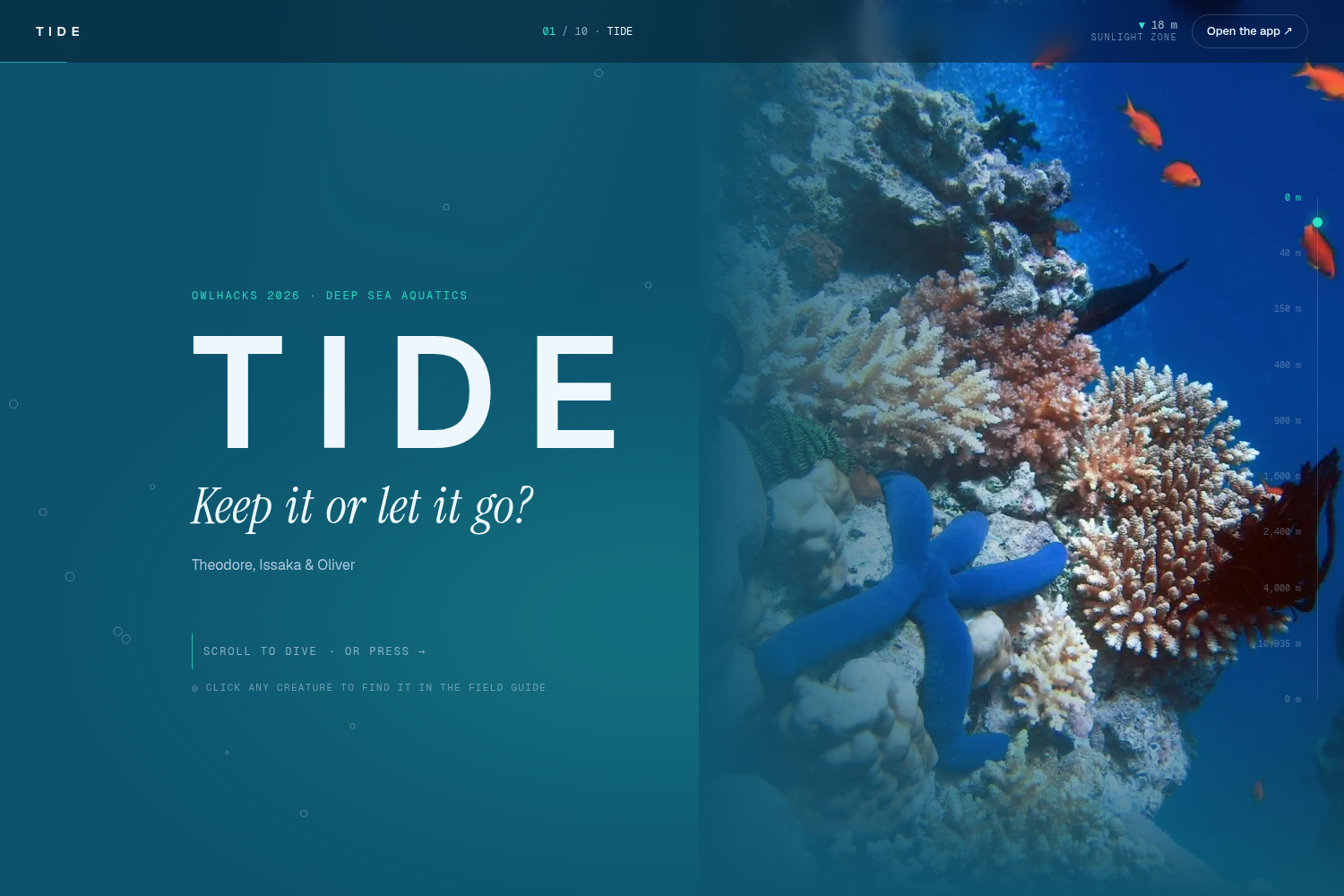
You take a photo of what you caught (or a turtle you found), and TIDE tells you:
- What it is
- Whether it's endangered or protected
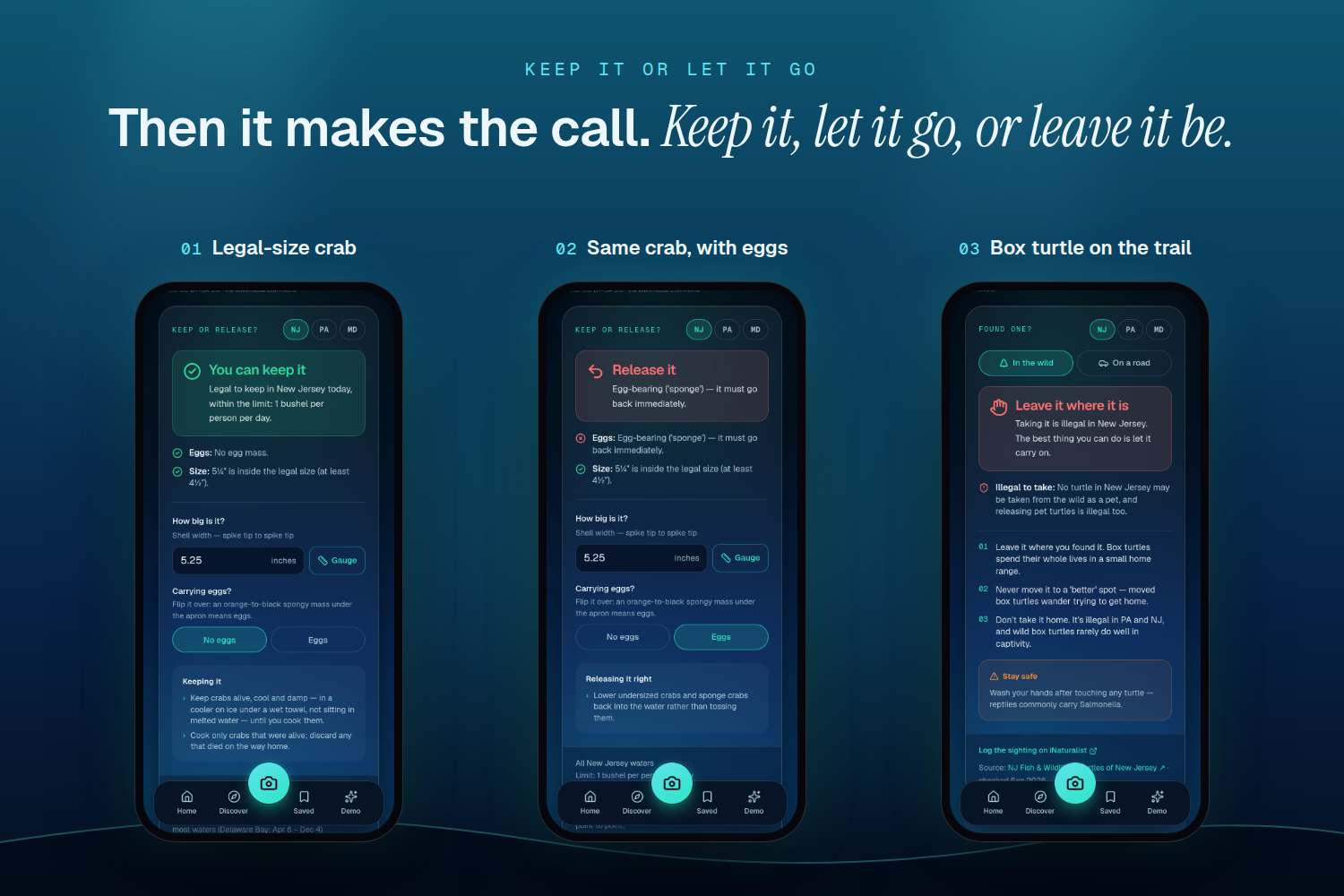
- Your state's rules (size limits, seasons, and whether it's carrying eggs)
- What to do: keep it, let it go, leave it alone, or report it
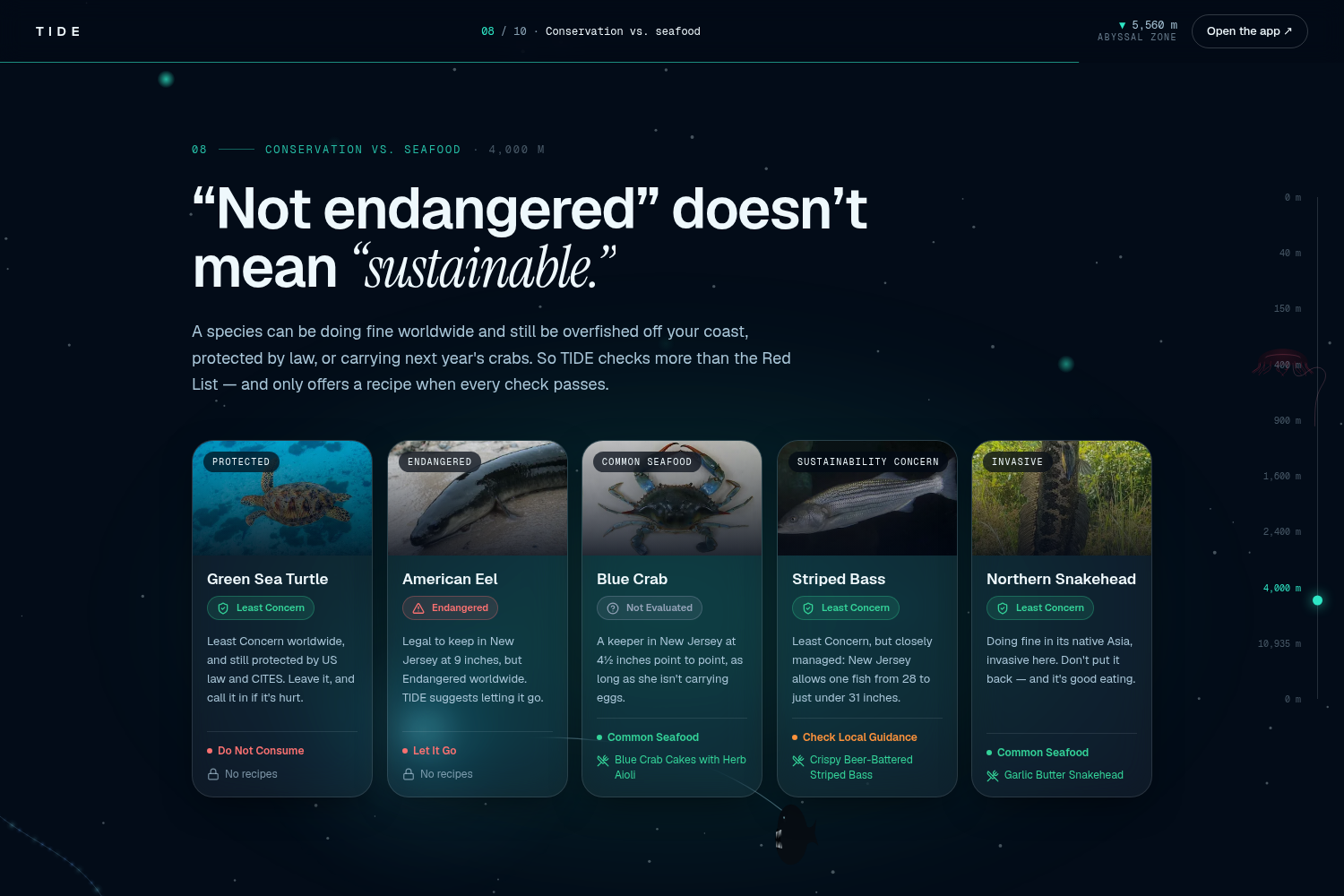
It only shows you a recipe if the animal is legal and safe to eat. If it's not, it suggests a better choice instead. It also has a crab ruler you can use with your phone, and a demo mode that works without internet.
How we built it
We built a website that works on any phone. It uses Google's Gemini AI to recognize the animal from the photo, a public science database to check if the species is at risk, and fishing rules we collected by hand for New Jersey, Pennsylvania and Maryland. It's hosted on Vercel.
Challenges
- The AI sometimes got overloaded, so we added backups so the app never gets stuck.
- Fishing rules are confusing and spread out all over the place, so we checked each one ourselves.
- A fish can be doing fine worldwide but still be overfished near you, so we had to figure out how to give one clear, honest answer.
What we learned
Being "sustainable" isn't just about whether an animal is endangered. It also depends on its size, the season, where you are, and whether it's carrying eggs. We also learned how to build an app that uses AI and still works when the AI doesn't.
What's next
We want to add all 50 states, make it work fully offline on boats, and let people report rare animals to wildlife scientists.
Built With
- framer-motion
- gbif
- gemini-api
- google-gemini
- html5
- iucn-red-list
- lenis
- next.js
- node.js
- playwright
- react
- tailwind-css
- typescript
- vercel

Log in or sign up for Devpost to join the conversation.