-
-
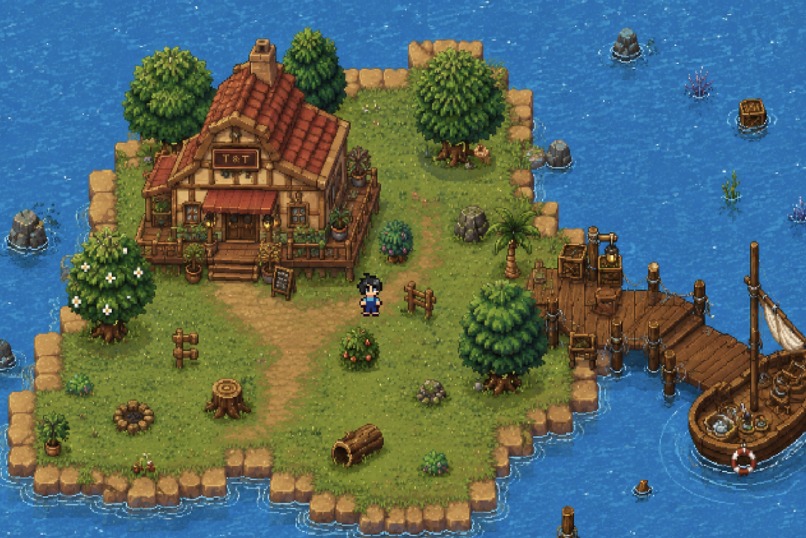
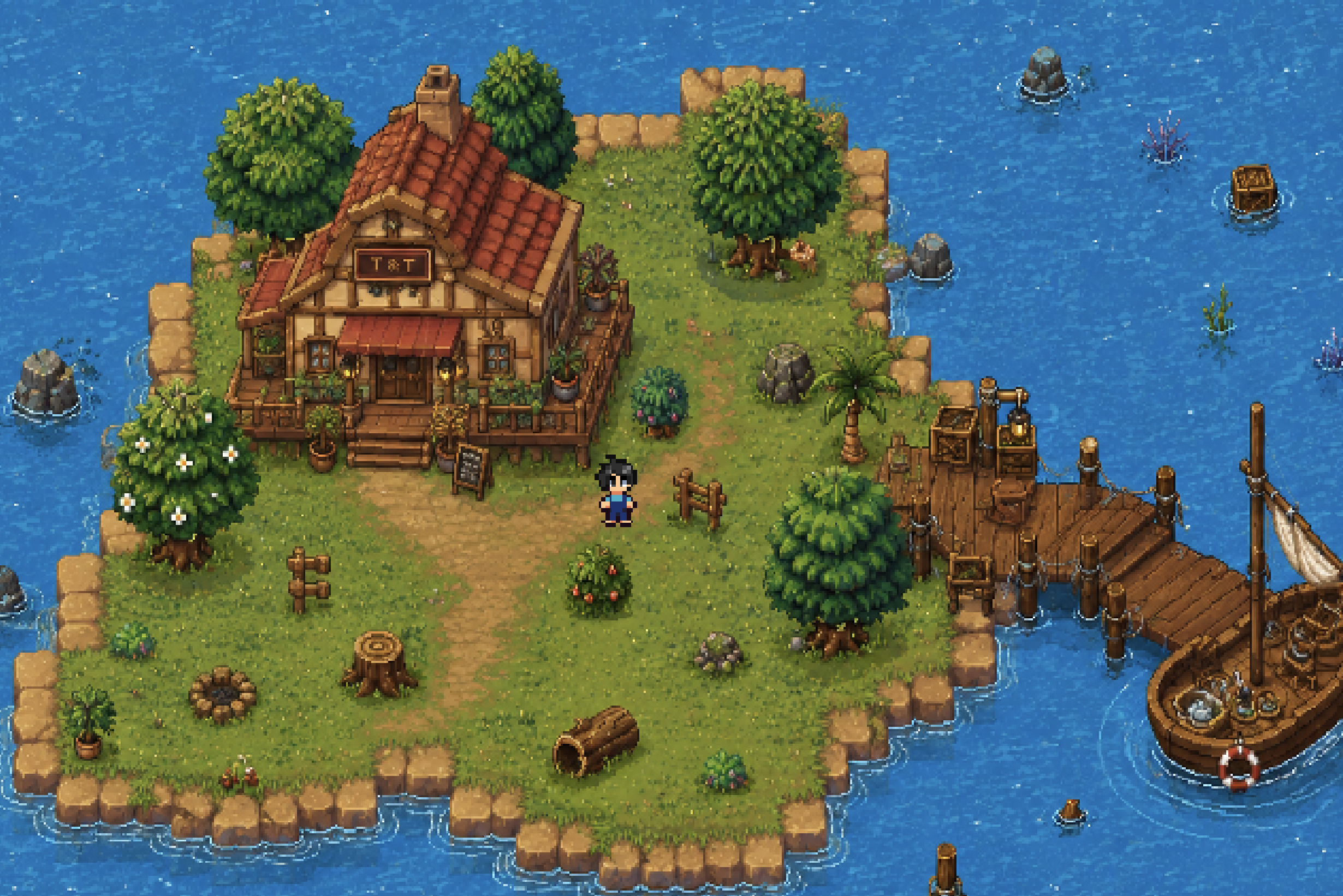
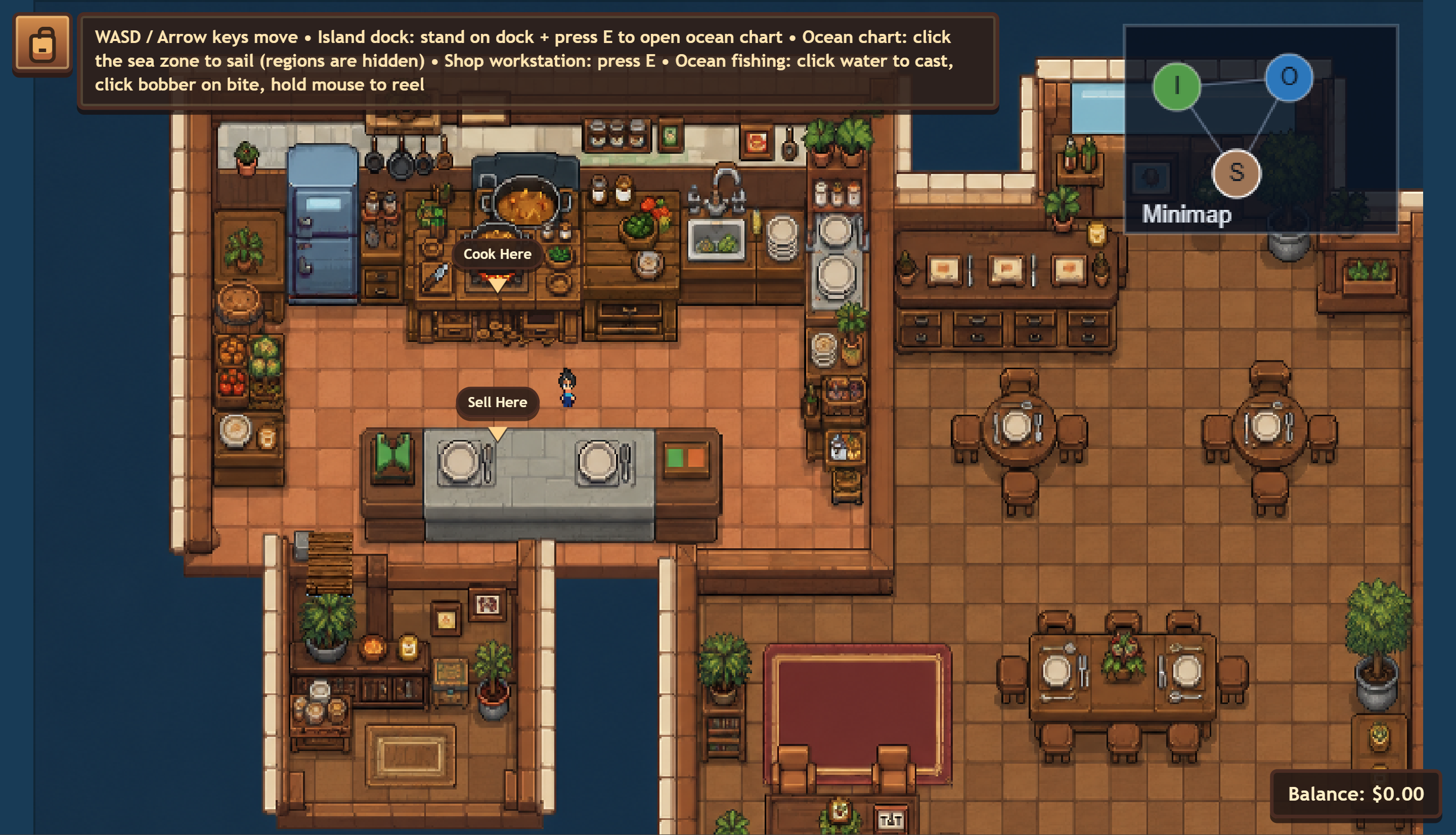
Your island. Head to the dock to start fishing!
-
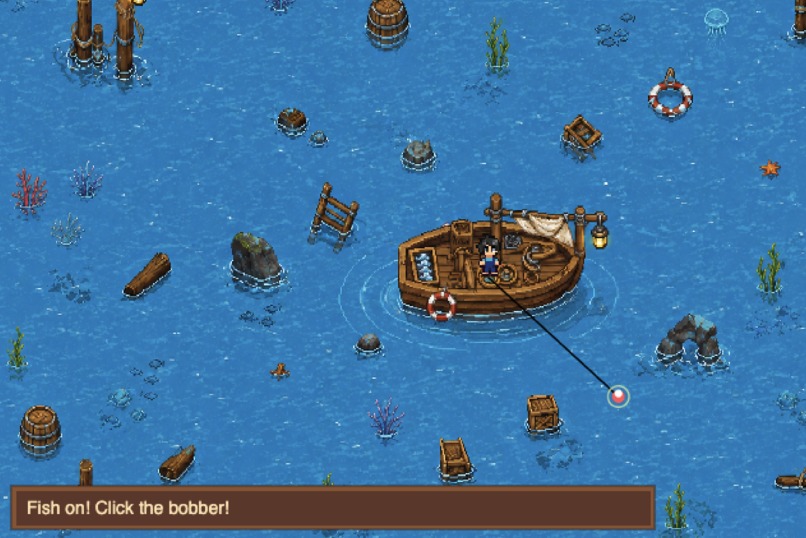
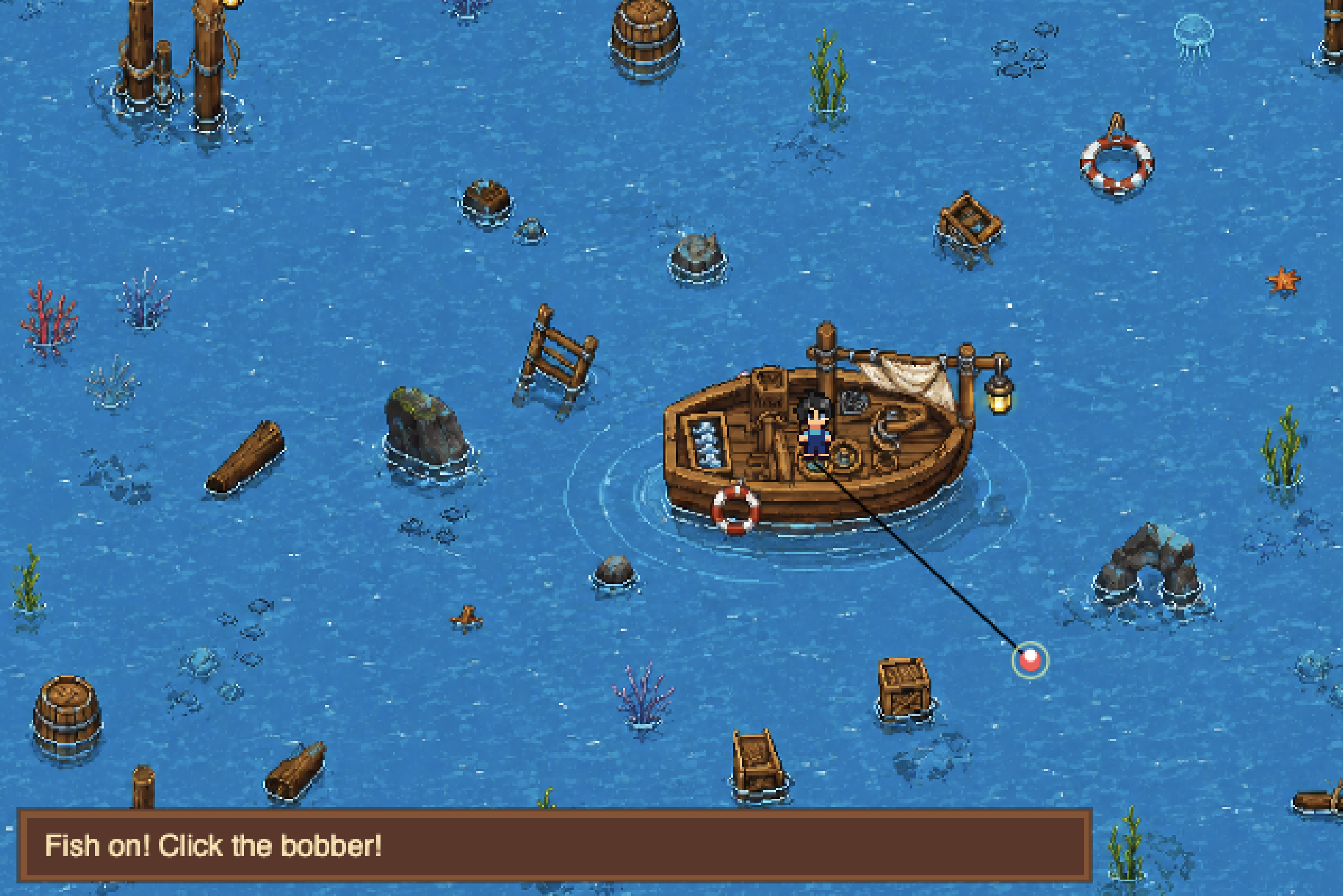
Catch fish based in the region, taken from the Marine Life API.
-
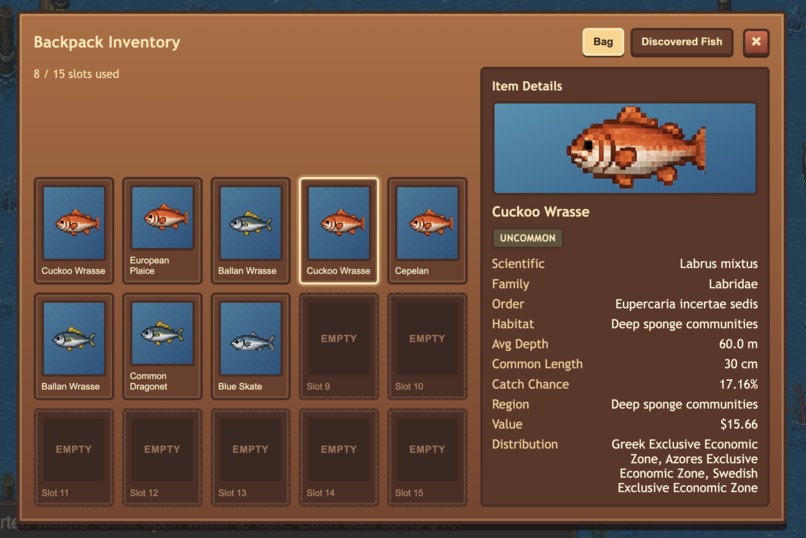
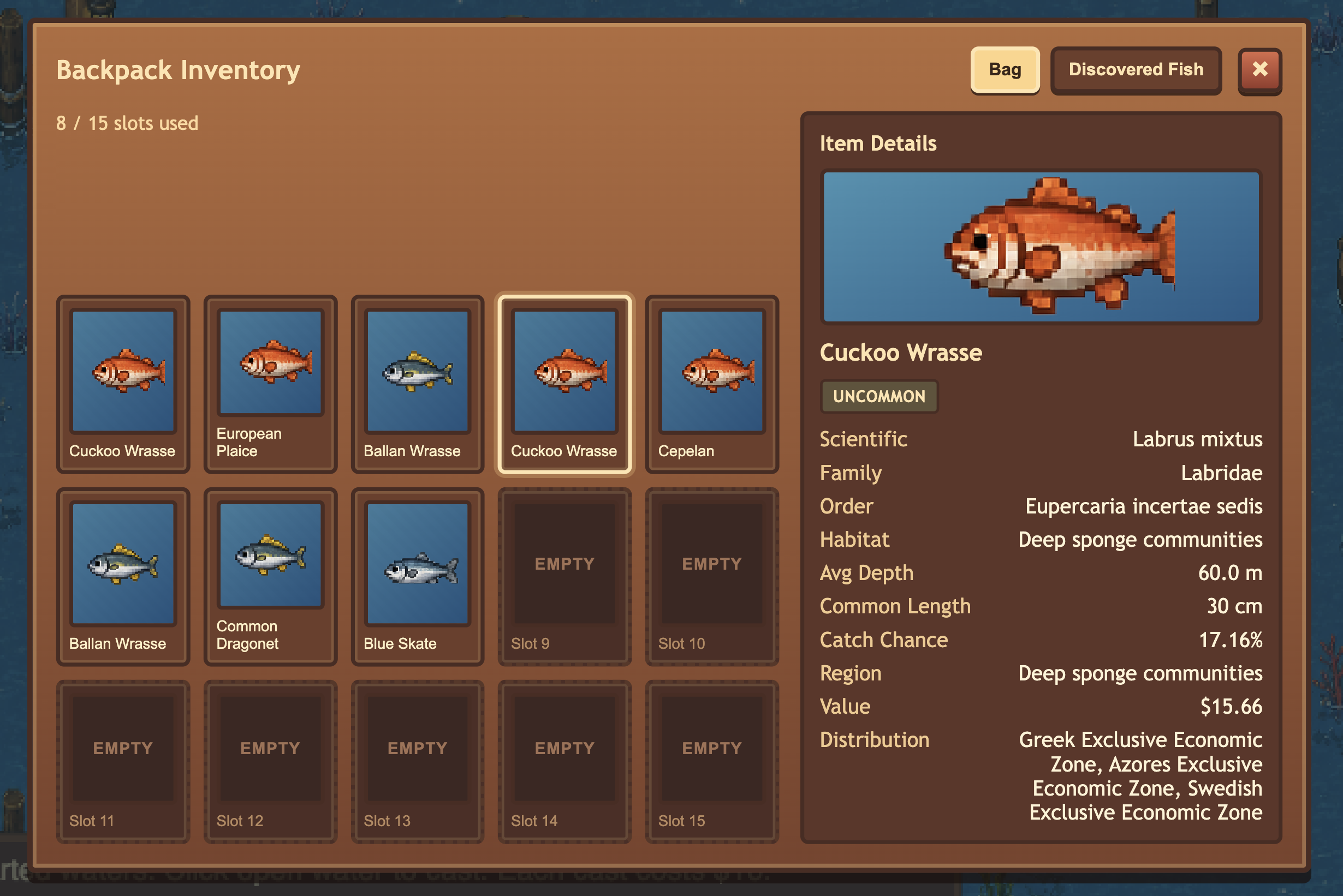
Fish inventory system. Learn about your catch!
-
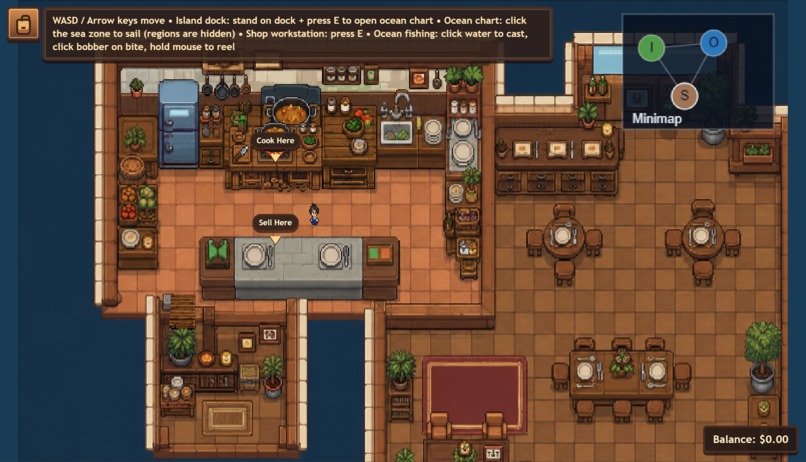
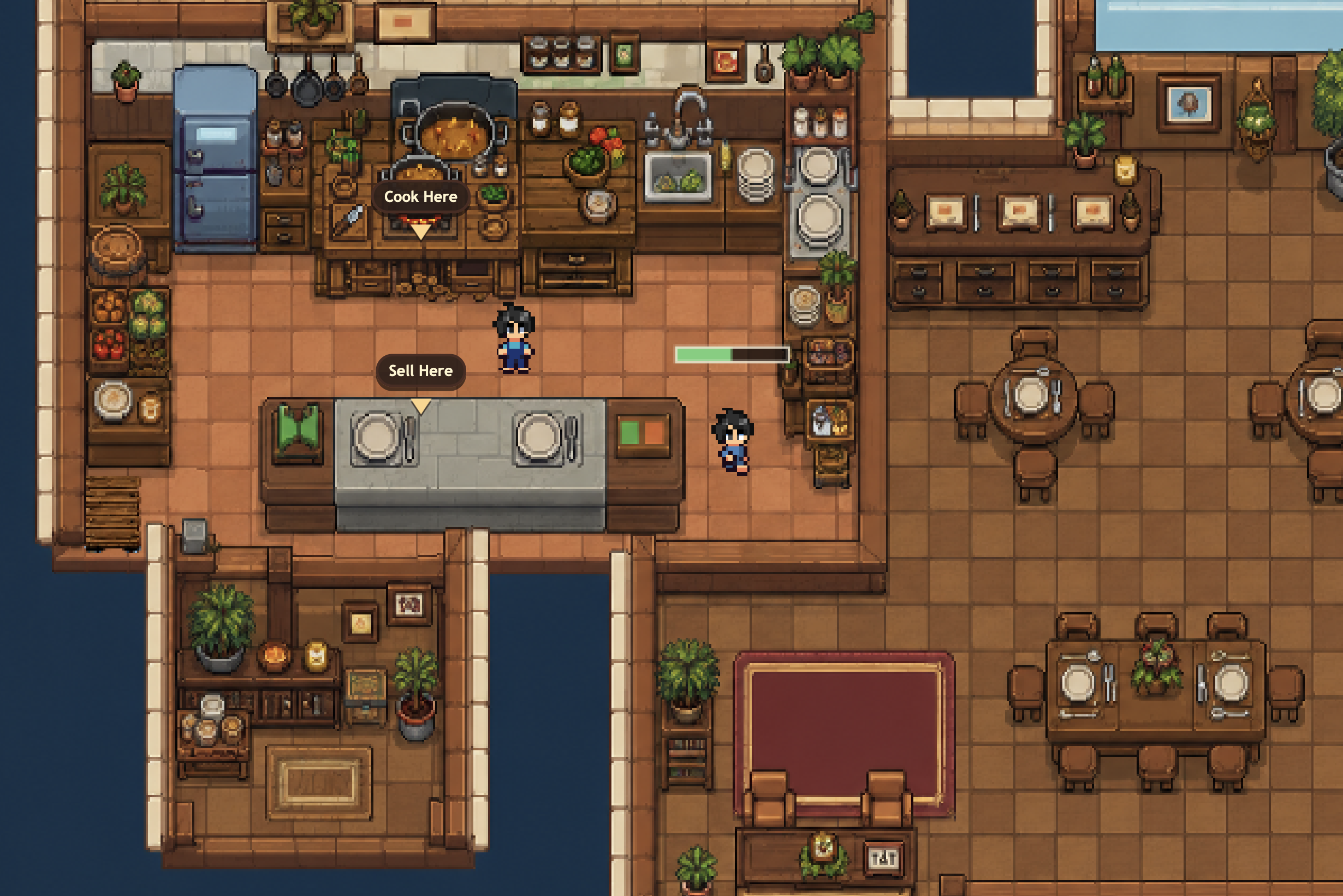
Your store! Cook and sell here.
-
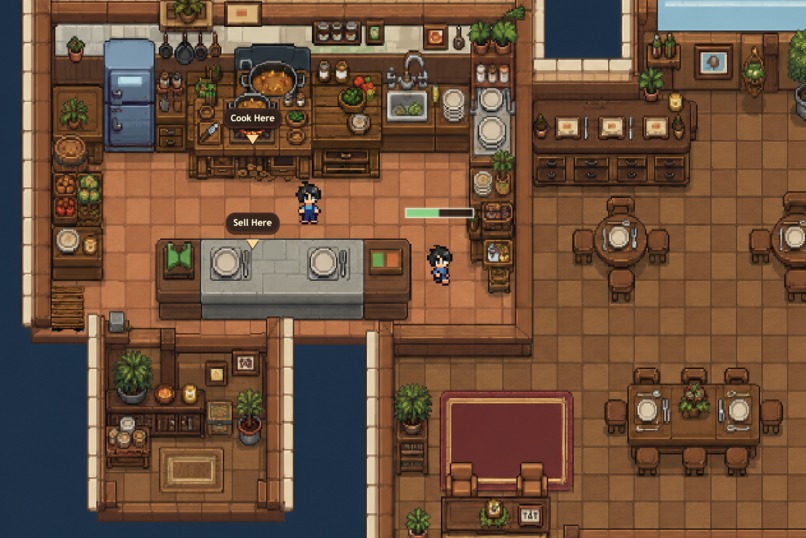
Cook and sell your fish in the shop!
-
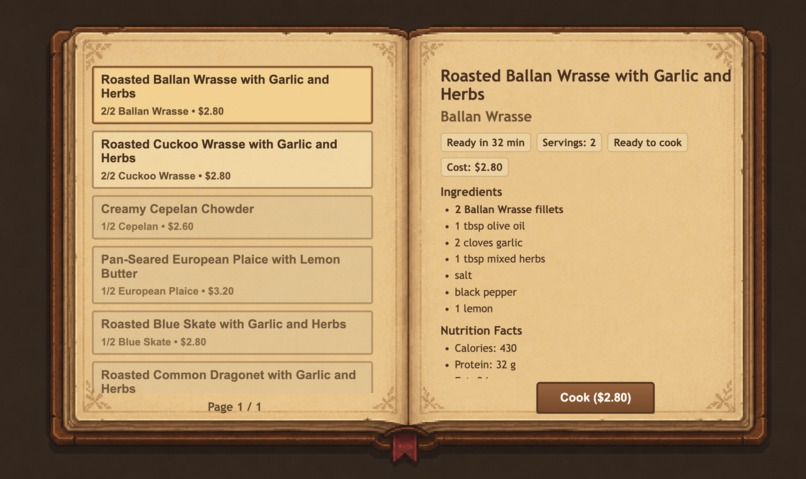
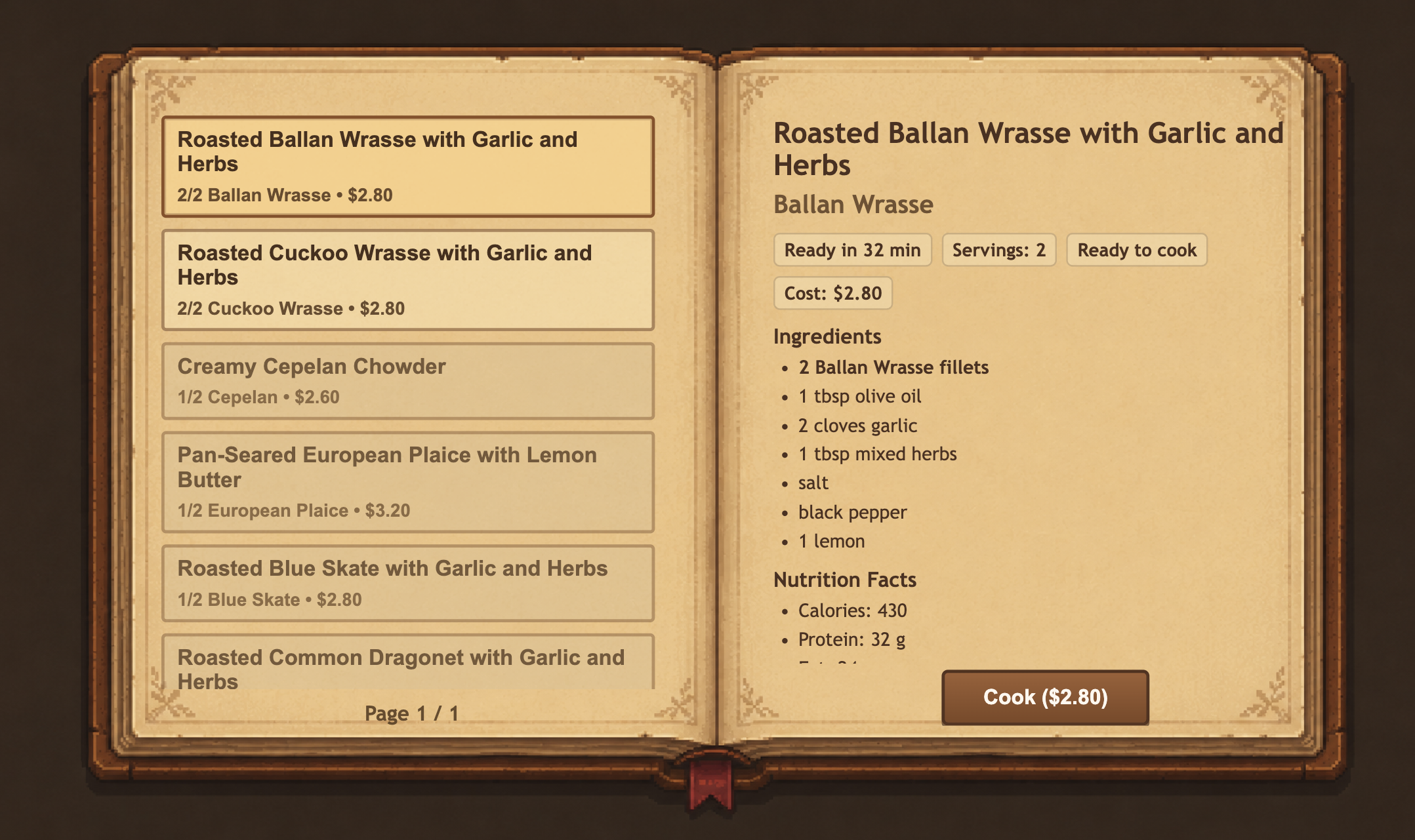
Discover new fishes and recipes as you play.
To run, clone our Repo, and npm run dev!
Team Name: The Tiders and Tillers
Team Members: Edison Cai, Aman Shah, Dorothy Zheng
Communication tools: We yapped in person
API Chosen: Food Recipe App and Marine Life API
Tech stack: Typescript/NodeJS,
Inspiration
We chose to not exchange either of our APIs, because we're BALLERS like that.
Naturally, we looked at that combo and thought, what if learning about fish habitats came with a side of capitalism?
That was the birth of Tide and Till, a silly little game where players meet fascinating fish, learn where they live, and then immediately consider whether that fish would be better used in a recipe or sold for pocket money.
What it does
Tide and Till is an educational catch-and-cook game where players learn to identify different fish species and discover the marine regions they call home. You fish in different habitats, build up a collection of discovered species, and turn your ocean findings into either culinary opportunity or quick cash. It is part fish field guide, part recipe machine, and part morally questionable seafood side hustle.
The inventory and recipe systems let players manage their catches, discover fish-based dishes, and turn regional biodiversity into either a meal or a modest financial empire. The result is a gameplay loop of explore, catch, learn, cook, and sell, with just enough chaos to keep the educational part from feeling like homework.
How we built it
Piecing together several provided Marine Life APIs, we were able to compile data about various species, where they lived and their rarities. None of the APIs provided the exact details we needed, nor were they even coordinated. We used the Marine Life Information Network API to gather habitat and species information, which gave us the ecological side of the project: what fish belong to which marine regions and what those environments are like.
To do that, we built scoring logic that looks at habitat descriptors like depth, substratum, and ecological keywords, then compares those against fish records from multiple sources. The scripts infer habitat traits, score fish for habitat fit, estimate how associated a fish is with fishing activity, and even normalize percentages so each habitat gets a believable catch pool instead of just a random fish pile.
Then we used the recipe API to answer the extremely serious scientific question: "cool, but can I cook it?" The recipe scripts search for dishes tied to a fish, pull recipe details and estimates real costs. However, there aren't many dishes for exotic fishes, like seahorse. So, taking a lap back to our marine life APIs, we found similar fish or those under the same umbrella to come up with alternate recipes.
Challenges we ran into
Everything. Especially, version control. Aside from that, the biggest challenge was making two APIs with very different vibes cooperate. One API was about marine habitats, species, and ecological context; the other was about turning ingredients into meals. Bridging "this fish lives in deep sponge communities" with "here is what you can cook with it" took a lot of data wrangling and some creative glue logic.
Accomplishments that we're proud of
We are especially proud that Tide and Till is not just a concept, prototype, or "imagine if this worked" situation. We built a fully functioning game (with AWESOME graphics) with an actual gameplay loop: players can explore, fish, collect species, manage inventory, discover recipes, and sell their catches for profit. For a hackathon project built around two APIs that absolutely did not ask to be friends, getting all of those moving parts to work together into one playable experience feels like a huge win.
We are also proud that the game is doing multiple jobs at once without falling apart. It teaches players about fish species and marine habitats, it turns external data into meaningful gameplay content, and it keeps a silly sense of humor the whole time. The fact that it is both educational and genuinely playable makes it feel like more than a gimmick. It is a weird little fish game, but it is our weird little fish game, and it works.
What we learned
We learned a lot about data wrangling, gameplay design, and the delicate art of TIME MANAGEMENT. On the technical side, we got experience analyzing habitat data, ranking fish by region, and connecting recipe generation to game systems. On the creative side, we learned that the best hackathon ideas are sometimes the ones that sound a little unhinged at first.
What's next for Tide and Till
We would love to implement the "Tilling" component, where users also have to farm for their other resources, which we unfortunately did not get to. On top of that, we'd like to make it so users have to actually COOK following the recipe. To top it all off, we'd like to make it multi-player so users can face off!
Built With
- data-pipelines
- html/css
- javascript
- json
- marlin-api
- node.js
- spoontacular-api
- typescript
- vite
- worms-api


Log in or sign up for Devpost to join the conversation.