-
-
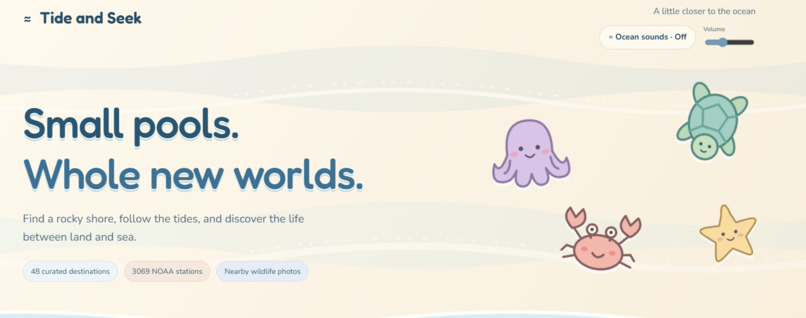
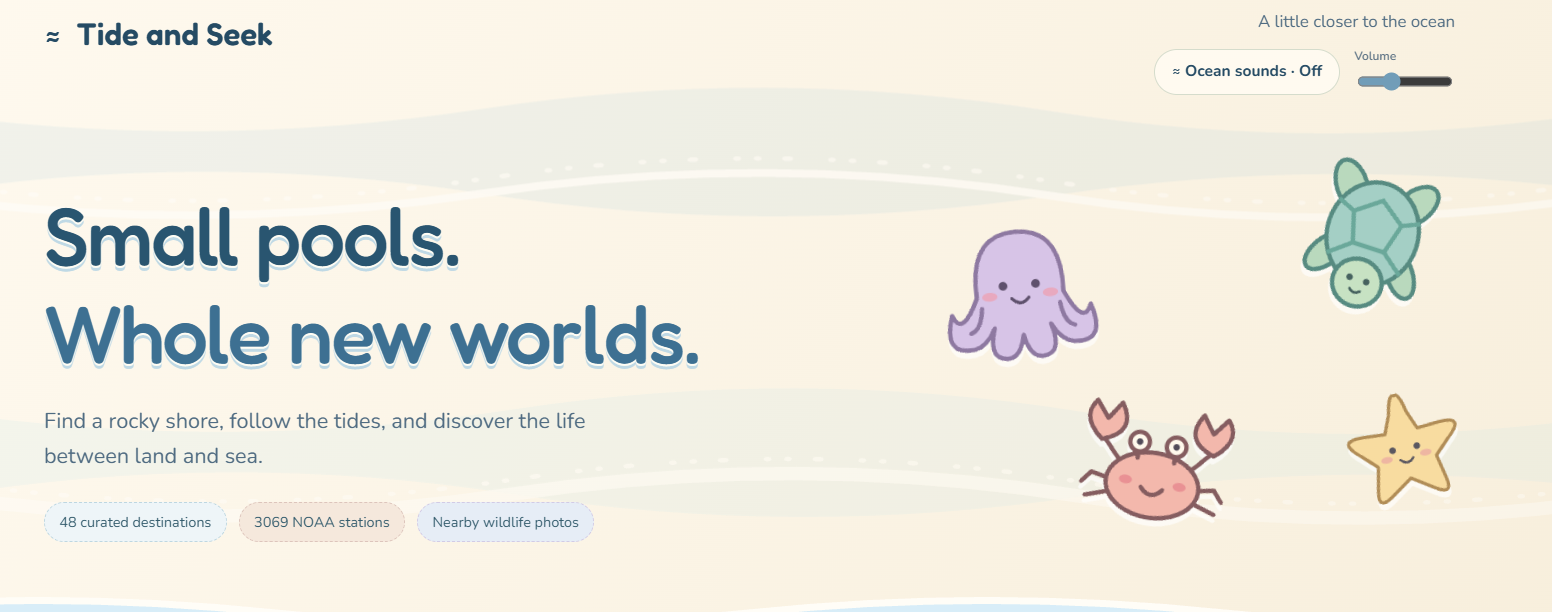
Header page
-
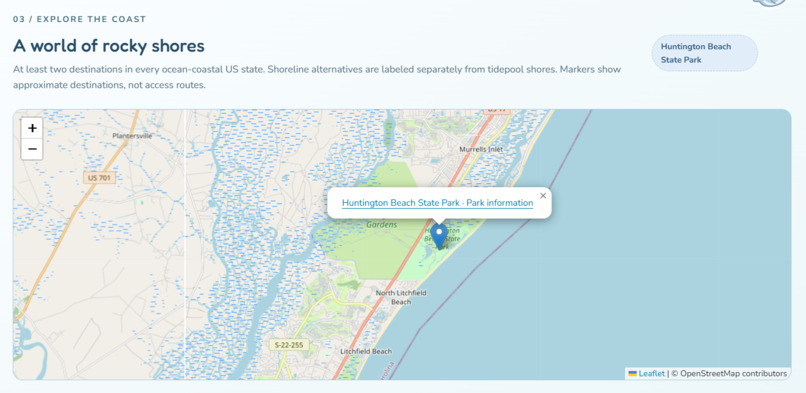
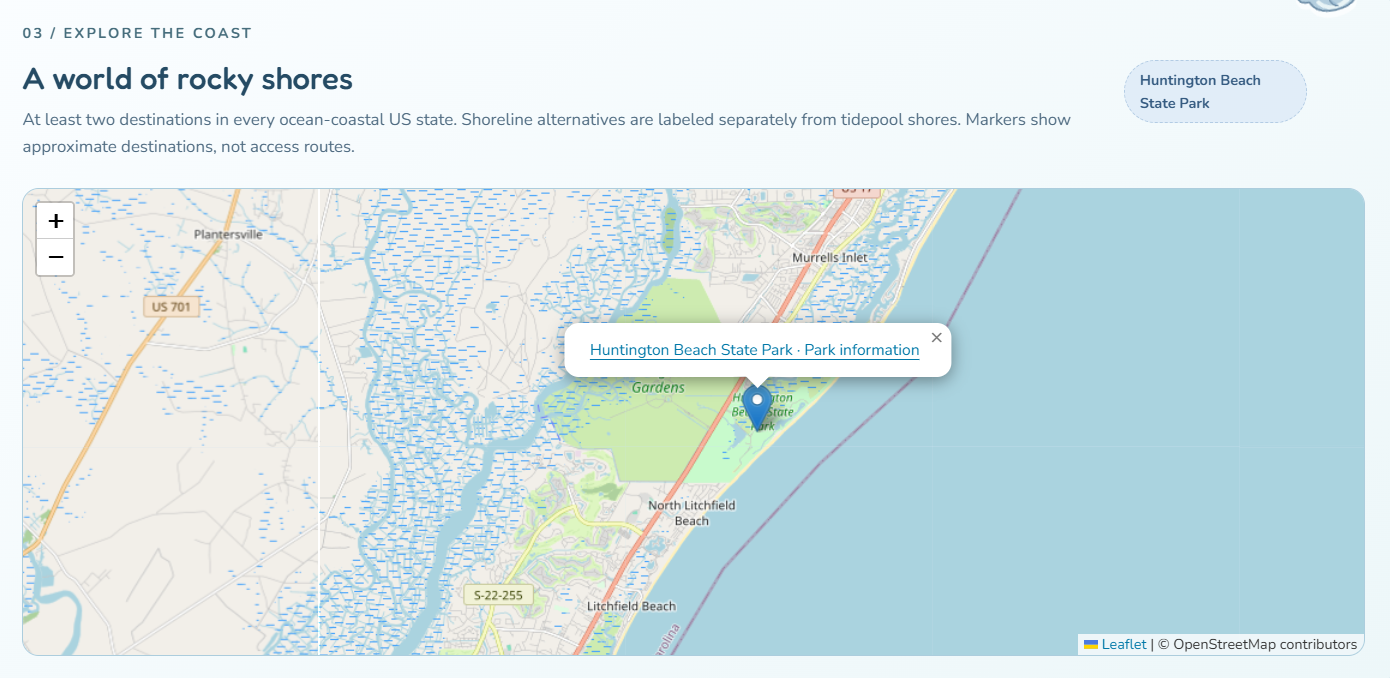
Visual map plotting tide pool locations
-
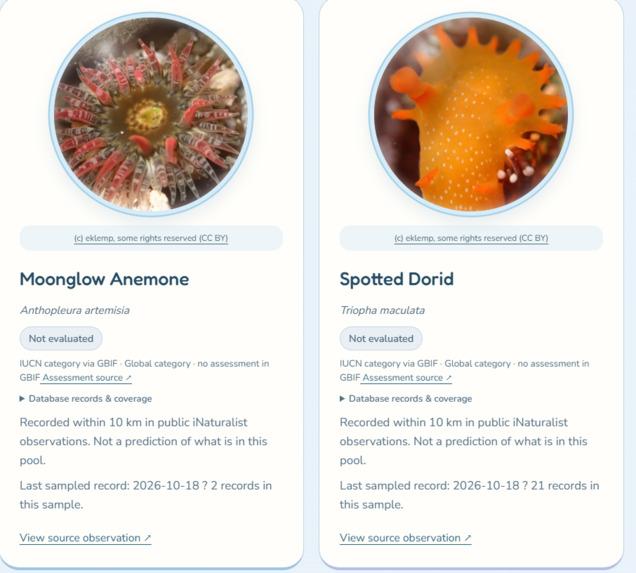
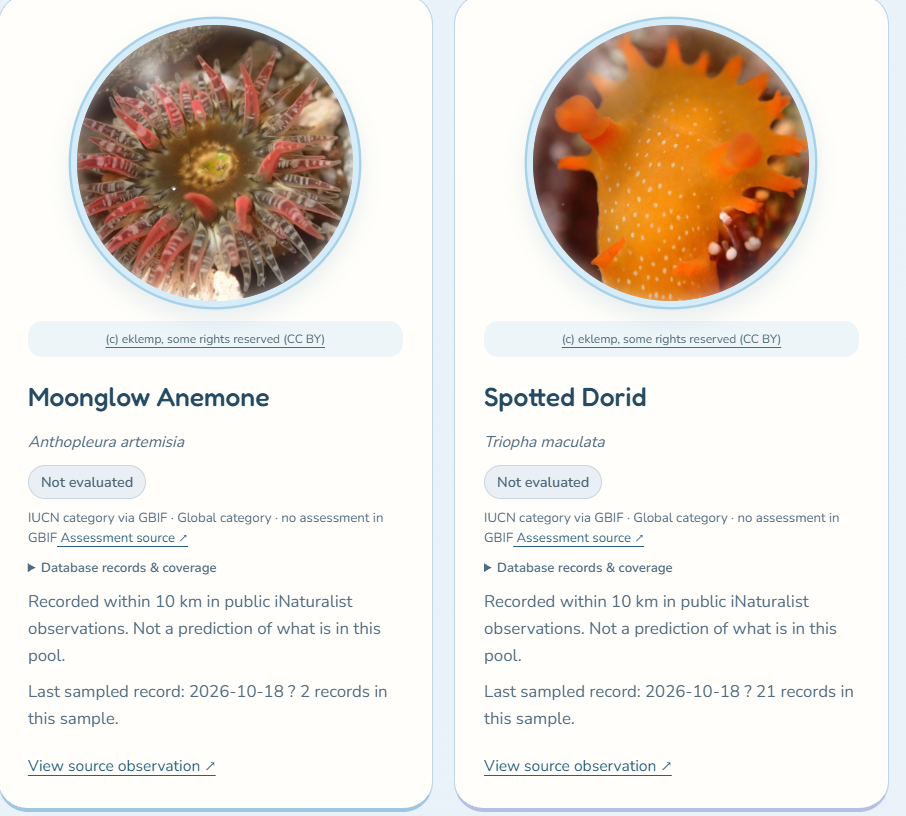
Organism identification cards
-
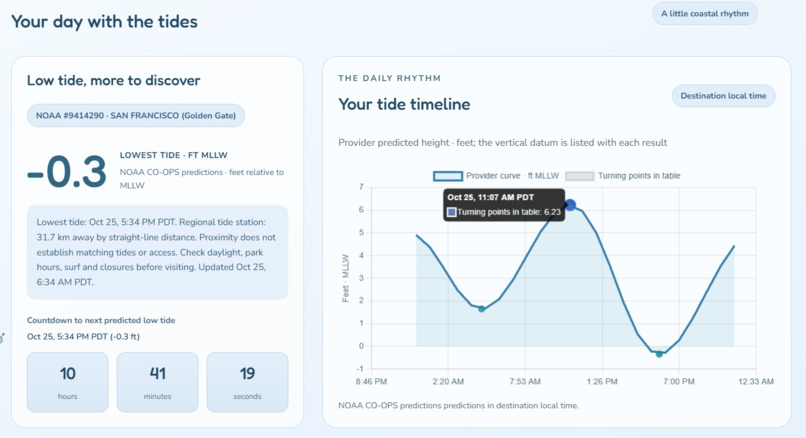
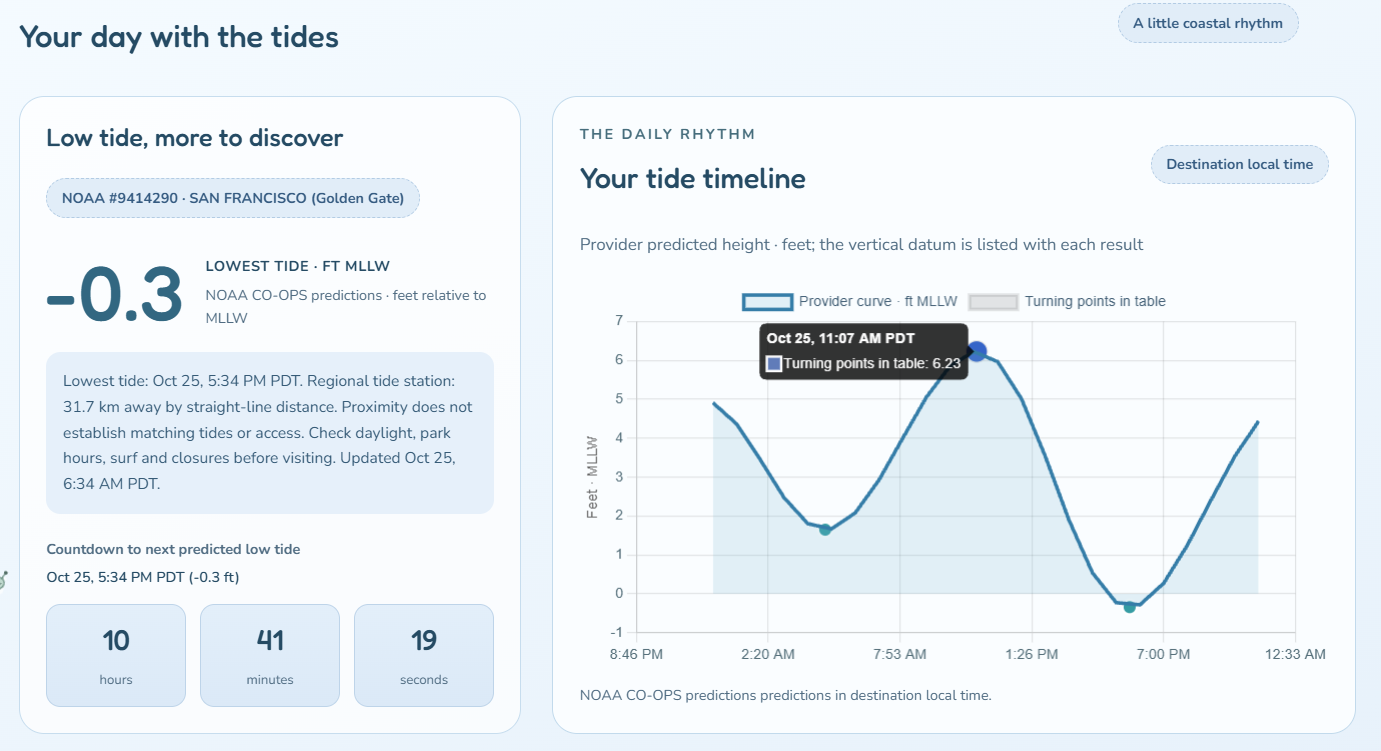
High and low tide points graph
-
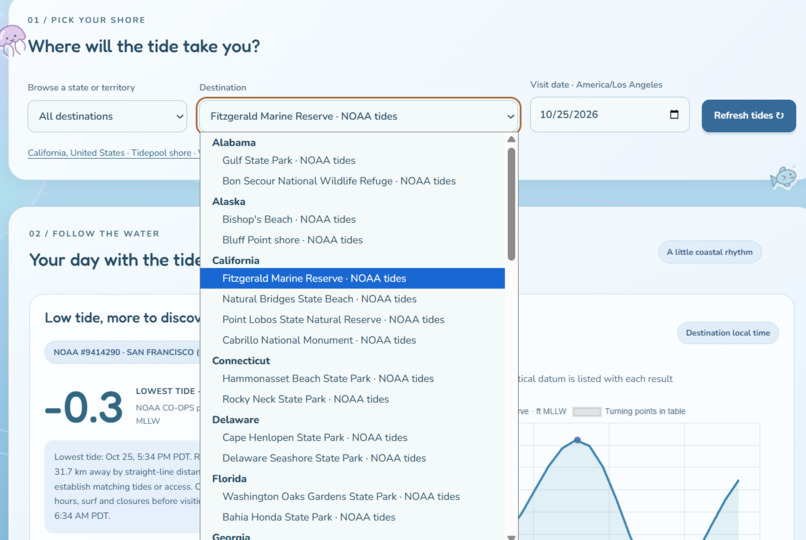
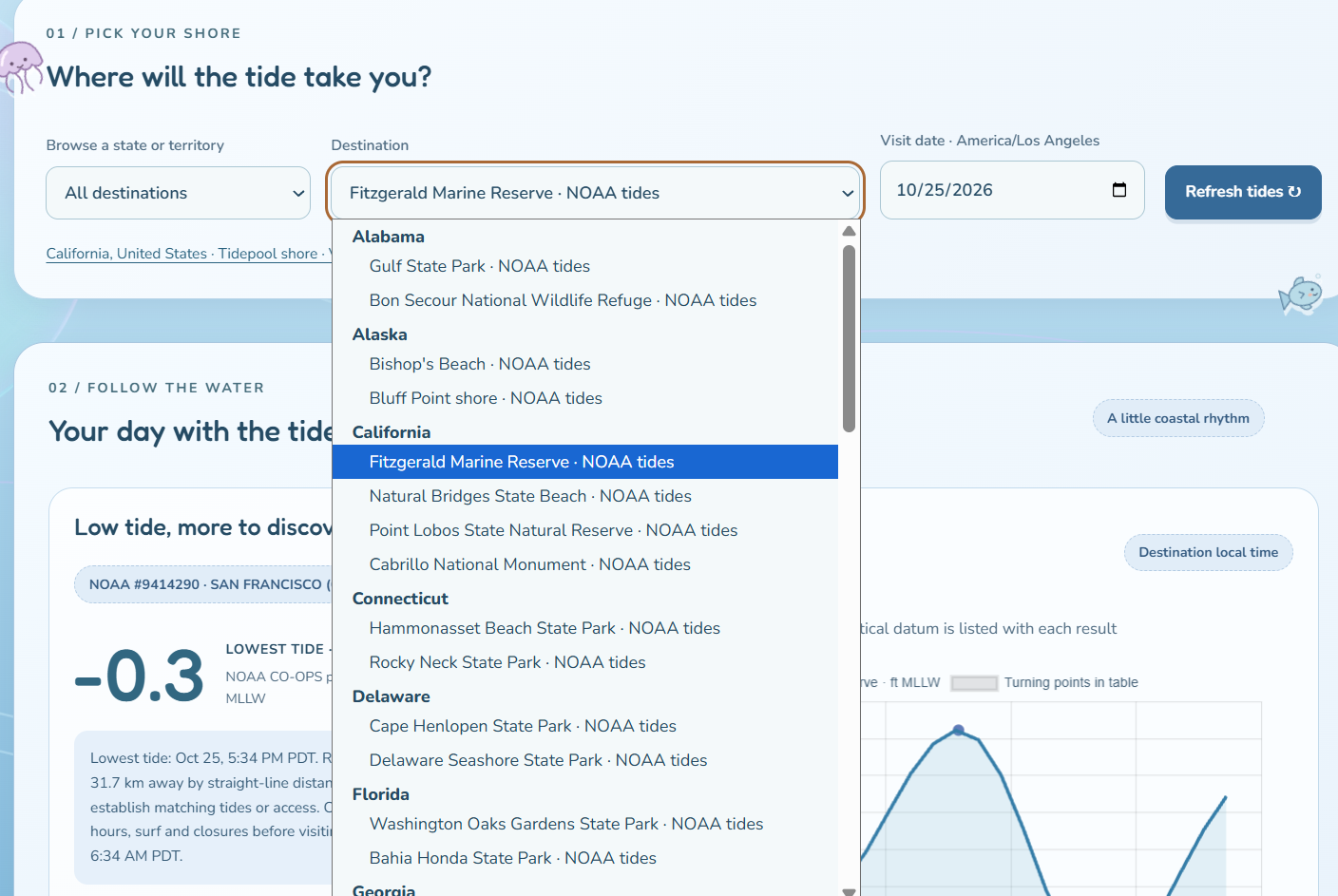
Dropdown of 48 curated destinations
Inspiration
Our team was inspired by the incredible biodiversity hidden along our country's coastlines and the role that tides play in shaping marine ecosystems. Many people visit beaches without realizing how dramatically the landscape and the animals they can encounter change between high and low tide. We wanted to bridge this gap between curiosity and discovery by creating an accessible tool that connects tidal patterns with local marine life. By allowing users to explore 48 coastal locations and discover their high and low tides alongside the animals that inhabit them, we hope to encourage people to explore the natural world, appreciate coastal biodiversity, and develop a deeper understanding of the ecosystems around them.
What it does
Tide and Seek allows users to explore 48 coastal locations and learn about their tidal patterns and marine biodiversity. By selecting a location, users can view its high and low tide information and discover the types of animals that may be found in the area. By bringing together tidal data and wildlife information in one accessible platform, our website helps users discover local marine life and plan their next coastal adventure at the beach.
How we built it
Our team built this website using HTML, Python, and JavaScript to create an interactive and user-friendly coastal exploration experience. We focused on making the interface intuitive and accessible, bringing together environmental data and wildlife information in one place. Through this project, we combined web development and our interest in marine ecosystems to create a tool that makes tracking coastal biodiversity engaging and accessible.
Challenges we ran into
One of the biggest challenges we faced was integrating multiple sources of real-world environmental data into one seamless experience. Since our website relies on information from NOAA, iNaturalist, and GBIF, we had to figure out how to retrieve, process, and display different types of data in a way that was both accurate and easy for users to understand. A particularly interesting challenge was working with tide predictions. Not every NOAA station provides hourly tide data, which made it difficult to consistently generate tide graphs for all of our coastal destinations. To overcome this, we developed an algorithm that estimates a smooth tide curve between known high and low tide predictions.
Accomplishments that we're proud of
One of our proudest accomplishments is creating a website that combines real tidal predictions, local wildlife observations, and conservation information into a single interactive experience. Rather than simply presenting static information, Tide and Seek allows users to explore real coastal destinations and discover how environmental conditions relate to the marine life around them.
Another accomplishment we're particularly excited about is our website's *visuals. From the pastel ocean colors and animated waves to the adorable sea-creature illustrations, we wanted every part of Tide and Seek to capture the excitement of discovering marine life. Seeing our technical features come together in an interface that feels fun, welcoming, and educational was incredibly rewarding.
What we learned
Throughout this hackathon, we learned how much goes into building a website that relies on real-world data from multiple APIs. Working with NOAA, iNaturalist, and GBIF taught us how to retrieve information from external sources, process different data formats, and account for missing or inconsistent information. Beyond programming, this project taught us the importance of designing with the _ user in mind _. Scientific information can be overwhelming, so we focused on presenting it in a way that was both informative and enjoyable. We discovered that thoughtful design can make complex environmental concepts more accessible to people who may not have a scientific background.
What's next for Tide and Seek
Although we're proud of what we've built, we see Tide and Seek as just the beginning of a much bigger adventure! One of our next goals is to expand our destination database to include more tidepool locations across the United States and eventually around the world. We would also love to incorporate additional environmental information, such as weather conditions, wave heights, and coastal safety alerts, to help users plan safer and more informed visits. We also hope to improve our conservation resources by incorporating more information about responsible tidepooling practices, protected habitats, and local environmental initiatives.


Log in or sign up for Devpost to join the conversation.