-
-
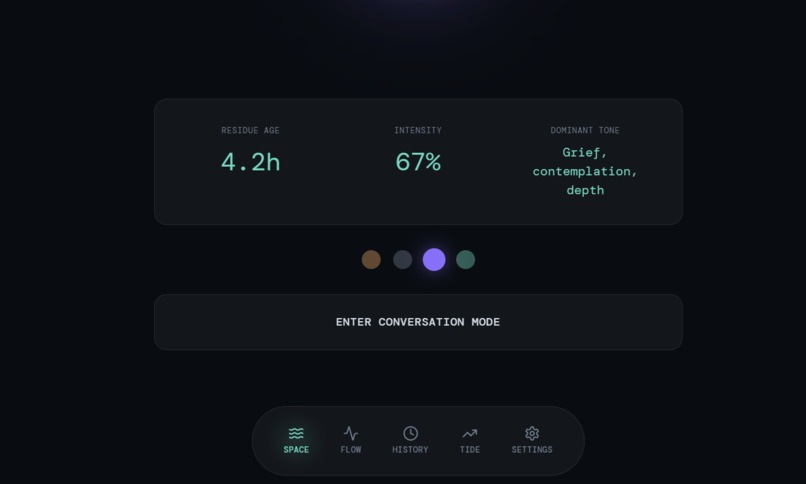
Purple Aura
-
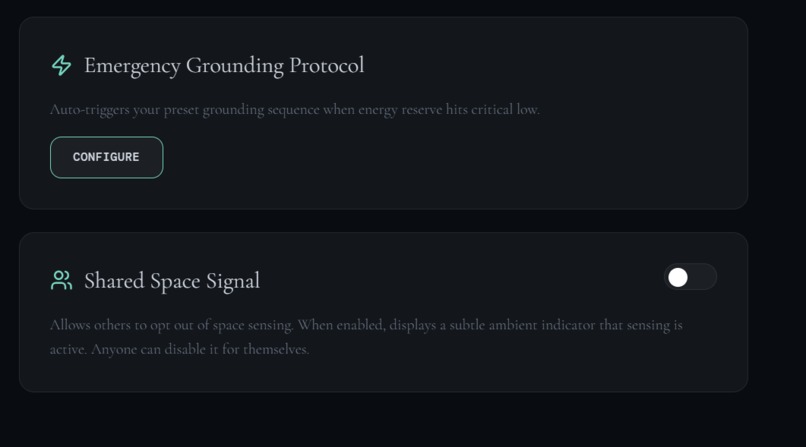
Other Safety Features
-
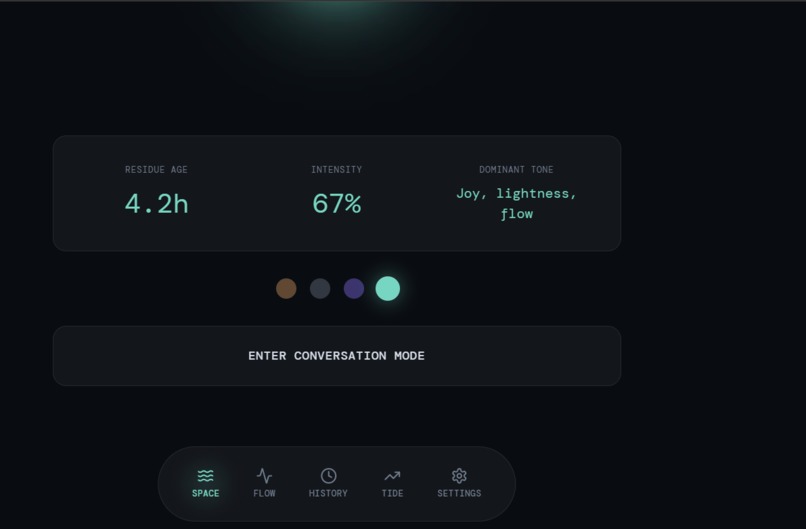
Teal Aura
-
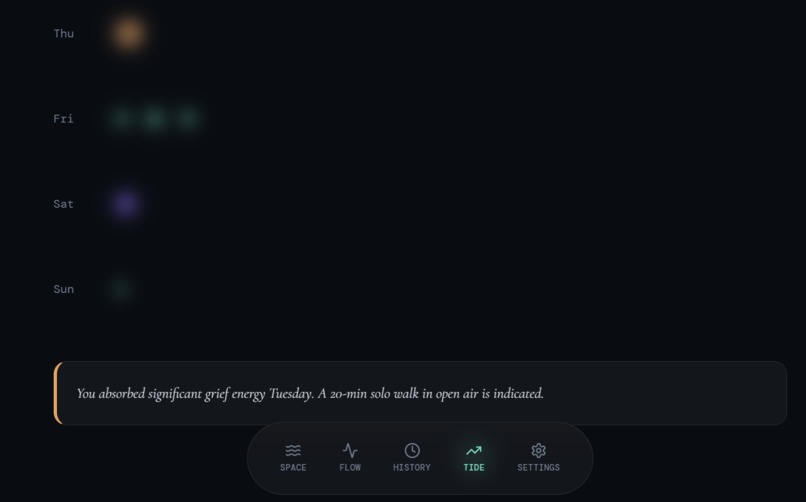
Suggestion
-
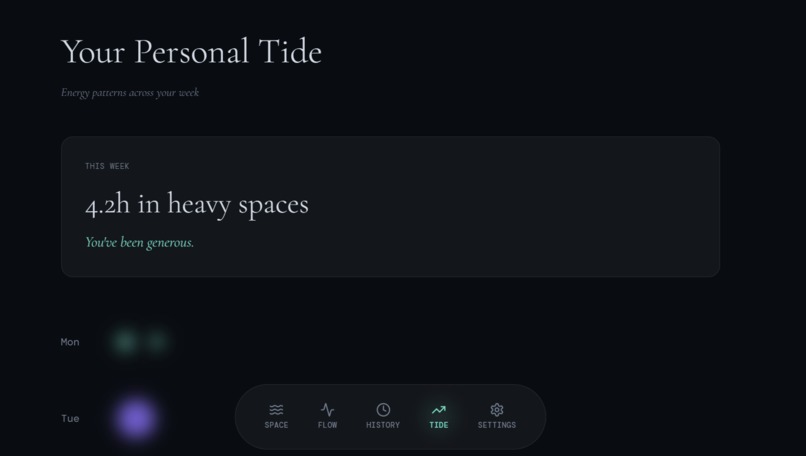
Personal Tide
-
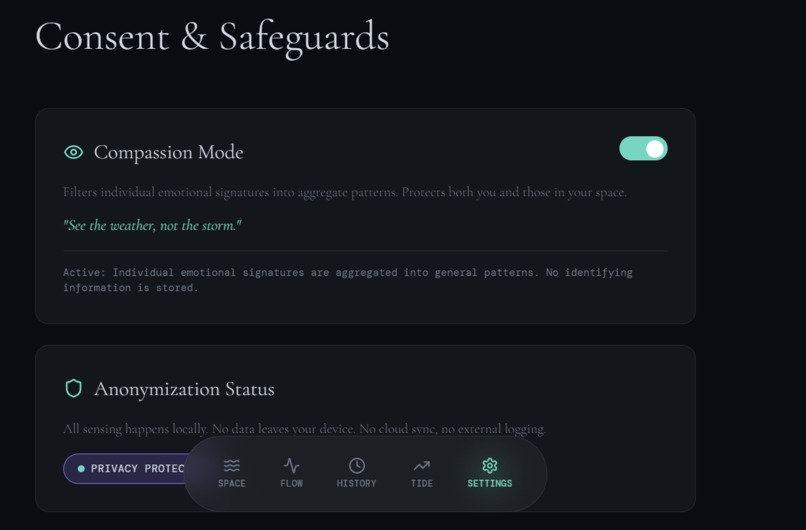
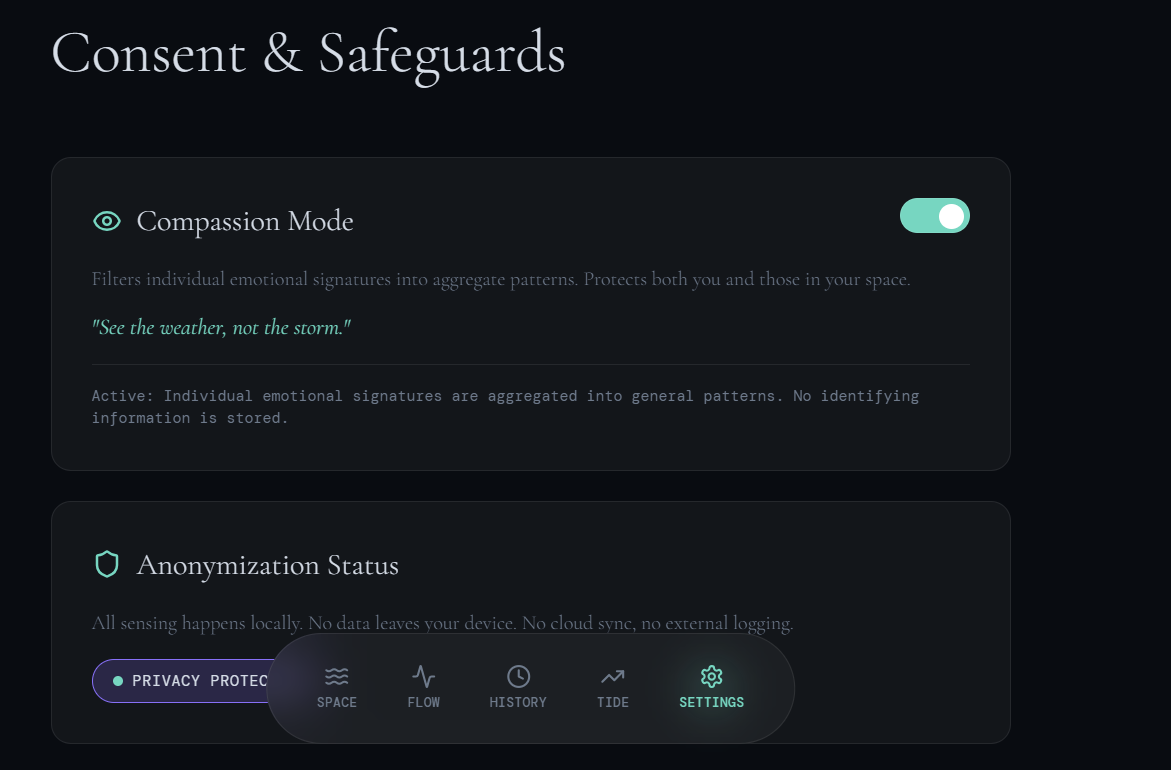
Compassion Mode
-
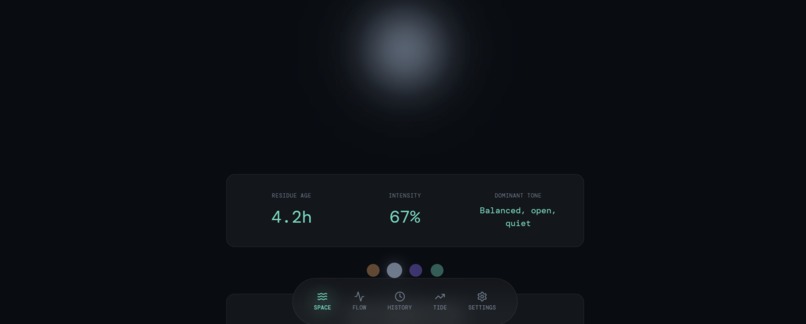
Grey Aura
-
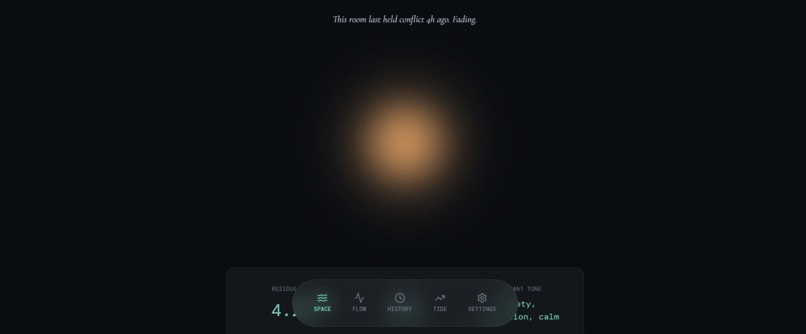
Amber Aura
-
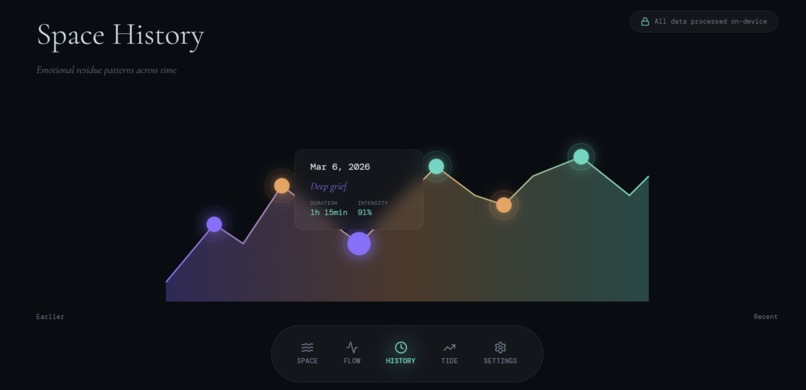
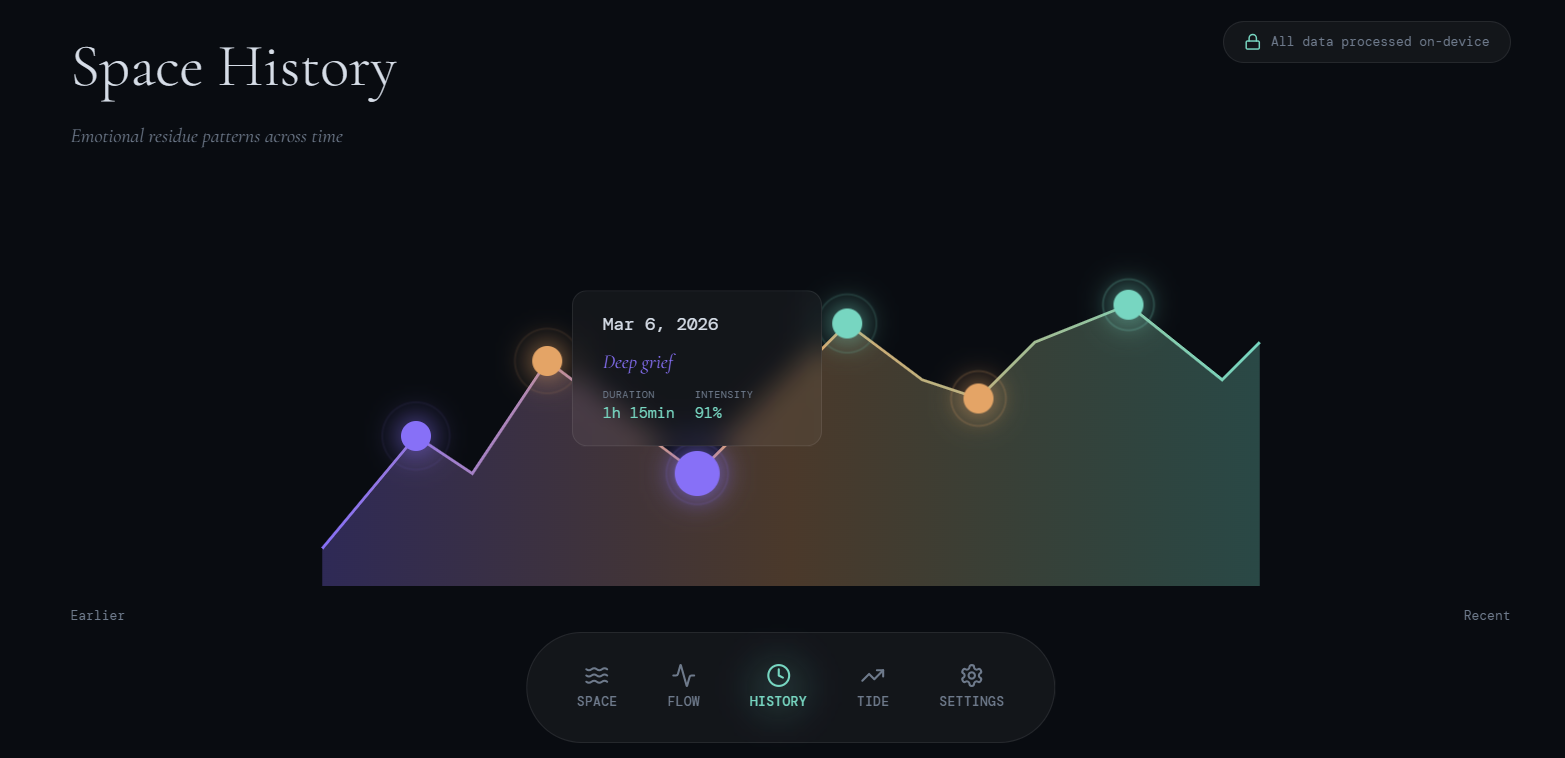
Emotional History
-
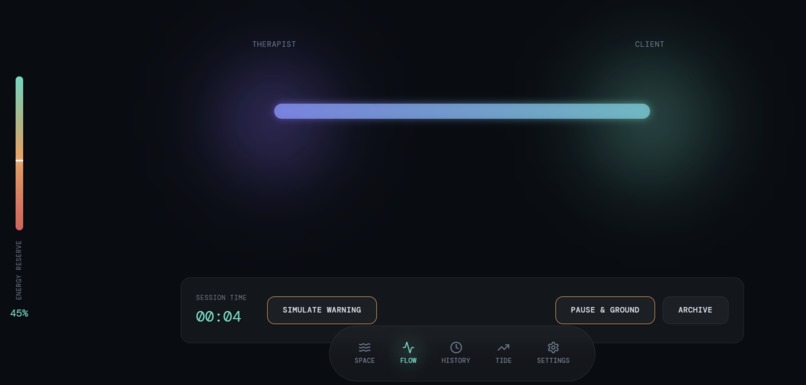
Real time energy movement
-
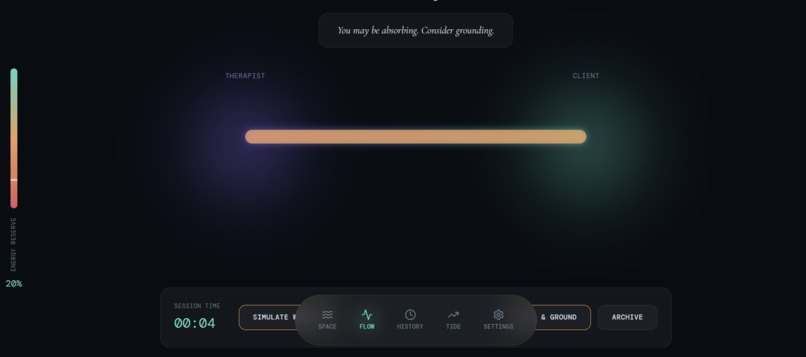
Quiet Signal
Inspiration
The idea started with a simple observation: we have instruments for everything physical about the human body, but nothing for the invisible labor of emotional presence.
A therapist sits with 6 clients a day. A social worker walks into homes carrying generational trauma. A nurse absorbs fear from every room on the floor. None of them have a way to measure what that costs. They find out they were depleted the day they cannot get out of bed.
We kept coming back to one question: what if the feeling that a room is heavy was not just intuition? What if it was data?
That is where Tide began.
What it does
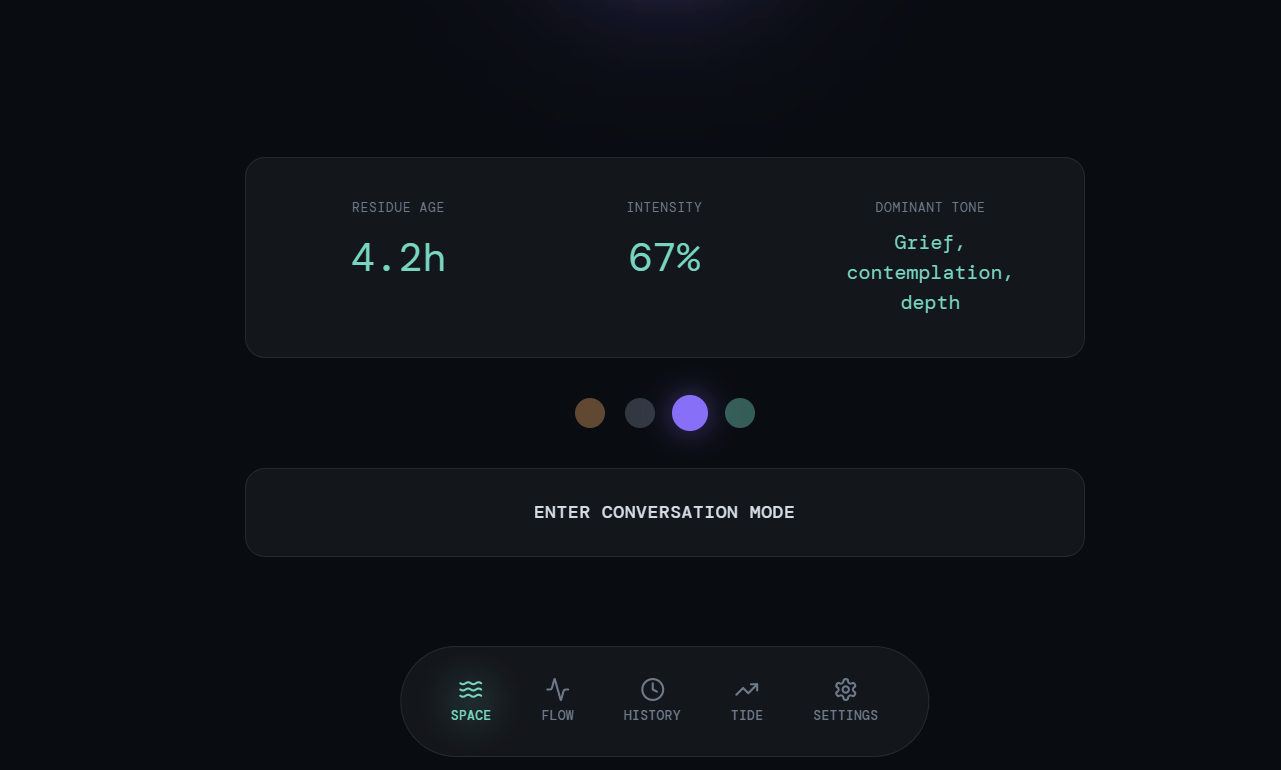
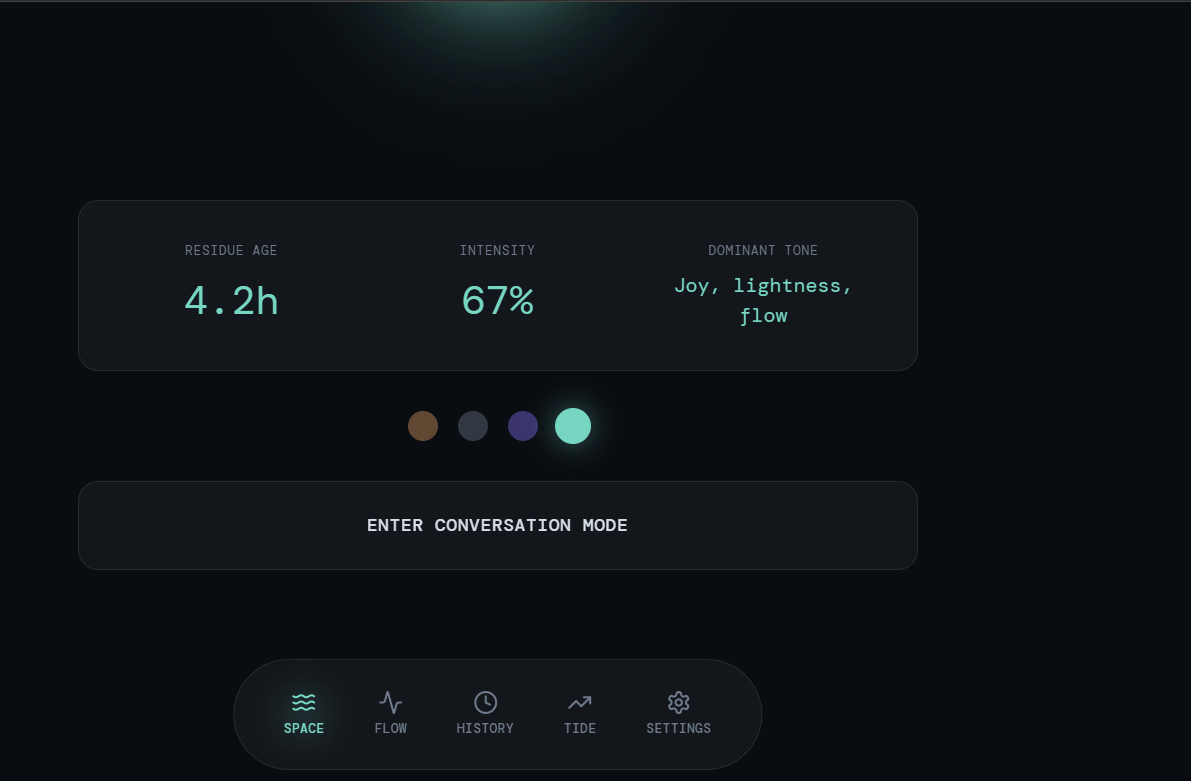
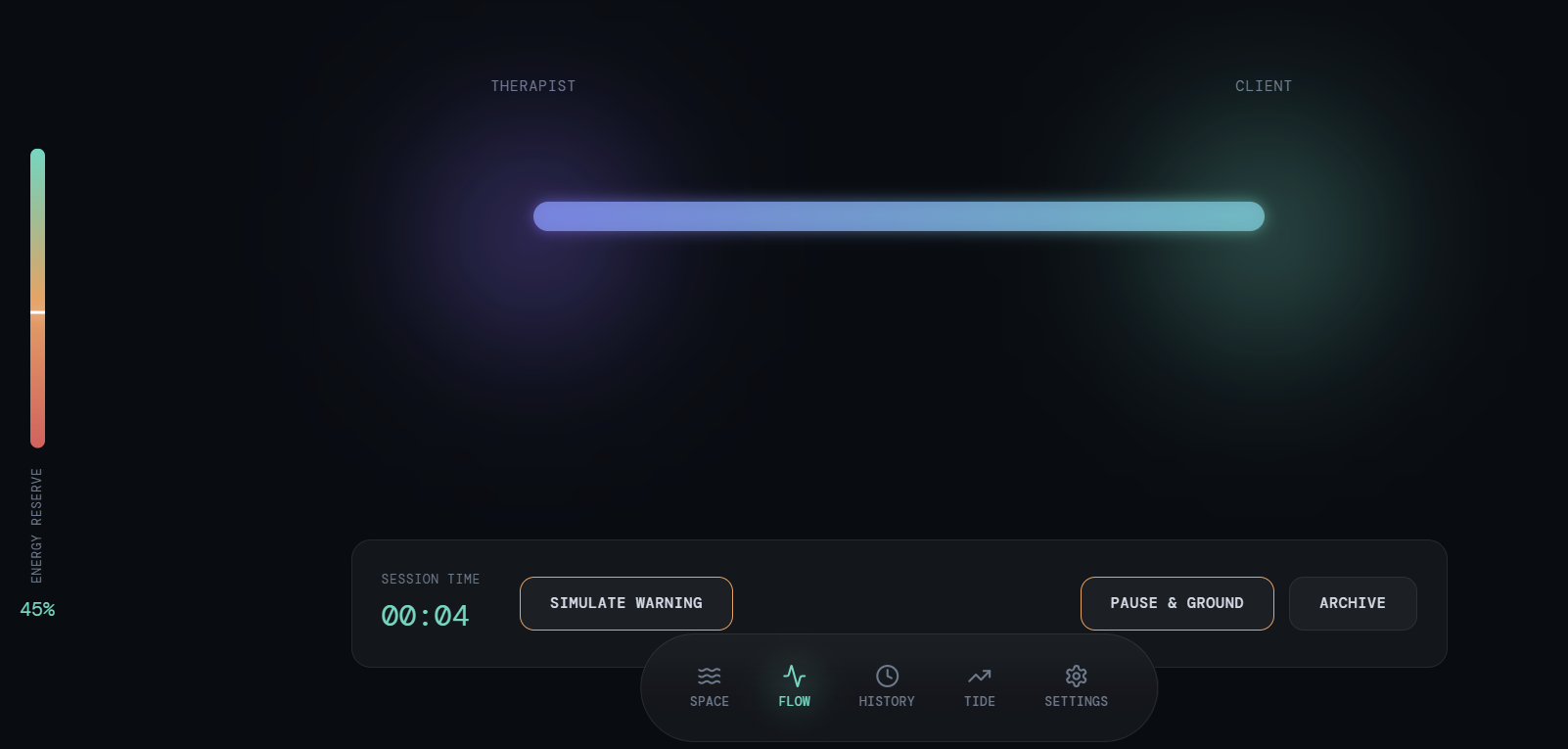
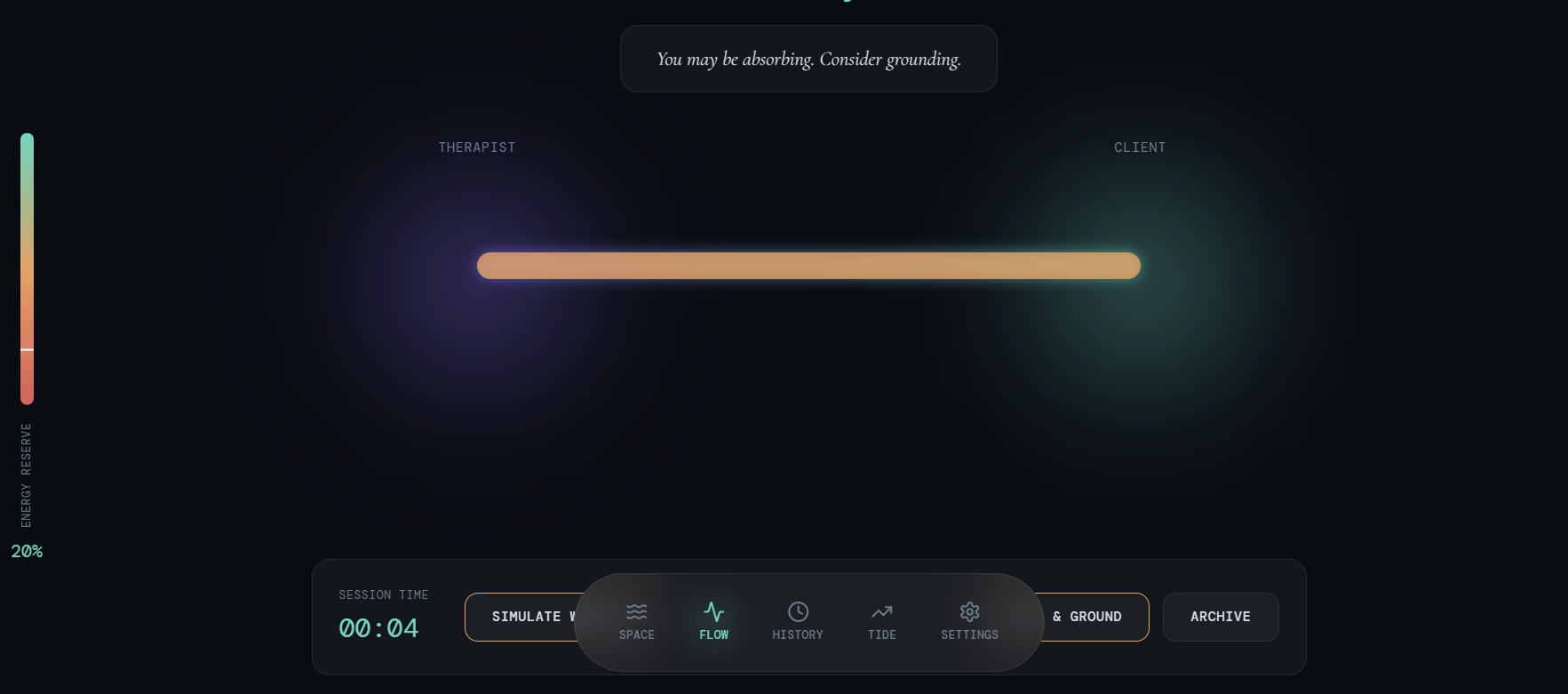
Tide detects the emotional residue in physical spaces and the energetic exchange in live conversations, then surfaces that data as ambient, actionable visualizations.
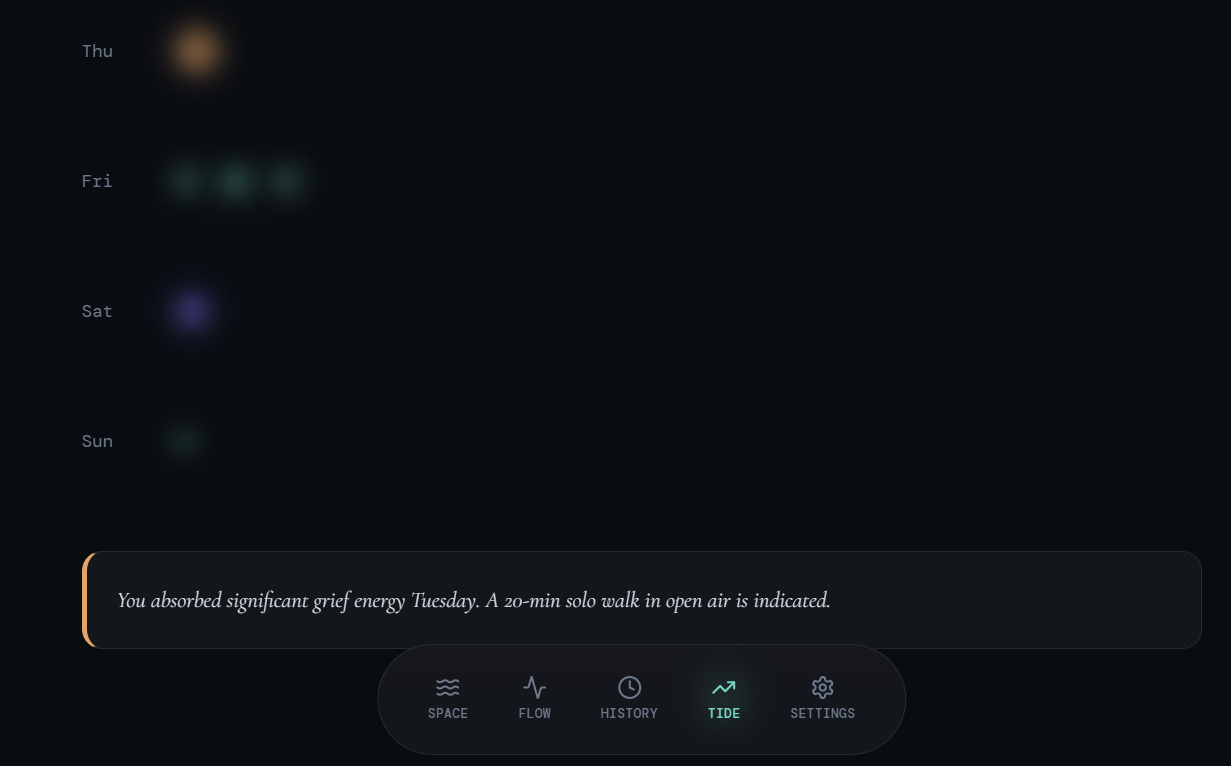
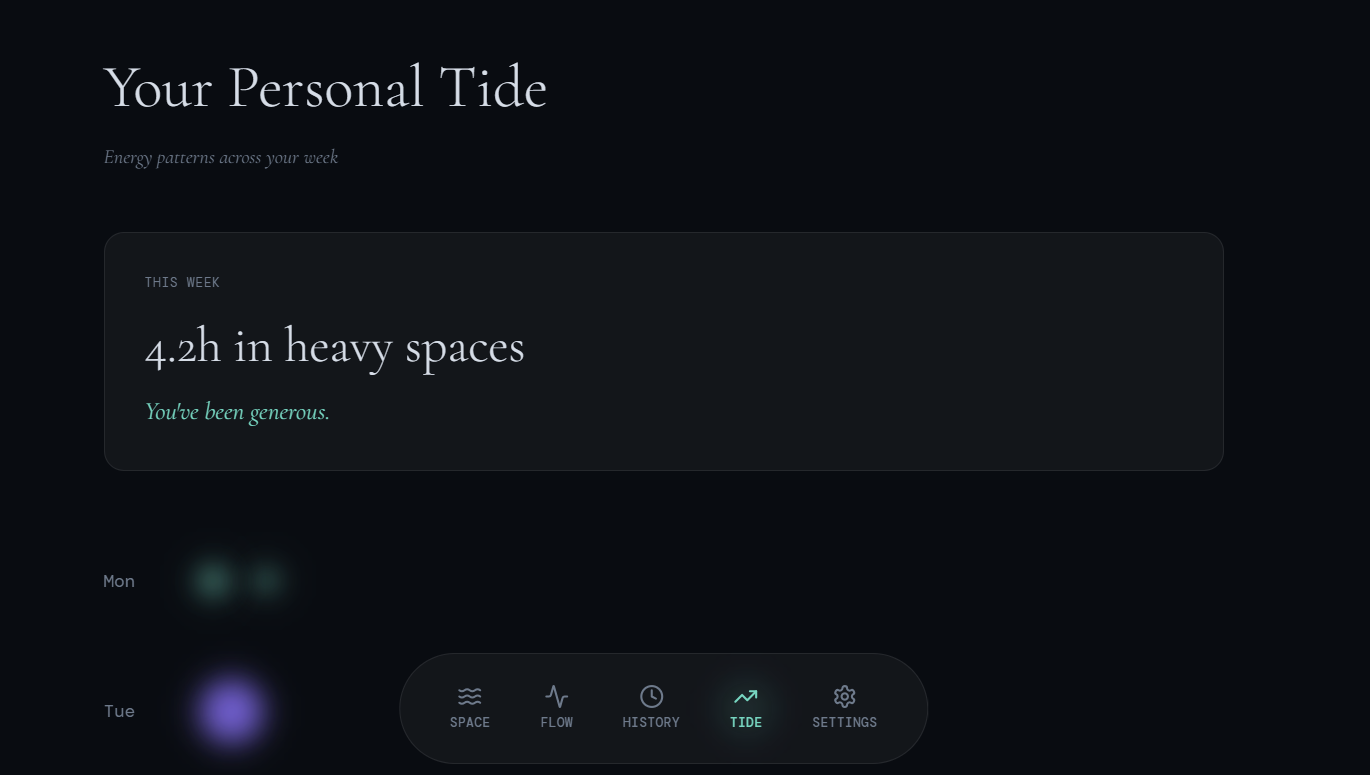
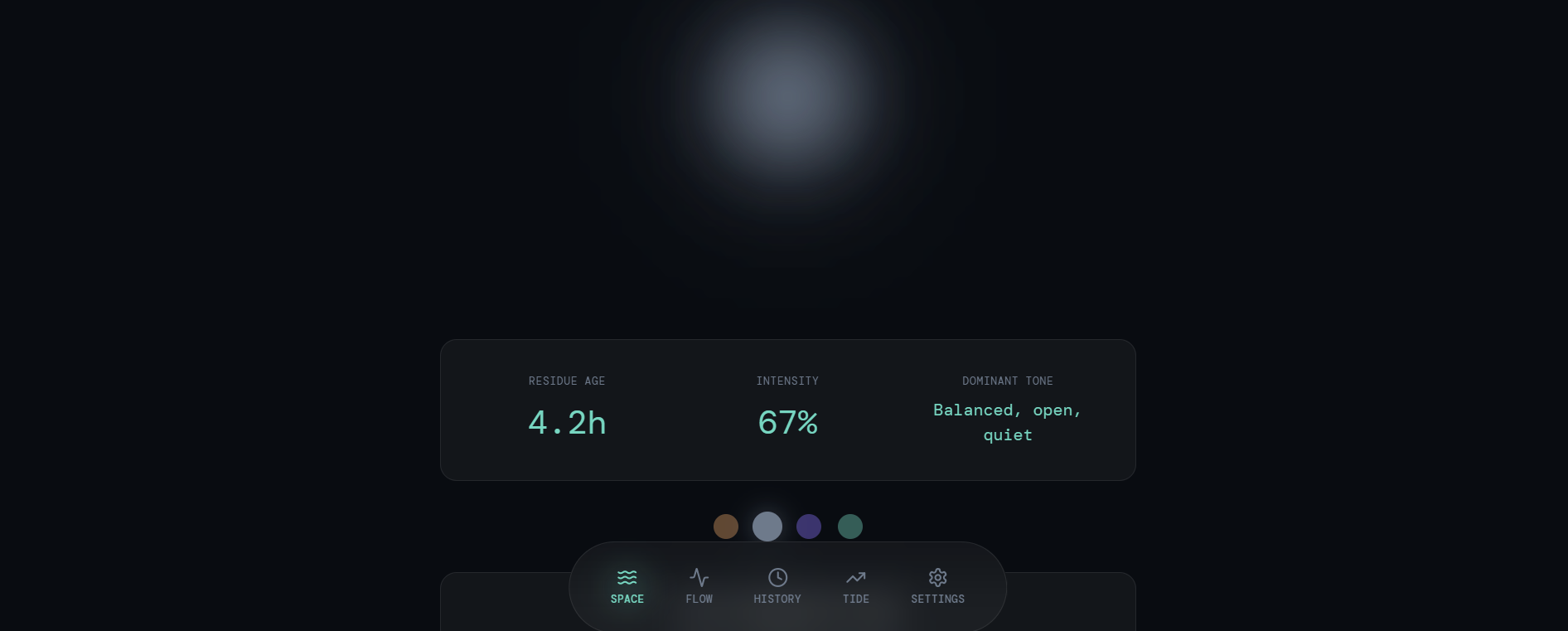
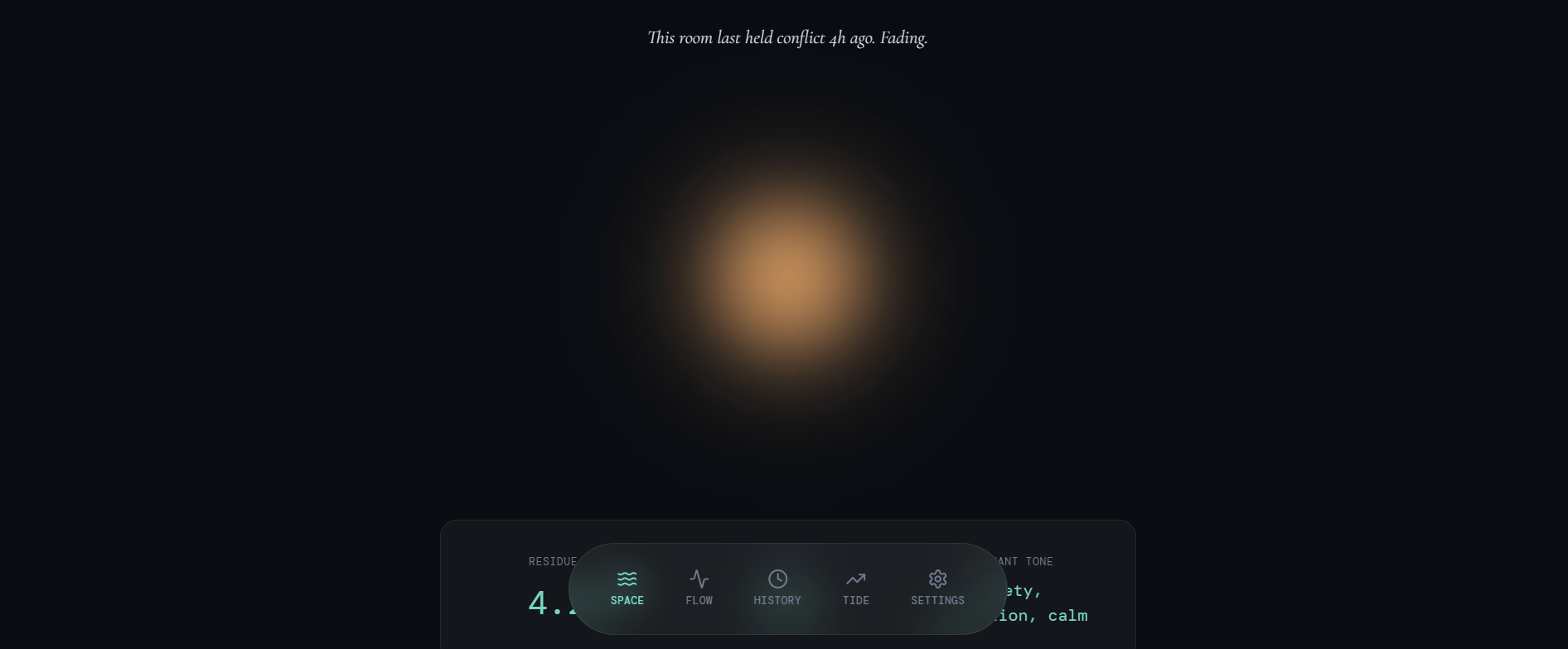
A therapist walks into a room and sees its emotional history: how long ago tension was present, how intense, what tone it left behind. During a session, Tide shows a live flow ribbon between two people — who is giving, who is receiving, when the balance tips too far. At the end of the day, a personal dashboard shows exactly which spaces cost the most, and what recovery looks like.
The wellness goal is precise: know when you are empty before you are empty.
How we built it
Tide was designed entirely in Figma using Figma Make for the interactive prototype, built with plain HTML, CSS, and vanilla JavaScript. No frameworks. All visuals are pure CSS and SVG, including the living aura system, the flow ribbon, and the waveform timeline.
The visual system is built around one metaphor: bioluminescence. Things that are alive glow softly from within. Figma Slides houses the full presentation with embedded prototypes demoing each core screen and interaction state.
Challenges we ran into
The hardest design problem was information without overload. Tide adds a new layer of perception to already perceptive people. Highly empathetic users are often already overwhelmed by the signals they absorb. A tool that surfaces more data could make things worse, not better.
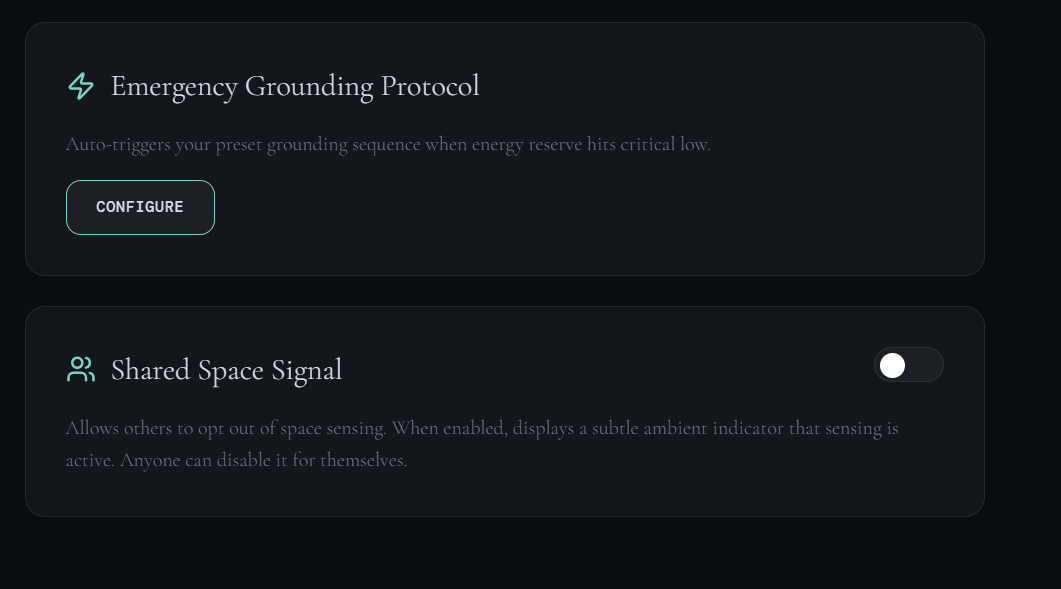
Consent in shared spaces was the second challenge. If Tide reads a room's emotional residue, it is implicitly reading the people who were in that room. We had to design an opt-out system that protected others without disrupting the primary user's experience.
The third was aesthetic: making data feel felt, not just seen.
Accomplishments that we're proud of
The Compassion Mode toggle is the design decision we are most proud of. When enabled, Tide shows patterns instead of specifics. You see the weather, not every individual raindrop. It is a single interaction that resolves the tension between awareness and overload, and between personal insight and the privacy of others.
We are also proud of building a speculative tool that feels grounded. Tide does not feel like science fiction. It feels like something that should already exist.
What we learned
Humans have far more than five senses. Emerging research identifies anywhere from 22 to 33 distinct sensory systems, including interoception and what some researchers describe as social proprioception: an implicit awareness of emotional proximity and relational pressure.
We learned that compassion fatigue follows a measurable curve. If we model a therapist's emotional reserve $R(t)$ over a session:
$$R(t) = R_0 - \int_0^t \alpha \cdot I(\tau) \, d\tau$$
Where $R_0$ is starting reserve, $I(\tau)$ is emotional intensity at time $\tau$, and $\alpha$ is the individual's absorption coefficient. Tide is trying to make that integral visible in real time.
Most importantly, we learned that the interface itself is the intervention.
What's next for Tide
The immediate next step is a wearable patch prototype: a non-invasive biosensor that correlates skin conductance, micro temperature shifts, and HRV to build the environmental emotional model Tide currently simulates.
Beyond that, we want to explore Tide for group contexts: clinical supervision rooms, crisis response teams, emergency departments. Spaces where many empaths operate together and collective depletion is the silent epidemic nobody is measuring.
The long term vision is simple. Every building that holds human suffering, from therapy offices to hospital wards to courtrooms, deserves an instrument that takes the measure of what happens inside it. Tide is that instrument.
Built With
- figma


Log in or sign up for Devpost to join the conversation.