-
-
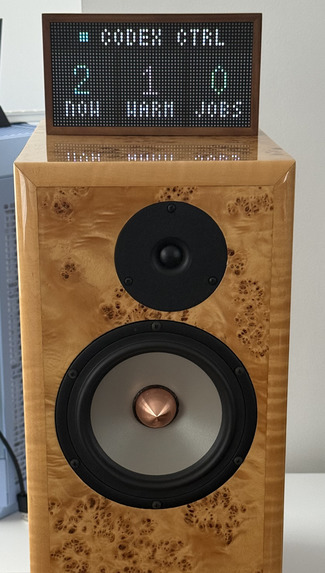
Control Tower — what Codex is doing, live on one of four original Tidbyt displays.
-
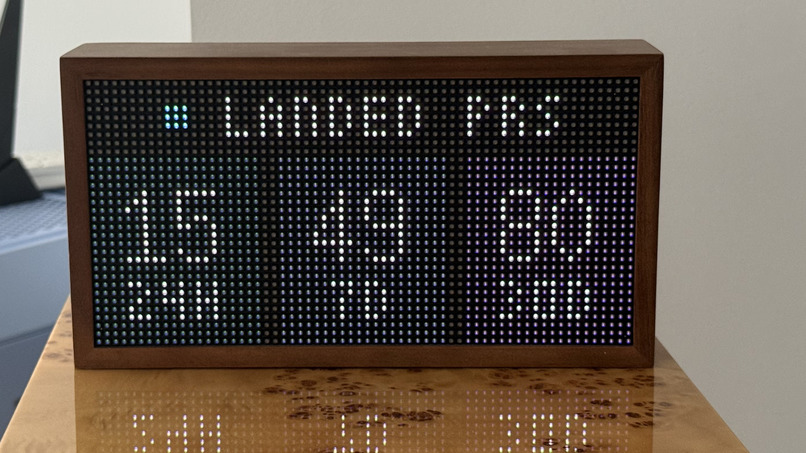
Landed PRs — shipped work, visible from across the room.
-
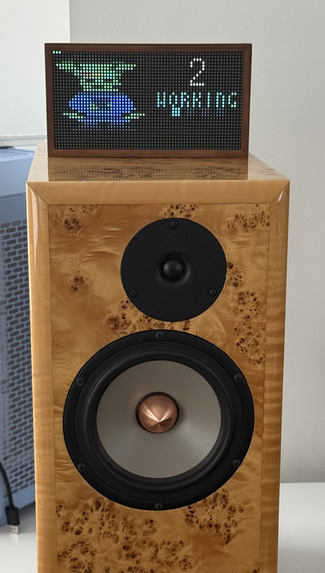
Glint — a quiet signal that Codex is still working.
-
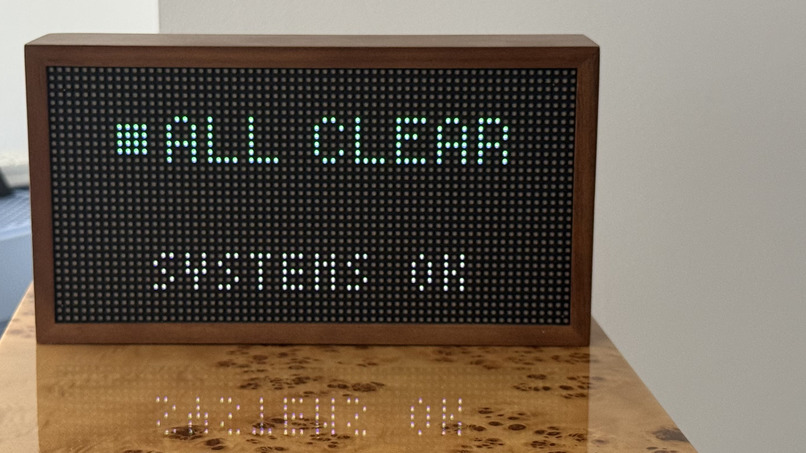
All Clear — nothing needs attention.
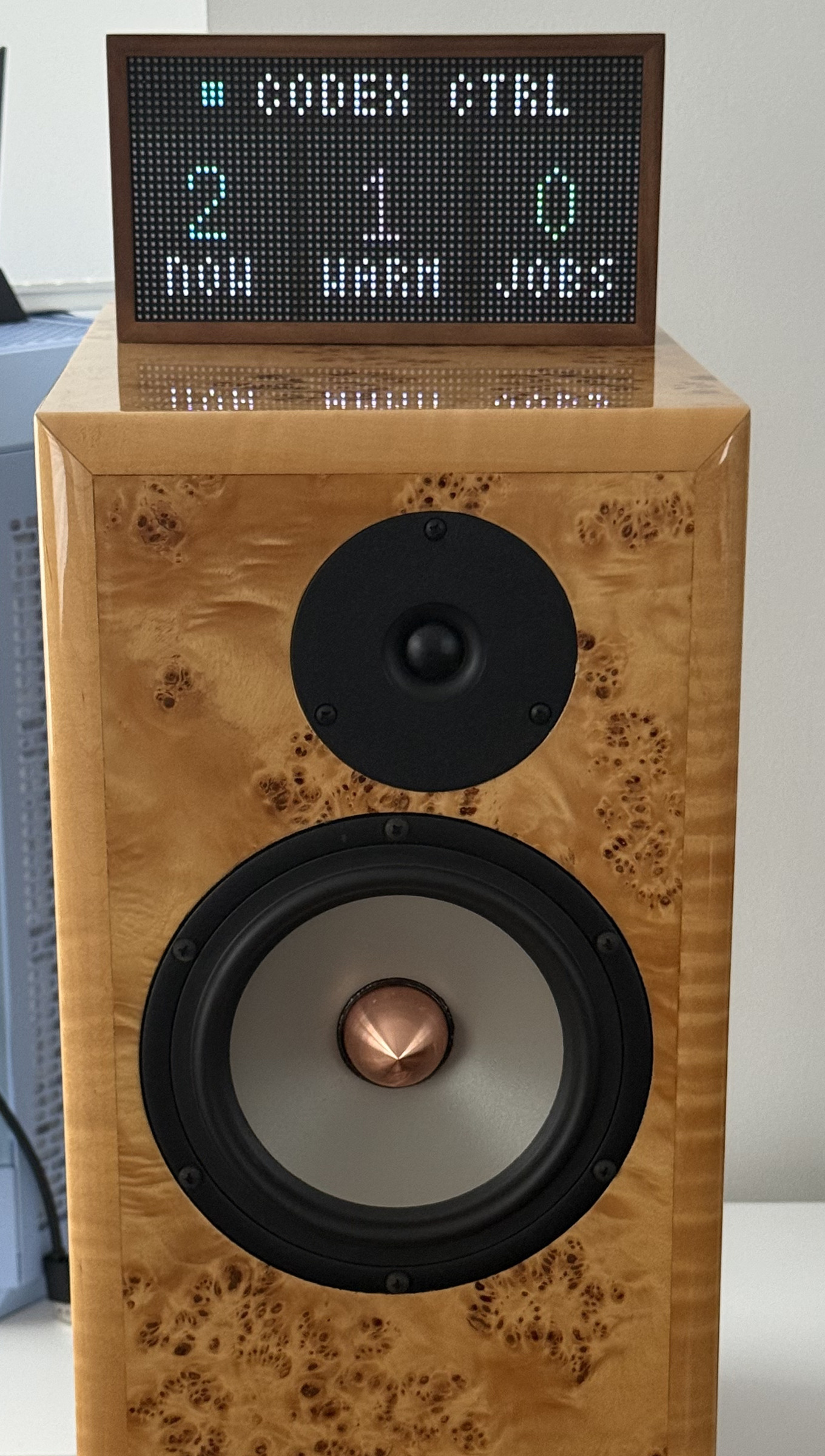
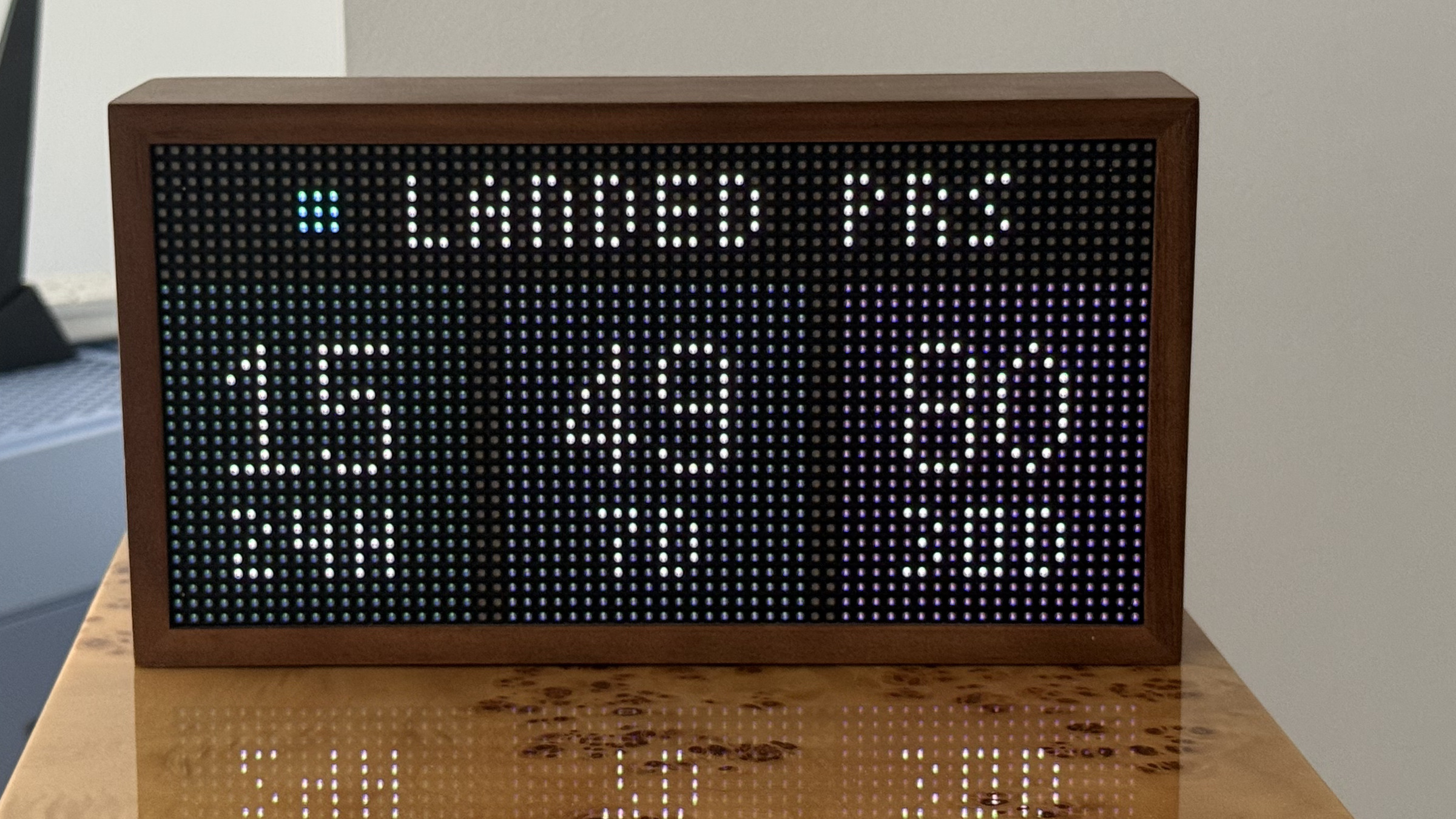
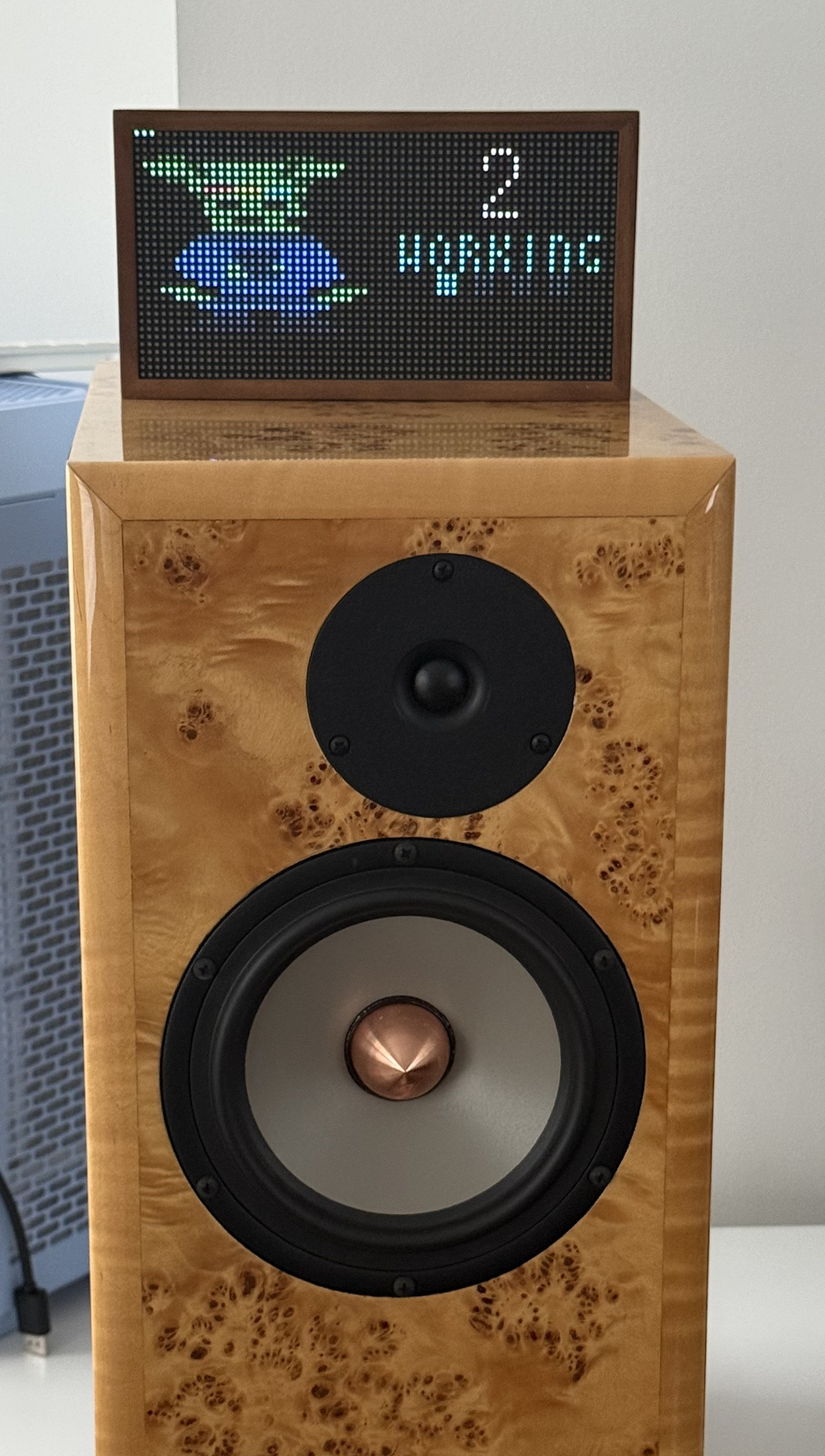
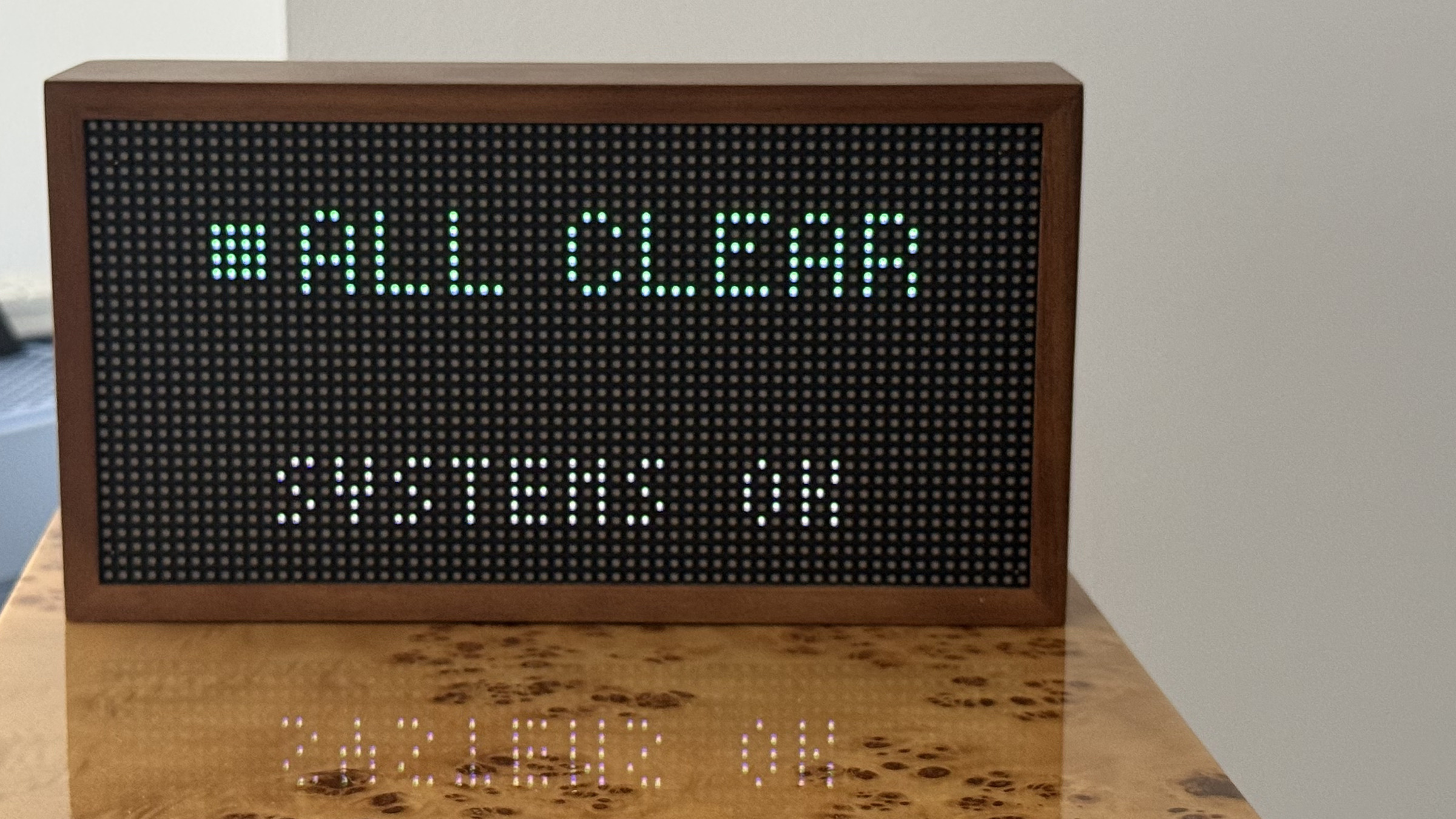
Four original displays. One new job.
Tidbyt made these displays and still runs the platform behind them. I already owned four original devices, cycling through weather, sports, and the existing Tidbyt app library.
TIDBYTS is my software project, not the hardware. The name is a play on “tidbits”: small pieces of useful information delivered through Tidbyt. For Build Week, Codex learned Tidbyt’s Pixlet/Starlark app stack, built new 64×32 views, pushed them through the official device API, and stayed on as the local automation that keeps the wall current.
I wanted the answer from across the room
Codex can be working on several tasks while I’m focused somewhere else. One may be running, another may be waiting for a decision, and a third may have quietly failed. The information exists, but finding it means checking tasks, terminals, GitHub, and system monitors.
I didn’t want another dashboard. I wanted one useful answer from across the room: does anything need me right now?
Those four displays now have a second life as a quiet status wall for AI-assisted development.
Four tiny screens, one job at a time
Every view is designed for a real 64×32-pixel display. At that size, there is nowhere to hide a weak hierarchy behind tabs or charts. Each screen has to decide what matters and make it readable at a glance.
- Control Tower shows current Codex work, recent activity, background jobs, and anything waiting for me.
- Exception Screen stays calm while the system is healthy. A failed build, low disk space, stale data, a missing service, or a budget warning gets the whole screen.
- Glint turns working, waiting, and completion into a small animated character, so progress is visible without becoming another interruption.
- Landed PRs, Token Use, Billable Week, and Bin Quest make shipped work, AI usage, time, and even a household clean-out visible in the same restrained visual language.
The displays are intentionally quiet. Animation communicates state; it doesn’t decorate the screen. Healthy systems recede. The one exception that needs action becomes impossible to miss.
Codex built it. Then Codex stayed on.
First, Codex helped me build TIDBYTS. During Build Week, I used Codex Desktop
with GPT-5.6 (gpt-5.6-sol) to connect the TypeScript collectors,
Cloudflare Worker and D1 database, Pixlet/Starlark apps, and the test suite. It
also helped test
awkward display states such as long labels, two-digit counts, healthy fallbacks,
and failures at the actual 64×32 resolution. The primary July 18 build session
is 019f76ab-6b0a-7d73-a7dd-7e3bc30bb31f.
Then Codex took on its second job. In my normal setup, one continuing local Codex automation runs every fifteen minutes on my Mac. It checks current work and machine health, refreshes the local snapshots, renders the Pixlet views, and pushes them to the displays. Because that task continues over time, I can teach it a new check when my setup changes without making the screens any busier.
That is the part I find most useful: the wall stays simple even as the monitor behind it evolves.
The private work stays on my Mac
Prompts, code, transcripts, tool calls, file paths, PR titles, and PR bodies stay local. They are not copied into the Worker, D1 database, or Tidbyt payloads.
The optional shared path carries only the small facts that need to move between devices: content-free usage records such as timestamps, provider/model identifiers, and token counts; pull-request totals; and explicitly entered household scores. Machine-local state goes directly from the local snapshot into Pixlet.
Pixlet renders locally and pushes through the normal Tidbyt device API. The project uses stock firmware and does not depend on Tidbyt Plus, Teams, or paid private-app hosting.
Judge it without owning a Tidbyt
The hardware-free demo uses the same checked-in Pixlet output as the physical displays. It needs no account, API key, private metrics, or rebuild:
- Live demo: tidbyts.jon-cooper.workers.dev/demo/
- Demo film: I Gave Codex Four Tiny Screens
- Source and tests: github.com/joncooper/tidbyts
Reviewers can switch among Control Tower, Exception Screen, Glint, delivery and usage signals, and the privacy architecture directly in the browser. The repository also includes deterministic Worker/D1 tests and Pixlet render tests for normal, active, alert, and maximum-width states.
For a local run: npm ci, npm run dev, then open
http://localhost:8787/demo/. Run npm test for the deterministic test suite.
What I stopped checking
The useful part is what I stop doing: checking dashboards. Active work stays visible without turning every change into a notification.
TIDBYTS is a passive information radiator with a living Codex operator behind it. As my work changes, Codex can learn new checks and tailor what the wall shows—without making each display busier. It is an ambient-observability pattern for developers running several long-lived local agents: keep private context local, export only state, and interrupt only when attention is useful.
Four original Tidbyt displays now answer the question I kept opening dashboards to ask: does anything need me? Usually, I just look up.
Tidbyt is the existing hardware and platform; TIDBYTS is this independent Codex-powered software project.
Built With
- cloudflare-d1
- cloudflare-workers
- codex-desktop
- gpt-5.6-sol
- pixlet
- starlark
- typescript
- vitest
- wrangler


Log in or sign up for Devpost to join the conversation.