Inspiration
In the midst of the COVID-19 pandemic, when college campuses were abruptly closed and students were forced to return home, a sense of longing and isolation swept through the student community. The vibrant atmosphere and camaraderie of campus life were sorely missed, and students yearned for a way to stay connected and bridge the gap between their physical separation.
Trapped within the confines of their homes due to lockdown restrictions, students faced a new challenge: a significant decline in social interaction. With limited opportunities to meet new people and engage in casual conversations, their social skills and sense of community began to suffer.
Amidst this backdrop of longing and isolation, GcChat emerged as a beacon of hope. The project was born out of a deep understanding of the students' yearning for the campus environment and the need to foster meaningful connections in a virtual world.
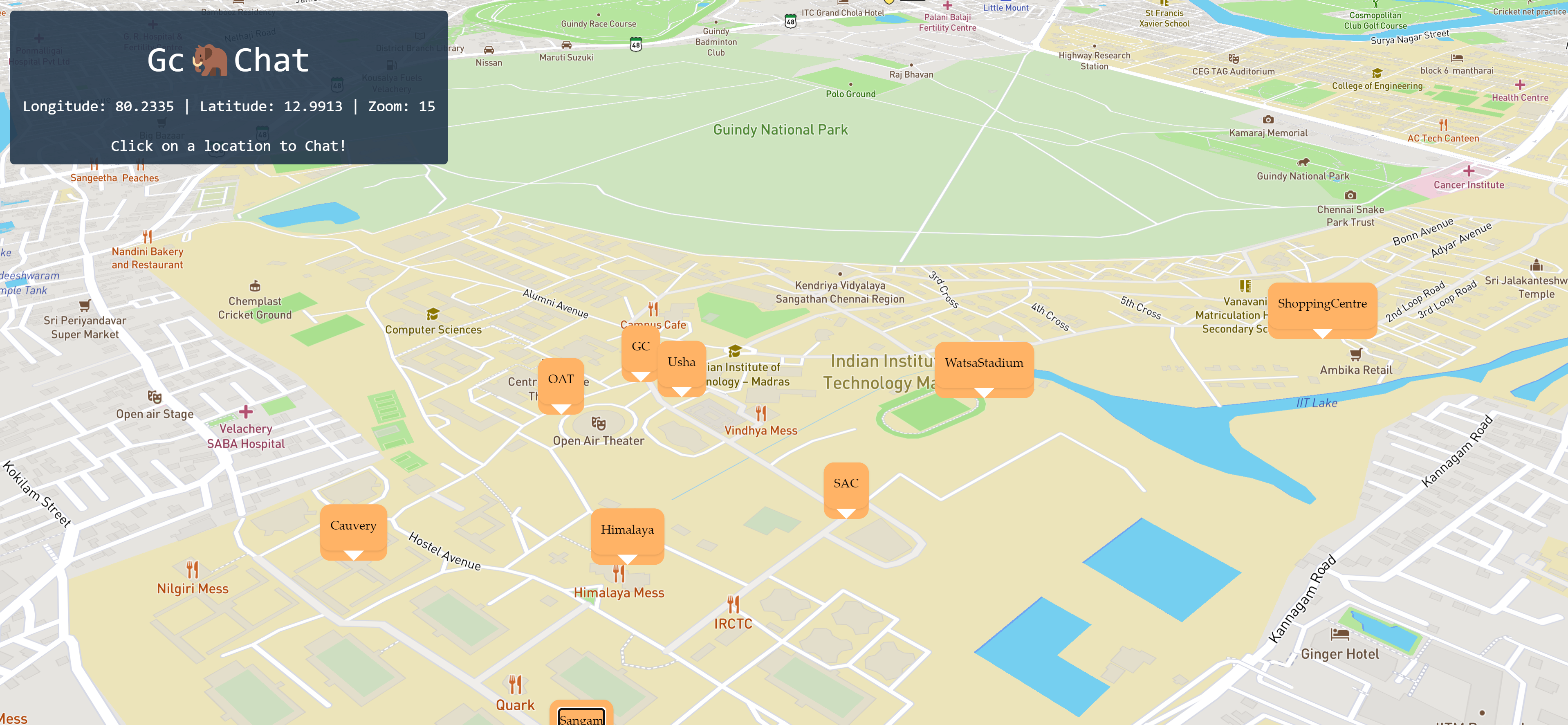
GcChat set out to solve these pressing issues and more. By leveraging cutting-edge technology, the platform aimed to recreate the vibrant campus experience, complete with a virtual interactive map and chat rooms located at familiar hotspots. Students could once again gather, converse, and collaborate, transcending the physical limitations imposed by the pandemic.
The project sought to provide a lifeline for students, offering them a sense of belonging, a space to express themselves, and an opportunity to rebuild their social skills. GcChat aimed to not only fill the void left by the absence of physical campus interactions but to go beyond, creating a supportive and inclusive online community that would remain a valuable resource even after normalcy returned.
Driven by a passion to enhance the lives of college students, GcChat endeavored to bring back the essence of campus life, rekindle connections, and empower students to thrive in the face of adversity. With each line of code, the project team aimed to breathe life into a virtual metaverse that would heal the wounds of isolation and strengthen the fabric of the college community.
Through GcChat, students would find solace, forge new friendships, and nurture their social skills, knowing that even in the most challenging times, they were not alone. The project carried the hopes and aspirations of a generation yearning for connection, making it more than just a technical endeavor but a powerful force for positive change in the lives of college students everywhere.

What it does
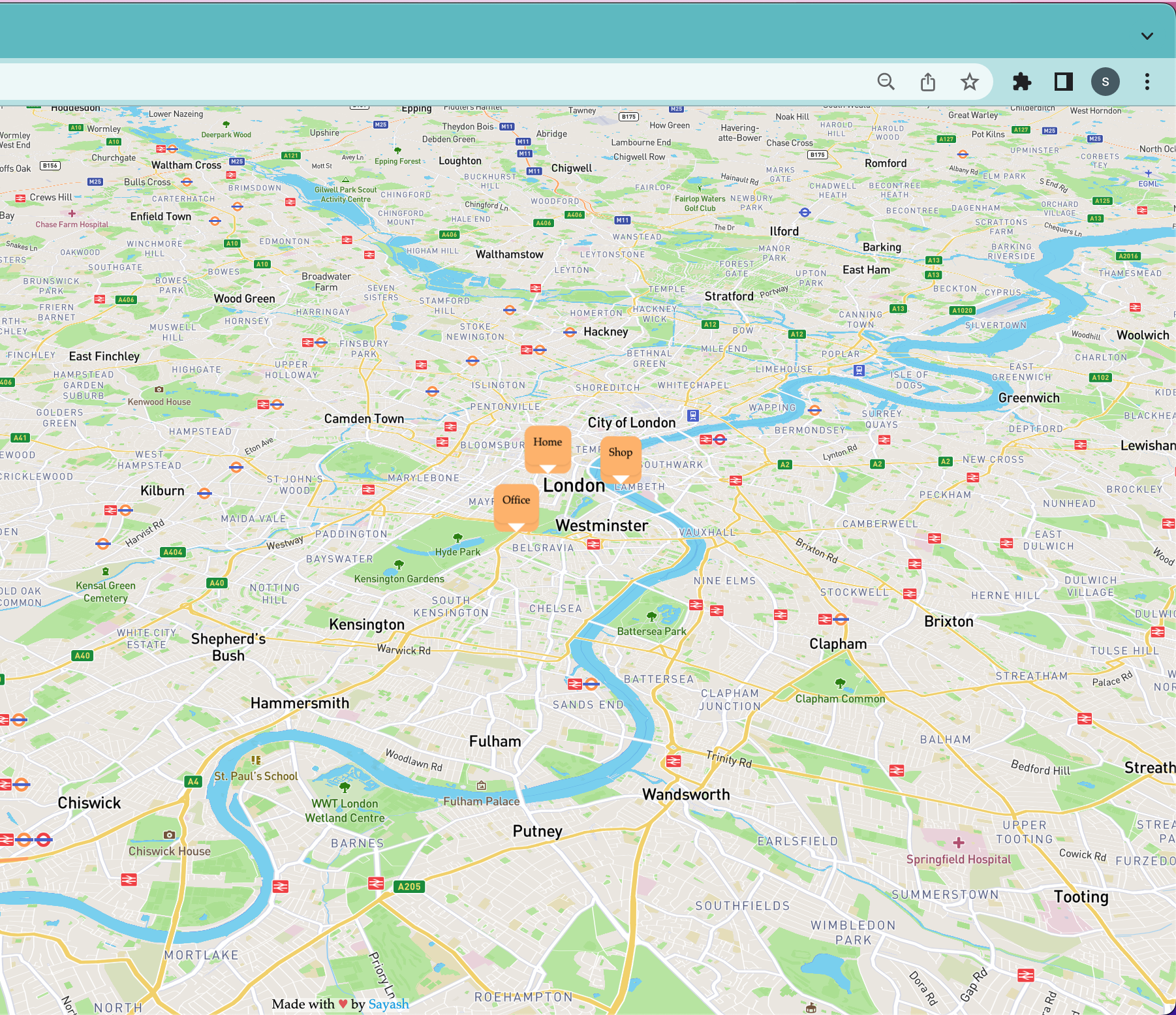
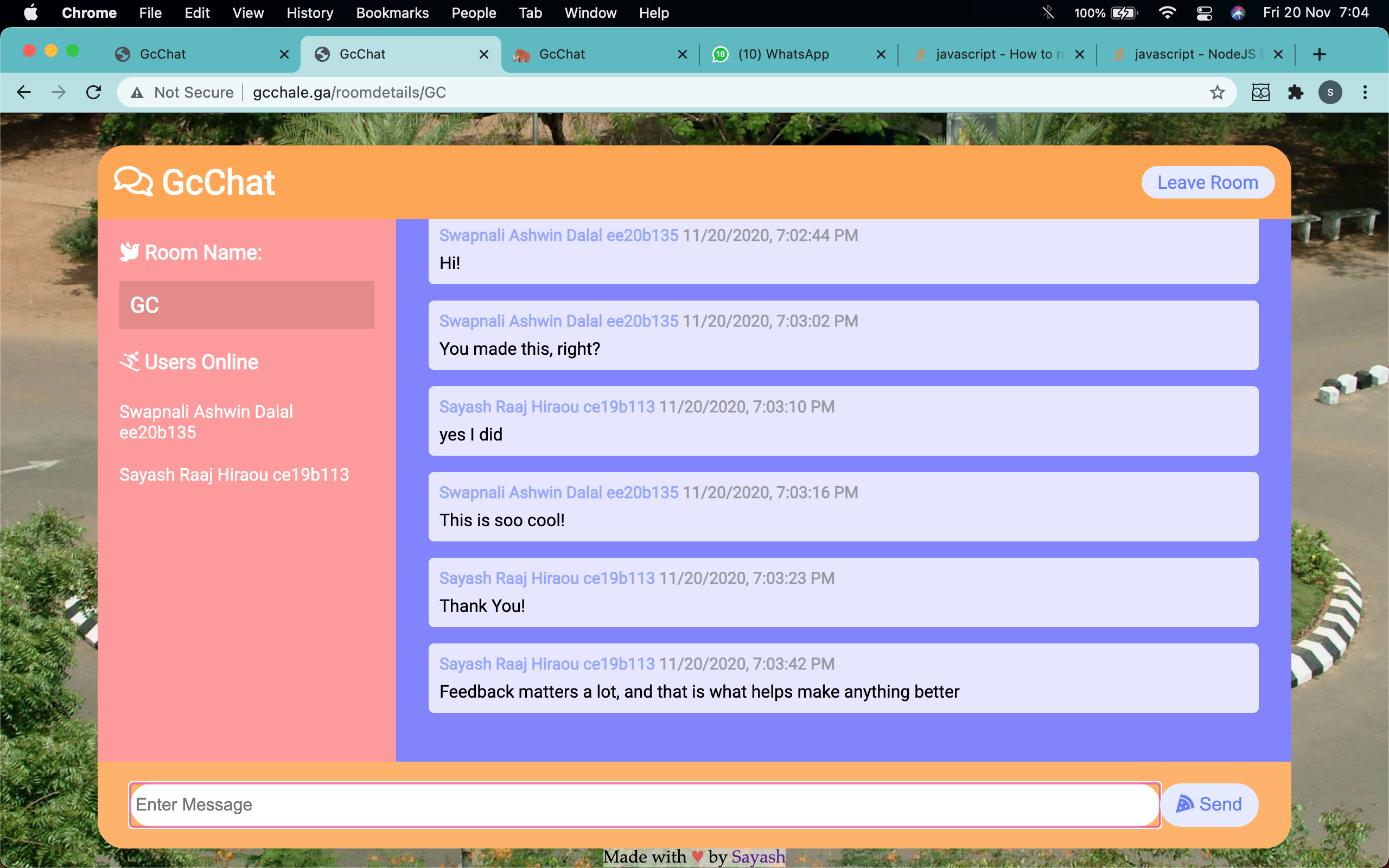
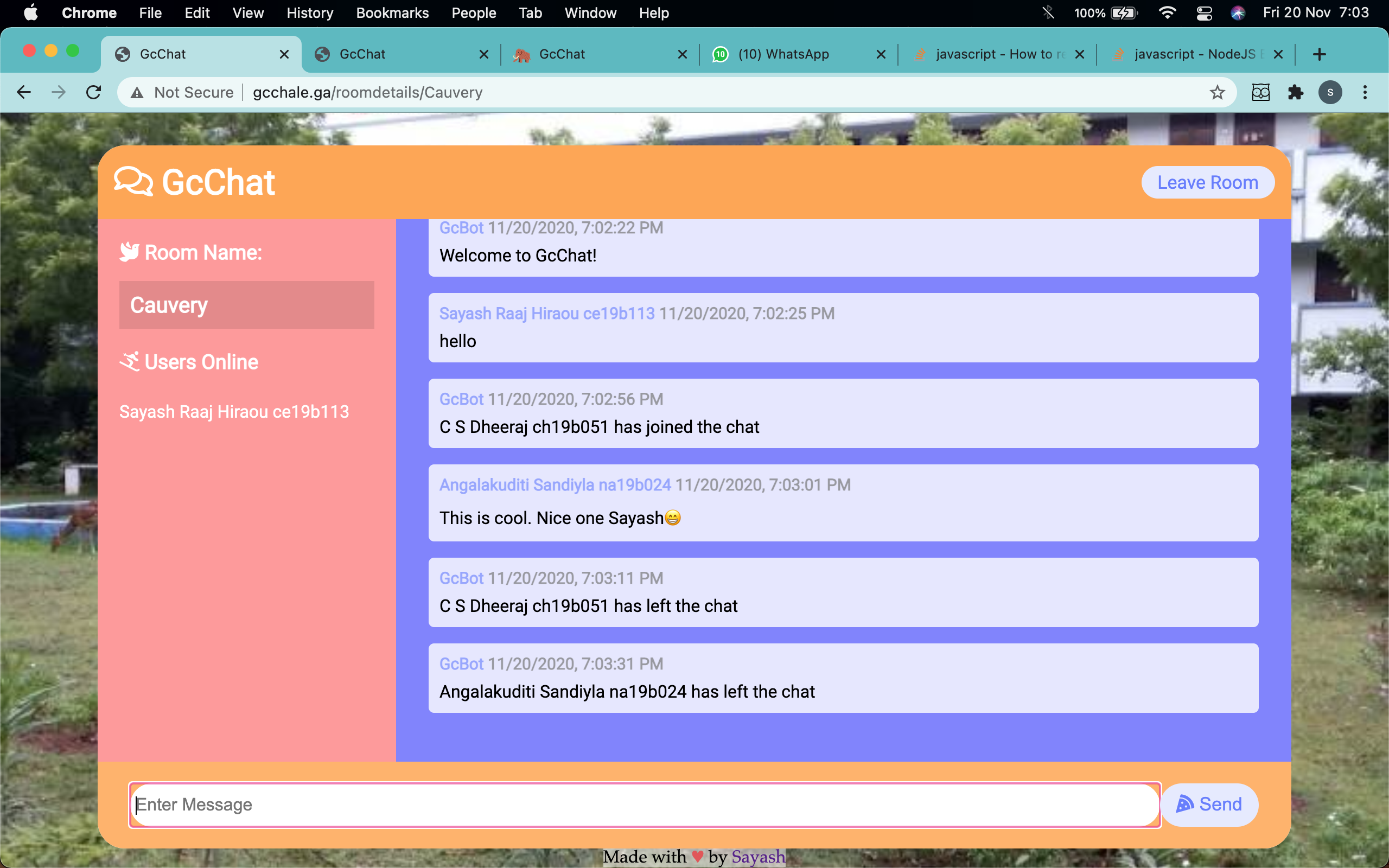
The project, GcChat, is a real-time chat application designed to facilitate seamless communication and collaboration among college students. It creates a virtual interactive map of college campuses, integrating chat rooms at specific hotspots where students typically gather. GcChat enables users to connect, chat, and share information in real-time, fostering a sense of community and enhancing the overall college experience. By leveraging the power of web technologies, GcChat aims to bridge the gap between physical separation, particularly during the COVID-19 pandemic, and provide a platform where students can interact, exchange ideas, and build meaningful connections.
How we built it
GcChat was developed using a combination of powerful technologies to create a seamless and immersive chat experience.
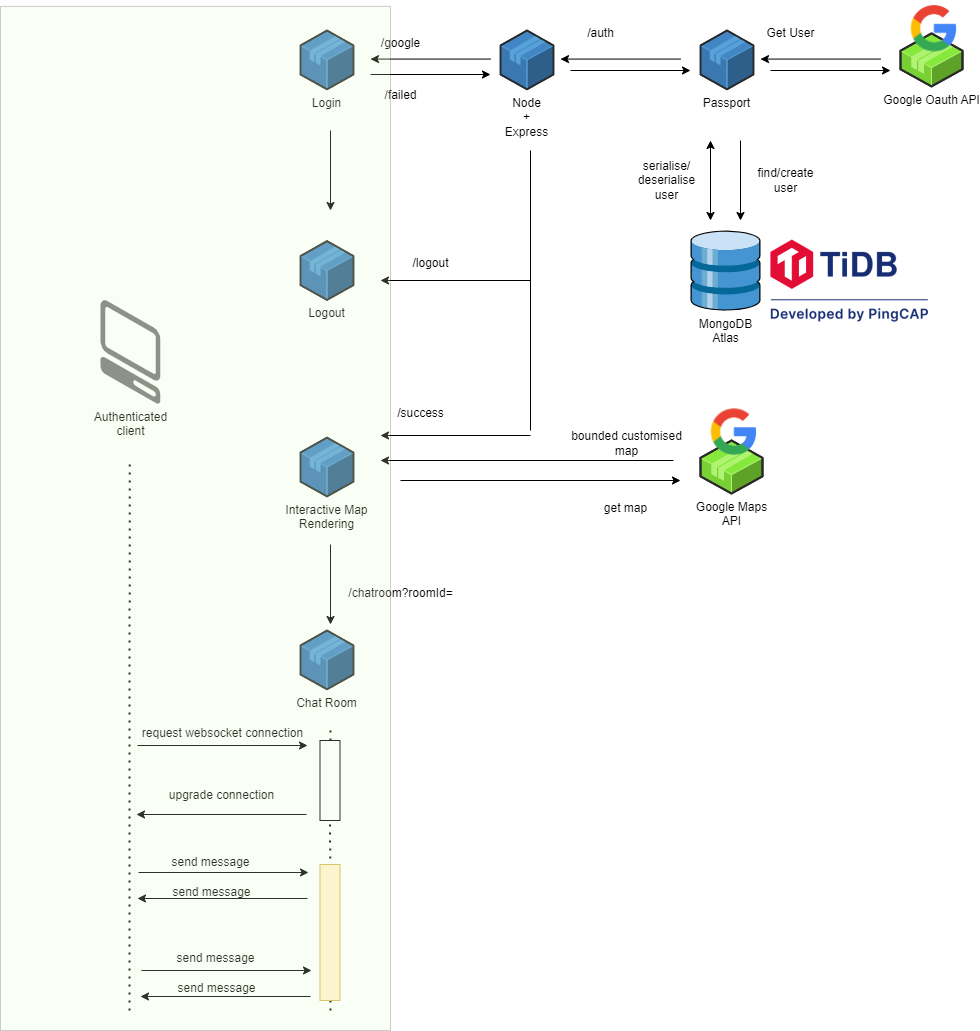
To enable secure user authentication and authorization, we integrated Google Cloud Platform (GCP) and specifically utilized Google OAuth. This allowed users to log in to GcChat using their Google accounts, ensuring a trusted and streamlined authentication process. Additionally, we utilized the Google Maps API within GCP to create the virtual interactive map of college campuses. This integration enabled us to embed chat rooms at specific hotspots, bringing the campus experience to life within the application.
For user management tasks, we leveraged the capabilities of TiDB serverless. This cloud-based database service was used to find, create, serialize, and deserialize user profiles. TiDB serverless provided efficient and reliable data management, ensuring the seamless functioning of user-related operations within GcChat.
To facilitate real-time communication between users, we implemented WebSockets, a technology that enables bidirectional and low-latency communication over a single, persistent connection. WebSockets allowed us to establish real-time connections between users, ensuring instant message delivery within the chat rooms. This feature enabled dynamic and interactive conversations, enhancing the sense of community and engagement within GcChat.
By utilizing these technologies, GcChat was built to provide a secure and immersive chat experience. Google Cloud Platform's OAuth and Maps API integration, along with TiDB serverless for user management, and WebSockets for real-time communication, formed the foundation of the application, allowing users to connect, interact, and collaborate in an efficient and engaging manner.

Challenges we ran into
During the development of GcChat, we encountered several challenges that tested our skills and pushed us to find innovative solutions. Let me share some of the hurdles we faced along the way:
Real-Time Communication: Implementing seamless real-time communication using WebSockets was a demanding task. We had to ensure messages were delivered reliably and synchronized between users, while handling potential network disruptions and providing robust error handling mechanisms.
Map Integration: Integrating the Google Maps API to create the virtual interactive map required in-depth understanding and careful implementation. We had to work closely with the API documentation, tackle challenges related to rendering and displaying the map accurately, and ensure smooth navigation and user interaction within the map interface.
User Authentication and Security: Implementing Google OAuth for secure user authentication and authorization presented its own set of challenges. Configuring the authentication flow, managing user sessions, and safeguarding user data from unauthorized access demanded meticulous attention to detail and a strong focus on security best practices.
Scaling and Performance: As GcChat gained popularity, ensuring the application could handle a growing user base became vital. We had to optimize database queries, carefully manage server resources, and fine-tune the application's architecture to maintain high performance and responsiveness even under heavy usage.
User Experience and Interface Design: Crafting an intuitive and visually appealing user interface that delivered a seamless chat experience was no easy feat. We had to strike the right balance between functionality and aesthetics, design efficient chat room layouts, and ensure a responsive design that catered to various devices and screen sizes.
Testing and Bug Fixing: Ensuring the reliability and stability of GcChat demanded rigorous testing and thorough bug fixing. We diligently conducted manual and automated tests, striving to identify and address any issues promptly. This process allowed us to enhance error handling, address bugs, and maintain a high-quality system.
Throughout the development journey, we embraced these challenges as opportunities to learn and grow. By leveraging our technical expertise and collaborating closely as a team, we overcame these obstacles, resulting in the creation of GcChat—a robust, feature-rich, and user-friendly chat application that truly addresses the needs of college students.

Accomplishments that we're proud of
As the sole developer behind the creation of GcChat, I am immensely proud of several accomplishments achieved throughout the development process. Here are some key milestones that fill me with a sense of pride:
Conceptualizing and Executing the Idea: Taking the initial idea of GcChat—a real-time chat application with a virtual interactive map—and transforming it into a fully functional product was a significant accomplishment. From envisioning the concept to mapping out the features and technical requirements, seeing the idea come to life was a gratifying experience.
Seamless Integration of Technologies: Integrating the MERN stack, Google Cloud Platform, Google OAuth, TiDB serverless, and WebSockets to build a cohesive and efficient application was a complex task. Overcoming the challenges associated with integrating these technologies seamlessly and ensuring they worked harmoniously was an accomplishment that required careful planning, research, and meticulous implementation.
Creating an Engaging User Experience: Designing an intuitive and visually appealing user interface that provided a seamless chat experience was a significant achievement. Focusing on user-centric design principles, I aimed to make GcChat accessible, engaging, and easy to navigate. Seeing users enjoy and appreciate the application's interface was a rewarding outcome of this effort.
Overcoming Technical Challenges: Building GcChat presented various technical challenges, such as real-time communication, map integration, user authentication, and scaling. Overcoming these hurdles through innovative problem-solving, extensive testing, and continuous optimization was an accomplishment that showcased my technical expertise and perseverance.
Positive User Feedback and Impact: Witnessing GcChat positively impact the college student community and receiving positive feedback from users has been a source of immense pride. Knowing that the application fulfilled its purpose of fostering connection, collaboration, and community among students during challenging times is a testament to the project's success.
Overall, the journey of creating GcChat as a solo developer has been a challenging but immensely fulfilling experience. The accomplishments achieved throughout the development process serve as a testament to the dedication, technical expertise, and commitment to creating a valuable tool for college students.
What we learned
Building GcChat provided me with valuable insights into utilizing Google Cloud Platform (GCP) and TiDB serverless for developing robust and scalable applications. Here are the key learnings:
Google Cloud Platform (GCP): Throughout the project, I deepened my understanding of GCP's vast array of services and their capabilities. I learned to leverage services like App Engine and Compute Engine for hosting and scaling the application. Working with Cloud Storage enabled efficient storage and retrieval of essential files and resources. Additionally, I gained insights into GCP's authentication and authorization mechanisms, specifically integrating Google OAuth for secure user authentication.
TiDB serverless: While developing GcChat, I honed my skills in working with TiDB serverless, a cloud-based database service. I learned to effectively manage user-related operations, such as finding, creating, serializing, and deserializing user profiles. By leveraging TiDB serverless, I gained insights into data management practices, ensuring data security and privacy for user information.
Scalability and Performance: Building GcChat allowed me to focus on designing and implementing scalable architectures. I learned techniques to optimize database queries, distribute application load, and manage server resources effectively. This knowledge empowered me to enhance the application's performance, ensuring smooth and responsive user experiences, even during peak usage periods.
Cloud-Based Infrastructure: Through the integration of GCP and TiDB serverless, I deepened my understanding of cloud-based infrastructure. I learned the advantages of utilizing cloud services for hosting, scalability, and data management. This knowledge has expanded my capabilities in building and deploying applications that can leverage the benefits of cloud computing.
Overall, building GcChat with a focus on Google Cloud Platform and TiDB serverless provided me with invaluable hands-on experience in working with these technologies. I gained insights into their functionalities, best practices, and how they can be effectively utilized to develop scalable, reliable, and feature-rich applications.

What's next for GcChat
The future scope for GcChat holds immense potential for further growth and enhancements. Here are some envisionments for the project:
Expansion to Other Colleges: GcChat can be expanded to include multiple college campuses, catering to a broader audience of college students. By incorporating additional virtual maps and chat rooms, students from various institutions can connect, share experiences, and collaborate, fostering a larger and more diverse community.
Enhanced Features and Functionality: GcChat can be enriched with new features and functionality to enhance the user experience. This could include multimedia sharing capabilities, file sharing, event notifications, scheduling tools, and collaborative features, allowing students to plan meetups, study groups, and campus events seamlessly within the application.
Mobile Application: Developing a mobile application for GcChat would enable students to connect and communicate on-the-go. By providing a mobile platform, students can access chat rooms, interact with peers, and stay connected with their college community from anywhere, further enhancing the convenience and accessibility of the application.
Integration of AI and Chatbot Assistance: The integration of artificial intelligence (AI) technologies and chatbot assistance can enhance the user experience and provide personalized support. AI-powered features like smart recommendations, sentiment analysis, and automated assistance can help students discover relevant chat rooms, receive tailored suggestions, and streamline their interactions within the platform.
Integration with Social Media Platforms: Integrating GcChat with popular social media platforms can facilitate seamless sharing and connectivity. Students can easily invite friends, share conversations or events, and extend their network beyond the application, promoting a wider reach and engagement.
Virtual Events and Campus Engagement: GcChat can serve as a platform for hosting virtual events, club meetings, and campus engagement activities. By incorporating features like virtual event spaces, live streaming, and interactive sessions, the application can become a hub for student engagement, fostering a vibrant and connected college community.
Overall, the future scope for GcChat is to continue evolving as a comprehensive communication and collaboration platform for college students. By incorporating new features, expanding to more campuses, and embracing emerging technologies, GcChat can create a dynamic and immersive digital space that enhances the college experience and promotes meaningful connections among students.
Built With
- api
- express.js
- google-cloud
- google-maps
- maps
- mern
- node.js
- react.js
- rest
- socket
- socket.io
- tidb
- tidb-serverless
- websockets

Log in or sign up for Devpost to join the conversation.