-
-
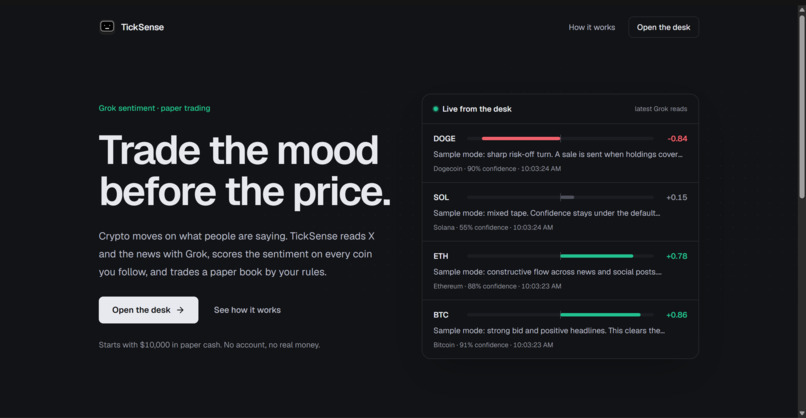
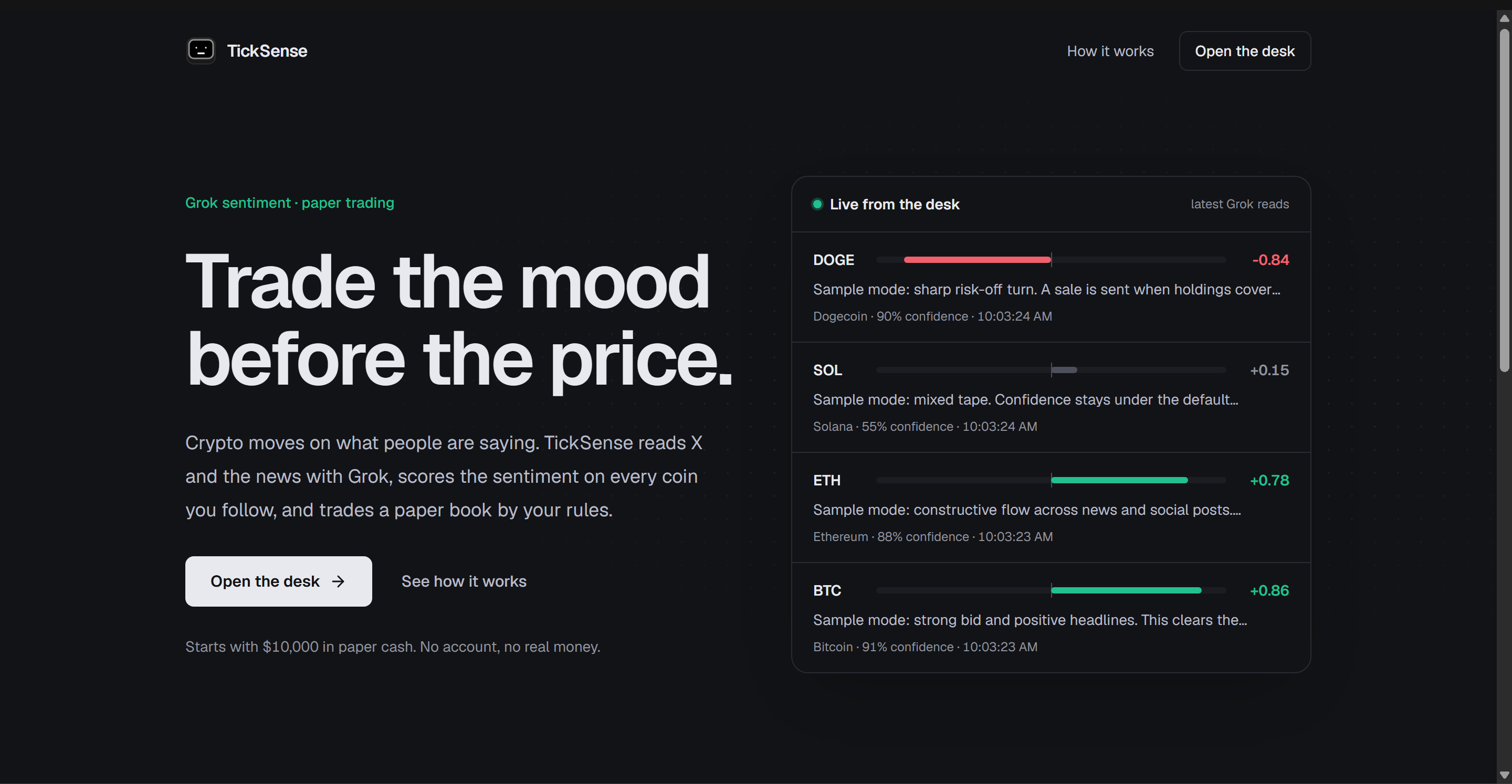
TickSense Landing Page
-
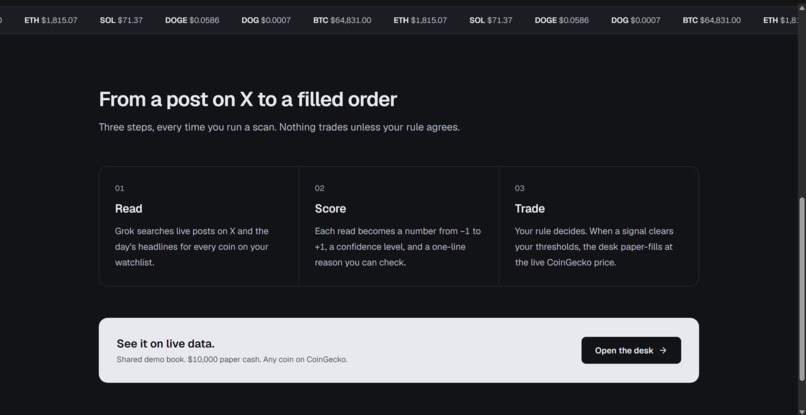
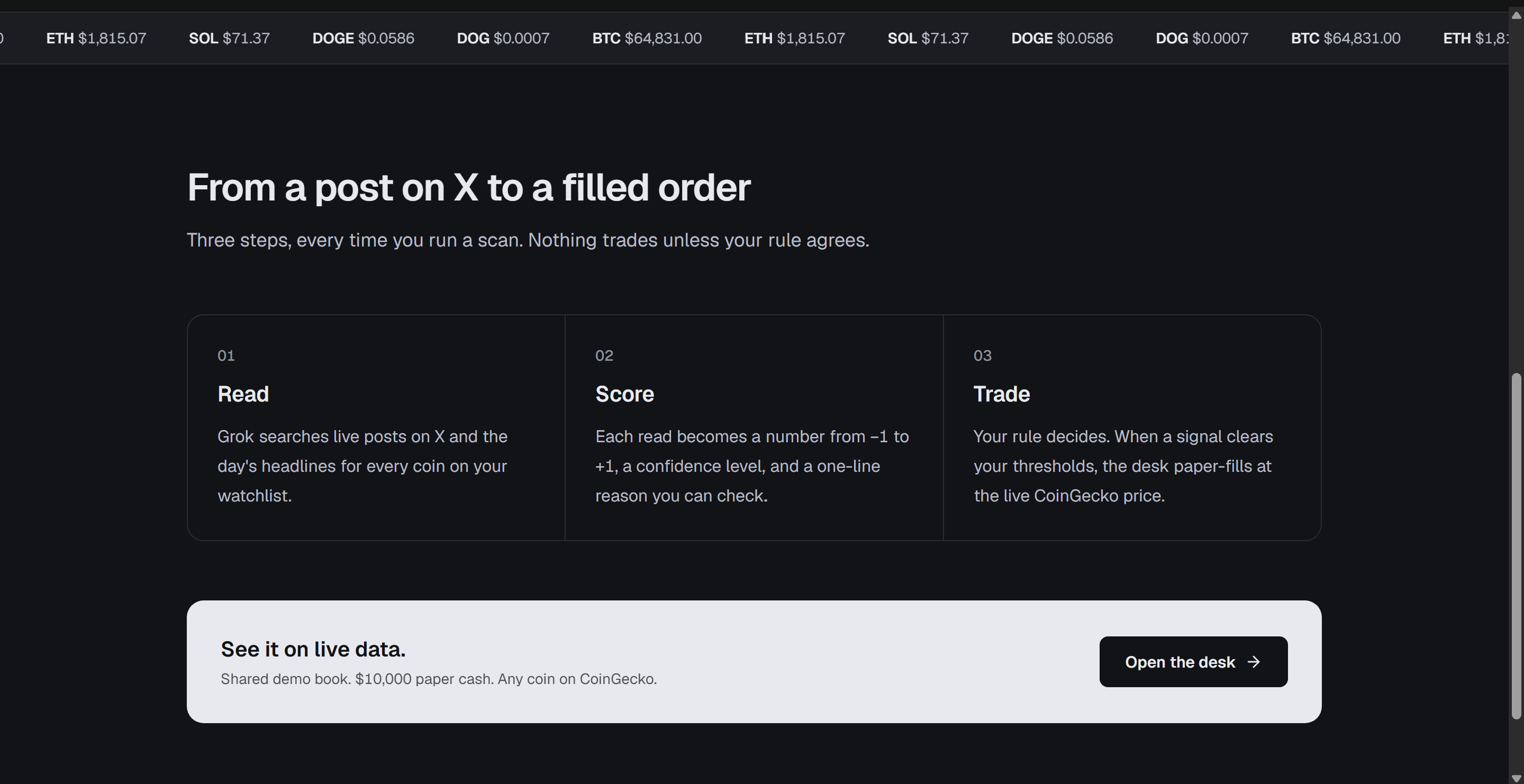
How TickSense Works
-
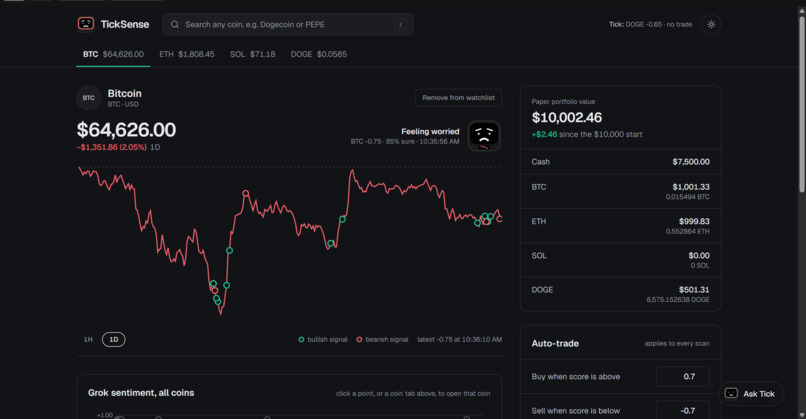
Market Analytics
-
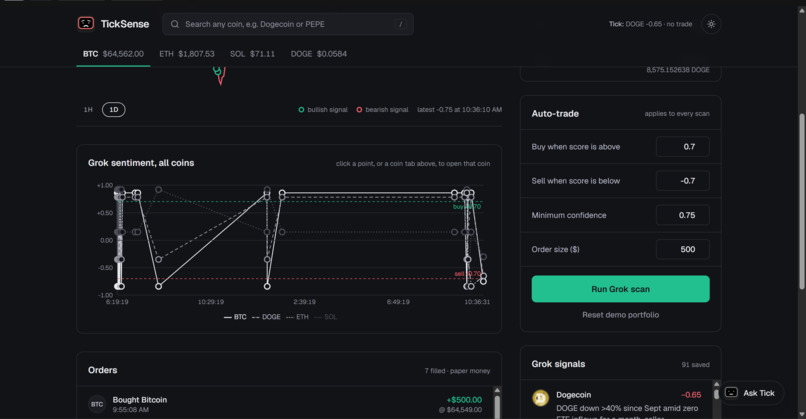
Grok Sentiment & Auto-Trade Features
-
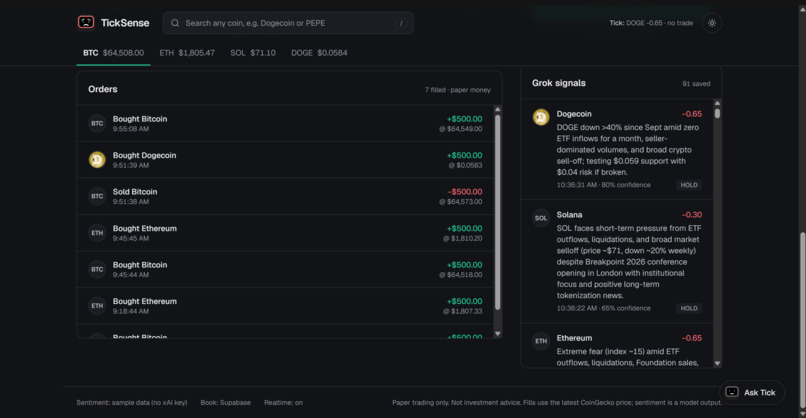
Orders & Grok Signals
-
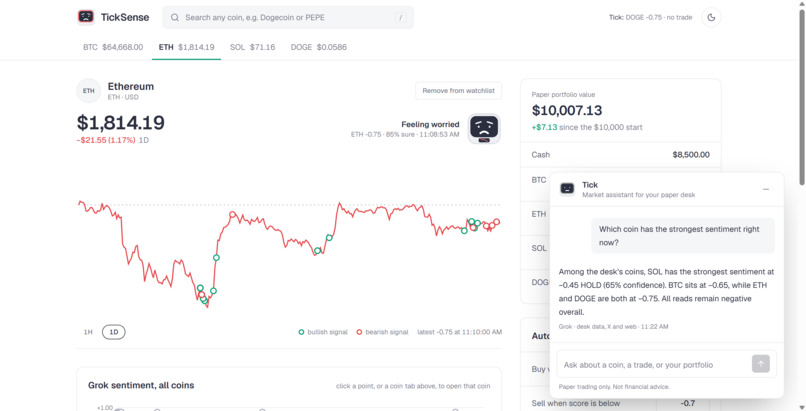
Tick Assistant in Light Mode
Inspiration
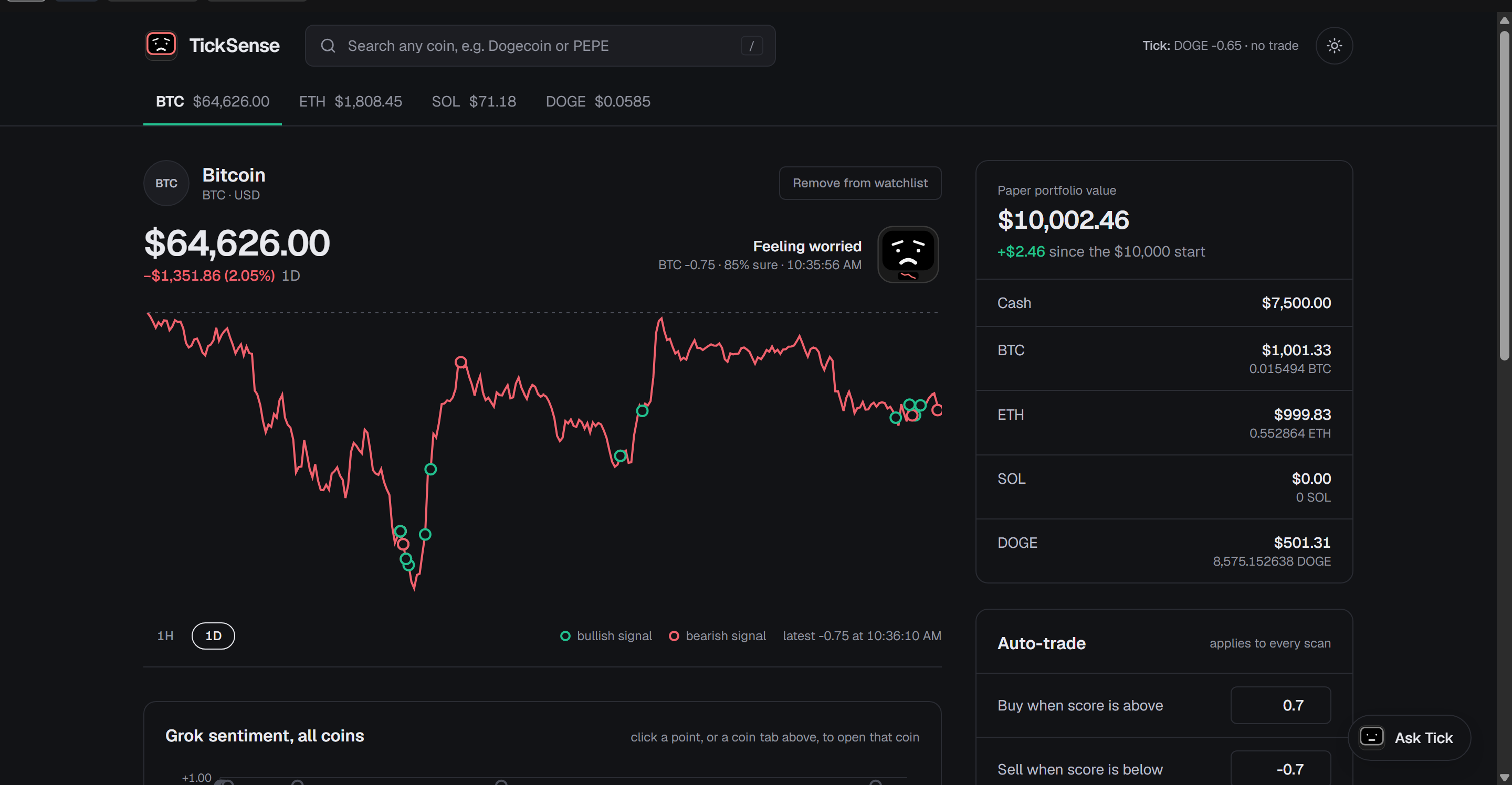
Crypto traders see a constant stream of headlines and opinions. We wanted to answer a practical question: if you turned that chatter into a signal and followed the same trading rules every time, what would happen to your portfolio? We built TickSense at SunHacks so anyone could try it with simulated money.
What it does
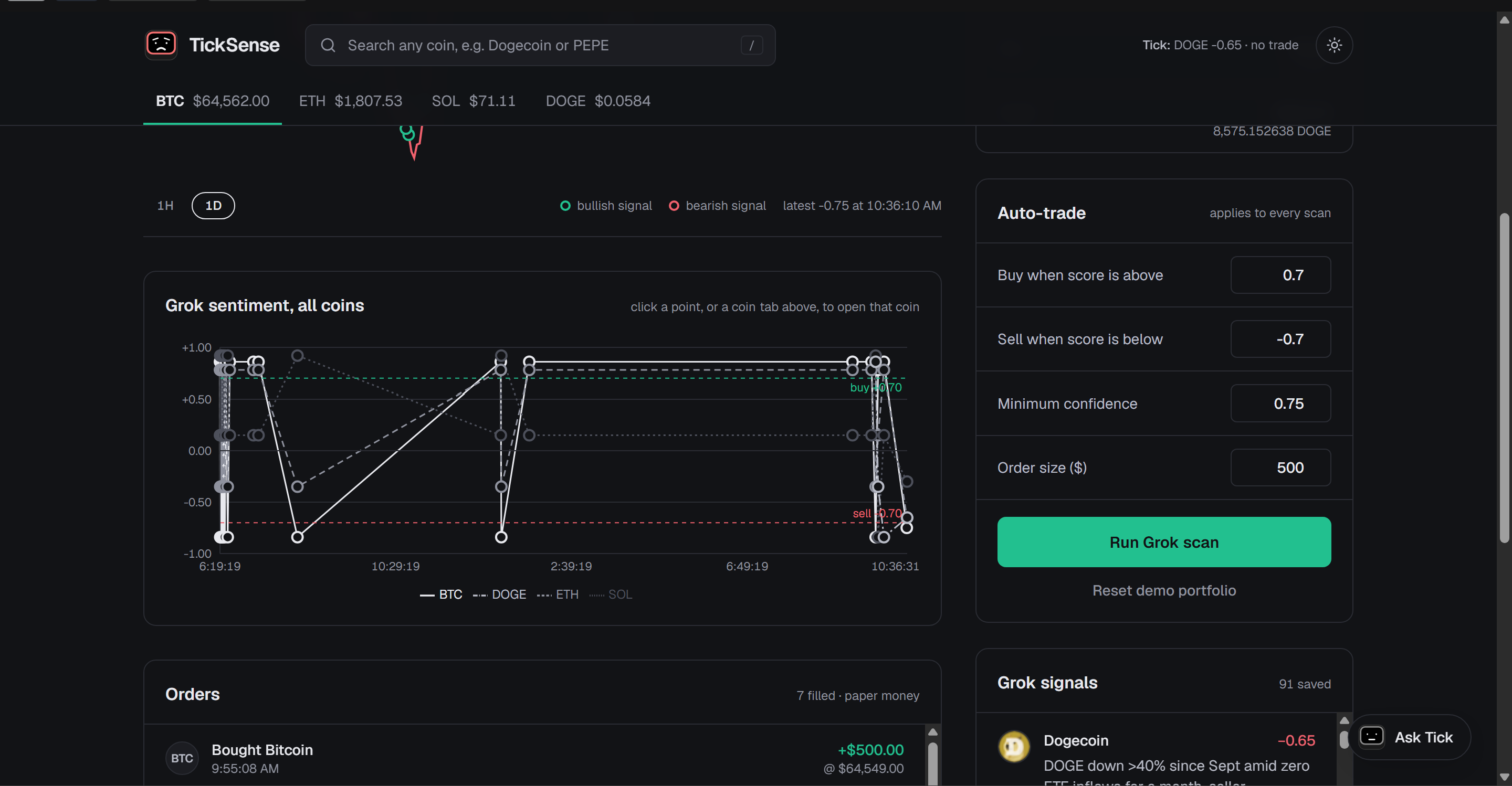
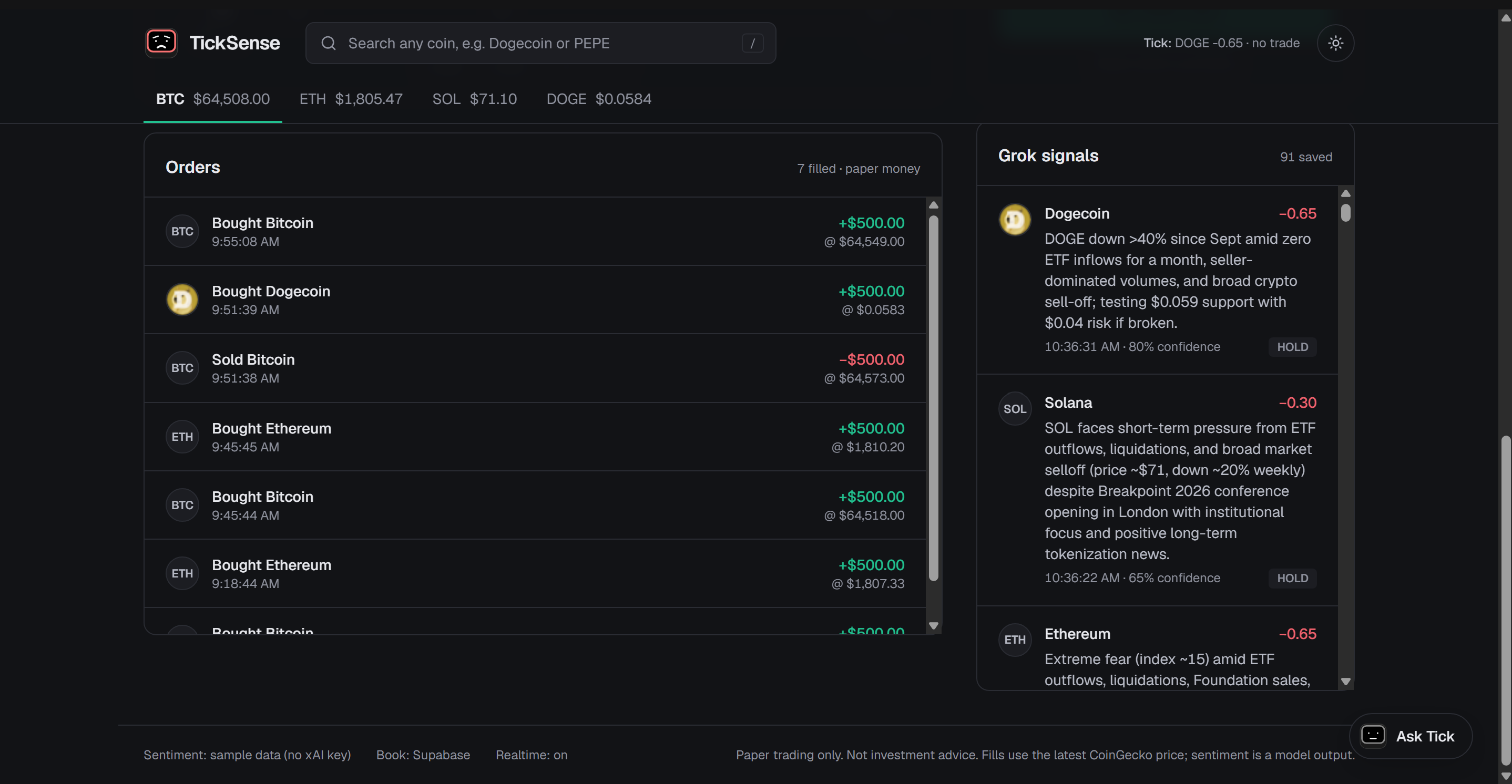
TickSense is a crypto paper-trading desk with a shared demo portfolio that starts at $10,000. Run a scan and Grok returns a sentiment score, a confidence score, and a short explanation of what’s driving sentiment for each coin. You set the buy and sell thresholds, minimum confidence, and trade size. When a signal meets your rules and the portfolio can support the order, TickSense records a simulated trade. The dashboard shows the signals, fills, and how the portfolio is performing.
How we built it
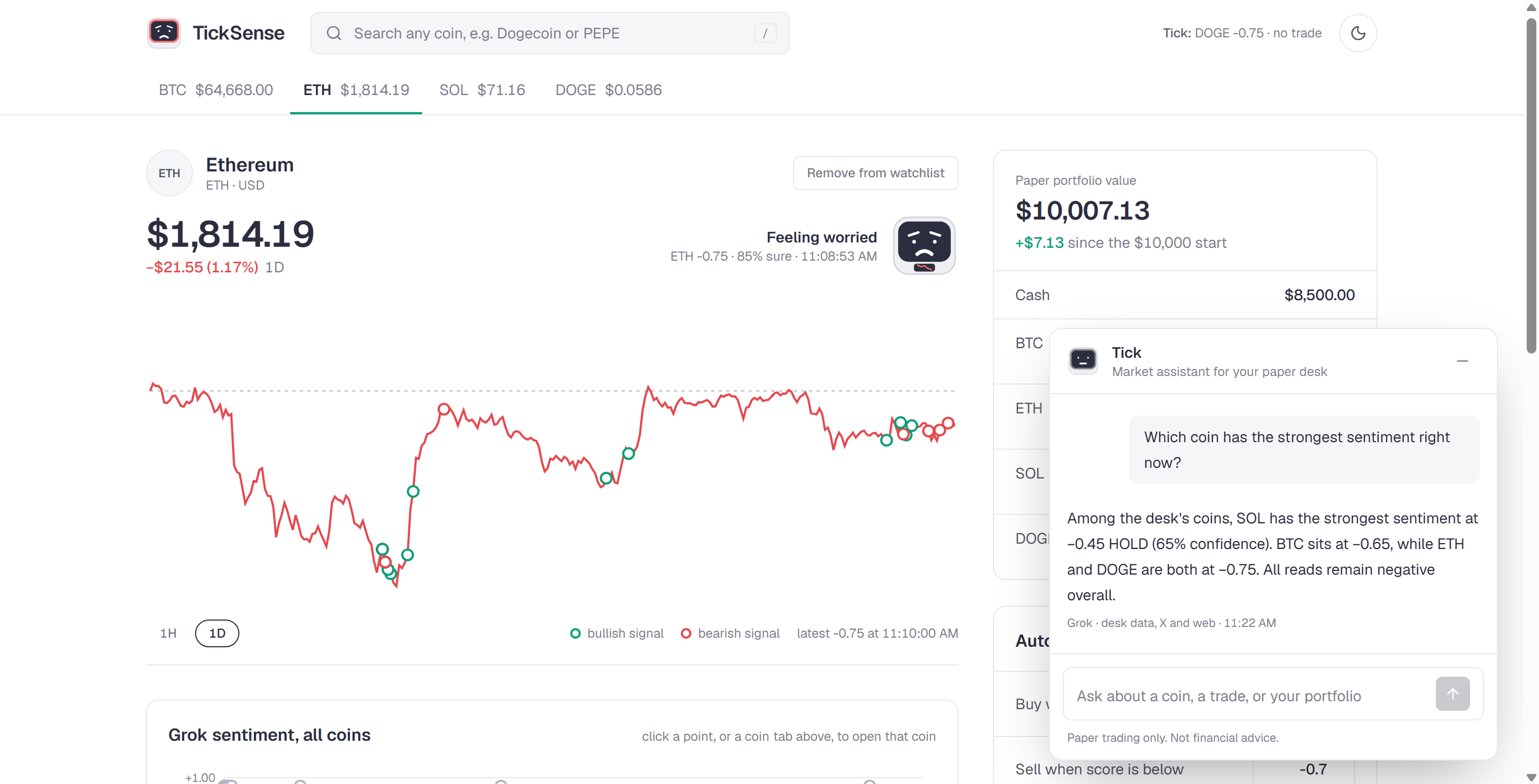
We built the dashboard and API with Next.js, used the xAI API for sentiment analysis, and stored signals, trades, and portfolio data in Supabase. We used Cursor to build and test the server-side trading rules. We also set up a Grok Bot briefing that reads the latest signals, fills, and portfolio performance without triggering a new scan.
Challenges and what we learned
The hardest part was making each simulated decision easy to explain. A bullish signal might still fall below the confidence threshold, and a sell signal might come through when the portfolio has nothing to sell. We kept the execution rules in code so we could test those cases and show users why an order was skipped.
We also built a labeled sample mode so people can try the full workflow without an xAI key. Building both paths taught us to make the source of a signal visible alongside the score, especially when someone is using it to evaluate a trading rule.
Built With
- cursor
- grok
- next.js
- plpgsql
- supabase
- typescript
- xai
