-
-
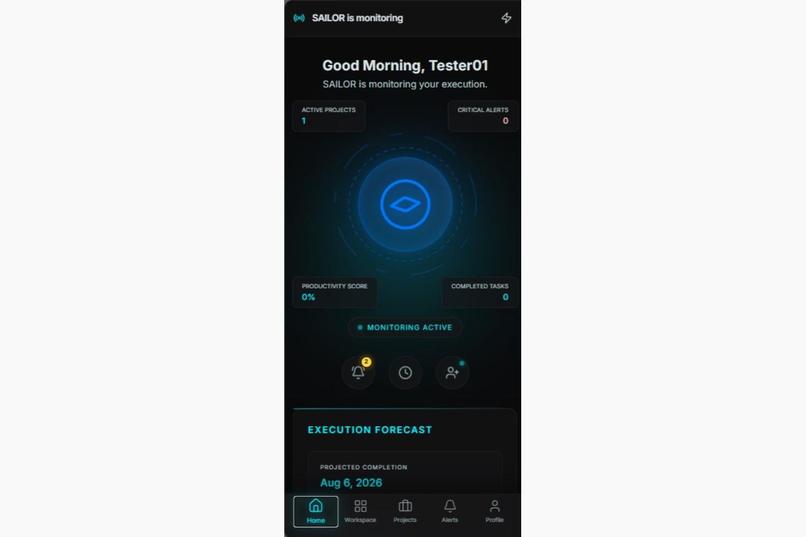
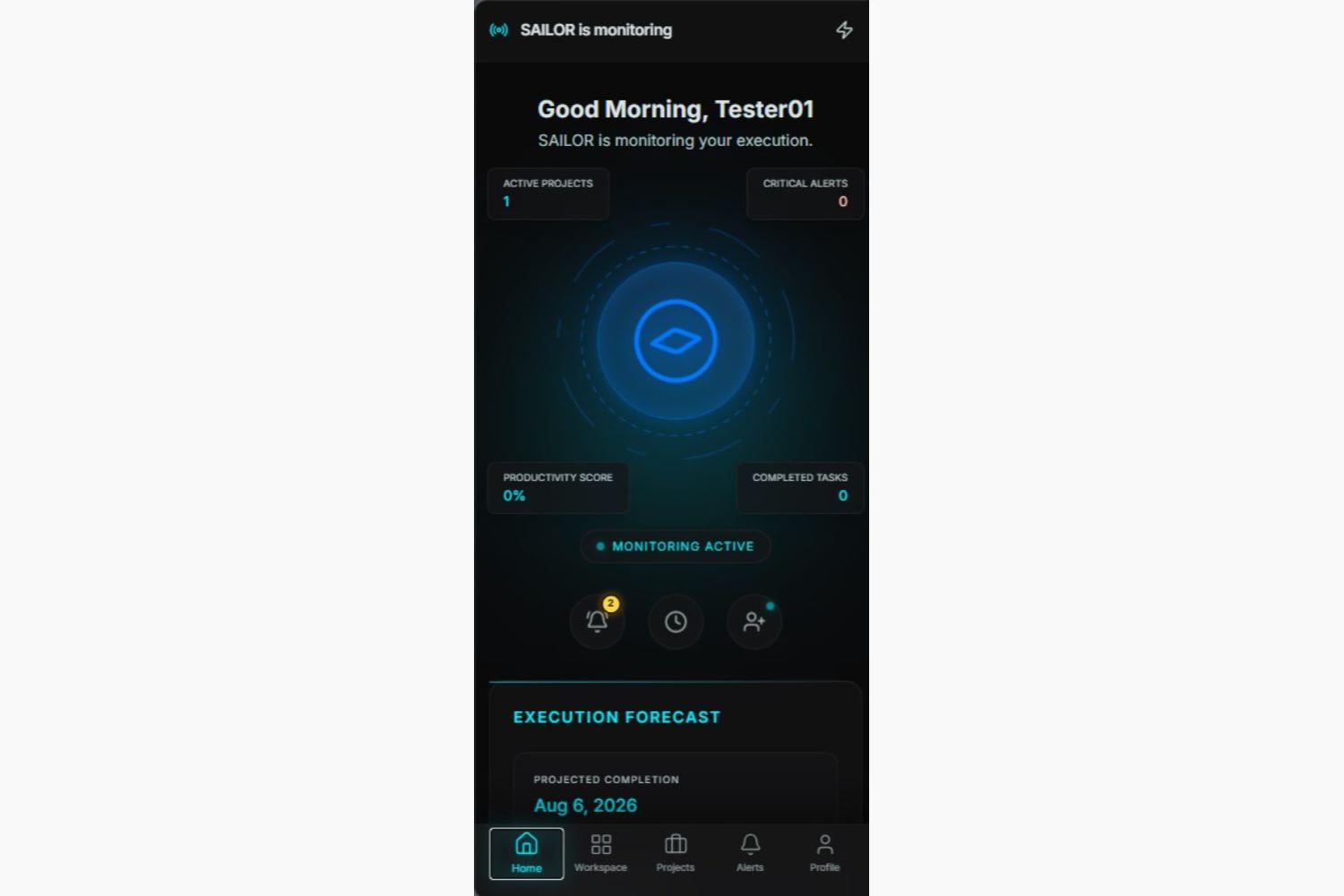
Home or Sailor Dashboard
-
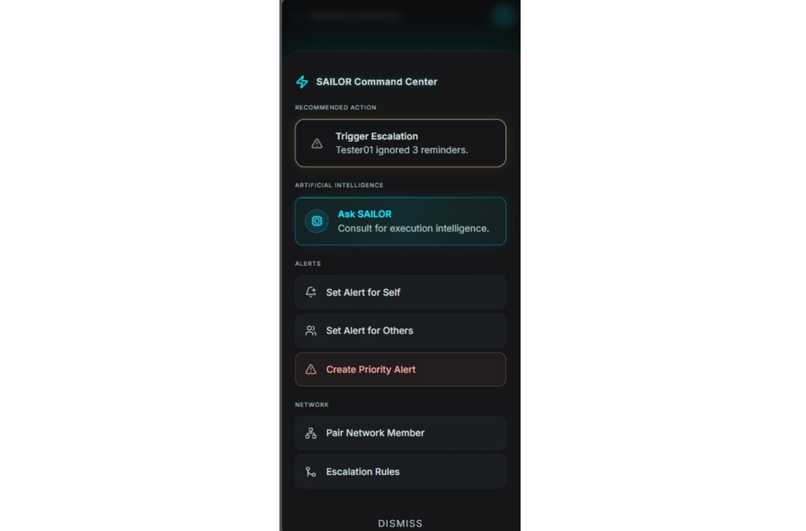
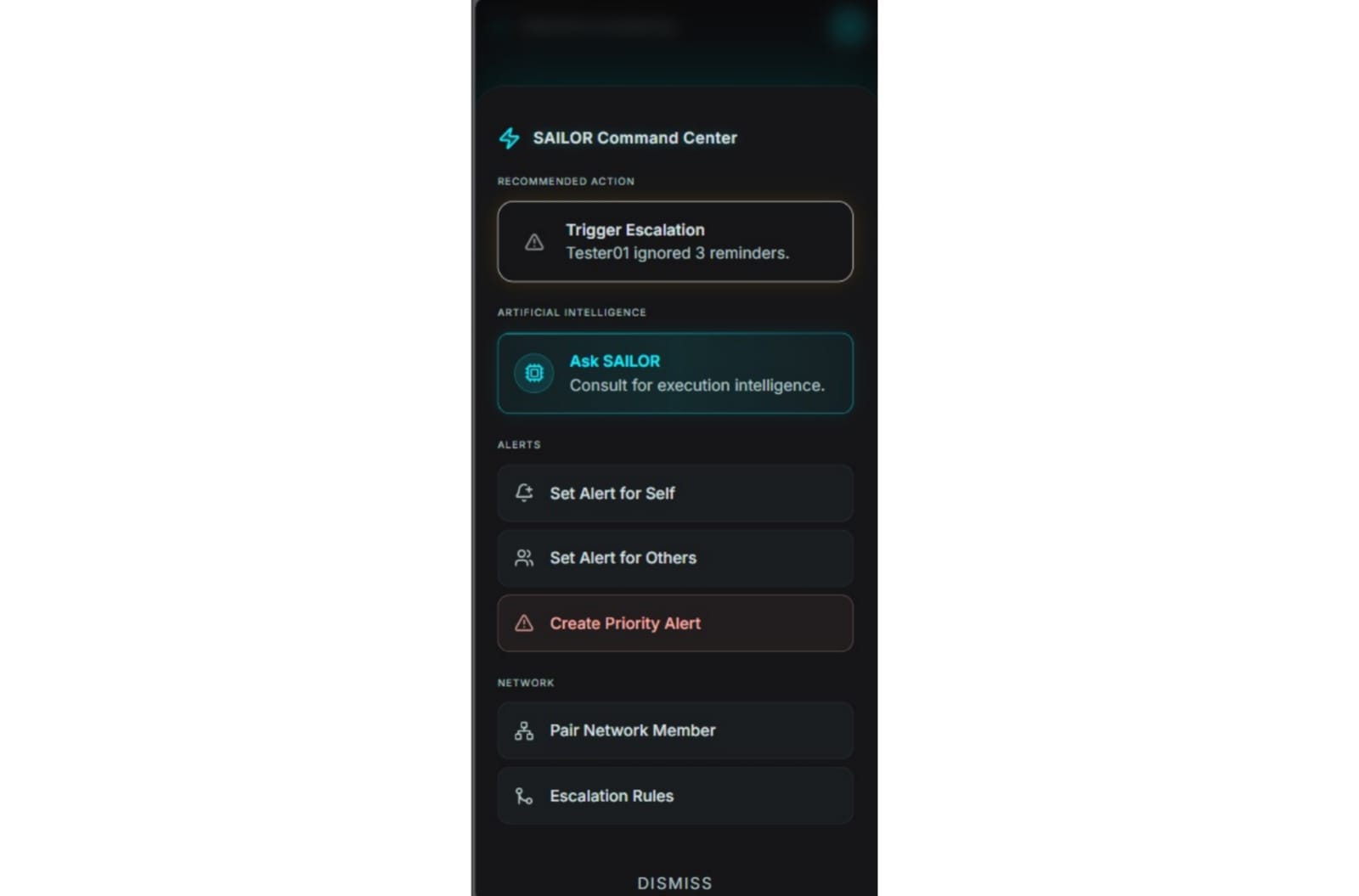
Sailor Command Center
-
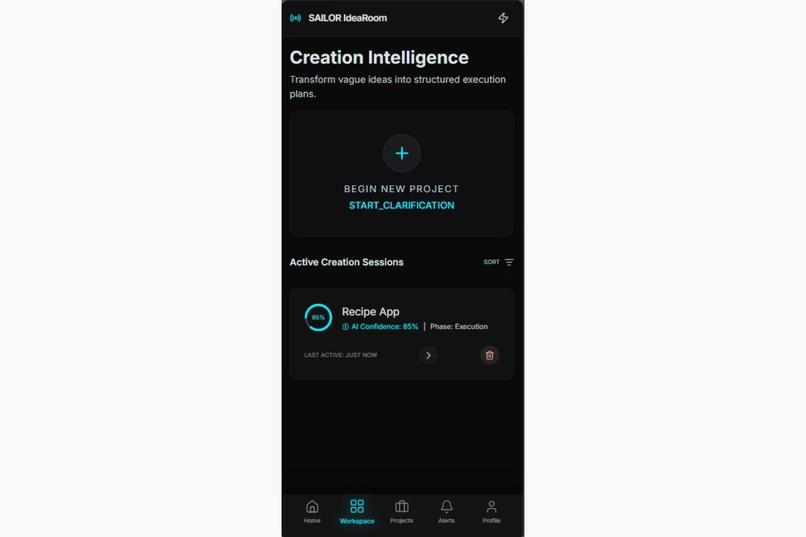
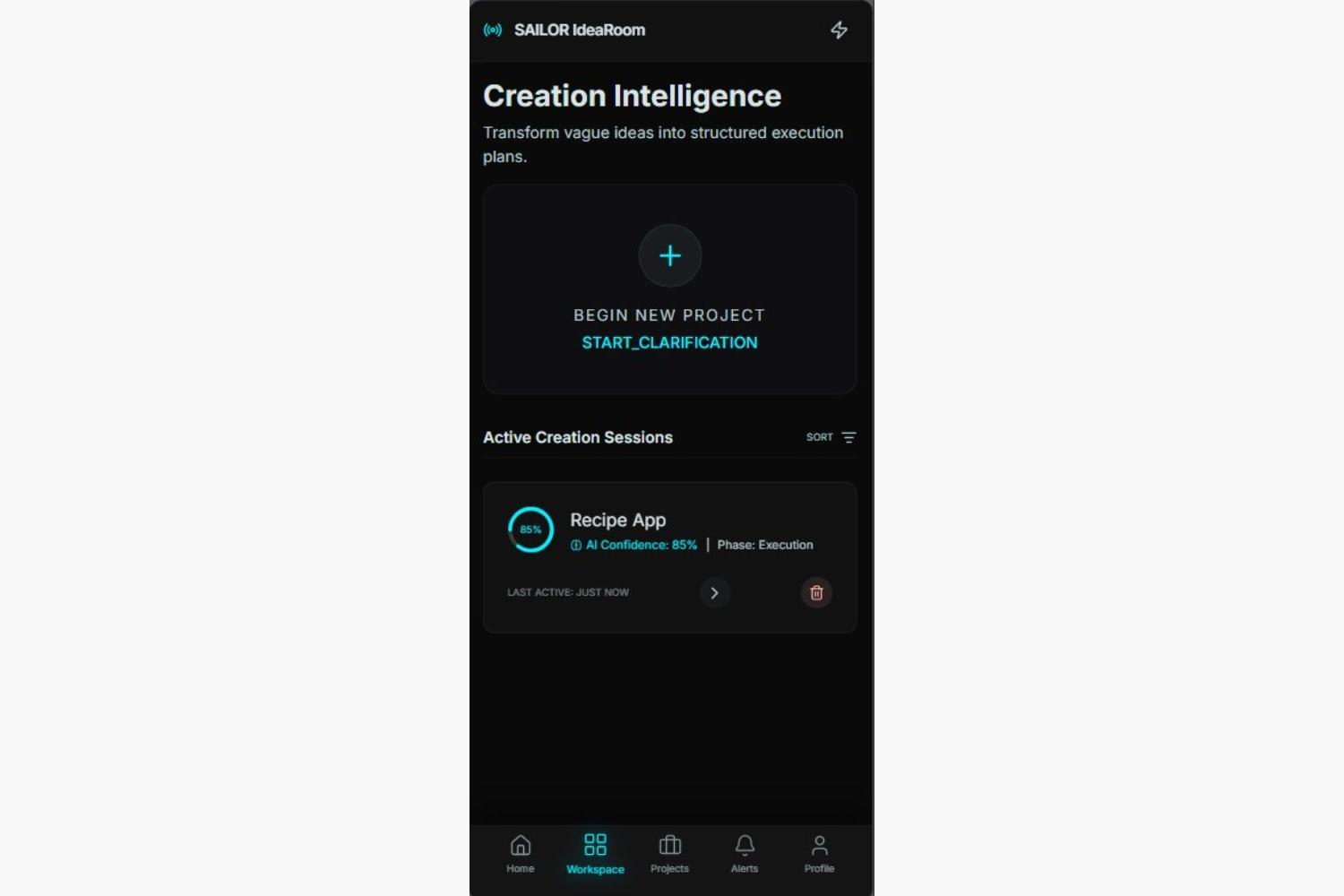
Workspace Section
-
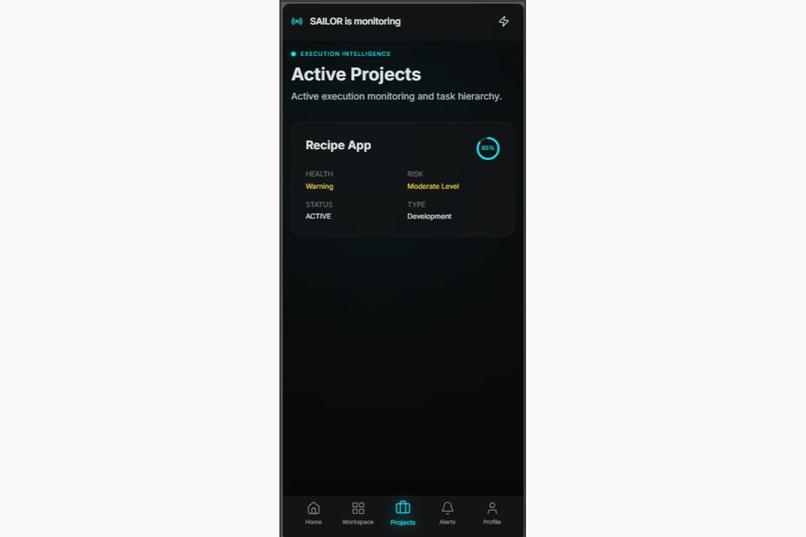
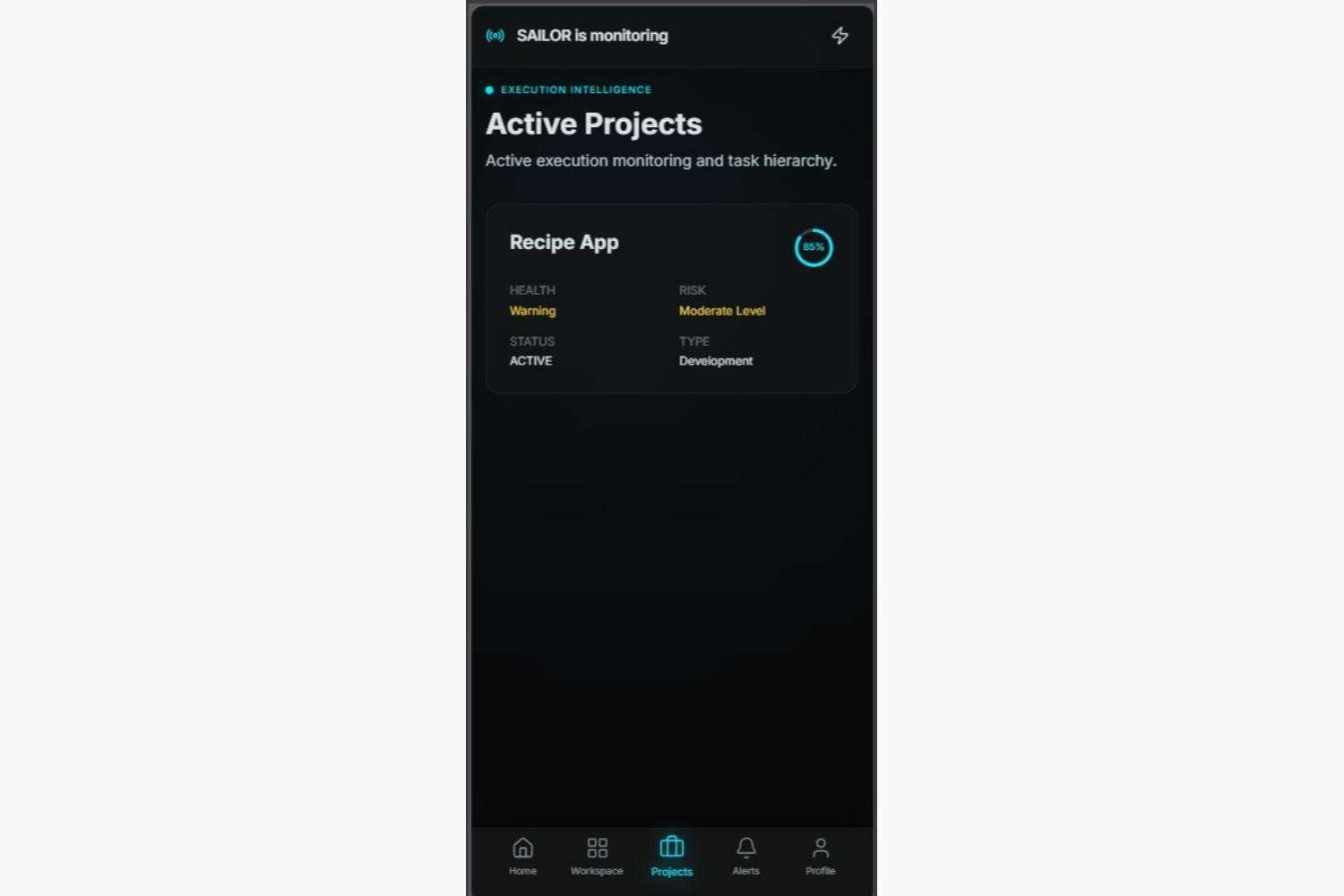
Projects Section
-
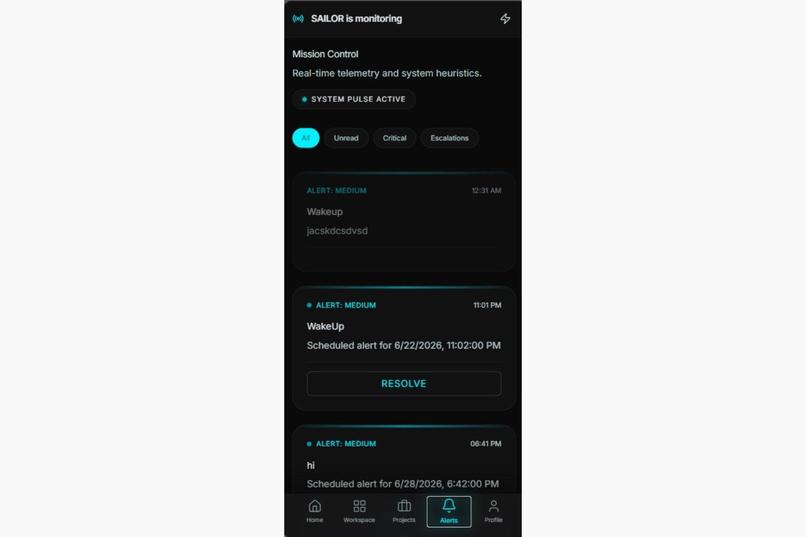
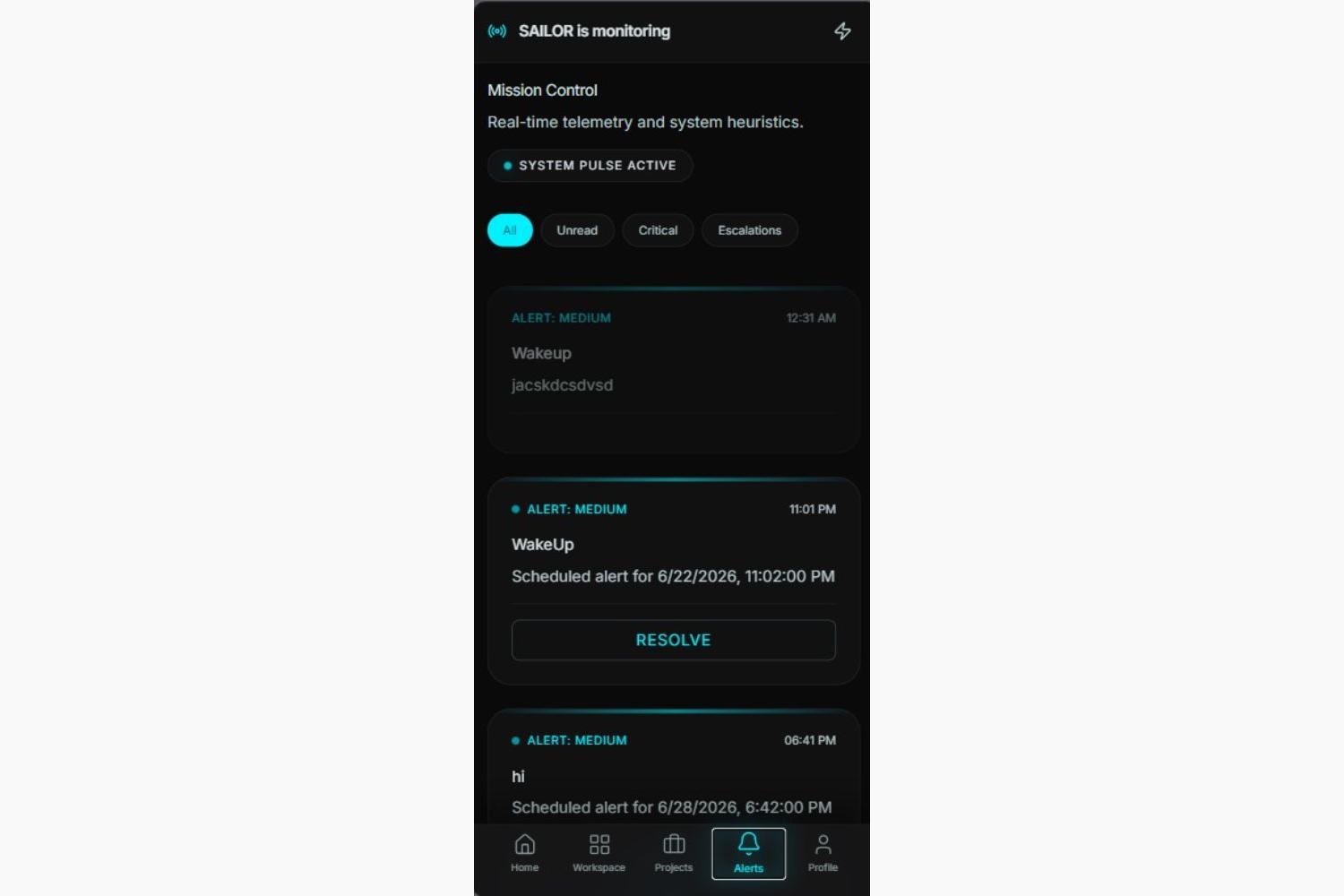
Alert Section
-
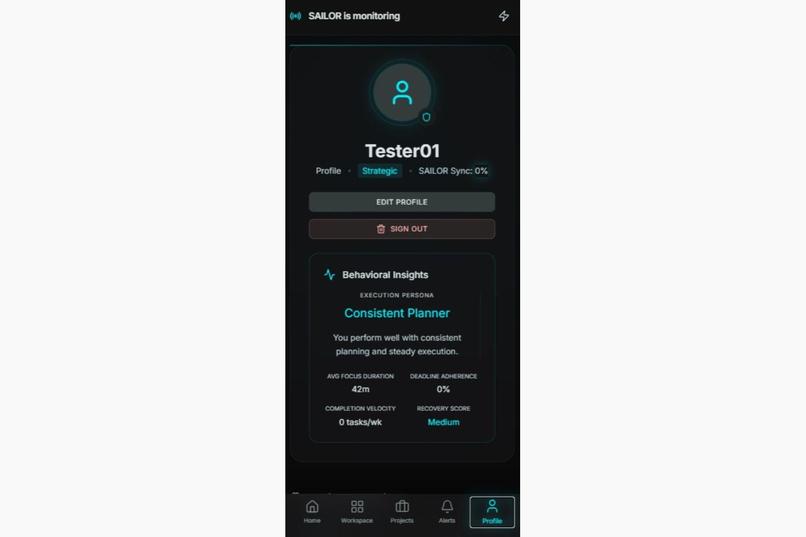
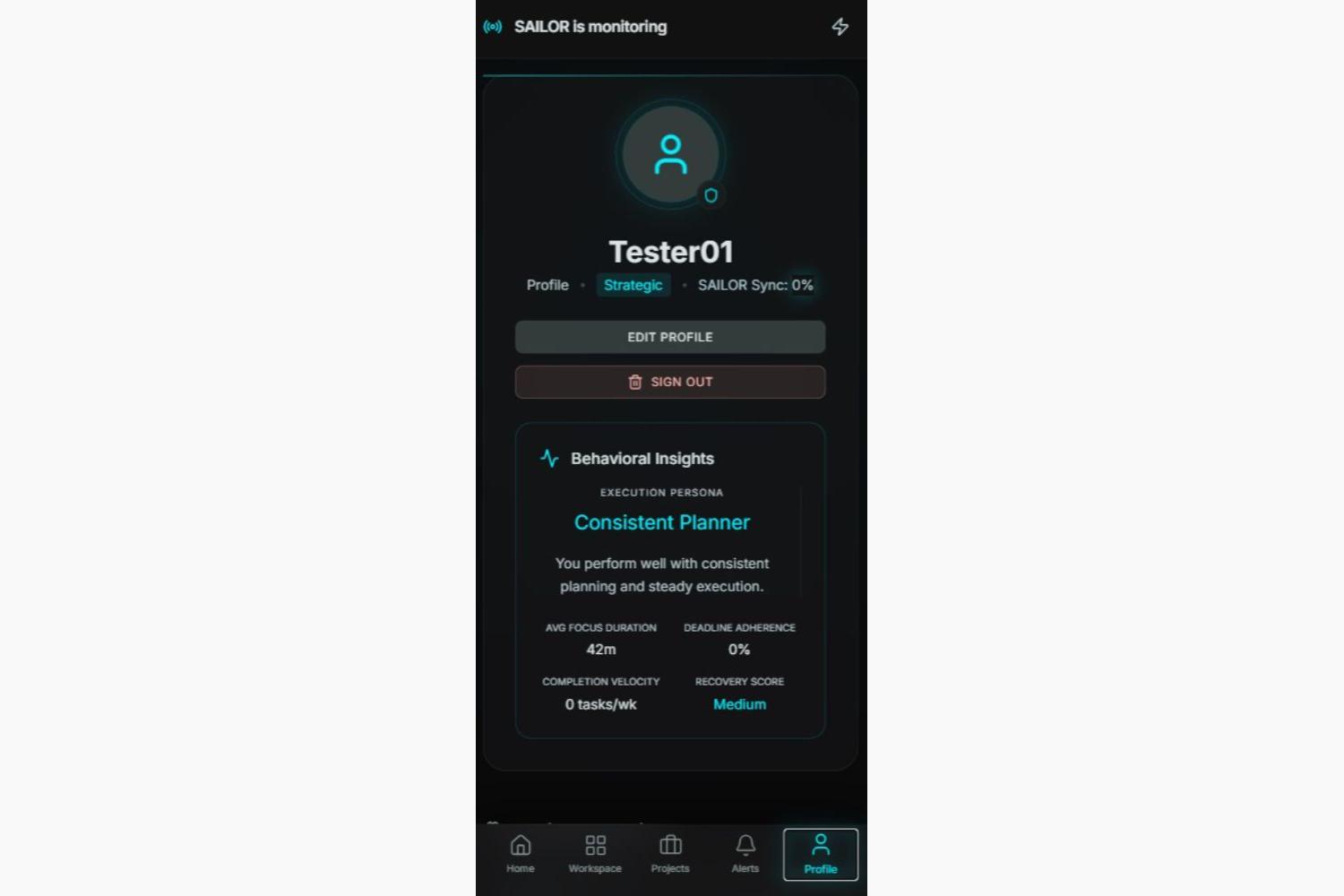
Profile Section
-
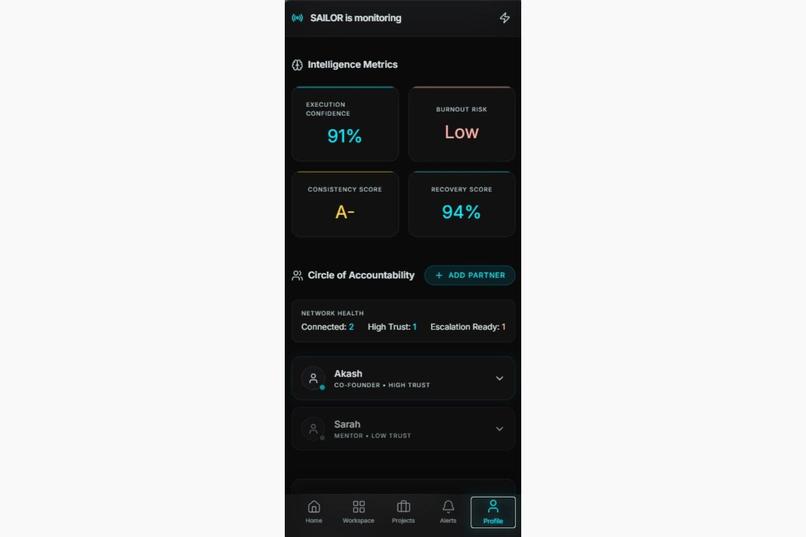
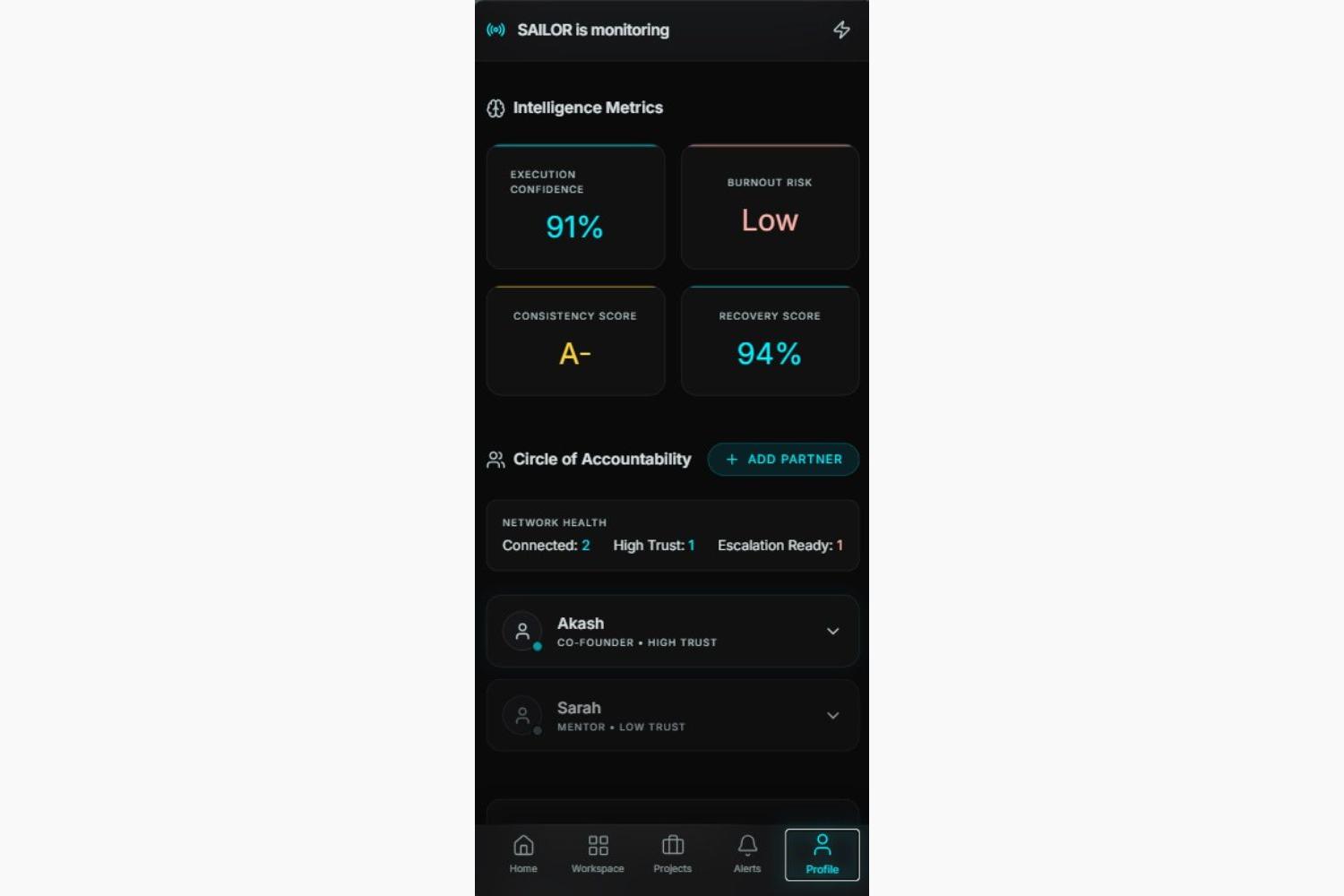
Profile Intelligence Insights Section
-
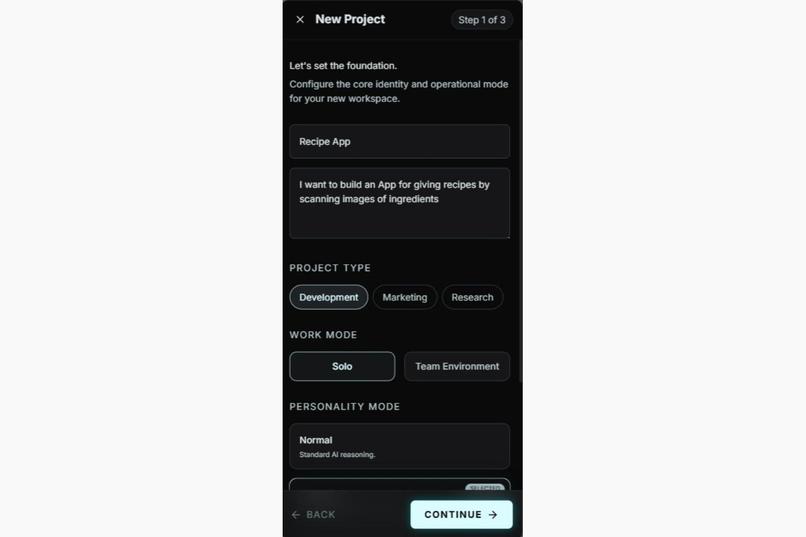
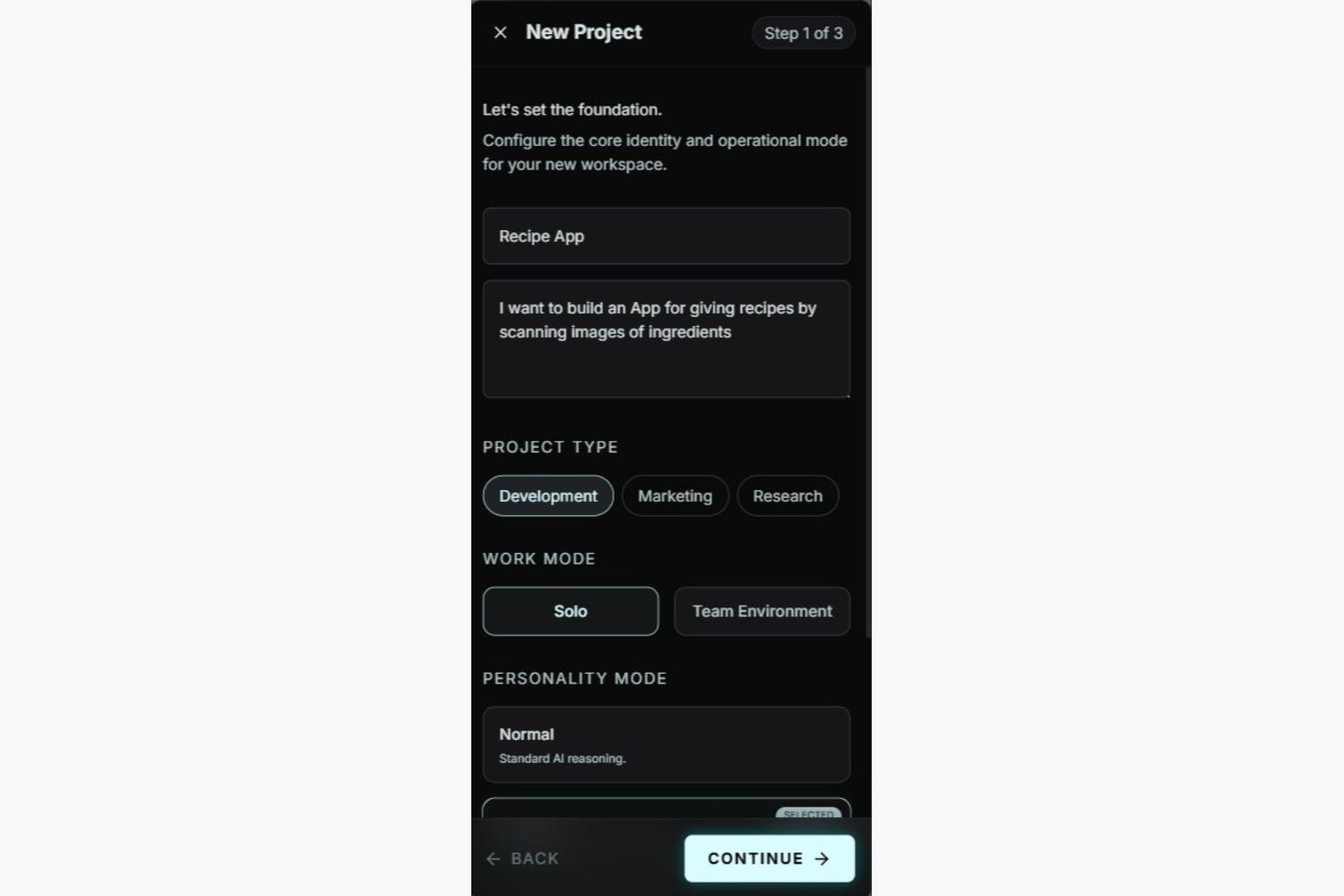
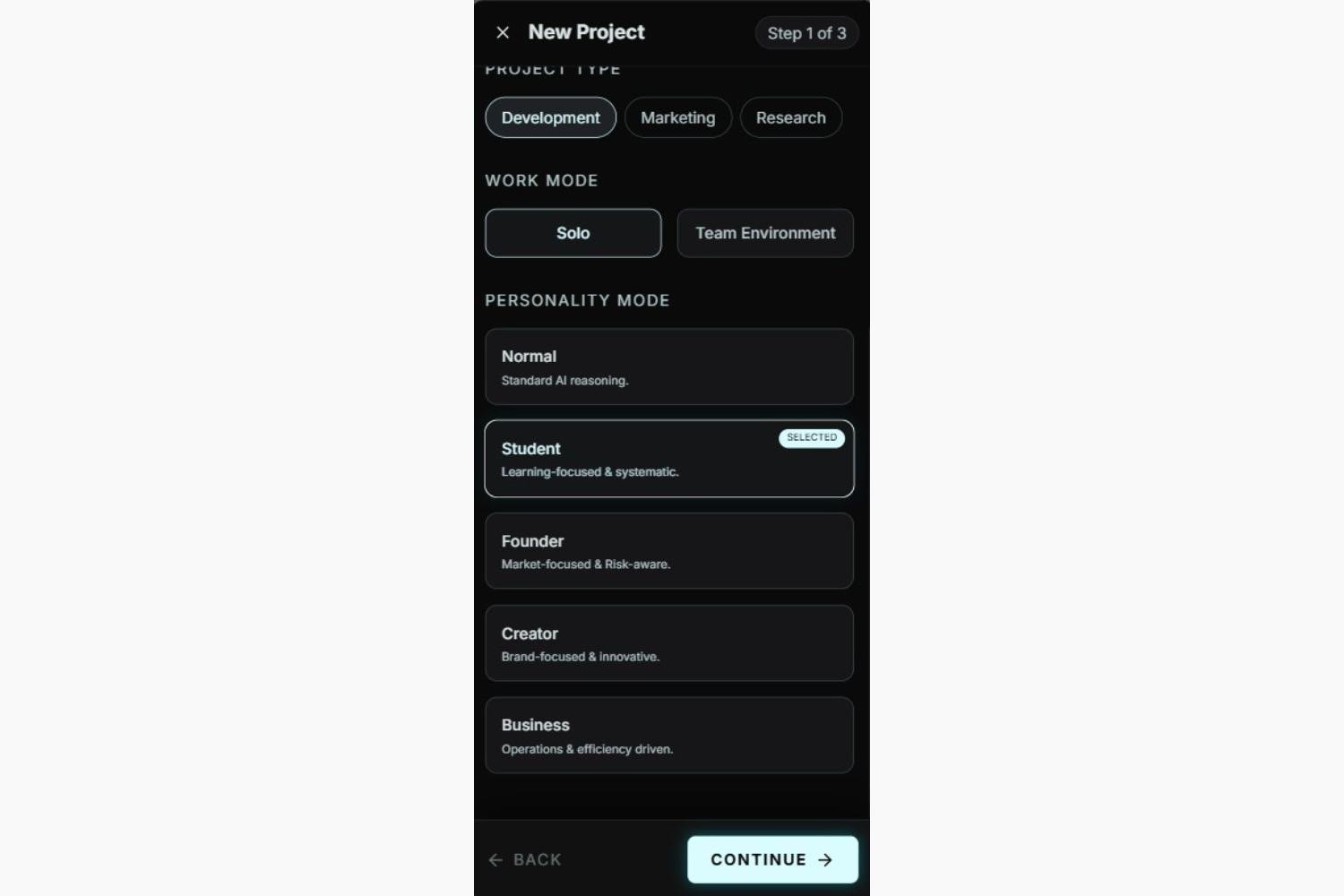
Project Creation in Workspace
-
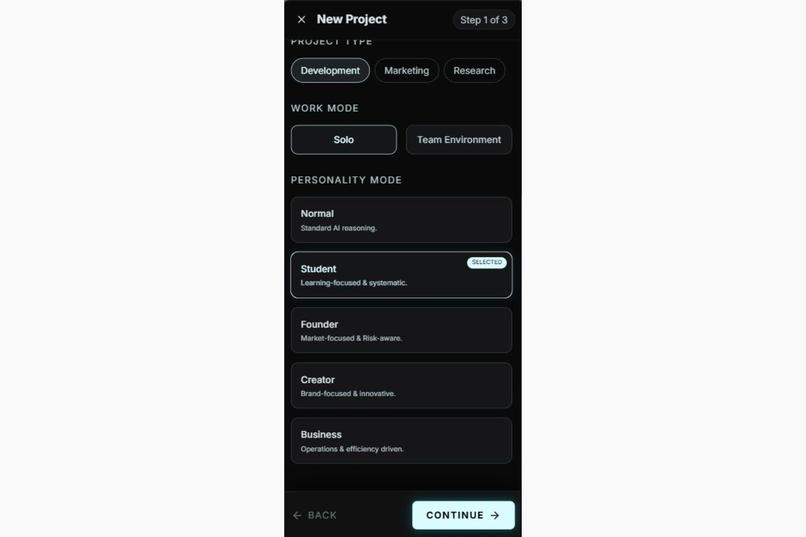
Project Creation Personality Modes
-
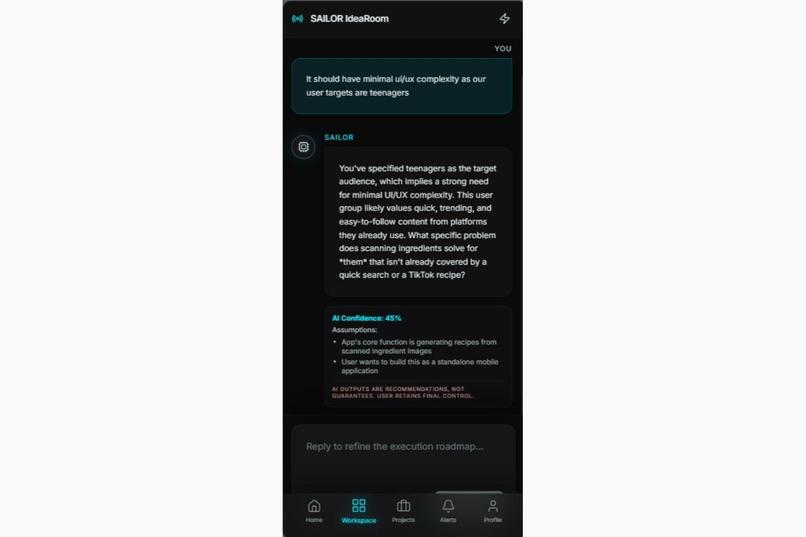
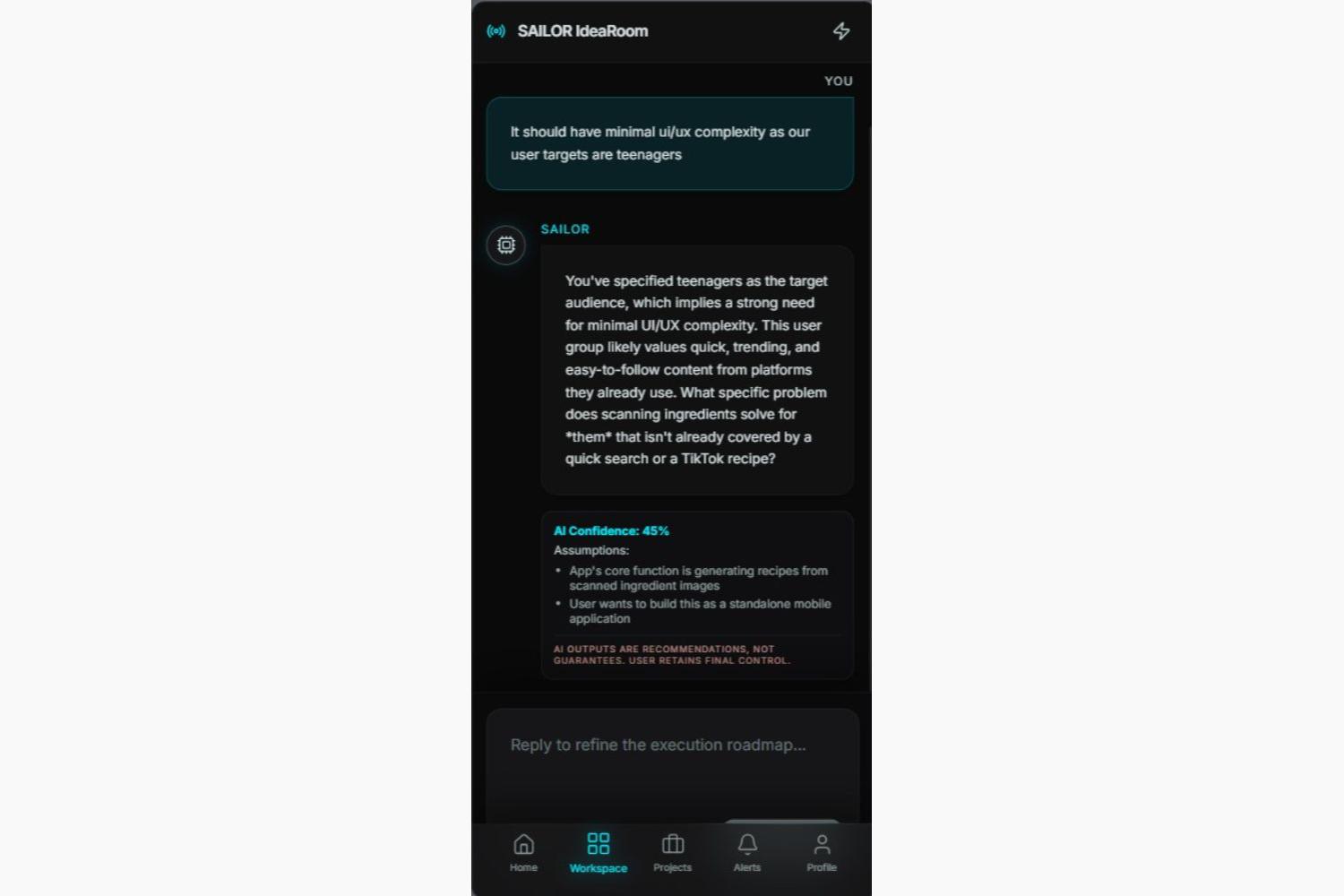
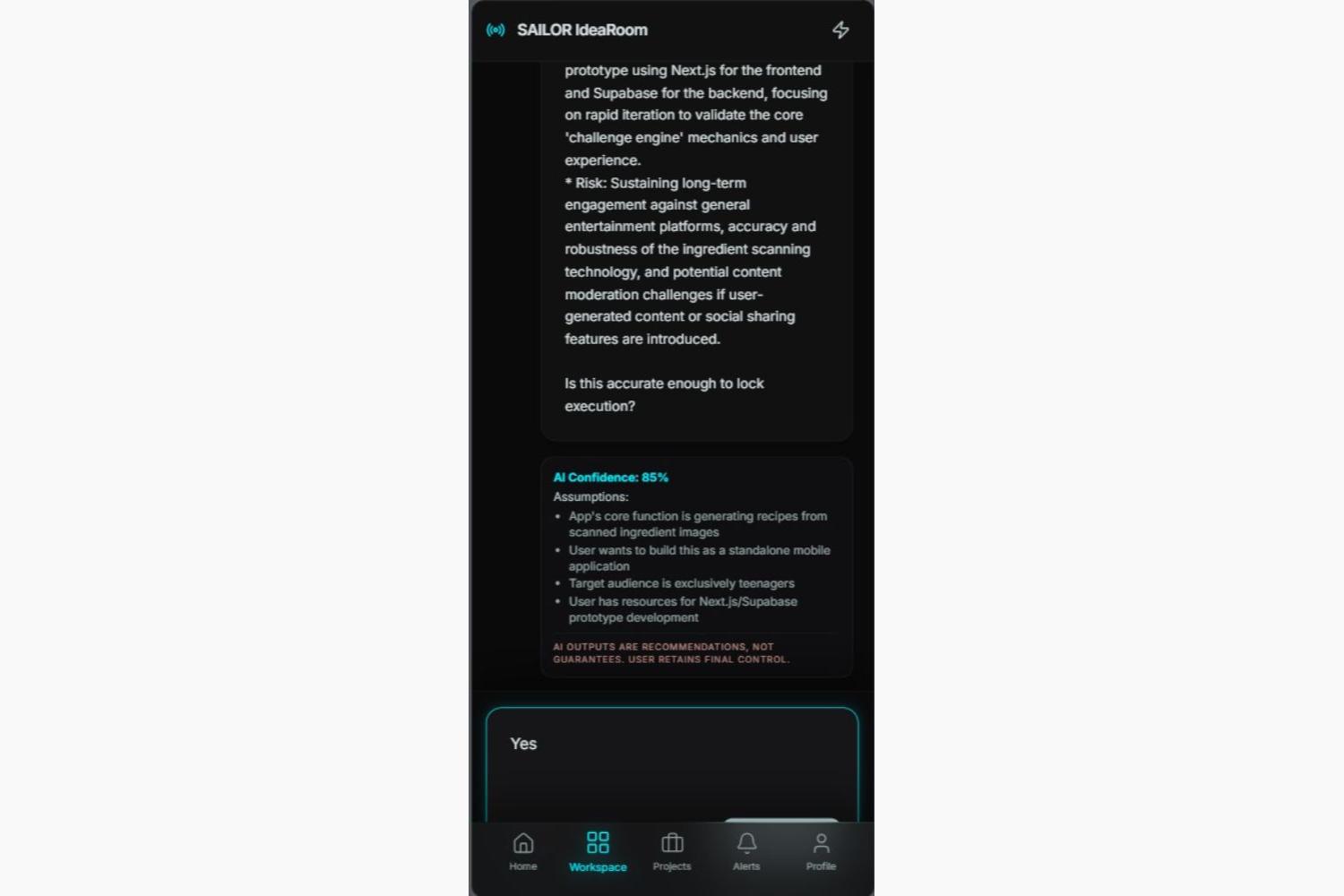
IdeaRoom Roadmap generation chat section
-
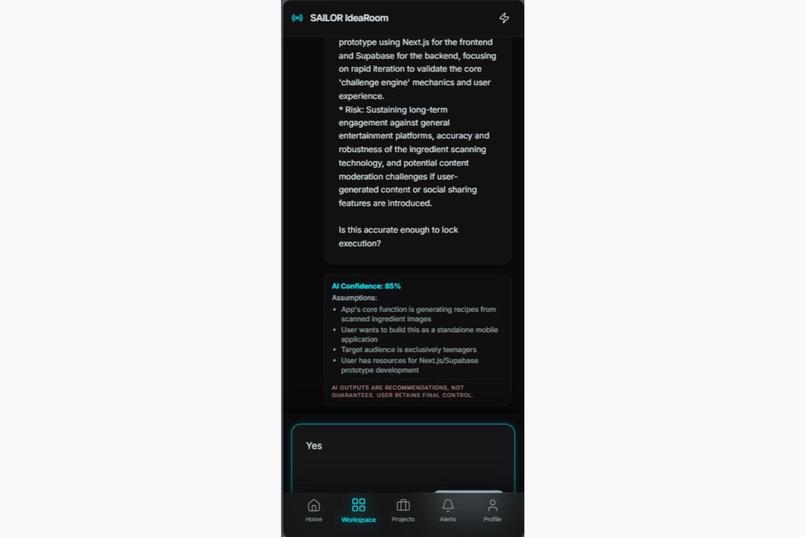
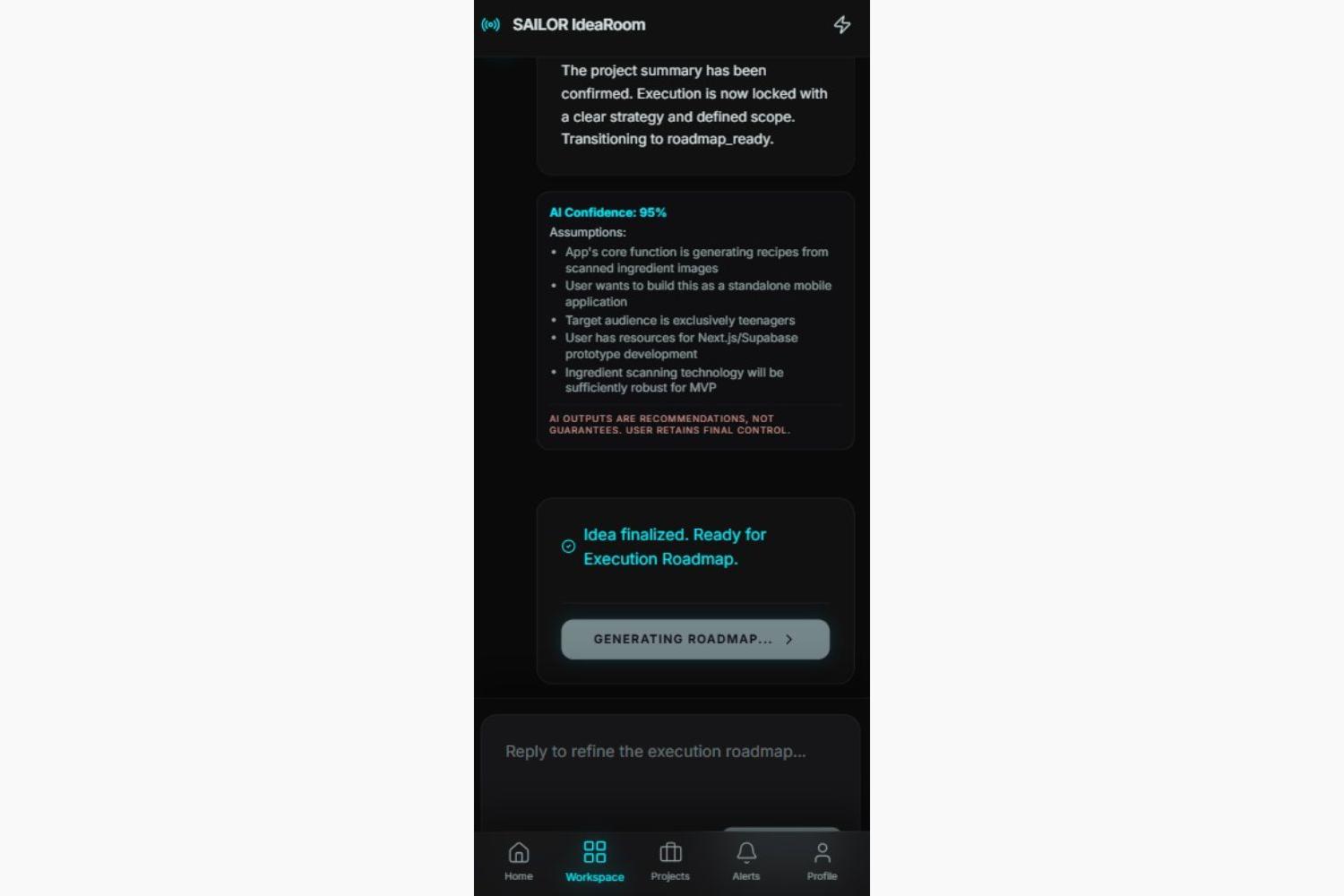
Sailor AI giving Confidence scores and reasoning
-
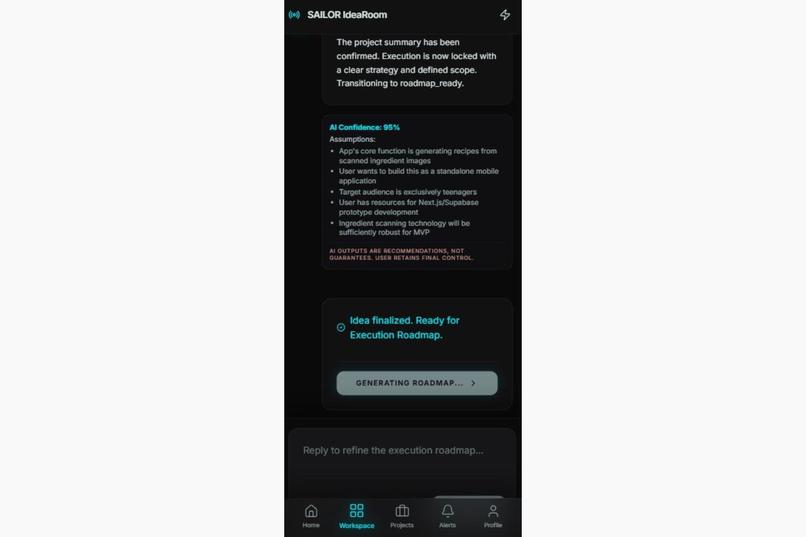
Roadmap Generation after User Validation
-
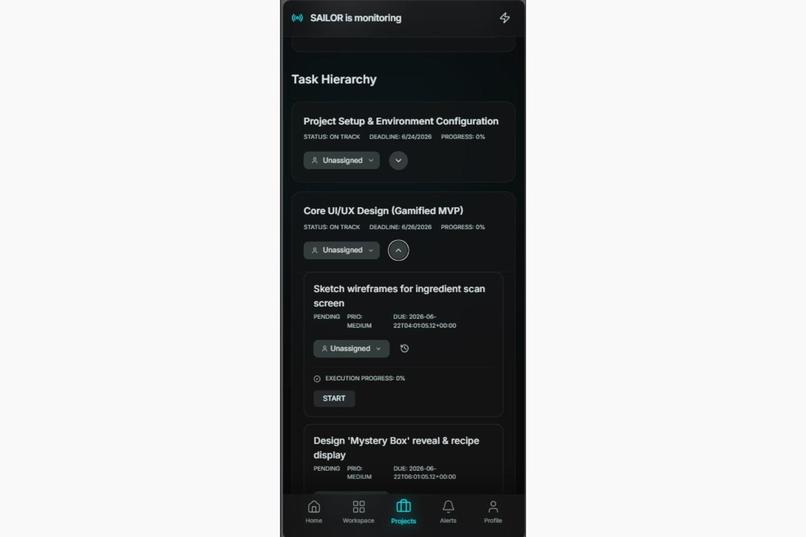
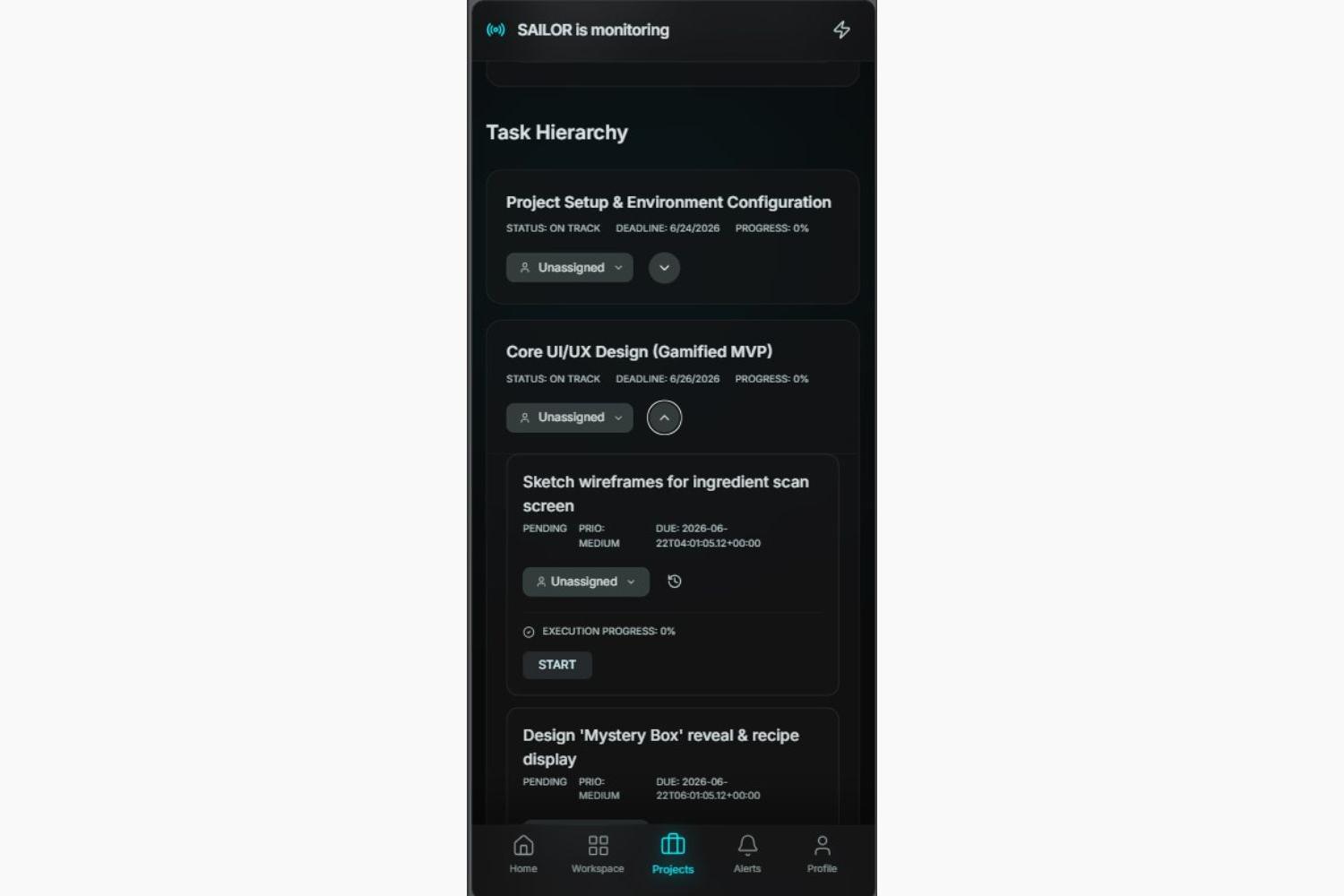
Actionable Task Hierarchy in Project Section
-
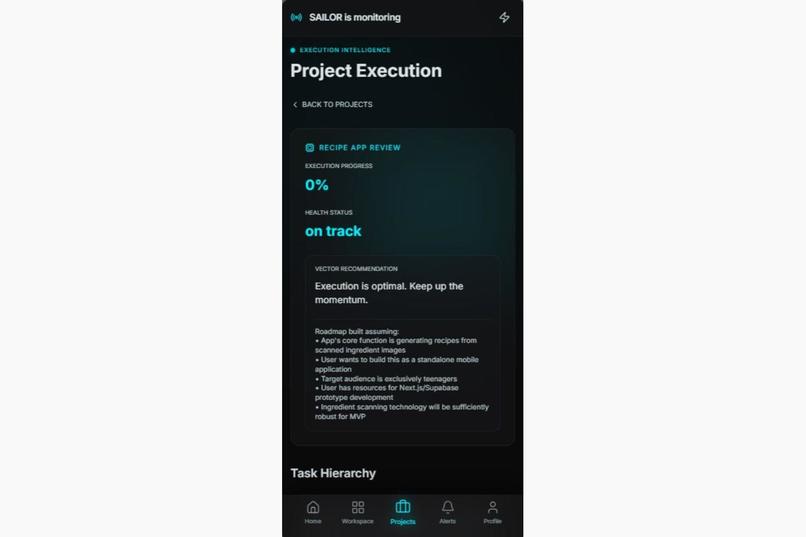
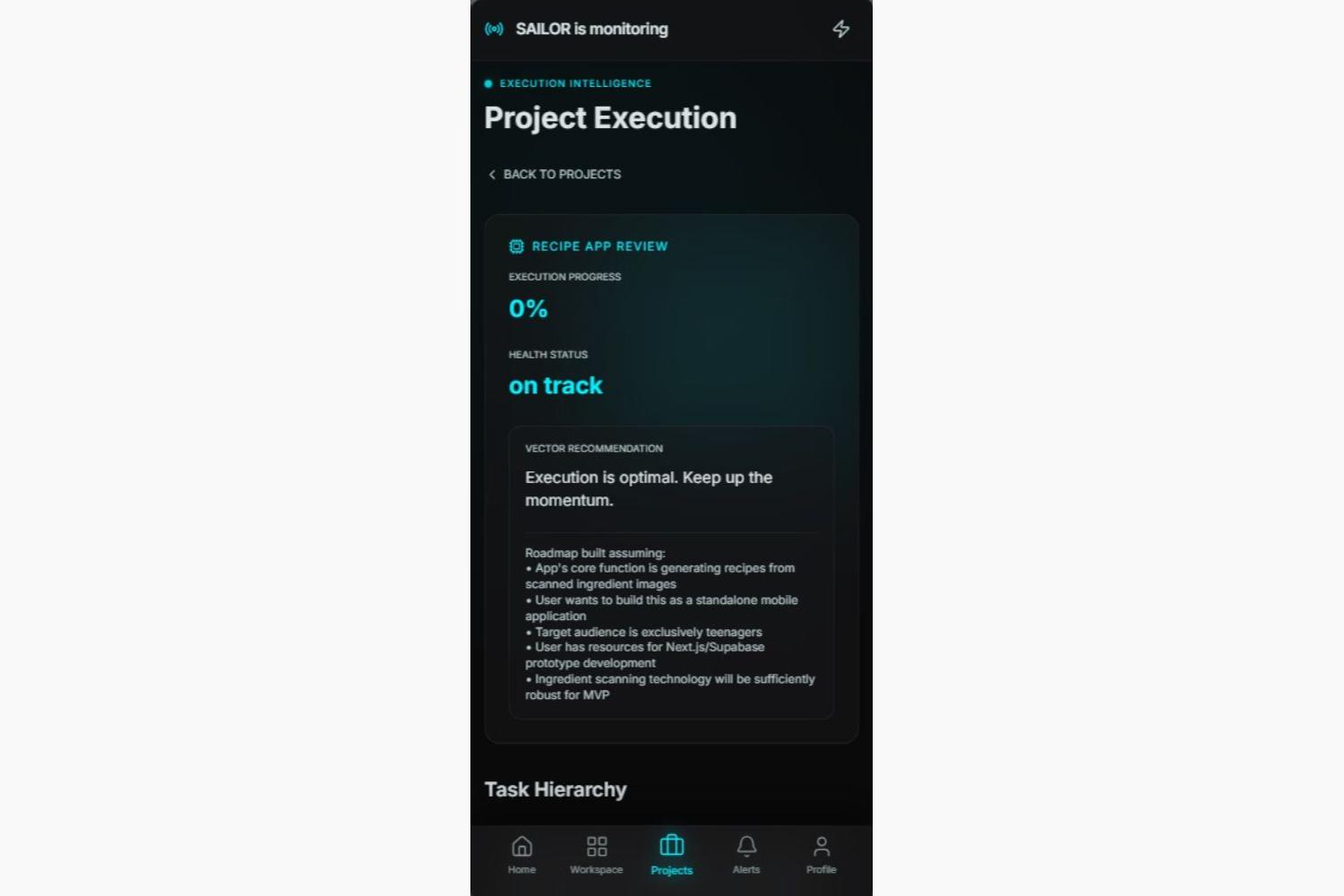
Project Execution Status
-
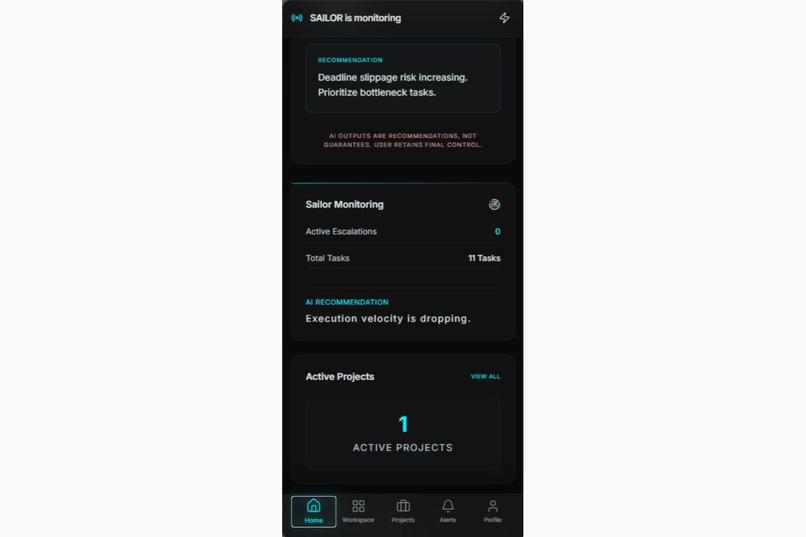
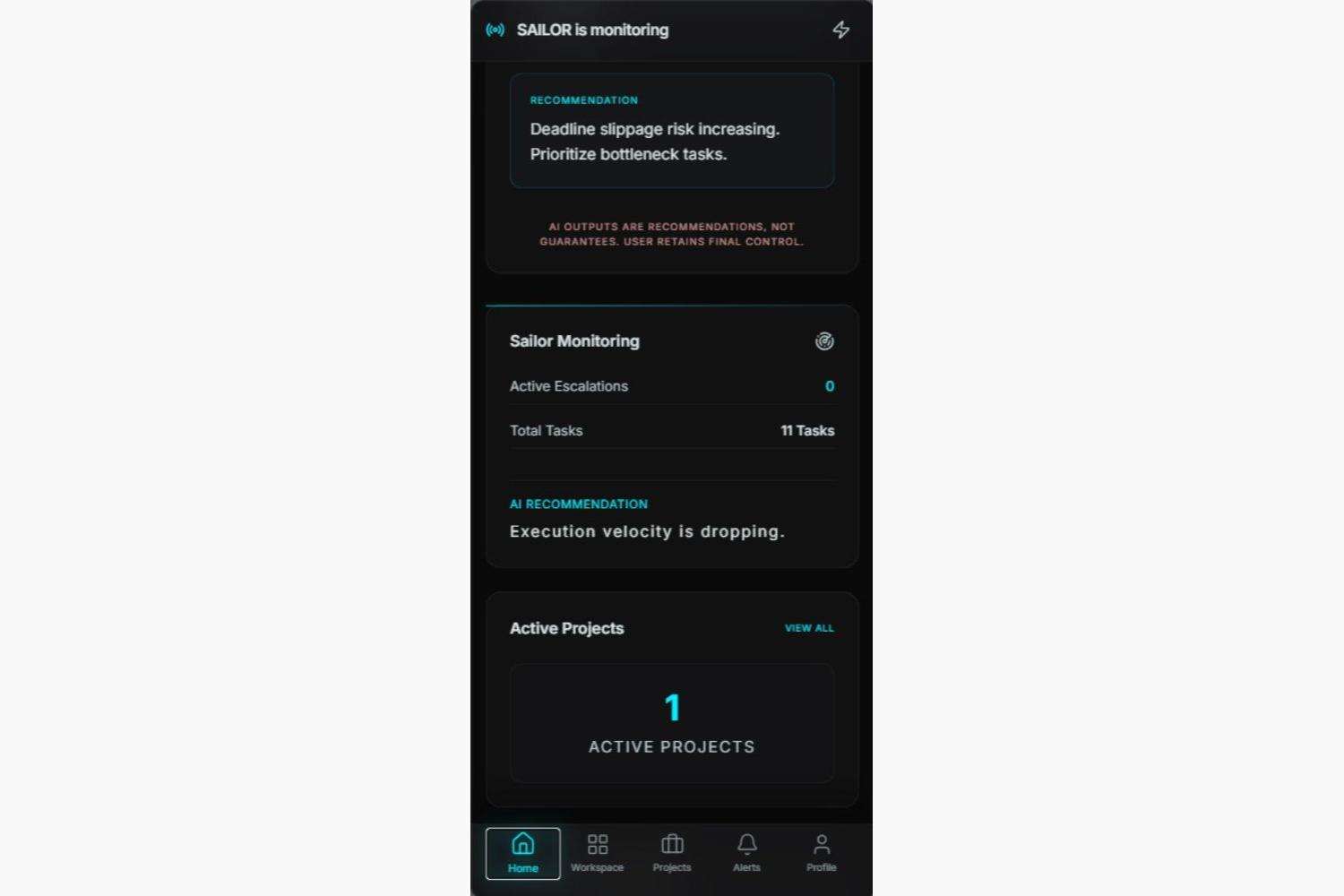
Monitoring Section and Active Projects
-
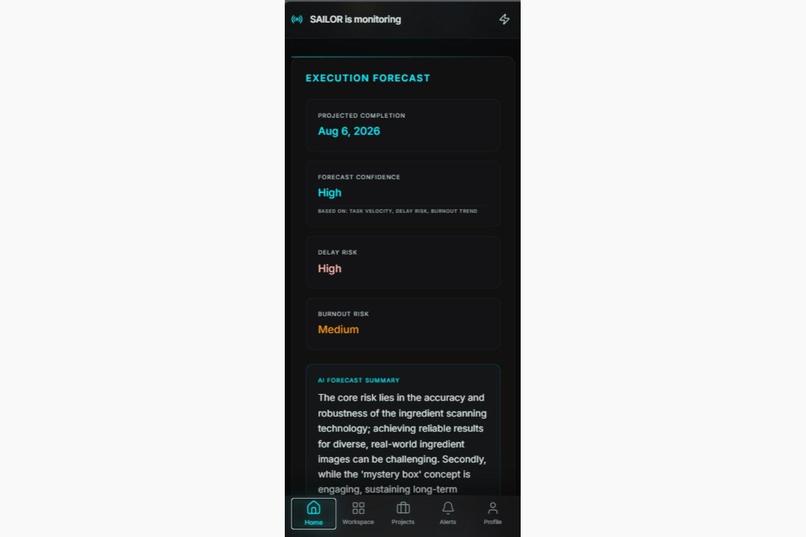
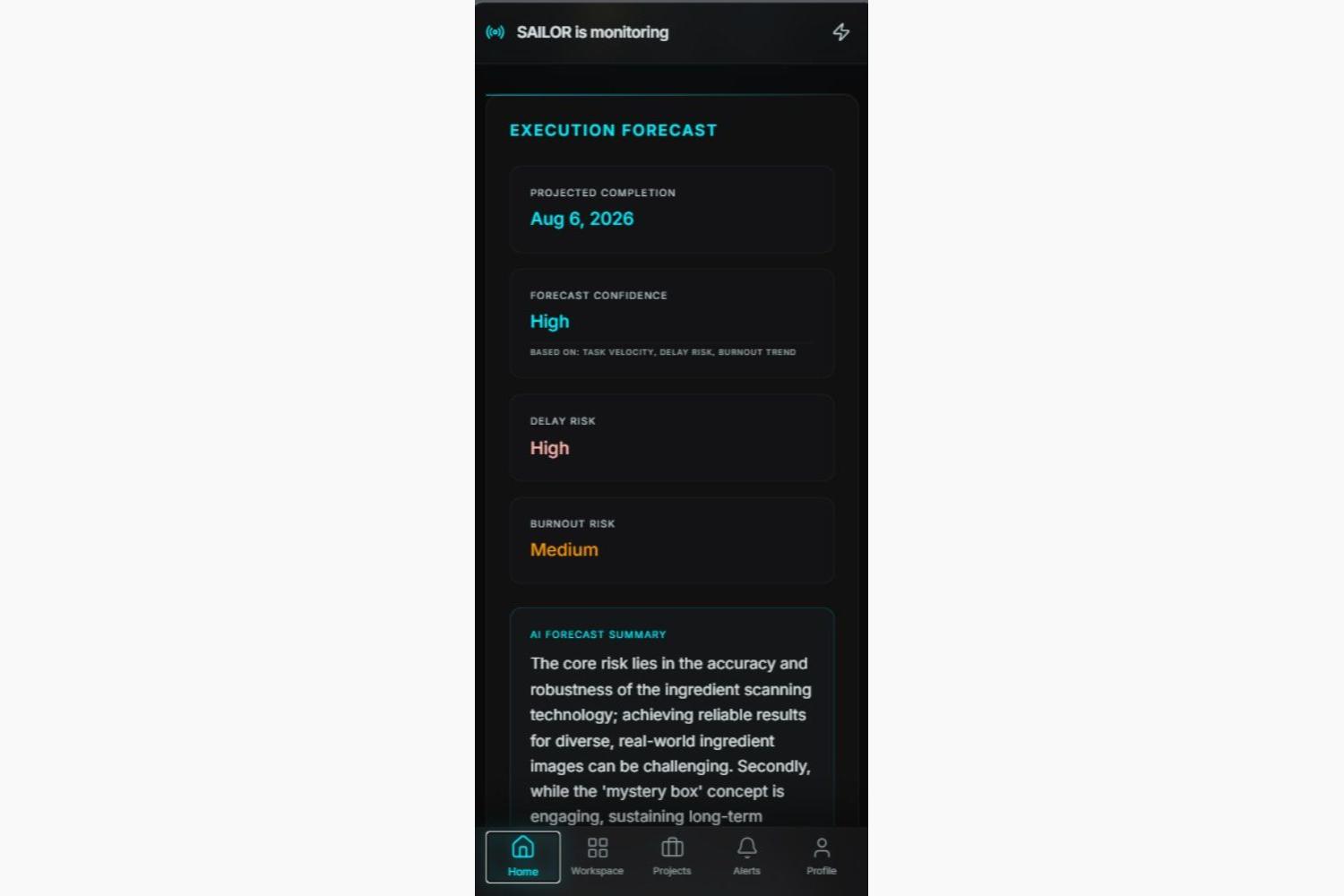
Execution Forecast
TICKINS.SAILOR
Inspiration
Great ideas often fail not because people lack motivation, but because they lack clarity and consistent execution. Students, founders, creators, and professionals frequently start with ambitious goals but struggle to convert them into structured plans and sustain progress over time.
Existing productivity tools are excellent at organizing tasks, but they assume users already know what to do next and rely heavily on manual updates.
We wanted to build something different: a system that helps users move from idea to execution, continuously monitors progress, identifies risks early, and promotes accountability before projects fall behind. This vision led to TICKINS.SAILOR, an AI-powered execution intelligence platform designed to bridge the gap between planning and completion.
What It Does and Why It Matters
TICKINS.SAILOR is an AI-powered Execution Intelligence System that helps students, founders, creators, and professionals turn intentions into completed outcomes.
Unlike traditional productivity tools that stop at planning, SAILOR actively guides users through execution by continuously monitoring progress, detecting risk patterns, and intervening before momentum collapses.
Key Capabilities
AI Goal-to-Roadmap ConversionConverts vague natural-language goals into structured execution plans with milestones, tasks, subtasks, dependencies, and timelines.
Execution Intelligence MonitoringContinuously analyzes task progress, execution velocity, missed deadlines, and behavioral patterns to understand whether a project is moving forward or silently failing.
Predictive Risk DetectionDetects early signals of execution failure such as delays, stalled progress, burnout risk, bottlenecks, and falling momentum before they become critical.
VECTOR Smart Alerts & EscalationsDelivers intelligent reminders, real-time alerts, and escalating interventions. If critical alerts are repeatedly ignored, SAILOR can escalate to accountability partners for human support.
AI Explainability & TransparencyEvery major AI decision includes a confidence score, surfaced assumptions, trigger reasoning, threshold breaches, and recommended actions so users understand why the system intervened.
Human-in-the-Loop ControlAI never makes irreversible decisions autonomously. Users retain full control to accept, reject, snooze, dismiss, or override every recommendation, reminder, alert, and escalation.
Why It Matters
The biggest reason projects fail is rarely lack of ambition—it is execution collapse.
People often start with strong intent but gradually lose momentum due to procrastination, unclear priorities, hidden bottlenecks, burnout, or lack of accountability. Existing productivity tools help users organize tasks, but they do not actively help users finish what they start.
TICKINS.SAILOR addresses this execution gap by combining AI planning, behavioral intelligence, predictive monitoring, explainable risk detection, and human accountability into a single closed-loop execution workflow.
Instead of merely tracking tasks, SAILOR acts like an intelligent execution partner—helping users stay focused, recover from drift, and dramatically reduce project abandonment while improving completion rates.
How We Built It
TICKINS.SAILOR was built as a full-stack AI-native execution intelligence platform designed for real-time planning, monitoring, intervention, and accountability.
Frontend & User Experience
The frontend was built using TypeScript, HTML, and CSS with a responsive dashboard architecture optimized for high-frequency interaction across workspace, mission control, roadmap, alerts, and profile intelligence views.
The interface was designed around a command-center experience, allowing users to seamlessly move between ideation, execution, and intervention workflows without context switching. Core UI components include real-time alert modals, execution boards, AI transparency cards, escalation panels, and behavioral insight dashboards.
Backend & Infrastructure
The backend is powered by Supabase with PostgreSQL as the primary database.
We leveraged:
Authentication for secure user sessions
Row-Level Security (RLS) for strict per-user access control
Relational schema design for projects, tasks, subtasks, forecasts, alerts, escalations, and activity logs
Real-time data synchronization to ensure live execution monitoring across the system
The database architecture enables SAILOR to maintain a complete execution graph—from project creation to final completion—while preserving secure user ownership and accountability relationships.
AI & Machine Learning Stack
SAILOR’s intelligence layer combines multiple AI systems specialized for different execution tasks.
Core LLM Reasoning
- Google Gemini 2.5 Flash
Gemini powers SAILOR’s high-level reasoning engine, including:
goal understanding
project clarification
roadmap generation
strategic questioning
execution recommendations
explainable AI reasoning
Instead of acting as a generic chatbot, Gemini functions as SAILOR’s strategic planning brain.
Predictive Machine Learning Models
Built using:
Scikit-learn
XGBoost
TensorFlow Lite
NumPy
Pandas
These models power the VECTOR execution intelligence system.
VECTOR continuously analyzes:
task velocity
deadline adherence
progress trends
burnout patterns
execution consistency
risk escalation signals
This enables predictive detection of:
delays
stalled execution
bottlenecks
burnout risk
critical project failure patterns
before they become visible to the user.
AI Services & Orchestration
We built modular AI services using FastAPI for prediction and feedback pipelines.
Core services include:
AI Orchestrator Service — manages prompt engineering, conversation state, confidence scoring, and reasoning assumptions
Roadmap Generation Engine — converts ideas into executable plans with milestones, dependencies, and timelines
VECTOR Monitoring Engine — evaluates execution health in real time
Smart Alerts Engine — triggers intelligent reminders based on risk thresholds
Escalation Engine — upgrades unresolved risks into interventions and accountability escalations
Forecast Engine — predicts project completion probability and delivery risk
Accountability & Human Oversight
A core design principle of SAILOR is human-in-the-loop AI.
We implemented:
Partner Pairing System for accountability relationships
Permission & Access Management for trust-based collaboration
Manual Overrides for every AI recommendation
Confidence Scores & Assumption Surfacing for transparency
Explainability Layers for alerts, forecasts, and interventions
This ensures AI remains assistive—not autonomous.
Every recommendation, reminder, alert, and escalation can be accepted, snoozed, dismissed, or overridden by the user.
System Architecture Philosophy
Most productivity tools stop at task management.
S.A.I.L.O.R was engineered as a closed-loop Execution Intelligence System:
Goal → Planning → Monitoring → Prediction → Alerting → Escalation → Human Decision
This architecture allows SAILOR not only to help users plan work, but to actively ensure they finish what they start.
Challenges We Ran Into
Building TICKINS.SAILOR required solving challenges across AI reasoning, machine learning, systems architecture, and human-centered product design.
One of the biggest challenges was designing meaningful execution-risk models with limited real-world behavioral data. Unlike traditional ML problems with large public datasets, execution intelligence is highly contextual—factors like procrastination, burnout, momentum loss, and accountability are difficult to quantify directly.
To overcome this, we engineered realistic synthetic behavioral datasets to simulate execution patterns such as stalled progress, missed deadlines, recovery behavior, and escalating risk states. This allowed us to train and evaluate our early predictive models before large-scale real usage data becomes available.
Another major challenge was balancing AI automation with human control. Since SAILOR actively intervenes through alerts, recommendations, and escalations, we needed to ensure the AI remained helpful without becoming intrusive, overwhelming, or overly authoritarian.
Designing escalation workflows was particularly challenging. We had to build intervention systems that were proactive enough to prevent execution failure, yet respectful enough to avoid alert fatigue and unnecessary friction.
We also faced significant infrastructure challenges in building a reliable real-time monitoring and alerting system capable of continuously tracking project health, execution velocity, deadline risk, and behavioral drift across multiple concurrent projects while maintaining secure user isolation and low-latency performance.
Accomplishments We’re Proud Of
We successfully built TICKINS.SAILOR, a full-stack AI-powered execution intelligence platform that spans the entire workflow from idea formation to successful completion.
Our biggest accomplishment was engineering a true closed-loop execution system, where AI does more than generate plans—it continuously monitors execution, predicts failure risk, explains its reasoning, and intelligently intervenes when momentum drops.
We developed multiple machine learning models for:
execution-risk prediction
delay forecasting
burnout detection
escalation recommendations
completion probability estimation
We also built a secure Accountability Network, enabling trusted partner pairing, role-based permissions, and escalation workflows that bring humans into the loop when AI intervention alone is insufficient.
From a systems perspective, we designed a scalable backend architecture with:
authentication
strict Row-Level Security
real-time task monitoring
predictive forecasting
smart alerts and escalation management
Most importantly, we built SAILOR around Responsible AI principles. Every major AI output includes confidence scoring, surfaced assumptions, explainability, and user override controls, ensuring transparency and preserving human agency at every critical decision point.
What We Learned
One of our biggest learnings was that AI planning alone is not enough.
Generating roadmaps and task breakdowns is valuable, but successful execution depends far more on what happens after planning—specifically monitoring, accountability, behavioral consistency, and recovery from drift.
We learned that behavioral intelligence can be as important as task intelligence. Understanding why users slow down, stall, or abandon projects often provides more actionable insight than simply tracking task completion.
We also observed that iterative model development dramatically improves predictive quality. Each refinement of our risk models improved our ability to detect execution failure earlier and recommend more useful interventions.
A critical Responsible AI lesson was that trustworthy systems should communicate uncertainty, not false certainty. Confidence scores, assumptions, and explainability became essential to building user trust.
Most importantly, we learned that while AI can dramatically improve execution support, human judgment remains irreplaceable for decisions involving trust, accountability, relationships, and escalation. The strongest AI systems are not fully autonomous—they are collaborative systems that amplify human decision-making.
What’s Next
TICKINS.SAILOR is currently focused on solving execution intelligence for individuals, but this is only the beginning of our vision.
Near-Term Goals
Our immediate goal is to make SAILOR significantly more adaptive, personalized, and context-aware.
We plan to enhance the platform through behavioral learning, allowing SAILOR to continuously understand each user’s unique execution patterns—such as productivity windows, procrastination triggers, recovery cycles, and workload tolerance. This will enable highly personalized interventions rather than generic reminders.
We are also expanding SAILOR’s execution recommendation engine to deliver smarter, context-sensitive guidance, helping users make better decisions about prioritization, delegation, pacing, and recovery when execution risk rises.
Another major focus is building long-term contextual memory and knowledge retrieval, enabling SAILOR to remember historical project decisions, behavioral trends, recurring blockers, and previous execution failures. This persistent memory will allow future recommendations to become progressively more accurate and personalized.
We also aim to introduce advanced execution analytics and reporting, giving users deeper insight into their long-term consistency, velocity, burnout trends, and completion behavior.
Future Roadmap
Our long-term vision extends beyond individual productivity into large-scale execution intelligence.
We plan to expand SAILOR into:
Mobile Applications for always-on execution support and real-time interventions
Richer Collaboration Workflows for shared accountability and coordinated execution
Team & Organizational Execution Intelligence for startups, enterprises, and high-performance teams
Privacy-First On-Device AI to enable secure behavioral analysis with minimal cloud dependency
In the future, SAILOR will evolve from an execution assistant into a true AI Execution Operating System capable of helping individuals, teams, and organizations consistently convert ambition into measurable outcomes.
Our vision is simple but ambitious:
Ideas are abundant. Execution is rare.TICKINS.SAILOR exists to close that gap—helping people not just plan better, but consistently finish what they start.
Built With
- accesscontrol
- aiandmachinelearning
- aifirstui
- aiorchestration
- aisystems
- backendandapis
- chatgpt
- cloudandtools
- css
- databaseandsecurity
- escalationengine
- fastapi
- forecastengine
- frontend
- github
- githubcopilot
- googleaistudio
- googlegemini2-5flash
- googlegenaiapi
- html
- numpy
- pandas
- python
- realtimedatabase
- responsivedashboard
- restapis
- roadmapgeneration
- rowlevelsecurity
- scikitlearn
- securesqlrpc
- smartalertengine
- supabaseapis
- supabaseauthentication
- supabasecloud
- supabasepostgresql
- tensorflowlite
- typescript
- vectormonitoringengine
- vectorsystem
- xgboost


Log in or sign up for Devpost to join the conversation.