-
Cover Game Art
-
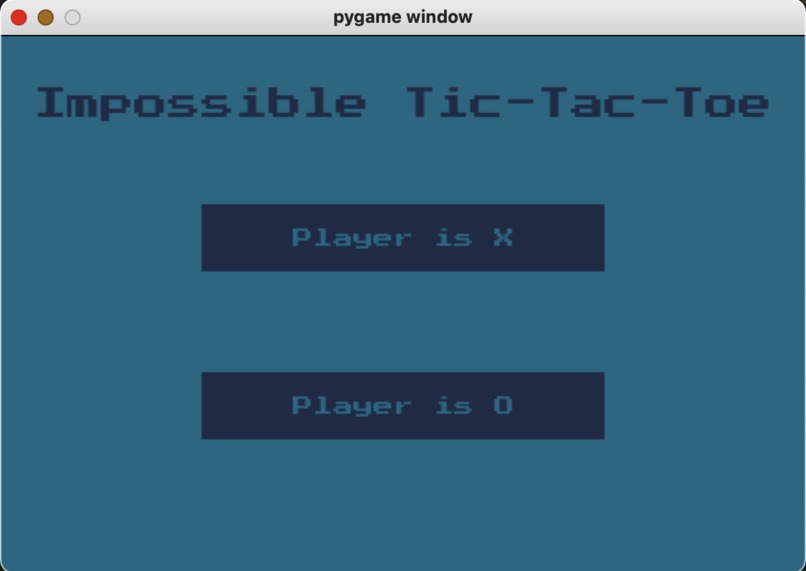
Title Screen
-
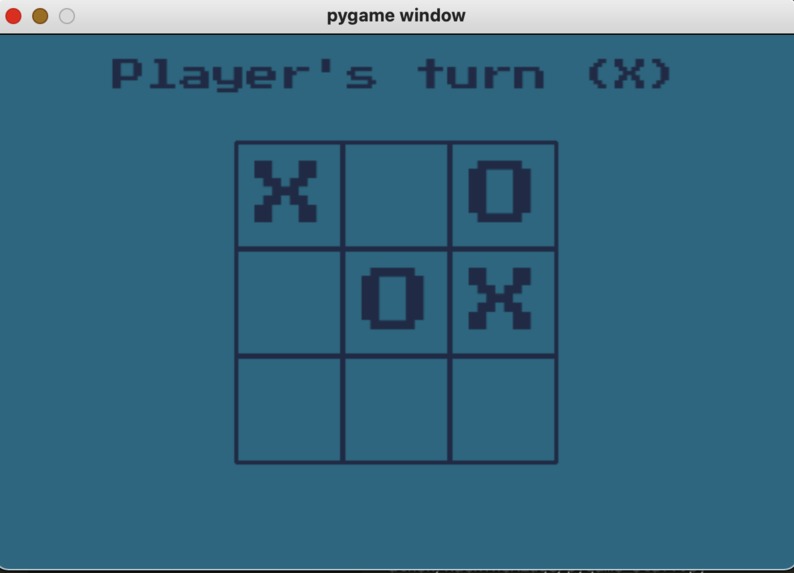
During the Game
-
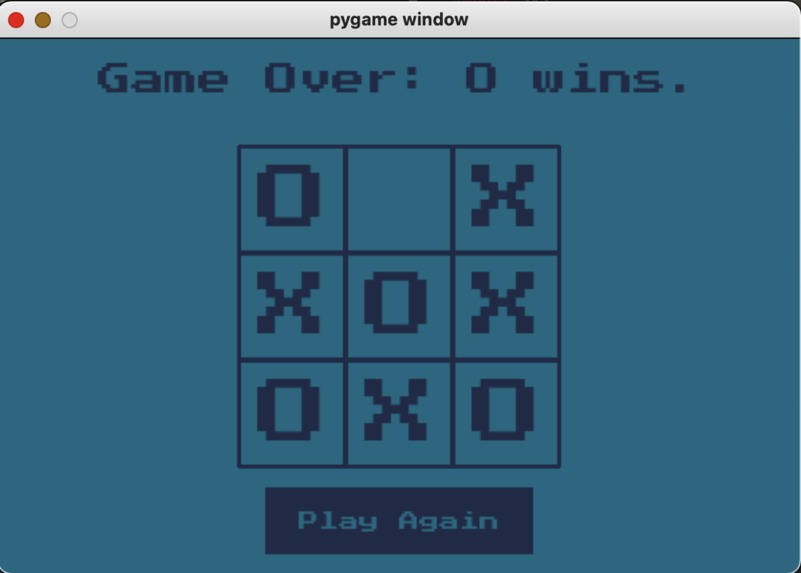
End of Game


💡 Inspiration
Artificial intelligence has truly changed our world. From travel navigation to smart home devices, drones to facial recognition software, AI is becoming more applicable by the year.
I wanted to begin my exposure to AI through coding an algorithm that builds the basis for many different types of games, such as chess and Othello.
🔍 What it does
A player can test their Tic-Tac-Toe prowess against an AI, but will inevitably lose over and over again.
⚙️ How it was built
I used Python to code the algorithm and Pygame specifically to code the game display.
🚧 Challenges I ran into
It was hard to know where to begin coding, Although I knew the process in programming the algorithm, I was missing the components to shape my algorithm around. Also, creating a function to determine the winner of the game caused me some trouble, as the recursive functions kept crashing.
✔️ Accomplishments that I'm proud of
- Being able to code an AI algorithm within the time frame of Hack The Ridge
- The successful implementation of the adversarial search algorithm minimax
📚 What I learned
Throughout Hack The Ridge, I learned the basics of search algorithms, working with different models, states, and agents to create a functioning AI for Tic-Tac-Toe. Furthermore, it helped me refine my knowledge of python classes and recursive functions, forcing me to think from different perspectives.
🔭 What's next for Tic-Tac-Toe, But You Can't Win!
If I continue with this project, I will change the algorithm slightly to improve the speed of the AI, most likely by implementing an alpha-beta pruning search. Being able to finish this project has inspired me to pursue future AI-based projects, such as "Minesweeper, but the AI does it for you".


Log in or sign up for Devpost to join the conversation.