-
-
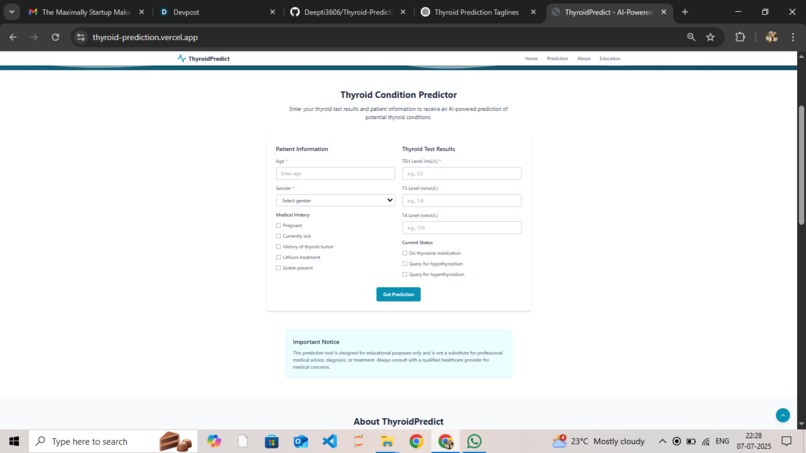
data collection
-
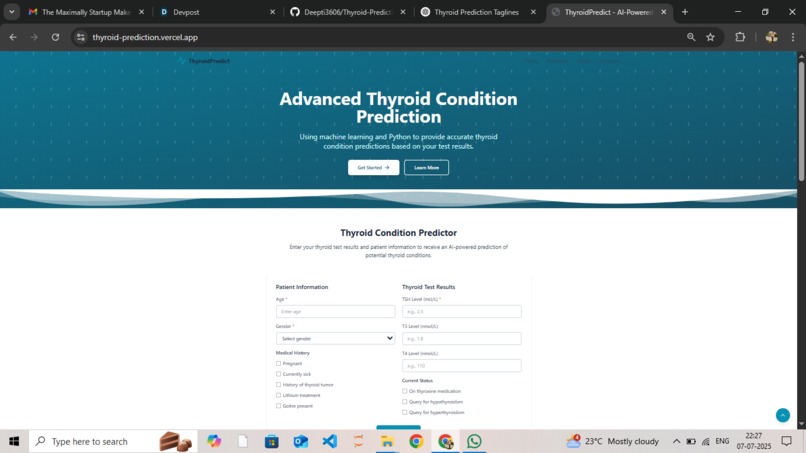
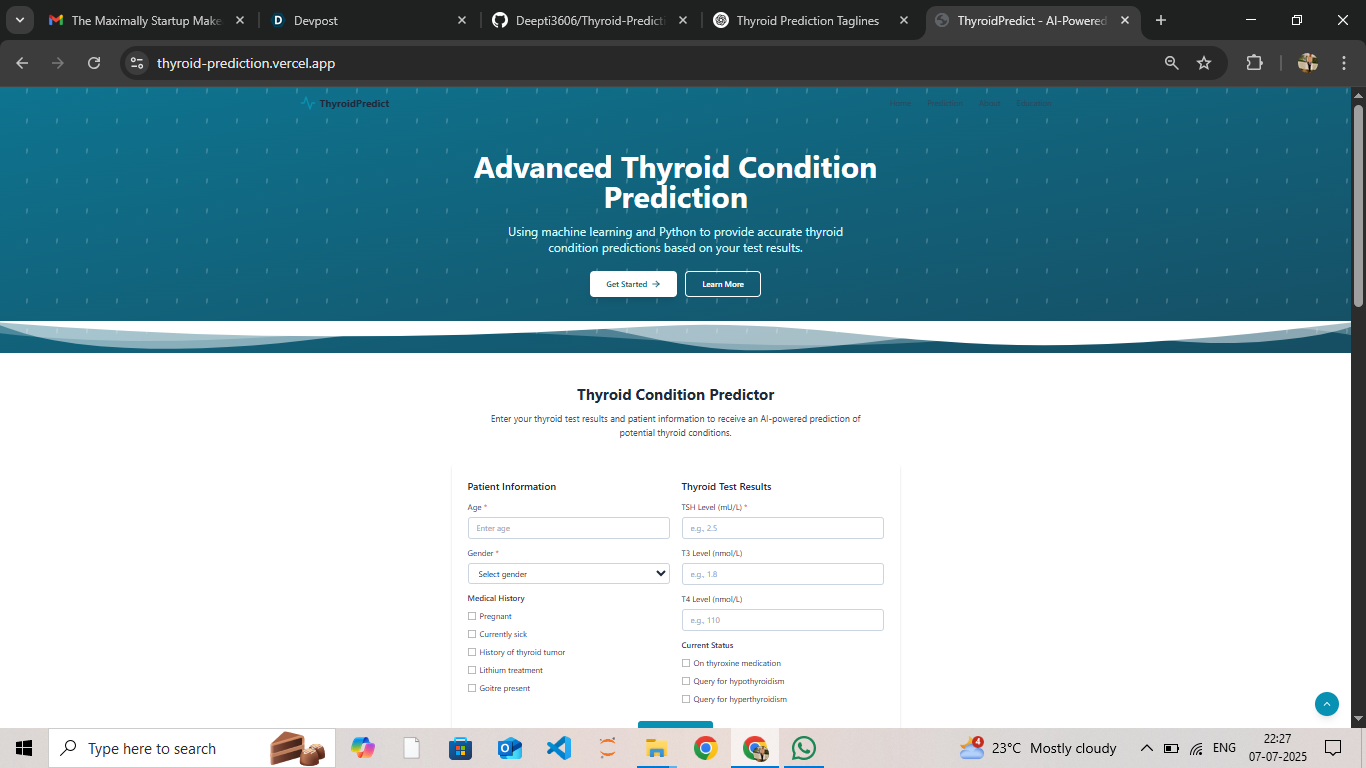
home page
-
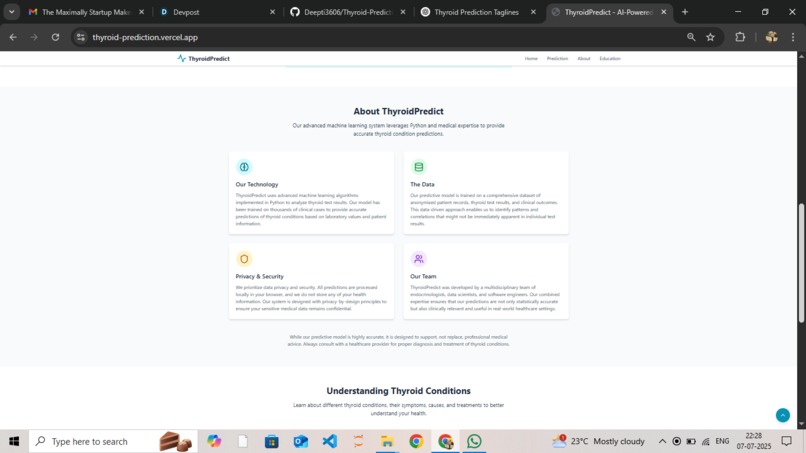
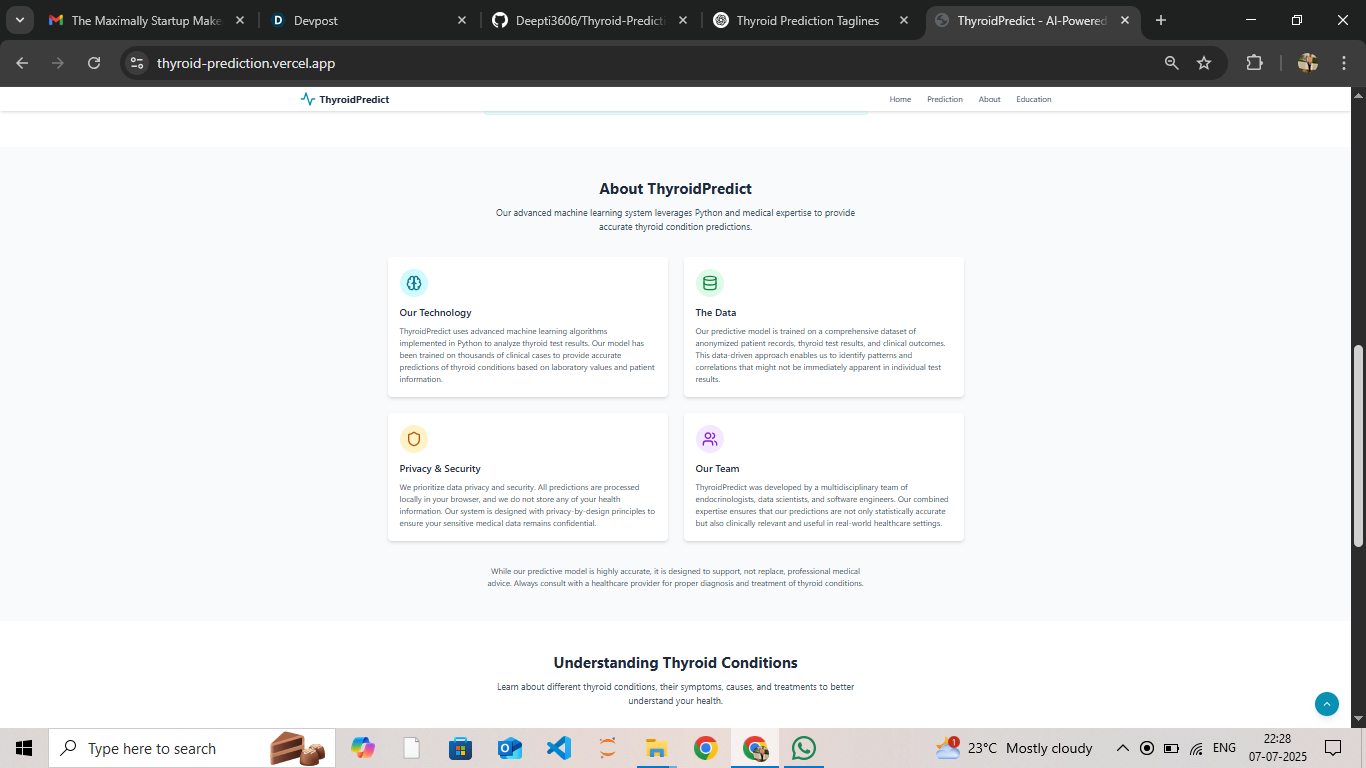
about us
Inspiration - Thyroid disorders often go undetected due to vague symptoms and lack of early screening. Inspired by the growing potential of AI in healthcare, we aimed to create a tool that can predict thyroid conditions using patient data—helping users take early action before symptoms worsen.
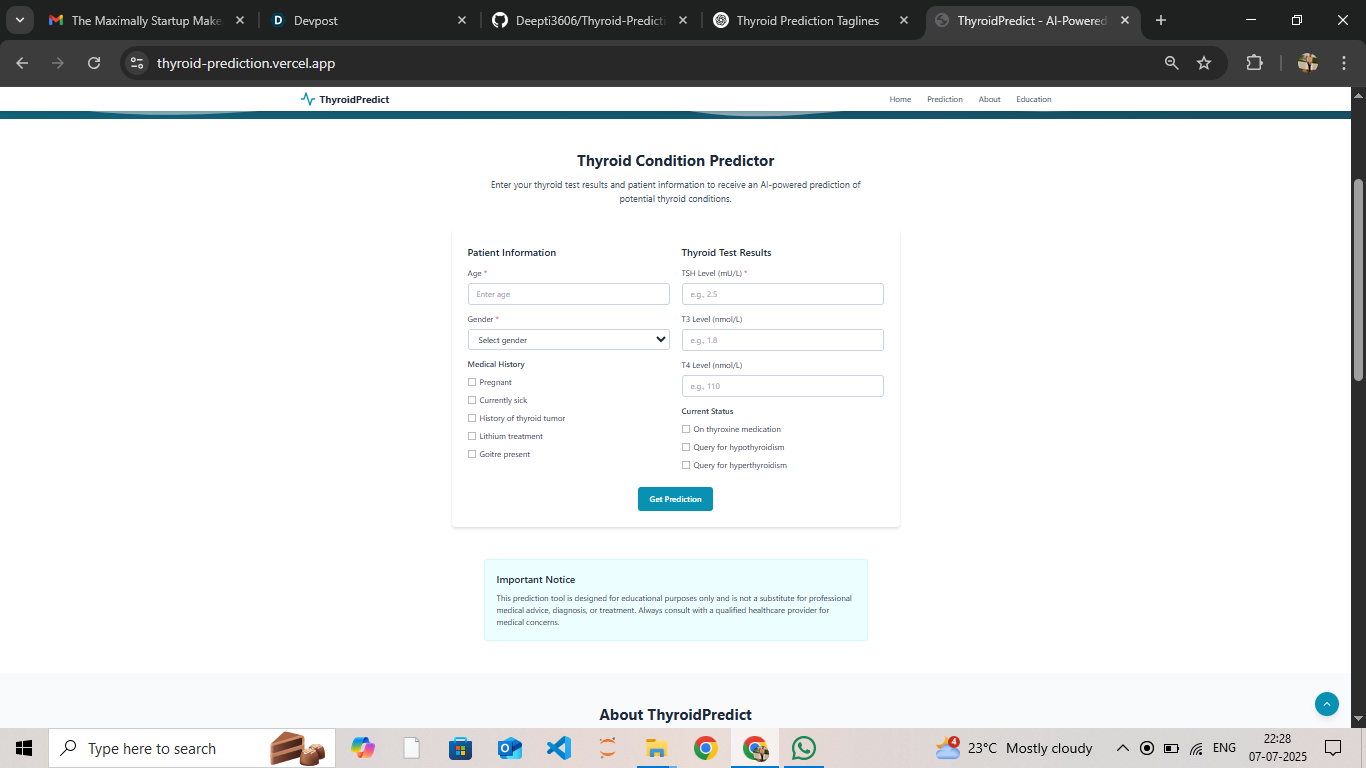
What it does - The system predicts whether a person is likely to have a thyroid disorder (e.g., hypothyroidism or hyperthyroidism) based on input parameters like symptoms, blood test results, age, gender, and more. It provides a risk percentage and suggests next medical steps.
How we built it - We used a machine learning model (e.g., logistic regression, random forest, or neural network) trained on a labeled thyroid dataset. The platform is built using Python with libraries like Pandas, scikit-learn . typescript,html,css and java script
Challenges we ran into - Finding a clean and balanced dataset for thyroid prediction.
Handling missing or inconsistent data in medical records. Ensuring the model doesn't overfit due to class imbalance. Building an intuitive interface for non-technical users.
Accomplishments that we're proud of - Achieved over 90% accuracy on the test set.
Developed a user-friendly and responsive prediction interface. Made the system accessible for non-medical users to raise awareness. Successfully applied ML to a real-world healthcare issue.
What we learned - How to handle imbalanced medical datasets.
The importance of feature selection and model evaluation metrics in healthcare.


Log in or sign up for Devpost to join the conversation.