-
-
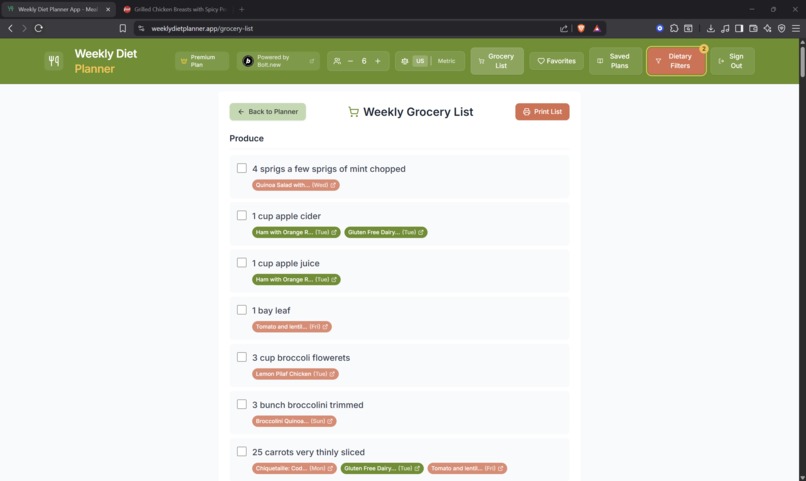
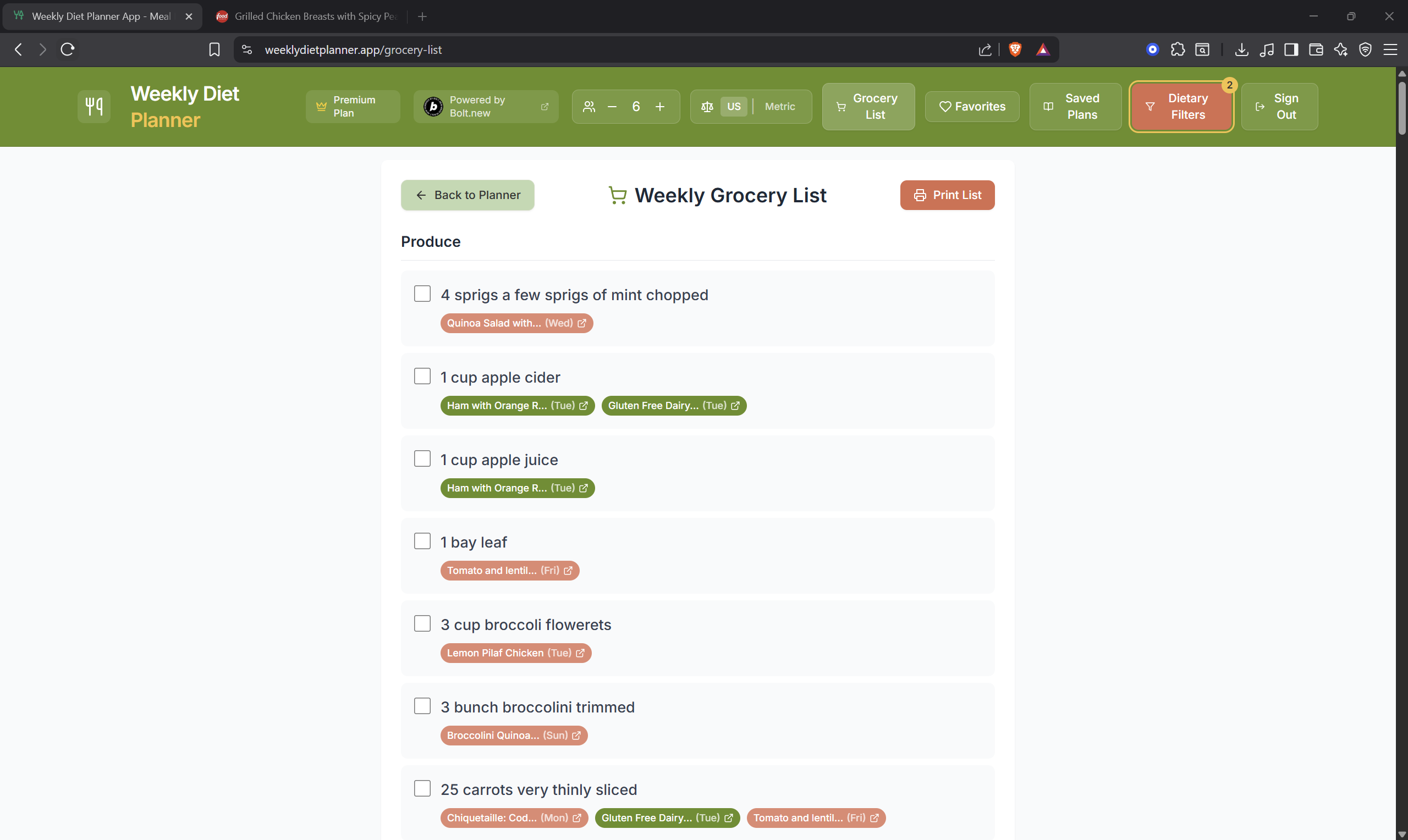
The shopping list for the week.
-
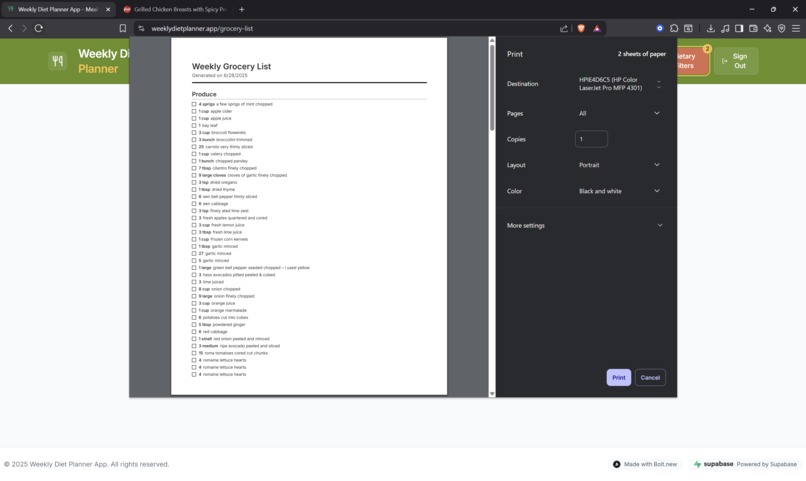
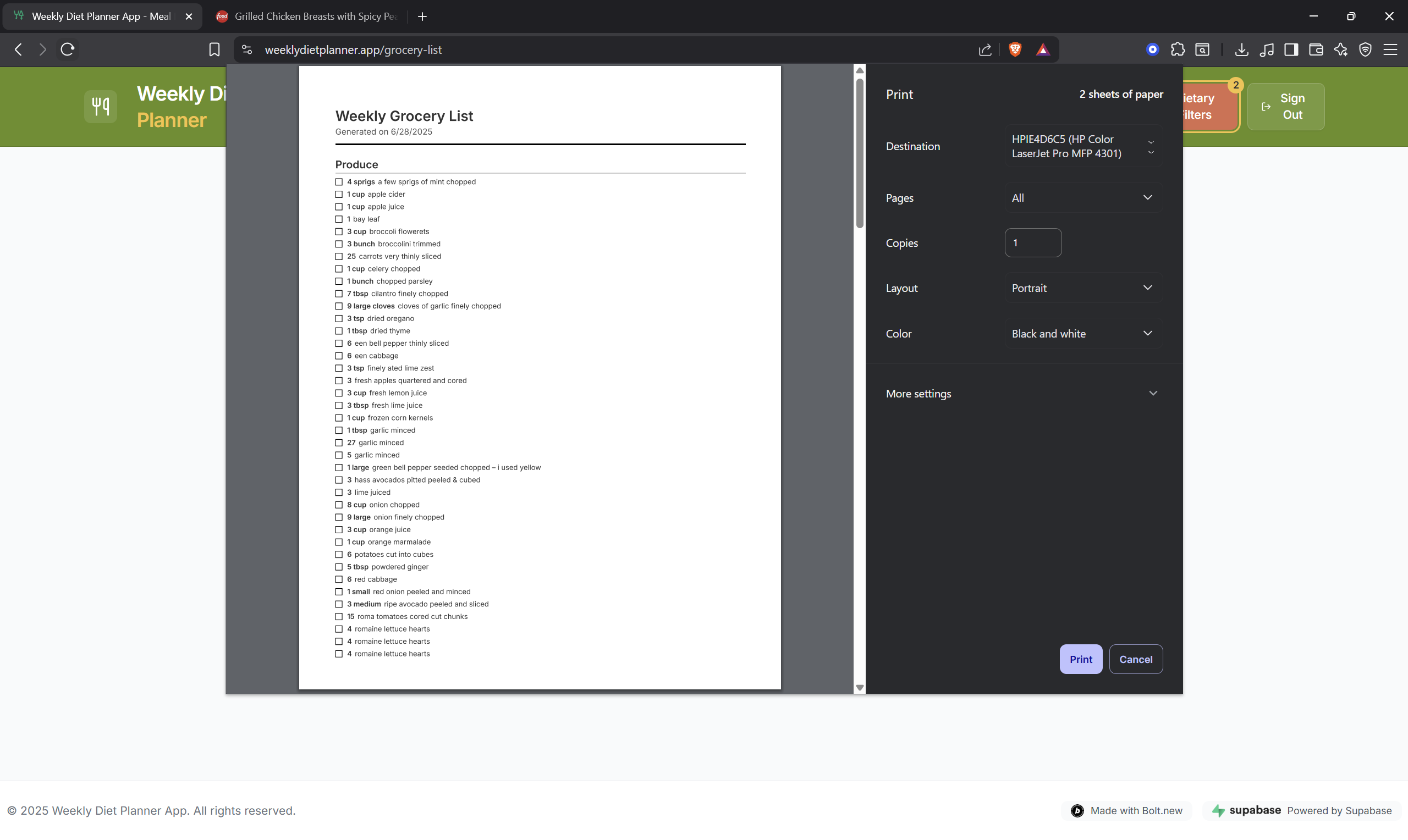
Printing off your shopping list.
-
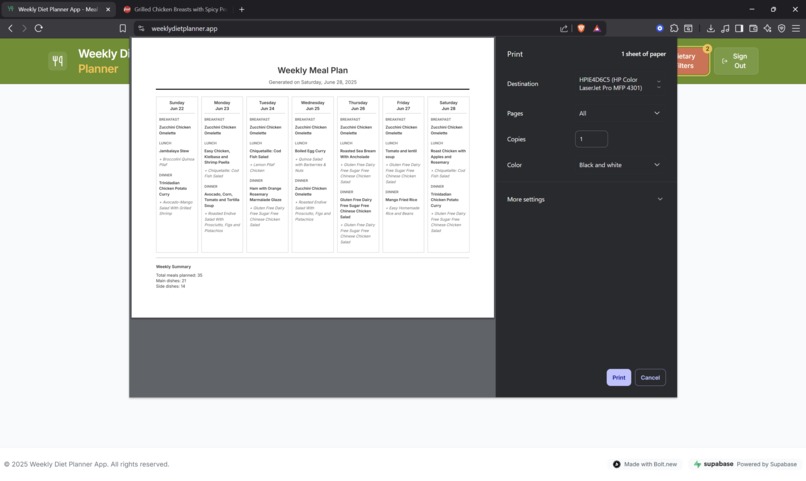
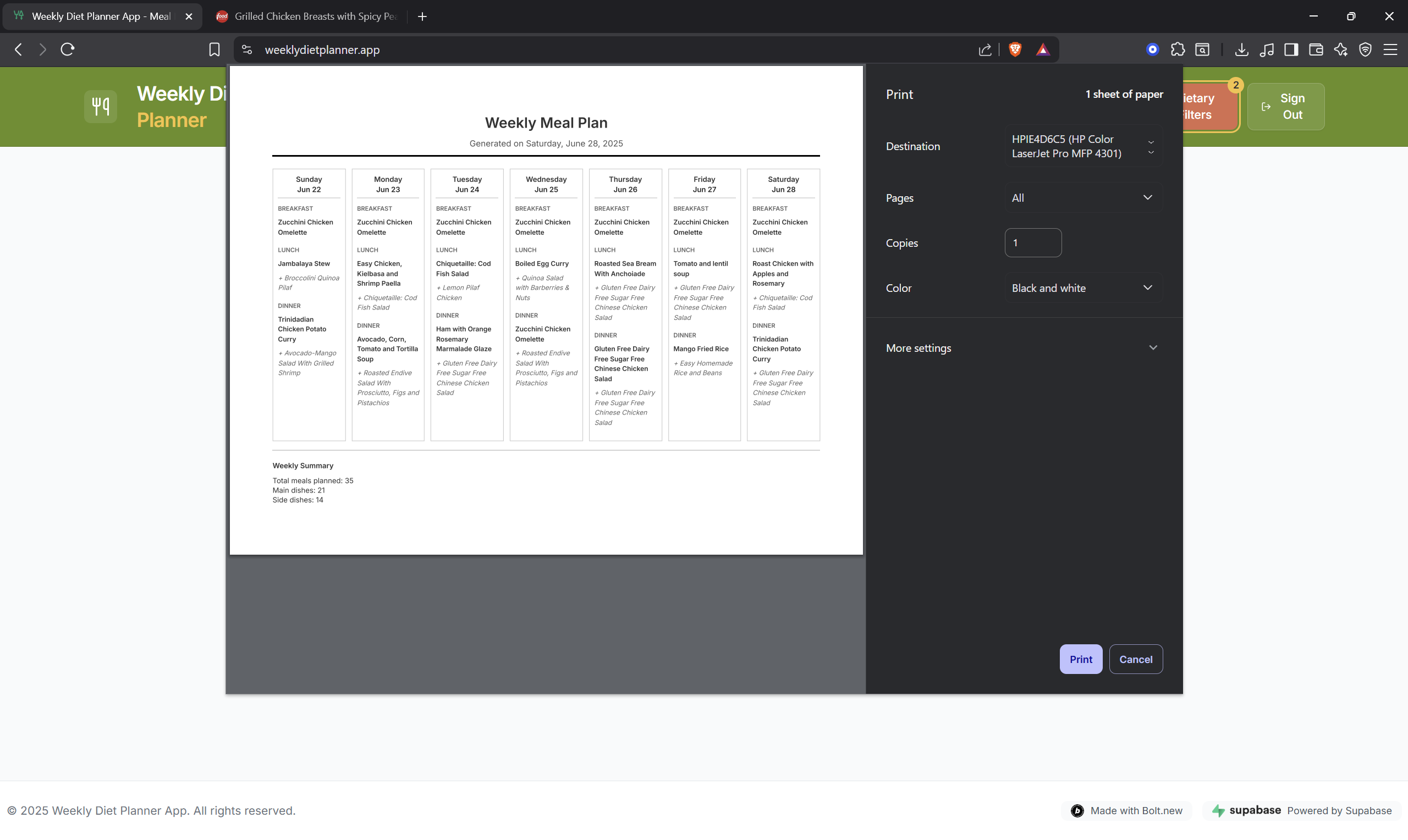
Print off your weekly meal plan.
-
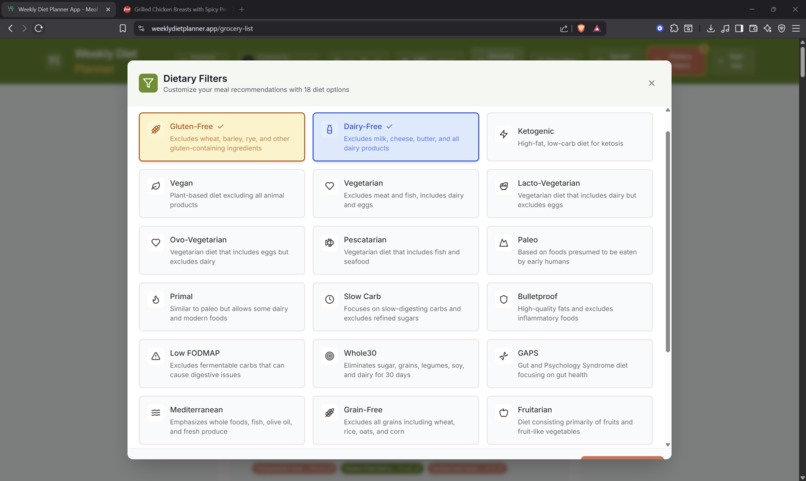
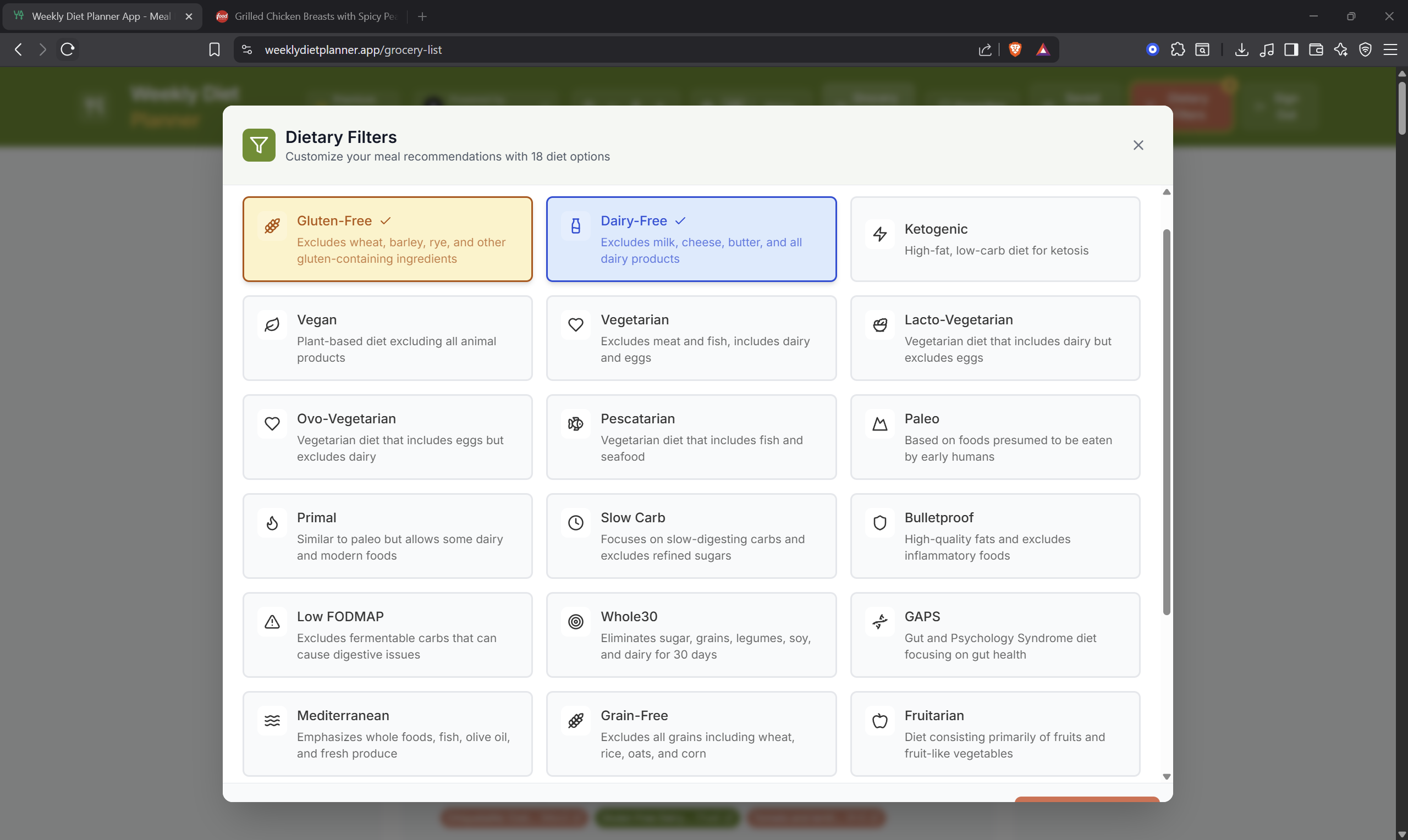
The app has 18 pre-built dietary filters.
-
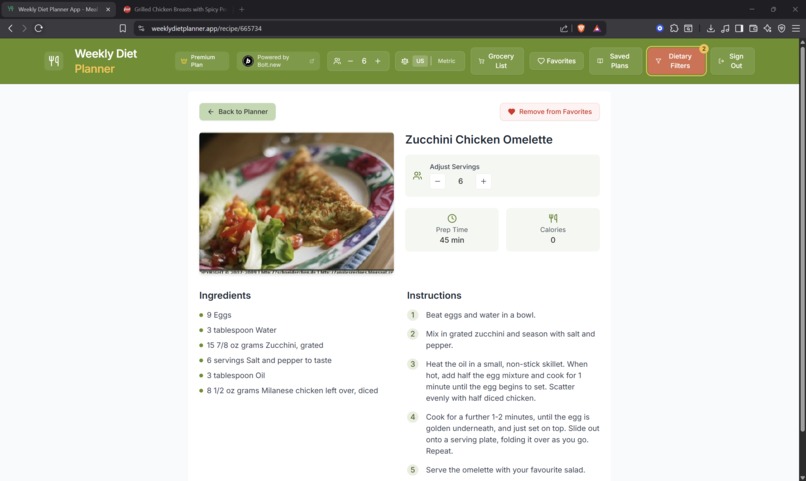
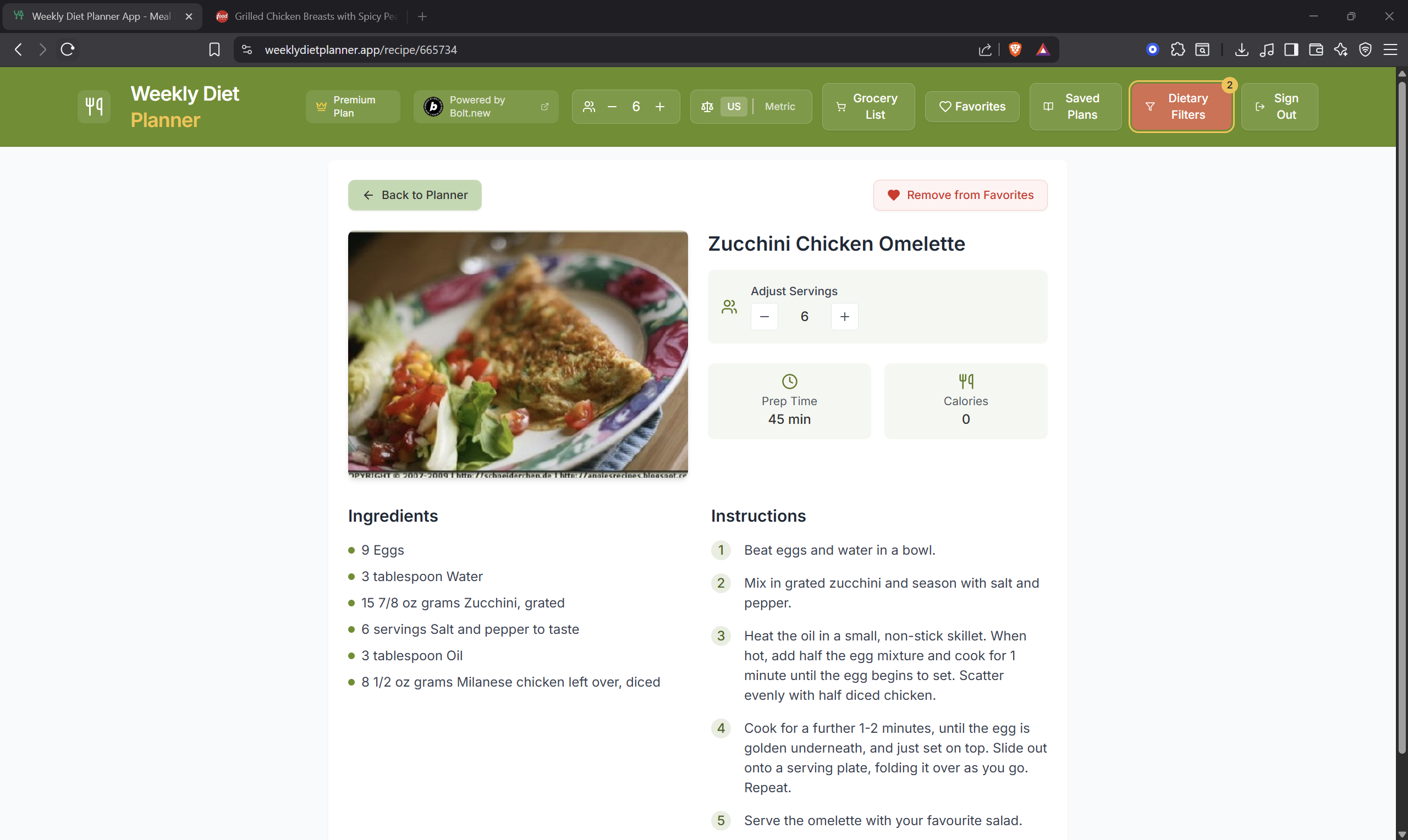
An example recipe.
-
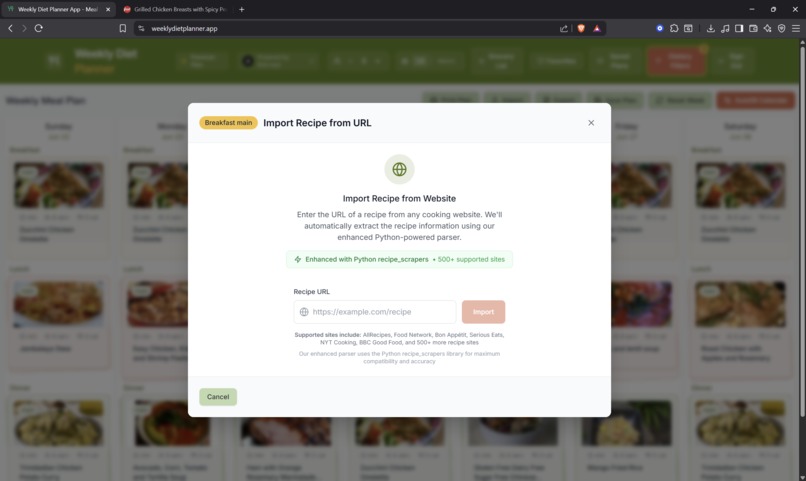
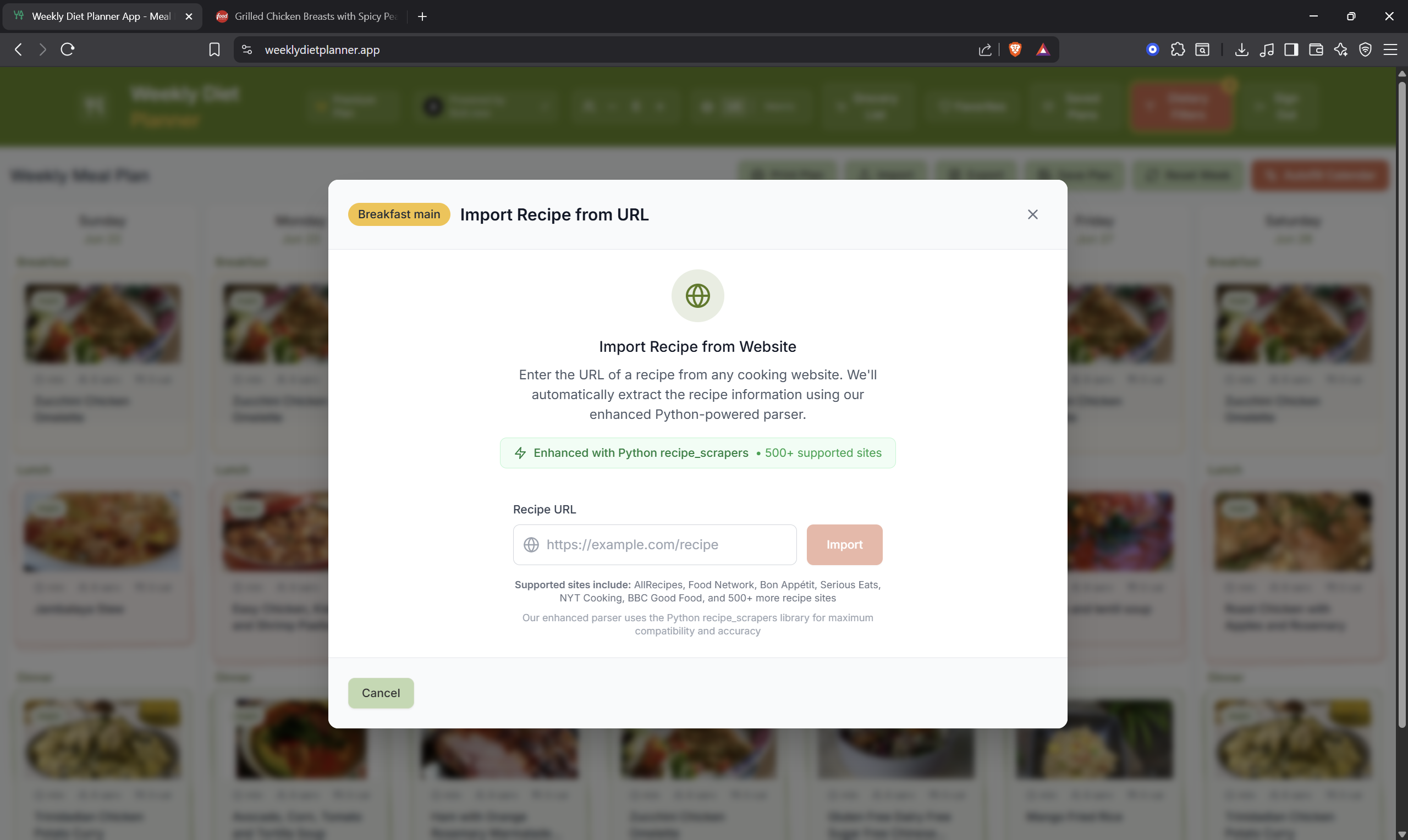
EXPERIMENTAL: Pull in a recipe from a URL.
-
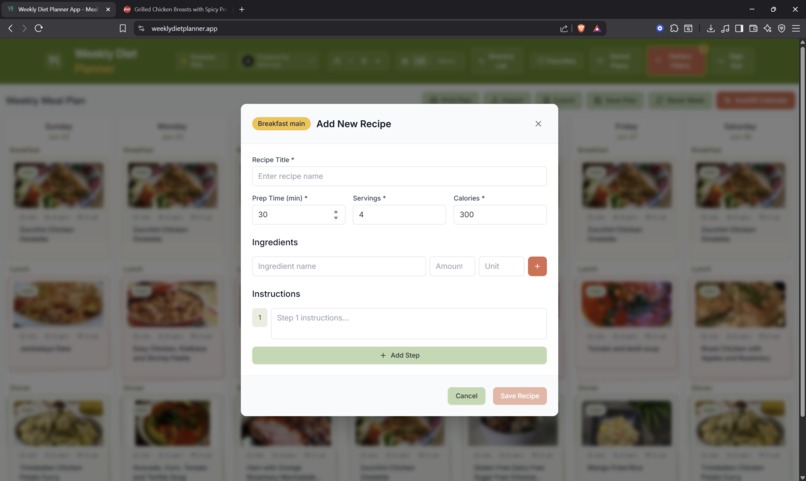
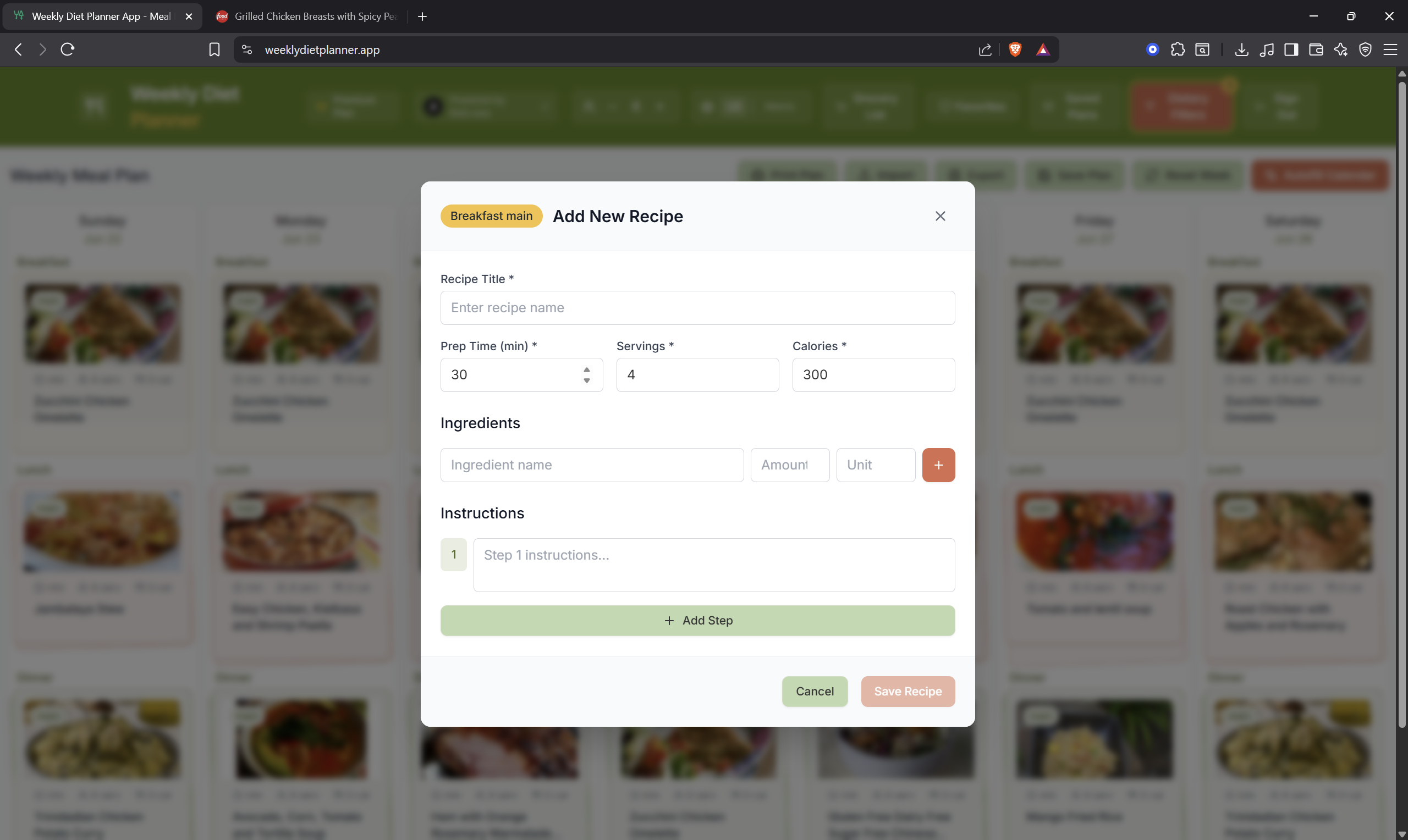
Manually input your own recipes.
-
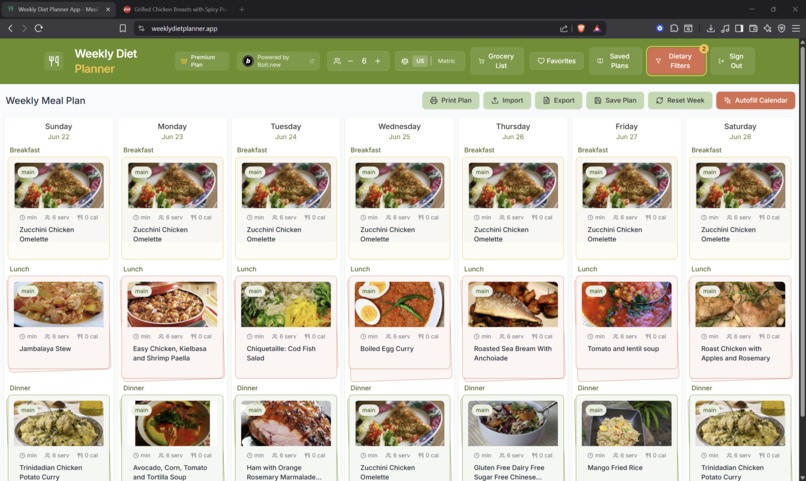
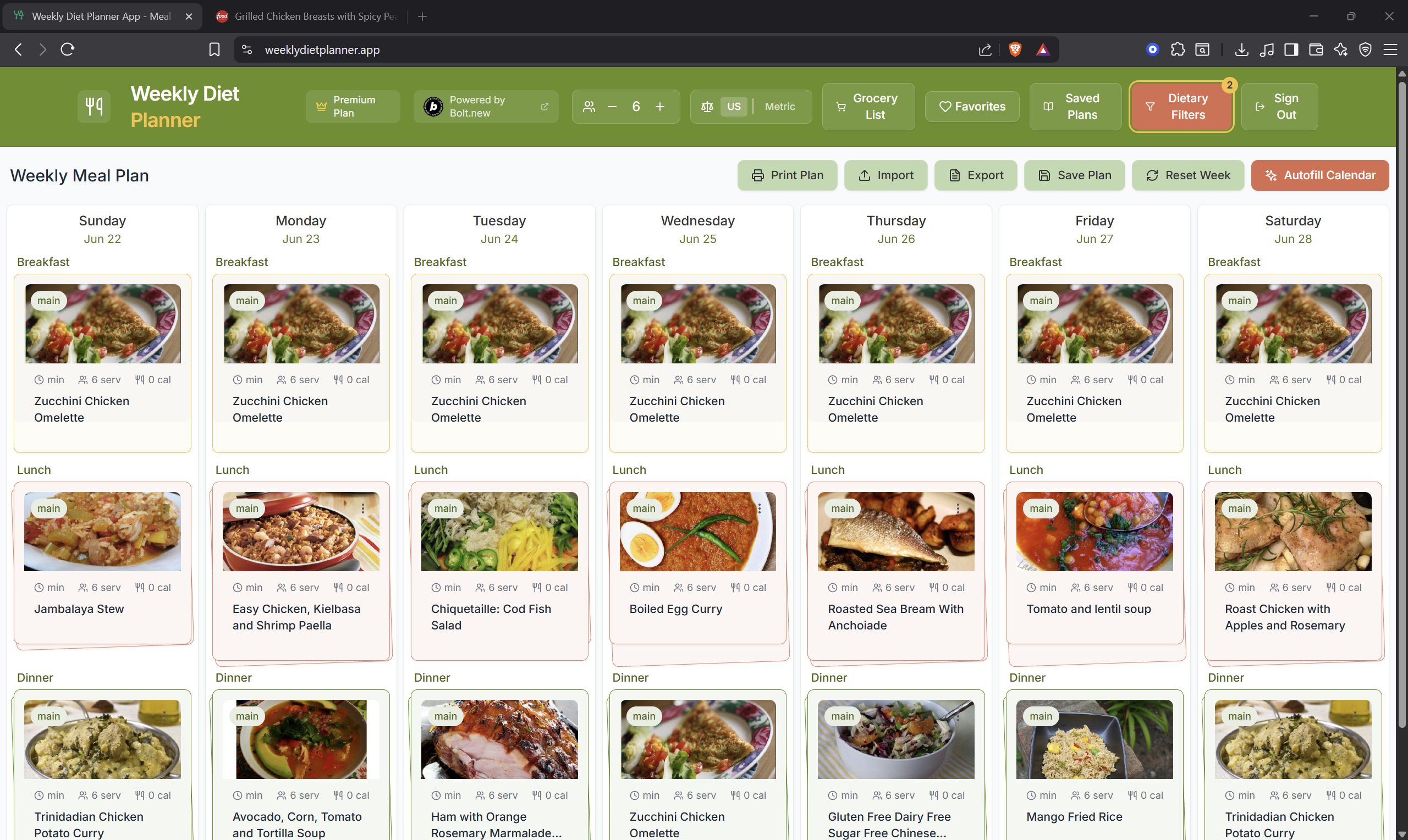
The Weekly Meal Plan
-
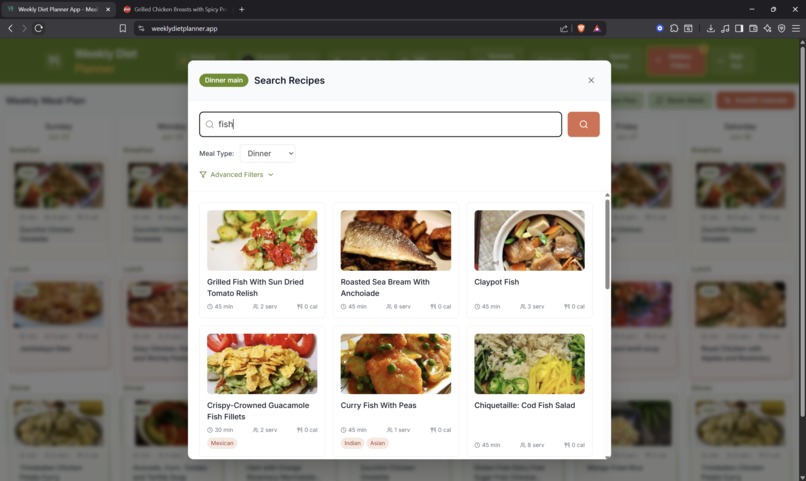
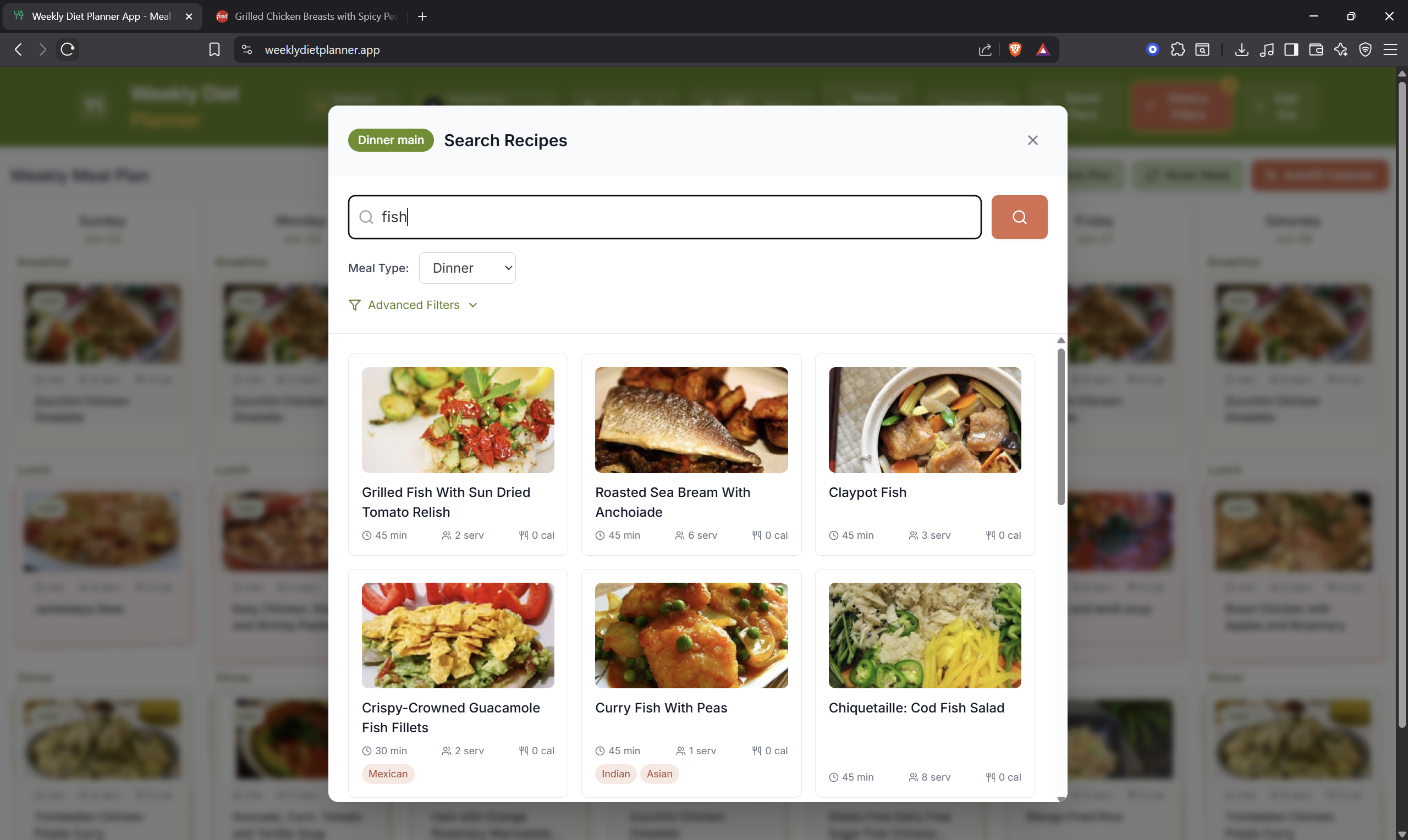
Search Spoonacular's API of recipes based on your dietary needs.
Inspiration
The Problem
Meal planning for families with restrictive diets—such as allergies, intolerances, or specific dietary needs—is incredibly challenging, time-consuming, and often stressful. Finding recipes that meet everyone’s requirements, managing unusual ingredients, and ensuring safety can feel like a full-time job.
I experience this daily in my own family. Our oldest son, was exposed to antibiotics during birth and therefore developed a systemic yeast allergy. We realized the seriousness of this when he was about two and nearly had to rush him to the ER the night after a fresh pizza dinner.
A few years later, we adopted three other children—two with dairy intolerance. Our youngest son would scream constantly at mealtimes as an infant/toddler. We heard about going gluten-free for children with ADHD and Autism, so we put the whole family on a GF diet. Mealtime became more enjoyable within days, and within weeks, we noticed cognitive breakthroughs in our older boys in areas they had been struggling. We were GF for life at this point and I even saw improvements in myself.
Later, we tried the ketogenic diet and found major benefits, but it was hard to sustain due to allergies and dietary requirements.
Years later, I was diagnosed with a histamine allergy and needed a low-histamine diet, adding even more restrictions to our already limited diet.
In order to make cooking more fun and less overwhelming, I started a project, RecipeHunter, to make finding recipes easier. It began as a command-line Python script using the Spoonacular API to find recipes based on included/excluded ingredients. I added a GUI wrapper and, after hearing about the World’s Largest Hackathon, decided to explore further how I could make eating at home with strict dietary requirements less of a burden..
The Goal
Unlike RecipeHunter which focused on finding individual recipes, the purpose of Weekly Diet Planner App was to create a comprehensive, intuitive, and intelligent meal planning solution that alleviates the burden of restrictive diets, making healthy and safe eating accessible and enjoyable for families. This app focuses on meal planning, shopping, and organization for families with highly restrictive diets.
What It Does
The Weekly Diet Planner App is a robust web application designed to simplify meal planning for individuals and families with restrictive diets.
- Interactive Weekly Calendar: Visually plan meals for each day and meal (breakfast, lunch, dinner). Each dish is a card that can be swapped or dragged around the week.
- Flexible Recipe Management:
- Manual Recipe Entry: Add your own family recipes or custom creations.
- Random Recipe Generation: Quickly find new recipes tailored to dietary preferences.
- Recipe Search: Search a vast database with advanced filters via the Spoonacular API (including dietary restrictions, ingredients to include/exclude). Popular diets are built in.
- Experimental Recipe Import from URL: Import recipes from any website using a Python-powered parser that extracts ingredients and instructions.
- Full Week Random Generation: Originally for testing, but useful for planning.
- Dynamic Dietary Filters: Apply standard diets (vegan, gluten-free, keto) and create custom filters for specific intolerances or exclusions.
- Adjustable Servings: Scale recipes for your family size, with automatic ingredient adjustments (single recipe or entire plan).
- Automated Grocery List Generation: Generate a categorized grocery list from your weekly plan, with smart ingredient combining and unit conversions.
- Saved Meal Plans: Save and load entire weekly meal plans for reuse and organization.
- Favorites: Keep track of your most loved recipes for quick access.
How We Built It
- Main Tool: Bolt.new for the hackathon; VS Code with Copilot and Gemini for the Python recipe parser.
- Frontend: React for a dynamic UI, Vite for fast development, Tailwind CSS for styling, Framer Motion for animations.
- Backend & Database: Supabase with PostgreSQL for data storage, Supabase Auth for user management, Supabase Edge Functions for serverless logic.
- Recipe Data & Parsing: Integrates with the Spoonacular API. Recipe import uses custom Supabase Edge Functions running Python’s
recipe_scraperslibrary. - Payments & Subscriptions: Stripe for secure payment processing and subscription management. Free, Standard, and Premium, managed by Stripe. Higher tiers unlock features like unlimited searches, enhanced import, and autofill.
- Deployment: Netlify for reliable and scalable hosting.
Challenges We Ran Into
- Front End Development: As a backend/data person, learning React was a challenge.
- Complex State Management: Managing the intricate state of a weekly meal plan, including drag-and-drop, dynamic recipe details, and real-time updates.
- Robust Recipe Parsing: Developing a reliable import feature for diverse website structures, leading to both client- and server-side (Python-based) solutions.
- Dynamic Unit Conversions: Ensuring accurate and user-friendly conversions and ingredient consolidation for the grocery list (US vs Metric, ingredient types).
- Grocery List Ingredient Combining: Difficult to configure robustly.
- Subscription Logic & RLS: Implementing a flexible subscription model and managing Row Level Security (RLS) in Supabase for data privacy and access control.
Accomplishments That We're Proud Of
- Intuitive User Experience: Despite complex features, the UI is clean, responsive, and intuitive.
- Powerful Recipe Import: The enhanced import feature, powered by Python, offers compatibility and accuracy for pulling recipes from the web.
- Comprehensive Dietary Filtering: Users can apply both standard and custom filters for personalized meal plans.
- Seamless Integrations: Smooth integration of Supabase, Stripe, and Spoonacular, plus custom Edge Functions, creates a robust, scalable architecture.
- Real-time Grocery List: Dynamic grocery list generation with intelligent combining and conversion saves users significant time and effort.
What We Learned
- Being a Data Analyst by trade, I am more confortable in backend applications, this project gave me a lot of time working on the frontend.
- The critical importance of a well-structured database schema and robust RLS policies in multi-tenant applications with varying access levels.
- The power and flexibility of serverless functions (Supabase Edge Functions) for offloading complex, resource-intensive tasks like web scraping.
- The value of a component-based architecture (React) for managing complex UI and state.
- How to design a tiered subscription model that provides clear value at each level and encourages upgrades.
What's Next for Weekly Diet Planner App
- AI-Powered Recipe Recommendations: Enhance AI to provide more personalized suggestions based on user history and preferences.
- Premium Recipe Collections: Curated, tried-and-true recipes.
- Advanced Meal Plan Sharing & Community Features: Share meal plans with family or friends, collaborative planning, and a community for sharing custom filters, meal plans, and favorite recipes.
- Mobile App Development: Explore native mobile apps using Expo for seamless iOS and Android experiences.
- Integration with Smart Kitchen Devices: Investigate potential integrations with smart kitchen appliances for a connected cooking experience.


Log in or sign up for Devpost to join the conversation.