Inspiration
Weather alerts are often written in dense, technical language. ClearAlert was inspired by the need to make urgent weather information easier to understand for people with limited English, lower literacy, or cognitive disabilities. What it does
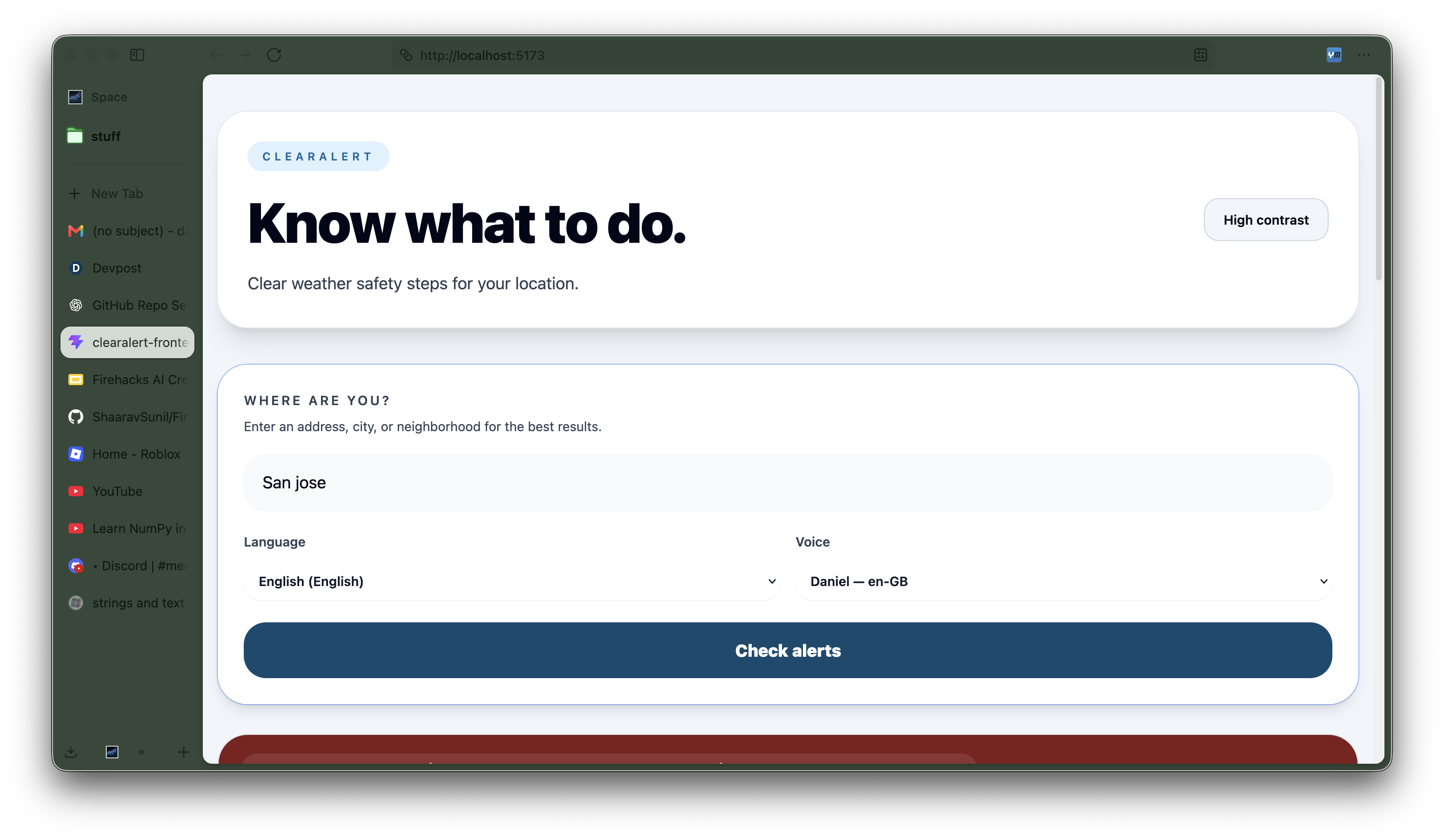
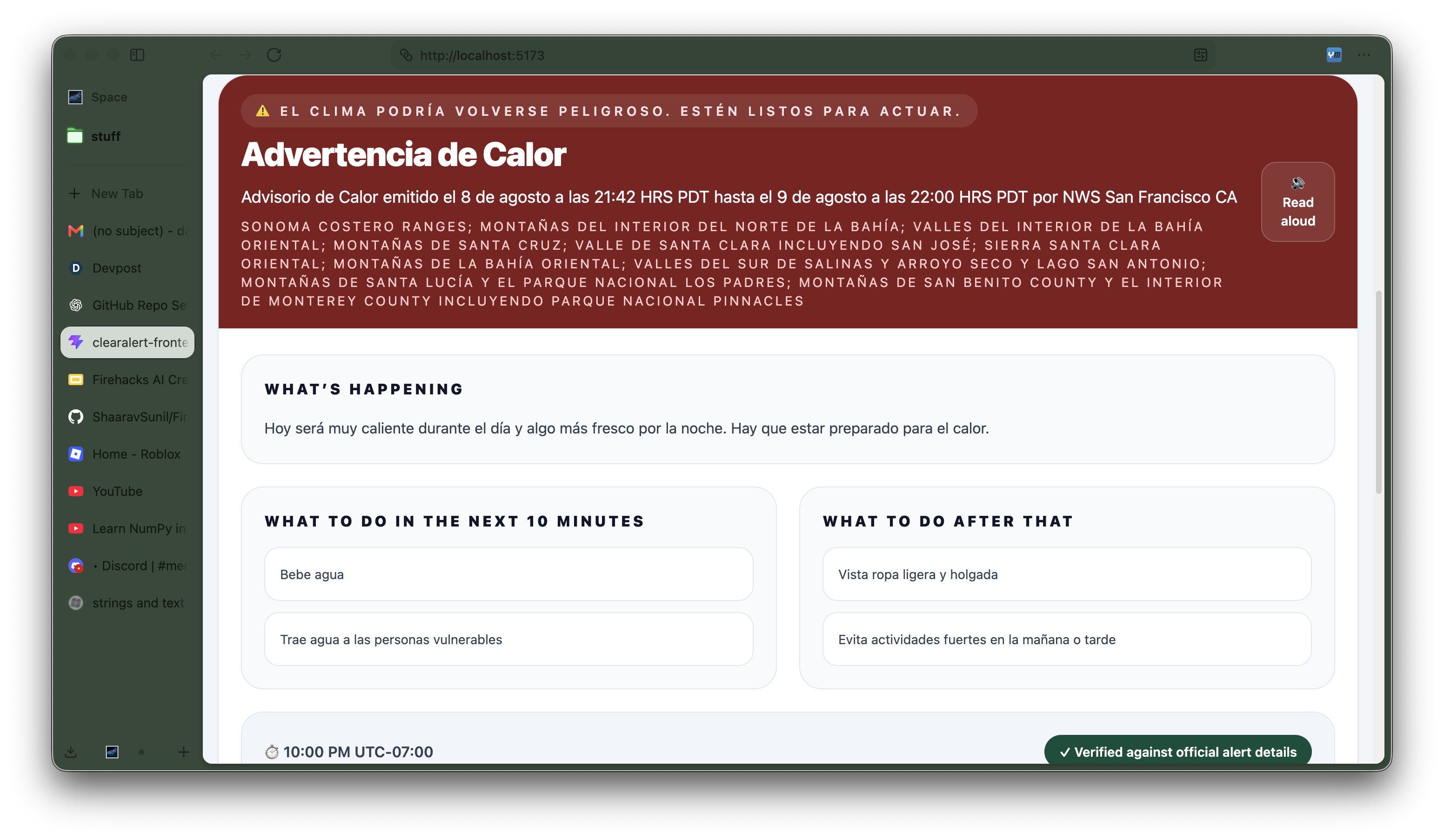
ClearAlert turns an address into clear, actionable weather-safety guidance. It finds active National Weather Service alerts, explains the danger in plain language, provides immediate action steps, supports multiple languages and reading levels, and lets users hear the alert read aloud. How we built it
We built a Python backend that:
Uses the US Census geocoder to convert an address into coordinates.
Fetches active alerts from the National Weather Service.
Uses deterministic safety rules to identify severity and action tiers.
Uses an LLM through Featherless to create simpler, translated explanations.
Verifies generated information against the official source alert.
We built a React, Vite, and Tailwind frontend with an address input, language and reading-level controls, alert cards, read-aloud support, high-contrast mode, source-alert expansion, and loading/error/no-alert states. Challenges we ran into
We had to connect several moving parts: geocoding, live weather data, LLM output, translation, verification, and the frontend. We also worked through Python package setup, API-key configuration, local server ports, and making sure the frontend could eventually connect to the backend safely. Accomplishments that we're proud of
We are proud that ClearAlert focuses on action, not just information. The app clearly explains what is happening, what users should do in the next 10 minutes, and where the official alert came from. We also built accessibility features such as read-aloud, high contrast, and multilingual support. What we learned
We learned how to connect a React frontend to a Python backend, work with public APIs, use environment variables for API keys, build with Vite and Tailwind, and make AI-generated safety guidance more trustworthy through verification. What's next for ClearAlert
Next, we want to finish the live frontend-to-backend connection, improve the API route, test every supported language, add more real alert fixtures, support notifications, and deploy ClearAlert so it can be used outside local development.

Log in or sign up for Devpost to join the conversation.