-
-
Build-Outfit
-
Build from Prompt
-
Build from Image
-
Generated Outfit
-
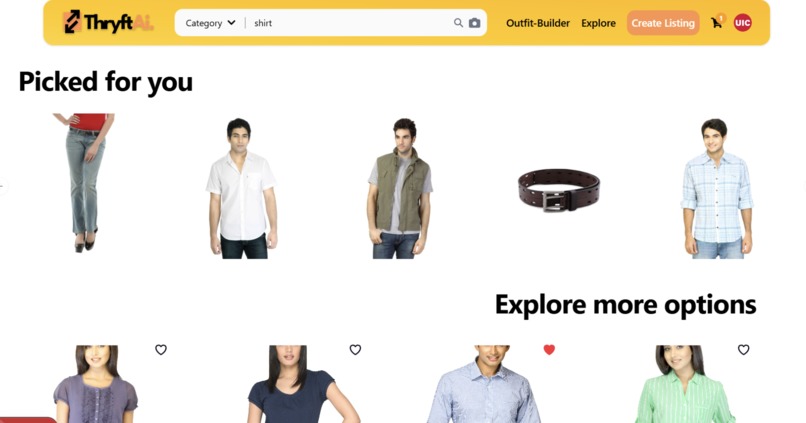
Explore
-
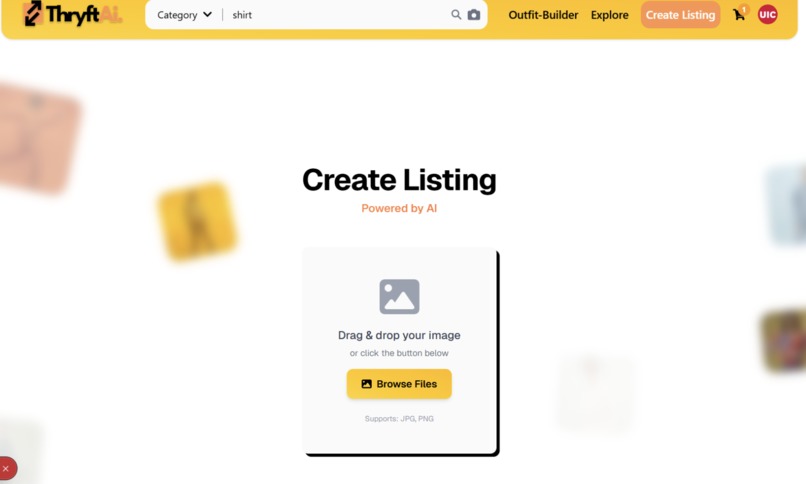
Create Listing
-
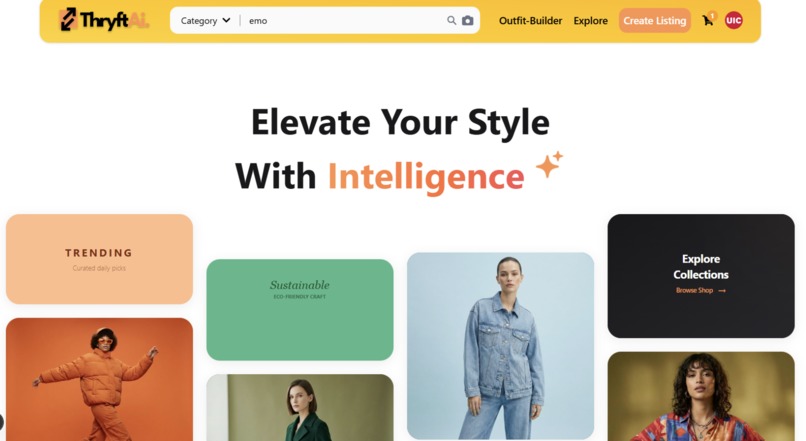
Homepage
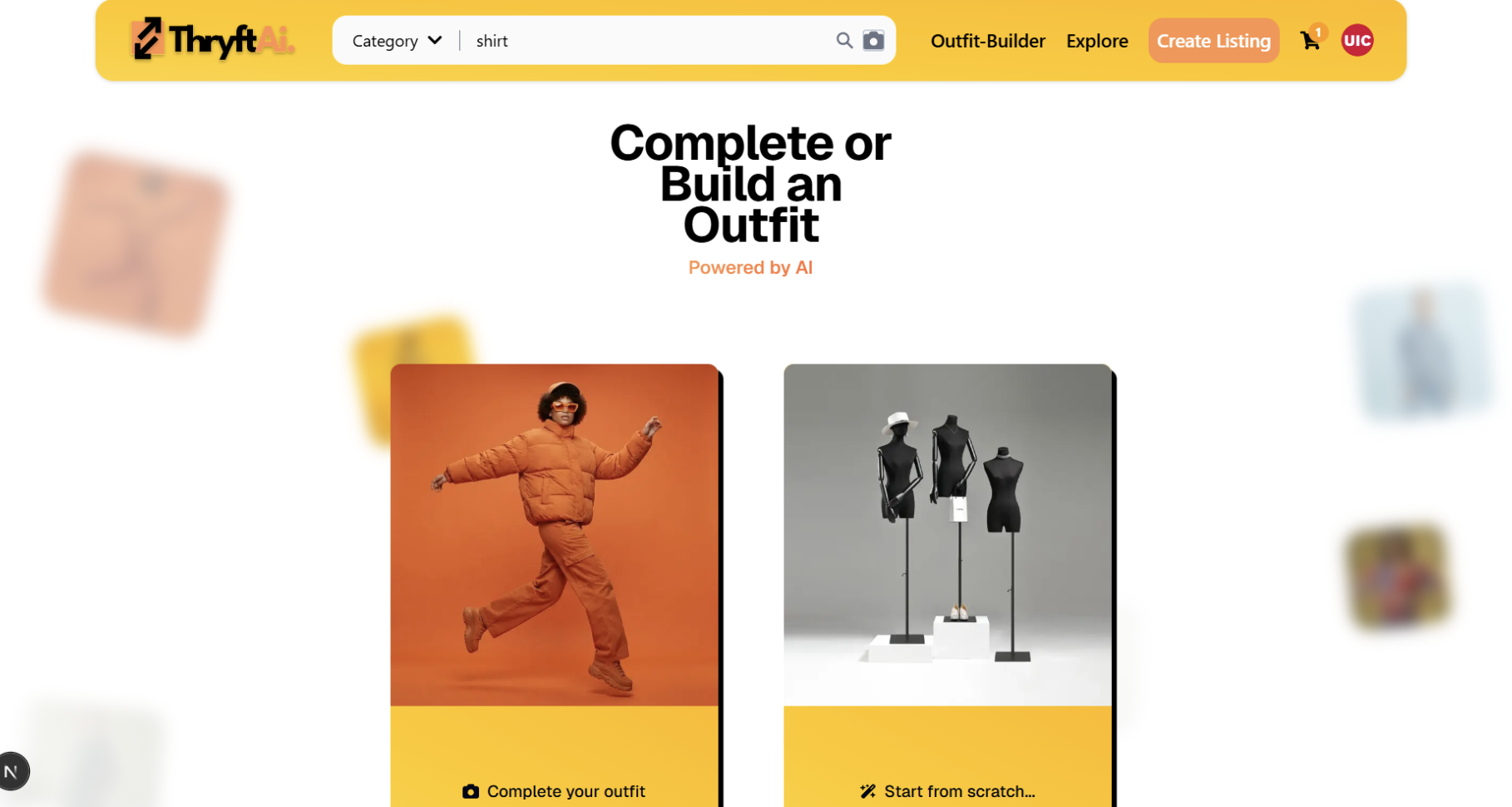
Inspiration
Right now, knowing where to buy the best clothes for you is hard, and even harder than that is to do so sustainably. Ethically sourced clothing is hard to access, and it's complicated, so many people opt for the convenience of fast fashion, which often raises ethical and environmental concerns. One way to buy clothes sustainably is to buy pre-owned clothes, like what you would find in a thrift store. However, the problem with thrift stores is that it's often difficult to find what's best for you. That's where ThryftAI comes in. We imagined a website that combines convenience, personalization, and sustainability and involves customers, naturally shifting the clothing market to be more humane and eco-friendly.
What it does
ThryftAI fundamentally is an E-commerce platform for buying and selling second-hand clothing. However, it is also an AI and data-driven platform aiming to assist buyers in finding what they like, building brand new outfits, and even complete partial outfits they have.
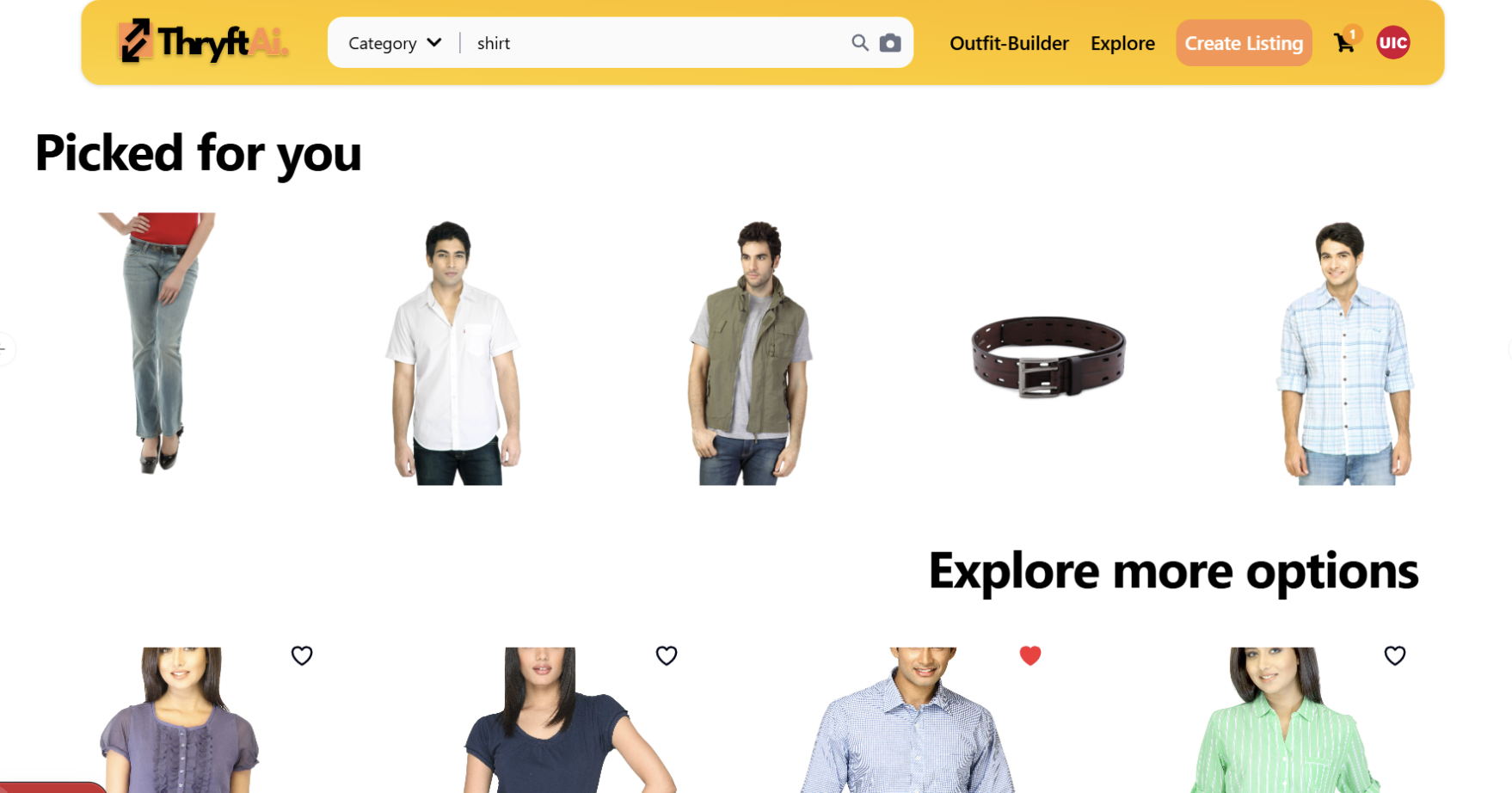
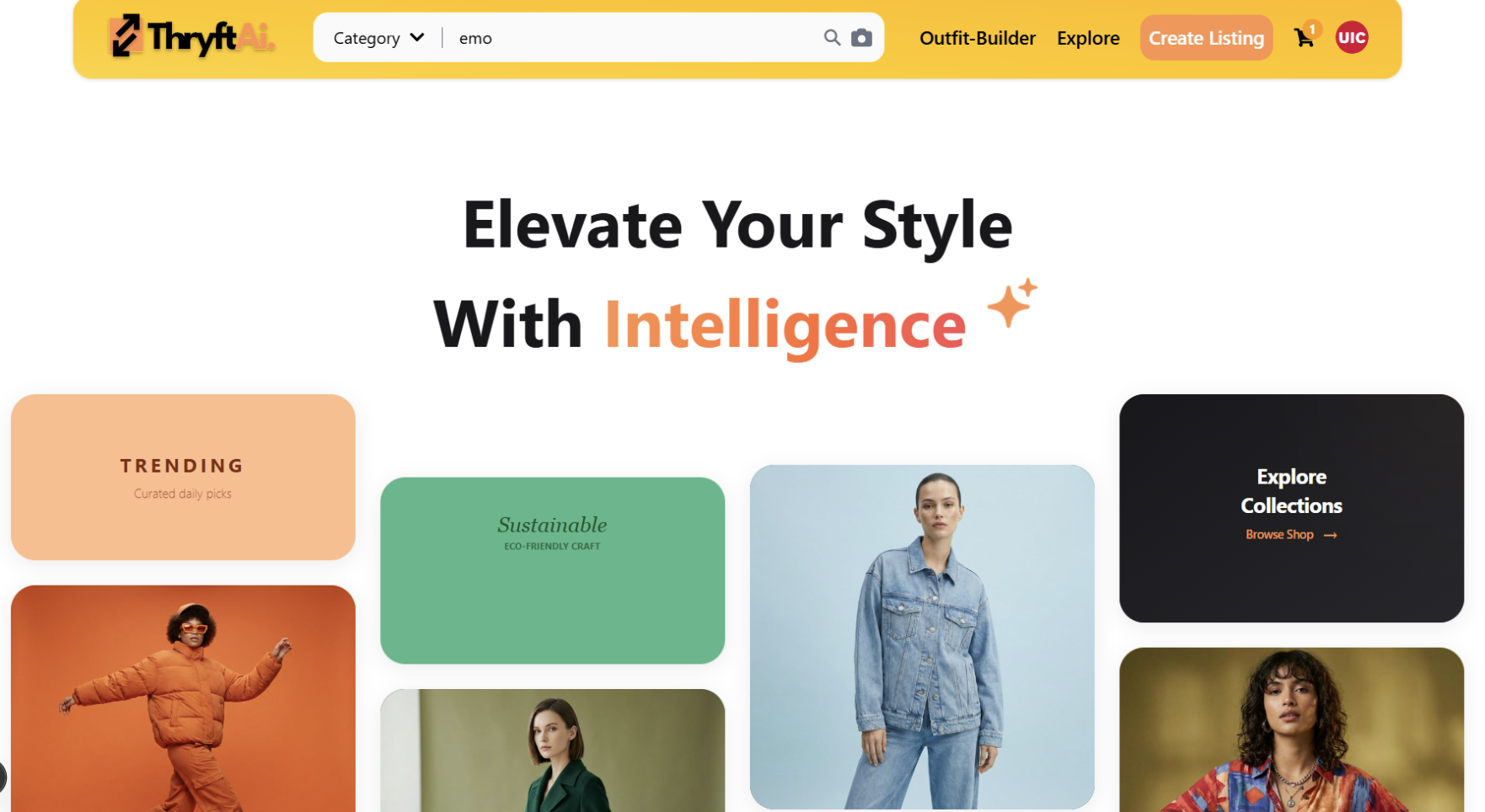
ThryftAI has a wide range of features, each one facilitating a unique aspect of the experience. On the homepage, an array of example styles are presented to the user, already helping them through the process the instant they load the website. The Explore feature allows the user to find their style by suggesting featured items based on AI-analyzed purchase history, and suggesting other general items available for sale. Here, the user can "heart" items they like. The Search any outfit... tool is very in-depth, allowing the user to find precisely what they are looking for even if they don't know what it is yet; the search bar adapts to genres, types, styles, and any kind of category of clothing the user might be interested in. And even more exciting is the reverse image search: an AI powered feature allowing the user to upload a clothing item they like and find others like it for sale.
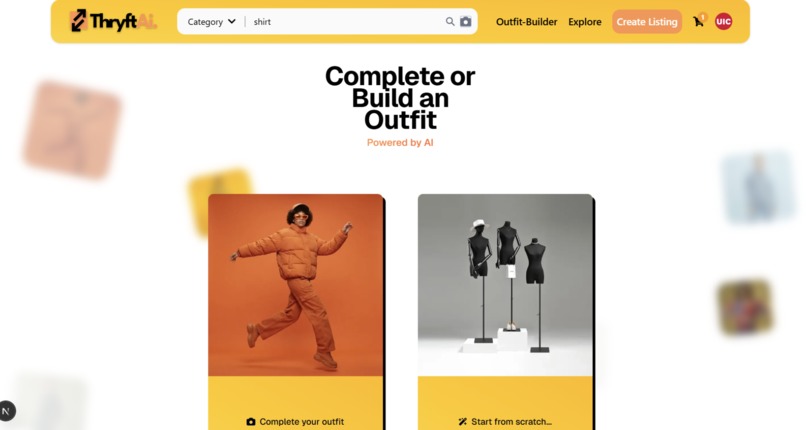
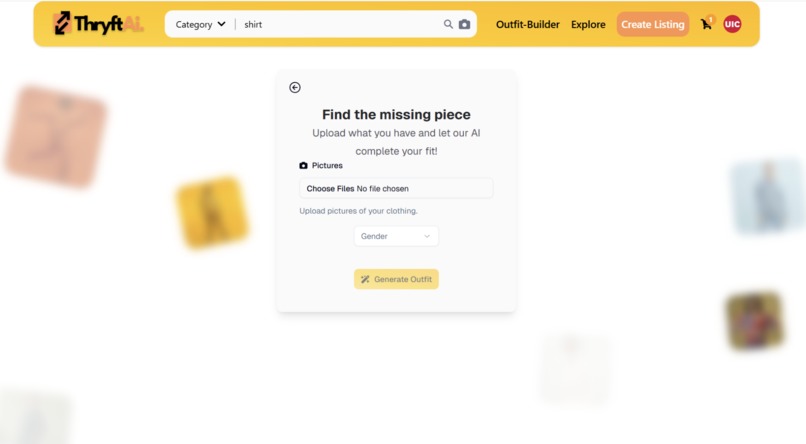
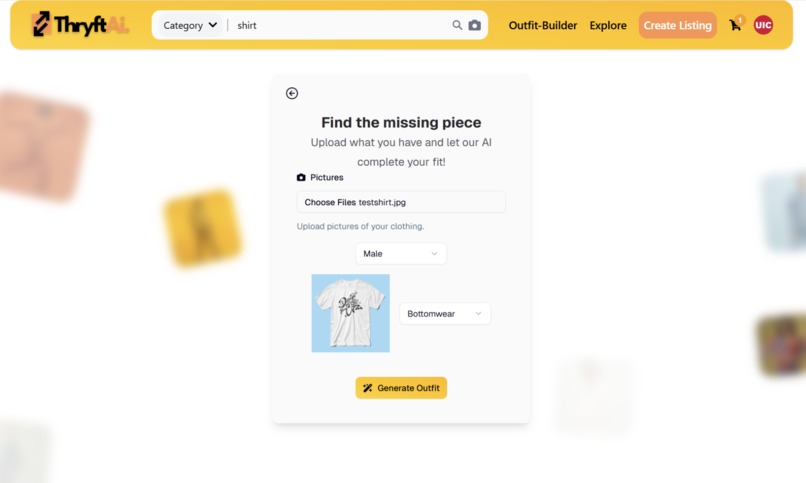
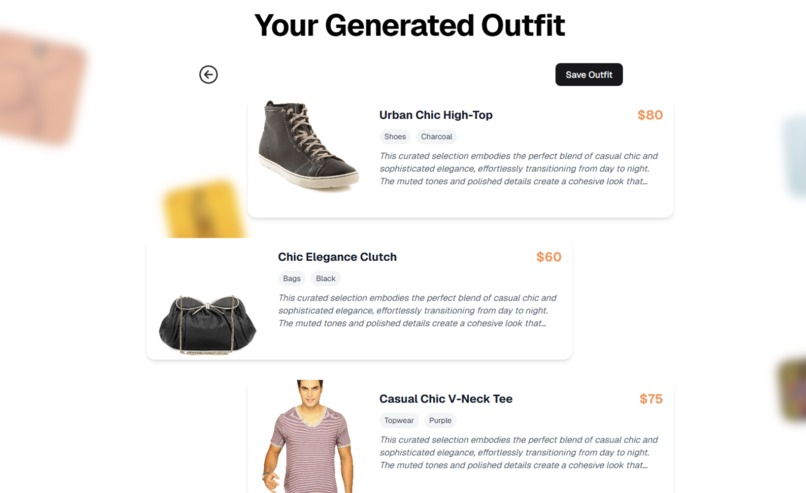
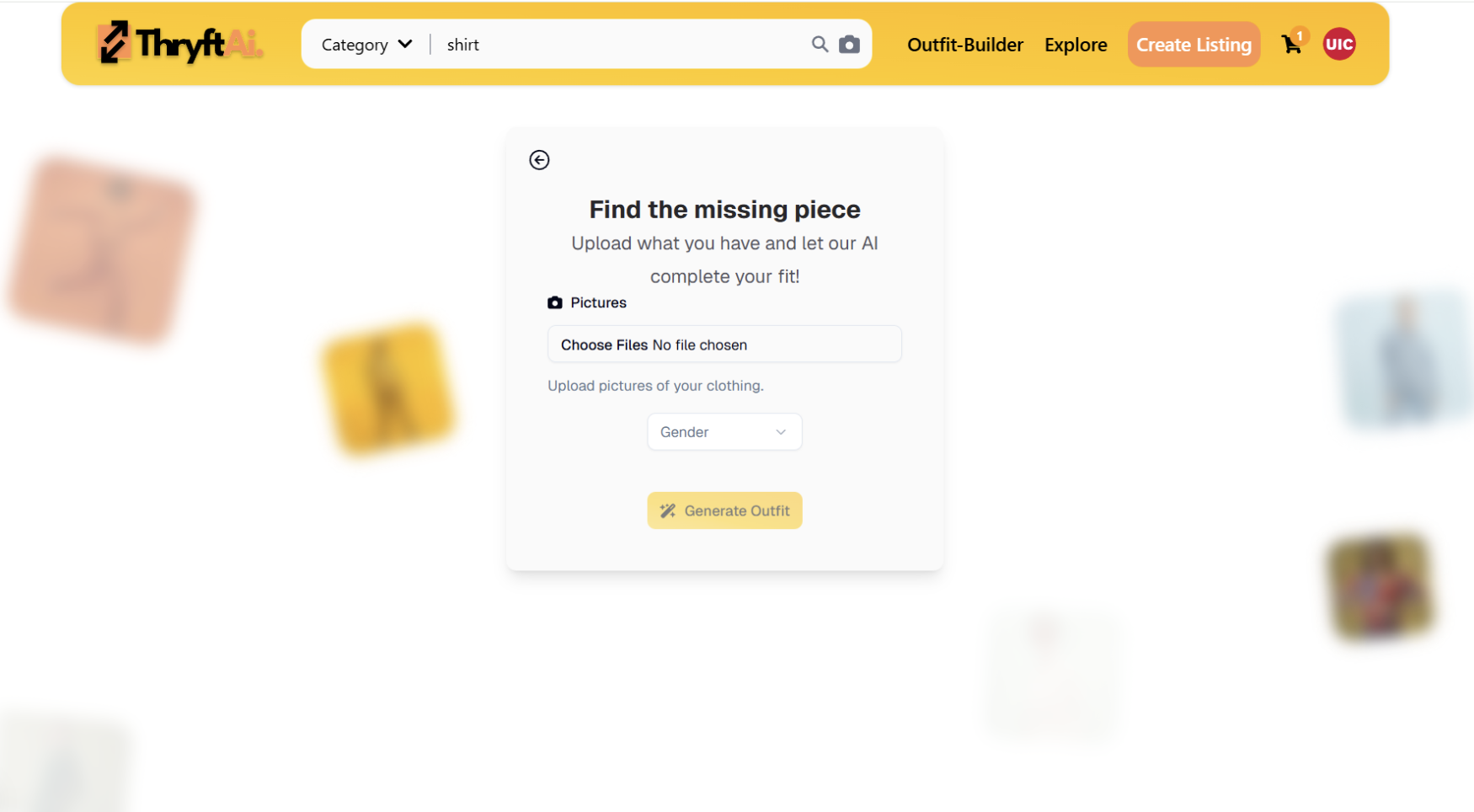
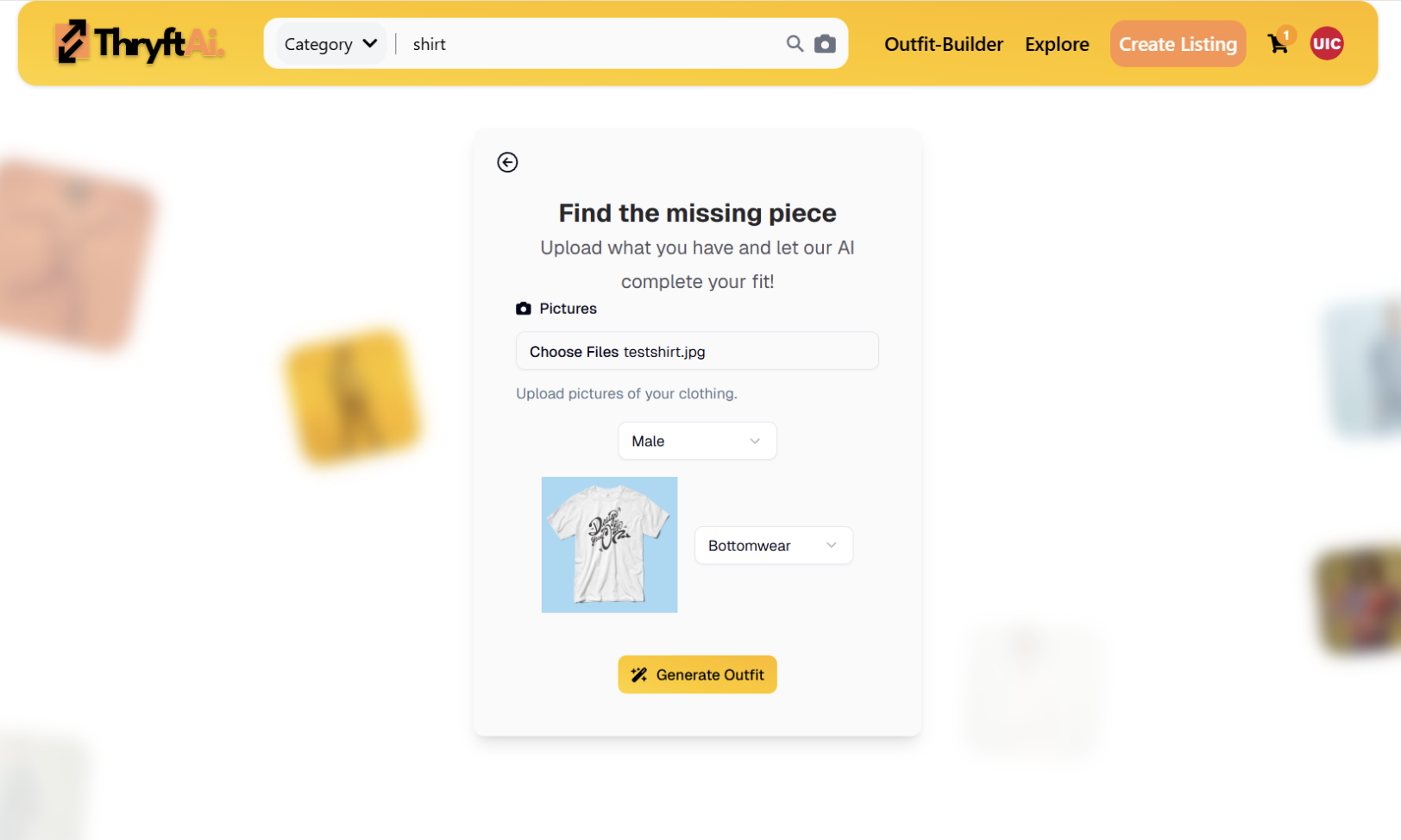
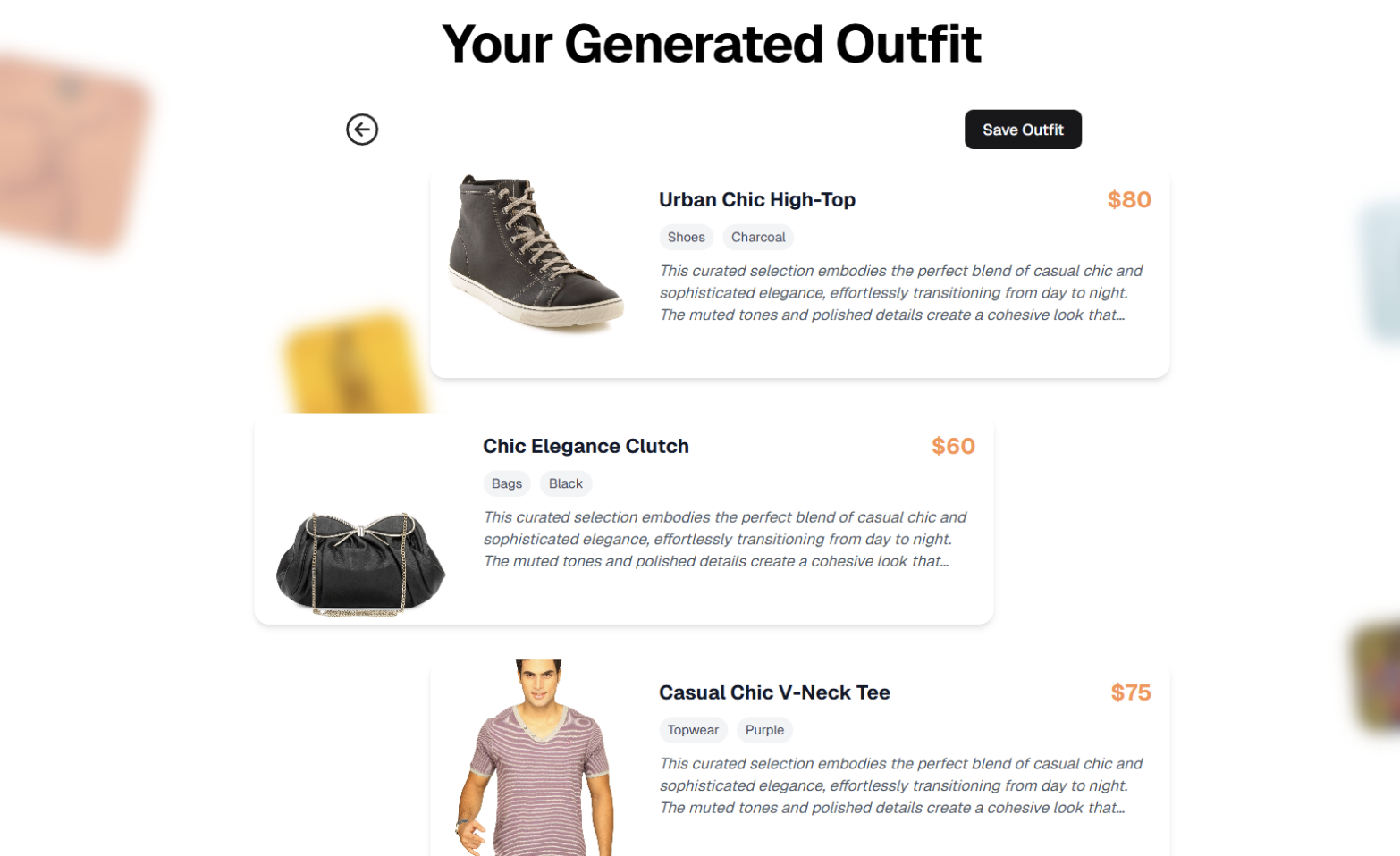
It is very common for people to thrift nice pieces of clothing, but cannot as easily build a full outfit with their clothing–That's where the Outfit-Builder feature comes in. Outfit-Builder allows a user two options. The first allows the user to prompt our AI service with a vibe or style to receive several matching articles of clothing for sale they can add to their collection. The second option lets the user upload photos of their own clothing items, and our service fills in the gaps to complete the outfit. These robust AI features built on top of a sustainable E-Commerce platform makes it easier for anyone to find their own style and do it sustainably. Of course, being an E-Commerce platform, other features include adding items to a cart, uploading items for sale, saving built outfits, and viewing a user profile.
How we built it
On the backend, we used Aedify.AI to register our container image and deploy it through a VPS. The VPS runs the image registered. We created the backend using ASP.NET since it is a very widely used, open source, and easy to learn. The Semantic Kernel Dependency was also very useful for integrating AI into this project via Open-AI models. We also used AWS S3 for image storing to optimize requests and AWS RDS (Postgres) to take advantage of Amazon's easy-to-use console.
On the frontend, we used React Typescript in conjunction with Tailwind CSS to make the design process seamless. Tailwind sped up stylistic design that would have taken much longer to accomplish with traditional CSS, which provided the efficiency we needed to make the User Interface more engaging. This helped to facilitate the convenience as well as enjoyability of the user experience, bringing us closer to our goal of making sustainable fashion convenient instead of an out-of-the-way ordeal.
Challenges we ran into
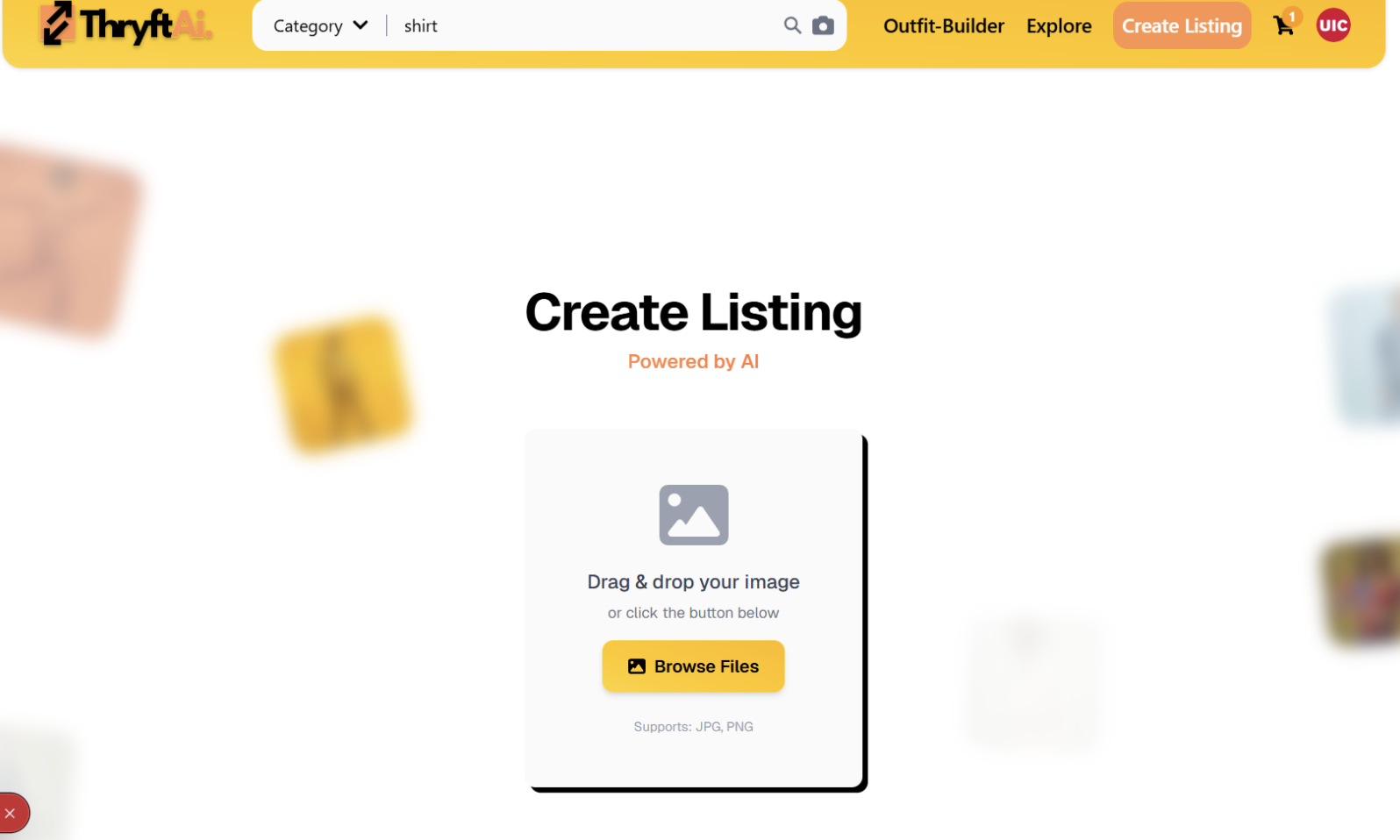
One initial challenge we experienced was the lack of publicly supplied databases containing data such as images and descriptions of used clothing. However, after faulty trials run with an initial database, we eventually abandoned it. Thereafter, we were able to find a public database of a reasonable amount of clothing which we could use for proof-of-concept. To further address this issue, in a long-term perspective, thanks to ThryftAI's Create Listing feature, users would provide their own entries into ThryftAI's database which would each be individually AI-evaluated with tags designated and descriptions generated automatically, the only user input being the name and their selling point.
Accomplishments that we're proud of
We are very proud of making a full stack web application as a team. Everyone learned something new along the way from each other and online resources. We also approached this project with a plan and well thought out ideas before typing any code. We had written a set of ideas, and a plan on how we would delegate amongst ourselves and execute those plans. We managed to do everything that we were hoping for and more. We had a team of a wide range of experience, and we as a team were determined to make sure everyone contributed in any way they could.
What we learned
Each member of the team had a unique takeaway from this project, especially being at different points in their academic careers.
Link Fulstone (Freshman): as a freshman participating in my first Hackathon, I became familiar with various programming languages that were employed in the frontend like React and Tailwind CSS. However, the most important skill I developed during this hackathon was working with others in teams and the process of building a project.
Jose Leal (Graduating Senior): I got more comfortable working with backend and even making my own APIs. This was also a nice opportunity to refresh some skills I have not used in a while. Working with the OpenAI API was also something new I learned since it was not something I had an opportunity to implement on my own.
Gabe Zeller (1st-Year Graduate Student & Experienced Hackathon Attendee): I personally used many tools I was familiar with in this project. However, it wouldn’t be a hackathon without learning something new. Although I was familiar with React, JSX, and CSS, I elected to do my styling using TailwindCSS. This was annoying at first, but it became efficient once I learned how its keywords translate to CSS. I also built this project using Typescript, despite being more familiar with JavaScript, so I became more familiar with the difference in syntax.
Rafael Mejia (Graduating Senior): I was already pretty familiar with the technical aspect, but I still learned a lot about meeting completely new people with variety of skill levels and still managing to include everyone in the project. I also learned about some new services like Aedify.AI.
What's next for ThryftAI
- We would diversify the compatibility of our software on different devices, like enhancing mobile compatibility and potentially creating an app.
- The size of the database would increase over time, allowing for a more complex and even more accurate and personalized user experience.
- We would also add a feature which allows customers to purchase items in their cart and input things like payment and shipping information.


Log in or sign up for Devpost to join the conversation.