-
-
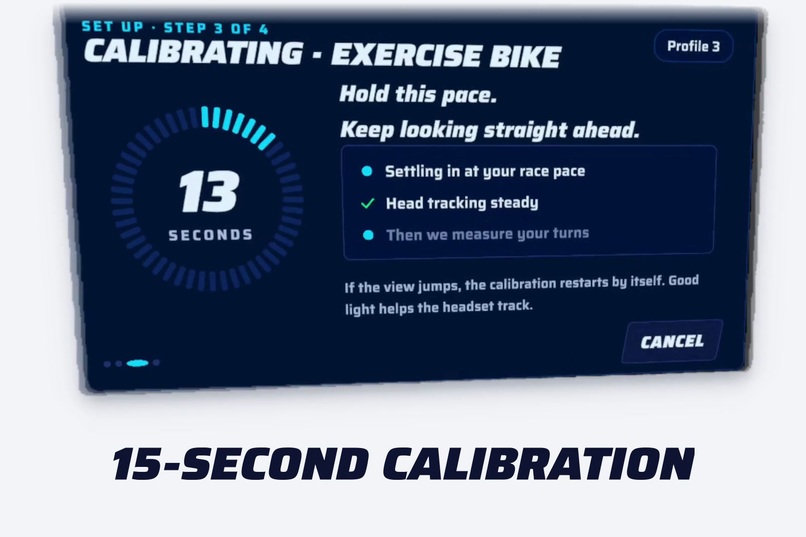
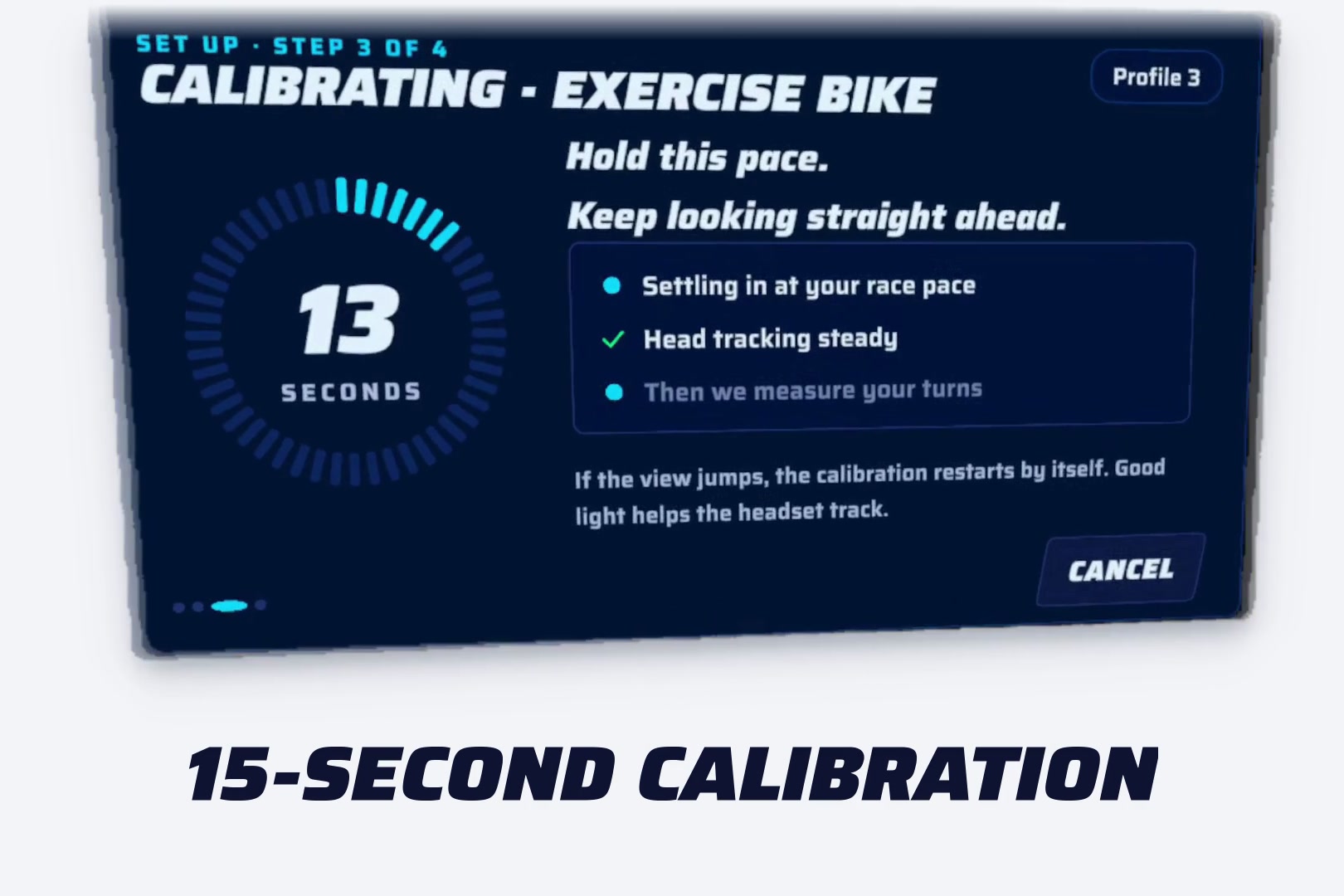
Calibration screen in progress showing calibration of a machine
-
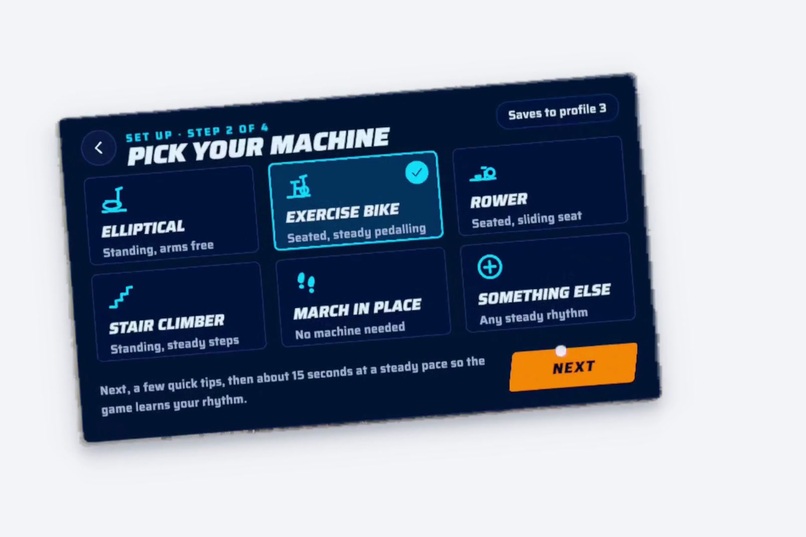
UI screen showing the machine options
-
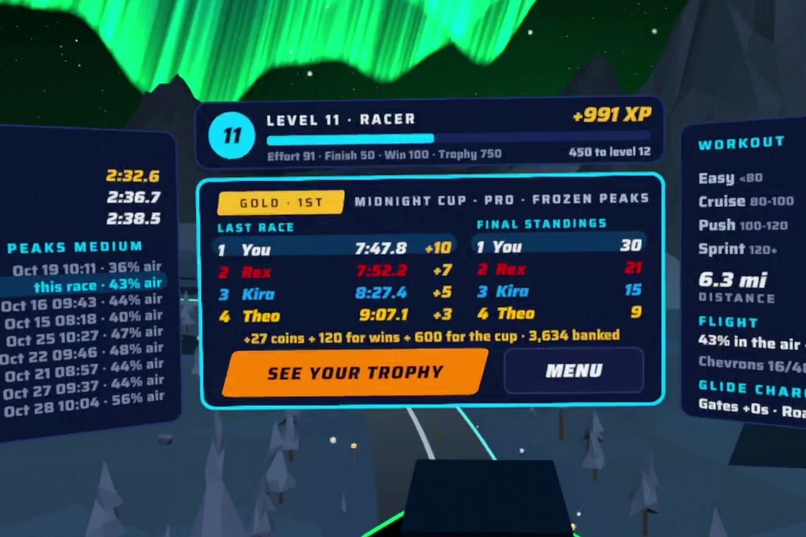
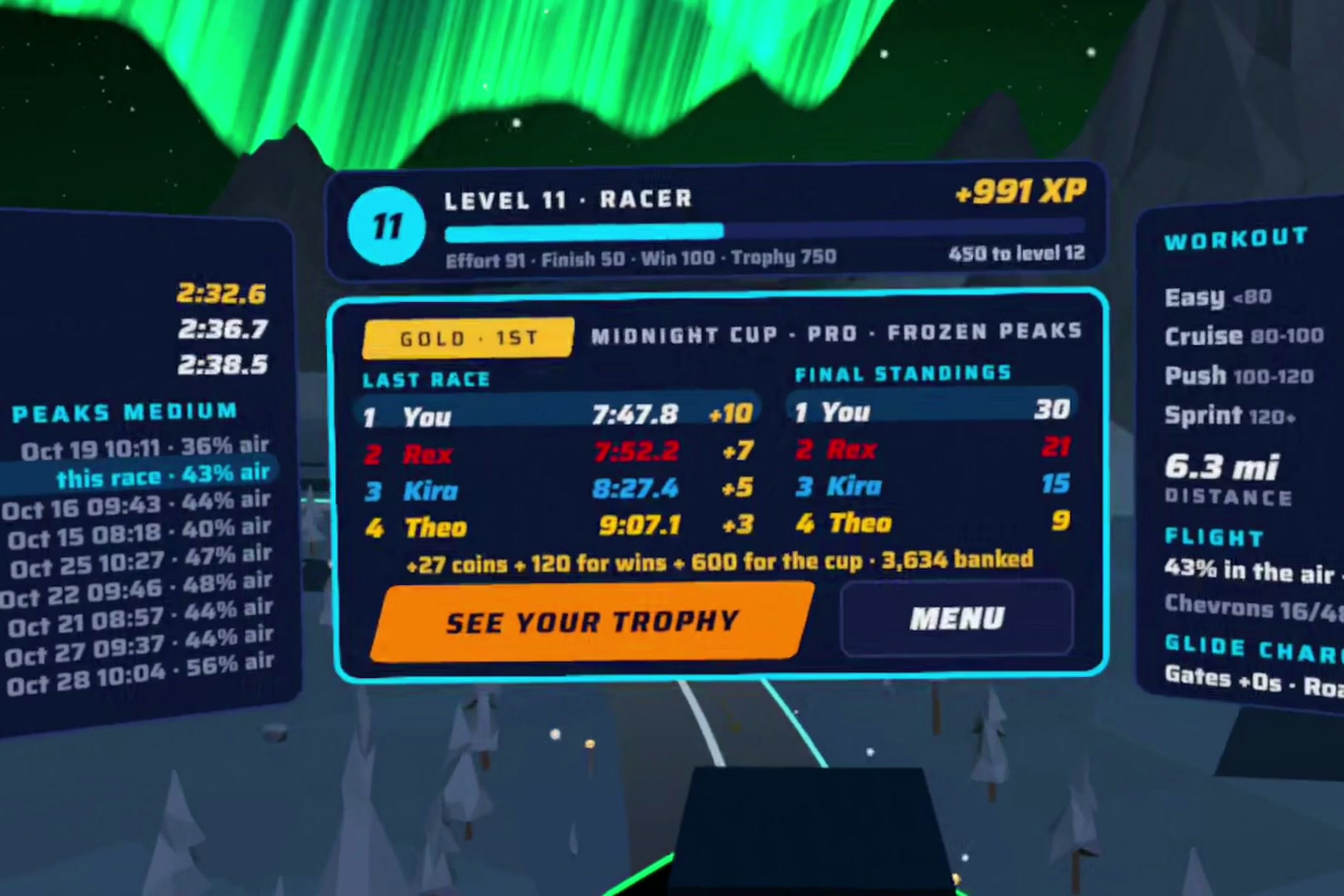
Final screen after a race on Frozen Peaks
-
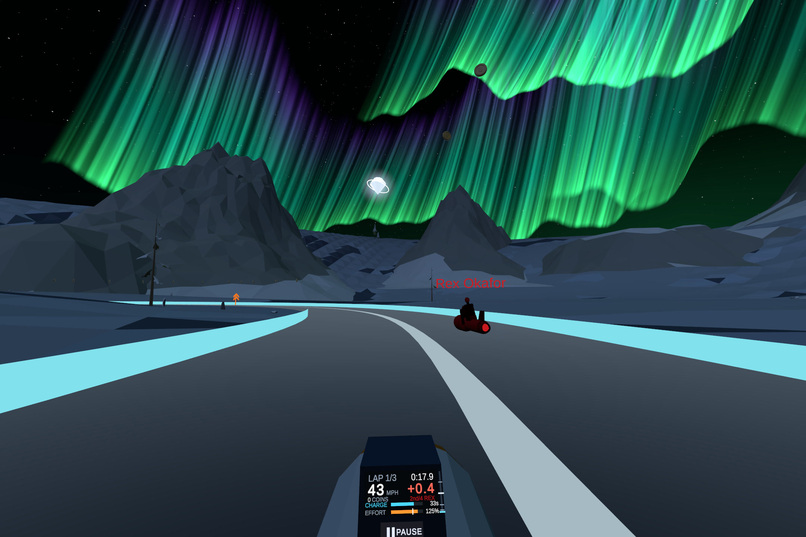
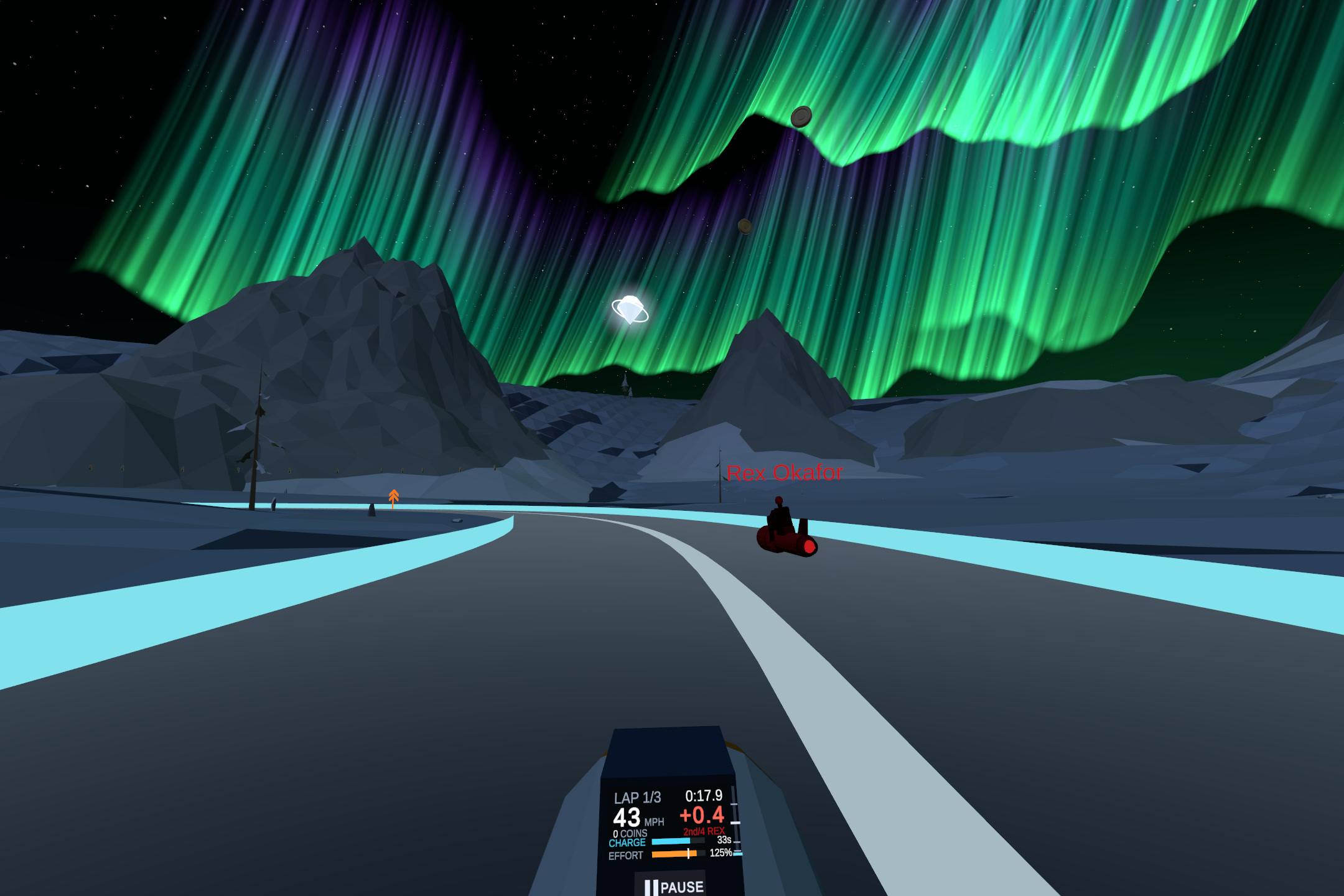
Starting stretch on Frozen Peaks with rivals in the distance
-
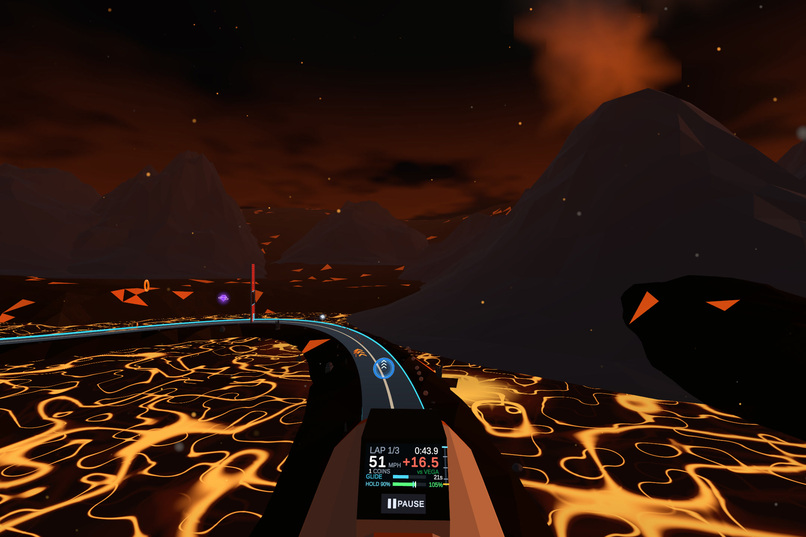
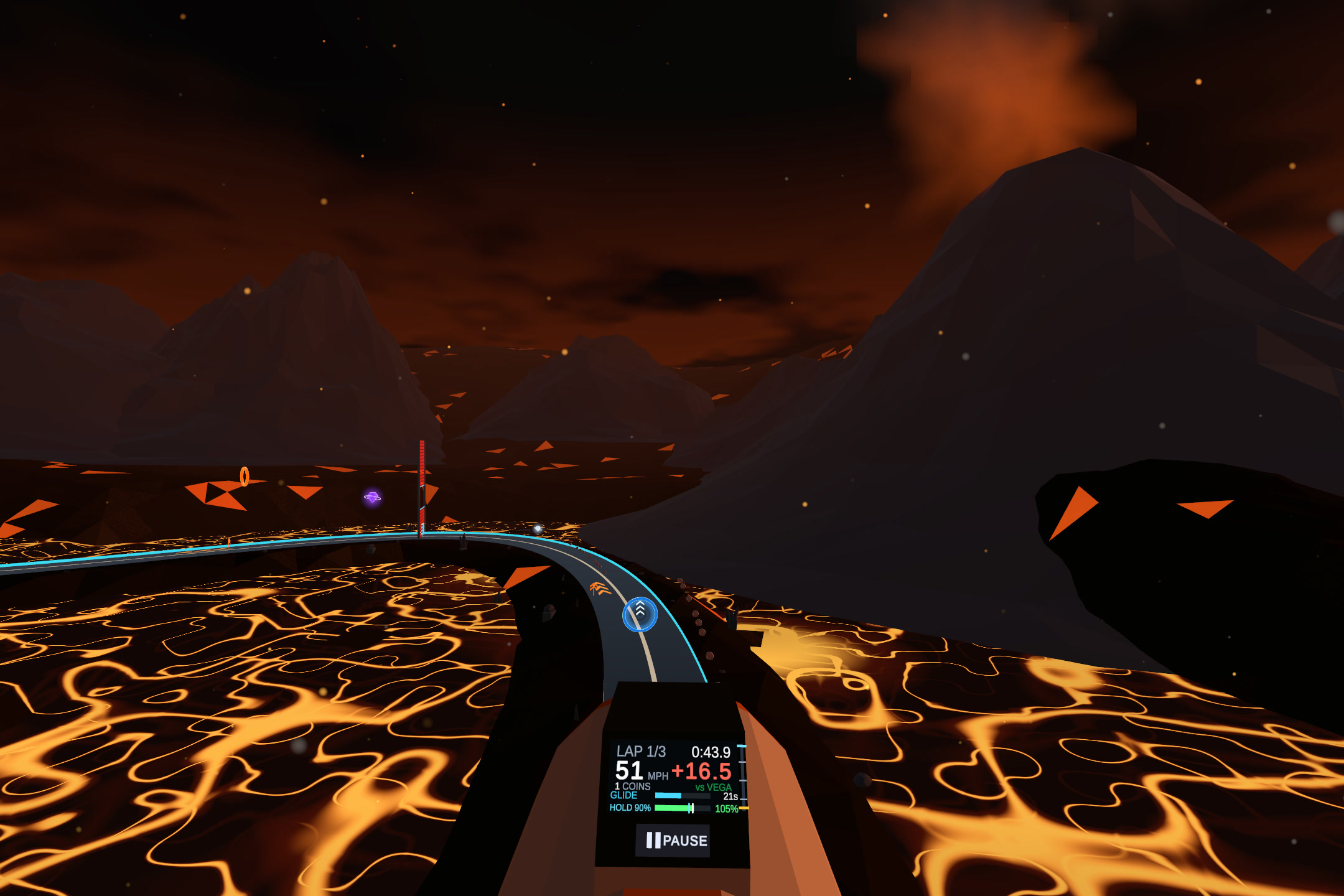
Flying around a turn surrounded by lava on Lava Canyon
-
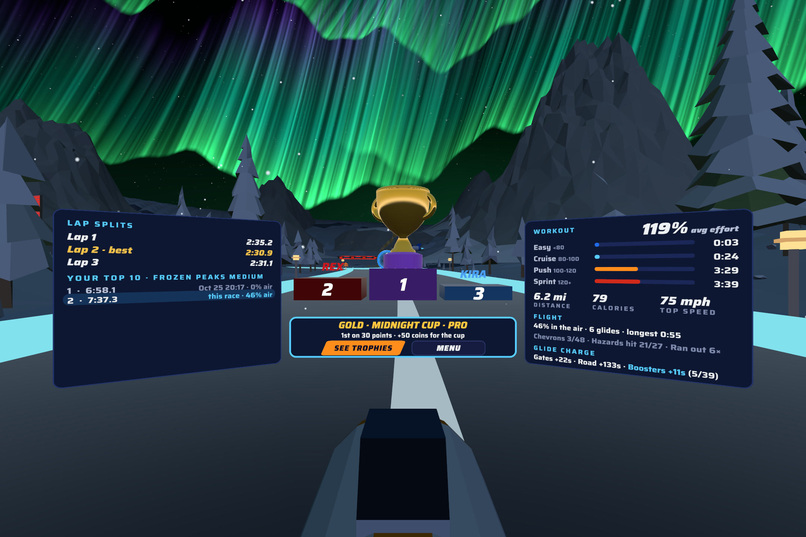
The winning trophy being presented after winning a cup on the Frozen Peaks level.
-
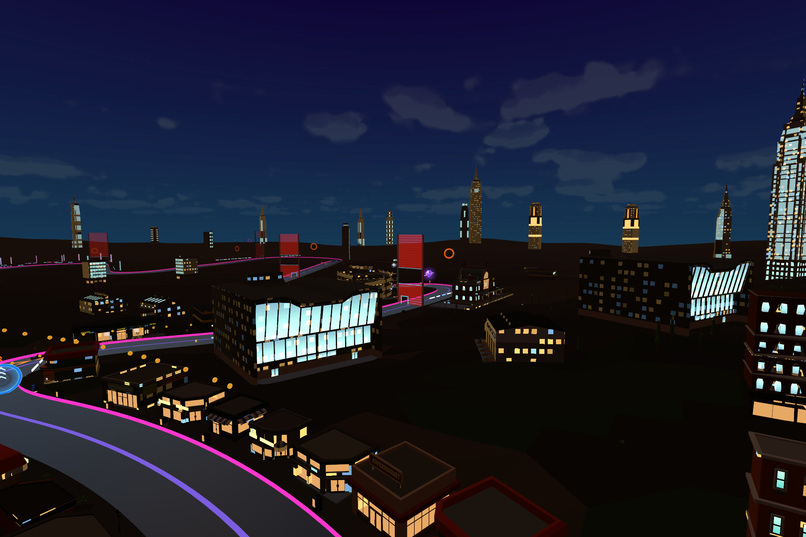
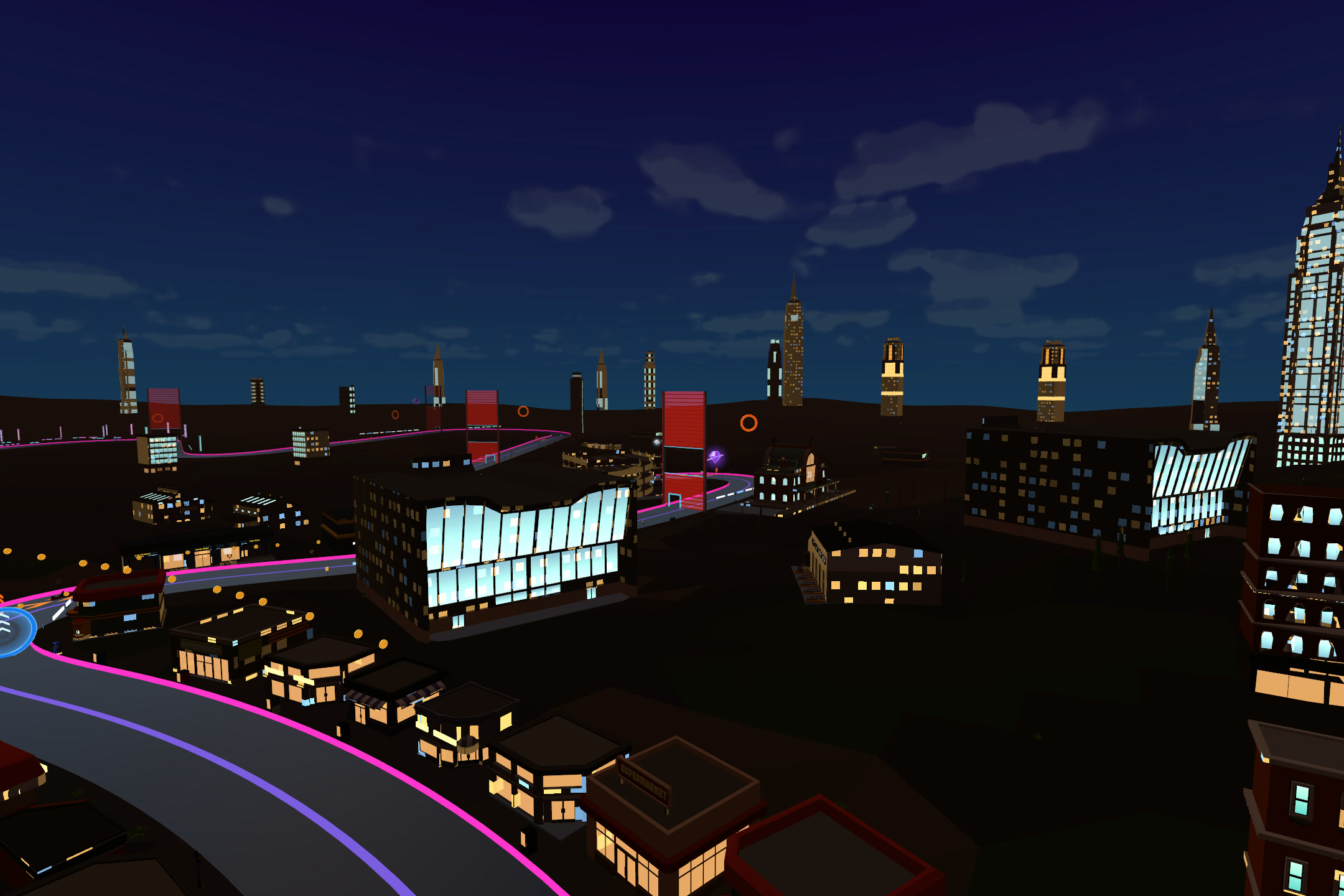
Flying over Night City on left turn
-
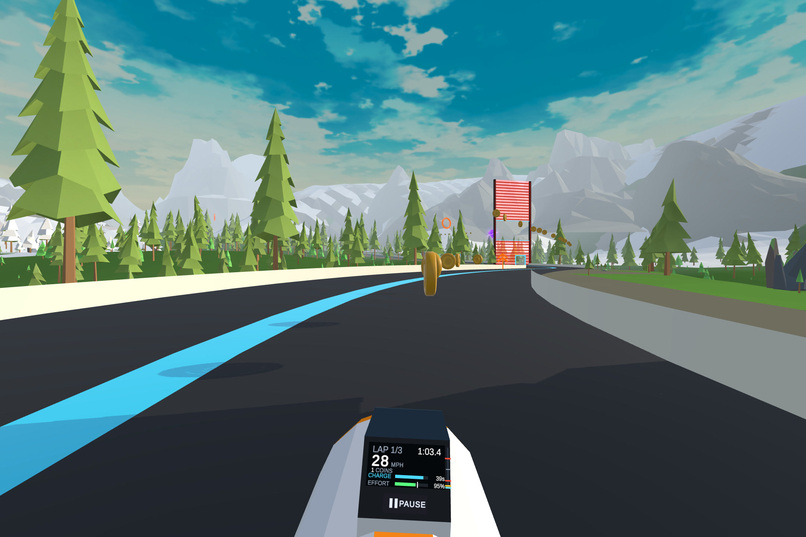
Starting up a hill on Alpine Ridge.
-
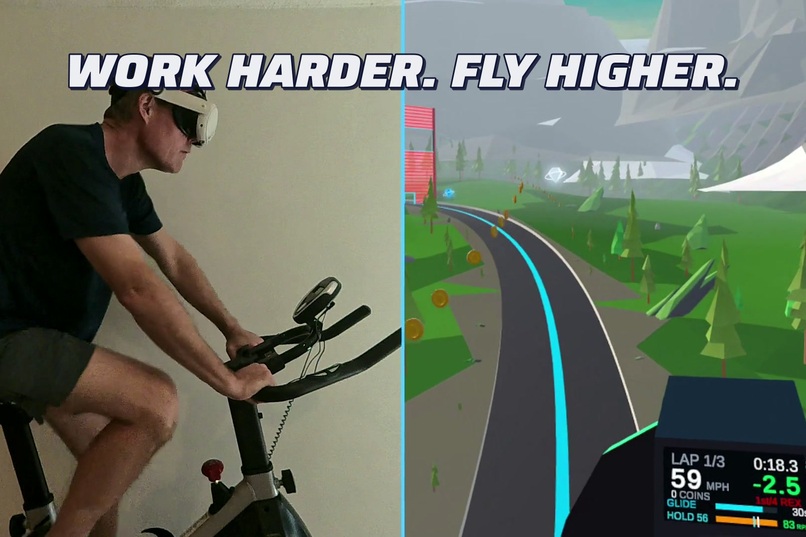
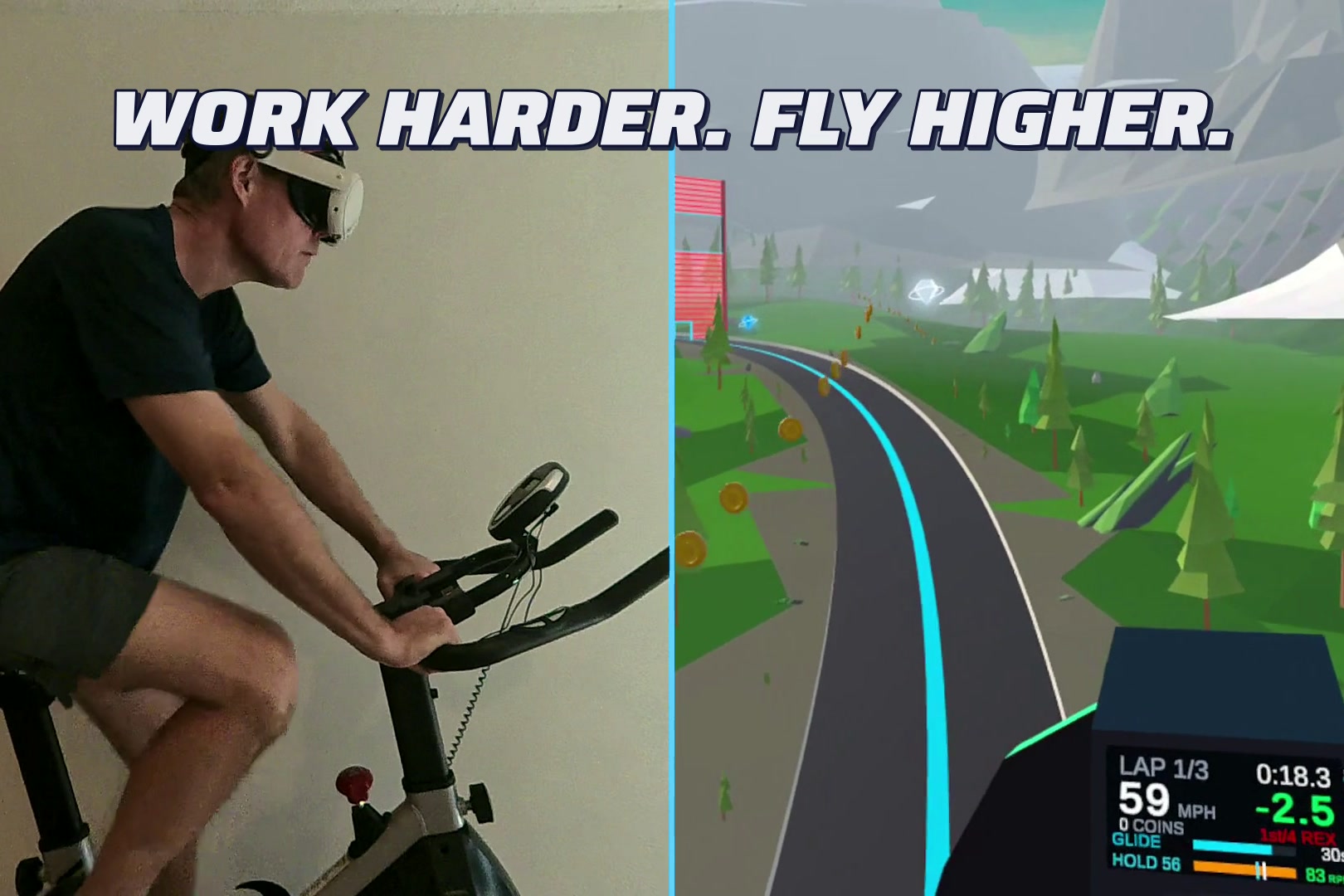
Split screen showing a rider and the thruster flying a course
-
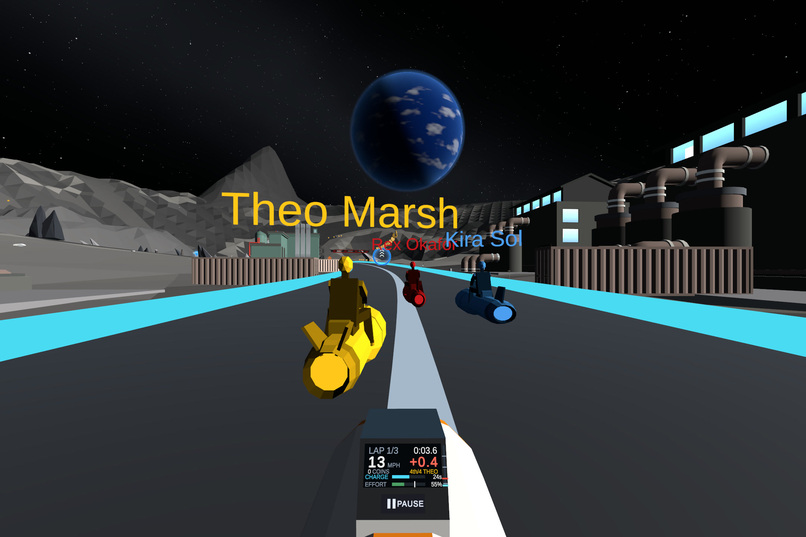
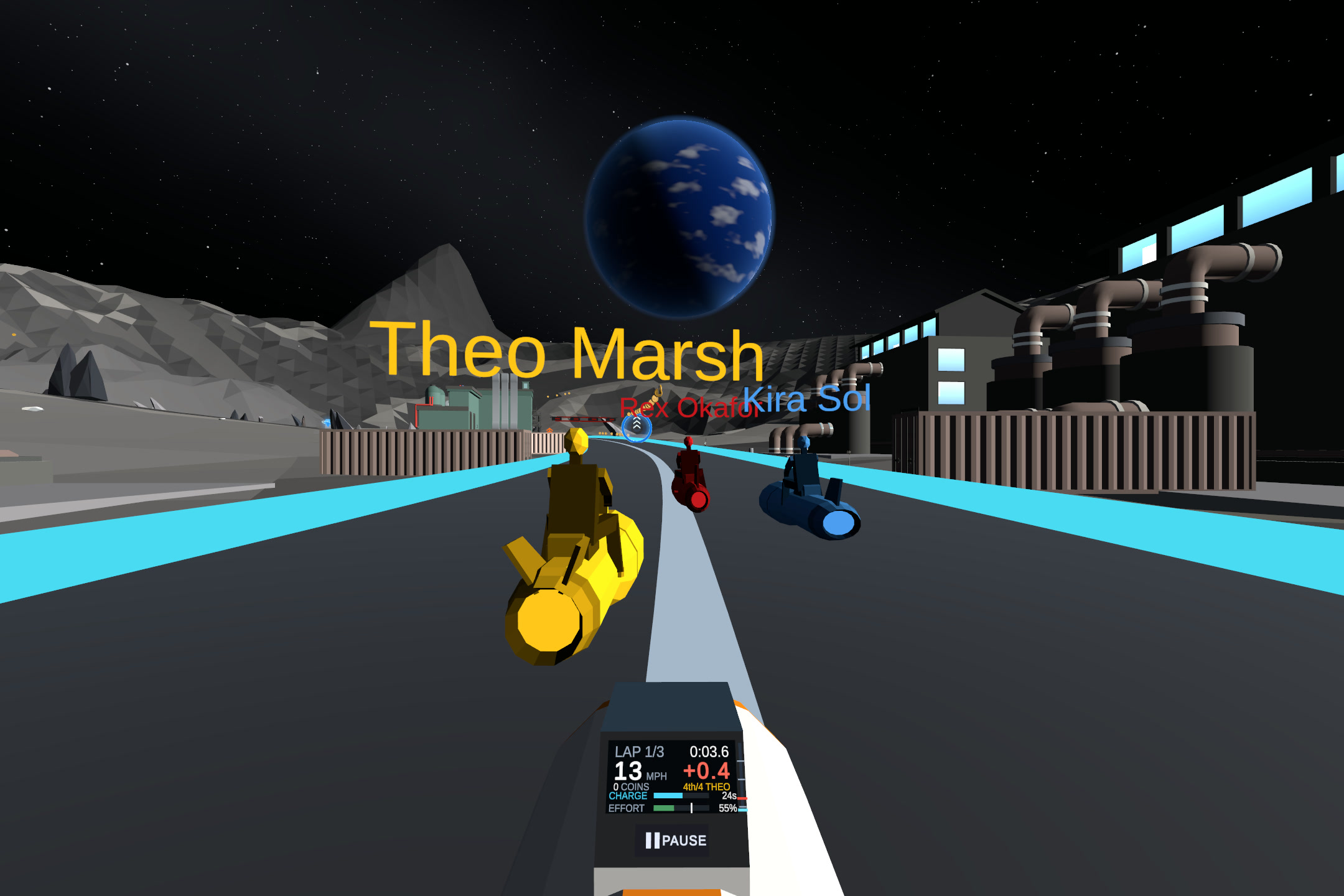
On the thruster on the road with rivals in front on Lunar Run
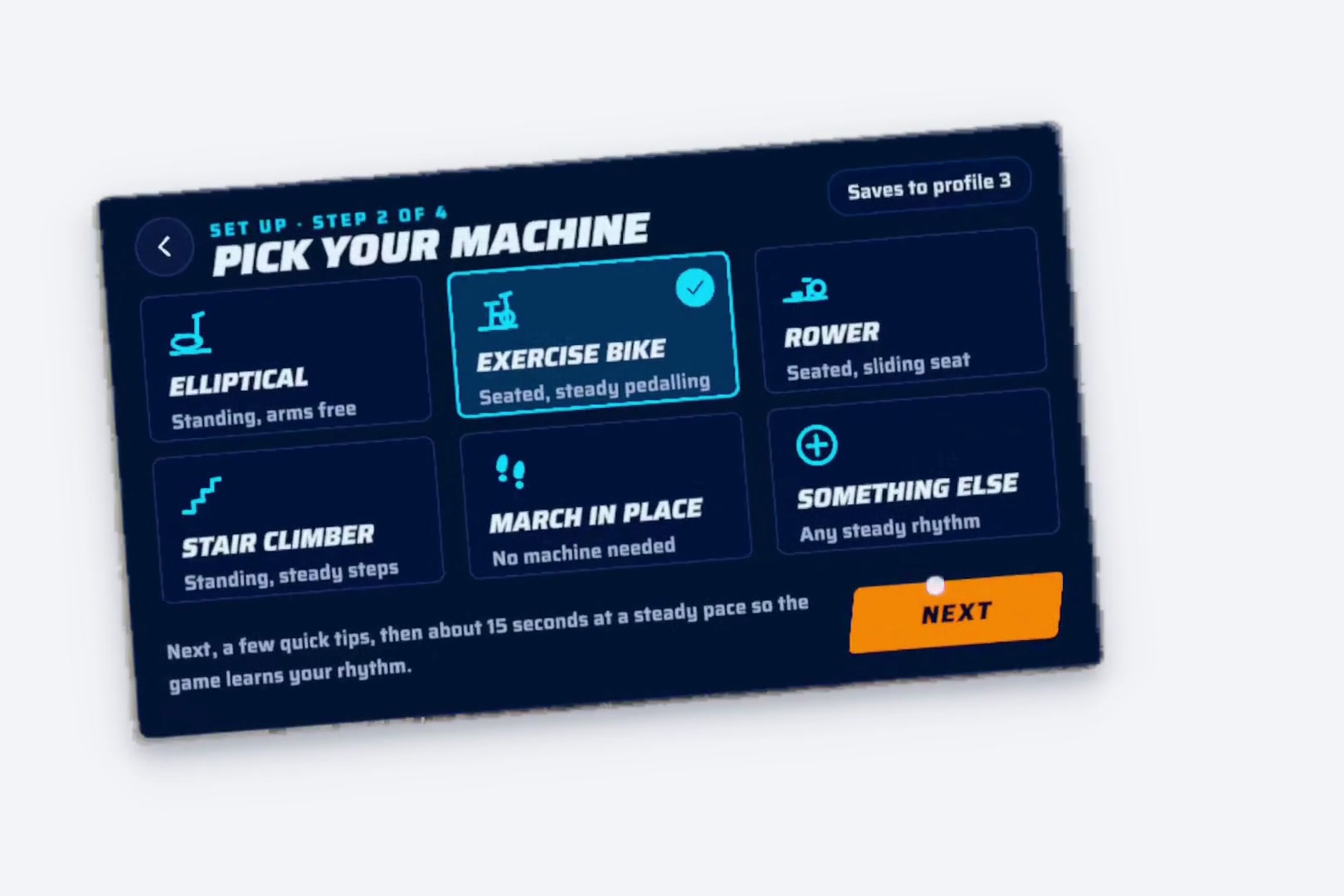

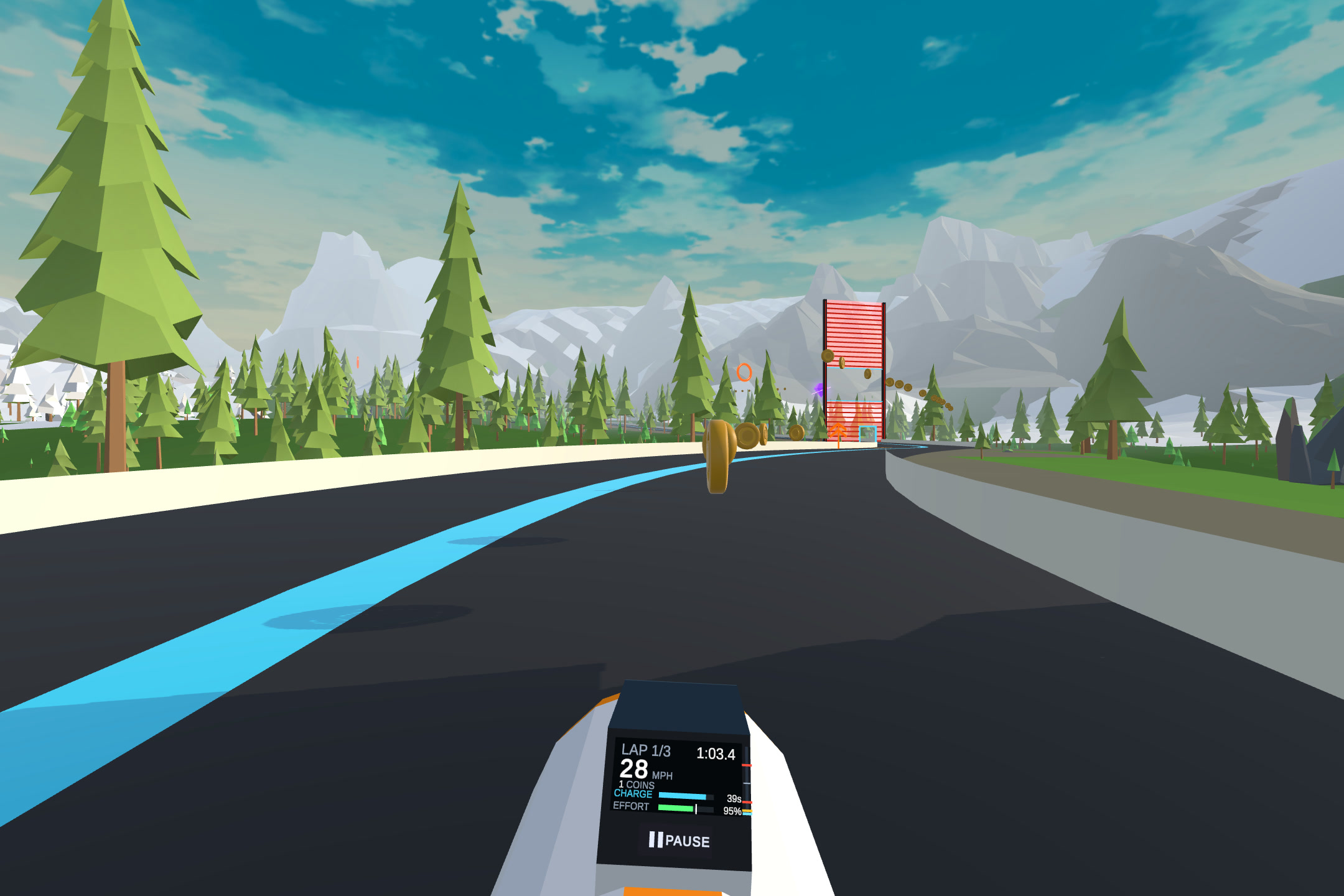
No machine needed to try it: choose March in place. The judge's quick start is at the end.
Inspiration
I was a runner for over 20 years, but in 2025, I began having hip pain and was diagnosed with arthritis. I needed to find low-impact exercise and cardio. My stationary bike, elliptical, and rower were fine but boring after a while without much motivation. Using my XR development skills, I set out to build a fun game for my workouts. I developed a prototype called Elliptical Explorer and used this competition to refine it into Thrustline, a cardio racing game for any fitness machine. It has certainly kept me moving and motivated. I am excited to share it with others looking for an engaging way to stay fit at home.
What it does
Thrustline is a racing game you play on the cardio machine you already have. Your headset reads the rhythm of your workout, so the harder you work, the faster and higher your jet thruster flies. Nothing to pair, nothing to strap on, no controller.
- A 15-second calibration sets your own pace as 100%, so slow and fast riders both get a fair race.
- Push above the hold line to climb, ease off to sink, and steer by looking.
- Elliptical, exercise bike, rower, stair climber, or marching in place.
- Eight courses, six rivals, four cups where three rivals race you at once, a weekly challenge, 50 rider levels, and six thrusters and 42 paints bought with coins you earn. No real-money purchases.
- A race is three laps, about ten minutes.
How I built it
Unity 6 with Meta XR SDK 207 (Core, Interaction, Platform). Calibration measures which way your head moves on your machine and how fast, and every moment of the race is compared with that. Seated pedalling barely moves the head, so the bike has its own reader that finds pedal rate in small head movements, tuned on recorded rides against a click track. 36 edit-mode tests replay those rides and check the cup, XP and song rules.
Menus use hand rays and pinch; a left-palm pinch or a pinch-hold on the dash pauses. The race needs no hands.
Every race saves a frame log by course zone. Quest 3 holds 72 fps with three rivals on the track, and a lighter tier keeps Quest 2 and Quest Pro at about 69 to 72.
I built it alone, with Claude Code as my partner on Unity MCP and GitHub.
Challenges I ran into
- Effort from the headset alone. On a bike, steering and nods looked like effort, so the bike reads pedal rate instead of head speed.
- Quest 2 frame rate. Dynamic resolution overshot and dropped frames, so the Quest 2 tier caps it.
- Hands on handles. A teleport arc and a wall vignette fired when hands rested on the machine. Races turn them off.
Accomplishments that I'm proud of
All eight courses, the rivals, the cups and the bike were built in the competition window, with a hands-only pass of every screen. Version 1.0 is approved for the Meta Horizon Store and launches December 1, 2026.
What's next for Thrustline
Two more courses in December, leaderboards, optional cadence sensor, and a check of the dash and menus in the narrower view of Meta VR Glasses.
Judge's quick start
- Pick March in place (fits a 2 ft spot) or your own machine.
- Calibrate: 15 seconds at your normal pace.
- Race City Circuit. Three laps take about ten minutes.
- Pause any time: pinch on your left palm.
