Inspiration
We were inspired by the gap between understanding a condition and truly experiencing the everyday barriers it creates. Too often, accessibility is explained in abstract terms, but real empathy comes from seeing how a small change in the environment can dramatically affect someone’s ability to complete a basic task. Through My Eyes was created to make those challenges visible in a way that is interactive, memorable, and easy to understand.
What it does
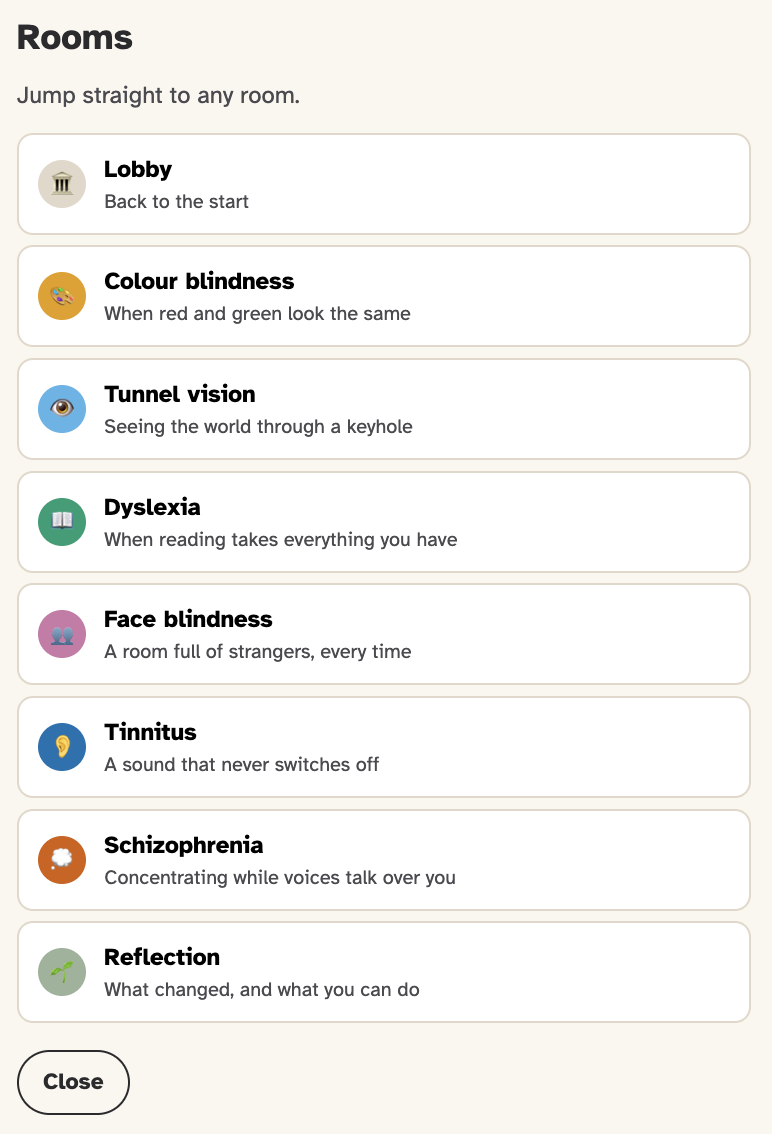
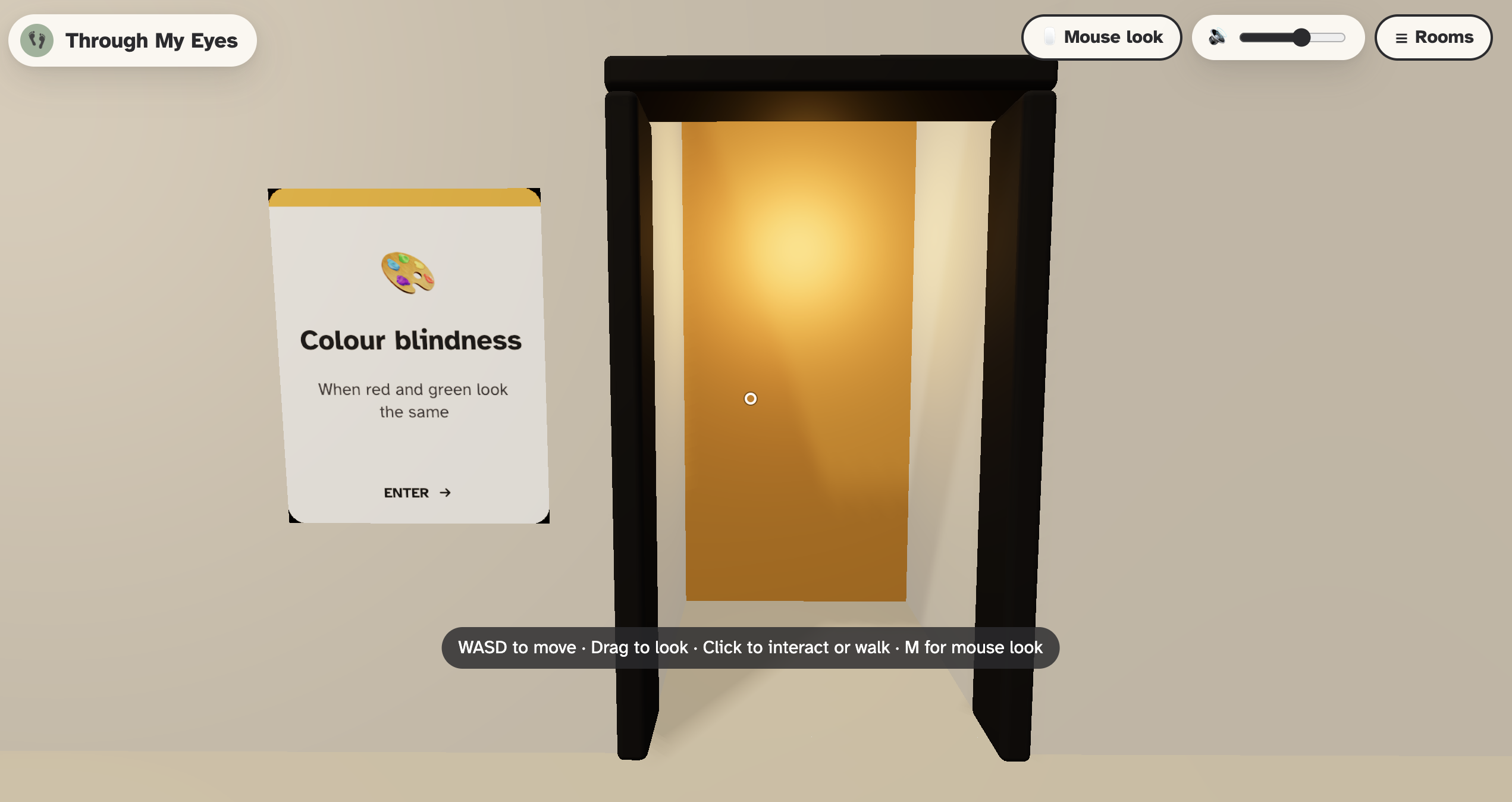
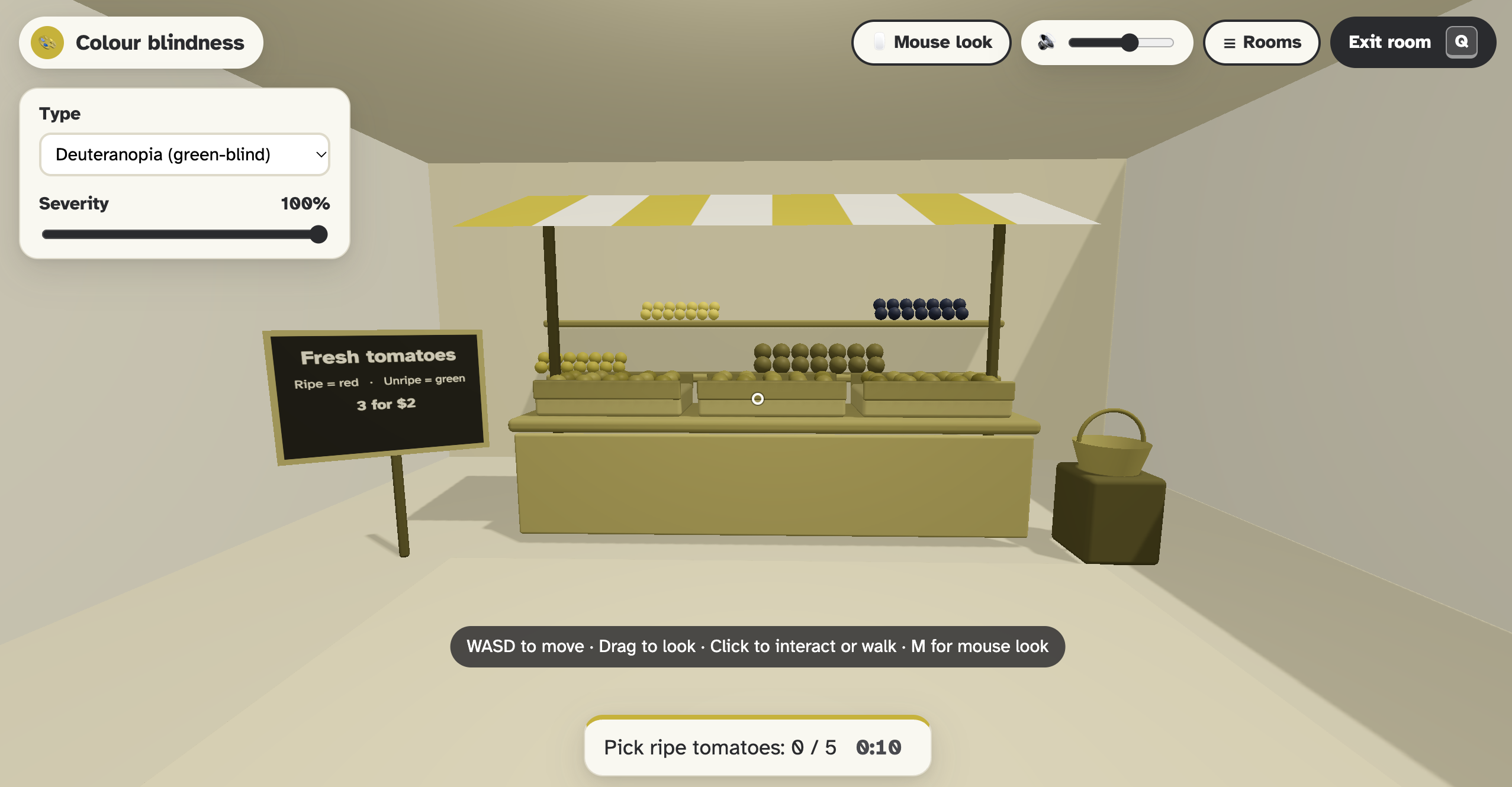
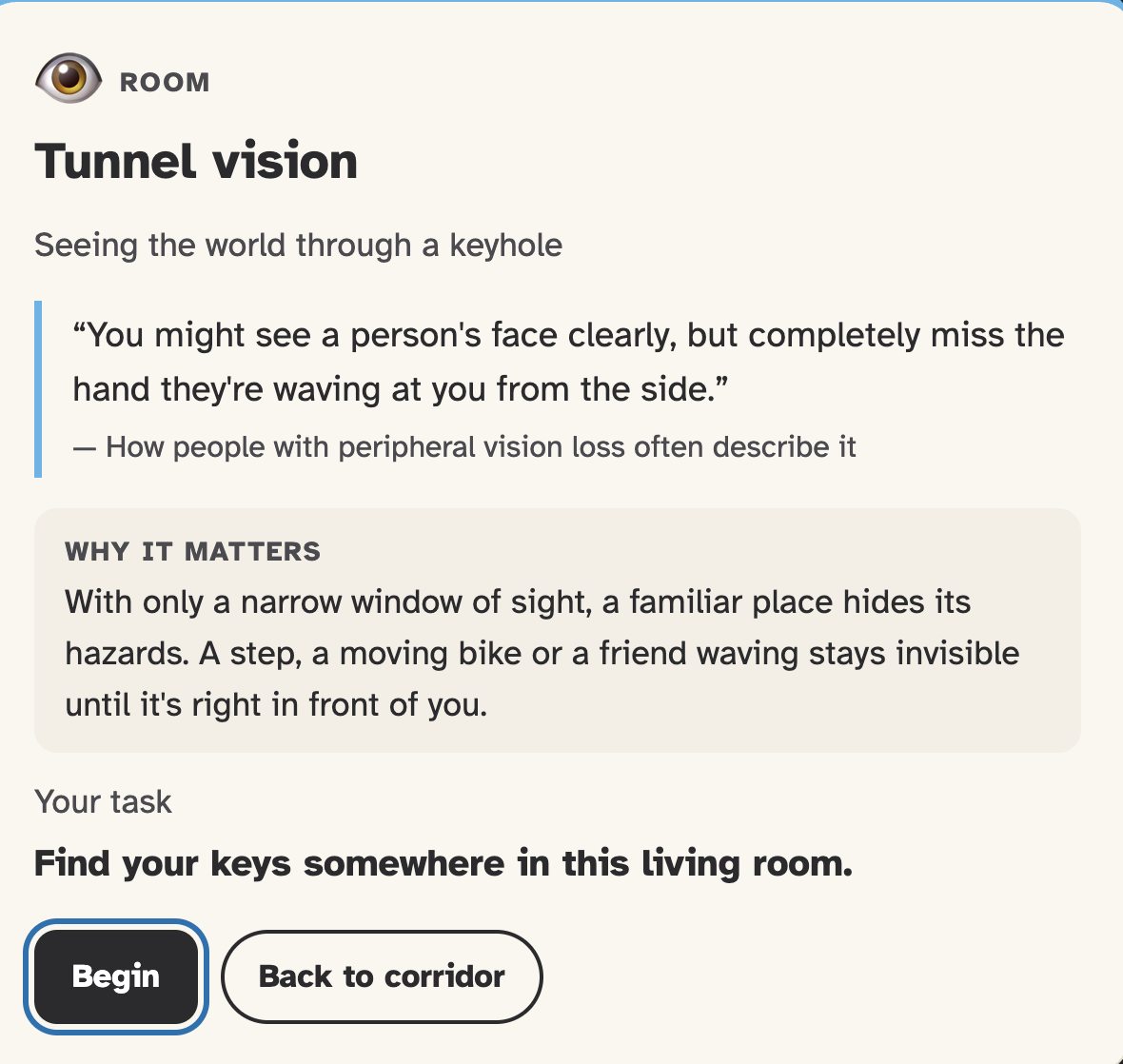
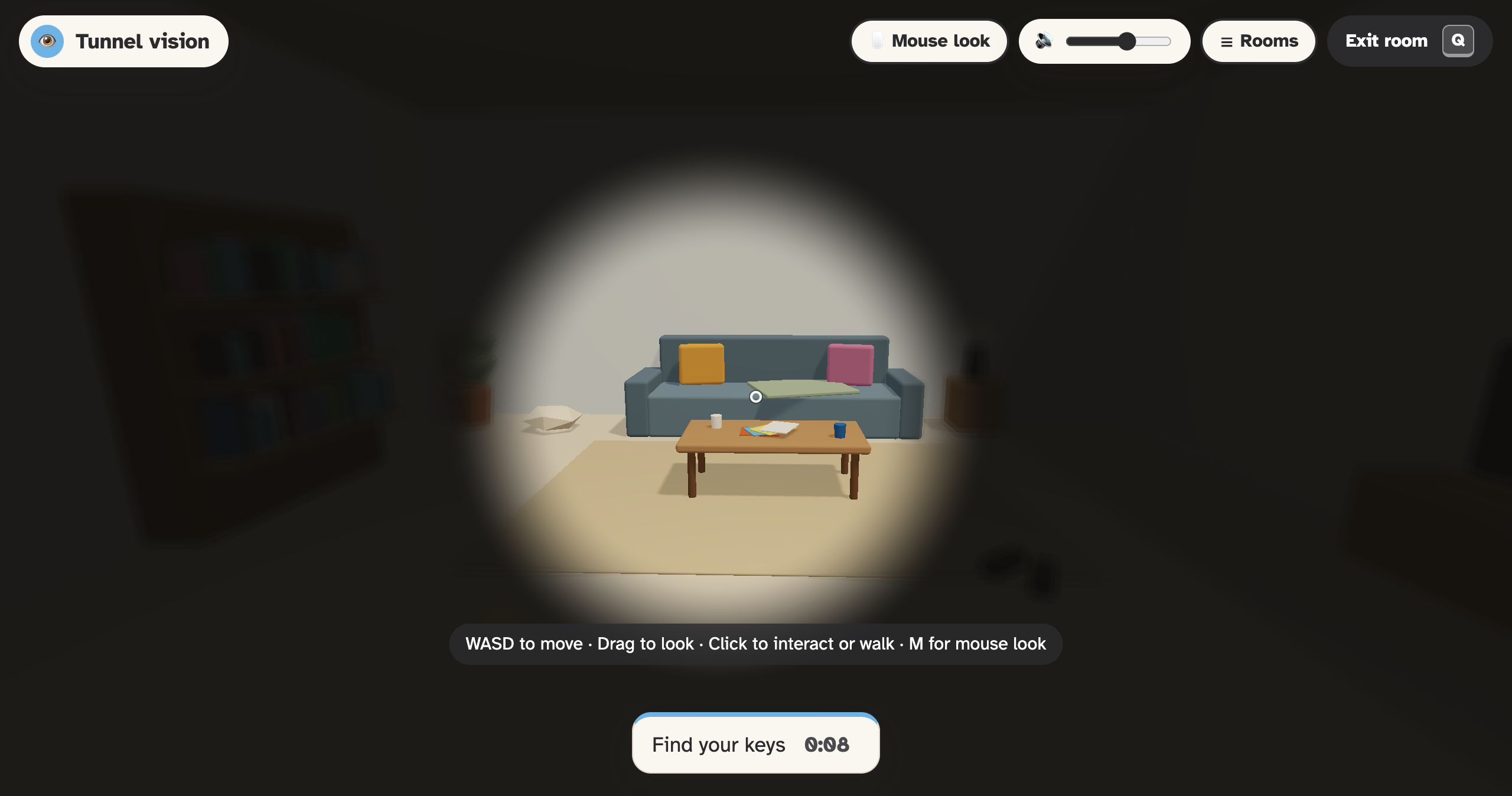
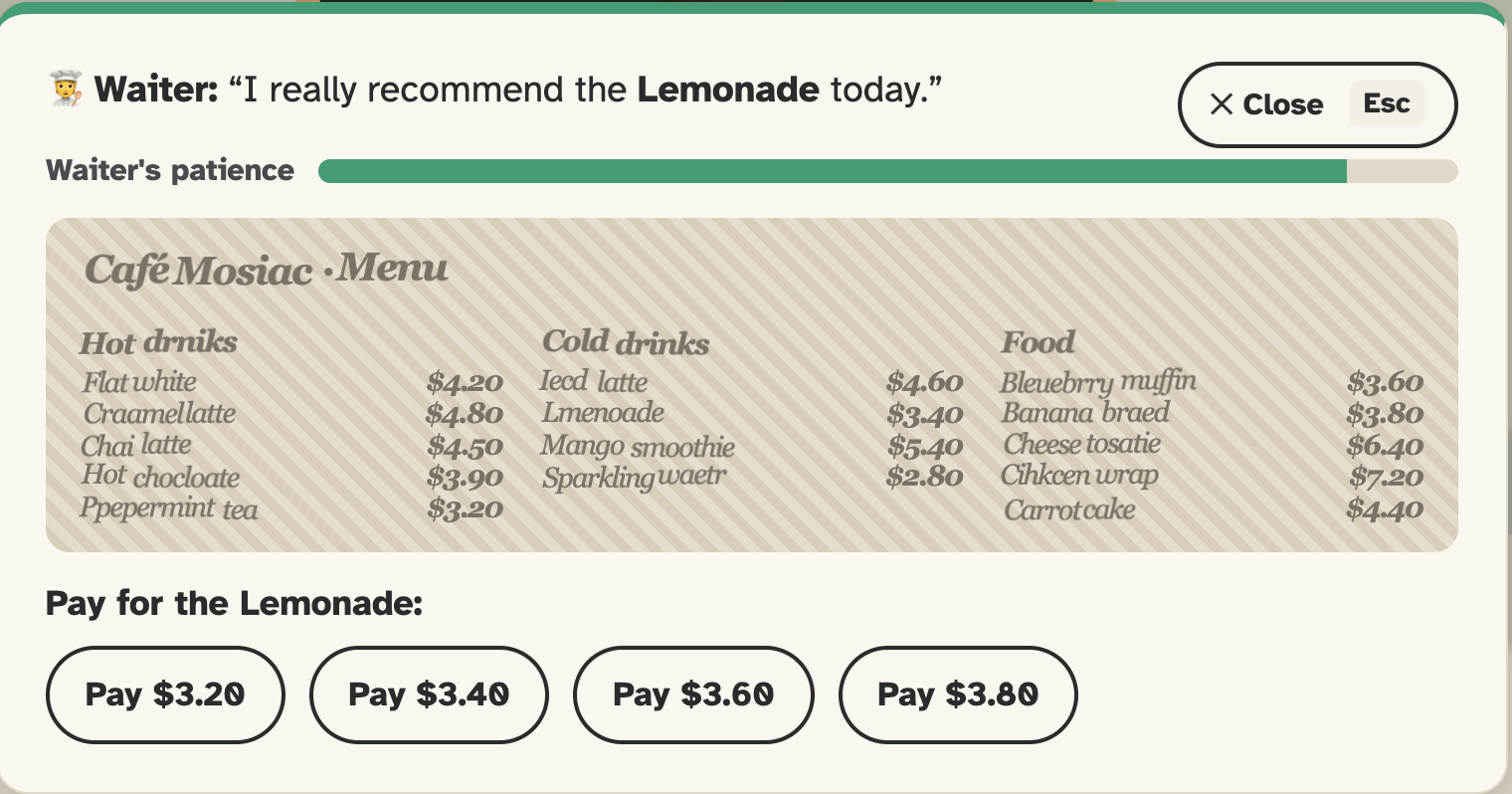
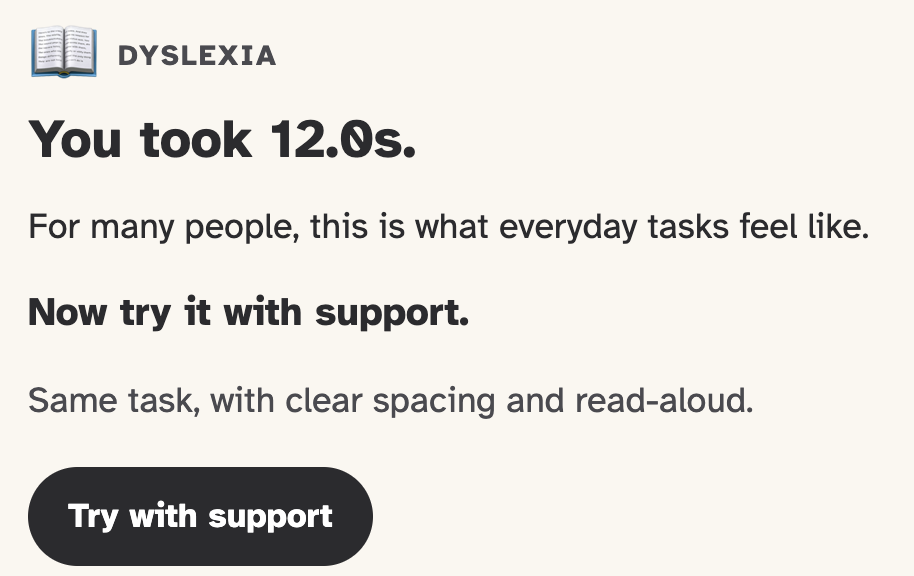
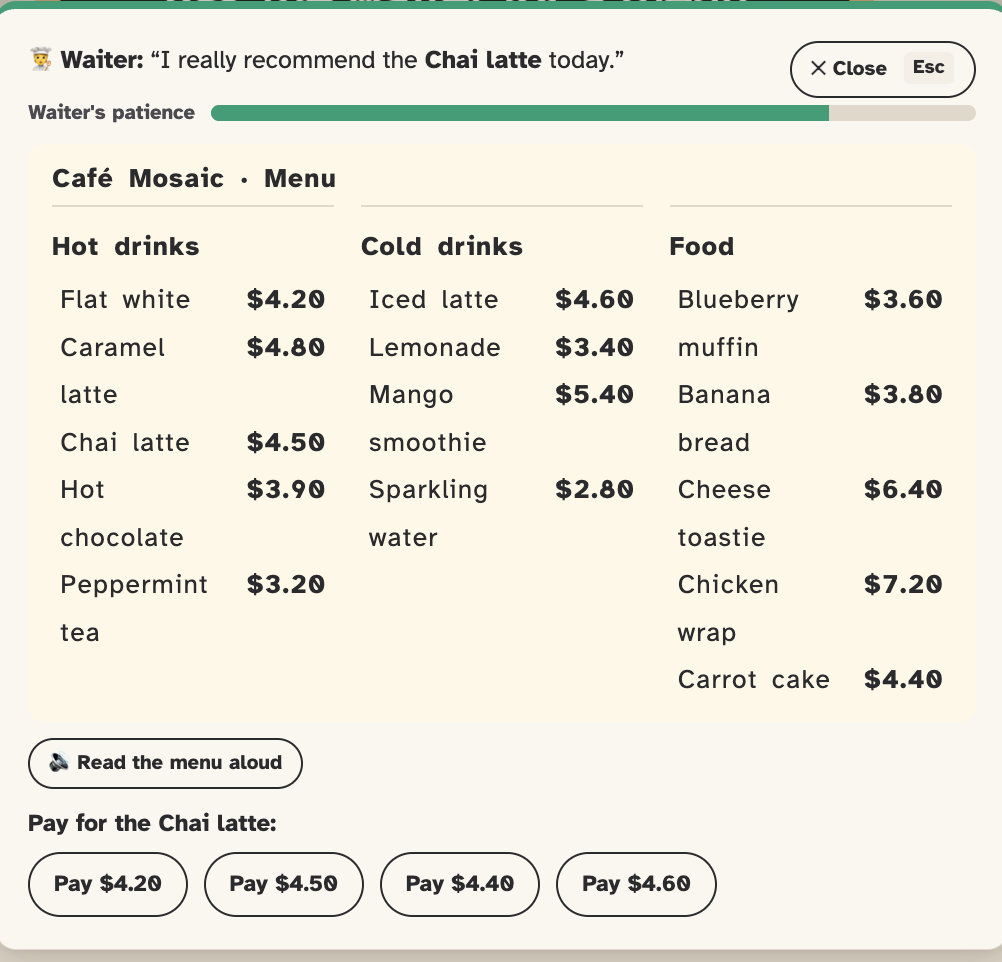
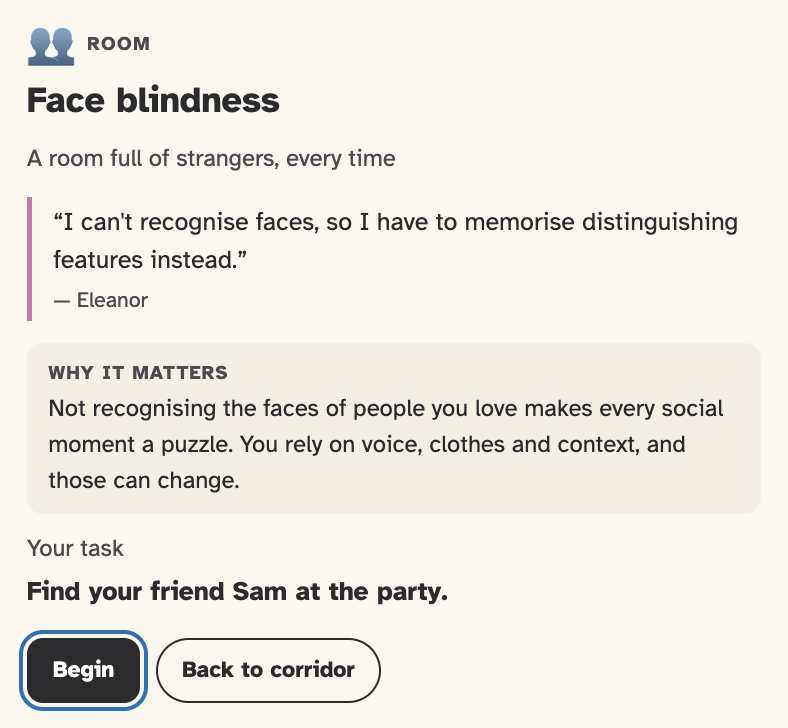
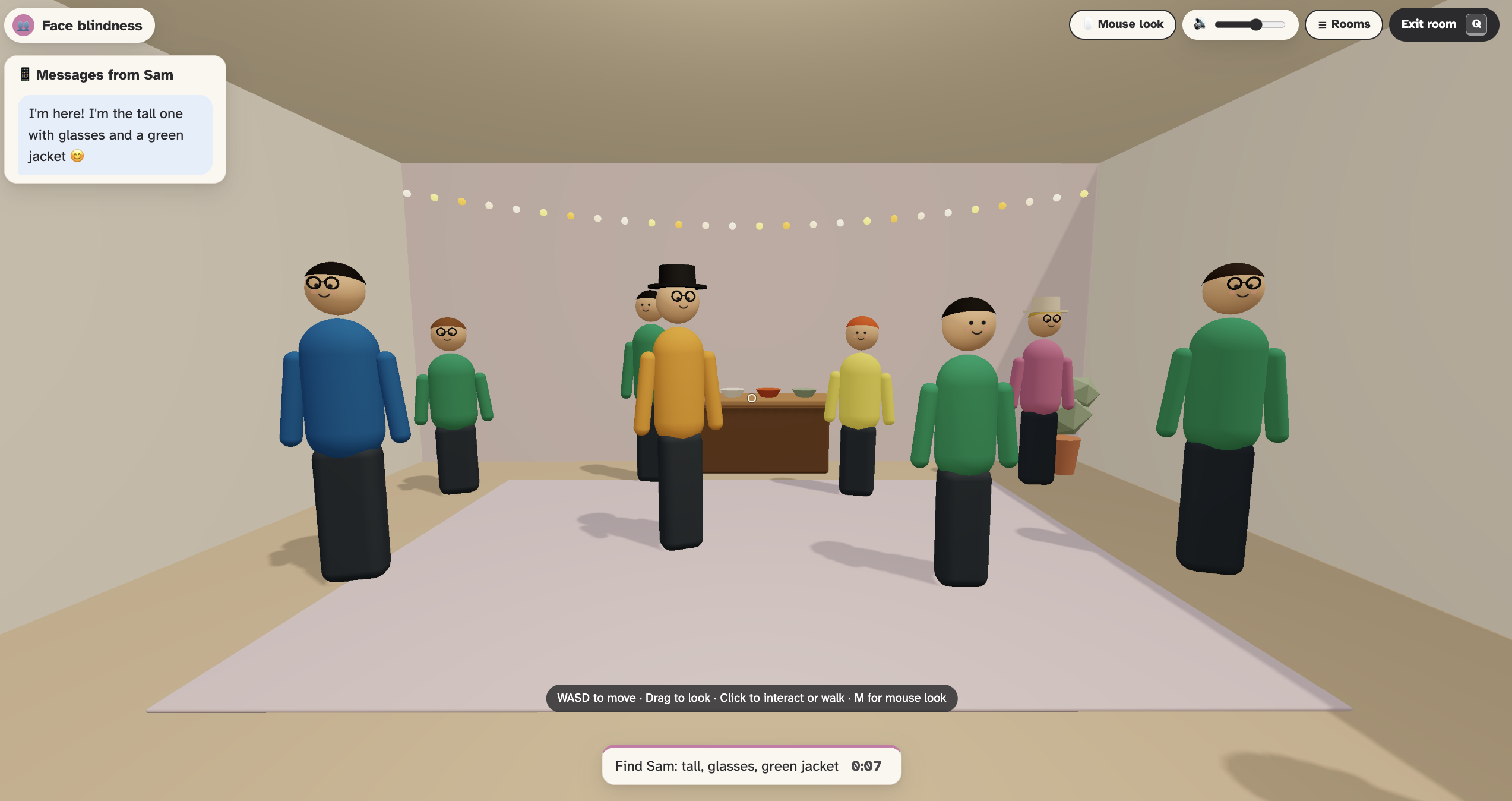
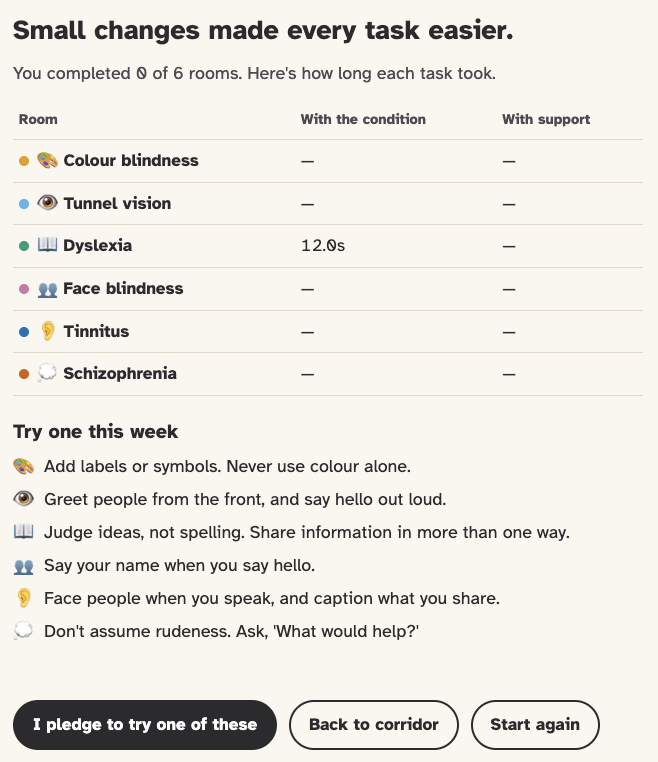
Through My Eyes is a browser-based 3D gallery that lets visitors step into the shoes of people experiencing different accessibility challenges. In each room, users attempt a simple everyday task while a condition is simulated, such as colour blindness, tunnel vision, dyslexia, tinnitus, face blindness, or schizophrenia. After that, they can turn on support tools and see how small design changes and accommodations make the task more manageable.
The experience is designed to spark discussion, build empathy, and show that accessibility is not just a compliance issue — it is a human-centered design problem with practical, impactful solutions.
How we built it
We built the project with TypeScript, Three.js, and Vite to create an immersive 3D environment with interactive rooms and first-person movement. The app uses a shared room system to support multiple scenarios, each with its own visual, audio, and interaction logic. We created custom effects, UI overlays, environment props, and task flows to simulate each condition while keeping the experience playful and accessible.
We also focused on clear storytelling: each room has a task, a simulated barrier, and a support mode that demonstrates how thoughtful adjustments can improve usability without reducing independence or dignity.
Challenges we ran into
One of the biggest challenges was balancing realism and clarity. We wanted each condition to feel authentic without becoming overwhelming or confusing. Designing tasks that were simple enough to understand quickly, but meaningful enough to demonstrate the real-world impact, required a lot of iteration.
We also had to build many systems at once: movement controls, collisions, object interactions, audio cues, UI states, and room transitions. On top of that, making sure the experience remained accessible and comfortable for users meant carefully tuning visual intensity, contrast, timing, and narration.
Accomplishments that we're proud of
We’re proud of building a complete, multi-room experience in a relatively short time, each room feeling distinct while sharing the same unified design language. The project successfully combines 3D exploration, simulated disability experience, educational content, and interactive support modes into a cohesive product.
We’re also proud that the experience doesn’t just explain accessibility — it demonstrates it in a way that is engaging, emotional, and memorable. The support toggles provide a clear “before and after” moment that makes the message easy to grasp and discuss.
What we learned
We learned that empathy is strongest when people can directly experience an obstacle in context rather than simply reading about it. Small design choices — such as contrast, pacing, readability, and sound — can have a major effect on how accessible a task is.
We also learned the value of iterative testing and user-centered design. By trying to simulate real-world difficulties with careful detail, we gained a deeper appreciation for how many invisible barriers exist in everyday life and how design can either remove or reinforce them.
What's next for Through My Eyes
We want to expand the project with more scenarios, deeper storytelling, and more personalized accessibility insights. Potential next steps include adding additional conditions, more room variety, improved analytics on user performance, and a stronger educational layer that explains the impact of each support feature.
We also hope to make the experience more broadly shareable and impactful by refining the narrative, improving visual polish, and potentially turning it into a public-facing exhibit or educational demo for schools, nonprofits, and accessibility workshops
Built With
- claude
- three.js
- typescript
- vite


Log in or sign up for Devpost to join the conversation.