-
-

Logo
-
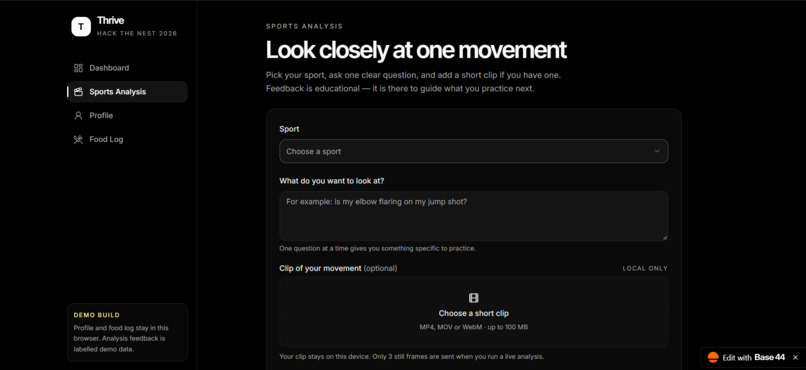
Sports Analysis
-
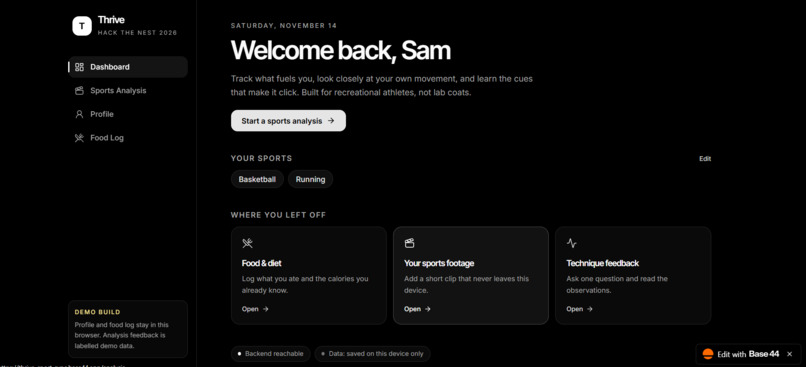
Dashboard
-
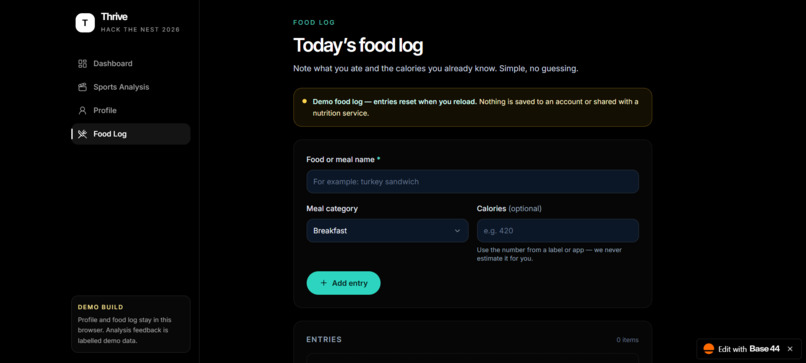
Food Log
-
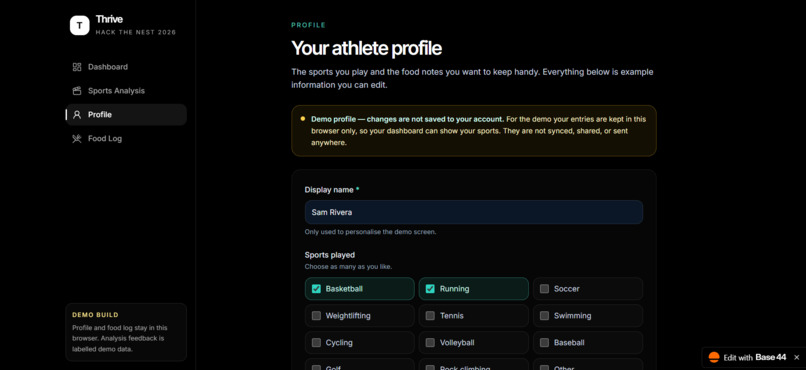
Profile

Inspiration
Not everyone has a personal trainer, a nutrition coach, and someone willing to film their jump shot. Sometimes you have a phone, a friend, and a very questionable camera angle.
We built Thrive for that athlete.
The weekend basketball player. The runner finding their rhythm. The beginner walking into the gym with more questions than answers. We wanted to bring food tracking, sports footage, and understandable feedback into one place—without making everyday progress feel like a full-time job.
What it does
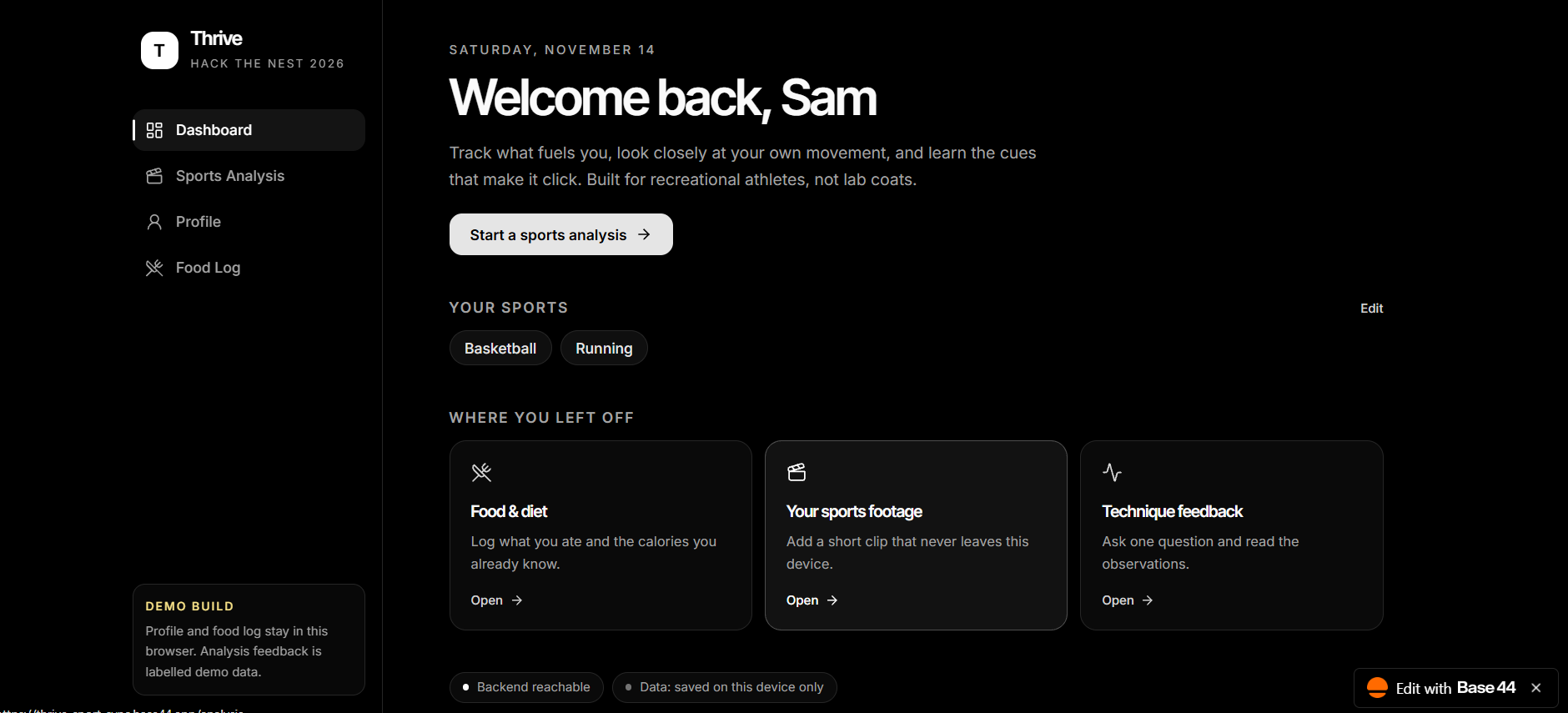
Thrive brings together three parts of an athlete’s day:
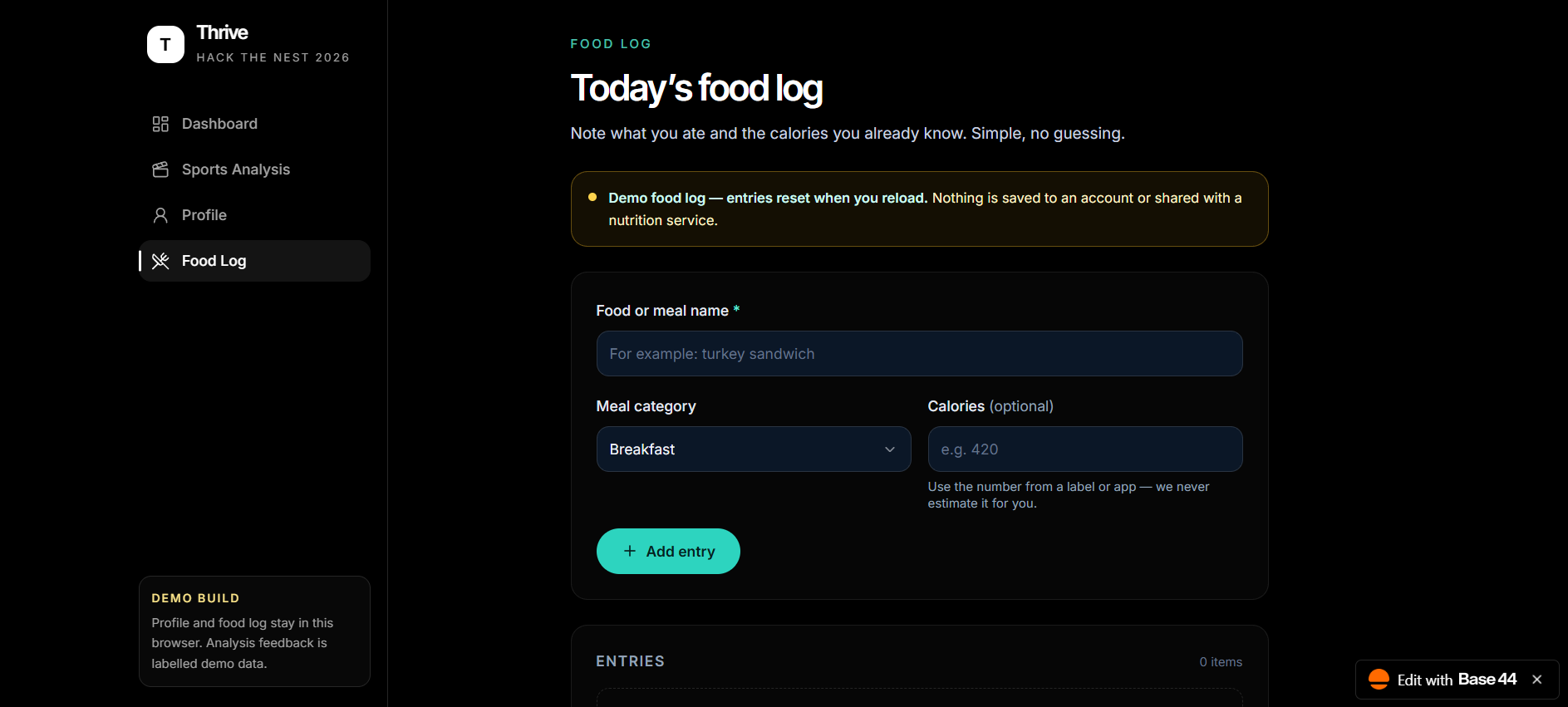
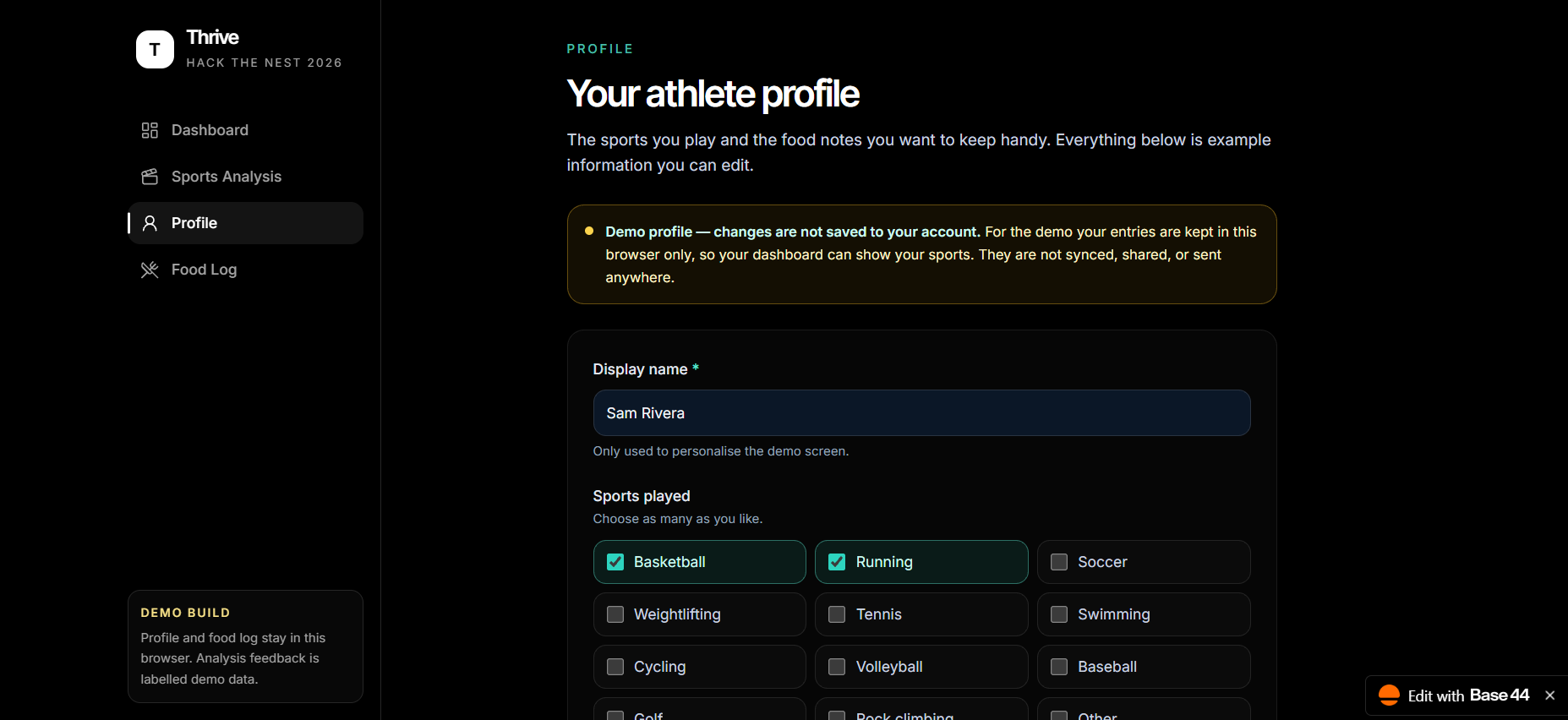
🥗 Fuel: Log meals, track calories you already know, and record dietary preferences and allergies.
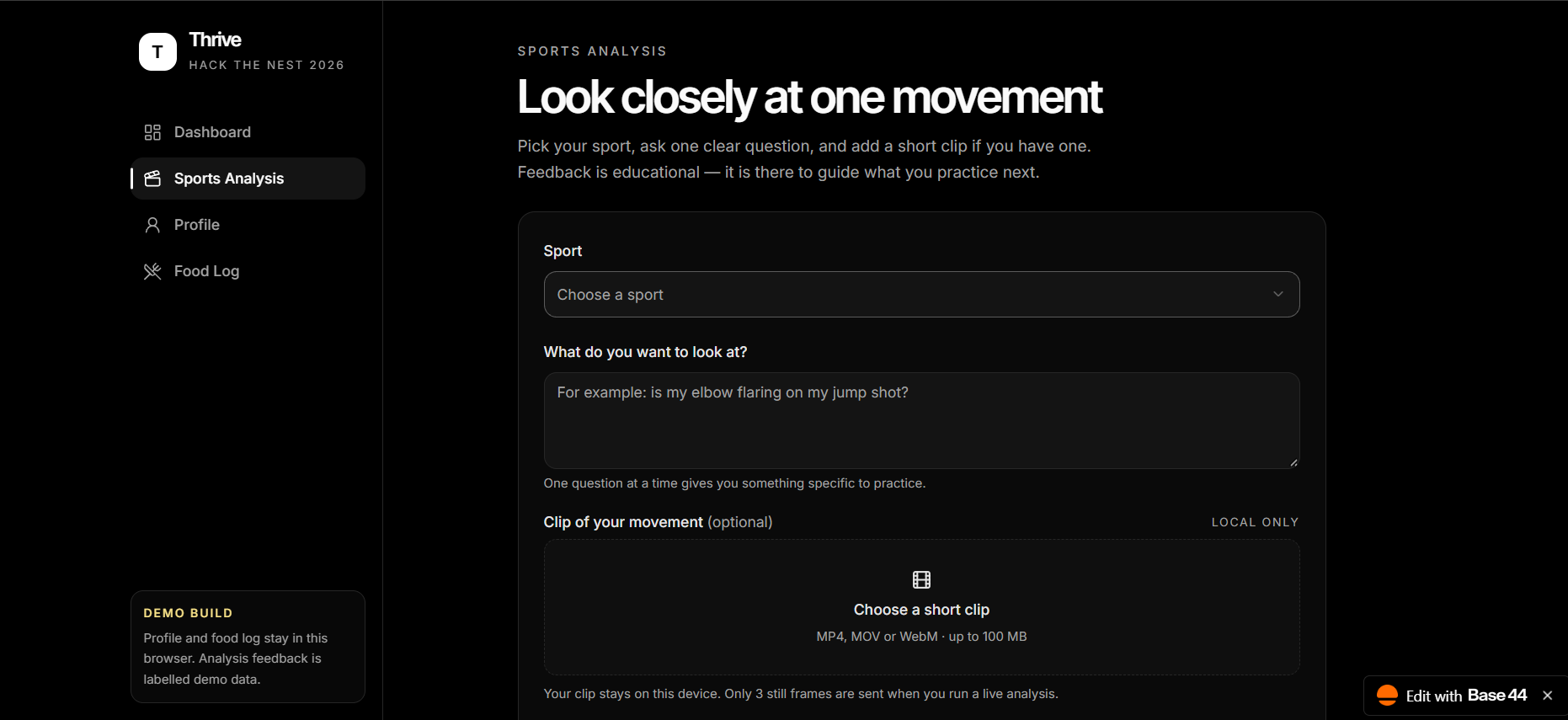
🎥 Review: Select a sports clip and ask a question about your technique.
🔊 Learn: Our analysis workflow is designed to use three selected video frames, supporting web resources, and spoken feedback to make observations easier to understand.
The goal is simple: spend less time juggling apps and more time understanding your next step.
Thrive provides educational technique feedback, not injury diagnosis or medical treatment.
How we built it
Our team, CyberChasers, split the work across a shared frontend and a custom backend:
- Base44: The responsive app interface, dashboard, profile, food log, and sports-analysis screens.
- Node.js and Express: The backend connecting our services.
- SSOJet: Backend sign-in and authenticated sessions.
- MongoDB Atlas: Account-specific data storage.
- OpenAI: Structured feedback generation, with image-frame analysis integration.
- Exa: Supporting web research.
- ElevenLabs: Spoken feedback.
- Vultr: Our deployed backend.
- Porkbun: Our thrive.select domain.
Joshua built the backend and deployment. Jayden built the main frontend and integration adapter. Kyndra developed and tested the profile and food-log experience. K Muhammad served as captain and tackled the CTF.
AI coding assistants helped us develop and troubleshoot the project. We reviewed their output and tested the behavior ourselves.
Challenges we ran into
Getting services to work individually was one challenge. Getting them to work together was the real event.
We worked through mismatched API contracts, callback URLs, authentication methods, and the difference between signing into an app and authenticating to its backend.
We also discovered two Base44 versions of Thrive. Our response: choose one canonical app and bring the useful work into it. Team coordination became part of the engineering.
Our most useful rule was: “An account exists” does not mean “the integration works.”
Accomplishments we're proud of
We deployed a public HTTPS backend, completed hosted SSOJet sign-in, and verified individual OpenAI, Exa, ElevenLabs, and MongoDB connections.
We also tested profile saving and retrieval through an authenticated local browser session, built a published Base44 interface, and completed nine frontend food-log checks.
Just as importantly, we kept demo content visibly labelled. Sample feedback should never pretend to be a live analysis.
What we learned
Clear handoffs matter as much as clever code.
A shared API contract helped us divide the work. Testing small pieces helped us find real problems. Bringing beginners into meaningful tasks made our team stronger.
And yes—one incorrect configuration value can turn an entire evening into a detective story.
What's next for Thrive
At this draft stage, the complete published frontend-to-backend workflow is still being verified. Frame extraction and live analysis integration are in progress; frontend profile and food-log storage still include demo behavior.
Our next milestones are reliable cross-site authentication, live account persistence, and a complete clip-to-feedback-to-voice experience.
We want Thrive to help everyday athletes turn “What should I work on?” into a clearer next step.
One meal. One clip. One useful observation at a time.
Built With
- atlas
- base44
- caddy
- elevenlabs
- exa
- express.js
- javascript
- mongodb
- node.js
- openai
- react
- ssojet
- vultr


