-
-

Thrivable Logo
-

Profile
-
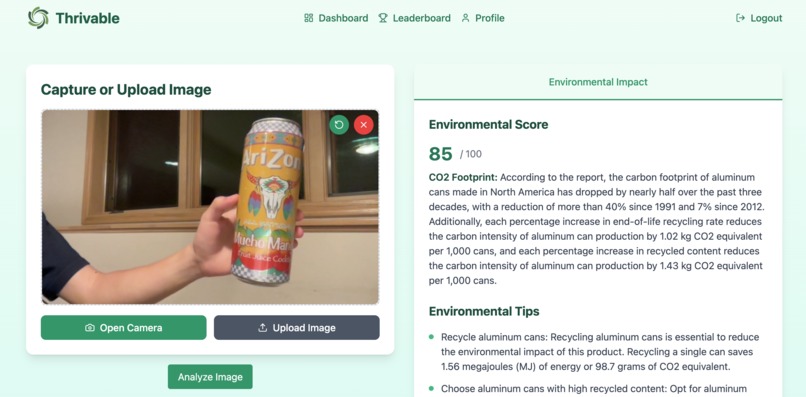
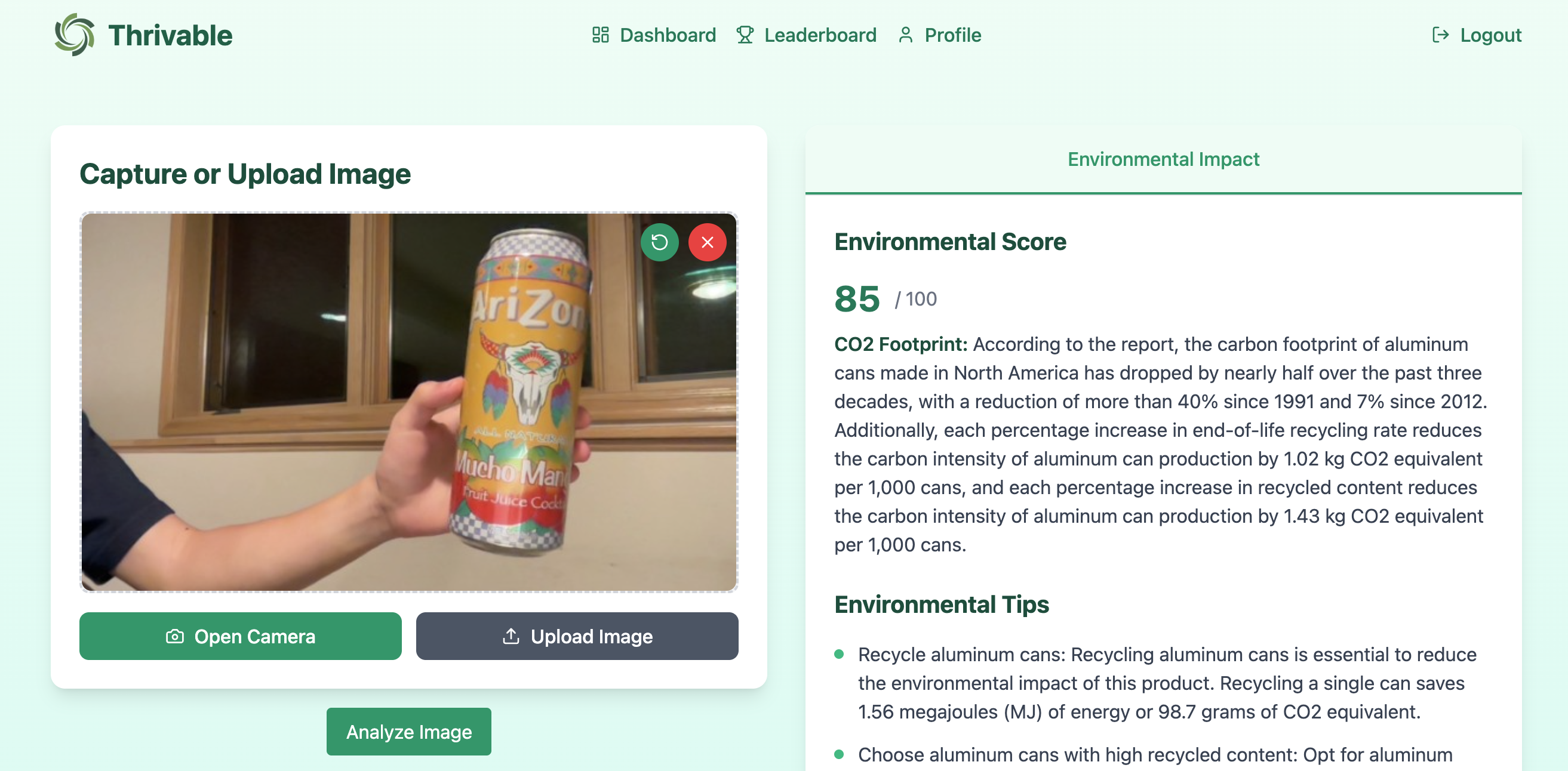
Product Identifier
-
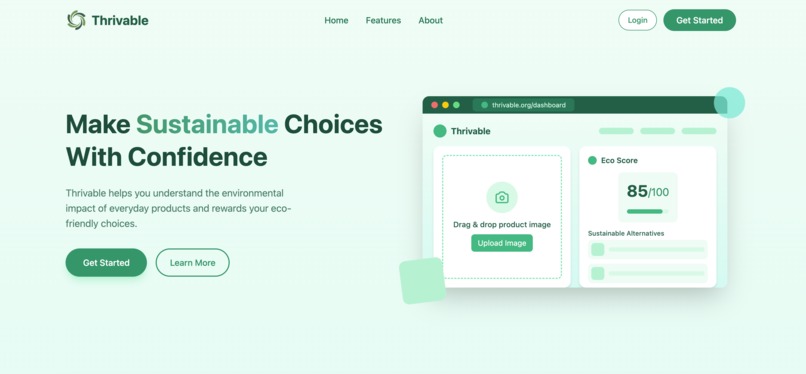
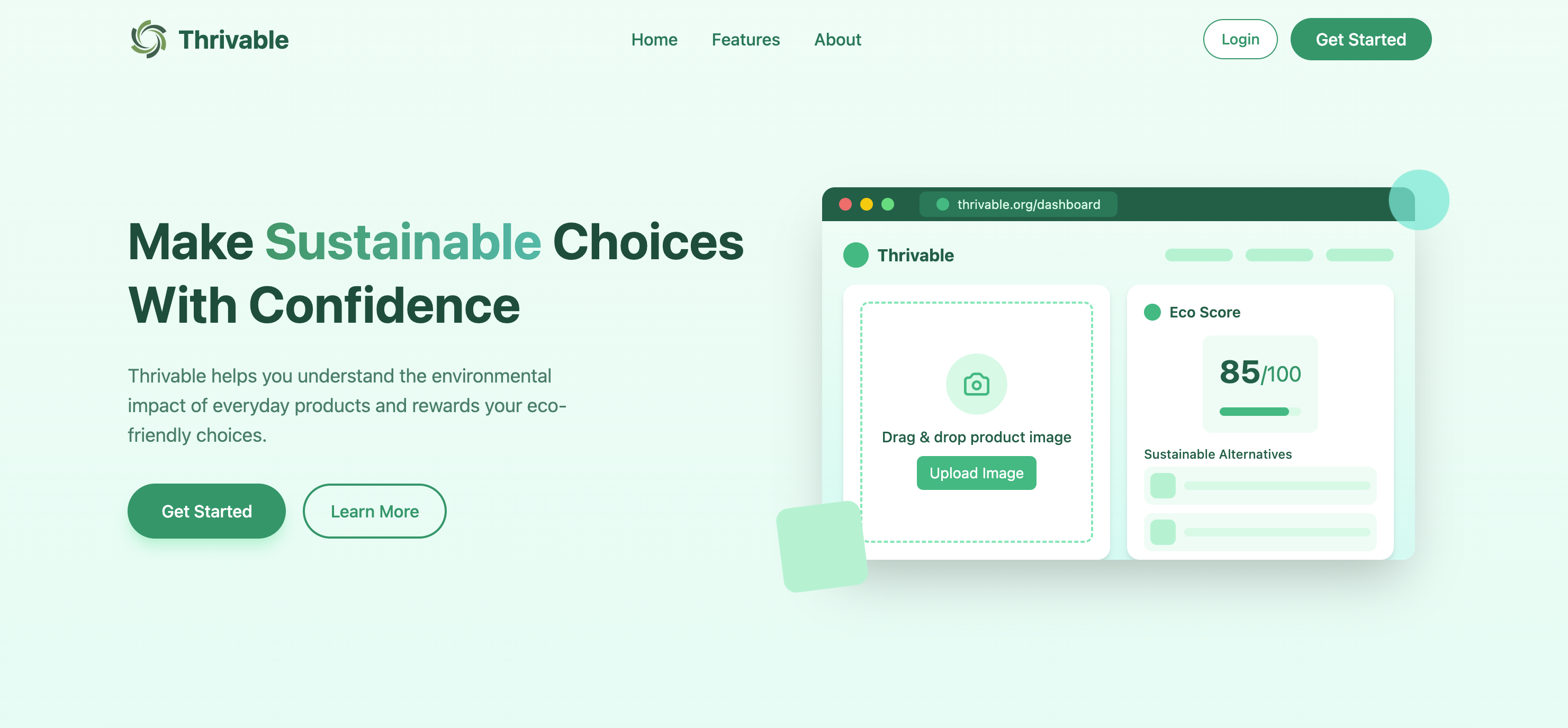
Landing Page


Thrivable - AI-Powered Sustainability Platform
Inspiration
In today's world, environmental consciousness is more important than ever. We were inspired by the growing need for accessible tools that help individuals make sustainable choices in their daily lives. Many people want to reduce their environmental impact but struggle to find reliable information about products, materials, and their ecological footprint.
Thrivable was born from the vision of creating an intelligent platform that combines computer vision, AI analysis, and environmental data to empower users to make informed, eco-friendly decisions. We wanted to bridge the gap between environmental awareness and actionable insights, making sustainability accessible to everyone.
What it does
Thrivable is a comprehensive sustainability platform that helps users understand and reduce their environmental impact through intelligent image analysis and AI-powered insights.
Key Features:
- Smart Image Analysis: Upload or capture photos of products/materials to get instant environmental impact assessments
- Environmental Scoring: Receive detailed environmental scores (0-100) with CO2 footprint calculations
- Sustainability Tips: Get personalized recommendations for reducing environmental impact
- Community Leaderboard: Compete with others and track your sustainability progress
- DIY Project Generator: Discover creative ways to repurpose items instead of discarding them
- Real-time Analytics: Visualize your environmental impact over time
How it Works:
- Capture: Take a photo or upload an image of any product
- Analyze: Our AI analyzes the image and identifies components
- Assess: Get detailed environmental impact scores and CO2 footprint data
- Act: Receive tips and alternative solutions
- Track: Monitor your progress with a points system and compete on the leaderboard
How we built it
Frontend Technologies:
- React.js with Vite for fast development and optimal performance
- Tailwind CSS for modern, responsive design
- Framer Motion for smooth animations and user interactions
Backend Technologies:
- Node.js with Express.js for robust server-side logic
- Groq API for fast AI inference and image analysis
- Tavily API for web scraping and data collection
- Supabase for user authentication and data persistence
- JWT for secure authentication
AI & Data Pipeline:
- Computer Vision: Image recognition and material identification
- Natural Language Processing: Environmental impact analysis
- Web Scraping: Real-time data collection from environmental databases
Architecture:
Frontend (React) ↔ Backend (Node.js/Express) ↔ AI Services (Groq/Tavily)
                                      ↓
                              Database (Supabase)
Challenges we ran into
Data Pipeline Complexity
Our biggest challenge was building the robust data pipeline that transforms a simple image into an accurate environmental assessment. We engineered a multi-stage process that first uses Google Cloud Vision's Product Search and a custom OCR fallback to precisely identify the product. This triggers the Tavily API to crawl the web for sustainability data, which is then synthesized by the LLaMA 3 model via the Groq API to generate an actionable eco-score, tips, and a final carbon footprint analysis.
Web Scraping Limitations
We encountered various challenges with web scraping, particularly in finding and extracting the right environmental information. Many websites have:
- Anti-bot measures that required careful request management
- Dynamic content that required sophisticated scraping techniques
- Inconsistent data formats that needed extensive parsing and normalization
Information Accuracy
Finding reliable, up-to-date environmental data proved challenging. We had to:
- Verify data sources for accuracy and credibility
- Handle conflicting information from different sources
- Update outdated environmental metrics with current standards
- Normalize data formats across various databases
Accomplishments that we're proud of
Technical Achievements:
- Real-time Image Processing: Built a fast, responsive image analysis system
- Modular Backend Design: We architected the backend using Express.js with a strong separation of concerns. Each core feature is encapsulated in its own dedicated module with distinct routes and controllers
- Intelligent Web Scraping/Data Extraction: Developed a dynamic data extraction pipeline using that performs targeted web searches for environmental data, filters irrelevant sources, and extracts raw text content from the most promising URLs for AI analysis.
What we learned
- AI Service Integration: Learned to effectively coordinate multiple AI APIs for complex analysis
- Data Pipeline Design: Gained expertise in building robust data processing systems
- Web Scraping Best Practices: Developed strategies for handling rate limits and dynamic content
- Real-time Processing: Mastered techniques for optimizing performance in image analysis
What's next for Thrivable
- Mobile App Development: Create native iOS and Android applications
- Enhanced AI Models: Improve accuracy of environmental impact assessments
- Social Features: Implement sharing and community features
- Barcode Integration: Add product barcode scanning for instant environmental data
Technical Roadmap:
- Performance Optimization: Implement caching and CDN for faster global access
- Advanced AI: Integrate more sophisticated AI models for better accuracy
- Data Expansion: Build partnerships for more comprehensive environmental databases
- Blockchain Integration: Explore blockchain for transparent environmental impact tracking
Built with ❤️ for a sustainable future
Thrivable - Making sustainability accessible, one picture at a time.
Built With
- express.js
- google-vision-ai
- groq
- javascript
- jwt
- node.js
- react
- supabase
- tailwind
- tavily


Log in or sign up for Devpost to join the conversation.